
Not every customer is good for growth
Winning new customers is usually treated as one of the clearest signs that a company is growing. More contracts mean more revenue, more logos and more evidence that the market wants what the business is selling. For an early-stage company in particular, saying no to a paying customer can feel almost irrational. Yet revenue can […] The post Not every customer is good for growth appeared first on e27.
Read full article
Watch live: Trump to honor Elon Musk, tech leaders at science summit
President Trump is set to recognize some of the biggest names in technology Thursday at the Science: A New Golden Age summit in Washington. Trump will award the National Medal of Science to Tesla and SpaceX CEO Elon Musk, Google co-founder Sergey Brin, Nvidia CEO Jensen Huang and AMD CEO Lisa Su. Microsoft CEO Satya...

Vance says foreign workers at Microsoft will no longer be able to apply for permanent status
Vice President Vance said Thursday that foreign workers at Microsoft will no longer be able to apply for permanent resident status in the U.S. through an employer-based program, after he accused the company of abusing the process. The tech giant has been suspended from the permanent labor certification program, referred to as PERM, which allows...
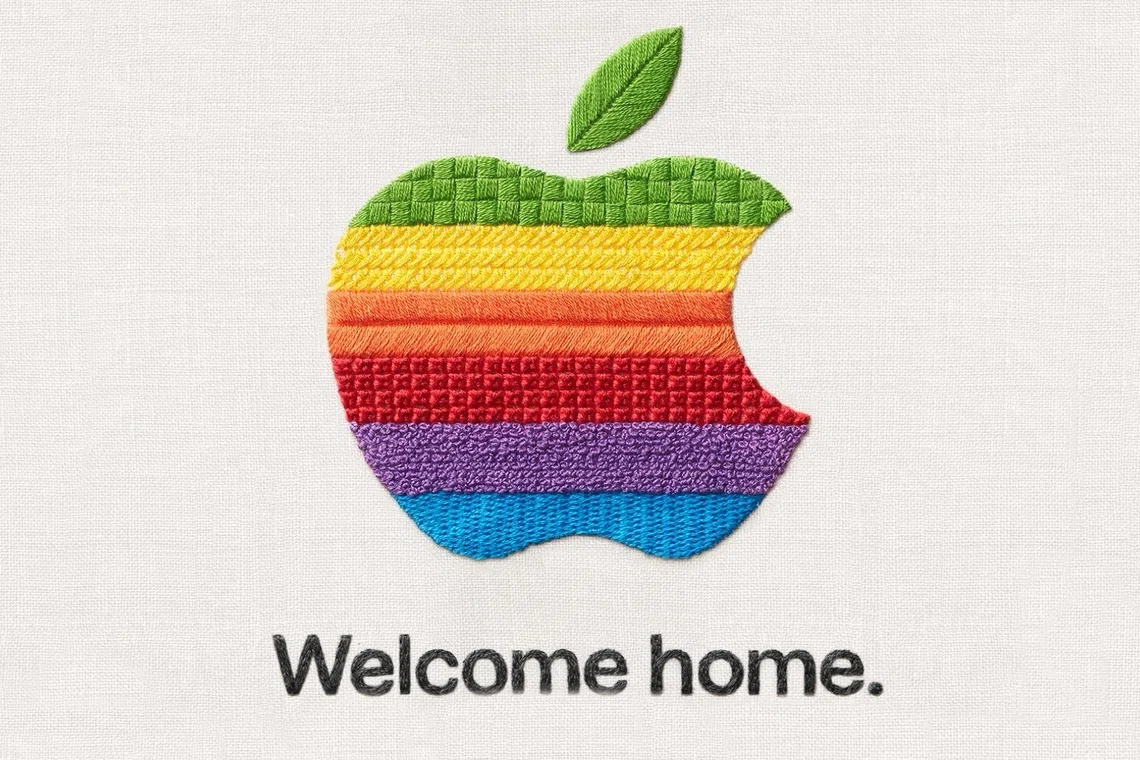
Apple announces “Welcome Home” event on 13 October in New York
The event will show just how serious Apple is about making a push into the smart home market.

NFL urges Supreme Court to take up prediction market dispute
The NFL urged the Supreme Court on Thursday to take up a case over who has the authority to regulate prediction markets, arguing that wagers on the platforms should fall under state gambling laws. The league filed an amicus brief as part of a dispute between Kalshi and the state of New Jersey, which has...

More threat data is useful only if security teams can act on it
Security teams have access to more threat intelligence than ever, but the volume of information can create another problem: figuring out what actually needs attention. Security Operations Centers are already handling large numbers of alerts every day, often with fewer people than they need. Attackers are also moving quickly, leaving analysts less time to determine

Samsung Electronics 1st Korean firm to top $80 bil. in quarterly operating profit
Samsung Electronics on Thursday estimated 107.4 trillion won ($80.28 billion) in operating profit for the third quarter, becoming the first Korean company to surpass 100 trillion won in quarterly operating profit. In a regulatory filing, the company said its third-quarter operating profit and revenue are each estimated at 107.4 trillion won and 195 trillion won, respectively. If the figures are finalized when the company announces its full earnings results on Oct. 29, they would represent year-on-year increases of 782.5 percent in operating profit and 126.6 percent in sales. Beside Samsung, no other company in the world expect for Saudi Arabia's state-owned oil company Aramco has posted a quarterly operating profit exceeding that amount. Aramco reported $86.5 billion in operating profit in the second quarter of 2022. The operating profit surpassed brokerages’ consensus estimate of 106.64 trillion won, though sales fell slightly short of the 200.64 trillion won forecast. The earnings are particularly significant as they exceeded expectations despite concerns that the Korean won's sharp

Hyosung Heavy Industries builds test facility for 2-gigawatt HVDC controller
Hyosung Heavy Industries, the power equipment and grid infrastructure unit of Korean conglomerate Hyosung Group, has built a facility to test the performance of its 2-gigawatt high-voltage direct current (HVDC) controller, marking a first for Korea using homegrown technology, the company said Thursday. The hardware-in-the-loop simulation system, recently installed at the company's research center in Gwacheon, Gyeonggi Province, links an actual HVDC controller to a simulated 2-gigawatt converter valve and power grid. This lets engineers check how the controller responds under conditions close to those of a real grid, the company said. HVDC technology converts alternating current into direct current to carry large amounts of electricity over long distances with less power loss. A 2-gigawatt system requires two to three times as many test scenarios, such as grid faults and emergencies, as a 200-megawatt one, according to the company. The simulator can reproduce hazardous situations that are difficult to test on a live grid and run them repeatedly over long periods, it said. Hyosung said it d

Hancom partners with AWS to bring Nomadian AI workforce platform to US
Korea's leading office software developer, Hancom, is taking its Nomadian artificial intelligence (AI) workforce platform to the U.S. market, teaming with Amazon Web Services to shape everything from product design and pricing to marketing and distribution. Hancom said Thursday that it will work with AWS on a 10-week program called Hancom x AWS CoLab as it prepares to launch Nomadian in the U.S. The program will cover product development and market strategy, with AWS supporting development in its cloud environment while both companies examine market size, customer willingness to pay, pricing and revenue models. Hancom will lead product vision and key decisions, while CoLab will use Amazon’s Working Backwards approach to map out its initial customers, market-entry strategy and launch road map. Hancom and AWS held a kickoff meeting Sept. 21, attended by business development and sales representatives from Hancom and AWS technology. Nomadian is designed for solo entrepreneurs, allowing users to assemble teams of AI agents for roles including data analysis and content marketing and assign wo

Korea has no plans to follow US push to replace term AI with 'super intelligence'
Korea is not considering to replace the term artificial intelligence (AI) with “super intelligence,” or SI, according to the Ministry of Science and ICT, distancing itself from a terminology push underway in the United States. An official from the ministry told The Korea Times that the government has no plans of replacing AI with SI. “There has been no consideration at our level of using such terminology,” the official said on Tuesday. The clarification came after Deputy Prime Minister and Science Minister Bae Kyung-hoon, during a National Assembly audit earlier in the day, used the term SI while describing U.S. efforts to secure leadership in advanced AI competition. The Donald Trump administration has been promoting the use of SI instead of AI. Trump signed an executive order titled "Inaugurating the Era of Super Intelligence" on Sept. 29, requiring federal executive agencies to use SI instead of AI in official documents, including websites, reports and policy papers. The shift has also drawn attention from the private sector. Elon Musk has said he plans to rename SpaceX’s AI

Korea's forgotten fortune: $1.1 bil. in shares left unclaimed
Nearly 1.5 trillion won ($1.1 billion) worth of shares held by the Korea Securities Depository (KSD) remain unclaimed by some 26,000 shareholders, data showed Thursday. According to data released by Rep. Han Min-soo of the ruling Democratic Party of Korea, the KSD held 800.84 million unclaimed shares worth a combined 1.47 trillion won as of the end of August. Unclaimed shares typically arise when shareholders fail to claim shares issued through rights offerings, bonus issues or stock dividends. Shareholders may be unaware of the newly issued shares or miss notifications after changing their addresses. In such cases, the shares are held by the KSD or other designated transfer agents until their rightful owners claim them. The value of unclaimed shares rose by about 26.4 billion won in the first eight months of this year, from 1.44 trillion won at the end of last year, when 763.54 million shares remained unclaimed. The number of shareholders with unclaimed shares also increased by 931, from 25,349 at the end of last year to 26,280 as of August. The figure included 22,526 individual sharehol

Hanmi Pharm's obesity treatment Eppe wins domestic approval
The Ministry of Food and Drug Safety on Thursday approved Hanmi Pharmaceutical's Eppe, Korea's first domestically developed glucagon-like peptide-1 (GLP-1)-based obesity treatment. Eppe is the 45th novel drug developed in Korea and the country's first domestically developed GLP-1-based obesity drug. It has been approved in five doses: 2, 4, 6, 8 and 10 milligrams. According to the ministry, the injectable drug is intended for chronic weight management in adults with obesity or for those who are overweight and do not have diabetes, as an adjunct to a reduced-calorie diet and exercise. The drug was initially licensed out to global pharmaceutical company Sanofi in 2015 as a diabetes treatment, but the rights were returned in 2020. Hanmi Pharm then decided to develop the drug as its own obesity treatment. Eppe was initially expected to become Korea's 44th domestically developed new drug, but became the 45th after an eye treatment jointly developed by Aju Pharm and GL Pharm Tech received approval on Sept. 8. Eppe is set to compete with leading GLP-1-based obesity treatments such as Wegovy and

Controversy resurfaces over SK hynix's potential Solidigm IPO
Controversy has resurfaced over SK hynix’s reported efforts to list its NAND flash memory subsidiary Solidigm in the U.S., after reports said the company had selected lead managers for an initial public offering (IPO), despite repeatedly maintaining that “nothing has been confirmed.” In an effort to protect retail investors, Korean financial regulators have introduced rules that prohibit parent-subsidiary listings in the domestic market in principle while allowing exceptions under certain conditions. However, because Solidigm is seeking an overseas listing, the case has raised questions over whether SK hynix could face regulatory penalties if it fails to comply with shareholder protection requirements. Bloomberg reported Thursday that Solidigm has selected Goldman Sachs and Morgan Stanley as lead underwriters for its planned IPO in the U.S. next year. The offering, if pursued, is expected to raise approximately $10 billion and value the NAND flash memory maker at up to $100 billion. Solidigm's parent company, memory chip giant SK hynix, has maintained that no decision has been mad