
Zocket Wins Accenture Tech Next Challenge 2026 With AI That Finally Understands the Brand
Sep 21, 2026
Zocket wins the Accenture Tech Next Challenge 2026 for its AI-native Brand OS, transforming enterprise marketing from a stack of tools into a system of intelligence through shared brand context and specialized AI agents.
United States, September 21, 2026 -- Zocket has been named the winner of the Accenture Tech Next Challenge 2026 in the Song category, a track focused on Autonomous Growth Agents and how enterprises can reimagine the way they acquire, serve and grow customers.

For marketing teams, that transition is particularly relevant. CMOs today are navigating fragmented technology stacks, growing volumes of customer and performance data, rising acquisition costs and increasing pressure to demonstrate measurable returns from marketing investments. At the same time, adopting AI at scale requires systems that understand the context of a brand.
Founded in 2021 and headquartered in San Francisco, Zocket is an AI-native marketing operating system for enterprise consumer brands. The company is trusted by more than 100 brands across 25+ countries, with more than 1 billion consumer and category data points ingested to date, alongside performance data from more than $250 million in advertising spend across 40+ industries.
Giving AI the Context of the Brand
At the center of Zocket's marketing operating system is Brand Brain, a shared context foundation designed to give workflows, campaigns and content a consistent understanding of the brand.
Structured as a knowledge graph, Brand Brain brings together information from company sources such as websites, product catalogs, style guides, CRM systems and advertising accounts, along with external signals including reviews, search trends and competitor activity. It continuously incorporates updates so specialized AI agents can work from current brand information rather than starting from disconnected data.
General-purpose AI models can reason at scale, but they don't know your enterprise. Brand guidelines, product data, customer conversations, and performance signals live scattered across disconnected systems.
Brand Brain closes that gap. It structures signals from every connected source and feeds brand context directly into the agents built on top of it, so agents never start from scratch. Skills scope instructions to a single agent, so creative guidance never bleeds into customer responses.
Teams work from one intelligent input. Zocket routes every request to the agent built to handle it. Four specialized agents already run core marketing workflows today.
AI Designer produces on-brand creative at volume with approvals built in. Across 26 specialist apps in four groups (creation, copy, adaptation, competitive and commerce), it takes a single master and resizes and localizes it into every platform aspect ratio in one click, spanning image, video, UGC, carousel and marketplace listings. Purpose-built apps such as Image Ad Creator, UGC Video Creator and Localization Studio handle the specific job, while the Compliance Checker audits every asset against the brand rules, flags by severity and auto-fixes where it can, and Approvals routes each one for human sign-off before distribution. In practice that is a festive campaign in multiple languages overnight, listing images at SKU scale, and agency-grade volume without the retainer.
Brand Moderator brings every comment, DM and review into one review queue across all your social platforms, each with an AI-drafted reply and the rule it applied. The Rules Engine turns a client's escalation matrix into enforced routing, and reviews of 2 stars and below auto-escalate. Responses are auto-posted by default. Human review is triggered only when AI confidence is low, or when a user threatens, blackmails, or repeatedly escalates to senior leadership. Action history keeps a full audit trail of what was drafted, approved, edited or rejected.Together with Brand Guardian, it functions as an always-on ORM layer — no agency required, holds a 30-minute median response SLA, and catches spikes into the queue, with AI Researcher available for on-demand crisis or competitor deep-dives across 30+ sources.
Consumer Insights listens to your brand against the whole category, tracking share of voice, sentiment, topics, channels and estimated reach. A Sub-Brands view surfaces a sub-line quietly underperforming while the master brand still looks healthy, and you can drill from any chart into the raw Mentions stream, the evidence behind the number, including platforms where you hold no official account. That powers category benchmarking, sub-brand NPS and perception, and pinpointing what is actually driving a sentiment shift, with on-demand deep research across 30+ sources.
AI Paid Media answers "is my ad money working" in plain English.It diagnoses performance across all your ad platforms, marketing channels, and analytical and attribution tools. then ranks a Signals feed of what changed and what to do. Goals read On-track, At-risk or Breached at account, platform or campaign level across CPA, ROAS, CTR, CPC, CPP and purchase volume. It surfaces ad waste, audience saturation and creative fatigue, and drafts changes for review, with the marketer approving and executing inside the ad platform.
Alongside these agents, Reporting provides shared reporting infrastructure across the platform, including prompt-built dashboards, saved analyses, scheduled alerts and diagnostic playbooks, reducing the manual work involved in rebuilding recurring marketing reports.
Human-in-the-Loop, Compounding Intelligence
Zocket separates automating marketing work from removing human control. Agents generate creative, draft responses, diagnose performance, and analyze consumer data, while brand, publishing, and spending decisions stay behind approval gates. Any suggestion can become a tracked, owned, dated task, so it turns into work someone owns, not a notification that scrolls past.
Every agent action feeds a single, shared knowledge graph, and nothing stays siloed: learnings from one workflow generalize across all others. The same goes for human feedback. Approve or correct an output in one narrow context, and that signal gets aggregated and generalized at the graph level, making every agent smarter, not just the one being corrected. Most tools treat feedback as a local fix. Zocket treats it as a permanent addition to a shared brand intelligence layer, and that's the core differentiator.
"This recognition validates our belief that the next phase of enterprise marketing will be driven by AI that truly understands the brand. With Brand OS and Brand Brain, our goal is to help marketing teams move from fragmented tools to intelligent systems that learn, act and improve continuously, with human approval where it matters." said Mukund Srivathsan, Co-Founder & CTO, Zocket

The Accenture Tech Next Challenge brings together startups developing technology-led solutions for enterprise transformation. For Zocket, winning the Song category provides further validation for its approach to building contextual AI for enterprise marketing and strengthens its ambition to bring Brand OS to more enterprise teams globally.
As AI moves deeper into marketing workflows, the opportunity is not simply to add more AI tools. It is to give specialized AI applications the brand context, governance and human oversight required to make them useful inside real enterprise environments.
For Zocket, that starts with a shared Brand Brain: one context foundation that helps every agent understand the brand before it generates, analyzes or recommends what happens next.
About Zocket
Zocket is an AI native operating system for enterprise brand marketing that brings together brand intelligence, creative production, consumer research, paid media, and related marketing workflows. The company develops Brand OS around a shared Brand Brain designed to organize information from connected business and external sources and make that context available to specialized AI agents. Zocket is headquartered in San Francisco, with operations and engineering in Chennai. More information is available at Zocket, and media inquiries can be directed to [email protected].
Contact Info:
Name: Mukund Srivathsan
Email: Send Email
Organization: Zocket
Website: https://zocket.com/
Release ID: 89203933
If there are any errors, inconsistencies, or queries arising from the content contained within this press release that require attention or if you need assistance with a press release takedown, we kindly request that you inform us immediately by contacting [email protected] (it is important to note that this email is the authorized channel for such matters, sending multiple emails to multiple addresses does not necessarily help expedite your request). Our reliable team will be available to promptly respond within 8 hours, taking proactive measures to rectify any identified issues or providing guidance on the removal process. Ensuring accurate and dependable information is our top priority.

LG Electronics emerges as Apple's home AI ally
LG Electronics has built an alliance with Apple in the home artificial intelligence (AI) sector, unveiling a range of internet of things (IoT) devices that will be integrated into Apple's ecosystem. The two companies’ partnership is now extending into the home appliance sector, evolving from component supplies and service integration to jointly developing finished products. For LG Electronics, the collaboration provides access to Apple’s global ecosystem, while Apple can leverage LG’s expertise in home appliances to strengthen its presence in the smart home market. LG Electronics and Apple jointly held a new product showcase in Manhattan, New York, Tuesday (local time), unveiling seven IoT devices. LG Electronics North America CEO Kwack Do-yeong, LG Electronics Home Appliance Solution Platform Business Center Head Jung Ki-hyun and Apple Vice President of Hardware Engineering Matthew Costello attended the event. Dubbed as smart home accessories, the devices include indoor and outdoor cameras, a video doorbell, a smart lock, a smart thermostat and a temperature sensor. They were co-

AI-driven cyberattacks hit 16 financial firms, expose 100,000 records
The number of financial firms affected by suspected artificial intelligence (AI) agent-driven cyberattacks has risen to 16, more than double the seven initially reported, financial regulators said Wednesday. About 100,000 records containing personal information, including resident registration numbers, were exposed. The tally could rise as companies continue checking their systems for signs of intrusion. Regulators also found security deficiencies at 130 of the 555 financial firms reviewed, including failures to apply the latest security patches. The Financial Services Commission (FSC) disclosed the findings at an emergency response meeting. It said the breaches, reported since the beginning of this month, have affected banks, savings banks, credit finance companies, electronic payment providers and cryptocurrency businesses. The affected firms include four banks — Shinhan, KB Kookmin, BNK Busan and Hana — and four savings banks — Yegaram, Welcome, DB and OK. Hyundai Capital and KDB Capital are among the affected credit finance companies. Others on the list include online investment
![[PHOTO] Next-generation memory architecture](https://newsimg.koreatimes.co.kr/2026/10/14/726fc344-baf5-4330-b223-d477d4506cc7.jpg)
[PHOTO] Next-generation memory architecture
Visitors take photos of mockups of zHBM and zNAND-O, 3D architecture for advanced DRAM and NAND memory chips, at Samsung Electronics' booth for the SEDEX 2026 semiconductor exhibition at Coex in southern Seoul, Wednesday. Along with Samsung Electronics, SK hynix and 300 other companies in the semiconductor supply chain are participating in the exhibition, which runs through Friday. Yonhap

LIG D&A, Firehawk to co-develop Poniard rocket system
LIG Defense & Aerospace (LIG D&A) has partnered with U.S. defense technology company Firehawk to develop a propulsion system for its Poniard guided rocket, as the Korean defense company seeks to expand its presence in the U.S. market. The two companies signed a teaming agreement Tuesday (local time) in Washington, D.C., to jointly develop propulsion technology for the 2.75-inch guided rocket system, known as "Bigung" in Korean. Under the agreement, the companies will work together on propulsion system development, with plans to expand the partnership into mass production, further technical cooperation and joint marketing targeting the U.S. government. Firehawk specializes in advanced energetics and propulsion technologies. The company has developed a thermoplastic manufacturing platform designed to overcome material and production limitations associated with conventional rocket propulsion manufacturing. Its technology can be applied across the production process, from propellant and rocket motors to complete munitions. The partnership is expected to support LIG D&A's efforts to localize

Hyundai Motor India opens Pune plant, marks 30 years in country
Hyundai Motor India inaugurated a new smart manufacturing plant in Talegaon, Pune, Maharashtra, on Wednesday, marking 30 years of operations in India as Hyundai Motor Group expands investment to strengthen the country’s role in its global production and export network. The facility will initially have an annual production capacity of 170,000 vehicles, with plans to increase it to 320,000 by 2030. The opening comes as the group plans to invest $15.5 billion in India from 2026 through 2032 to expand manufacturing, research and development, supplier networks and future mobility businesses. “India remains one of Hyundai's most important and strategic markets globally. The inauguration of the Pune plant reflects our long-term commitment to India's growth and our confidence in its bright future,” Hyundai Motor Group Executive Chair Chung Euisun said. The plant's opening was marked in a ceremony by Maharashtra Chief Minister Devendra Fadnavis, alongside Korean Ambassador to India Lee Seong-ho, state deputy chief ministers and senior Hyundai executives. The Pune facility will produce the H
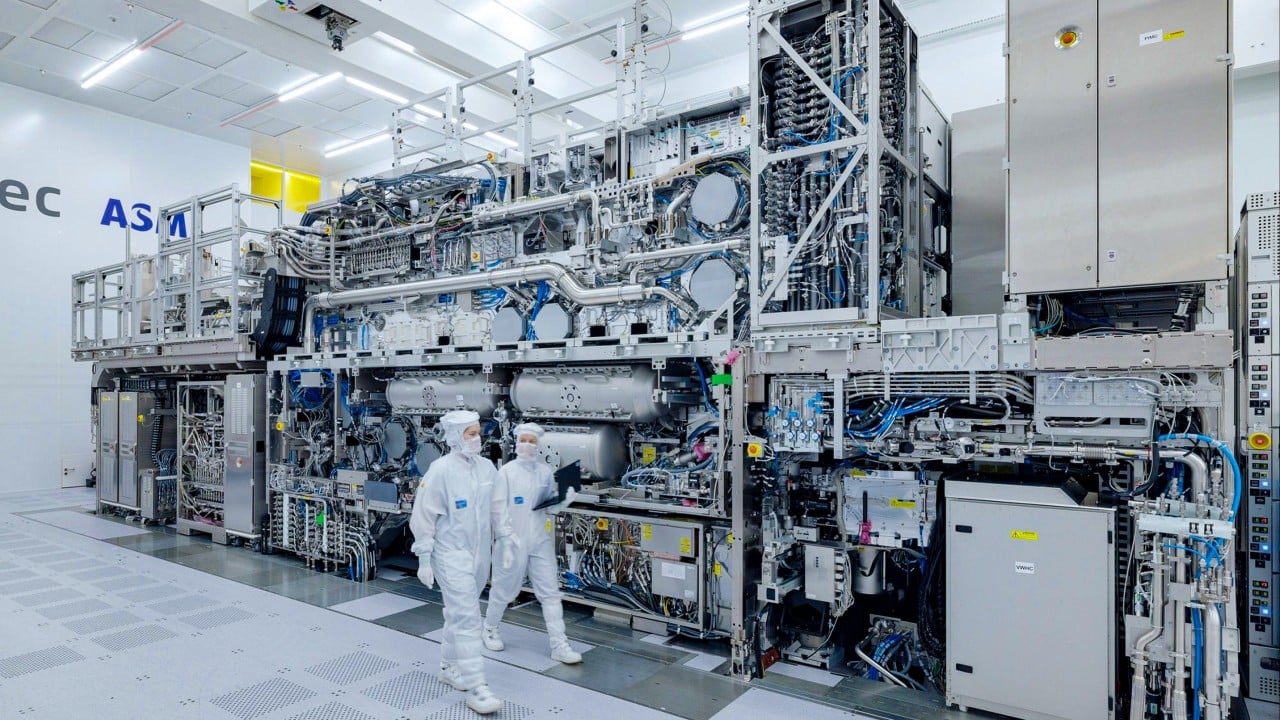
ASML’s chip equipment sales to China soar 109% despite US export curb push
Dutch semiconductor equipment giant ASML expects China to account for about 20 per cent of its total sales this year, after seeing shipments to the market more than double during the previous quarter despite mounting US pressure for tighter export restrictions on less advanced chipmaking machinery. The company’s sales to China surged 109 per cent in the third quarter compared with the previous three months, according to financial results released on Wednesday. That took China’s share of ASML’s...

Ukraine says SpaceX limiting Starlink operations, impacting air defense
Ukraine is raising alarm that air defense operations are being impacted by unannounced limitations on SpaceX satellites. The disruption comes following Ukrainian President Volodymyr Zelensky warning that President Trump has threatened to cut off intelligence sharing with the country. Limits on Starlink’s services in Ukraine occurred without warning, presidential adviser Serhii Beskrestnov wrote on Telegram,...

Watch live: Hegseth talks future of autonomous warfare amid leadership shake-ups
Defense Secretary Pete Hegseth is set to discuss the future of autonomous warfare Wednesday morning as the Pentagon pushes to modernize the military amid leadership shake-ups. Hegseth will join acting Army Secretary Adam Telle and acting Navy Secretary Hung Cao at the Association of the United States Army’s annual meeting for a discussion on Project...
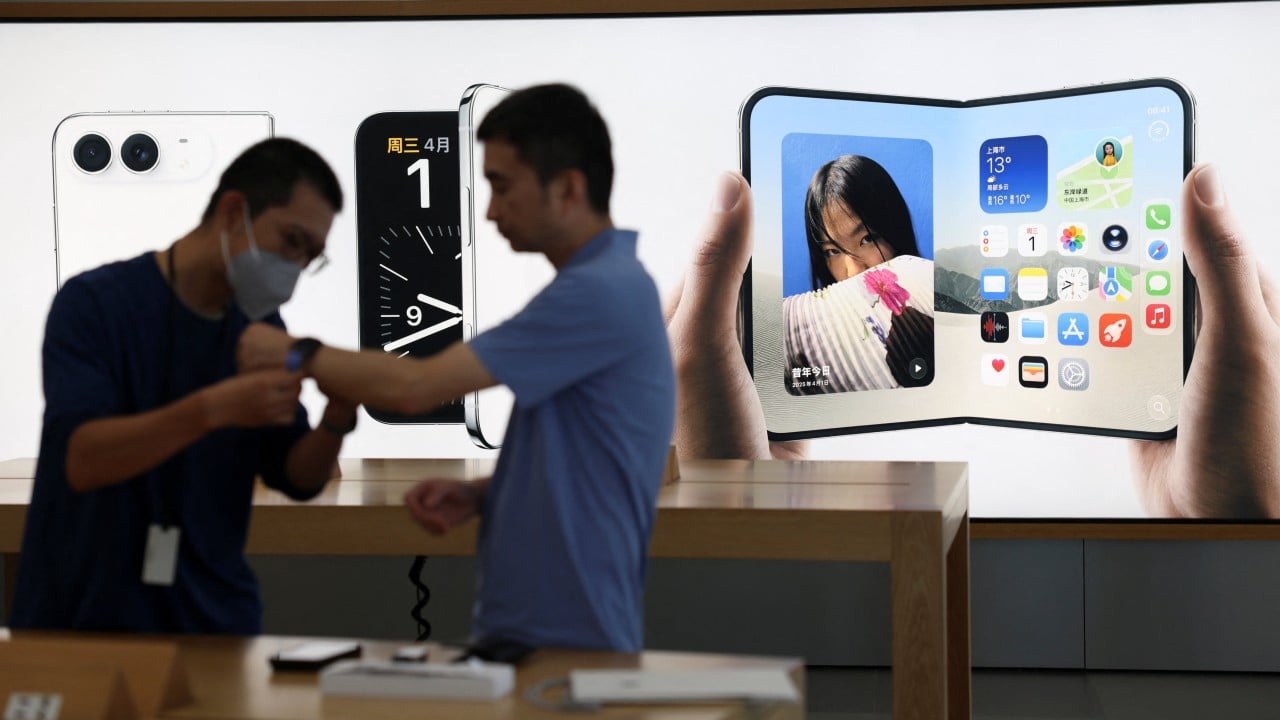
China approves Alibaba AI models for use in iPhone Duo and other Apple handsets
China has granted approval for Alibaba Group Holding’s artificial intelligence models to be integrated into several Apple handsets, including the new iPhone Duo, in the Chinese market, clearing a key regulatory hurdle for the long-delayed launch of Apple Intelligence in the country. Updated network access permits for the iPhone Duo, iPhone 18 Pro and several earlier Apple models from China’s Ministry of Industry and Information Technology now include three approved AI systems: Apple Intelligence...
Chinese memory giant YMTC to grow revenue 6 times faster than peers as IPO nears: report
Yangtze Memory Technologies Corporation (YMTC), China’s leading flash-memory maker, is set to grow revenue six times faster than its industry peers this year as it expands into server-related business ahead of a planned initial public offering (IPO), according to Counterpoint Research. The company’s server-related revenue was effectively zero in 2024, but could account for nearly 39 per cent of its revenue by 2028, according to the market intelligence firm on Tuesday. Much of the momentum is...

Anthropic’s Singapore MOU bets on safety testing, not consumer reach
Anthropic has finally given its Singapore customers somewhere to knock. The San Francisco-based AI lab opened an office in the city-state on Wednesday, its fifth in the Asia Pacific, and signed a memorandum of understanding (MOU) with the Ministry of Digital Development and Information (MDDI) that puts AI safety testing at the centre of the […] The post Anthropic’s Singapore MOU bets on safety testing, not consumer reach appeared first on e27.

Musk steps back into politics with redefined DC role
Elon Musk is jumping back into the political fray, reviving his role as a massive election spender and technology leader with a seat at the table again in Washington. Following a brief hiatus from President Trump’s orbit last year, Musk’s latest appearances in D.C. and influx of election cash signal he still has an appetite...


[PHOTO] Building AI-native workspace


YOUR NEWS, OUR NETWORK.
Do you have Great News you want to tell the world?
Be it updates about your business or your community, you can make sure that it’s heard by submitting your story to our network reaching hundreds of news sites across 6 verticals.