
Yantai ZS Bulk Bags Manufacturing: Top Food Pharmaceutical Grade FIBC Manufacturers?
Sep 30, 2026
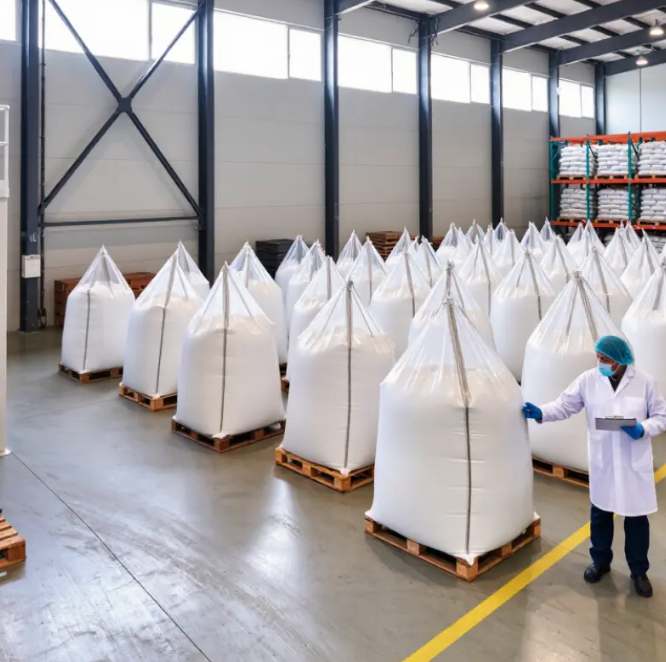
Yantai, Shandong Sheng Sep 30, 2026 (Issuewire.com) - Picking the right supplier for Food & Pharmaceutical Grade FIBC bags isn't just about comparing load capacities and prices. You really need to think about whether these bulk bags are a good fit for your product, how they'll be filled, stored, and handled. Things like traceability, strict manufacturing controls, strong seams, and compatible liners? They all matter-small details can make a big difference. For instance, if the liner shifts during filling, it can turn into a real headache when discharging and handling the product.
Considering how much food and pharma products get lost or wasted along the supply chain, it's definitely worth taking your packaging choices seriously. The Food and Agriculture Organization's *The State of Food and Agriculture 2023* states that about 13.2% of food was lost between harvest and retail in 2021. Now, that number doesn't directly measure FIBC performance, but it highlights just how crucial it is to protect your items during storage and transport. When it comes to pharmaceutical-grade FIBC bags, you should also double-check whether manufacturers' specs, inspection reports, and quality controls match what you actually need. Don't just go by brochures; ask for test results and straightforward explanations of their production process. Comparing their answers in detail can save you a lot of trouble down the line-some claims might sound promising, but they need real proof.
This guide covers key points for evaluating manufacturers-think material choices, contamination prevention, customization options, and whether they can keep up with your supply demands. Remember, there's no one-size-fits-all checklist, and it's easy to miss that. Doing a thorough comparison helps you find a good partner without just relying on the grade label as your proof. It's all about digging a little deeper to ensure you're making the right call.
Top Food Pharmaceutical Grade FIBC Manufacturers
Table of Contents
1 What Are Food and Pharmaceutical Grade FIBCs?
2 Which Safety Standards Govern Food and Pharmaceutical FIBCs?
3 How Are Certified FIBCs Manufactured and Tested?
4 What Defines a Reliable FIBC Manufacturer?
5 How Do Leading Manufacturers Compare by Product Capability?
6 How Should Buyers Select the Right FIBC Supplier?
What Are Food and Pharmaceutical Grade FIBCs?
Food and pharmaceutical grade FIBCs are flexible intermediate bulk containers designed for materials requiring controlled handling. Unlike ordinary industrial sacks, they are specified for cleanliness, material suitability, and consistent construction. Food-grade units may carry flour, sugar, or powdered milk, while pharmaceutical powder bulk bags can be selected for excipients and other production materials. The label alone proves little. Buyers should check the intended product, contact surfaces, manufacturing controls, and documented test results. A clean-looking bag is not automatically suitable.
These bags typically use woven polypropylene fabric, sometimes with an inner liner to limit moisture, dust, or contact with the outer fabric. Seams, filling spouts, discharge spouts, and lifting loops all matter. A weak seam can release fine powder during filling. Suppliers may provide controlled production areas, batch traceability, and cleanliness procedures, but requirements vary by application. "Pharmaceutical grade" is not one universal construction standard. That distinction is easy to miss. Ask how each bag is cleaned, packed, inspected, and protected in transit. Match its capacity and discharge design to the actual process. A small trial is still worth considering, since powder flow can behave differently than expected.
Which Safety Standards Govern Food and Pharmaceutical FIBCs?
Food Grade Fibc Bags must meet the requirements of their intended market and contents; no single standard covers every use. In the United States, food-contact materials are assessed under applicable FDA regulations, including relevant parts of 21 CFR. In the European Union, Regulation (EC) No 1935/2004 sets a general framework for materials that contact food, while Regulation (EC) No 2023/2006 addresses good manufacturing practice. ISO 21898 covers FIBCs for non-dangerous goods, but it is not a food-safety certification. Details matter.
For pharmaceutical use, buyers typically assess bags through supplier qualification and risk-based quality controls. Relevant good manufacturing practice requirements depend on the product and process; a bag is not automatically "pharmaceutical grade" because a supplier uses that label. Ask for material specifications, batch traceability, contamination-control records, and evidence that any liner and closure suit the product. A certificate alone is not enough.
During a facility review, inspect seams, discharge spouts, and inner surfaces for dust, loose fibers, or residue. Check how bags are stored and protected before filling. Cleaning claims should be supported by documented procedures, not appearance alone. Requirements can differ between dry ingredients and sensitive powders, so confirm them with your quality team. Even a careful checklist can miss something. Revisit it after product or process changes.
Which Safety Standards Govern Food and Pharmaceutical FIBCs?
EU overall migration limit for applicable plastic food-contact materials
Regulation (EU) No 10/2011 sets a default overall migration limit of 10 mg/dm2 for plastic materials and articles within its scope. Food-contact FIBCs may also be subject to Framework Regulation (EC) No 1935/2004 and food-contact GMP Regulation (EC) No 2023/2006. In the United States, applicable FDA requirements depend on the materials and intended use. ISO 21898 addresses FIBCs for non-dangerous goods, but does not by itself certify food-contact or pharmaceutical suitability. Pharmaceutical use requires material-specific qualification and controls appropriate to the intended application; there is no single universal FIBC standard for all pharmaceutical uses.
How Are Certified FIBCs Manufactured and Tested?
Certified food- and pharmaceutical-grade FIBCs start with controlled raw materials. Manufacturers verify polymer and additive documentation, then extrude, weave, cut, and sew fabric under documented procedures. Clean production areas help limit dust and fiber contamination. Liners and seams need separate inspection; a clean-looking bag is not proof of suitability. Food-contact declarations must match the intended market and product.
ISO 21898:2004 specifies five FIBC type tests: lifting, stacking, topple, righting, and drop. These tests assess the bag's structural performance, not its cleanliness or chemical suitability. Manufacturers therefore also test fabric and seam strength, inspect liners, and retain batch records. For food-contact plastics, applicable migration requirements depend on the destination market and packaging construction. A certificate alone may not cover every component or production site.
Tips: Ask for material declarations, test results, lot traceability, and cleaning controls. Check that documents match the exact bag specification. One detail is easy to overlook: a tested design does not guarantee every production lot is identical. Sampling plans and acceptance limits should be agreed in writing.
What Defines a Reliable FIBC Manufacturer?
A reliable FIBC manufacturer can show how each bag is controlled, not just how it looks. Ask for resin specifications, batch traceability, liner material details, and documented cleaning procedures. For Food Grade Fibc Liners, check that the liner fits securely, seams are consistent, and closures protect against dust during filling and discharge. A sample inspection should include the inside corners; residue can hide there. Details matter.
Useful evidence includes food-safety management records, documented production controls, and test results relevant to the intended load. ISO 21898 provides design and testing requirements for FIBCs carrying non-dangerous goods, while ISO 22000 addresses food-safety management systems. Neither certificate alone proves that a particular bag suits a specific product.
WHO's 2015 Estimates of the Global Burden of Foodborne Diseases put the annual burden at 600 million illnesses and 420,000 deaths worldwide. That figure is not evidence about FIBCs specifically, but it shows why contamination controls deserve serious attention.
Ask how the manufacturer prevents mix-ups between production lots and verifies liner integrity. Paper is not proof. I would also review complaint records and repeat-test results; a polished audit file can still leave practical questions unanswered.
How Do Leading Manufacturers Compare by Product Capability?
Leading food and pharmaceutical-grade FIBC manufacturers differ less by sales claims than by control of materials and production. A useful comparison starts with fabric weight, seam construction, and documented cleaning procedures. Ask whether each batch can be traced to raw material records and inspection results. Small details matter. A clean white bag is not proof of controlled handling.
Product capability also shows in liner options, filling and discharge designs, and protection from moisture or static where relevant. Some suppliers offer custom dimensions and printing, while others focus on standard formats and repeatability. Compare load ratings and test evidence against the actual filling line, not just a catalog table. A bag that fits a pallet but blocks a spout can slow an entire shift.
For demanding supply chains, request sample documentation, change-control practices, and clear acceptance criteria for seams and contamination checks. Experienced buyers may assess sample bags under real handling conditions before approving volume orders. Luxury Food Grade Fibc Bags can suggest premium positioning, but the phrase itself says little about hygiene or performance. Ask for measurable specifications. Even capable suppliers can miss details when requirements are vague; that deserves a second look.
How Should Buyers Select the Right FIBC Supplier?
Selecting a food- or pharmaceutical-grade FIBC supplier starts with the product, not a sales label. Define the material, filling temperature, discharge method, load, and whether a liner touches the contents. Ask for current food-contact declarations, resin and additive details, batch traceability, and test reports tied to the actual bag construction. A clean-looking sample is not proof. Check how the supplier controls incoming fabric, sewing areas, rework, and foreign-particle risks. For sensitive powders, request documented cleaning controls and packaging protection during storage and shipment. Small details matter.
Evaluate consistency, not just one successful sample. Compare production bags with approved specifications, including dimensions, seam strength, safe working load, and liner fit. Request test methods, acceptance limits, and change-notification procedures; vague certificates deserve follow-up. If static control is needed, confirm the bag type and review test evidence for the complete assembly, rather than relying on a fabric claim. Visit the site or arrange an independent audit when volumes justify it. Ask how complaints and corrective actions are recorded. Then test a small production lot under real filling conditions. I would not treat a polished audit report as certainty; documentation can lag behind practice. That is worth checking twice.
Conclusion
Food & Pharmaceutical Grade FIBC bags are designed to protect sensitive products from contamination during storage and transport. Choosing the right bag means understanding the required safety standards, checking how materials and finished products are controlled and tested, and matching product features-such as liners, barriers, and discharge options-to the cargo. A reliable manufacturer should offer consistent quality, customization, dependable delivery, and clear documentation. Buyers can compare suppliers by their product range, quality systems, production capacity, and experience, then select a partner suited to their specific application and supply needs.
Founded in 1988, Yantai Zhensheng Plastic Products Co., Ltd. specializes in customized mid-to-high-end FIBCs. With ISO 9001 and ISO 22000 certifications, a complete production chain, and experience serving customers worldwide, Zhensheng provides tailored packaging solutions for food, chemicals, and other industries.
Welcome To Zhensheng!
Founded in 1988, Yantai ZS Bulk Bags Manufacturing Co., Ltd. is a professional manufacturer specializing in the customized design and production of mid-to-high-end FIBCs (Flexible Intermediate Bulk Containers). With over 30 years of dedication to the industry, we take cost-effective customized solutions as our core. Relying on solid technical accumulation and strict quality control, we have become a trusted choice for well-known enterprises both at home and abroad, and are committed to providing packaging solutions that carry trust and safeguard value for global customers.
The company boasts strong capabilities, with two modern production bases located in Laishan District and Muping District of Yantai City, respectively, covering a total area of 60,000 square meters. It has more than 300 employees, including over 30 professional and technical personnel and inspectors. We have built a complete closed-loop industrial chain covering raw material processing to finished product manufacturing, strictly controlling quality and delivery efficiency from the source. Backed by advanced production equipment and a lean management model, we maintain a stable monthly output of over 250,000 units and an annual output exceeding 3 million units, capable of efficiently meeting both bulk procurement needs and personalized customization requirements.
38+ Years Oem/Odm Service
60000m2 Total Site Area
300+ Employers
250000+ Monthly Output
400+ Customers
Certificate Display
We strictly comply with the standards of ISO 9001 Quality Management System and ISO 22000 Food Safety Management System certifications, and have created a comprehensive range of FIBC products, including food-grade FIBCs for the grain industry, special-purpose bags for fine chemicals, high-barrier aluminum foil FIBCs, Type C conductive FIBCs, as well as dangerous goods packaging FIBCs that conform to international standards. Each product is professionally designed to accurately match the needs of different industries, helping customers improve supply chain safety and operational efficiency.
Services & Partnerships
Currently, our products serve more than 400 customers worldwide, spanning regions including Europe, the Americas, Australia, Africa, Japan, South Korea, and Southeast Asia. We not only provide in-depth services to many well-known domestic enterprises but also achieve mutually beneficial win-win results with global customers. Adhering to the principle of "Talent as the Foundation, Integrity as the Root" and taking empowering partners' business expansion as our mission, we firmly believe in the power of quality and collaboration.
Product Process
In the future, Zhensheng will continue to focus on technological upgrading and product innovation, striving to become a benchmark enterprise in the global mid-to-high-end FIBC customization sector, and looks forward to working with you to create brilliance together.
Contact Us:
Address
No. 5 Sanlei Road, Laishan District, Yantai City, Shandong Province, China
E-mail
[email protected]
Phone / WhatsApp
+8619508662917
Official Website: https://www.zsbulkbags.com/
Media Contact
Yantai ZS Bulk Bags Manufacturing Co., Ltd.
+8619508662917
No. 5 Sanlei Road, Laishan District, Yantai City, Shandong Province, China
Source :Yantai ZS Bulk Bags Manufacturing Co., Ltd.
This article was originally published by IssueWire. Read the original article here.

Nuri rocket deploys 14 satellites, 1 CubeSat fails to release
The Nuri rocket successfully lifted off on its fifth launch and deployed 14 of the 15 satellites it carried into their target orbit Wednesday. The rocket lifted off from the second launch pad at the Naro Space Center in Goheung, Jeonnam-Gwangju Special Metropolitan City, at 12:25 p.m. and completed its roughly 20-minute flight at around 12:45 p.m. The rocket separated its first stage about two minutes after liftoff, followed by the second stage about four and a half minutes into the flight. At around 12:40 p.m., it reached an altitude of 570 kilometers and completed the sequential deployment of five NEONSAT swarm microsatellites (satellite No. 2 to 6), its primary payload, along with nine of the 10 CubeSats it carried. Initially, the Nuri sent signals indicating that all of the CubeSats had been successfully deployed. However, subsequent checks found that PERSAT02, developed by Quaternion, had failed to separate from the rocket. The flight ended at around 12:45 p.m. after the third stage completed its autopilot sequence. "The Nuri rocket successfully completed its planned fifth launch mis

Southeast Asia’s foodtech winners are the least glamorous ones
Southeast Asia’s foodtech story was supposed to be about disruption: lab-grown shrimp on every plate, groceries at your door in 15 minutes, ghost kitchens replacing the corner restaurant. The reality has been humbler, and arguably more interesting. The 2022 correction thinned the herd, the eFishery scandal and TaniHub’s collapse left scars, and many of the […] The post Southeast Asia’s foodtech winners are the least glamorous ones appeared first on e27.

When the carer has dementia too: Japan turns to physical AI to rescue eldercare
Some Japanese words resist translation. Take rōrō kaigo (老老介護). The character rō means “elderly”, and repeating it describes an elderly person caring for another elderly person, such as an 80-year-old husband looking after his equally frail wife on his own. That is the reality the word captures. Then there is the darker ninnin kaigo (認認介護). […] The post When the carer has dementia too: Japan turns to physical AI to rescue eldercare appeared first on e27.

Southeast Asian tech leaders are learning to trust AI agents, but not with production
AI coding agents have moved quickly from novelty to daily tool inside Southeast Asian engineering teams. Across Singapore, Bangkok, Jakarta and Ho Chi Minh City, developers are no longer just asking AI to complete a line of code or explain an error message. They are using agents to plan tasks, refactor repositories, generate tests and […] The post Southeast Asian tech leaders are learning to trust AI agents, but not with production appeared first on e27.
Nuri rocket successfully deploy 15 satellites
The Nuri rocket successfully lifted off in its fifth launch and deployed 15 satellites into their target orbit, Wednesday. The rocket lifted off from the second launch pad at the Naro Space Center in Goheung, Jeonnam-Gwangju Special Metropolitan City, at 12:25 p.m. and completed its roughly 20-minute flight at around 12:45 p.m. The rocket separated its first stage about two minutes after liftoff, followed by the second stage about four and a half minutes into the flight. At around 12:40 p.m., it reached an altitude of 570 kilometers and completed the sequential deployment of five NEONSAT swarm microsatellites, its primary payload, and 10 CubeSats. The flight ended at around 12:45 p.m. after the third stage completed its autopilot sequence. "The Nuri rocket has been confirmed to have reached its target orbit in accordance with the planned flight sequence, and all five NEONSAT swarm microsatellites were separated in the planned order,” Korea AeroSpace Administration (KASA) Administrator Oh Tae-seog said. “Based on the satellite deployment process and flight status confirmed so far, the

KT&G's No. 2 plant in Indonesia begins operations
KT&G Corp., Korea's dominant tobacco company, said Wednesday its second plant in Indonesia has begun operations as it expands its presence in Southeast Asia. The new plant is located in Pasuruan, East Java, while KT&G's first tobacco manufacturing plant in Indonesia is in Surabaya, the company said in a press release. The new Indonesian plant will serve as KT&G's manufacturing base in Southeast Asia, producing goods for export to neighboring countries and other markets, it said. The plant has an annual production capacity of 21 billion cigarettes, bringing KT&G's total production capacity in Indonesia to 35 billion cigarettes. KT&G operates tobacco plants in five countries — Korea, Russia, Turkey, Indonesia and Kazakhstan. The combined annual production capacity of its four overseas plants is expected to reach 65 billion cigarettes, the company said, without specifying when that target would be reached. KT&G's three domestic plants have a combined annual production capacity of 56 billion cigarettes. The company aims to generate half of its sales overseas in 2027. It is targeting sales of

The new engineering bottleneck isn’t writing code, it’s trusting it
For the past two years, the story engineering teams told about AI was simple: it writes code faster, so teams ship faster. That story is only half true. Code does get written faster. But Google’s 2025 DORA report, based on analysis of over 1,100 open-ended responses from Google software engineers, found that higher AI adoption […] The post The new engineering bottleneck isn’t writing code, it’s trusting it appeared first on e27.

Light liquidations and flat funding: Is Bitcoin about to explode?
Bitcoin traded in a narrow band near US$85,400 to US$85,550 during early October 7, 2026. Live aggregator readings clustered around US$85,435 to US$85,542. The 24-hour change settled at roughly -0.3 per cent to -0.5 per cent on most feeds, though one snapshot briefly showed a small positive. There were no sustained breakouts in either direction. […] The post Light liquidations and flat funding: Is Bitcoin about to explode? appeared first on e27.

Granite Asia, Google AI Futures Fund team up to back Asia’s AI founders
Asia’s AI founders are increasingly facing a split-screen reality. Investor interest is high, but building at the frontier of artificial intelligence still requires more than a seed cheque. Startups need access to large models, cloud infrastructure, technical feedback, distribution channels and patient capital, all while competing with better-funded peers in the US and China. Granite […] The post Granite Asia, Google AI Futures Fund team up to back Asia’s AI founders appeared first on e27.

Europe’s trade truce with America has not restored trust in American business
For much of the past three decades, American companies operating overseas benefited from a powerful assumption: that despite periodic political turbulence at home, the United States (US) remained a predictable and broadly reliable commercial partner. That assumption has been badly tested. Yet the latest phase of the US-European relationship is more complicated than a simple […] The post Europe’s trade truce with America has not restored trust in American business appeared first on e27.

Nuri rocket set for 5th launch to place 15 satellites into orbit
Korea's homegrown Nuri rocket is set for its fifth launch Wednesday, carrying 15 satellites, including five that will form part of the country's first domestically launched microsatellite constellation. The three-stage rocket is scheduled to lift off from the Naro Space Center in Goheung, about 400 kilometers south of Seoul, at 12:25 p.m., Oh Tae-seok, administrator of the Korea AeroSpace Administration (KASA), said. Oh said the rocket is technically ready for launch, with weather and space conditions also favorable and no concerns over potential collisions with space objects, allowing the launch to proceed as scheduled. The payload consists of five New-space Earth Observation Satellite Constellation for National Safety (NEONSAT) microsatellites and 10 CubeSats. About four hours before liftoff, the launch team will begin filling the three-stage rocket with kerosene fuel and liquid oxygen oxidizer after completing system checks. Nuri's first and second stages will separate about 123 and 268 seconds after liftoff, respectively, with satellite deployment beginning between 810 and 960 seconds

AI could turn concierge medicine into the future interface to healthcare
Concierge medicine is expensive for a simple reason: physician attention is scarce. A typical primary-care doctor may be responsible for 2,000 or more patients, while concierge practices generally restrict panels to 400 or fewer to 600. Patients pay annual retainers ranging from a few thousand dollars to tens of thousands for longer appointments and faster […] The post AI could turn concierge medicine into the future interface to healthcare appeared first on e27.


YOUR NEWS, OUR NETWORK.
Do you have Great News you want to tell the world?
Be it updates about your business or your community, you can make sure that it’s heard by submitting your story to our network reaching hundreds of news sites across 6 verticals.