
Why Retailers Partner with Union Source for Private label product development solutions
Nov 10, 2026
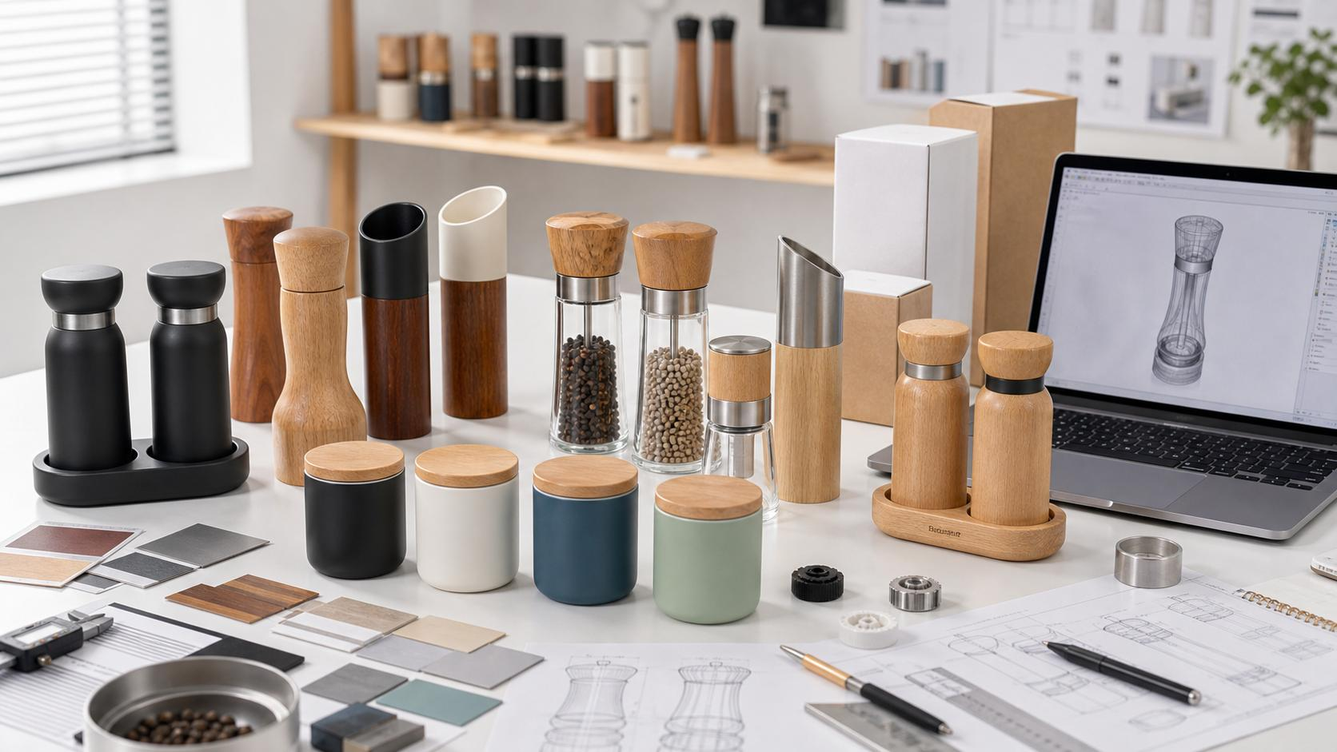
Ningbo, Zhejiang Nov 10, 2026 (Issuewire.com) - Building a private label program across high-traffic retail aisles requires far more than rebranding generic factory inventory. For supermarket chains, department stores, and multi-channel retailers, private brand expansion represents a strategic initiative to secure higher operating margins, strengthen customer loyalty, and deliver differentiated value against national brand competitors.
However, scaling private label merchandise across diverse consumer lifestyle departments introduces significant operational complexity. This process entails coordinating industrial design, color matching across varied production substrates, factory ethical audits, product safety certifications, and multi-supplier logistics synchronization. When sourcing directly from isolated manufacturing facilities, retailers frequently struggle with fragmented brand styling, high minimum order barriers, inconsistent quality standards, and disconnected supply chains.
To overcome these operational hurdles, international retail buyers increasingly partner with specialized product development and supply chain managers capable of managing the full merchandise lifecycle.
Here is an in-depth examination of why leading retailers partner with Union Source to engineer, manufacture, and deliver turnkey private label product solutions.
1. Cross-Category Merchandise Development Under a Unified Brand Identity
A primary operational obstacle in retail private label development is managing brand coherence across disparate manufacturing materials. A cohesive home or kitchen lifestyle collection typically combines molded plastics, brushed stainless steel, food-grade silicone, textiles, and natural bamboo.
Because individual factories specialize strictly in single materials or specific manufacturing processes, working directly with individual factories often results in mismatched Pantone shades, conflicting surface finishes, and disjointed retail presentation across the same product family.
An integrated development model resolves this through centralized visual and technical management:
Centralized CMF Specifications: Dedicated Color, Material, and Finish (CMF) specialists establish standardized color tolerances and surface texture parameters across diverse manufacturing substrates.
Unified Design Language: Industrial designers calibrate silhouette geometry, radius curves, and tactile grip elements across handheld tools, storage containers, and tableware, ensuring the entire collection looks and feels cohesive on retail shelving.
Streamlined Vendor Coordination: Sourcing teams manage the technical execution across distinct specialized factories, sparing the retailer from negotiating aesthetic standards separately with multiple suppliers.
2. Multi-Disciplinary In-House Engineering and Packaging Support
Turning retail merchandising concepts into shelf-ready inventory requires multidisciplinary technical capabilities. Rather than relying on third-party design agencies or factory-floor technicians, Union Source maintains a dedicated in-house design and engineering team structured to support the four essential pillars of private label development:
Industrial Design and Ergonomics: Designers focus on functional usability and regional consumer preferences. Anthropometric dimensions are calibrated for North American and European user hand spans, optimizing leverage, handle comfort, and balance across kitchen gadgets and personal care tools.
Structural Engineering and Tooling DFM: Engineers conduct Design for Manufacturability (DFM) reviews on custom part geometries. They verify wall thickness uniformity, internal rib structures, draft angles, and snap-fit tolerances, ensuring parts can be produced efficiently in automated injection and stamping lines.
Display-Ready Packaging (DRP): Packaging structural designers engineer retail-ready packaging formats, such as litho-laminated display boxes, tear-away master cartons, and sustainable sleeves. These structures allow retail store personnel to move goods directly from shipping cartons onto store shelves without unpackaging individual units, reducing store handling labor.
Packaging Compliance and Barcoding: Packaging teams ensure strict alignment with international retail standards, incorporating verified UPC/EAN barcodes, multilingual instructional copy, and required environmental recycling symbols.
3. De-Risked Category Expansion via Rapid Prototyping and Flexible MOQs
Entering new product categories or testing seasonal trend concepts presents retail inventory risks. Committing to large initial production runs before establishing customer purchase velocity can lead to margin-eroding clearance markdowns.
A structured private label partnership incorporates specific mechanisms to de-risk market testing:
Functional Physical Prototyping: For applicable lifestyle goods, functional engineering prototypes can be produced within 7-10 days using CNC machining, 3D printing, or vacuum casting. Sourcing merchants and category buyers can physically evaluate snap-fit action, volumetric capacity, and tactile feel during line reviews before authorizing capital expenditures for production tooling.
Flexible 1,000-Piece Trial Orders: For selected emerging programs, low-volume initial production orders starting around 1,000 units are accommodated depending on the product category. This allows retail merchandisers to test customer demand across several distinct colorways or secondary sizes with contained financial exposure.
Standardized 90-Day Production Roadmap: From final sample approval to container dispatch, projects follow a disciplined milestone schedule of approximately 90 days depending on project requirements, providing predictable lead-time visibility for seasonal assortment planning.
4. Comprehensive Retail Compliance and Multi-Stage Quality Assurance
Private label goods carry the retailer's brand name, meaning any product failure, toxic material incident, or factory labor violation directly damages the retailer's commercial reputation. Ensuring absolute compliance across hundreds of disparate factories requires continuous, multi-point verification.
A structured procurement framework establishes thorough quality safeguards:
Social and Ethical Factory Audits: Supplier matching protocols require production facilities to maintain valid ethical audit credentials, including BSCI, Sedex (SMETA), or ISO 9001 certifications matching the vendor compliance standards of major supermarket and retail chains.
International Product Safety Testing: Technical teams coordinate laboratory testing to verify compliance with mandatory destination market directives, including FDA 21 CFR and German LFGB for food-contact items, CE and RoHS for electrical goods, and REACH standards for chemical safety.
Standardized Quality Control Loop: Production undergoes structured inspection gates, including incoming raw material checks, during-production inspections (DUPRO) conducted when orders reach 20% to 50% completion, and final random pre-shipment inspections (PSI) conducted under international AQL Level II sampling standards (Major 2.5, Minor 4.0).
5. Multi-Supplier Consolidation and Port-Adjacent Mixed Container Shipping
One of the largest logistical inefficiencies in retail sourcing is shipping small, individual Less-Than-Container-Load (LCL) consignments from multiple independent factories. Multiple LCL shipments incur high destination port terminal handling charges, redundantcustoms clearance fees, and fragmented arrival schedules at retail distribution centers.
Consolidated logistics infrastructure turns multi-factory sourcing into an efficient supply stream:
Centralized 20,000 m² Consolidation Facility: Located near key maritime shipping hubs, goods from dozens of qualified manufacturing suppliers are received, verified, and staged under one roof.
Customs and Documentation Streamlining: Diverse product lines are consolidated into single, balanced maritime Full Container Loads (FCL). Sourcing specialists generate unified shipping documentation, including single bills of lading, harmonized tariff schedules, and consolidated commercial invoices.
Automated Palletization and Protection: Cargo is palletized according to specific supermarket warehouse criteria, utilizing ISPM-15 heat-treated pallets, corner edge protectors, and stretch-wrapping to minimize transit vibration and damage.
Frequently Asked Questions (FAQ)
How do retailers ensure color and finish consistency across products made in different factories?
Maintaining visual consistency across disparate factories requires centralized Color, Material, and Finish (CMF) control. Sourcing teams establish master Pantone physical swatches and precise gloss-level specifications to which all participating manufacturing facilities adhere. Pre-production color chips and sealed golden samples are verified against master standards using standardized spectrophotometers and optical light booths before bulk material processing begins.
What are the main advantages of mixed-container consolidation over direct factory LCL shipments?
Direct LCL shipments from multiple factories involve separate customs declaration fees, individual ocean freight surcharges, and costly destination de-consolidation fees at the arrival port. By aggregating merchandise into a single full container (FCL) at a centralized warehouse, retailers minimize redundant documentation fees, optimize shipping cube utilization, and coordinate seasonal product collections to arrive at retail distribution centers simultaneously.
How should a retailer balance initial prototype testing against production launch deadlines?
To balance thorough physical validation with strict retail seasonal deadlines, development teams utilize a stage-gate roadmap. Rapid functional prototyping takes place within 7-10 days for applicable designs, allowing immediate ergonomic and dimensional reviews. Once physical prototypes are confirmed, Design for Manufacturability (DFM) reviews run concurrently with packaging dieline engineering, compressing the overall timeline so that mass production and quality inspections fit cleanly within an approximate 90-day cycle depending on project requirements.
Working With Union Source for Turnkey Private Label Programs
Developing a resilient, highly differentiated private label portfolio demands seamless coordination between creative styling, precision manufacturing, strict compliance governance, and global consolidation logistics.
Union Source (https://www.unionsourceb2b.com/), established in 2005, operates as a comprehensive supply chain and product development partner for global supermarket chains, retail department stores, and independent brand owners. Supported by over 400 professionals, an audited network of 10,000+ manufacturing partners across more than 10 Chinese provinces, and a dedicated in-house design and engineering department, the organization delivers end-to-end OEM and ODM private label programs.
The company states that its integrated services cover trend analysis, industrial concept styling, 3D mechanical modeling, retail-ready packaging design, functional prototyping available in 7-10 days for applicable projects, factory social compliance auditing, and multi-supplier mixed container consolidation through its 20,000 m² modern warehouse facility.
By uniting product development, quality control, and export logistics within a single accountable operational interface, Union Source empowers retail organizations to scale distinctive, compliant, and commercially viable consumer goods collections with total supply chain transparency.
Media Contact
Union Source Co., Ltd.
+86 13967800390
21F, NO. 288 Guanghua RD. Ningbo National Hi-Tech Zone, Ningbo, China 315048
Source :Union Source Co., Ltd.
This article was originally published by IssueWire. Read the original article here.

Everland's newest panda Shubao draws 50,000 visitors in 10 days
Shubao, the youngest giant panda at Everland, has drawn about 50,000 visitors in roughly 10 days since she first went on public view, the theme park’s operator said Tuesday. Samsung C&T’s resort division, which runs Everland in Yongin, Gyeonggi Province, said the cub began appearing at the park’s Panda World enclosure on Oct. 30. She was on view for about an hour a day in her first week. Everland has since raised that to three to four hours as she gets used to visitors. Shubao was born June 3 to mother Aibao and father Lebao. She is the fourth giant panda born in Korea, after Fubao in 2020 and twins Ruibao and Huibao in 2023. Fubao moved to China in April 2024. Crowds are also coming to see the twins before they leave for China in the third week of December. Under international conservation rules, giant pandas born outside China must move there before they turn 4, when they reach breeding age. About 100,000 people have visited the twins at their enclosure in the month or so since Everland announced their departure. The twins will start a month of quarantine on Friday, but will stay

Ceragem earns 9 CES Innovation Awards for AI-powered health care products
Health care equipment maker Ceragem has won nine CES 2027 Innovation Awards for eight products on Tuesday, marking its fourth consecutive year of recognition and bringing its cumulative total to 30 awards. The company has previously won three awards in 2024, six in 2025 and 12 in 2026. This year’s awards include products designed to meet the health care needs of different age groups, from infants and young children to older adults. The eight award-winning products are: Ceragem artificial intelligence (AI) Wellness Home, Therapier AI Multi Boosting Capsule, Youridm AI Muscle Longevity System, AI Sleep Recovery Pillow, AI Pet Wellness Suite, AI Neuro Focus Office Chair, Senior Wellness Sofa with AI Adaptive Care and AI Sensor Pod & Smart Crib. Ceragem AI Wellness Home, which won an award in the AI category, uses physical AI to analyze users' biometric data and daily routines, assess their health status and automatically adjust connected home environments and health care devices to their needs. The platform brings together connected devices, health data and services to deliver personalize

LS Eco Energy makes push for world's 1st mass production of samarium
LS Eco Energy, a subsidiary of LS Cable & System, said Tuesday it will begin trial production of samarium metal in December, with the goal of becoming the world's first company to mass-produce the key material for permanent magnets using non-Chinese raw materials. The move is part of the company's efforts to establish a supply chain independent of China ahead of new U.S. restrictions on rare earth materials used in defense applications. According to the company, LS Eco Energy is investing 11.6 billion won ($8 million) to build a samarium metal production facility at its subsidiary LSCV in Ho Chi Minh City, Vietnam. The company plans to begin trial production in December before moving to full-scale mass production. The facility's annual output of 240 tons of samarium metal would be sufficient to produce approximately 700 to 1,000 tons of samarium-cobalt (SmCo) permanent magnets. Samarium is a key material for SmCo permanent magnets, which retain their magnetic strength at high temperatures. SmCo magnets are used in aerospace and defense applications, including fighter jets and missiles. St

Boston Dynamics' Atlas robot pulls off 360-degree spinning jump on wheels instead of feet
Boston Dynamics' humanoid robot Atlas has successfully performed a challenging aerial maneuver, jumping into the air, spinning 360 degrees and landing like a figure skater — all while equipped with wheels instead of feet. The robotics company, a subsidiary of Hyundai Motor Group, released a video Monday showing a wheeled version of Atlas performing a series of demanding movements designed to test the limits of its motors and whole-body control technology. The 2-minute, 50-second video shows Atlas rapidly moving sideways while changing direction on its wheels, executing a full 360-degree spinning jump, balancing on one wheel with the other leg raised and lifting itself off the floor before accelerating forward. The robot successfully completed the 360-degree spinning jump on its first attempt. The achievement followed efforts by the development team to narrow the gap between computer simulations and real-world hardware through a process known as "sim-to-real" transfer. Engineers also used reinforcement learning, a machine-learning technique in which robots improve their performance throu

Seoul Metro union threatens Nov. 25 general strike over wage, hiring disputes
The largest of three labor unions at Seoul Metro threatened Tuesday to launch a general strike on Nov. 25 unless its demands, including additional staff recruitment and wage increases, are met. Union 1 of Seoul Metro, which operates subway Lines 1-8 and parts of Line 9, issued the warning at a news conference following a meeting of senior union members. The union initially sought a 5.2 percent wage increase but lowered its demand to 3.5 percent in negotiations with management. It also calls for scrapping a plan to cut 2,212 jobs and hiring an additional 1,313 workers this year to address staff shortages. Other demands include state funding for public services and a requirement that all field work be performed by two-person teams. The union said 7,782, or 84.6 percent, of its 9,201 members recently participated in a vote, with 6,715, or 86.3 percent of those who voted, backing the strike plan. Unions 2 and 3 also approved the strike plan, with 80.8 percent and 94.9 percent of their respective members voting in favor. Union 1 said it and Union 2 plan to launch a "work-to-rule" campaign on N

F&F Q3 net income down 34.6% to $49.3 mil.
F&F on Tuesday reported its third-quarter net income of 65.9 billion won ($49.3 million), down 34.6 percent from a year earlier. Operating income for the July-September period was 108.4 billion won, down 15.3 percent from a year ago, the fashion and beauty retailer said in a regulatory filing. Sales also backtracked 4.7 percent to 452.1 billion won. The earnings fell behind market expectations. The average estimate of net profit by analysts stood at 96.7 billion won, according to a survey by Yonhap Infomax, the financial data firm of Yonhap News Agency.

LG Energy Solution secures CES Innovation Award for battery diagnostic software
LG Energy Solution has won a CES 2027 Innovation Award for software that can assess the condition and remaining performance of used batteries, marking the second consecutive year the company has been recognized for a software-based solution. The company said Tuesday that its Re.Pulse solution, which assesses the health and remaining performance of used batteries, was named an honoree in the awards' Vehicle Tech and Advanced Mobility category. The system sends specific electrical pulses through a battery, measures changes in voltage and analyzes the data using its proprietary AI model to quickly assess the battery's condition. The company said the assessment will allow operators to determine whether a used battery is best suited for reuse, remanufacturing or recycling, helping get the most value out of each battery. "This CES Innovation Award recognizes the strength of our battery diagnostic technology and software capabilities," a company official said. "We will continue to advance our diagnostic and management technologies to unlock greater value from used batteries and help build a sus

Samsung SDI wins CES Innovation Award for UPS battery solution
Samsung SDI has won CES 2027 Innovation Award for its prismatic battery solution for uninterruptible power supply (UPS) systems. The battery maker said Tuesday that its SDI U8A3-UPS was named an honoree in the awards’ Enterprise Tech category. A UPS is a battery-based backup system that supplies emergency power to critical facilities, including data centers, when the main power supply is unexpectedly interrupted. "This award recognizes the innovation of a critical power solution for the artificial intelligence era," a company official said. "We will continue to lead the market with products that combine the performance and safety our customers demand." The company explained that its solution stands out for its high-power output, high energy density and fire safety. Using lithium manganese oxide prismatic cells, the battery offers high power output and energy density while taking up 33 percent less space than existing products. This allows operators to maintain a stable power supply with fewer battery units. The system is also designed to provide additional power when electricity demand s

Kolmar Korea's AI lipstick system wins CES beauty tech award
Kolmar Korea's artificial intelligence (AI)-powered lipstick system, ChromaFlow, won the Best of Innovation award in the beauty technology category for CES 2027, marking the first case of consecutive wins in the category, the company said Tuesday. ChromaFlow also received an Innovation Award in the AI category, while its LumiJet Pro skin care device won another award in that category, bringing Kolmar Korea’s total honors at CES 2027 to three across two products. The company said the recognition follows its award for the Scar Beauty Device, an AI-based wound care and makeup coverage device, at CES 2026. It plans to exhibit both award-winning products at the Venetian Expo in Las Vegas during CES 2027, scheduled for Jan. 6 to 9. ChromaFlow is designed to reproduce a lip color while accounting for differences in users’ lip tones, which can affect how the same lipstick shade appears on different people. When held against the lips, an optical sensor analyzes their condition. The system then calculates a customized formula and combines material from seven color cartridges to produce a lip p

Antitrust review of Naver's Dunamu takeover to conclude by year-end
The Fair Trade Commission (FTC) has launched a formal review of Naver Financial’s planned acquisition of Dunamu, saying the deal could substantially restrict competition across multiple markets, including online payments and digital asset exchanges, the watchdog said Tuesday. The deal involves a comprehensive stock swap under which Naver Financial would acquire all shares of Dunamu. In return, Dunamu shareholders would receive about 2.54 shares of Naver Financial for each Dunamu share. Dunamu is the operator of the nation’s leading crypto exchange Upbit. If completed, Naver Financial would become Dunamu’s sole parent company, while Dunamu would become its wholly owned subsidiary. The proposed acquisition raises competition concerns in several relevant markets. The companies submitted proposed remedies to ease such concerns, and the FTC initiated a review of the measures proposed by the two firms. Naver Financial seeks to bring one of Korea’s largest digital asset exchanges into its financial portfolio. The watchdog is expected to hold a hearing on the case soon. Final approval, re
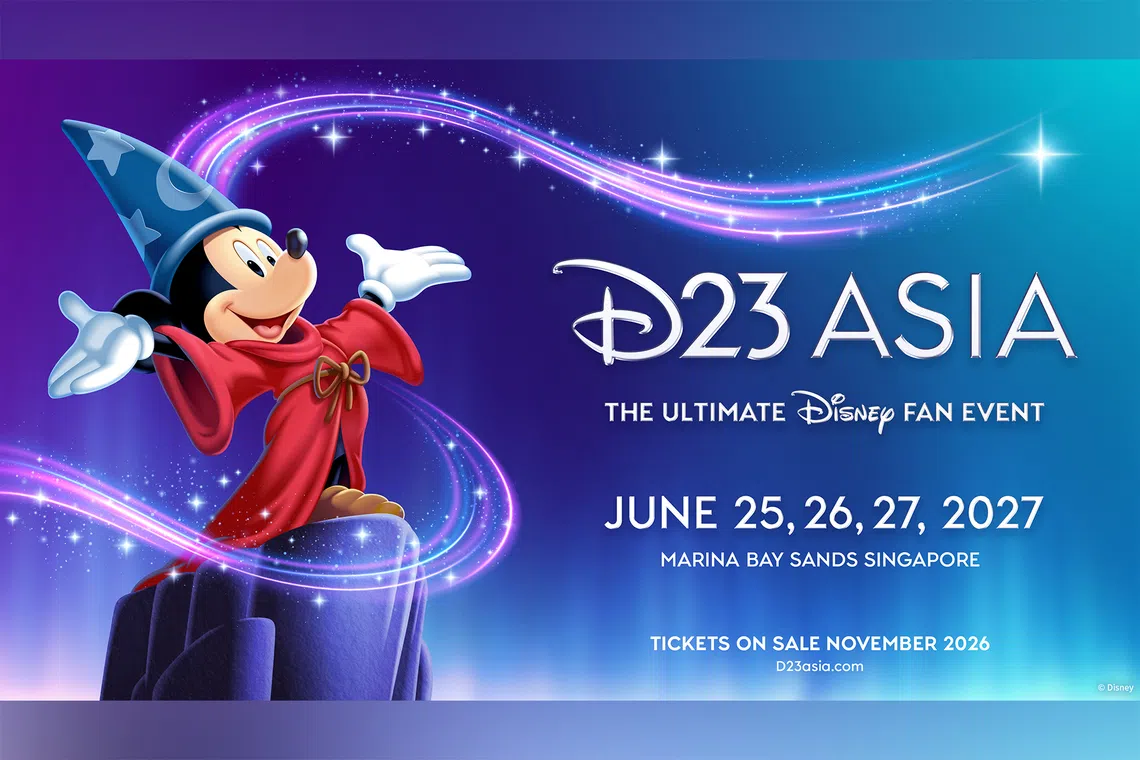
Singapore gets some Disney magic with D23 Asia: The Ultimate Disney Fan Event
The event is set to take place in June 2027, with tickets coming out at the end of November 2026.

Ecosystem Roundup: Nvidia board probes Jensen Huang over affair with Megaspeed exec
Nvidia’s board has opened an independent investigation into Jensen Huang after the CEO admitted in a staff memo to an affair with Alice Huang, an executive at Singapore-based Megaspeed. A memo circulated among US policymakers earlier this year claimed China’s Ministry of State Security had recruited her to spy on him. Beijing’s embassy in Washington […] The post Ecosystem Roundup: Nvidia board probes Jensen Huang over affair with Megaspeed exec appeared first on e27.


YOUR NEWS, OUR NETWORK.
Do you have Great News you want to tell the world?
Be it updates about your business or your community, you can make sure that it’s heard by submitting your story to our network reaching hundreds of news sites across 6 verticals.