
Why Are Scientific Breakthroughs Becoming Harder to Translate into Medicines?
Sep 9, 2026
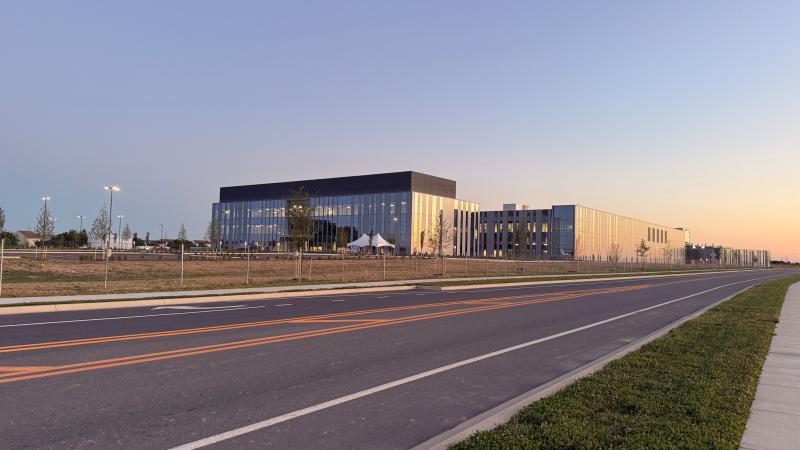
San Diego, California Sep 9, 2026 (Issuewire.com) - Biopharma has never lacked promising ideas. What is changing is the difficulty of turning those ideas into medicines that can be characterized, formulated, scaled and manufactured reliably. In a Fierce Biotech interview, WuXi AppTec Co-CEO Steve Yang describes a widening translation gap: discovery is moving faster than the industry's ability to develop and make increasingly sophisticated products. That gap helps explain why resilience now depends on more than redundant supply. It requires integrated expertise, specialized platforms and capacity that is ready before a program reaches a critical stage. Closing it will shape which breakthroughs ultimately reach patients.
Complexity has moved downstream
Twenty years ago, much of drug development centered on small molecules and monoclonal antibodies. Today's pipeline spans peptides, oligonucleotides, antibody-drug conjugates, targeted protein degraders, cell therapies and other emerging modalities. In many programs, the biological hypothesis may already be compelling or validated. The harder question is whether biology can become a product with a workable process, analytical package, formulation and manufacturing route.
WuXi AppTec's view across thousands of programs makes the shift visible: since 2021, the proportion of compounds above 600 Da has increased by more than 60%, while the average number of synthesis steps for long-route molecules has risen by 22%. These are not isolated chemistry statistics. A larger, longer-route molecule can demand customized analytics, advanced purification, formulation expertise, process development, and a credible path to scale.
The same pattern appears in peptides and oligonucleotides. Their potential to address difficult targets comes with specialized starting materials, characterization, and manufacturing requirements. Conjugation to antibodies or other payloads, or formulation in lipid nanoparticles, adds further interfaces. The industry is often writing the development playbook while products move toward the clinic. Complexity has become a defining source of fragility.
Integrated execution turns expertise into speed
As complexity rises, speed takes on a different meaning. Teams must solve unfamiliar technical problems without relaxing development timelines or compromising quality. Under greater capital discipline, every handoff, repeat experiment and late discovery can consume runway as well as time.
The practical answer is integration from the beginning. A difficult molecule may need chemists, analytical scientists, purification specialists, formulation experts, process engineers, and manufacturing teams to work from a shared development picture. If each discipline acts sequentially, a locally efficient choice can create a costly constraint later. Early analytical insight can shape route selection; purification realities can influence process design; formulation requirements can change what a scalable manufacturing solution looks like.
This is why collaboration is becoming infrastructure rather than an optional supplement. No single organization is likely to possess every answer for every modality. A partner's value is therefore not simply access to individual services, but the ability to connect decisions across the development cycle. Sophisticated analytical and purification platforms matter because teams cannot manage what they cannot characterize. When methods, instruments and experienced scientists operate together, they support faster, more confident decisions and help prevent scientific sophistication from becoming operational delays.
Readiness must arrive before demand
Specialized knowledge is useful only if capacity is available when a program needs it. Biopharma facilities, quality systems and technical teams cannot be created instantly after a modality becomes successful. By the time demand is obvious, starting from zero may already be too late. Resilience therefore requires investment ahead of utilization, not only in buildings, but also in people, training and repeatable operating systems.
WuXi AppTec's facility-ramp experience offers a concrete example. Once, bringing a plant to full operational capacity took more than 22 months. The company responded by developing a comprehensive in-house training system and using its scale to mobilize experienced teams. More than 100 technicians, engineers, and manufacturing professionals may support a new-site launch. Now, the same type of ramp-up can often be completed in a few months.
Earlier readiness reduces the risk that a promising program reaches a pivotal stage only to wait for trained people, suitable equipment, or qualified capacity. The same logic applies to formulation technologies for larger molecules, including spray-dried dispersion and hot-melt extrusion, and to specialized platforms for peptides and oligonucleotides. Infrastructure built ahead of demand gives innovation somewhere to go.
From possibility to patients
Discovery opens the door, but execution determines whether a promising idea becomes a medicine. As modalities grow more complex, closing the translation gap will require connected disciplines, strong analytical and purification platforms, formulation solutions, and capacity built before it is urgently needed. Organizations that coordinate those elements without trading quality for speed will be better positioned to carry innovation through to patients.
Source :WuXi AppTec
This article was originally published by IssueWire. Read the original article here.

Mercedes-Benz’s new three-row all-electric GLB arrives for families with a need for space
The new electric GLB consists of two models and has a claimed WLTP range of up to 674km.
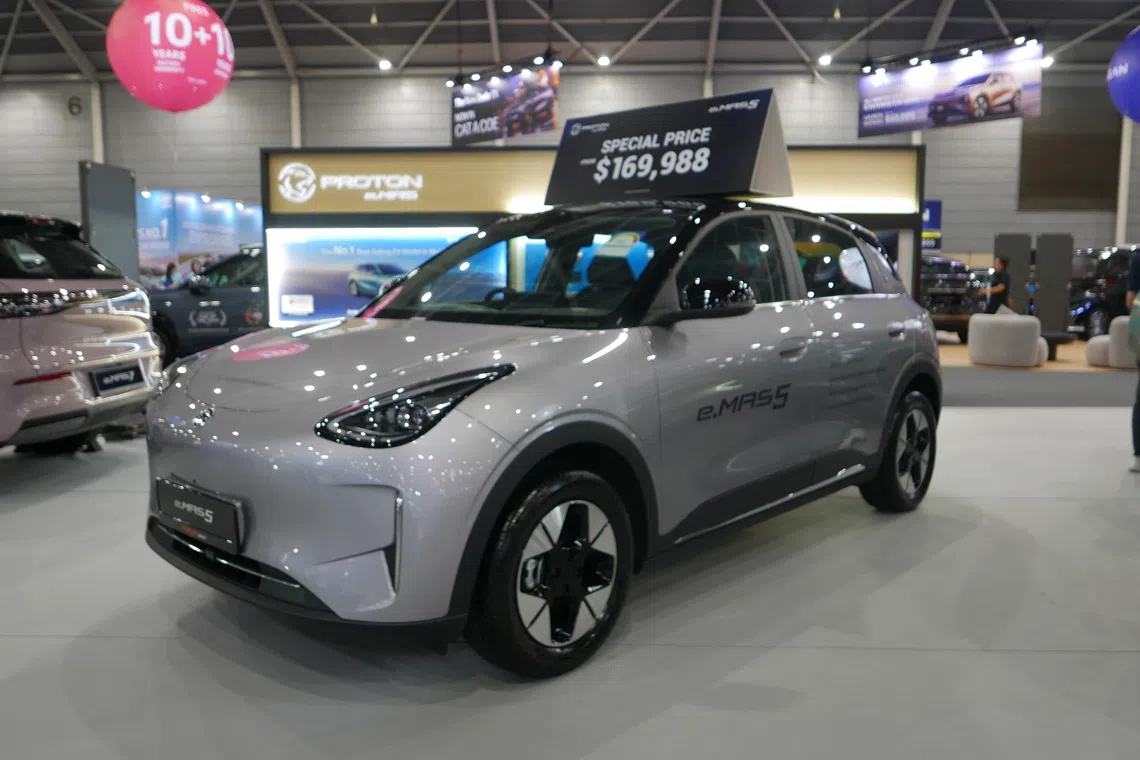
Grab deals, freebies and prizes as you upgrade your ride at The Car Expo 2026
From the latest electric vehicles and hybrids to exclusive car deals and cash prizes, The Car Expo 2026 offers plenty of reasons to head down to Singapore EXPO this weekend.

Export push seeks to breathe new life into Korea's hollowed-out mining towns
Deep in the rugged, forested mountains of Gangwon Province, the hollowed-out shafts of abandoned anthracite mines stand as quiet monuments to Korea’s industrial birth. During their mid-20th-century heyday, these bustling towns fueled the nation’s postwar economic miracle, powering domestic hearths and heavy manufacturing alike. But as Korea’s energy needs shifted toward oil and gas in the 1980s, the region entered a long, steep decline. While a handful of major mines remained operational into the 2020s, the last state-run mine officially closed its shafts in mid-2025 — leaving behind steep valleys marked by demographic collapse and crumbling local economies. Now, trade officials and local leaders are trying a new approach to revive these quiet valleys: connecting their remaining small businesses directly to overseas markets. Rather than relying solely on local tourism or government aid, a national trade showcase last week in Goyang, Gyeonggi Province, brought small-town entrepreneurs face-to-face with international buyers. At the center of the event was a targeted exhibition flo

Apple updates the Apple TV 4K with A19 chip, new Siri Remote, and higher price tag
Apple’s digital media streaming box gets a more powerful chip, support for Siri AI, and a new remote with some nifty features, and a higher price tag.

Xiaomi Vision Gran Turismo is coming to Gran Turismo 7 this October
Xiaomi’s wind-sculpted concept car will arrive alongside the PlayStation-exclusive game’s EV Experience mode.

Paxton sues OpenAI, Altman for failing to warn Texans about ChatGPT's 'dangers'
Texas Attorney General Ken Paxton (R) sued OpenAI and its CEO Sam Altman on Friday, accusing the company of failing to warn consumers about the potential dangers from its AI models. The lawsuit alleges the ChatGPT maker is running afoul of a Texas consumer protection law and kids' online safety law, underscoring warnings about the...

Trump denies speaking to Musk about Starlink but says he will if it’s not fixed
President Trump said he did not speak to Elon Musk about the tech leader's decision to restrict Starlink access for Ukraine but warned he will do so if access is not restored. "I have not spoken to him," Trump told reporters on the White House South Lawn. "I might have to, but I have not....

Riot Games unveils VCT Pacific partnered teams for 2027
MANILA, Philippines – VALORANT Champions Tour (VCT) Pacific 2027 has unveiled the eight organizations that will each represent a region as a partnered team. The list includes Crazy Raccoon, FULL SENSE, GAM Esports, Gen.G, Paper Rex, Rex Regum Qeon (RRQ), T1, and ZETA DIVISION, combining returning organizations with new additions to the league’s partnership program.

Too busy for parental controls? Think again
MANILA, Philippines – Whether you’re setting up a new device or configuring an existing one, parental controls are probably much easier to turn on than you think. Parental controls aren’t limited to one device, one app, or one type of internet connection. Most major platforms (smartphones, gaming devices, and applications) already have built-in tools to

Musk midterm spending tops $442M
Tech mogul Elon Musk has spent more than $442 million in the midterm elections, after pouring another $76.8 million into his super PAC over the past month, campaign finance filings show. America PAC, which Musk launched during the 2024 elections, received the influx of cash from the SpaceX and Tesla CEO over the course of...
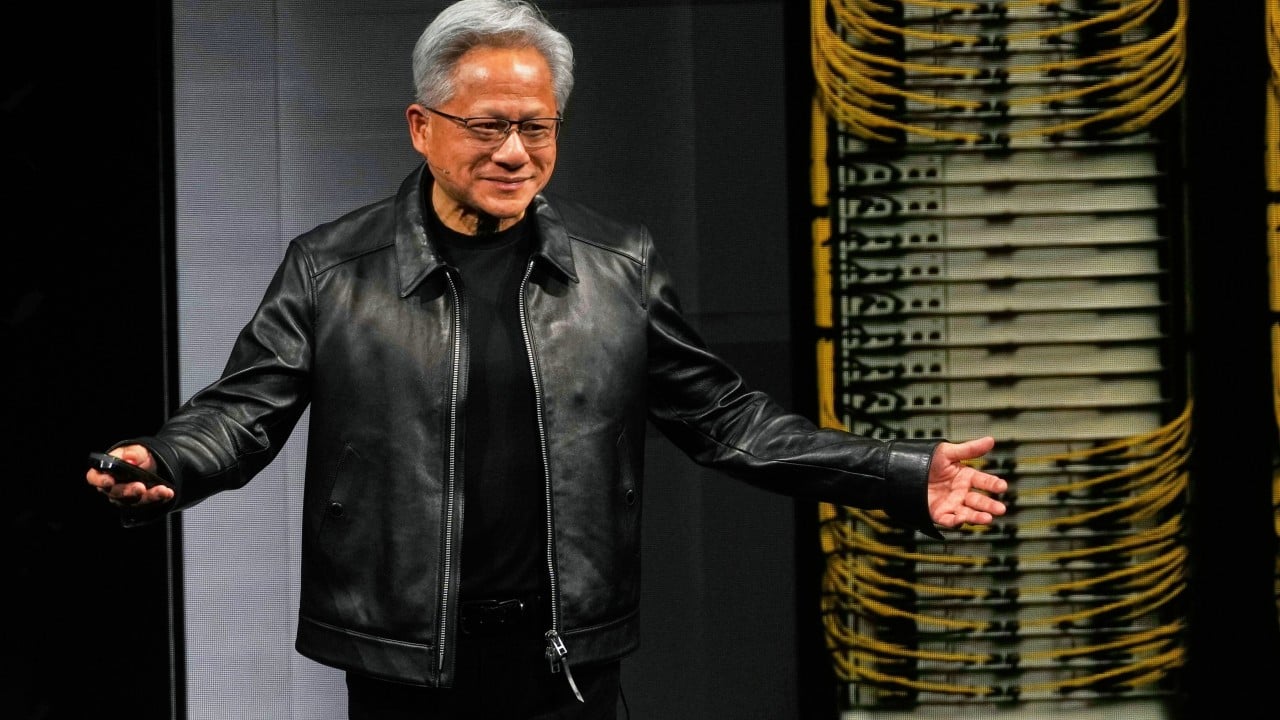
Nvidia’s Jensen Huang brings ‘sovereign AI’ push to Kazakhstan, shrugs off bubble fears
Nvidia CEO Jensen Huang is pitching the concept of “sovereign AI” in Kazakhstan – part of his global crusade urging nations to build domestic computing infrastructure using the firm’s chips – as the energy-rich nation emerges as a US-China battleground for artificial intelligence. Speaking at a fireside chat in Astana on Friday with Kazakh AI and digital development minister Zhaslan Madiyev, Huang said AI was reshaping every industry in a transformation that “affects every single person and...

China's humanoids go job hunting amid Korea's bets on physical AI
Chinese humanoid robot makers are accelerating efforts to gain a foothold in Korea, moving beyond dance performances and showroom displays to factory trials and other commercial applications as Seoul beefs up investment in physical artificial intelligence (AI). A string of Chinese robotics companies have flexed their muscles or announced projects in the country this year, including Hong Kong-listed Ubtech, startup Anyverse Dynamics, Shanghai-based Agibot and leading robot maker Unitree. “China’s new generation of robot companies has global DNA and naturally looks overseas, and Korea is one of the most important markets in Asia-Pacific,” said Ethan Qi, an associate director covering robotics at Counterpoint Research. The absence of locally built humanoids available at scale has created an opening for Chinese suppliers, he added. Early footprint Representatives of Galaxy Robot Park, a robot-themed entertainment venue in Seoul, agreed to buy Ubtech’s lifelike U1 model after attending its debut in Shenzhen in June, according to Sean Qin, overseas head of the company's commercial robo





YOUR NEWS, OUR NETWORK.
Do you have Great News you want to tell the world?
Be it updates about your business or your community, you can make sure that it’s heard by submitting your story to our network reaching hundreds of news sites across 6 verticals.