
Wholesale 5kWh Wall-Mounted LiFePO4 Battery for Home Energy Storage: Engineering Features - Sourcing Solutions
Sep 29, 2026
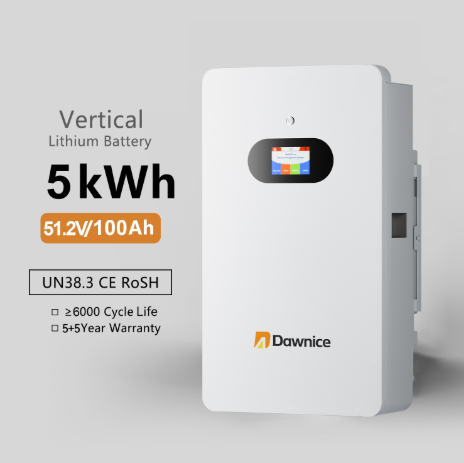
Zhengzhou, Henan Sep 28, 2026 (Issuewire.com) - Wholesale 5kWh Wall-Mounted LiFePO4 Battery for Home Energy Storage: Engineering Features & Sourcing SolutionsExecutive Summary
This commercial guide analyzes key hardware considerations, inverter protocol integration, and thermal management strategies for residential energy storage deployment. A certified China high-quality Wall-Mounted LiFePO4 Battery Storage Supplier provides scalable 51.2V 100Ah battery architectures that effectively reduce installation labor and total operating expenses. Sourced directly from Dafa Solar (Dawnice), these 5kWh wall-mounted LiFePO4 battery modules integrate grade-A lithium iron phosphate cells, smart multi-protocol BMS communication, and space-saving wall enclosures designed for distributors, solar installers, and EPC contractors.
Technical Architecture & Supply Chain Integrity in LiFePO4 Manufacturing
Evaluating residential battery storage solutions requires evaluating cell composition, thermal management, and internal structural design. The 5kWh 51.2V 100Ah wall-mounted form factor serves as a standard building block for modern residential photovoltaic systems. Achieving operational reliability across a 6,000+ cycle lifespan requires strict component selection and controlled assembly processes.
Cell Chemical Safety and Structural Cell-to-Pack Integration
Lithium Iron PhosphateLiFePO4remains the preferred chemistry for stationary home energy storage due to its thermal stability and resistance to thermal runaway. High-density prism-shaped cells are held in rigid internal frames with isolation barriers between individual cells. This physical arrangement absorbs natural expansion and contraction during charge and discharge cycles, avoiding mechanical strain on terminal posts and internal electrical busbars.
Smart Battery Management Systems and Inverter Protocol Matching
The Battery Management System (BMS) acts as the primary safety barrier and communication bridge for residential solar installations. A commercial-grade BMS performs active voltage balance across individual series cells, continuously monitoring temperatures at key busbar junctions and power terminals.
Closed-Loop Inverter Communications: The internal management system supports multi-protocol switching via RS485 and CANbus interfaces. This capability enables direct plug-and-play communication with mainstream hybrid inverters, including Deye, Growatt, Solis, Victron, and SAJ.
Electrical Safety Parameters: Built-in protection logic safeguards against over-voltage, over-discharge, short circuits, high-current spikes, and low-temperature charge cutoffs, preventing permanent cell damage in varying outdoor environments.
Heat Dissipation and Mechanical Enclosure Design
Compact wall-mounted batteries must dissipate operational heat without relying on noisy external fans that can disturb home residents. Utilizing an IP65-rated powder-coated steel enclosure allows passive thermal convection through engineered structural heatsinks. This sealed structure prevents dust, moisture, and pests from entering sensitive electronics, ensuring stable operation across ambient indoor and sheltered outdoor environments.
Commercial Pain Points & Practical System Solutions
Distributors, solar installation firms, and electrical contractors frequently encounter field challenges with residential battery imports. Addressing these problems requires targeted engineering improvements and verified manufacturing controls.
Challenge 1: Inverter Communication Errors and Complex On-Site Setup
Installers often lose billable hours troubleshooting communication faults between third-party hybrid inverters and low-cost battery storage packs. Protocol mismatches cause inverter tripping, incorrect state-of-charge (SOC) reporting, and unexpected system shutdowns.
Engineering Solution:
Pre-Programmed Protocol Libraries: Modern wall-mounted packs incorporate selectable DIP switches or LCD control panels. Installers can select target inverter communication protocols in seconds without carrying specialized laptop software or reprogramming firmware on site.
Dual-Port Bus Topology: Parallel communication ports permit seamless daisy-chaining across multiple 5kWh battery units, allowing auto-addressing and synchronized SOC management across expanded storage arrays.
Challenge 2: Installation Friction and Wall-Mount Structural Strain
Mounting 45kg to 50kg battery enclosures onto residential brick, concrete, or drywall structures poses physical challenges for small installation crews. Bulky, poorly balanced battery cases increase labor time and present physical safety hazards during wall mounting.
Engineering Solution:
Modular Heavy-Duty Mounting Brackets: Separate wall plates are anchored first, enabling installers to lift and lock the compact battery unit securely into aligned retention slots.
Slim Form-Factor Enclosures: Depth profiles under 160mm keep the battery flush against garage or utility room walls, minimizing space consumption while maintaining structural balance.
Challenge 3: Cell Degradation and Inconsistent Cycle Lifespans
Substandard cell sourcing, uncalibrated BMS balancing, or weak cell matching leads to capacity fade within 2 to 3 years of installation. Premature loss of capacity results in costly warranty replacements and damages the installer's market reputation.
Engineering Solution:
Grade-A Cell Sorting: Cells undergo automated sorting for capacity, internal resistance, and voltage consistency prior to pack assembly.
Active Balancing Modules: Continuous micro-current balancing balances cell capacity across every cycle, preserving overall pack capacity and extending service life past 6,000 cycles at 80% Depth of Discharge (DOD).
Real-World Residential Application Scenarios
Understanding how wall-mounted energy storage performs under real operational conditions helps procurement teams select appropriate configurations for regional market needs.
Scenario 1: Suburban Household Peak Shaving and Time-of-Use Optimization
In regions with variable electricity rates, peak evening power costs can strain household budgets. Homeowners use wall-mounted LiFePO4 batteries to store inexpensive solar power generated during mid-day hours.
System Configuration: A 5kWh 51.2V 100Ah wall-mounted battery coupled with a 5kW hybrid inverter and a 6kW rooftop solar array.
Operational Result: During evening peak tariff hours, the battery discharges stored solar energy to power air conditioning, cooking appliances, and home lighting. This shift reduces grid power dependence during high-tariff periods and lowers monthly utility bills.
Scenario 2: Unstable Rural Grids and Backup Power Switching
In suburban outskirts and rural communities prone to frequent storm outages or rolling blackouts, maintaining continuous power for essential home appliances is critical.
System Configuration: Two parallel 5kWh wall-mounted battery modules (10kWh total) connected to an off-grid or hybrid inverter with millisecond-level automatic transfer switching.
Operational Result: When main grid power drops, the battery system switches to supply power within 10 millseconds. Essential loads--including refrigeration, medical equipment, water pumps, and Wi-Fi routers--continue operating without interruption or device resets.
Scenario 3: Compact Urban Multi-Family Installations
Urban residential properties often have limited floor space in utility closets or basements, making traditional ground-stacked battery cabinets impractical.
System Configuration: A single 5kWh wall-mounted battery mounted inside a garage or dedicated utility hallway.
Operational Result: The slim wall-mounted design preserves floor area for parking or storage, delivering reliable clean energy storage while meeting residential building layout requirements.
Manufacturing Infrastructure & Supplier Capabilities
Partnering with an established manufacturer ensures consistent product delivery, verified quality compliance, and ongoing engineering support. Sourcing from a recognized Top China Wall-Mounted LiFePO4 Battery Storage Manufacturer provides access to scalable production facilities and customized project engineering.
Production Capacity and Strategic Supply Chain Location
Operating from Yichun, Jiangxi Province--often recognized as Asia's lithium capital--Dafa Solar (Dawnice) leverages direct access to raw material processing and cell manufacturing networks.
Manufacturing Scale: Advanced automated production facilities support a 3GWh annual capacity, maintaining steady component supply lines and short lead times for international distributors.
Proven Track Record: Supported by an R&D and engineering team with over 14 years of lithium battery experience, the company serves partners across 150 countries and regions.
Quality Assurance Testing and System Certifications
Comprehensive quality management protocols govern every stage of production:
Incoming Material Quality Control (IQC): Cell capacity sorting, laser terminal weld testing, and visual checks of raw battery casings.
In-Process Quality Control (IPQC): Automated spot welding, high-potential insulation checks, and wire harness pull tests.
Out-of-Box Final Testing (OQC): Full-cycle charge and discharge testing, high-temperature aging chamber validation, and BMS communication verification across multiple inverter brands.
Safety Certifications: Products comply with UN38.3 transport safety rules, MSDS guidelines, and CE, IEC 62619, and MSDS standards for international shipment and grid connection.
OEM/ODM Customization for Regional Distributors
Distributors requiring tailored brand identity or unique market configurations benefit from OEM and ODM customization services:
Branded Enclosures: Custom powder-coat color schemes, laser-etched brand logos, and specialized outer packaging for regional distribution networks.
Tailored Electrical Configurations: Custom DC circuit breaker sizing, flexible terminal orientation, and specialized LCD display screens configured for local languages.
Commercial Procurement, Sourcing Framework & FAQ
Establishing clear procurement parameters helps purchasing managers evaluate total landed costs, shipping safety, and warranty coverage. Working directly with a China Best Wall-Mounted LiFePO4 Battery Storage factory establishes clear communication lines and long-term technical support.
Wholesale Sourcing Considerations
When placing bulk orders for wall-mounted home batteries, purchasing managers should review:
Landed Cost Structure: Compare EXW, FOB, and DDP shipping terms, ensuring UN38.3 hazardous goods packaging and dangerous goods (DG) sea freight documentation are fully covered.
Warranty Terms and After-Sales Support: Verify 5-year to 10-year linear performance warranties backed by direct spare parts availability, replacement BMS boards, and remote technical diagnostics.
System Integration Offerings: Evaluate one-stop supply options that bundle battery packs with compatible hybrid inverters and mounting hardware to streamline customs clearance and installation logistics.
Frequently Asked Questions (FAQ)What installation and environmental conditions are required for wall-mounted LiFePO4 home batteries?
Wall-mounted LiFePO4 batteries should be secured to structural masonry, concrete, or reinforced wall studs capable of supporting a 50kg static load. Operating temperatures should stay between -10°C and 50°C, with charging recommended above 0°C to protect cell health. When installing outdoors, position the unit under a protective overhang or inside an IP65 enclosure shielded from direct sunlight and heavy driving rain.
How do I verify inverter compatibility when buying from a China high-quality Wall-Mounted LiFePO4 Battery Storage Supplier?
Reputable suppliers provide pre-tested communication protocols for major hybrid inverter brands built directly into the battery software. Before ordering, confirm your inverter brand and model with the factory technical team. Installers can then configure the battery using simple DIP-switch settings or a front panel menu to establish stable closed-loop CANbus or RS485 communications.
Can multiple 5kWh wall-mounted batteries be expanded if a customer's power needs grow?
Yes. The 5kWh 51.2V 100Ah battery modules support parallel connections, allowing up to 15 or 16 units to link together on a single low-voltage DC bus. This modular architecture allows homeowners to start with a single 5kWh unit and expand total system capacity up to 80kWh over time without replacing original mounting infrastructure or balance-of-system wiring.
For complete product specifications, technical datasheets, or commercial supply inquiries, visit Dafa Solar at:
Media Contact
Zhengzhou Treasure Box Import And Export Trade Co., Ltd.
Source :Zhengzhou Treasure Box Import And Export Trade Co., Ltd.
This article was originally published by IssueWire. Read the original article here.

KCCI, audit authority collaborate to resume construction of 4,000 public housing units
The audit authority has cleared a key hurdle for six stalled public housing projects totaling nearly 4,000 units after the Korea Chamber of Commerce and Industry (KCCI) sought a preliminary consultation on behalf of builders struggling with soaring construction costs. The KCCI said on Tuesday that the Board of Audit and Inspection (BAI) determined that project costs for the six sites, covering 3,936 housing units, can be recalculated to reflect current market conditions. The case marks the KCCI’s first use of the consultation program since it was opened to private organizations in May. “Companies have faced difficulties for a long time, but this was not an issue they could easily make a decision on,” Lee Jong-myung, head of the KCCI's industry innovation division, said. “The BAI's decision to open its doors to the private sector has added another channel for resolving corporate difficulties, and its first result will benefit the public through housing supply.” The six projects are part of a public-private housing program, with public agencies providing the land while private bu

Private sector's role increased in 5th Nuri launch
Private companies played a significantly greater role in the successful fifth launch of Korea’s Nuri rocket on Wednesday, signaling that the country’s efforts to keep pace with the global shift toward a private sector-led “New Space” era are gaining momentum. The Nuri rocket completed its fifth launch and 20-minute-long flight successfully after lifting off at the Naro Space Center in Goheung, Jeonnam-Gwangju Special Metropolitan City, at 12:25 p.m. The most notable change in the latest launch was not the rocket itself, but the growing presence of private-sector personnel at the launch site. Hanwha Aerospace has overseen the manufacturing of the Nuri rocket as its system integrator since the fourth launch on Nov. 27 last year, but this time, its role expanded to the consoles at the launch control center. Hanwha Aerospace deployed 42 staffers for the fifth launch. They participated in operations at 20 of the 22 consoles responsible for launch vehicle systems, and at 18 of them, Hanwha employees directly operated the controls instead of specialists from the Korea Aerospace Researc
![[EXPLAINER] How AI emerged as new threat in Korea's bank hacking crisis](https://newsimg.koreatimes.co.kr/2026/10/07/77d98bb7-f23e-430d-be94-38ae9821547a.jpg)
[EXPLAINER] How AI emerged as new threat in Korea's bank hacking crisis
Hackers once had to manually test security defenses, identify vulnerabilities and work out how to exploit them. Now, artificial intelligence (AI) can do much of that work, requiring little human input. That possibility is at the center of Korea's latest security crisis in the financial sector, as investigators have found traces of an AI-powered autonomous penetration-testing tool in a series of recent cyberattacks on the country's major banks. Since last week, Shinhan Bank, KB Kookmin Bank, Hana Bank, Yegaram Savings Bank and BNK Busan Bank have all reported data breaches, while Woori Bank and NH NongHyup Bank have detected signs of hacking attempts, though no data leaks were confirmed. Shinhan Bank reported that about 25,000 customers were affected, with personal information including names, phone numbers, annual income and loan limits exposed. KB Kookmin reported 119 affected customers, while Hana Bank said personal information belonging to 89 customers was exposed. The hacking spree has drawn particular concern after investigators reportedly found traces of an AI-powered tool known as

SK Energy, HD Hyundai Oilbank face fines over alleged fuel price fixing
SK Energy and HD Hyundai Oilbank may face sanctions from the Fair Trade Commission (FTC) over allegations that they colluded on gasoline, diesel and kerosene prices, with combined fines potentially reaching 4.63 trillion won ($3.45 billion). The antitrust regulator said Wednesday that it sent a review report to the two companies, formally launching deliberations over the alleged price-fixing case. The FTC said the alleged collusion lasted from February 2022, shortly before Russia's invasion of Ukraine, through March this year, shortly after the outbreak of the war in Iran. The case covers petroleum products that are essential to household and economic activity. Korea's oil refining industry is highly concentrated, with SK Energy, HD Hyundai Oilbank, GS Caltex and S-Oil accounting for about 98 percent of the domestic market. According to the FTC, SK Energy and HD Hyundai Oilbank exchanged information on the prices of gasoline, diesel and kerosene, including provisional prices, final prices and sales policies. The regulator also determined that the two companies colluded on prices followin

Beef tallow remains hurdle to Charrr's global expansion
Countries’ regulations on imported foods containing beef tallow pose a hurdle for Samyang Foods as the Korean instant noodle giant seeks to expand exports of its latest black bean sauce instant noodles, Charrr. The company has established Buldak as a massively popular product around the globe without using beef tallow, selling 10 billion units and generating cumulative sales of 7 trillion won ($5.2 billion) as of June. Unlike the spicy, brothless instant noodle brand, however, Charrr uses beef tallow as a key ingredient to give its sauce a rich, beefy flavor. Charrr is not Samyang’s first instant noodle product using beef tallow. The company launched Samyang 1963 in November last year with the ambitious goal of reviving the “forgotten” taste of its first instant noodle product, Samyang Ramen, which was introduced in 1963 and used beef tallow. Samyang Ramen, introduced by the late company founder Chun Joong-yoon to help feed a population suffering from widespread poverty at the time, remains a cornerstone of the company’s identity. Its use of beef tallow has now become part of

Bank data breach victims step up calls for compensation
A growing number of customers affected by a string of recent personal data breaches at major commercial banks and other financial firms appear to be turning to class action lawsuits in pursuit of compensation, according to industry officials, Wednesday. The banks have pledged to fully compensate customers whose losses, including those from voice phishing scams, are found to have directly resulted from the leaks. But proving that a loss was caused by a specific data breach can be difficult in practice, and the banks have yet to set out clear standards for determining which claims would qualify, prompting some victims to resort to legal action. Seven financial firms have reported information leaks so far, including three of the country’s largest commercial lenders — Shinhan Bank, KB Kookmin Bank and Hana Bank. Shinhan reported the largest breach, affecting around 25,000 people, followed by 119 at KB Kookmin and 89 at Hana Bank. The exposed data includes customers’ names, contact details, resident registration numbers, annual income and loan limits. The combination of personal and fin
![[COVER STORY] Nuri rocket successfully completes 5th flight](https://newsimg.koreatimes.co.kr/2026/10/07/6a8cafff-abc8-4ebb-86ed-8bb7b1eb07d3.jpg)
[COVER STORY] Nuri rocket successfully completes 5th flight
Korea’s domestically-developed Nuri rocket successfully carried out its mission in its fifth launch Wednesday, sequentially deploying 14 out of the 15 satellites it carried into their target orbit. The key objective of the fifth launch was to safely deploy the five microsatellite constellations, and its success has demonstrated Korea's increased multisatellite launch capabilities, taking another step toward privately-led commercial launch services. The rocket lifted off from the launchpad at the Naro Space Center in Goheung, Jeonnam-Gwangju Special Metropolitan City, at 12:25 p.m. and completed its roughly 20-minute flight at around 12:45 p.m. The rocket separated its first stage about two minutes after liftoff, followed by the second stage about four and a half minutes into the flight. At around 12:40 p.m., it reached an altitude of 570 kilometers and completed the sequential deployment of five New-space Earth Observation Satellite Constellation for National Safety (NEONSAT) microsatellites (satellites No. 2 to 6), its primary payload, along with nine of the 10 CubeSats it carried. In

AMD to establish AI research center in Korea this year, hire hundreds
U.S. chip giant AMD announced Wednesday that it plans to establish an artificial intelligence (AI) research center in Korea by the end of this year and hire hundreds of researchers as part of broader AI cooperation between the company and Korea. The announcement came during a meeting between AMD CEO Lisa Su and Second Vice Minister of Science and ICT Ryu Je-myung in Seoul. AMD also plans to help develop graduate-level AI and AI transformation talent and collaborate with Korea on a reference model for heterogeneous AI computing. The model would combine AMD’s central processing units (CPUs) and graphics processing units (GPUs) with domestically developed neural processing units (NPUs). The meeting, arranged by the Ministry of Science and ICT, served as an interim review of AI cooperation agreed upon by the ministry and AMD during President Lee Jae Myung’s attendance at the San Francisco AI Summit in July. AMD also outlined plans to work with Korea’s private sector to create new business opportunities. At a subsequent roundtable with 13 Korean companies involved in AI infrastructure, c

OpenAI releases new batch of math breakthroughs
OpenAI released a new batch of mathematics breakthroughs on Tuesday following calls from AI researchers and developers to slow the growth of the technology. The company released 377 results that cover different physics, mathematical and other scientific problems solved by an OpenAI internal frontier model not yet available to the public. “Towards acceleration of scientific...

IMF chief urges countries to do more to curb debt and regulate AI
Countries both rich and poor must take faster action to cut debt and counter growing inequality as their economies weather a triple whammy from the artificial intelligence boom, heavy borrowing and shocks from wars in the Middle East and Ukraine, the head of the IMF said Wednesday. “Some very tough political choices stare us in...
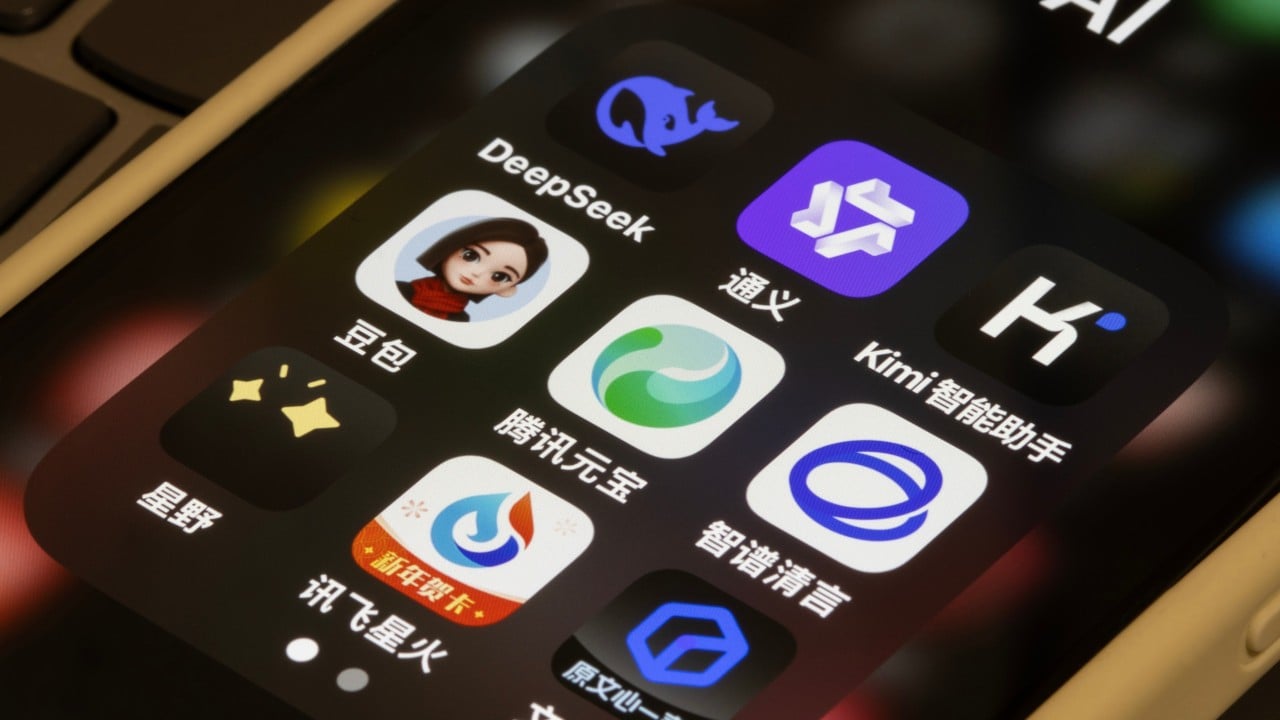
China’s open-weight AI models are winning global users. Who is capturing the value?
China’s open-weight artificial intelligence models are taking off globally, but much of the money they generate is flowing to third-party providers rather than the companies that create them, according to a new study. Developers including DeepSeek and Moonshot AI make their model weights – essentially the “brains” of their AI systems – freely available for download. This strategy, which has accelerated global adoption over the past two years, allows other companies to run the models on their own...

Why Trump chose these leaders to head his 'Super Intelligence Force'
President Trump’s selection of four administration officials to head up his new “Super Intelligence Force” is offering a window into how the White House will approach AI in the face of pressure over its risks. The group of government leaders each reflect different priorities of the Trump administration after months of mixed messaging on the...


YOUR NEWS, OUR NETWORK.
Do you have Great News you want to tell the world?
Be it updates about your business or your community, you can make sure that it’s heard by submitting your story to our network reaching hundreds of news sites across 6 verticals.