
What Are the Advantages of an Integrated Drug Development Model Over Multiple Specialized Vendors?
Sep 22, 2026

San Diego, California Sep 22, 2026 (Issuewire.com) - Key Takeaways
- Integrated drug development can improve decision quality by connecting discovery, biology, chemistry, manufacturing, and control (CMC) considerations earlier.This helps teams identify liabilities sooner, make better go/no-go decisions, and avoid optimizing a molecule for one stage at the expense of downstream development requirements.
- Integration can reduce handoff-related delays and execution risk across drug development.In a targeted protein degrader case study, a 24-step synthesis route was reduced by one-third while formulation development proceeded in parallel, enabling required material to be produced two months ahead of schedule.
- Complex modalities benefit particularly from integrated development because scientific and operational decisions are highly interdependent. In an ASO case study, discovery chemistry and process development teams worked together to address impurity and yield challenges, supporting progression through hit-to-lead optimization, process development, and GMP manufacturing within 12 months.
Drug development has always depended on specialists. But as therapeutic modalities become more complex, the challenge is no longer simply finding the best chemist, biologist, toxicologist, or manufacturer. The harder question is how effectively those disciplines work together. Decisions made in discovery can reshape formulation, analytical strategy, toxicology, scale-up, and manufacturing months or years later. For biotech companies managing tight timelines and limited resources, an integrated drug development model can therefore offer advantages beyond vendor consolidation. An integrated drug development model offers three primary advantages over managing multiple specialized vendors: better cross-functional decision-making, fewer handoff-related delays, and earlier identification of downstream development risks.
How Does an Integrated Model Improve Early Drug Development Decisions?
One of the biggest risks in drug development is optimizing for the next experiment without considering what the molecule will need several stages later. A change that improves potency or tissue uptake may also increase synthesis difficulty, alter metabolism, complicate analytical characterization, or create manufacturing challenges. When discovery, biology, testing, toxicology, and CMC teams operate separately, these consequences may emerge only after a program has moved forward.
An integrated model creates the opportunity to evaluate candidates through multiple lenses from the beginning. Rather than asking only whether a compound works in a biochemical assay, teams can also consider cellular activity, in vivo translatability, physicochemical properties, developability, and future manufacturing requirements.
Translatability is a good example. One of the challenges in early discovery is moving from promising scientific findings to reliable data that can support regulatory decisions. Integrating chemistry, biology, and testing earlier can help teams identify potential developmental bottlenecks earlier and evaluate candidates more comprehensively.
The real advantage goes beyond speed. It lies in better decision-making: identifying liabilities earlier, making more informed go/no-go decisions, and selecting candidates with stronger overall development profiles.
How Can Integration Reduce Handoff Risk and Development Delays?
A multi-vendor model can work well when activities are modular and interfaces are clearly defined. But complex drug programs increasingly behave less like a sequence of independent tasks and more like a connected system. Every transition--from discovery chemistry to process development, from formulation to manufacturing, or from preclinical studies to clinical supply--creates a handoff. Each handoff can introduce delays, data gaps, duplicated work, or assumptions that must be revisited.
This becomes particularly important when solving a problem in one discipline changes requirements in another. In a published WuXi AppTec case study, a biotech partner brought forward a complex targeted protein degrader (TPD) molecule that required 24 synthetic steps. The synthesis process was redesigned to reduce the number of steps by one-third and eliminate a costly catalyst. At the same time, a spray-dried dispersion formulation was developed to improve bioavailability and meet clinical requirements. With process, formulation, and manufacturing activities connected, the required material was ultimately produced two months ahead of schedule.
The broader lesson is that integration is not simply about placing more services under one organizational roof. Its value comes from continuity between scientific and operational decisions. When teams share context and work against the same development plan, fewer insights are lost during transitions, and downstream teams can begin preparing for challenges before a project reaches them.
Why Do Complex Drug Modalities Benefit More From Integrated Development?
The case for integration becomes stronger as therapeutic modalities become more technically interdependent. Oligonucleotides are a clear example. Their development may involve sequence design, modified nucleotides, conjugation, delivery, bioanalysis, metabolism, toxicology, process development, purification, and manufacturing. Optimizing one attribute can influence several others.
In another WuXi AppTec ASO case study illustrates this interaction. During early screening, novel backbone modifications introduced impurities that reduced yield and created potential development concerns. Instead of treating discovery chemistry and process development as sequential steps, the teams worked together. Discovery scientists investigated the impurity pathway and redesigned key building blocks, while process scientists rapidly synthesized and evaluated the new components and optimized process parameters. The program progressed through hit-to-lead optimization, process development, and GMP manufacturing within 12 months.
Extrahepatic oligonucleotide delivery presents an even broader systems problem. Antibody format, peptide sequence, lipid properties, linker chemistry, cargo selection, receptor biology, trafficking, endosomal escape, pharmacokinetics, biodistribution, and toxicology can all affect the final pharmacological outcome.
No single discipline can optimize such a system independently. For complex modalities, integrated development therefore becomes a way to coordinate scientific and development trade-offs across the molecule's lifecycle, rather than simply a more convenient outsourcing structure.
Conclusion
Using multiple specialized vendors can still be effective, particularly for discrete activities. But when scientific and development decisions are tightly coupled, integration offers a different advantage: connecting decisions across stages, reducing friction at handoffs, and anticipating problems before they become downstream bottlenecks. For companies developing increasingly complex therapies, the most important question may not be how many capabilities a partner offers, but how effectively those capabilities work together.
Source :WuXi AppTec
This article was originally published by IssueWire. Read the original article here.

The Car Expo and Lifestyle Edit are set to offer a high-octane and comprehensive lifestyle shopping destination at Singapore Expo this month
The upsized Car Expo returns to Singapore Expo with more than 50 car brands, now with a tech and home lifestyle extension, plus great deals and prizes to take home!

Huawei MatePad Air hands-on: Great battery life and display in a slim, lightweight package
The Huawei MatePad Air has a generous 12-inch display, but it’s only 5.3mm thin.

SK hynix showcases next-generation AI memory technologies beyond HBM
SK hynix said Friday that it has showcased its next-generation artificial intelligence (AI) memory technologies aimed at expanding the boundaries of AI infrastructure beyond conventional high-bandwidth memory (HBM). The company presented the technologies at the OCP Global Summit 2026, held in California from Tuesday to Thursday (local time). The summit is an annual conference organized by the Open Compute Project Foundation that brings together engineers and industry leaders. The Korean chip giant said it divided its exhibition space into two sections. The front section, dubbed the memory section, showcased the company's flagship products, while the larger rear section, called the system demo section, featured memory solutions designed to support next-generation server ecosystems. Kim Ho-sik, a senior vice president at SK hynix, introduced MARS (Memory-Centric AI Rack-Scale System), a disaggregated rack-scale architecture designed to coordinate computing and memory resources seamlessly. Kim highlighted progress in High Bandwidth Flash (HBF), a technology aimed at addressing the industry's

Ecosystem Roundup: Singapore’s always-on workers are performing to an empty room
Singapore’s office workers answer a 10.47pm message within 90 seconds to prove their commitment. Their bosses barely notice. The Jobstreet by SEEK Singapore Workplace Culture Study 2026, which surveyed 600 employees and jobseekers and 200 hiring decision makers, finds that 63% of staff signal dedication by replying fast, a behaviour only 39% of employers value. […] The post Ecosystem Roundup: Singapore’s always-on workers are performing to an empty room appeared first on e27.

The US$82,000 Illusion: Why Bitcoin still trades like a traditional tech stock
Bitcoin currently trades at US$82,231.14, reflecting a 0.65 per cent gain over the last 24 hours. This movement mirrors a broader 0.84 per cent rise in the total crypto market capitalisation. Having operated in this industry for over 15 years and advised on blockchain policy, I view this price action as a clear reflection of […] The post The US$82,000 Illusion: Why Bitcoin still trades like a traditional tech stock appeared first on e27.

Hong Kong builds a test track for robots that keep failing outside the lab
Every humanoid robot looks brilliant in a launch video. The trouble begins on an ordinary weekday in a warehouse, when a parcel arrives in a shape nobody trained the machine for, a forklift reverses where it shouldn’t, and a worker strolls into its path while scrolling a phone. That messy gap between the lab and […] The post Hong Kong builds a test track for robots that keep failing outside the lab appeared first on e27.
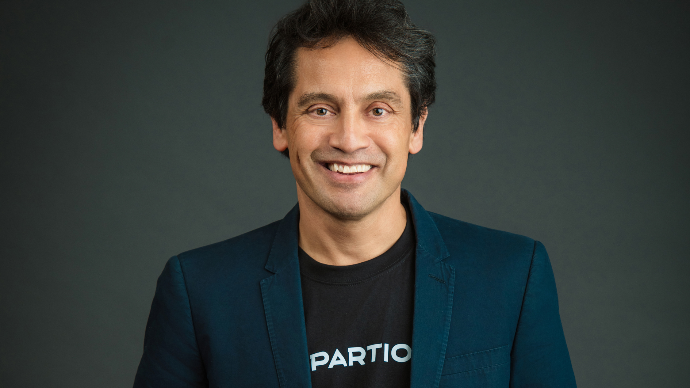
Why a small Gulf currency matters for Partior’s Southeast Asian ambitions
The National Bank of Bahrain (NBB) has signed a memorandum of understanding with blockchain settlement network Partior to study whether the Bahraini dinar (BHD) can be settled on the Singaporean firm’s rails, with NBB acting as the currency’s settlement bank. Read the fine print and the ambition shrinks to its proper size. The MoU commits […] The post Why a small Gulf currency matters for Partior’s Southeast Asian ambitions appeared first on e27.

Your ESOP is a fundraising document. Most founders treat it as a HR perk
Almost every founder I meet reaches the same conclusion at roughly the same moment. You cannot outbid a funded competitor on salary, so you give people a stake in the outcome instead. The logic is sound. Equity turns salary-limited hires into owners and aligns the people doing the work with the value they create. Then […] The post Your ESOP is a fundraising document. Most founders treat it as a HR perk appeared first on e27.

Employers are buying AI tools. Their managers are being left behind
Thirty-seven per cent. Eleven per cent. Those two numbers, tucked deep inside Jobstreet by SEEK’s Singapore Workplace Culture Study 2026, may say more about the region’s productivity problem than any headline about AI or inflation. The first is the share of employees who try to manage workplace pressure by quietly drawing their own boundaries: muting […] The post Employers are buying AI tools. Their managers are being left behind appeared first on e27.

Before you use predictive AI, decide what decision it should change
A lot of startup advice about predictive AI starts too early. It starts with the model, the tool, the data stack, or the dashboard. Those things matter, but they are not the first question. The first question is simpler: what decision should this prediction change? If a startup cannot answer that clearly, it is usually […] The post Before you use predictive AI, decide what decision it should change appeared first on e27.

'AI artists' perform improvised jazz at Jarasum Jazz Festival
Artificial intelligence (AI) models developed by a research team led by Korea Advanced Institute of Science and Technology (KAIST) professor Nam Ju-han made their debut at one of Korea’s leading jazz festivals, performing improvised jazz alongside human artists. According to the university Friday, the team showcased human-AI music collaboration technology that analyzes the flow of human performances in real time, allowing AI to take over performances or generate improvised accompaniment, during the 23rd Jarasum Jazz Festival, held in Gapyeong County, Gyeonggi Province, from Oct. 9 to 11. A total of 12 human jazz artists participated in the event, collaborating with AI in 26 pieces across 12 performances. The technology is different from existing music AI services as it enables collaboration with human musicians in jazz, a genre characterized by improvisation. Jazz musicians often change the tempo or create new melodies based on how they feel in the moment. Because the same piece can be performed differently each time, musicians must listen to one another and adjust their playing accord

DEFA cuts the cost of entry. Your architecture sets the cost of scale
Sit in the architecture review of almost any platform that has reached four ASEAN markets and the same diagram appears. One product on top. Underneath, four data stores, four payment integrations, four know-your-customer flows (the identity checks that onboard each user), and four sets of legal entities and directors. Adding Malaysia means adding a […] The post DEFA cuts the cost of entry. Your architecture sets the cost of scale appeared first on e27.



YOUR NEWS, OUR NETWORK.
Do you have Great News you want to tell the world?
Be it updates about your business or your community, you can make sure that it’s heard by submitting your story to our network reaching hundreds of news sites across 6 verticals.