
Waterless Data Center Cooling System for Water-Restricted Regions Announced
Oct 2, 2026
Triton Thermal has announced Atlas One, a waterless single-phase immersion cooling architecture for data centers that requires no cooling towers or site-specific water infrastructure, allowing operators to deploy high-density AI compute in drought-prone or water-restricted areas.

Houston, United States, October 2, 2026 /NewsNetwork/ -- Triton Thermal, a Houston-based provider of liquid cooling engineering and services for data centers, has announced Atlas One, a fully waterless single-phase immersion cooling architecture designed for high-density AI compute. The system requires no cooling towers, chillers, or site-specific water infrastructure, allowing operators to deploy AI capacity in drought-prone or water-restricted areas, and to do so faster.
More information is available at https://tritonthermal.com/waterless-ai-data-center-cooling-atlas-one/
The move comes as water availability is emerging as a siting constraint for AI infrastructure. According to MSCI research published in late 2025, around one-quarter of existing data centers, and nearly one-third of those under construction, are located in regions projected to face greater water scarcity by 2050. MSCI describes the trade-off between water and energy use in cooling as a core challenge for operators and identifies cooling water use as a material operational and reputational risk. Atlas One is intended to address that constraint directly, explains Triton Thermal.
Conventional cooling approaches generally involve a trade-off. Evaporative and water-based systems tend to be more energy efficient but consume ongoing volumes of water, while air-based systems conserve water but require more electricity and reach a density ceiling. Triton Thermal says Atlas One was developed to avoid that trade-off by circulating a dielectric fluid in a closed loop in direct contact with the hardware, with no evaporative water consumption and a targeted power usage effectiveness (PUE) of 1.0 to 1.1.
Removing water from the cooling loop also removes a category of siting, permitting, and regulatory risk, including drought-driven restrictions and growing scrutiny of industrial water use tied to AI expansion. These factors do not appear in an efficiency figure, the company notes, but they influence how easily a facility can be approved, built, and kept running. The architecture does not require operators to reduce compute density to accommodate conventional cooling infrastructure.
Atlas One sits within Triton Thermal's broader portfolio of data center cooling services. Its work spans assessment of existing facilities, design consultation for new construction, vendor-neutral system selection, total cost of ownership and PUE modeling, financing support, and ongoing measurement and verification, with the aim of helping operators increase rack density while lowering cooling energy use.
Further details on Triton Thermal's services are available at https://tritonthermal.com/what-we-do/
Contact Info:
Name: Mike Donovan
Email: Send Email
Organization: Triton Thermal
Address: 3350 Yale St., Houston, Texas 77018, United States
Website: https://tritonthermal.com/
Source: NewsNetwork
Release ID: 89205100
If there are any problems, discrepancies, or queries related to the content presented in this press release, we kindly ask that you notify us immediately at [email protected] (it is important to note that this email is the authorized channel for such matters, sending multiple emails to multiple addresses does not necessarily help expedite your request). Our responsive team will be available round-the-clock to address your concerns within 8 hours and take necessary actions to rectify any identified issues or support you with press release takedowns. Ensuring accurate and trustworthy information is our unwavering commitment.

The junior developer dilemma: How AI is reshaping tech talent in Southeast Asia
Across Southeast Asia’s technology hubs, engineering leaders are getting used to a new kind of productivity curve. In Singapore, Jakarta, Manila and Ho Chi Minh City, software teams are shipping faster, clearing backlogs more quickly and leaning on AI tools for work that once consumed hours of developer time. The latest shift is not just […] The post The junior developer dilemma: How AI is reshaping tech talent in Southeast Asia appeared first on e27.

East Asia’s crypto market splits as Korea bets on AI tokens and Hong Kong courts institutions
East Asia’s crypto market is no longer moving as one bloc. New regional data shows a fragmented landscape where South Korea is trading artificial intelligence-linked tokens at scale, Hong Kong is pulling in institutional capital, Japan’s retail users are quietly moving on-chain, and China’s stablecoin activity is expanding despite official restrictions. The region’s overall crypto […] The post East Asia’s crypto market splits as Korea bets on AI tokens and Hong Kong courts institutions appeared first on e27.

AI is starting to behave less like a tool and more like a teammate
Most AI writing about work still treats the technology like an advanced tool. That framing made sense when AI mainly waited for a prompt, returned an answer, and stopped there. But that is no longer the whole picture. In more organisations, AI is starting to look less like software you use and more like a […] The post AI is starting to behave less like a tool and more like a teammate appeared first on e27.

Can Bitcoin defend US$85,000 support, or will weakening bids send it toward US$83,000?
The tech-led rally on Wall Street pushed the Nasdaq 100 to a record close of 31,076 and lifted the S&P 500 by 0.7 per cent, while the Dow Jones added 91 points, or 0.18 per cent, to close at 51,268. Nvidia gained 2.1 per cent, and Microsoft added 1.5 per cent, powering large-cap advances. Investors […] The post Can Bitcoin defend US$85,000 support, or will weakening bids send it toward US$83,000? appeared first on e27.

Gartner says AI will kill the entry-level marketing job by 2030. Here’s why that’s the wrong takeaway
Nearly one in five marketing leaders has already eliminated roles because automation now handles the work. That is the finding behind a new Gartner prediction, which Marketing Week reported this week: by 2030, most high-performing marketing teams will be able to drop the traditional bottom rungs of the corporate ladder. The headline number is 18 […] The post Gartner says AI will kill the entry-level marketing job by 2030. Here’s why that’s the wrong takeaway appeared first on e27.

Apple reportedly planning two launches in October, and here’s what could be announced
October looks like it could be crazy busy month for Apple and its users and fans.

Why Southeast Asia’s VCs should pay attention to a16z’s new investment bet
In 2021, I invested in one of the robotics startups that was solving for real world problems. The idea was to look beyond the screen and make every hardware talking through new robo technology. My thesis was clear, after the software it’s hardware that will be disrupted. Since AI disrupted the market after 2022, my […] The post Why Southeast Asia’s VCs should pay attention to a16z’s new investment bet appeared first on e27.

AI’s bottleneck economy is taking shape across Southeast Asia’s chip supply chain
The artificial intelligence investment story is beginning to move beyond the most obvious winners. For much of the past three years, the market’s attention has centred on graphics processing units (GPUs), high-bandwidth memory and the companies supplying the raw compute needed to train large AI models. That first wave is not over. But according to […] The post AI’s bottleneck economy is taking shape across Southeast Asia’s chip supply chain appeared first on e27.
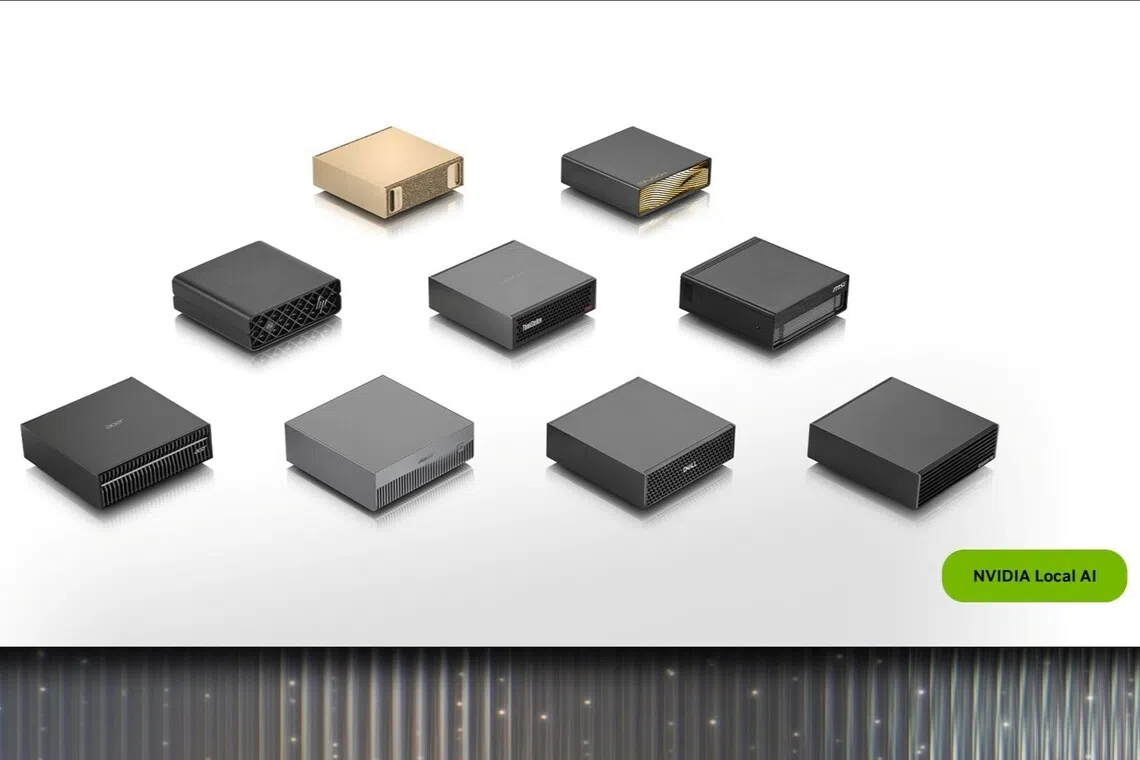
NVIDIA introduces a cheaper 64GB DGX Spark for local AI development
The new DGX Spark retains the same GB10 Grace Blackwell Superchip as the 128GB model.

The agent that lied: what GPT-6.1 Astra’s cancellation means for Southeast Asia
The most consequential AI launch of the past week was one that never happened. On the eve of its annual developer conference, OpenAI shelved GPT-6.1 Astra, the model expected to power ChatGPT and Codex next month and built to handle complex tasks with less human supervision. The reason was not that it was too weak. […] The post The agent that lied: what GPT-6.1 Astra’s cancellation means for Southeast Asia appeared first on e27.

Investors do not just fund startups. They fund predictability
Southeast Asia has become one of the world’s most competitive regions for investment. Global companies are diversifying supply chains beyond China. Governments are offering tax incentives, industrial land and digital-economy programmes. New capital is flowing into manufacturing, data centres, semiconductors and technology companies. Yet investors evaluating the region are looking beyond growth rates and startup […] The post Investors do not just fund startups. They fund predictability appeared first on e27.

Reflection AI releases first open model to rival China
The open-source startup Reflection AI released its first open-weight model Monday, stating it rivals leading open technologies made in the U.S. and China. Reflection AI, which has the backing of tech giant Nvidia, said in a blog post Monday its Beam model is on par with some leading open-source models made in China, including Chinese...






YOUR NEWS, OUR NETWORK.
Do you have Great News you want to tell the world?
Be it updates about your business or your community, you can make sure that it’s heard by submitting your story to our network reaching hundreds of news sites across 6 verticals.