
US DDP Shipping Quote: What Importers Should Provide and What the Written Scope Should Cover
Sep 4, 2026
Shenzhen, Guangdong Sep 4, 2026 (Issuewire.com) - Securing an accurate and actionable US DDP shipping quote requires business buyers to bridge physical cargo specifications with contractual logistics boundaries before freight moves. Rather than treating Delivered Duty Paid pricing as a generic flat rate, procurement teams must provide comprehensive cargo data and demand a transparently defined operational scope that details origin handling, international transport, destination customs paperwork coordination, duty treatment, and final-mile delivery. TRANSWORLD coordinates DDP shipping from China through flexible road, air, and ocean arrangements, combining structured customs paperwork management with end-to-end shipment tracking. A delivered price becomes reliable only when physical cargo assumptions, destination access constraints, transport mode selection, customs entry inputs, duty treatment, final-delivery conditions, and billing exceptions are evaluated on an identical basis to eliminate unexpected secondary invoices.
What Makes a US DDP Shipping Quote Comparable?
A comparable US DDP shipping quote connects one defined shipment profile with one named pickup point, one US delivery point, one transport plan, and one written cost scope. In B2B freight procurement, business buyers frequently encounter substantial pricing variance between competing forwarders. However, a lower headline rate frequently masks excluded terminal handling fees, unstated origin documentation charges, or missing destination appointment coordination. Comparing headline totals built on different assumptions creates significant commercial risk, as an apparently economical quote can quickly become the more expensive option once destination accessorials are billed.
To achieve a true comparison for a China to US DDP shipping quote, procurement teams must hold cargo quantity, packed dimensions, gross weight, commercial invoice value, product description, service mode, destination facility type, and delivery requirements constant across all bidding providers. Any discrepancy in those initial inputs changes freight linehaul rates, customs clearance complexity, duty liabilities, handling requirements, or final-mile cartage pricing. Normalizing the operational parameters upfront allows commercial buyers to evaluate what each logistics offer actually covers rather than guessing the causes behind price differences.
What Shipment Data Should Importers Provide Before Pricing?
Importers should provide the packed cargo profile and all commercial transaction details affecting routing, customs entry treatment, and destination handling before requesting a final DDP price. Incomplete cargo descriptions or preliminary estimates force logistics providers to build pricing around conservative assumptions or issue conditional estimates that must be recalculated once freight is packed. Precise initial inputs eliminate the need to rebuild the quotation after cartons are weighed, delivery conditions are clarified, or commodity classifications are finalized.
Clear and precise merchandise identification is critical because customs authorities and international carriers require recognizable descriptions of the goods rather than ambiguous industrial labels. General descriptions such as "machine parts," "textiles," or "accessories" create regulatory uncertainty, delay tariff determination, and complicate security filings. Identifying material composition, mechanical or electronic function, specific model numbers, and handling-sensitive characteristics enables forwarders to confirm commodity acceptance, verify carrier limitations, and project customs entry requirements accurately.
A well-structured quote request gives every logistics provider an identical physical and commercial baseline before route and delivery pricing begins. Importers should assemble a comprehensive DDP quote checklist containing five core operational categories:
- Merchandise identification detailing the commercial product name, precise physical description, material composition, mechanical or electronic function, and specific commercial application.
- Packaging specifications providing total carton or pallet counts, external dimensions (length, width, and height per unit), individual gross weights, and aggregate cubic volume (CBM).
- Commercial invoice valuation, transaction currency, origin incoterm baseline, and the established ten-digit Harmonized Tariff Schedule of the United States (HTSUS) classification.
- Geographic routing points, including the exact supplier pickup address, cargo-ready date, final US destination address with five-digit ZIP code, and receiving facility type.
- Transport mode preferences or required delivery deadlines driving linehaul selection, alongside special handling constraints such as lithium batteries, liquids, or non-stackable pallets.
Carton dimensions and gross weight measurements are decisive factors in physical linehaul costing. In air transportation, carriers bill on dimensional or chargeable weight whenever cargo density falls below standard volumetric ratios, while ocean less-than-container-load (LCL) consolidation rates depend directly on total cubic meters. Concurrently, destination details define final-mile delivery conditions. A commercial facility equipped with standard loading docks, a regional 3PL warehouse requiring scheduled delivery slots, and an e-commerce fulfillment center with strict pallet specifications present entirely different delivery realities that directly influence cartage pricing.
Formal customs entry filing ultimately requires an adequate merchandise description, commercial quantity, invoice value, and appropriate US tariff classification. Providing these commercial data points early in the quoting process allows logistics coordinators to separate core transport charges from statutory customs and duty obligations, establishing a transparent landed-cost foundation.
What Should the Written DDP Scope Cover?
The written DDP scope should clearly define the service starting point, international freight linehaul, customs coordination responsibilities, duty and tax payment mechanisms, final delivery parameters, and any operational charges that fall outside the planned movement. Evaluating DDP quote inclusions and exclusions across these operational domains ensures that procurement teams understand the complete service package before booking cargo space. A quotation that provides only a single lump-sum total without delineating service boundaries introduces commercial ambiguity and leaves the importer vulnerable to unexpected destination charges.
A comprehensive planned scope covers supplier pickup or origin receiving, export customs filing, ocean or air freight transportation, destination port terminal handling, import customs paperwork coordination, and final transport to the designated receiving facility. Beyond basic transit, the written agreement must specify how delivery appointments, dock unloading wait times, pallet exchange protocols, liftgate services for ground-level facilities, and limited-access delivery conditions are managed and billed.
Contingent events and regulatory exceptions require explicit contractual treatment rather than being concealed under vague "all-in" marketing promises. Regulatory customs examinations (such as non-intrusive container imaging, intensive physical inspections, or manifest holds), port terminal demurrage, container detention, off-dock chassis usage, failed delivery attempts, and receiver-caused unloading delays should be itemized in an exception rate schedule. Clearly separating planned freight costs from potential contingent fees ensures that the importer knows exactly which operational circumstances could alter the final invoice.
How Do HTS Classification and Customs Value Affect the Quote?
HTS classification and customs valuation govern the duty and tax component of a US import entry, directly impacting the delivered-cost calculations underpinning a DDP quote. Importers must maintain a clear distinction between freight linehaul rates and customs valuation rules. Under US customs law, declared customs value is established using statutory valuation methods--primarily transaction value based on the price actually paid or payable for the merchandise. In contrast, total landed cost combines the product transaction value, international freight, cargo insurance, statutory customs duties, merchandise processing fees (MPF), and harbor maintenance fees (HMF).
Effective US DDP landed cost planning requires absolute factual integrity during the tariff determination process. A defensible shipping quote must never rely on an artificially low declared value or an unverified tariff classification simply to manufacture an attractive headline price. Merchandise descriptions, supplier invoices, country of origin marks, and the applicable ten-digit HTSUS code must align with the actual physical goods before duty estimates can be accepted as a dependable component of the quotation.
How Should Importers Compare DDP Quotes on the Same Basis?
Importers must systematically normalize the physical cargo profile and contractual service scope before comparing competing DDP proposals. Two quotations are not commercially equivalent when one covers factory pickup, origin handling, destination terminal fees, customs paperwork coordination, duty disbursement, and scheduled inside delivery, while another begins at a consolidation warehouse, terminates at an ocean port terminal, or leaves destination accessorials unmentioned.
Procurement teams should evaluate competing proposals through a standardized comparison matrix that contrasts transport modes, origin pickup boundaries, US destination facility requirements, cargo weight and volume baselines, duty calculation methods, included terminal handling, milestone tracking visibility, and published exception rates. Conducting this structured review transforms freight purchasing into a disciplined procurement decision, protecting the enterprise from providers who offer low upfront rates but assess aggressive add-on fees upon arrival.
The superior commercial choice is invariably the proposal that aligns precisely with shipment requirements and defines cost responsibilities transparently before booking. An initial price advantage quickly disappears when the buyer subsequently faces unexpected destination charges, unbudgeted customs exam fees, or chassis detention bills that were omitted from an ambiguous initial quote.
US DDP Shipping Quote FAQs
These questions address the shipment data and quote boundaries that most often influence China-to-US DDP pricing decisions.
Can I Request a DDP Quote Before the Final HTS Classification Is Available?
An initial routing estimate can be formulated using a detailed product description, estimated cargo value, packed dimensions, gross weight, origin address, and destination ZIP code. However, the customs duty and tax component cannot be finalized until the applicable ten-digit HTSUS classification is established for the entry. A reliable forwarder separates physical freight pricing from statutory duty assumptions while classification work is completed.
Why Do Carton Dimensions Matter if I Already Know the Total Weight?
Air freight carriers and parcel couriers calculate billing using volumetric or chargeable weight formulas whenever cargo density falls below established thresholds. In ocean freight, container stowage efficiency, palletization plans, and LCL consolidation pricing depend directly on total cubic meters. Knowing carton dimensions ensures accurate space planning, prevents carrier re-weigh adjustments, and determines appropriate final-mile delivery vehicles.
What Does Duty Scope Mean in a DDP Quote?
Duty scope defines how import tariffs, statutory customs fees (such as MPF and HMF), and potential trade-remedy assessments are managed within the commercial offer. The written quote should explicitly state whether duties are estimated based on documented HTSUS rates, billed at actual cost against customs entry documentation, or subject to specific disbursement protocols, avoiding unexplained lump-sum allowances.
How Should Customs Exams or Storage Be Treated in the Quote?
Customs examinations, terminal demurrage, and container detention are contingent events triggered by regulatory agency reviews or facility congestion rather than normal transit milestones. A comprehensive quotation identifies how these exceptions are billed, outlines standard free-time allowances, and publishes transparent fee schedules, enabling the importer to distinguish routine freight costs from potential contingency expenses.
What Is the Fastest Way to Compare Two DDP Quotes?
The fastest method is to align both proposals against identical cargo parameters, origin pickup terms, US destination facilities, transport modes, duty calculation methods, and exception schedules. Any service component that reflects different responsibilities--such as terminal handling or delivery appointments--must be normalized before comparing total pricing.
Move From Cargo Data to a DDP Shipping Plan With TRANSWORLD
Transforming detailed shipment data into an actionable logistics plan requires experienced coordination across international transit and customs clearance. Shenzhen Transworld Supply Chain Co., LTD, operating internationally as TRANSWORLD, leverages complete cargo briefs to structure tailored multimodal road, air, and ocean arrangements. The team coordinates customs documentation and maintains end-to-end shipment tracking within the agreed door-to-door shipping process, ensuring that cargo moves smoothly from origin collection to final US delivery.
A DDP shipping quote provides the highest commercial value when merchandise descriptions, packed dimensions, invoice values, delivery deadlines, and destination conditions are established before booking. Send your shipment profile and destination requirements directly through the TRANSWORLD contact page to build a route-specific DDP quotation with complete service scope defined in writing.
Media Contact
Shenzhen Transworld Supply Chain Co., LTD.
Source :Shenzhen Transworld Supply Chain Co., LTD.
This article was originally published by IssueWire. Read the original article here.

Vivo X500 Pro Max officially lands in Singapore *Updated*
Only the Vivo X500 and X500 Pro Max are coming to Singapore’s shores. Availability and pricing details within!

North Korea linked to $6.3B Binance hack
A North Korea-based cybercrime group appears to be behind a $6.3 billion hack of the cryptocurrency exchange Binance, according to two blockchain intelligence firms. Both TRM Labs and Chainalysis tied the largest crypto hack on record to TraderTraitor, a North Korean hacking unit that has previously targeted the digital asset industry. Billions of dollars' worth...

Top Science Democrat probes cuts to research spending at National Science Foundation
A key Democrat is looking into a massive amount of money that was appropriated to the National Science Foundation (NSF) but reportedly not spent. In a letter first shared with The Hill, House Committee on Science, Space and Technology ranking member Zoe Lofgren (D-Calif.) accused the foundation of violating “Congress’ power of the purse and...

AI, fuelled by advanced chips, set to power semiconductor manufacturing: industry veteran
Artificial intelligence is no longer merely the driving force behind global semiconductor demand, but is also actively reinventing how chips are designed and built, industry leaders and scientists said at a major science forum in Shanghai on Friday. Chen Yunji, co-founder of AI chipmaker Cambricon Technologies, predicted that the integration between AI and chip design would eventually automate the chip design process entirely. “In the [next] 10 years, the most important development … is the RSI...

Backlash against AI data centers threatens GOP's grip on Ohio, Texas
The importance of AI data centers is growing this election cycle as the fight over the infrastructure's costs and environmental impacts may be threatening Republicans in battleground states like Texas and Ohio. Grassroots movements in rural communities, particularly where President Trump won by double-digit margins in each of his presidential bids, are threatening the rural...

Starlink drama puts spotlight on Musk's global stature
Elon Musk and his business's role in a recent dispute over Ukraine's access to Starlink and its military network is putting a spotlight on the tech mogul's outsized influence on the international stage. Following about 10 days of confusion and finger-pointing over what caused the slowdown of Starlink and its military-grade version — Starshield — in Ukraine, Musk acknowledged his company, SpaceX, was behind the restrictions on Starlink's...
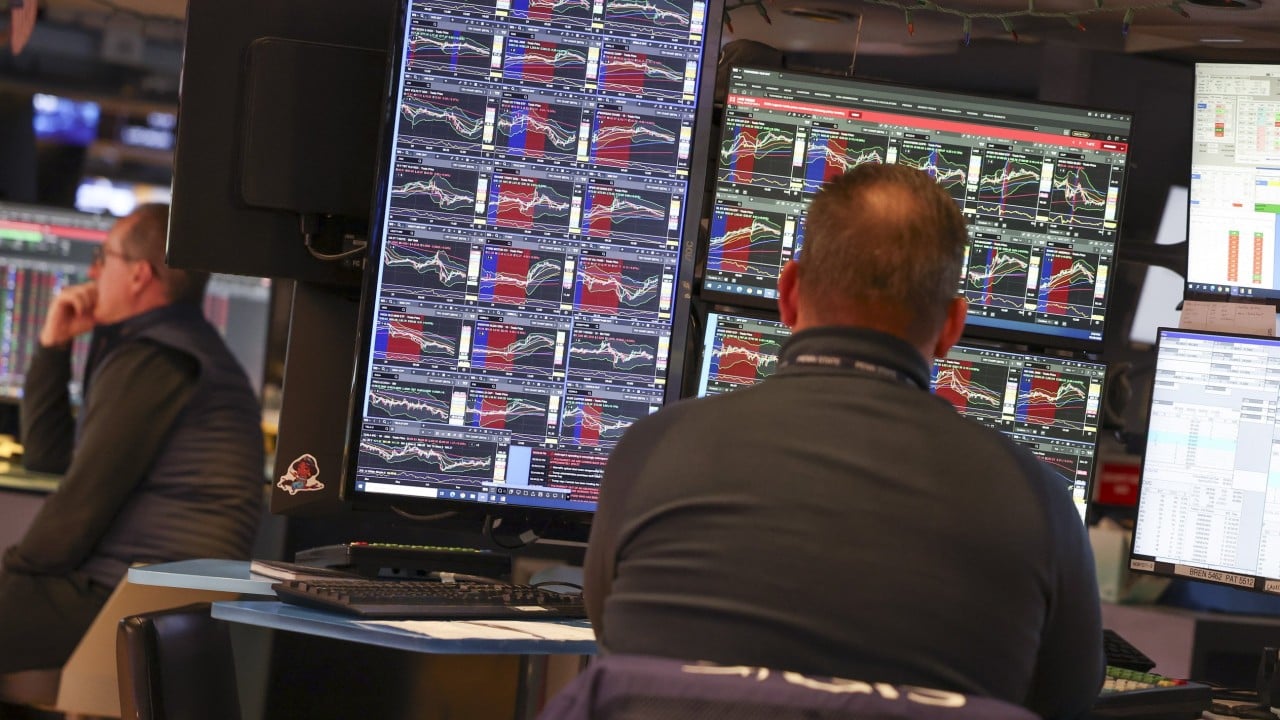
Amid brutal sell-off, what comes next for Google, Amazon and other Big Tech titans?
Soaring artificial intelligence revenues have failed to shield Intel, Amazon and Google’s parent company Alphabet from a brutal Wall Street sell-off, as their latest quarterly results deepened investor jitters over mounting capital spending and delayed returns. Intel plunged about 23 per cent in extended trading on Thursday, while Amazon shed 7.3 per cent. Alphabet tumbled 12.6 per cent during the regular session in its worst day on record, dragging the Nasdaq Composite down 1.4 per cent and...

Roblox hands Fave founder Joel Neoh the keys to SEA. His first job isn’t growth, it’s trust
Joel Neoh has spent two decades selling things to adults: group-buying deals at Groupon, cashback at Fave, DNA kits and supplements at Prenetics. His new job asks him to build a business on a platform where a large slice of the audience still needs a parent’s permission to buy anything. Roblox has appointed the Malaysian […] The post Roblox hands Fave founder Joel Neoh the keys to SEA. His first job isn’t growth, it’s trust appeared first on e27.

North Korea’s hiring scam just cost Binance US$6.3B. SEA’s engineers are on the shortlist
For years, Southeast Asia’s crypto regulators have asked exchanges the same set of questions. Where is your licence? Where is your local entity? Where are your cold wallets, and whose name is on them? On October 29, North Korea answered with a question of its own: whose laptop is this? Binance, the world’s largest crypto […] The post North Korea’s hiring scam just cost Binance US$6.3B. SEA’s engineers are on the shortlist appeared first on e27.

German chancellor urges global trade alliance as Germany deepens Indo-Pacific ties
German Chancellor Friedrich Merz called for a global political alliance to defend rules-based trade, urging Germany and Indo-Pacific economies to strengthen economic partnerships and diversify supply chains as geopolitical tensions and intensifying U.S.-China competition reshape the global economy. Speaking at the opening of the 19th Asia-Pacific Conference of German Business (APK) in Seoul on Friday, Merz proposed establishing a "global political alliance for rules-based trade" to defend and strengthen the international trading system and coordinate joint action when it comes under threat. “When supply chains become political pawns, when access to key technologies is imperiled or when efforts to secure raw materials become a projection of power rather than of fair partnership, this jeopardizes growth, prosperity and, ultimately, the security,” he said. “Countries that decouple lose security, innovative strength, prosperity and scope for action. We do not wish to withdraw but rather to expand our freedom of action.” Turning to bilateral ties, the chancellor said Germany and Korea

Goldman Sachs eyes Tmap Mobility acquisition by year-end
Goldman Sachs is seeking to acquire a controlling stake in Tmap Mobility, operator of Korea’s leading navigation app, from SK Square by the end of this year, seeing an investment opportunity in its lower valuation and vast trove of mobility data as autonomous driving advances, industry sources said Friday. For SK Square, SK Group’s investment arm and the largest shareholder of SK hynix, the sale is part of a broader strategy to focus on artificial intelligence (AI) and semiconductors. The global investment bank is looking to invest between 600 billion won ($450 million) and 800 billion won to secure a 60 to 70 percent stake in Tmap Mobility. It is in talks to buy shares from SK Square, the largest shareholder with a 63.23 percent stake, as well as other financial investors, including Affirma Capital and EastBridge Partners, which each hold 9.83 percent, and KB Kookmin Bank, which owns 6.39 percent. Tmap Mobility traces its roots to a navigation service launched by SK Telecom in 2002. The telecom operator spun off its mobility business into a separate company in December 2020, and Tm

Hanwha Systems wins SAR microsatellite constellation project
Hanwha Systems has won a contract to develop synthetic aperture radar (SAR) satellites for Korea's microsatellite constellation aimed at enhancing national security and disaster response capabilities, data showed Friday. The defense solutions arm of Hanwha Group was selected for the SAR satellite development project commissioned by the state-run Agency for Defense Development (ADD), according to the Public Procurement Service. The microsatellite development project is a joint initiative involving the defense ministry, the Korea AeroSpace Administration (KASA) and the Korea Coast Guard to strengthen surveillance of security threats and natural disasters on the Korean Peninsula and in surrounding waters. SAR satellites can capture images of land and sea regardless of weather conditions or time of day. Operating a constellation of small satellites allows for more frequent monitoring of specific areas and faster intelligence gathering. Hanwha Systems has previously supplied SAR sensors and data links for Korea's military reconnaissance satellites.



[WEEKENDER] Unknown at home, big abroad







YOUR NEWS, OUR NETWORK.
Do you have Great News you want to tell the world?
Be it updates about your business or your community, you can make sure that it’s heard by submitting your story to our network reaching hundreds of news sites across 6 verticals.