
US Anti-Dumping Customs Clearance: How Importers Check Scope, HTS Codes, and Cash Deposits Before Shipping
Sep 4, 2026
Shenzhen, Guangdong Sep 4, 2026 (Issuewire.com) - Executing compliant US anti-dumping customs clearance requires cross-border sourcing teams and commercial importers to evaluate trade-remedy obligations long before cargo is manufactured or booked for transport. Anti-dumping (AD) and countervailing duty (CVD) orders are statutory trade-remedy measures designed to offset unfair foreign pricing and government subsidies; they represent binding legal liabilities that cannot be resolved through alternative routing or forwarder selection. Navigating these regulatory frameworks requires buyers to establish a structured pre-shipment decision process: examining the controlling written scope of the order, utilizing Harmonized Tariff Schedule (HTS) codes as screening tools, and confirming applicable cash-deposit instructions before finalizing commercial transactions. TRANSWORLD supports export logistics through specialized multimodal transport and documentation alignment within DDP shipping from China, while the importer's trade compliance review establishes which statutory duties govern the US entry plan.
Why Anti-Dumping Clearance Starts Before Freight Booking
US anti-dumping customs clearance starts before freight booking because an applicable AD/CVD order fundamentally alters the financial and operational structure of an import entry. Discovering trade-remedy coverage after a container arrives at a US port of entry creates severe commercial exposure. Unlike routine customs duty adjustments, anti-dumping and countervailing cash deposits frequently exceed the commercial invoice value of the merchandise. An unexamined freight rate that omits active trade-remedy orders produces a delivered-cost projection that fails to reflect actual import liabilities, risking substantial capital drain or cargo abandonment.
A rigorous pre-shipment compliance review aligns the exact merchandise profile and country of origin with active Commerce Department orders before logistics teams establish duty assumptions. Sourcing personnel must integrate US anti-dumping duty planning directly into supplier contract negotiations and production scheduling. Route selection and carrier booking can then follow the established compliance determination rather than being mistakenly viewed as a mechanism to bypass trade-remedy obligations.
How Does an Importer Determine Whether a Product Falls Within an AD/CVD Scope?
An importer determines potential AD/CVD coverage by reading the written scope of the relevant order and matching that legal language directly against the physical and technical specifications of the product. The analysis centers on detailed merchandise characteristics, manufacturing processes, specific exclusions, and country coverage rather than on a tariff classification number alone.
Read the Written Scope as the Controlling Product Description
The written scope published by the U.S. Department of Commerce in the Federal Register is the sole legally controlling description of covered merchandise. Importers must compare the product's physical dimensions, chemical metallurgy, tensile properties, manufacturing methods, and functional characteristics against the order text. Express exclusions contained within the scope deserve rigorous examination, as specific design thresholds, coating types, or specialized engineering criteria may formally exempt certain merchandise from the order.
Match the Product With the Relevant Producer, Exporter, and Order Record
Producer and exporter identities directly determine the applicable cash-deposit rate attached to subject merchandise. Commerce establishes company-specific rates for investigated manufacturers who participated in administrative proceedings, while assigning higher all-others or country-wide rates to non-cooperative entities. Business buyers must trace the commercial supply chain from the actual factory floor to the export vendor, verifying both entities against active customs instructions rather than relying on generic industry averages.
Use a Commerce Scope Ruling When the Order Text Does Not Resolve Coverage
When product specifications and published scope language leave coverage uncertain, an interested party can apply for a formal scope ruling through the U.S. Department of Commerce. A scope ruling provides a legally binding administrative determination regarding whether specific merchandise falls within an active AD/CVD order. Importers must recognize that a Commerce scope ruling is legally distinct from a CBP classification ruling, which determines general tariff numbers under the HTS rather than trade-remedy order coverage.
Why an HTS Code Alone Does Not Decide AD/CVD Coverage
An HTS code serves as a screening and discovery tool, but the written scope description alone controls whether imported goods are subject to an AD/CVD order. A single tariff classification code frequently contains products that fall both inside and outside an order scope. Conversely, an AD/CVD order may reference multiple tariff subheadings for administrative convenience. Assuming that an HTS code match definitively proves coverage--or that an unlisted subheading guarantees exemption--is a major compliance error.
U.S. anti-dumping and countervailing duties are distinct statutory trade remedies separate from ordinary customs tariff rates established in the Harmonized Tariff Schedule. While accurate HTS classification remains essential for formal customs entry, importers must execute a parallel two-track review: classifying the merchandise under general tariff rules while independently confirming that product specifications satisfy the written scope text before integrating duty numbers into freight quotes.
How Scope and Cash-Deposit Requirements Change DDP Planning
When goods are identified as subject merchandise under an active order, statutory cash-deposit instructions become an integral part of the import-cost plan. Commerce establishes applicable deposit rates, and CBP collects the required estimated duties at the time of customs entry. Cash deposits represent immediate financial obligations that cannot be deferred, altering the working capital requirements of the import transaction.
Importers must also account for the mechanics of the United States retrospective duty assessment system. The cash deposit collected upon entry is an estimated security, not the final duty assessment. Under US law, actual duty liability is determined retroactively through annual administrative reviews conducted by Commerce. If an administrative review establishes a higher final margin, CBP issues supplemental bills for the difference plus interest; if the rate decreases, excess funds are refunded.
A reliable DDP quotation for potentially subject cargo must keep physical freight linehaul, routine customs processing, and AD/CVD cash-deposit treatment conceptually separate. This transparent structure allows the buyer to see whether the delivered-cost model incorporates current trade-remedy instructions rather than concealing potential liabilities beneath an ambiguous headline freight rate.
US Anti-Dumping Customs Clearance FAQs
These questions separate tariff classification, order scope, cash deposits, and logistics responsibilities before a US shipment is booked.
Is an HTS Code Match Enough to Prove That a Product Is Subject to AD/CVD?
No. HTS classifications help identify potentially applicable orders, but the written scope description published by Commerce is controlling. An importer must compare the actual physical characteristics and exclusions of the merchandise against the scope language rather than relying on tariff numbers alone.
What Is the Difference Between a Scope Ruling and a Classification Ruling?
A Commerce scope ruling decides whether specific merchandise falls within the legal scope of an AD/CVD order, while a CBP classification ruling determines the ten-digit tariff code under the HTS. These two administrative decisions address separate legal questions and cannot be substituted for one another.
Why Can Producer or Exporter Identity Matter for Cash Deposits?
Commerce orders frequently assign company-specific duty deposit margins to foreign manufacturers who participated in administrative reviews, while unreviewed entities receive higher all-others rates. Sourcing from a specific producer directly affects the required cash-deposit percentage at entry.
Is the Cash Deposit the Final Anti-Dumping or Countervailing Duty?
Not necessarily. The cash deposit paid to CBP at entry secures estimated duties based on preliminary rates. The final duty liability assessed on covered entries is determined later through the US retrospective assessment system during annual administrative reviews.
Does DDP Remove the Importer's AD/CVD Compliance Exposure?
No. A DDP commercial arrangement does not override US trade-remedy laws or cancel an applicable AD/CVD order. Subject merchandise must be entered under applicable customs instructions, and attempting to circumvent orders through routing exposes commercial parties to statutory penalties.
Build a Compliance-First China-to-US Shipping Plan With TRANSWORLD
A compliance-first shipping brief provides logistics coordinators with confirmed merchandise descriptions, country of origin documents, established HTS classifications, manufacturer identities, and verified trade-remedy determinations. Shenzhen Transworld Supply Chain Co., LTD, operating globally as TRANSWORLD, leverages complete shipment data to optimize carrier mode selection and execute structured door-to-door shipping coordination without confusing freight management with legal scope determinations.
Send your completed cargo and compliance brief directly through the TRANSWORLD contact page to build an efficient China-to-US transport plan designed around your shipment's actual import requirements.
Media Contact
Shenzhen Transworld Supply Chain Co., LTD.
Source :Shenzhen Transworld Supply Chain Co., LTD.
This article was originally published by IssueWire. Read the original article here.
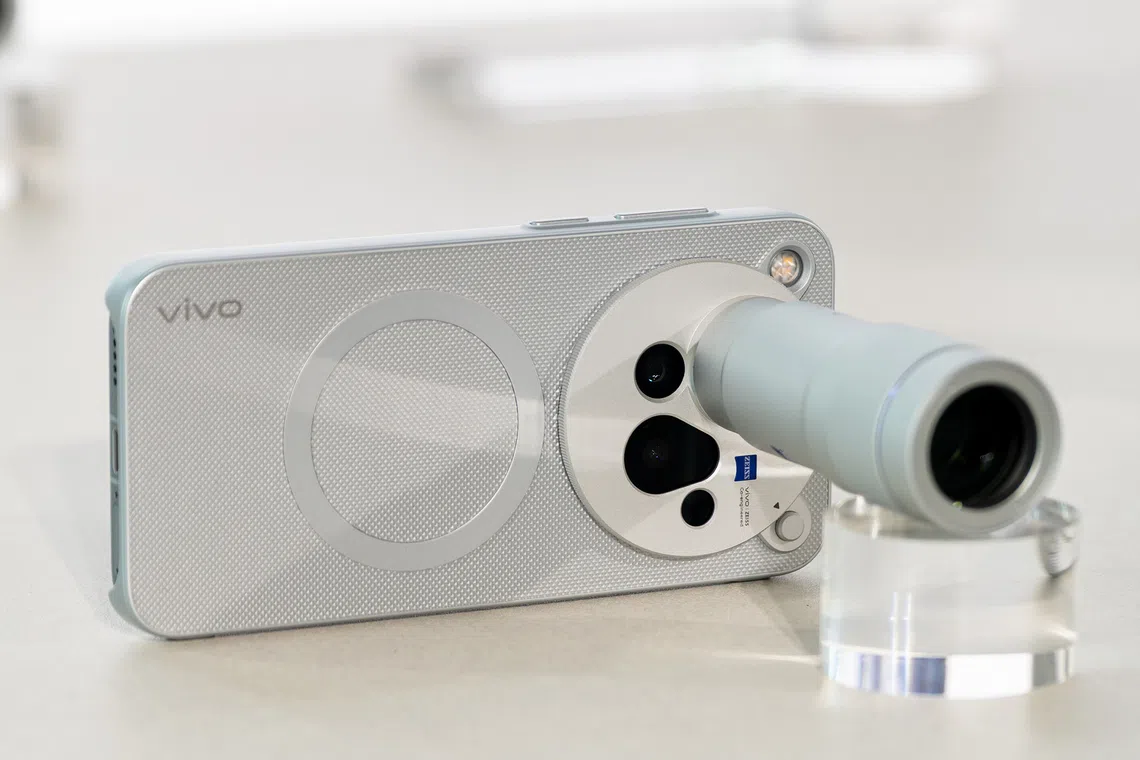
Vivo X500 Pro Max officially lands in Singapore *Updated*
Only the Vivo X500 and X500 Pro Max are coming to Singapore’s shores. Availability and pricing details within!

North Korea linked to $6.3B Binance hack
A North Korea-based cybercrime group appears to be behind a $6.3 billion hack of the cryptocurrency exchange Binance, according to two blockchain intelligence firms. Both TRM Labs and Chainalysis tied the largest crypto hack on record to TraderTraitor, a North Korean hacking unit that has previously targeted the digital asset industry. Billions of dollars' worth...

Top Science Democrat probes cuts to research spending at National Science Foundation
A key Democrat is looking into a massive amount of money that was appropriated to the National Science Foundation (NSF) but reportedly not spent. In a letter first shared with The Hill, House Committee on Science, Space and Technology ranking member Zoe Lofgren (D-Calif.) accused the foundation of violating “Congress’ power of the purse and...

AI, fuelled by advanced chips, set to power semiconductor manufacturing: industry veteran
Artificial intelligence is no longer merely the driving force behind global semiconductor demand, but is also actively reinventing how chips are designed and built, industry leaders and scientists said at a major science forum in Shanghai on Friday. Chen Yunji, co-founder of AI chipmaker Cambricon Technologies, predicted that the integration between AI and chip design would eventually automate the chip design process entirely. “In the [next] 10 years, the most important development … is the RSI...

Backlash against AI data centers threatens GOP's grip on Ohio, Texas
The importance of AI data centers is growing this election cycle as the fight over the infrastructure's costs and environmental impacts may be threatening Republicans in battleground states like Texas and Ohio. Grassroots movements in rural communities, particularly where President Trump won by double-digit margins in each of his presidential bids, are threatening the rural...

Starlink drama puts spotlight on Musk's global stature
Elon Musk and his business's role in a recent dispute over Ukraine's access to Starlink and its military network is putting a spotlight on the tech mogul's outsized influence on the international stage. Following about 10 days of confusion and finger-pointing over what caused the slowdown of Starlink and its military-grade version — Starshield — in Ukraine, Musk acknowledged his company, SpaceX, was behind the restrictions on Starlink's...
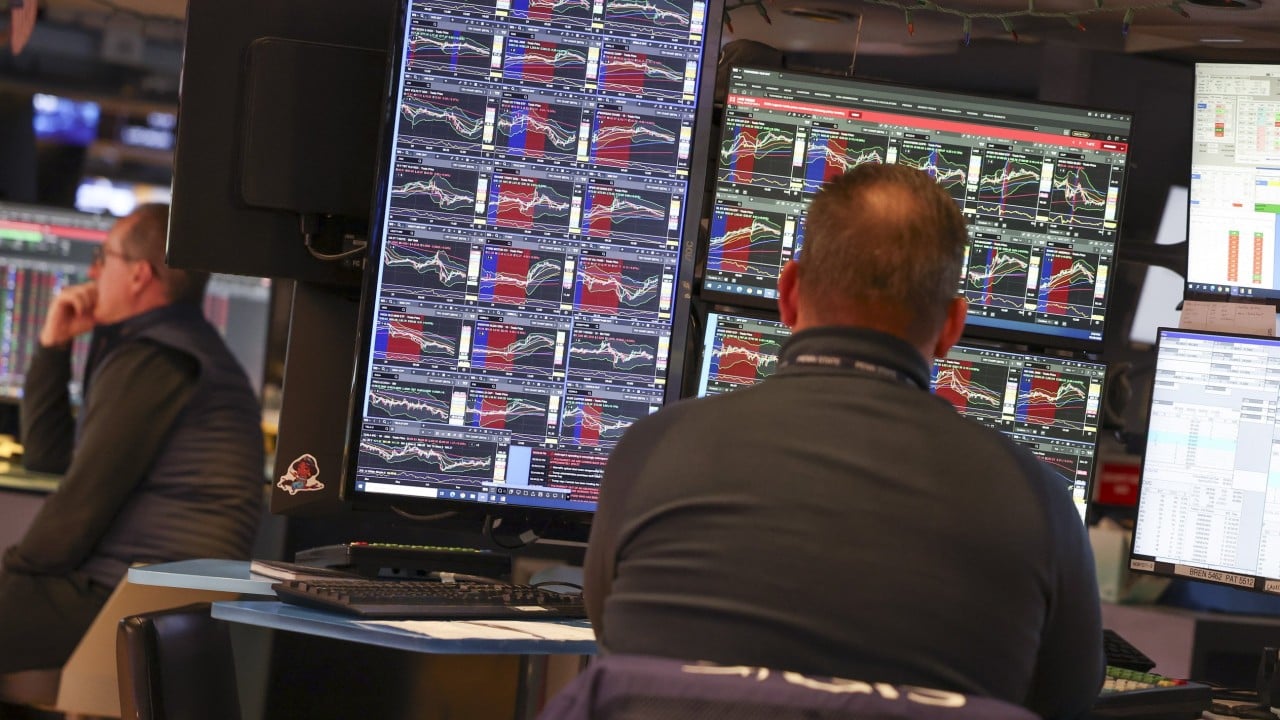
Amid brutal sell-off, what comes next for Google, Amazon and other Big Tech titans?
Soaring artificial intelligence revenues have failed to shield Intel, Amazon and Google’s parent company Alphabet from a brutal Wall Street sell-off, as their latest quarterly results deepened investor jitters over mounting capital spending and delayed returns. Intel plunged about 23 per cent in extended trading on Thursday, while Amazon shed 7.3 per cent. Alphabet tumbled 12.6 per cent during the regular session in its worst day on record, dragging the Nasdaq Composite down 1.4 per cent and...

Roblox hands Fave founder Joel Neoh the keys to SEA. His first job isn’t growth, it’s trust
Joel Neoh has spent two decades selling things to adults: group-buying deals at Groupon, cashback at Fave, DNA kits and supplements at Prenetics. His new job asks him to build a business on a platform where a large slice of the audience still needs a parent’s permission to buy anything. Roblox has appointed the Malaysian […] The post Roblox hands Fave founder Joel Neoh the keys to SEA. His first job isn’t growth, it’s trust appeared first on e27.

North Korea’s hiring scam just cost Binance US$6.3B. SEA’s engineers are on the shortlist
For years, Southeast Asia’s crypto regulators have asked exchanges the same set of questions. Where is your licence? Where is your local entity? Where are your cold wallets, and whose name is on them? On October 29, North Korea answered with a question of its own: whose laptop is this? Binance, the world’s largest crypto […] The post North Korea’s hiring scam just cost Binance US$6.3B. SEA’s engineers are on the shortlist appeared first on e27.

German chancellor urges global trade alliance as Germany deepens Indo-Pacific ties
German Chancellor Friedrich Merz called for a global political alliance to defend rules-based trade, urging Germany and Indo-Pacific economies to strengthen economic partnerships and diversify supply chains as geopolitical tensions and intensifying U.S.-China competition reshape the global economy. Speaking at the opening of the 19th Asia-Pacific Conference of German Business (APK) in Seoul on Friday, Merz proposed establishing a "global political alliance for rules-based trade" to defend and strengthen the international trading system and coordinate joint action when it comes under threat. “When supply chains become political pawns, when access to key technologies is imperiled or when efforts to secure raw materials become a projection of power rather than of fair partnership, this jeopardizes growth, prosperity and, ultimately, the security,” he said. “Countries that decouple lose security, innovative strength, prosperity and scope for action. We do not wish to withdraw but rather to expand our freedom of action.” Turning to bilateral ties, the chancellor said Germany and Korea

Goldman Sachs eyes Tmap Mobility acquisition by year-end
Goldman Sachs is seeking to acquire a controlling stake in Tmap Mobility, operator of Korea’s leading navigation app, from SK Square by the end of this year, seeing an investment opportunity in its lower valuation and vast trove of mobility data as autonomous driving advances, industry sources said Friday. For SK Square, SK Group’s investment arm and the largest shareholder of SK hynix, the sale is part of a broader strategy to focus on artificial intelligence (AI) and semiconductors. The global investment bank is looking to invest between 600 billion won ($450 million) and 800 billion won to secure a 60 to 70 percent stake in Tmap Mobility. It is in talks to buy shares from SK Square, the largest shareholder with a 63.23 percent stake, as well as other financial investors, including Affirma Capital and EastBridge Partners, which each hold 9.83 percent, and KB Kookmin Bank, which owns 6.39 percent. Tmap Mobility traces its roots to a navigation service launched by SK Telecom in 2002. The telecom operator spun off its mobility business into a separate company in December 2020, and Tm

Hanwha Systems wins SAR microsatellite constellation project
Hanwha Systems has won a contract to develop synthetic aperture radar (SAR) satellites for Korea's microsatellite constellation aimed at enhancing national security and disaster response capabilities, data showed Friday. The defense solutions arm of Hanwha Group was selected for the SAR satellite development project commissioned by the state-run Agency for Defense Development (ADD), according to the Public Procurement Service. The microsatellite development project is a joint initiative involving the defense ministry, the Korea AeroSpace Administration (KASA) and the Korea Coast Guard to strengthen surveillance of security threats and natural disasters on the Korean Peninsula and in surrounding waters. SAR satellites can capture images of land and sea regardless of weather conditions or time of day. Operating a constellation of small satellites allows for more frequent monitoring of specific areas and faster intelligence gathering. Hanwha Systems has previously supplied SAR sensors and data links for Korea's military reconnaissance satellites.


[WEEKENDER] Unknown at home, big abroad







YOUR NEWS, OUR NETWORK.
Do you have Great News you want to tell the world?
Be it updates about your business or your community, you can make sure that it’s heard by submitting your story to our network reaching hundreds of news sites across 6 verticals.