
Top 10 Suppliers of Smoke Alarm in China: Comparative Evaluation of Global Compliance and Manufacturing Power
Sep 30, 2026
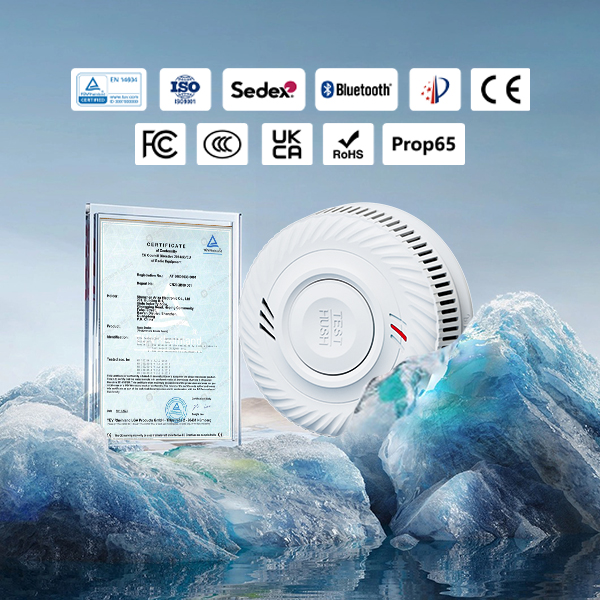
Shenzhen, Guangdong Sep 30, 2026 (Issuewire.com) - The global residential fire safety market has experienced structural growth driven by stricter building codes, mandatory domestic legislation across Europe and North America, and rapid smart home adoption. In response, China's security manufacturing ecosystem has evolved from high-volume assembly to advanced ODM/OEM production characterized by strict regulatory compliance, proprietary optical engineering, and wireless IoT integration.
This report provides a comparative evaluation focused on global compliance frameworks, manufacturing scale, wireless communication technology, and custom engineering capabilities.
Understanding the baseline technology is essential before comparing manufacturing power across key suppliers. A modern Top 10 Suppliers of Smoke Alarm in China: relies primarily on photoelectric sensing chambers rather than traditional ionization sources. Photoelectric detection operates on light-scattering principles: an infrared LED emits light within an internal chamber at a specific angle away from a light sensor. When smoke particles enter the chamber, they scatter the light beam onto the sensor, triggering the alarm. This mechanism offers heightened sensitivity to slow-burning, smoldering fires while significantly reducing false alarms caused by cooking vapors. Advanced iterations integrate dual-spectrum optical sensors, anti-dust labyrinths, and wireless interconnectivity, transforming standalone detectors into active safety nodes within commercial and residential structures.
1. Global Compliance Frameworks and Certification Standards
Compliance with international security regulations represents the primary barrier to market entry for fire alarm exporters. Regulatory frameworks vary significantly by geographic region, requiring suppliers to maintain multi-jurisdictional testing documentation and third-party certifications.
The European market operates under strict harmonized directives. Smoke alarms sold in EU member states must comply with EN 14604, which governs construction, response times, and durability under environmental stress. Furthermore, carbon monoxide combined units must satisfy EN 50291 standards. Certification bodies such as TÜV Rheinland, LPCB, and Kriwan perform periodic factory audits and performance verification tests to validate production line consistency. In North America, UL 217 and UL 2034 dictate mandatory mechanical and electronic safety thresholds, while mandatory CCC (China Compulsory Certificate) certification regulates the domestic Chinese market.
- Tier-1 Global Brand OEMs (e.g., Siterwell, Heiman): Maintain EN 14604 and EN 50291 via TÜV or LPCB, along with UL 217, FCC, CE, and CCC approvals. Factory operations hold ISO 9001, BSCI, and IATF 16949 credentials, targeting enterprise clients and global retail chains.
- Specialized Smart Safety ODMs (e.g., ARIZA): Hold comprehensive TÜV EN 14604, EN 50291, CE, FCC, RoHS, and mandatory CCC certifications. Production lines operate under ISO 9001 and BSCI quality management systems, serving B2B brand partners and IoT system integrators.
- Regional Component Manufacturers: Primarily rely on CE and RoHS self-declarations and basic FCC compliance, operating under ISO 9001 to supply regional or low-cost export channels.
A key differentiator among top manufacturers is the breadth of their pre-certified product lines. Companies like ARIZA maintain a portfolio backed by TÜV EN 14604, EN 50291, CE, RoHS, FCC, and mandatory CCC approvals. Securing direct TÜV verification minimizes legal risk for brand partners, ensuring smooth customs clearance and streamlined distribution across European and North American retail networks.
2. Manufacturing Scale, Production Infrastructure, and Quality Control
The second comparative vector assesses physical manufacturing capability, automated assembly infrastructure, and end-to-end quality assurance systems. High-volume output must be balanced with rigorous quality testing, as sensor defects directly impact life safety.
China's top ten suppliers operate facilities ranging from 2,000 to over 50,000 square meters. Leading facilities incorporate surface-mount technology (SMT) lines, automated optical inspection (AOI), and dedicated smoke-test tunnel chambers. High-volume factories typically leverage automated calibration rigs to test smoke sensitivity profiles for every unit before packaging, removing manual error from sensor adjustment.
The standard quality control workflow across high-tier manufacturing facilities follows a structured operational sequence:
- Inbound Quality Control (IQC): Rigorous screening of raw electronic components and optical diodes before assembly.
- SMT & PCBA Assembly: Automated placement of circuit components followed by in-circuit testing.
- Smoke Tunnel Calibration: Controlled smoke chamber exposure to calibrate response thresholds against standard aerosol concentrations.
- Aging & Burn-in Chamber: Thermal and electrical stress testing to verify long-term power efficiency and battery stability.
- Functional Testing & Outgoing Quality Control (OQC):Final sensor verification prior to packaging and dispatch.
Established manufacturers backed by ISO 9001 and BSCI factory certifications demonstrate higher batch-to-batch consistency and lower warranty return rates.
3. Sensor Technology, Optical Engineering, and False Alarm Reduction
Sensor accuracy forms the core technical indicator of any fire detection system. The main engineering challenge lies in maximizing sensitivity to genuine fire combustion while eliminating false alarms triggered by ambient dust, steam, insect intrusion, or rapid humidity changes.
Top manufacturers invest heavily in custom optical chamber design. Modern optical chambers feature micro-mesh insect screens, labyrinthine baffle walls that block external ambient light, and anti-static surface treatments that prevent dust buildup.
Advanced signal processing algorithms complement physical chamber design through a multi-stage light management process:
- Ambient Light Shielding: Labyrinth baffles exclude external light from interfering with optical readings.
- Dual-Spectrum Scattering: Infrared and blue LEDs simultaneously project through the optical chamber.
- Particle Evaluation: Microcontrollers analyze particle size distribution to differentiate combustion smoke from larger dust or steam particles.
- Baseline Drift Compensation: Microcontroller units automatically adjust signal thresholds over time as background dust accumulates, extending operational lifespan without compromising safety.
4. Wireless Interconnectivity and Smart IoT Integration
Market demand has shifted from standalone buzzers toward interconnected mesh networks and smart home integration. Comparative evaluation requires examining supported communication protocols and cloud platform compatibility.
Modern smoke alarm installations leverage RF 433 MHz or RF 868 MHz wireless interlinking. When one detector identifies smoke in a multi-story building, it transmits an RF signal to activate all interconnected alarms simultaneously, providing early warning to occupants in distant rooms. Simultaneously, smart home architectures demand direct integration with IoT ecosystems. Leading OEMs provide certified Tuya WiFi, Zigbee, and Matter wireless modules alongside traditional RF connectivity.
As demonstrated in modern smart Wi-Fi smoke detectors, hybrid architectures combine standalone local photoelectric sensing with 2.4 GHz Wi-Fi connectivity. In the event of a fire, the unit activates an onboard 85 dB piezoelectric sounder while simultaneously pushing instant app notifications to users' smartphones. This dual-pathway approach ensures local audible alerts remain fully operational even if local network access or internet connectivity drops.
5. Custom Engineering, OEM/ODM Flexibility, and Application Solutions
The final evaluation area examines a manufacturer's capacity to deliver custom research and development, structural design, and tailored electronic engineering for specialized B2B applications.
While standardized off-the-shelf units serve general retail markets, commercial safety projects, hotel chains, educational institutions, and public facilities often require tailored forms, custom protocol mapping, or multi-sensor capabilities.
Leading ODM partners maintain dedicated engineering departments containing structural, hardware, software, and testing engineers. Customization options span multiple technical layers:
- Enclosure & Aesthetics: Custom mechanical molds, low-profile physical designs, and specialized silk-screen logo printing without color constraints.
- Protocol & Firmware: Custom RF 433/868 MHz protocol matching to align with proprietary control panel receiver protocols.
- Multi-Sensor Integration: Combined smoke and carbon monoxide (CO) detection, or specialized vaping and e-cigarette detection units designed for schools and hospitality venues.
- Power Management: Highly optimized circuit designs supporting 3-year replaceable battery setups or 10-year sealed lithium battery lifespan configurations.
By pairing rapid prototyping with comprehensive in-house testing equipment, flexible ODM partners enable security brands, IoT integrators, and system developers to bring certified security products to market efficiently while meeting regional compliance demands.
Technical Specifications Summary
- Sensing Technology: Photoelectric Chamber or Dual-Spectrum Photoelectric Chamber
- Audible Alarm Output: 85 dB at 3 meters (Piezoelectric)
- Wireless Protocol Options: Standalone, RF 433/868 MHz Mesh, WiFi 2.4GHz, or Zigbee
- Power Supply Options:2x AA Alkaline (1-3 Years) or 10-Year Sealed Lithium / 3V DC
- Compliance Approvals: TÜV EN 14604, EN 50291, CE, FCC, RoHS, and Mandatory CCC
- Operating Temperature:-10°C to +50°C
- Functional Features: Manual Test / Mute Button, Instant App Alerts, and Insect-Proof Labyrinth
Frequently Asked Questions (FAQ)
What is the significance of the EN 14604 certification for smoke alarms?
EN 14604 is the European standard specifying requirements, test methods, performance criteria, and manufacturer guidelines for smoke alarms used in residential applications. Compliance with EN 14604, verified by accredited testing bodies like TÜV, is mandatory for selling smoke detectors within the European Union.
How do photoelectric smoke alarms reduce false alarms compared to older models?
Photoelectric alarms detect light scattered by smoldering smoke particles rather than reacting to ion disruption. Combined with dust-proof labyrinth designs, insect screens, and smart signal filtering, photoelectric units resist triggering from steam, cooking vapors, and ambient dust.
What is the advantage of choosing an ODM manufacturer with customizable RF protocols?
Customizable RF 433/868 MHz protocols allow brand owners to seamlessly integrate new smoke detectors into existing alarm control panels and proprietary home security ecosystems without redesigning their core receiver hardware.
For further details on certified security alarm solutions and OEM/ODM manufacturing capabilities, visit the official corporate website at https://www.airuize.com
Source :Shenzhen ARIZA Electronic Co., Ltd.
This article was originally published by IssueWire. Read the original article here.

Nuri rocket deploys 14 satellites, 1 CubeSat fails to release
The Nuri rocket successfully lifted off on its fifth launch and deployed 14 of the 15 satellites it carried into their target orbit Wednesday. The rocket lifted off from the second launch pad at the Naro Space Center in Goheung, Jeonnam-Gwangju Special Metropolitan City, at 12:25 p.m. and completed its roughly 20-minute flight at around 12:45 p.m. The rocket separated its first stage about two minutes after liftoff, followed by the second stage about four and a half minutes into the flight. At around 12:40 p.m., it reached an altitude of 570 kilometers and completed the sequential deployment of five NEONSAT swarm microsatellites (satellite No. 2 to 6), its primary payload, along with nine of the 10 CubeSats it carried. Initially, the Nuri sent signals indicating that all of the CubeSats had been successfully deployed. However, subsequent checks found that PERSAT02, developed by Quaternion, had failed to separate from the rocket. The flight ended at around 12:45 p.m. after the third stage completed its autopilot sequence. "The Nuri rocket successfully completed its planned fifth launch mis

Southeast Asia’s foodtech winners are the least glamorous ones
Southeast Asia’s foodtech story was supposed to be about disruption: lab-grown shrimp on every plate, groceries at your door in 15 minutes, ghost kitchens replacing the corner restaurant. The reality has been humbler, and arguably more interesting. The 2022 correction thinned the herd, the eFishery scandal and TaniHub’s collapse left scars, and many of the […] The post Southeast Asia’s foodtech winners are the least glamorous ones appeared first on e27.

When the carer has dementia too: Japan turns to physical AI to rescue eldercare
Some Japanese words resist translation. Take rōrō kaigo (老老介護). The character rō means “elderly”, and repeating it describes an elderly person caring for another elderly person, such as an 80-year-old husband looking after his equally frail wife on his own. That is the reality the word captures. Then there is the darker ninnin kaigo (認認介護). […] The post When the carer has dementia too: Japan turns to physical AI to rescue eldercare appeared first on e27.

Southeast Asian tech leaders are learning to trust AI agents, but not with production
AI coding agents have moved quickly from novelty to daily tool inside Southeast Asian engineering teams. Across Singapore, Bangkok, Jakarta and Ho Chi Minh City, developers are no longer just asking AI to complete a line of code or explain an error message. They are using agents to plan tasks, refactor repositories, generate tests and […] The post Southeast Asian tech leaders are learning to trust AI agents, but not with production appeared first on e27.
Nuri rocket successfully deploy 15 satellites
The Nuri rocket successfully lifted off in its fifth launch and deployed 15 satellites into their target orbit, Wednesday. The rocket lifted off from the second launch pad at the Naro Space Center in Goheung, Jeonnam-Gwangju Special Metropolitan City, at 12:25 p.m. and completed its roughly 20-minute flight at around 12:45 p.m. The rocket separated its first stage about two minutes after liftoff, followed by the second stage about four and a half minutes into the flight. At around 12:40 p.m., it reached an altitude of 570 kilometers and completed the sequential deployment of five NEONSAT swarm microsatellites, its primary payload, and 10 CubeSats. The flight ended at around 12:45 p.m. after the third stage completed its autopilot sequence. "The Nuri rocket has been confirmed to have reached its target orbit in accordance with the planned flight sequence, and all five NEONSAT swarm microsatellites were separated in the planned order,” Korea AeroSpace Administration (KASA) Administrator Oh Tae-seog said. “Based on the satellite deployment process and flight status confirmed so far, the

KT&G's No. 2 plant in Indonesia begins operations
KT&G Corp., Korea's dominant tobacco company, said Wednesday its second plant in Indonesia has begun operations as it expands its presence in Southeast Asia. The new plant is located in Pasuruan, East Java, while KT&G's first tobacco manufacturing plant in Indonesia is in Surabaya, the company said in a press release. The new Indonesian plant will serve as KT&G's manufacturing base in Southeast Asia, producing goods for export to neighboring countries and other markets, it said. The plant has an annual production capacity of 21 billion cigarettes, bringing KT&G's total production capacity in Indonesia to 35 billion cigarettes. KT&G operates tobacco plants in five countries — Korea, Russia, Turkey, Indonesia and Kazakhstan. The combined annual production capacity of its four overseas plants is expected to reach 65 billion cigarettes, the company said, without specifying when that target would be reached. KT&G's three domestic plants have a combined annual production capacity of 56 billion cigarettes. The company aims to generate half of its sales overseas in 2027. It is targeting sales of

The new engineering bottleneck isn’t writing code, it’s trusting it
For the past two years, the story engineering teams told about AI was simple: it writes code faster, so teams ship faster. That story is only half true. Code does get written faster. But Google’s 2025 DORA report, based on analysis of over 1,100 open-ended responses from Google software engineers, found that higher AI adoption […] The post The new engineering bottleneck isn’t writing code, it’s trusting it appeared first on e27.

Light liquidations and flat funding: Is Bitcoin about to explode?
Bitcoin traded in a narrow band near US$85,400 to US$85,550 during early October 7, 2026. Live aggregator readings clustered around US$85,435 to US$85,542. The 24-hour change settled at roughly -0.3 per cent to -0.5 per cent on most feeds, though one snapshot briefly showed a small positive. There were no sustained breakouts in either direction. […] The post Light liquidations and flat funding: Is Bitcoin about to explode? appeared first on e27.

Granite Asia, Google AI Futures Fund team up to back Asia’s AI founders
Asia’s AI founders are increasingly facing a split-screen reality. Investor interest is high, but building at the frontier of artificial intelligence still requires more than a seed cheque. Startups need access to large models, cloud infrastructure, technical feedback, distribution channels and patient capital, all while competing with better-funded peers in the US and China. Granite […] The post Granite Asia, Google AI Futures Fund team up to back Asia’s AI founders appeared first on e27.

Europe’s trade truce with America has not restored trust in American business
For much of the past three decades, American companies operating overseas benefited from a powerful assumption: that despite periodic political turbulence at home, the United States (US) remained a predictable and broadly reliable commercial partner. That assumption has been badly tested. Yet the latest phase of the US-European relationship is more complicated than a simple […] The post Europe’s trade truce with America has not restored trust in American business appeared first on e27.

Nuri rocket set for 5th launch to place 15 satellites into orbit
Korea's homegrown Nuri rocket is set for its fifth launch Wednesday, carrying 15 satellites, including five that will form part of the country's first domestically launched microsatellite constellation. The three-stage rocket is scheduled to lift off from the Naro Space Center in Goheung, about 400 kilometers south of Seoul, at 12:25 p.m., Oh Tae-seok, administrator of the Korea AeroSpace Administration (KASA), said. Oh said the rocket is technically ready for launch, with weather and space conditions also favorable and no concerns over potential collisions with space objects, allowing the launch to proceed as scheduled. The payload consists of five New-space Earth Observation Satellite Constellation for National Safety (NEONSAT) microsatellites and 10 CubeSats. About four hours before liftoff, the launch team will begin filling the three-stage rocket with kerosene fuel and liquid oxygen oxidizer after completing system checks. Nuri's first and second stages will separate about 123 and 268 seconds after liftoff, respectively, with satellite deployment beginning between 810 and 960 seconds

AI could turn concierge medicine into the future interface to healthcare
Concierge medicine is expensive for a simple reason: physician attention is scarce. A typical primary-care doctor may be responsible for 2,000 or more patients, while concierge practices generally restrict panels to 400 or fewer to 600. Patients pay annual retainers ranging from a few thousand dollars to tens of thousands for longer appointments and faster […] The post AI could turn concierge medicine into the future interface to healthcare appeared first on e27.


YOUR NEWS, OUR NETWORK.
Do you have Great News you want to tell the world?
Be it updates about your business or your community, you can make sure that it’s heard by submitting your story to our network reaching hundreds of news sites across 6 verticals.