
Top 10 Suppliers of Glass Stress Inspection Equipment: Why Global Exporters Partner with Jeffoptics
Sep 20, 2026

Beijing, China Sep 20, 2026 (Issuewire.com) - Contact: Beijing Jeff Optics Technology Co., Ltd. Media Relations
Official Website:https://www.jeffoptics.com/
The global market for industrial glass quality control relies on a select group of specialized manufacturers who set the benchmark for non-destructive optical testing. Among the top 10 suppliers of glass stress inspection equipment--a prominent tier featuring global instrumentation leaders such as Strainoptics, Orihara Industrial, Agr International, and Beijing Jeff Optics Technology (Jeffoptics)--identifying a partner capable of delivering both precision and compliance is essential for industrial success. Glass stress inspection equipment evaluates internal and surface residual stresses within materials such as physically tempered glass, chemically strengthened glass, and automotive safety glass. Maintaining strict control over these metrics prevents catastrophic structural failures, ensuring that products survive harsh operational environments in architectural and automotive sectors.
Navigating Procurement: Key Criteria for Selecting Inspection Partners
When procurement teams evaluate testing solutions, they must examine specific parameters, material compatibility, and manufacturing standards. Selecting substandard testing tools often leads to compliance failures and production delays. Industrial buyers should prioritize instruments built to recognized international standards such as GB, ECE R43, ASTM, and EN.
Evaluating optical inspection hardware requires a close look at core mechanical and optical craftsmanship. High-grade testing devices utilize advanced optical components and stable processing architectures to deliver repeatable measurements. For instance, testing instruments must handle distinct sample thicknesses, varied light transmittances, and specialized coatings without losing calibration accuracy.
Core Evaluation Checklist for Industrial Buyers
- Measurement Range and Resolution: Verify that the system accommodates maximum compression and tension limits relevant to your specific glass thickness.
- Standard Compliance: Ensure equipment certifications align with global regulatory frameworks like ASTM C 1422 or ASTM C 1279-13.
- Data Integration: Look for systems offering robust software assistants, real-time logging, and clear visual outputs.
Engineering Excellence, Technical Precision, and Direct Manufacturing Advantages
Established in 2015, Jeffoptics operates as a National High-tech Enterprise and an Innovative Small and Medium-sized Enterprise certified with the ISO 9001 Quality Management System. The company holds over 40 authorized patents and more than 10 computer software copyrights, reflecting deep technical capability in optical metrology and a robust commitment to continuous innovation.
Operating through a direct-to-market manufacturer model, Jeffoptics eliminates traditional intermediary markups to provide international export clients with cost-effective, factory-direct pricing alongside rigorous quality control. Every instrument is built upon high-precision optical architecture, ensuring exceptional reliability for continuous industrial operations. The comprehensive R&D and production infrastructure empowers the enterprise to deliver customized optical configurations, responsive technical adaptation, and rapid global supply chain execution for overseas fabrication plants and third-party testing institutions.
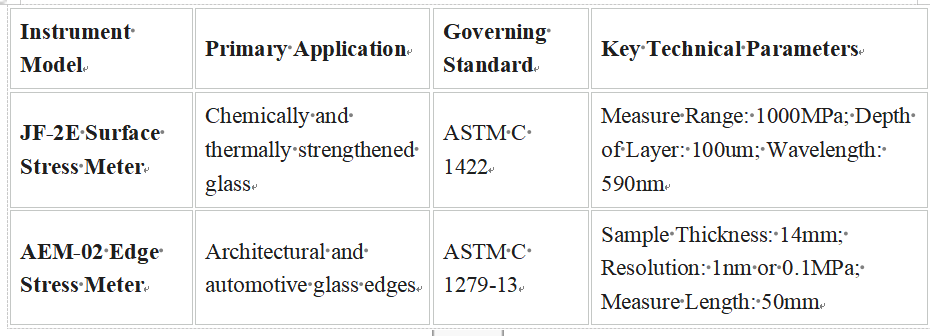
The product lineup is engineered to solve complex shop-floor inspection challenges. The JF series glass surface stress meters are built for versatility, supporting physically tempered glass, chemically strengthened glass, microcrystalline glass, fire-resistant glass, and photovoltaic patterned glass. Portable variants like the JF-2E feature compact physical dimensions, manual operation software assistants, and a 3.5-inch touch screen designed for rapid shop-floor checks, operating effectively up to a measurement range of 1000MPa and a layer depth of 100um under ASTM C 1422 compliance.
For edge-specific quality control, the AEM series glass edge stress meters utilize advanced Nematic Liquid Crystal Variable Retarders. The AEM-02 model measures edge stress in compliance with ASTM C 1279-13, serving laminated glass, annealed glass, heat-strengthened glass, and tempered glass. Capable of scanning samples up to 14mm in thickness with a calculating time of roughly 7 seconds, the device captures maximum compression, maximum tension, and zero stress positions with high clarity.
Technical Parameter Comparison of Core Inspection Systems
Verifying Supplier Credibility and Technical Support
Global exporters cannot rely solely on marketing brochures. Verifying a supplier requires examining their R&D infrastructure, calibration methods, and full-cycle technical services. Manufacturers should request calibration certificates using certified wave plates and test sample performance against known reference blocks.
Furthermore, integrating online and offline testing systems--such as the SIS series secondary image separation test systems for automotive safety glass--requires responsive engineering support. Working with an established enterprise ensures that hardware maintenance, software updates, and recalibration services remain accessible throughout the operational lifecycle of the inspection tools.
Optimizing Glass Quality Control Workflows
Selecting the correct inspection infrastructure safeguards product integrity and satisfies international export requirements.
- Assess Production Parameters: Match instrument measurement ranges directly to your maximum stress tolerances and material types.
- Verify Compliance Documentation: Confirm that all selected equipment adheres strictly to recognized standards like GB, ECE R43, ASTM, and EN.
- Engage Technical Specialists: Coordinate with experienced manufacturers to design integrated quality control setups tailored to your specific architectural or automotive fabrication lines.
Official Website: https://www.jeffoptech.com/
Source :Beijing Jeffoptics Company Limited
This article was originally published by IssueWire. Read the original article here.

Trump claims neither he nor Musk caused Ukraine Starlink outage
President Trump claimed on Friday that neither he nor SpaceX founder Elon Musk caused Ukraine’s Starlink outage earlier this week as the president clashed with Ukrainian President Volodymyr Zelensky over resumed strikes on Russian oil refineries. “I didn’t do that. No, we didn’t do that at all. In fact, I don’t even think it was...

18 reasons to get the new iPhone Duo with Smart Postpaid
A foldable design, a larger display when you need it, and the flexibility of the iPhone experience – all in one device. Apple’s much-anticipated iPhone Duo introduces a new way to experience iPhone, and Smart makes it easier for you to own it with Smart Postpaid Plans+ 1999 starting at P6,304 per month, with zero-interest

Musk settles election lottery lawsuits over $1 million voter giveaways
Tech mogul Elon Musk agreed to settle two lawsuits over his $1 million check handouts to battleground voters in the 2024 election, according to court filings published Thursday. The suits, filed in the Western District of Texas, accused the Tesla and SpaceX CEO of defrauding voters when his America PAC offered a $1 million giveaway...

AI safety group pushes for tighter export controls, limits on 'vastly superhuman AI'
A conservative AI safety group is calling for the U.S. to implement tighter restrictions on advanced chip sales to China and limit the development of “vastly superhuman AI” as part of a new framework for AI policy. Humans First, chaired by former Tea Party leader Amy Kremer, laid out what it described as an “America...

Warsh offers no fresh signals on interest rates
Federal Reserve Chair Kevin Warsh declined Friday to predict central bank officials’ future course on interest rates, less than two weeks before they meet to discuss monetary policy. “I don’t prejudge meetings. I don’t believe in saying now what I might do at the meetings that we have in the balance of this year,” Warsh...

'AI artists' perform improvised music at Jarasum Jazz Festival
Artificial intelligence (AI) models developed by a research team led by Korea Advanced Institute of Science and Technology (KAIST) professor Nam Ju-han made their debut at one of Korea’s leading jazz festivals, performing improvised jazz alongside human artists. According to the university Friday, the team showcased human-AI music collaboration technology that analyzes the flow of human performances in real time, allowing AI to take over performances or generate improvised accompaniment during the 23rd Jarasum Jazz Festival, held in Gapyeong County, Gyeonggi Province, from Oct. 9 to 11. A total of 12 human jazz artists participated in the event, collaborating with AI in 26 pieces across 12 performances. The technology is different from existing music AI services as it enables collaboration with human musicians in jazz, a genre characterized by improvisation. Jazz musicians often change the tempo or create new melodies based on how they feel in the moment. Because the same piece can be performed differently each time, musicians must listen to one another and adjust their playing accordi

Why do some Samsung employees cheer company's stock plunge?
Some Samsung Electronics employees have drawn criticism from online users after appearing to welcome a nearly 9 percent plunge in their company's share price on an anonymous workplace community. Posts written by Samsung Electronics employees on the company's board on Blind, an anonymous community for office workers, spread across online communities and social media Thursday. Blind requires users to verify their employment through their company email addresses, and displays the name of their employer alongside their usernames. According to the Korea Exchange, Samsung Electronics closed Thursday's regular trading at 210,000 won ($147), down 9.48 percent, or 22,000 won, from the previous session. One person believed to be a Samsung Electronics employee posted on Blind under the title, "Please let the stock plunge to 100,000 won." Another employee wrote a post titled, "Isn't a falling stock price actually better for Samsung Electronics employees?" The employee said, "From the Device Solutions (DS) division's perspective, a higher stock price only increases the risk associated with OPI2," ref

Michael Jordan's Steak House named Korea's best hotel restaurant
Michael Jordan’s Steak House, the only location of the U.S. restaurant brand outside the United States, has been named “Korea’s Best Hotel Restaurant 2026” at the World Culinary Awards. INSPIRE Entertainment Resort in Incheon, which houses the restaurant, said Friday that the steakhouse received the award at a ceremony held Wednesday in Jamaica. The awards recognize outstanding restaurants and culinary destinations through votes cast by industry professionals, experts and consumers. The event is a sister event of the World Travel Awards, described as the “Oscars of the travel industry.” The restaurant opened in Incheon in 2023 as the brand’s first and only location outside the U.S., bringing a selection of steaks that had proved popular in its home market. Cornerstone Restaurant Group oversees the brand in partnership with basketball legend Michael Jordan, with two U.S. locations in Chicago and Connecticut. The Incheon restaurant also received a Best of Award of Excellence in June from Wine Spectator, a U.S. wine publication, as part of its annual Restaurant Awards. “This

Chaevi wins all 4 government EV charging subsidy categories
Electric vehicle (EV) charging operator Chaevi has achieved a rare clean sweep in this year's government EV charging facility subsidy program, securing qualifications across all four categories in both network operation and hardware manufacturing. The company was selected as an operator and manufacturer of fast, medium-speed and slow charging facilities under a program overseen by the Ministry of Climate, Energy and Environment. The selection marks Chaevi’s ninth consecutive year as a designated charging facility operator and its first selection in newly introduced manufacturer categories, according to the company. The four categories cover operators of fast and medium-speed chargers, operators of slow chargers, manufacturers of fast and medium-speed chargers, and manufacturers of slow chargers, allowing Chaevi to participate in the government’s subsidy program through 2027. The government revised its evaluation system this year to assess operators and manufacturers separately, with manufacturers facing additional scrutiny of technological development, product quality and charging pe

Hyosung Heavy Industries doubles export capacity with Changwon factory
Power transmission equipment manufacturer Hyosung Heavy Industries opened a new factory in Changwon, South Gyeongsang Province, Friday, doubling its production capacity for extra-high-voltage circuit breakers rated at 420 kilovolts (kV) and above as it prepares for surging global demand for power infrastructure. The facility, covering about 18,996 square meters, will exclusively manufacture circuit breakers rated at 420 kV, 550 kV and 800 kV for export markets, strengthening the company's ability to fulfill large overseas orders. Hyosung Heavy Industries reorganized its existing circuit breaker operations to focus primarily on domestic models, while the new facility handles export products rated at 420 kV and above. The factory integrates component manufacturing, assembly, testing and shipping under one roof, creating a streamlined production system designed to improve efficiency and delivery times. Production capacity for insulation components, which are critical to circuit breaker performance, has also doubled, according to the company, which said it is the only domestic power equipmen

Samsung's Galaxy S26 Ultra, 2 other products named to TIME's Best Inventions of 2026
Samsung Electronics said Friday that three of its products have been named to TIME magazine’s list of The Best Inventions of 2026. The U.S. weekly news magazine announced the list Thursday (local time). It picked the Galaxy S26 Ultra smartphone in the Consumer Electronics category, the Bespoke AI Family Hub refrigerator in Household and the Odyssey G8 gaming monitor in Entertainment & Gaming. TIME compiles the list each year from nominations by its editors and correspondents around the world. It rates new products and ideas on originality, efficacy, ambition and impact. The magazine called the Galaxy S26 Ultra “a privacy-focused smartphone,” citing its Privacy Display. The feature effectively blocks people from viewing the screen from the side. Users can choose when it turns on or apply it only to certain content, such as pop-up notifications. TIME said this makes it more flexible than conventional privacy screen protectors. The phone is the top model in the Galaxy S26 series, which was released in March. It has a 200-megapixel wide-angle camera and artificial intelligence (AI) fea

AMCHAM chief receives honorary doctorate from Korea Aerospace University
American Chamber of Commerce in Korea (AMCHAM) Chairman James Kim received an honorary doctorate in business administration from Korea Aerospace University (KAU) on Thursday in recognition of his contributions to Korea-U.S. economic cooperation. The university recognized Kim for bringing businesses and policymakers from the two countries together to promote trade, investment and cooperation in advanced industries. It also cited his efforts to attract foreign investment to Korea and improve the business environment in the country, drawing on his experience leading global companies. A degree ceremony was held at Vision Hall in the university’s Aerospace Center following a commemorative tree-planting event. KAU President Hurr Hee-young delivered welcoming remarks, while Korean Air Executive Vice President Kenneth Chang offered congratulatory remarks. “It is a great honor to receive an honorary doctorate from a university that has been at the forefront of developing Korea’s aerospace and defense talent,” Kim said. Kim also praised KAU’s efforts to develop talent and strengthen ties



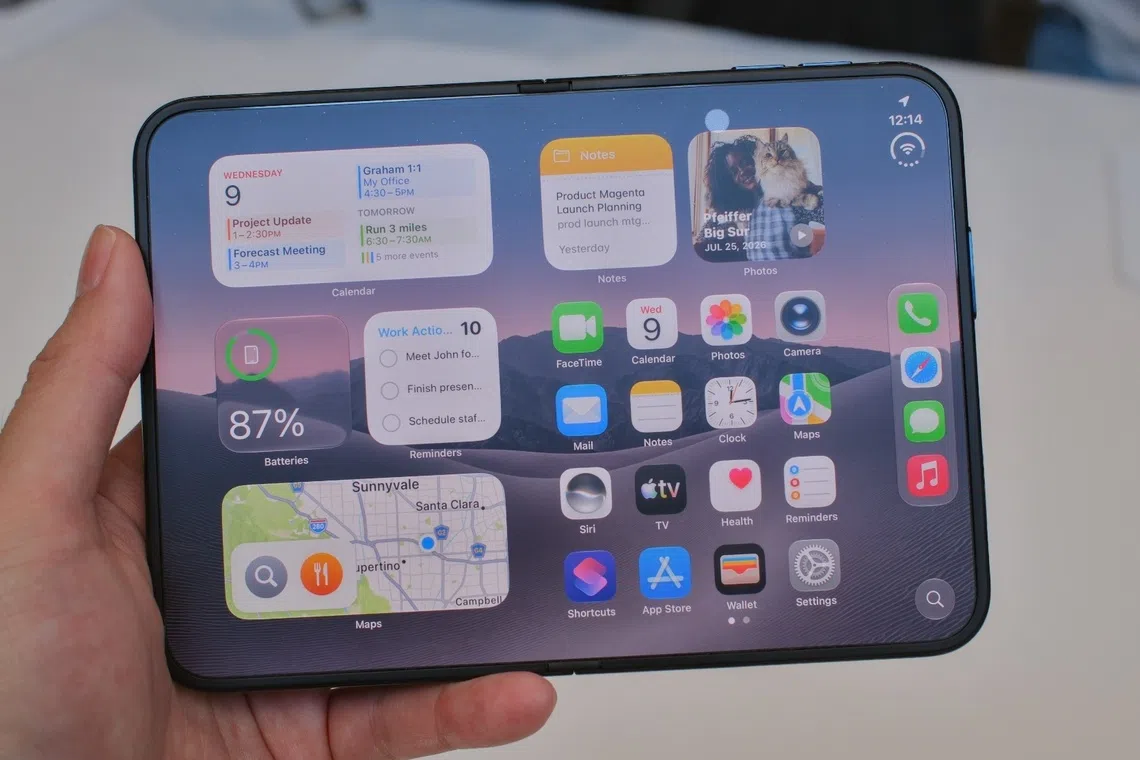


Where to preorder the iPhone Duo?

YOUR NEWS, OUR NETWORK.
Do you have Great News you want to tell the world?
Be it updates about your business or your community, you can make sure that it’s heard by submitting your story to our network reaching hundreds of news sites across 6 verticals.