
Top 10 Stone Countertop Cutting Machine Company: How WANLONG Leads the Market
Sep 26, 2026
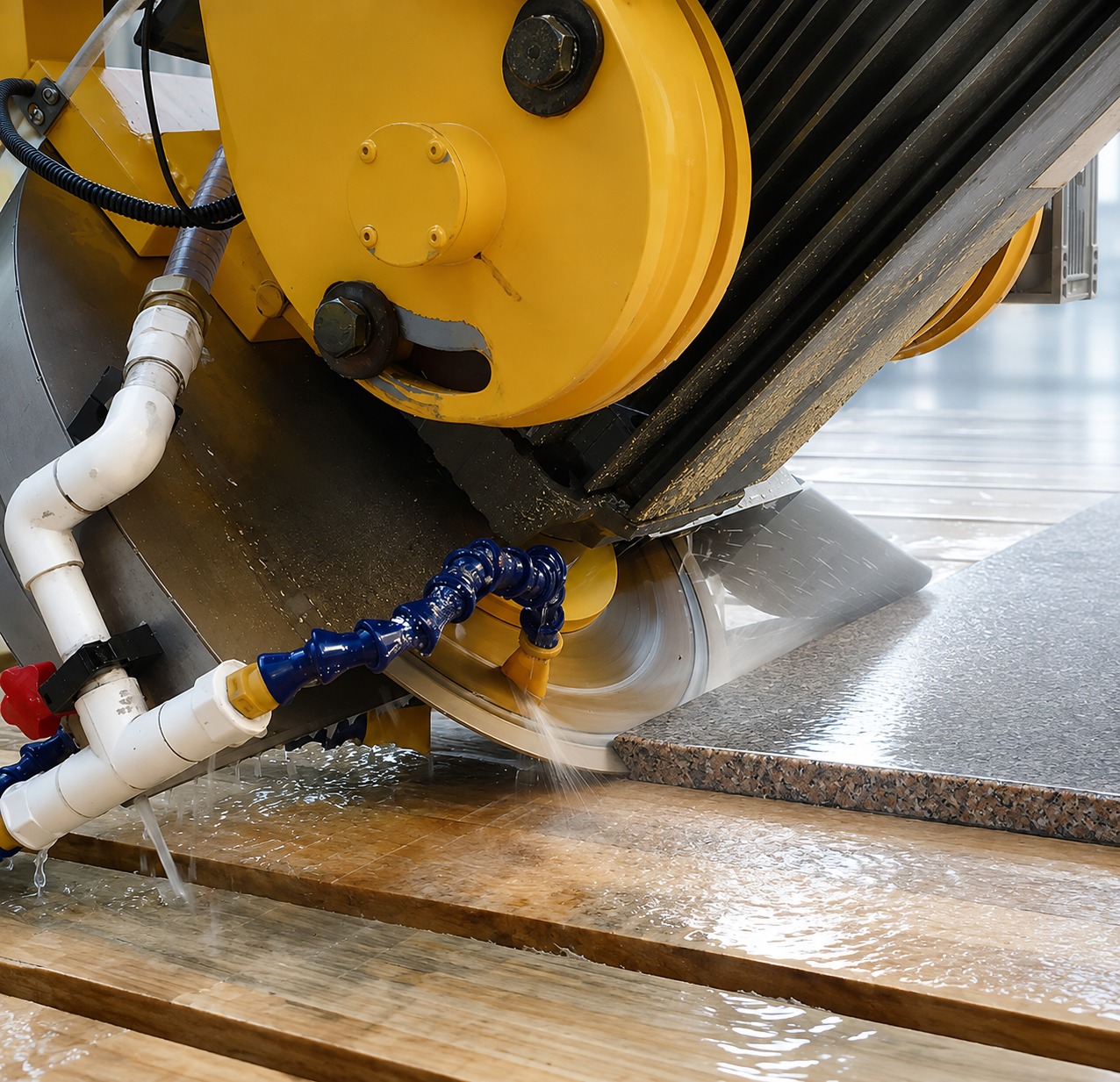
Quanzhou, Fujian Sep 25, 2026 (Issuewire.com) - Custom stone countertop fabrication demands zero-tolerance dimensional precision, automated vein-matching alignment, and chip-free edge profiling across demanding granite, quartz, and sintered stone slabs. Fabricating seamless 45-degree waterfall miter joints and complex undermount sink cutouts using traditional manual methods frequently results in edge chipping, joint misalignment, and high scrap rates. To address manual alignment errors and eliminate edge-chipping on intricate countertop profiles, Fujian Wanlong Times Technology Co., Ltd. (WANLONG / Wanlong Group) manufactures advanced stone countertop cutting machinery engineered with 5-axis CNC interpolation, overhead vision nesting, and high-speed electro-spindles. Operating since 1993, WANLONG integrates heavy monoblock frames, automated vacuum slab repositioning, and custom diamond tooling to empower high-volume kitchen countertop and vanity producers across global markets.
Operating 40,000 square meters of modern facilities across 64 acres, WANLONG establishes market leadership across four core operational pillars:
Versatile Countertop Machinery Portfolio: An integrated equipment spectrum spans cutting, edge grinding, drilling, polishing machinery, and matched superhard tooling.
Dedicated Countertop CAM and Intelligent Vein-Matching: Proprietary software imports DXF drawings, automates toolpath generation, and performs digital slab nesting with vein alignment.
High-Precision Multi-Axis Cutting and Sink Routing: Five-axis motorized electro-spindles execute forty-five-degree miter cuts and high-speed diamond routing for undermount sink cutouts.
Flexible Countertop Workstation Workflows and Global Commissioning: Hydraulic tilting tables, vacuum slab manipulators, and global on-site engineering support streamline workshop installation and daily production.
Versatile Countertop Machinery Portfolio
WANLONG delivers an integrated equipment spectrum covering every primary and secondary stage of modern stone countertop fabrication. Rather than relying on isolated equipment types, the manufacturer structures complete industrial lines that combine advanced machinery with proprietary diamond tooling. This unified equipment and consumable integration ensures synchronized operating parameters across complex workshop environments. Fabricators access specialized machinery categories engineered specifically for core countertop manufacturing workflows:
Precision Cutting Machinery: Multi-axis CNC bridge saws and infrared cutters execute primary slab sizing, forty-five-degree waterfall miters, and sink cutouts.
Architectural Edge Grinding Machinery: Specialized profiling and edge grinding machines shape complex decorative edges, including bullnose, ogee, and bevel profiles.
Specialized CNC Drilling Machinery: Automated drilling systems produce clean faucet openings, sink corner radiuses, and undermount mechanical anchor holes.
Continuous Polishing Machinery: Automated surface and edge polishers deliver uniform high-gloss finishes and smooth seam joints across natural and engineered stone.
A decisive factor establishing WANLONG among top global manufacturers is its proprietary superhard diamond tooling synergy. The company manufactures specialized consumable tooling lines calibrated to machinery electro-spindle torque curves and rotational velocities:
Diamond Saw Blades and Segments: Formulated matrices prevent edge chipping during high-speed sawing on granite, quartz, marble, and sintered stone slabs.
Diamond Drilling Tools: High-speed core drills and hole cutters produce clean, chip-free penetrations for plumbing fixtures and structural fasteners.
Grinding and Polishing Tools: CNC diamond router bits, profile wheels, and flexible resin polishing pads create mirror-smooth edge finishes efficiently.
Wear-Resistant Vacuum Brazed Tools: Brazed milling finger bits and edge bevelers deliver high wear resistance when shaping ultra-hard sintered stone surfaces.
Dedicated Countertop CAM and Intelligent Vein-Matching
Automating modern countertop production requires specialized software that simplifies complex 3D toolpath creation for kitchen and bathroom installations. WANLONG integrates intuitive CAD and CAM software capable of importing standard DXF and DWG architectural drawing files directly. The software automatically identifies countertop perimeters, faucet holes, cooktop cutouts, and undermount sink shapes to generate collision-free tool trajectories. High-definition industrial cameras positioned above the worktable capture real-time photographic maps of individual natural stone slabs. Digital slab nesting modules allow programmers to overlay virtual countertop parts onto stone textures, aligning distinct veining patterns across adjoining island panels.
Dynamic motion control algorithms protect delicate stone structures throughout aggressive cutting passes. Integrated Variable Frequency Drives (VFD) continuously monitor electro-spindle torque and cutting resistance during stone traversal. When encountering dense quartz concentrations or hard mineral inclusions, the controller automatically regulates linear axis travel speeds. This closed-loop feed adjustment maintains constant diamond tool pressure and prevents chipping along fragile marble edges. Automated tool change sequences switch smoothly between circular saw blades, core drills, and profile wheels to minimize cycle times.
High-Precision Multi-Axis Cutting and Sink Routing
Fabricating luxury residential and commercial countertops demands tight dimensional precision to ensure seamless on-site installation. WANLONG multi-axis machining centers utilize high-resolution optical linear encoders and precision ground helical racks to maintain plus or minus 0.5 mm tolerances. The articulating cutting head executes forty-five-degree miter cuts with zero angular deviation, creating perfectly aligned waterfall countertop corners. Interpolated multi-axis motion guides diamond finger bits smoothly along complex curved sink perimeters without producing faceted edge steps. Recessed drain grooves and inclined drainage slopes are milled directly into stone surfaces using programmed 3D surface interpolation routines.
High machining accuracy directly reduces downstream manual fabrication labor and material loss. Precision edge chamfering and clean internal corner cutouts eliminate secondary manual grinding before final surface polishing. Rigid spindle kinematics prevent blade deflection during deep plunge cuts in dense granites and engineered quartz slabs. Calibrated internal coolant passages direct high-pressure water jets precisely to the diamond cutting interface to clear slurry rapidly. This precise thermal and mechanical management maintains sharp diamond micro-cutting edges and preserves slab structural integrity.
Flexible Countertop Workstation Workflows and Global Commissioning
Optimizing workshop material handling is essential for maintaining high daily output across modern stone countertop fabrication facilities. WANLONG equips its CNC machining centers with heavy hydraulic worktables capable of tilting smoothly up to 85 degrees. This steep tilt angle allows operators to load large, fragile stone slabs safely using overhead cranes without risk of slab fracture. Optional vacuum suction cup manipulators mounted beside the spindle head automatically lift and relocate separated countertop pieces during nesting cycles. This automated part repositioning clears continuous blade paths, preventing tool collisions and allowing complete slab cut-out sequences without operator intervention.
Dedicated global delivery services ensure smooth factory integration and dependable long-term equipment performance worldwide. WANLONG exports heavy machinery to over 180 countries, providing experienced field service engineers for on-site mechanical assembly and laser calibration. Structured training modules instruct client operators on CAD and CAM software programming, diamond tooling selection, and preventive machine maintenance. IoT-enabled remote diagnostics connect overseas machinery directly with factory technicians in China for real-time troubleshooting and software updates. Regional spare parts warehouses maintain stock of genuine components, electro-spindles, linear guides, and diamond consumables for prompt dispatch.
Commercial Value and Strategic Partnership for Global Fabricators
Partnering directly with WANLONG provides decisive commercial and operational gains for global stone fabricators and countertop manufacturers. Direct factory sourcing eliminates intermediary commercial markups, providing favorable capital acquisition terms for high-performance automated assets. The precision alignment of WANLONG CNC saws maintains tight plus or minus 0.5 mm tolerances, reducing raw stone loss and shortening downstream polishing times. Factory-matched diamond tooling lowers power consumption and reduces tooling wear per square meter across demanding natural marbles and granites. These operational gains enable stone fabricators to expand capacity, compress project delivery cycles, and achieve higher commercial profit margins.
To download technical specifications for WANLONG stone countertop cutting machines or request a custom workshop layout proposal, visit the official portal at https://www.wanlongtimes.com/ . Direct engineering consultations and wholesale equipment quotations are available through the official international portal.
Media Contact
Wanlong Times Technology Co., Ltd.
0086 595 2249 8030
13# Zhitai Road Quanzhou Economic Technology Development Zone, Quanzhou, China
Source :Wanlong Times Technology Co., Ltd.
This article was originally published by IssueWire. Read the original article here.

Corporations' excess funds hit record high in Q2 on robust chip exports
Excess funds held by South Korean businesses hit an all-time high in the second quarter as strong semiconductor exports boosted corporate earnings, central bank data showed Wednesday. Net financial funds -- the value of financial assets minus financial liabilities -- held by non-financial corporations totaled 67.1 trillion won ($50.1 billion) at the end of June, sharply up from 20.8 trillion won three months earlier, according to the data from the Bank of Korea (BOK). It marked the highest quarterly figure since the BOK began compiling the data in 2009. Households' net financial funds fell to 60.7 trillion won in the second quarter from 79.2 trillion won in the first quarter, partly due to a fall in incomes and more purchases of homes. Financial assets held by the country's households and nonprofit organizations totaled 6,930.2 trillion won at the end of June, up 513 trillion won from three months earlier. Their debts rose by 28.2 trillion won from three months earlier to 2,495.8 trillion won over the cited period. The ratio of financial assets to liabilities owned by households stood at 2

POSCO completes upstream process of 2nd lithium plant in Argentina
POSCO Holdings has completed the upstream process of its second brine lithium plant at the Hombre Muerto Salt Flat in Argentina, laying the groundwork for an annual production capacity of 50,000 tons of lithium hydroxide, eight years after acquiring mining rights to the site. POSCO Holdings held a completion ceremony for the upstream process on Tuesday (local time) near the salt flat, located at an altitude of 4,000 meters above sea level. The ceremony was attended by POSCO Group Chairman Chang In-hwa, POSCO Argentina President Park Hyun, Argentine presidential chief of staff Karina Milei and Korean Ambassador to Argentina Lee Chong-hwa, among others. "Since I became head of the new business division in 2014, I have personally visited sites to find salt flats suitable for lithium development. It is deeply moving to have overcome numerous challenges in the extreme environment at 4,000 meters above sea level and reach today's completion," Chang said. "We will continue to proactively secure competitive resources, turn them into production and profitability and stably supply the critical mi

LG Electronics' Q3 profit rises on home appliances, auto parts
LG Electronics reported solid earnings growth in the third quarter, driven largely by strong performance in its home appliance and vehicle component businesses, the company said Wednesday in a regulatory filing. The electronics maker posted an operating profit of 781.8 billion won ($583 million) for the July-September period, up 13.5 percent from a year earlier. Sales rose 8.9 percent to 23.82 trillion won. The company attributed the growth to robust sales of its core businesses and continued expansion of business-to-business (B2B) operations. Its home appliance and vehicle solutions businesses maintained solid profitability, while its TV business also improved profitability from a year earlier. For the first nine months, LG Electronics’ sales reached a record 71.38 trillion won, up 9.2 percent from a year earlier. Operating profit also hit a record 4.03 trillion won, up 55.9 percent. Despite unfavorable external business conditions, including conflicts in the Middle East, the company said it continued to grow sales by maintaining its strong market positions in its core businesses and

S. Korea's Nuri space rocket lifts off from Naro Space Center
South Korea launched its homegrown Nuri rocket Wednesday on its fifth flight to place 15 satellites into orbit, including five that will form part of the country's first domestically launched microsatellite constellation. The 200-ton Nuri blasted off from the Naro Space Center in Goheung, about 400 kilometers southwest of Seoul, at 12:25 p.m. The payload consists of five New-space Earth Observation Satellite Constellation for National Safety (NEONSAT) microsatellites and 10 CubeSats. Nuri's first and second stages will separate about 123 and 268 seconds after liftoff, respectively, with satellite deployment beginning between 810 and 960 seconds at an altitude of around 575 kilometers. The five NEONSATs, Nos. 2 through 6, will be deployed at intervals of 35 to 40 seconds, with Nuri's upper stage rotating by about 45 degrees between each separation to prevent collisions. The 10 CubeSats will then be deployed two at a time at 10-second intervals. After releasing all 15 satellites, Nuri will perform a collision-avoidance maneuver and vent its remaining fuel, completing its flight about 20 min

KT&G launches new Indonesia plant, completes 5-country production network
KT&G has begun full-scale operations at a new cigarette plant in Indonesia, completing a five-country global production network spanning Korea, Indonesia, Russia, Kazakhstan and Turkey. KT&G said Wednesday that it held an opening ceremony for the plant in Pasuruan, East Java, on Monday Indonesia is one of the world's major tobacco markets and a key export hub in the Asia-Pacific region. KT&G entered the market in 2011 by acquiring a local company. It has since introduced Esse and Juara, its leading brands in Indonesia. The company ranks fourth in the country's cigarette market. KT&G built the plant to meet growing demand. It signed an agreement with Indonesia's Ministry of Investment and the Investment Coordinating Board in September 2023, began construction in April 2024 and started trial operations in the first half of 2026. Once all nine production lines are installed, the plant will have an annual capacity of up to 21 billion cigarettes. Combined with the existing plant's 14 billion-cigarette capacity, KT&G's total capacity in Indonesia will reach 35 billion cigarettes a year, making

KCCI, audit authority collaborate to resume construction of 4,000 public housing units
The audit authority has cleared a key hurdle for six stalled public housing projects totaling nearly 4,000 units after the Korea Chamber of Commerce and Industry (KCCI) sought a preliminary consultation on behalf of builders struggling with soaring construction costs. The KCCI said on Tuesday that the Board of Audit and Inspection (BAI) determined that project costs for the six sites, covering 3,936 housing units, can be recalculated to reflect current market conditions. The case marks the KCCI’s first use of the consultation program since it was opened to private organizations in May. “Companies have faced difficulties for a long time, but this was not an issue they could easily make a decision on,” Lee Jong-myung, head of the KCCI's industry innovation division, said. “The BAI's decision to open its doors to the private sector has added another channel for resolving corporate difficulties, and its first result will benefit the public through housing supply.” The six projects are part of a public-private housing program, with public agencies providing the land while private bu

Private sector's role increased in 5th Nuri launch
Private companies played a significantly greater role in the successful fifth launch of Korea’s Nuri rocket on Wednesday, signaling that the country’s efforts to keep pace with the global shift toward a private sector-led “New Space” era are gaining momentum. The Nuri rocket completed its fifth launch and 20-minute-long flight successfully after lifting off at the Naro Space Center in Goheung, Jeonnam-Gwangju Special Metropolitan City, at 12:25 p.m. The most notable change in the latest launch was not the rocket itself, but the growing presence of private-sector personnel at the launch site. Hanwha Aerospace has overseen the manufacturing of the Nuri rocket as its system integrator since the fourth launch on Nov. 27 last year, but this time, its role expanded to the consoles at the launch control center. Hanwha Aerospace deployed 42 staffers for the fifth launch. They participated in operations at 20 of the 22 consoles responsible for launch vehicle systems, and at 18 of them, Hanwha employees directly operated the controls instead of specialists from the Korea Aerospace Researc
![[EXPLAINER] How AI emerged as new threat in Korea's bank hacking crisis](https://newsimg.koreatimes.co.kr/2026/10/07/77d98bb7-f23e-430d-be94-38ae9821547a.jpg)
[EXPLAINER] How AI emerged as new threat in Korea's bank hacking crisis
Hackers once had to manually test security defenses, identify vulnerabilities and work out how to exploit them. Now, artificial intelligence (AI) can do much of that work, requiring little human input. That possibility is at the center of Korea's latest security crisis in the financial sector, as investigators have found traces of an AI-powered autonomous penetration-testing tool in a series of recent cyberattacks on the country's major banks. Since last week, Shinhan Bank, KB Kookmin Bank, Hana Bank, Yegaram Savings Bank and BNK Busan Bank have all reported data breaches, while Woori Bank and NH NongHyup Bank have detected signs of hacking attempts, though no data leaks were confirmed. Shinhan Bank reported that about 25,000 customers were affected, with personal information including names, phone numbers, annual income and loan limits exposed. KB Kookmin reported 119 affected customers, while Hana Bank said personal information belonging to 89 customers was exposed. The hacking spree has drawn particular concern after investigators reportedly found traces of an AI-powered tool known as

SK Energy, HD Hyundai Oilbank face fines over alleged fuel price fixing
SK Energy and HD Hyundai Oilbank may face sanctions from the Fair Trade Commission (FTC) over allegations that they colluded on gasoline, diesel and kerosene prices, with combined fines potentially reaching 4.63 trillion won ($3.45 billion). The antitrust regulator said Wednesday that it sent a review report to the two companies, formally launching deliberations over the alleged price-fixing case. The FTC said the alleged collusion lasted from February 2022, shortly before Russia's invasion of Ukraine, through March this year, shortly after the outbreak of the war in Iran. The case covers petroleum products that are essential to household and economic activity. Korea's oil refining industry is highly concentrated, with SK Energy, HD Hyundai Oilbank, GS Caltex and S-Oil accounting for about 98 percent of the domestic market. According to the FTC, SK Energy and HD Hyundai Oilbank exchanged information on the prices of gasoline, diesel and kerosene, including provisional prices, final prices and sales policies. The regulator also determined that the two companies colluded on prices followin

Beef tallow remains hurdle to Charrr's global expansion
Countries’ regulations on imported foods containing beef tallow pose a hurdle for Samyang Foods as the Korean instant noodle giant seeks to expand exports of its latest black bean sauce instant noodles, Charrr. The company has established Buldak as a massively popular product around the globe without using beef tallow, selling 10 billion units and generating cumulative sales of 7 trillion won ($5.2 billion) as of June. Unlike the spicy, brothless instant noodle brand, however, Charrr uses beef tallow as a key ingredient to give its sauce a rich, beefy flavor. Charrr is not Samyang’s first instant noodle product using beef tallow. The company launched Samyang 1963 in November last year with the ambitious goal of reviving the “forgotten” taste of its first instant noodle product, Samyang Ramen, which was introduced in 1963 and used beef tallow. Samyang Ramen, introduced by the late company founder Chun Joong-yoon to help feed a population suffering from widespread poverty at the time, remains a cornerstone of the company’s identity. Its use of beef tallow has now become part of

Bank data breach victims step up calls for compensation
A growing number of customers affected by a string of recent personal data breaches at major commercial banks and other financial firms appear to be turning to class action lawsuits in pursuit of compensation, according to industry officials, Wednesday. The banks have pledged to fully compensate customers whose losses, including those from voice phishing scams, are found to have directly resulted from the leaks. But proving that a loss was caused by a specific data breach can be difficult in practice, and the banks have yet to set out clear standards for determining which claims would qualify, prompting some victims to resort to legal action. Seven financial firms have reported information leaks so far, including three of the country’s largest commercial lenders — Shinhan Bank, KB Kookmin Bank and Hana Bank. Shinhan reported the largest breach, affecting around 25,000 people, followed by 119 at KB Kookmin and 89 at Hana Bank. The exposed data includes customers’ names, contact details, resident registration numbers, annual income and loan limits. The combination of personal and fin
![[COVER STORY] Nuri rocket successfully completes 5th flight](https://newsimg.koreatimes.co.kr/2026/10/07/6a8cafff-abc8-4ebb-86ed-8bb7b1eb07d3.jpg)
[COVER STORY] Nuri rocket successfully completes 5th flight
Korea’s domestically-developed Nuri rocket successfully carried out its mission in its fifth launch Wednesday, sequentially deploying 14 out of the 15 satellites it carried into their target orbit. The key objective of the fifth launch was to safely deploy the five microsatellite constellations, and its success has demonstrated Korea's increased multisatellite launch capabilities, taking another step toward privately-led commercial launch services. The rocket lifted off from the launchpad at the Naro Space Center in Goheung, Jeonnam-Gwangju Special Metropolitan City, at 12:25 p.m. and completed its roughly 20-minute flight at around 12:45 p.m. The rocket separated its first stage about two minutes after liftoff, followed by the second stage about four and a half minutes into the flight. At around 12:40 p.m., it reached an altitude of 570 kilometers and completed the sequential deployment of five New-space Earth Observation Satellite Constellation for National Safety (NEONSAT) microsatellites (satellites No. 2 to 6), its primary payload, along with nine of the 10 CubeSats it carried. In

Cantwell unveils new AI framework



YOUR NEWS, OUR NETWORK.
Do you have Great News you want to tell the world?
Be it updates about your business or your community, you can make sure that it’s heard by submitting your story to our network reaching hundreds of news sites across 6 verticals.