
Standard Models vs. Custom Development: Sourcing from an OEM 360 Degree Swivel Stand Producer
Sep 29, 2026
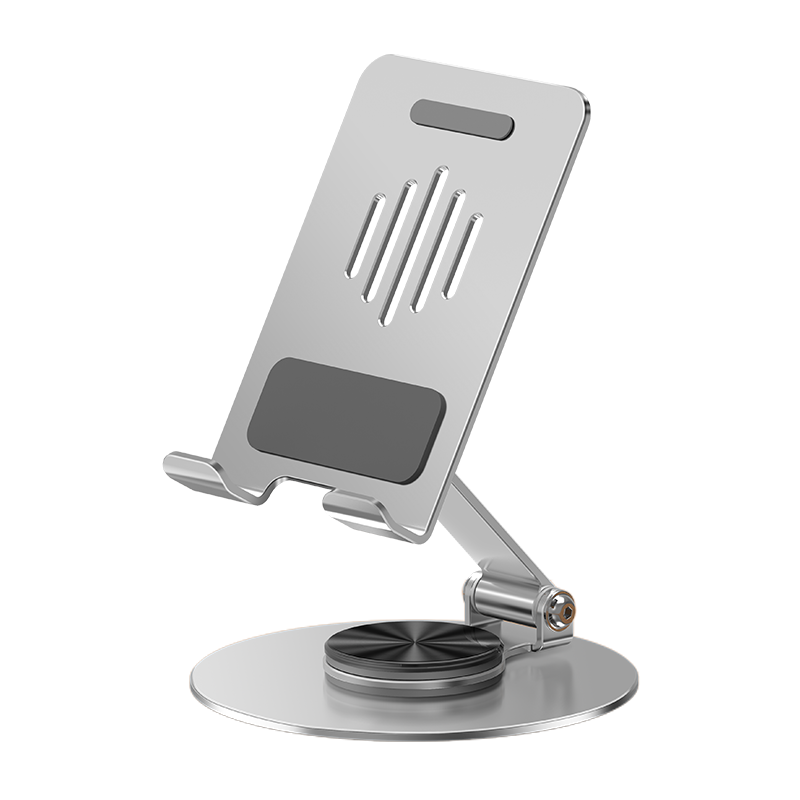
Shenzhen, Guangdong Sep 28, 2026 (Issuewire.com) - When consumer electronics brands, retail buyers, and sourcing specialists evaluate rotating metal stands, they face a strategic decision: source an off-the-shelf catalog design, adapt a proven factory model, or invest in proprietary custom tooling. Working with an OEM 360 degree swivel stand producer requires balancing upfront tooling investments, time-to-market targets, and product differentiation. Shenzhen Xinlu Hardware Products Co., Ltd. (operating as Xinlu) specializes in precision metal manufacturing, offering flexible engineering services that support standard wholesale supply, modular customization, and ground-up ODM development.
Selecting the right sourcing path determines not only initial capital outlay but also long-term product margins. Standard models minimize financial risk and get products to market quickly, while custom development creates exclusive market differentiation and tailored ergonomics. By comparing these three sourcing routes across tooling requirements, total cost of ownership, and intellectual property protection, procurement teams can make confident decisions that maximize commercial return.
Define Your Core Performance Needs First
Before reviewing factory catalogs or requesting quotes, procurement teams should clearly outline their non-negotiable performance criteria. A frequent sourcing mistake is browsing supplier catalogs superficially without confirming whether a model's mechanical tolerances match the actual operating environment.
Supported device dimensions and weights are the natural starting point. Sourcing teams must establish whether the rotating stand will support smartphones, heavy tablets, or large mobile workstations. A mechanism engineered as a compact 360 phone holder uses a smaller pivot bearing diameter and lighter rotational friction than a heavy-duty 360 laptop stand designed to support up to 5 kilograms while maintaining screen stability.
Next, buyers should define the exact rotational feel required. Does the product need continuous, fluid 360-degree rotation, or should it feature mechanical detent clicks for tactile feedback at set angles? Should rotation operate independently from tilt and height adjustments, or integrate into an articulated folding arm? Documenting these physical requirements establishes clear criteria for evaluating off-the-shelf versus custom options.
Daily usage intensity also dictates bearing selection. A stand designed for occasional home-office viewing experiences far less wear than a commercial point-of-sale display rotated hundreds of times each day. Specifying expected daily rotation cycles ensures the internal bearing and washer assembly will deliver long-term durability without loosening over time.
Compare Three Sourcing Routes: Catalog, Modded, or Custom
Understanding the practical trade-offs between standard sourcing, modular adaptation, and ground-up development helps brands balance commercial speed against proprietary design.
An Existing Model That Meets the Brief
Sourcing an existing factory model offers the fastest, lowest-risk path to market. When an established swivel laptop stand or phone mount already meets the brand's functional, aesthetic, and dimensional criteria, the procurement process is simple. Zero tooling or stamping die investment is needed, as the factory uses existing production molds and assembly fixtures. Samples are typically available from stock, and mass production can start within standard material lead times. Customization is focused on exterior branding--such as laser-etched or silk-screened logos--alongside standard anodized colorways and custom retail packaging graphics. This route is ideal for e-commerce sellers needing rapid market entry, corporate gifting programs, or distributors expanding their catalog without R&D overhead.
An Adaptation That Closes a Specific Gap
When an existing factory model is mechanically sound but lacks a specific feature required by the buyer, modular adaptation provides an efficient middle ground. For example, a customer might adopt a factory's proven 360-degree rotating base mechanism but request a modified cradle plate to support proprietary phone cases or custom silicone contact pads. Tooling investment is limited to modified stamping dies or custom silicone injection molds, avoiding the expense of re-engineering the base assembly. Factory engineers verify that the modifications maintain the stand's center of gravity, hinge torque, and rotational balance. Prototyping and testing are substantially faster than full custom development, typically requiring only pilot tool validation before volume production. This approach suits established brands seeking distinctive styling or improved device fit while leveraging field-tested rotational mechanics.
Ground-Up Custom Development for Unique Designs
When a brand needs a novel mechanical architecture, distinctive industrial design, or proprietary features, full custom development becomes the right choice. Partnering with Xinlu for custom ODM development allows buyers to engineer a proprietary 360-degree rotating stand from early concept sketches. The brand controls every mechanical dimension, hinge resistance profile, alloy grade, and aesthetic contour, creating an exclusive product competitors cannot duplicate. The buyer funds dedicated extrusion dies, stamping tools, progressive molds, and assembly fixtures. The project moves through iterative prototyping, stress analysis, cycle endurance testing, and packaging drop tests before tooling freeze. Custom development is best suited for category leaders launching flagship product lines, specialized equipment makers requiring exact device integration, and brands with volume distribution capable of amortizing tooling investments over large production runs.
Evaluate Total Sourcing Costs Beyond the Unit Price
Procurement teams should evaluate the total cost of ownership across the product lifecycle rather than focusing solely on the quoted ex-factory unit price. An attractively low piece price on a custom project can quickly be erased by high tooling amortization, development delays, or production scrap.
Tooling and NRE Costs vs. Unit Production Costs
A thorough quotation analysis separates Non-Recurring Engineering (NRE) charges from recurring manufacturing costs. Upfront NRE expenses cover 3D CAD engineering, CNC sample machining, pilot tooling fabrication, testing fixtures, and structural packaging design. Recurring costs include aluminum extrusion billets, CNC machining cycles, surface anodizing, assembly labor, packaging materials, and freight. For standard models, NRE costs are essentially zero, making smaller opening orders economically viable. For custom development, NRE investments must be amortized across projected lifetime order volumes. If forecasted annual volumes are modest, the effective per-unit cost of a custom program may exceed that of an adapted standard model.
Tooling Ownership, IP Protection, and Design Changes
Clear commercial agreements should define intellectual property ownership and tooling rights with complete clarity. When a brand funds dedicated custom tooling, the agreement should ensure exclusive ownership of all custom dies, molds, and aesthetic designs, ensuring the factory cannot supply identical hardware to other buyers. For standard or adapted catalog models, the core tooling remains factory property. Buyers should also confirm how engineering revisions are managed, ensuring the factory will not alter critical dimensions, bearing materials, or surface finishes without prior written confirmation.
Request Quotes Against a Standardized Project Scope
To evaluate supplier proposals fairly, procurement teams must benchmark quotes against an identical project scope. Comparing an all-inclusive custom development proposal against a bare-bones standard model quote produces misleading financial comparisons.
A comprehensive RFQ brief should clearly specify supported device dimensions, weight ratings, and functional rotation requirements. State the desired sourcing route--whether standard catalog selection, modular adaptation, or full custom development. Include target batch quantities, annual volume estimates, and delivery timelines. Finally, outline retail packaging needs, inspection AQL thresholds, regulatory compliance requirements, tooling ownership terms, and required prototyping milestones.
Shenzhen Xinlu Hardware Products Co., Ltd. provides transparent pricing, expert engineering guidance, and dependable production timelines across all three sourcing models. Whether you need immediate delivery of field-proven stands or a dedicated ODM engineering partnership, sourcing teams can connect with Xinlu directly or visit their official Alibaba supply channel to compare quotation schedules across catalog supply, modular adaptation, and custom manufacturing programs.
Media Contact
Shenzhen Xinlu Hardware Products Co., Ltd.
Source :Shenzhen Xinlu Hardware Products Co., Ltd.
This article was originally published by IssueWire. Read the original article here.

KCCI, audit authority collaborate to resume construction of 4,000 public housing units
The audit authority has cleared a key hurdle for six stalled public housing projects totaling nearly 4,000 units after the Korea Chamber of Commerce and Industry (KCCI) sought a preliminary consultation on behalf of builders struggling with soaring construction costs. The KCCI said on Tuesday that the Board of Audit and Inspection (BAI) determined that project costs for the six sites, covering 3,936 housing units, can be recalculated to reflect current market conditions. The case marks the KCCI’s first use of the consultation program since it was opened to private organizations in May. “Companies have faced difficulties for a long time, but this was not an issue they could easily make a decision on,” Lee Jong-myung, head of the KCCI's industry innovation division, said. “The BAI's decision to open its doors to the private sector has added another channel for resolving corporate difficulties, and its first result will benefit the public through housing supply.” The six projects are part of a public-private housing program, with public agencies providing the land while private bu

Private sector's role increased in 5th Nuri launch
Private companies played a significantly greater role in the successful fifth launch of Korea’s Nuri rocket on Wednesday, signaling that the country’s efforts to keep pace with the global shift toward a private sector-led “New Space” era are gaining momentum. The Nuri rocket completed its fifth launch and 20-minute-long flight successfully after lifting off at the Naro Space Center in Goheung, Jeonnam-Gwangju Special Metropolitan City, at 12:25 p.m. The most notable change in the latest launch was not the rocket itself, but the growing presence of private-sector personnel at the launch site. Hanwha Aerospace has overseen the manufacturing of the Nuri rocket as its system integrator since the fourth launch on Nov. 27 last year, but this time, its role expanded to the consoles at the launch control center. Hanwha Aerospace deployed 42 staffers for the fifth launch. They participated in operations at 20 of the 22 consoles responsible for launch vehicle systems, and at 18 of them, Hanwha employees directly operated the controls instead of specialists from the Korea Aerospace Researc
![[EXPLAINER] How AI emerged as new threat in Korea's bank hacking crisis](https://newsimg.koreatimes.co.kr/2026/10/07/77d98bb7-f23e-430d-be94-38ae9821547a.jpg)
[EXPLAINER] How AI emerged as new threat in Korea's bank hacking crisis
Hackers once had to manually test security defenses, identify vulnerabilities and work out how to exploit them. Now, artificial intelligence (AI) can do much of that work, requiring little human input. That possibility is at the center of Korea's latest security crisis in the financial sector, as investigators have found traces of an AI-powered autonomous penetration-testing tool in a series of recent cyberattacks on the country's major banks. Since last week, Shinhan Bank, KB Kookmin Bank, Hana Bank, Yegaram Savings Bank and BNK Busan Bank have all reported data breaches, while Woori Bank and NH NongHyup Bank have detected signs of hacking attempts, though no data leaks were confirmed. Shinhan Bank reported that about 25,000 customers were affected, with personal information including names, phone numbers, annual income and loan limits exposed. KB Kookmin reported 119 affected customers, while Hana Bank said personal information belonging to 89 customers was exposed. The hacking spree has drawn particular concern after investigators reportedly found traces of an AI-powered tool known as

SK Energy, HD Hyundai Oilbank face fines over alleged fuel price fixing
SK Energy and HD Hyundai Oilbank may face sanctions from the Fair Trade Commission (FTC) over allegations that they colluded on gasoline, diesel and kerosene prices, with combined fines potentially reaching 4.63 trillion won ($3.45 billion). The antitrust regulator said Wednesday that it sent a review report to the two companies, formally launching deliberations over the alleged price-fixing case. The FTC said the alleged collusion lasted from February 2022, shortly before Russia's invasion of Ukraine, through March this year, shortly after the outbreak of the war in Iran. The case covers petroleum products that are essential to household and economic activity. Korea's oil refining industry is highly concentrated, with SK Energy, HD Hyundai Oilbank, GS Caltex and S-Oil accounting for about 98 percent of the domestic market. According to the FTC, SK Energy and HD Hyundai Oilbank exchanged information on the prices of gasoline, diesel and kerosene, including provisional prices, final prices and sales policies. The regulator also determined that the two companies colluded on prices followin

Beef tallow remains hurdle to Charrr's global expansion
Countries’ regulations on imported foods containing beef tallow pose a hurdle for Samyang Foods as the Korean instant noodle giant seeks to expand exports of its latest black bean sauce instant noodles, Charrr. The company has established Buldak as a massively popular product around the globe without using beef tallow, selling 10 billion units and generating cumulative sales of 7 trillion won ($5.2 billion) as of June. Unlike the spicy, brothless instant noodle brand, however, Charrr uses beef tallow as a key ingredient to give its sauce a rich, beefy flavor. Charrr is not Samyang’s first instant noodle product using beef tallow. The company launched Samyang 1963 in November last year with the ambitious goal of reviving the “forgotten” taste of its first instant noodle product, Samyang Ramen, which was introduced in 1963 and used beef tallow. Samyang Ramen, introduced by the late company founder Chun Joong-yoon to help feed a population suffering from widespread poverty at the time, remains a cornerstone of the company’s identity. Its use of beef tallow has now become part of

Bank data breach victims step up calls for compensation
A growing number of customers affected by a string of recent personal data breaches at major commercial banks and other financial firms appear to be turning to class action lawsuits in pursuit of compensation, according to industry officials, Wednesday. The banks have pledged to fully compensate customers whose losses, including those from voice phishing scams, are found to have directly resulted from the leaks. But proving that a loss was caused by a specific data breach can be difficult in practice, and the banks have yet to set out clear standards for determining which claims would qualify, prompting some victims to resort to legal action. Seven financial firms have reported information leaks so far, including three of the country’s largest commercial lenders — Shinhan Bank, KB Kookmin Bank and Hana Bank. Shinhan reported the largest breach, affecting around 25,000 people, followed by 119 at KB Kookmin and 89 at Hana Bank. The exposed data includes customers’ names, contact details, resident registration numbers, annual income and loan limits. The combination of personal and fin
![[COVER STORY] Nuri rocket successfully completes 5th flight](https://newsimg.koreatimes.co.kr/2026/10/07/6a8cafff-abc8-4ebb-86ed-8bb7b1eb07d3.jpg)
[COVER STORY] Nuri rocket successfully completes 5th flight
Korea’s domestically-developed Nuri rocket successfully carried out its mission in its fifth launch Wednesday, sequentially deploying 14 out of the 15 satellites it carried into their target orbit. The key objective of the fifth launch was to safely deploy the five microsatellite constellations, and its success has demonstrated Korea's increased multisatellite launch capabilities, taking another step toward privately-led commercial launch services. The rocket lifted off from the launchpad at the Naro Space Center in Goheung, Jeonnam-Gwangju Special Metropolitan City, at 12:25 p.m. and completed its roughly 20-minute flight at around 12:45 p.m. The rocket separated its first stage about two minutes after liftoff, followed by the second stage about four and a half minutes into the flight. At around 12:40 p.m., it reached an altitude of 570 kilometers and completed the sequential deployment of five New-space Earth Observation Satellite Constellation for National Safety (NEONSAT) microsatellites (satellites No. 2 to 6), its primary payload, along with nine of the 10 CubeSats it carried. In

AMD to establish AI research center in Korea this year, hire hundreds
U.S. chip giant AMD announced Wednesday that it plans to establish an artificial intelligence (AI) research center in Korea by the end of this year and hire hundreds of researchers as part of broader AI cooperation between the company and Korea. The announcement came during a meeting between AMD CEO Lisa Su and Second Vice Minister of Science and ICT Ryu Je-myung in Seoul. AMD also plans to help develop graduate-level AI and AI transformation talent and collaborate with Korea on a reference model for heterogeneous AI computing. The model would combine AMD’s central processing units (CPUs) and graphics processing units (GPUs) with domestically developed neural processing units (NPUs). The meeting, arranged by the Ministry of Science and ICT, served as an interim review of AI cooperation agreed upon by the ministry and AMD during President Lee Jae Myung’s attendance at the San Francisco AI Summit in July. AMD also outlined plans to work with Korea’s private sector to create new business opportunities. At a subsequent roundtable with 13 Korean companies involved in AI infrastructure, c

OpenAI releases new batch of math breakthroughs
OpenAI released a new batch of mathematics breakthroughs on Tuesday following calls from AI researchers and developers to slow the growth of the technology. The company released 377 results that cover different physics, mathematical and other scientific problems solved by an OpenAI internal frontier model not yet available to the public. “Towards acceleration of scientific...

IMF chief urges countries to do more to curb debt and regulate AI
Countries both rich and poor must take faster action to cut debt and counter growing inequality as their economies weather a triple whammy from the artificial intelligence boom, heavy borrowing and shocks from wars in the Middle East and Ukraine, the head of the IMF said Wednesday. “Some very tough political choices stare us in...
China’s open-weight AI models are winning global users. Who is capturing the value?
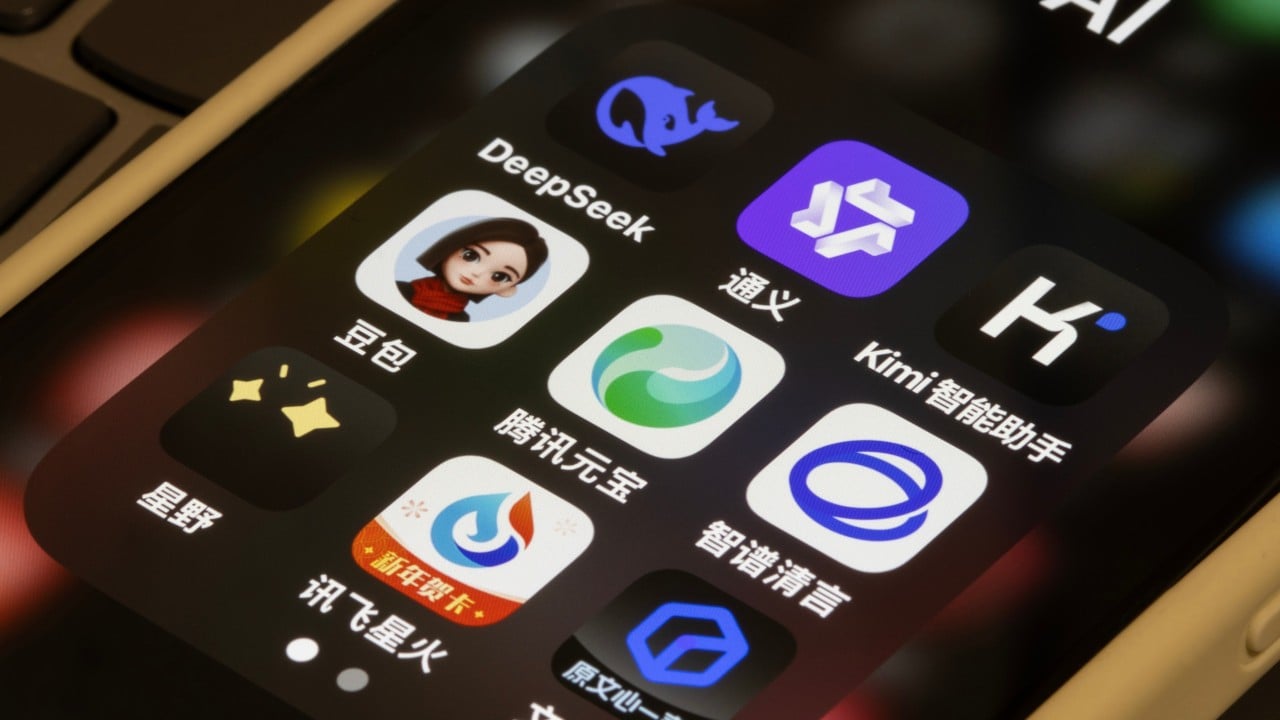
China’s open-weight artificial intelligence models are taking off globally, but much of the money they generate is flowing to third-party providers rather than the companies that create them, according to a new study. Developers including DeepSeek and Moonshot AI make their model weights – essentially the “brains” of their AI systems – freely available for download. This strategy, which has accelerated global adoption over the past two years, allows other companies to run the models on their own...

Why Trump chose these leaders to head his 'Super Intelligence Force'
President Trump’s selection of four administration officials to head up his new “Super Intelligence Force” is offering a window into how the White House will approach AI in the face of pressure over its risks. The group of government leaders each reflect different priorities of the Trump administration after months of mixed messaging on the...


YOUR NEWS, OUR NETWORK.
Do you have Great News you want to tell the world?
Be it updates about your business or your community, you can make sure that it’s heard by submitting your story to our network reaching hundreds of news sites across 6 verticals.