
Southeast Quartz Highlights High-Temperature Quartz Heating Lamp Supplier Technology at China Glass
Sep 30, 2026
Lianyungang, Jiangsu Sep 30, 2026 (Issuewire.com) - Redefining Thermal Control at China Glass
China Glass serves as a global benchmark for the industrial glass sector, bringing together glass processing machinery manufacturers, industrial furnace engineering firms, and material suppliers from around the world. Within modern glass manufacturing, precise thermal control during critical forming, annealing, and tempering cycles remains a decisive factor in final product quality. Heating elements do not merely generate bulk kinetic energy; they establish the thermal balance required to reduce internal residual stress, eliminate visual distortion, and prevent mechanical defects in high-performance glass products. As a specialized high-temperature quartz heating lamp supplier, Lianyungang Southeast Quartz Products Co.,Ltd. highlighted its thermal processing capabilities at China Glass, demonstrating how high-purity silica products optimize energy distribution across industrial heating zones.
Continuous thermal processing equipment demands consistent radiant emissions across wide operating surfaces. Minor variations in thermal output along a heating assembly can create localized cold spots or excessive temperature spikes, which compromise the structural integrity and optical clarity of output glass sheets. Rather than treating heating units as standard disposable commodities, Southeast Quartz approaches industrial heating assemblies as integrated interface systems where raw material purity, geometric precision, and internal coil design dictate overall process consistency. By matching fused quartz tubing physical characteristics with optimized internal wire geometry, Lianyungang Southeast Quartz Products Co.,Ltd. offers reliable heating solutions tailored to demanding thermal environments found across industrial production facilities.
Integrated Quartz and Heating System Engineering
During China Glass, Southeast Quartz showcased a comprehensive array of short-wave and medium-wave infrared radiation tubes, alongside matching heat-resistant quartz lamp holders, protective sleeves, and structural support components. The continuous thermal performance of a high-temperature quartz heating lamp depends on the physical characteristics of its fused silica outer envelope. High-purity fused quartz exhibits an operating temperature threshold reaching up to 1100°C, a low thermal expansion coefficient, and exceptional thermal shock resistance, which allows installed components to undergo severe temperature fluctuations without suffering structural fracture or micro-cracking. Furthermore, high-purity clear silica maintains high transmissive efficiency across the infrared optical spectrum, facilitating direct radiant energy delivery to processed workpieces.
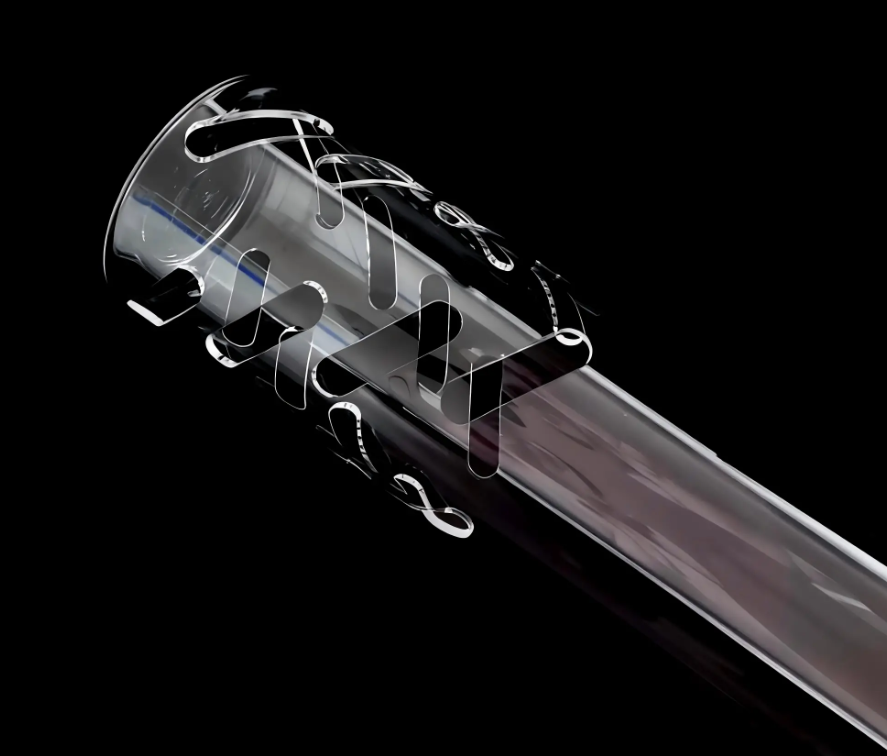
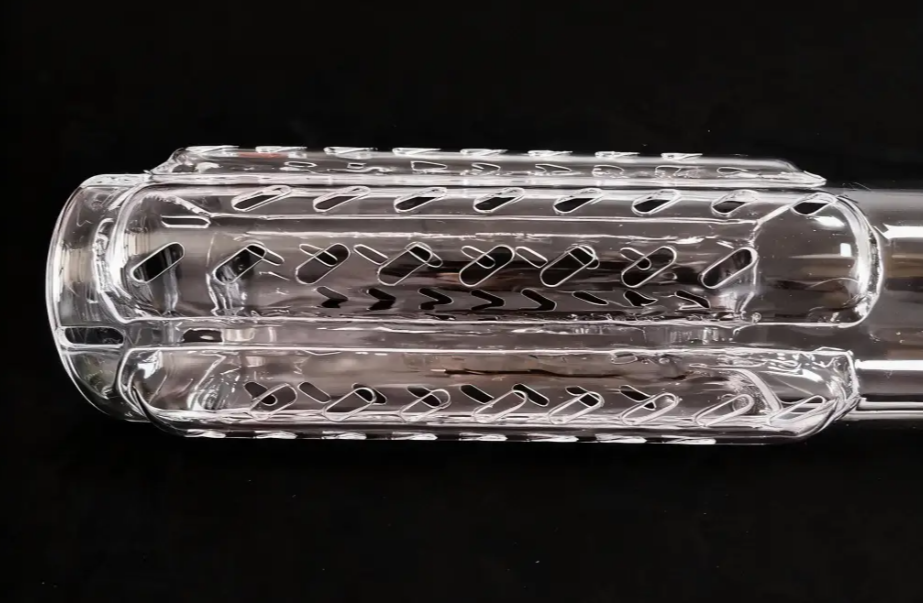
Beyond outer sheath material properties, internal structural geometry plays an important role in component operational longevity. Standard industrial heating units frequently experience premature electrical contact failure caused by unequal thermal expansion between internal metallic filaments and outer silica envelopes during extended heating cycles. To address this structural challenge, Southeast Quartz incorporates engineered filament support networks and S-shaped tension compensation profiles. These internal coil geometries accommodate linear filament elongation without applying axial mechanical tension to sealed terminal electrodes. Paired with precision-molded, high-temperature quartz lamp holders that maintain dimensional integrity and electrical insulation under strong radiant energy, the complete assembly prevents electrode weld separation during prolonged continuous manufacturing runs.
Transitioning from Light Source to Controlled Thermal Generator
In industrial furnace environments, total production yield is influenced more heavily by localized thermal gradients than by total incoming electrical wattage. Recognizing this operating condition, Southeast Quartz designs its radiant heating elements to perform as controlled thermal spot generators that keep process temperature deviations strictly within narrow target bands. Basic heating component specifications usually emphasize nominal power ratings; however, furnace design engineers require predictable spatial distribution of thermal flux across processing zones.
- High Wall-Thickness Uniformity: Precise dimensional control during quartz tube drawing eliminates localized wall thickness variations that cause uneven radiant refraction and thermal distortion.
- Filament Concentricity Alignment: Strict axial centering of the internal heating element along the central tube axis provides uniform 360-degree radial thermal distribution, preventing directional temperature concentration.
- Spectrum-Specific Reflective Coatings: Optional directional reflective coatings, such as half-white ceramic layers, focus infrared radiation toward target materials while reducing heat absorption by outer furnace walls.
Through these combined manufacturing controls, Lianyungang Southeast Quartz Products Co.,Ltd. reduces the standard deviation of surface thermal distribution across heating zones. This engineering focus allows equipment manufacturers to maintain tight thermal operating windows without installing complex external thermal baffles or relying on frequent power compensation adjustments.
Elevating Supplier Value through Complete Process Control
At China Glass, Southeast Quartz demonstrated how a quartz heating lamp supplier can shift from providing basic replacement parts to functioning as a comprehensive thermal interface partner. Located near the natural quartz sand resources of Donghai County, Jiangsu Province, Lianyungang Southeast Quartz Products Co.,Ltd. integrates raw material processing, precision thermal fabrication, and quality verification into a unified manufacturing workflow. Every production lot of high-temperature quartz components undergoes systematic testing before shipment, ensuring consistent physical performance in demanding industrial applications.
To support equipment design teams and industrial end users, Southeast Quartz provides verifiable testing documentation alongside shipped product samples. Each shipment includes spectrographic material purity analyses, stress-relief annealing verification records, and mass spectrometer helium leak inspection reports. Providing complete quality documentation allows machine builders to incorporate high-temperature quartz heating lamp components directly into their formal Bill of Materials (BOM) with confidence, simplifying procurement qualification steps and accelerating overall equipment manufacturing timelines.
Evolving Industry Standards for Industrial Quartz Components
As technical requirements for ultra-thin display glass, automotive safety glass, and photovoltaic glass substrates become more demanding, equipment design teams are updating their component selection criteria. Basic power consumption metrics alone no longer satisfy modern high-yield manufacturing operations that require precise temperature regulation. Through participation in major trade events such as China Glass, Lianyungang Southeast Quartz Products Co.,Ltd. promotes a technical approach centered on material purity, geometric precision, and long-term thermal stability.
By supplying high-purity quartz envelopes, expansion-compensating internal coils, and matching heat-resistant holders as a unified thermal assembly, Southeast Quartz assists industrial manufacturers in improving process consistency and extending component service life. Equipment builders and process engineers interested in evaluating thermal uniformity across their heating zones can explore technical specifications, custom fabrication capabilities, and international support options directly at https://www.dnquartz.com/
Media Contact
Lianyungang Southeast Quartz Products Co.,Ltd.
+86 13585286180
No. 1 Qingsheng Rd., Qinghu Industrial Park, Donghai County, Jiangsu, China/222300
Source :Lianyungang Southeast Quartz Products Co.,Ltd.
This article was originally published by IssueWire. Read the original article here.

Nuri rocket deploys 14 satellites, 1 CubeSat fails to release
The Nuri rocket successfully lifted off on its fifth launch and deployed 14 of the 15 satellites it carried into their target orbit Wednesday. The rocket lifted off from the second launch pad at the Naro Space Center in Goheung, Jeonnam-Gwangju Special Metropolitan City, at 12:25 p.m. and completed its roughly 20-minute flight at around 12:45 p.m. The rocket separated its first stage about two minutes after liftoff, followed by the second stage about four and a half minutes into the flight. At around 12:40 p.m., it reached an altitude of 570 kilometers and completed the sequential deployment of five NEONSAT swarm microsatellites (satellite No. 2 to 6), its primary payload, along with nine of the 10 CubeSats it carried. Initially, the Nuri sent signals indicating that all of the CubeSats had been successfully deployed. However, subsequent checks found that PERSAT02, developed by Quaternion, had failed to separate from the rocket. The flight ended at around 12:45 p.m. after the third stage completed its autopilot sequence. "The Nuri rocket successfully completed its planned fifth launch mis

Southeast Asia’s foodtech winners are the least glamorous ones
Southeast Asia’s foodtech story was supposed to be about disruption: lab-grown shrimp on every plate, groceries at your door in 15 minutes, ghost kitchens replacing the corner restaurant. The reality has been humbler, and arguably more interesting. The 2022 correction thinned the herd, the eFishery scandal and TaniHub’s collapse left scars, and many of the […] The post Southeast Asia’s foodtech winners are the least glamorous ones appeared first on e27.

When the carer has dementia too: Japan turns to physical AI to rescue eldercare
Some Japanese words resist translation. Take rōrō kaigo (老老介護). The character rō means “elderly”, and repeating it describes an elderly person caring for another elderly person, such as an 80-year-old husband looking after his equally frail wife on his own. That is the reality the word captures. Then there is the darker ninnin kaigo (認認介護). […] The post When the carer has dementia too: Japan turns to physical AI to rescue eldercare appeared first on e27.

Southeast Asian tech leaders are learning to trust AI agents, but not with production
AI coding agents have moved quickly from novelty to daily tool inside Southeast Asian engineering teams. Across Singapore, Bangkok, Jakarta and Ho Chi Minh City, developers are no longer just asking AI to complete a line of code or explain an error message. They are using agents to plan tasks, refactor repositories, generate tests and […] The post Southeast Asian tech leaders are learning to trust AI agents, but not with production appeared first on e27.
Nuri rocket successfully deploy 15 satellites
The Nuri rocket successfully lifted off in its fifth launch and deployed 15 satellites into their target orbit, Wednesday. The rocket lifted off from the second launch pad at the Naro Space Center in Goheung, Jeonnam-Gwangju Special Metropolitan City, at 12:25 p.m. and completed its roughly 20-minute flight at around 12:45 p.m. The rocket separated its first stage about two minutes after liftoff, followed by the second stage about four and a half minutes into the flight. At around 12:40 p.m., it reached an altitude of 570 kilometers and completed the sequential deployment of five NEONSAT swarm microsatellites, its primary payload, and 10 CubeSats. The flight ended at around 12:45 p.m. after the third stage completed its autopilot sequence. "The Nuri rocket has been confirmed to have reached its target orbit in accordance with the planned flight sequence, and all five NEONSAT swarm microsatellites were separated in the planned order,” Korea AeroSpace Administration (KASA) Administrator Oh Tae-seog said. “Based on the satellite deployment process and flight status confirmed so far, the

KT&G's No. 2 plant in Indonesia begins operations
KT&G Corp., Korea's dominant tobacco company, said Wednesday its second plant in Indonesia has begun operations as it expands its presence in Southeast Asia. The new plant is located in Pasuruan, East Java, while KT&G's first tobacco manufacturing plant in Indonesia is in Surabaya, the company said in a press release. The new Indonesian plant will serve as KT&G's manufacturing base in Southeast Asia, producing goods for export to neighboring countries and other markets, it said. The plant has an annual production capacity of 21 billion cigarettes, bringing KT&G's total production capacity in Indonesia to 35 billion cigarettes. KT&G operates tobacco plants in five countries — Korea, Russia, Turkey, Indonesia and Kazakhstan. The combined annual production capacity of its four overseas plants is expected to reach 65 billion cigarettes, the company said, without specifying when that target would be reached. KT&G's three domestic plants have a combined annual production capacity of 56 billion cigarettes. The company aims to generate half of its sales overseas in 2027. It is targeting sales of

The new engineering bottleneck isn’t writing code, it’s trusting it
For the past two years, the story engineering teams told about AI was simple: it writes code faster, so teams ship faster. That story is only half true. Code does get written faster. But Google’s 2025 DORA report, based on analysis of over 1,100 open-ended responses from Google software engineers, found that higher AI adoption […] The post The new engineering bottleneck isn’t writing code, it’s trusting it appeared first on e27.

Light liquidations and flat funding: Is Bitcoin about to explode?
Bitcoin traded in a narrow band near US$85,400 to US$85,550 during early October 7, 2026. Live aggregator readings clustered around US$85,435 to US$85,542. The 24-hour change settled at roughly -0.3 per cent to -0.5 per cent on most feeds, though one snapshot briefly showed a small positive. There were no sustained breakouts in either direction. […] The post Light liquidations and flat funding: Is Bitcoin about to explode? appeared first on e27.

Granite Asia, Google AI Futures Fund team up to back Asia’s AI founders
Asia’s AI founders are increasingly facing a split-screen reality. Investor interest is high, but building at the frontier of artificial intelligence still requires more than a seed cheque. Startups need access to large models, cloud infrastructure, technical feedback, distribution channels and patient capital, all while competing with better-funded peers in the US and China. Granite […] The post Granite Asia, Google AI Futures Fund team up to back Asia’s AI founders appeared first on e27.

Europe’s trade truce with America has not restored trust in American business
For much of the past three decades, American companies operating overseas benefited from a powerful assumption: that despite periodic political turbulence at home, the United States (US) remained a predictable and broadly reliable commercial partner. That assumption has been badly tested. Yet the latest phase of the US-European relationship is more complicated than a simple […] The post Europe’s trade truce with America has not restored trust in American business appeared first on e27.

Nuri rocket set for 5th launch to place 15 satellites into orbit
Korea's homegrown Nuri rocket is set for its fifth launch Wednesday, carrying 15 satellites, including five that will form part of the country's first domestically launched microsatellite constellation. The three-stage rocket is scheduled to lift off from the Naro Space Center in Goheung, about 400 kilometers south of Seoul, at 12:25 p.m., Oh Tae-seok, administrator of the Korea AeroSpace Administration (KASA), said. Oh said the rocket is technically ready for launch, with weather and space conditions also favorable and no concerns over potential collisions with space objects, allowing the launch to proceed as scheduled. The payload consists of five New-space Earth Observation Satellite Constellation for National Safety (NEONSAT) microsatellites and 10 CubeSats. About four hours before liftoff, the launch team will begin filling the three-stage rocket with kerosene fuel and liquid oxygen oxidizer after completing system checks. Nuri's first and second stages will separate about 123 and 268 seconds after liftoff, respectively, with satellite deployment beginning between 810 and 960 seconds

AI could turn concierge medicine into the future interface to healthcare
Concierge medicine is expensive for a simple reason: physician attention is scarce. A typical primary-care doctor may be responsible for 2,000 or more patients, while concierge practices generally restrict panels to 400 or fewer to 600. Patients pay annual retainers ranging from a few thousand dollars to tens of thousands for longer appointments and faster […] The post AI could turn concierge medicine into the future interface to healthcare appeared first on e27.


YOUR NEWS, OUR NETWORK.
Do you have Great News you want to tell the world?
Be it updates about your business or your community, you can make sure that it’s heard by submitting your story to our network reaching hundreds of news sites across 6 verticals.