
Solar Street Lamp Manufacturer: TX Solar's Split-Type Solutions With Lithium and Gel Battery Options
Nov 2, 2026

Yangzhou, Jiangsu Nov 1, 2026 (Issuewire.com) - Municipal highway authorities and infrastructure contractors face diverse climatic challenges when illuminating regional transit corridors, desert expressways, and sub-zero mountain routes. Fixed battery configurations often struggle under extreme diurnal temperature swings, sub-zero ground freezing, or high solar thermal absorption. To address regional climate extremes and provide adaptable energy storage architectures, Yangzhou Tianxiang Road Lamp Equipment Co., Ltd. (TX Solar / Tianxiang Group) manufactures engineered split solar street lights with lithium and gel battery options tailored to specific road cross-sections and local weather profiles. Established in 2008 with manufacturing roots dating back to 1996, TX Solar delivers complete, scalable split-type solar lighting systems for infrastructure projects across more than 20 countries.
Addressing diverse climatic demands from desert heat to coastal moisture, TX Solar engineers split-type solar street lamp systems across five primary technical pillars:
Chemical Mechanism and Storage Characteristics: Comparing high energy density lithium iron phosphate architectures with durable gel electrolyte storage chemistry.
Operating Temperature Resilience and Climatic Adaptation: Sizing battery enclosures and chemistry profiles to ensure stable output across varied climatic environments.
Mounting Ergonomics and Mechanical Layout: Evaluating pole-mounted aluminum battery enclosures against subterranean waterproof battery vaults for site conditions.
Road Hierarchy Mapping and Luminaire Scaling: Configuring coordinated 6 meter to 12 meter systems with independent solar panels and high-output LED optics.
Conditional Procurement Decision Framework: Establishing clear selection rules based on project ambient temperatures, cycling demands, and civil installation budgets.
Chemical Mechanism and Storage Characteristics
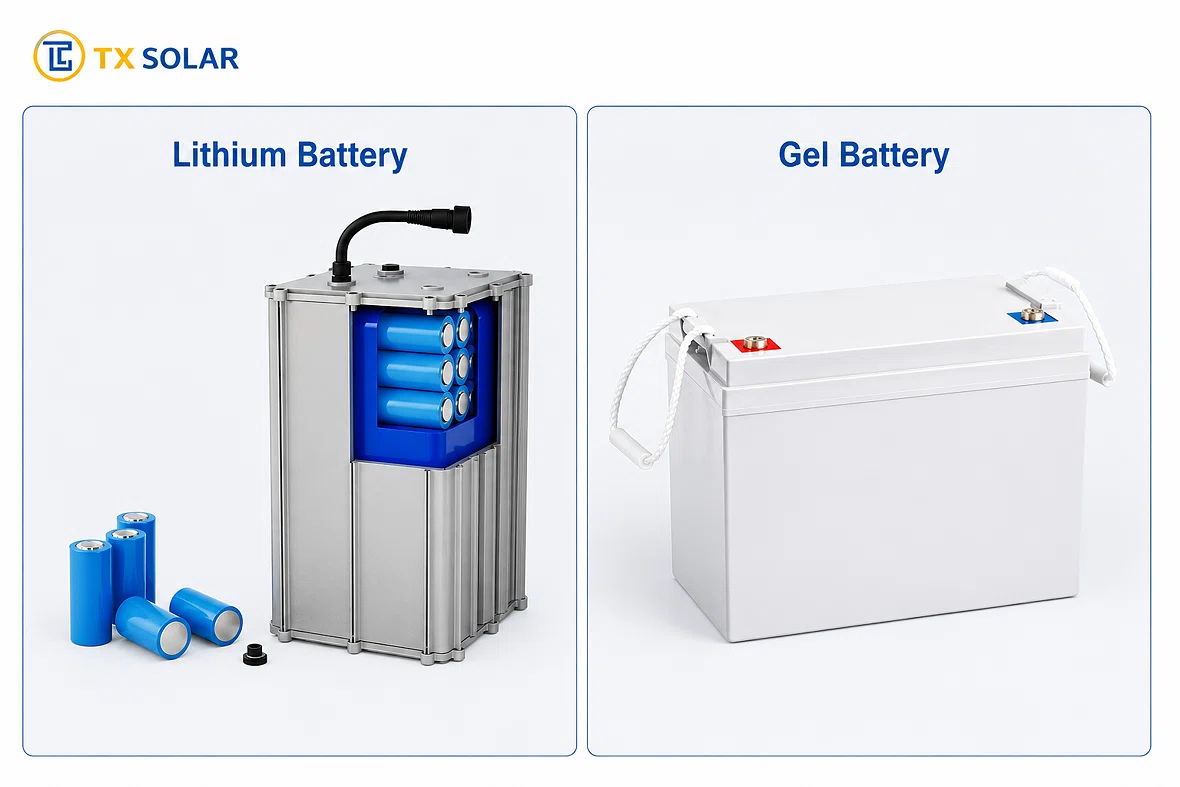
Energy storage chemistry fundamentally determines electrical cycling capability, physical footprint, and long-term maintenance overhead. TX Solar engineers dedicated lithium iron phosphate battery packs alongside heavy-duty gel battery configurations to match distinct project requirements. Lithium iron phosphate features compact dimensions that enable pole-top mounting without ground excavation. With superior energy density and extended cycle longevity compared to conventional lead-acid chemistries, lithium batteries deliver exceptional depth-of-discharge resilience. The modular lithium architecture provides built-in digital protection and ultra-low self-discharge rates during idle periods. Gel electrolyte chemistry utilizes immobilized silica gel electrolytes that prevent acid stratification. Gel batteries provide steady charge acceptance under continuous floating conditions. This design offers a dependable and cost-effective storage solution with proven field reliability in large-scale rural electrification.
Operating Temperature Resilience and Climatic Adaptation
Ambient temperature fluctuations significantly affect battery internal resistance and charging efficiency. TX Solar engineers battery systems to operate across demanding regional temperature profiles. The company supplies lithium iron phosphate battery packs engineered with internal thermal insulation. This construction maintains stable electrochemical performance across wide diurnal temperature swings. Gel batteries excel in thermal stability across extreme high and low ambient temperatures. The silica gel electrolyte acts as a thermal buffer. This property prevents electrolyte evaporation in arid desert regions. For cold climate installations, gel batteries maintain stable chemical activity when installed in subterranean insulated boxes below the frost line. Matching battery chemistry to regional climate data ensures continuous year-round lighting performance.
Mounting Ergonomics and Mechanical Layout
Split solar lighting designs permit two distinct physical layouts for battery positioning. Lithium iron phosphate packs are commonly housed in waterproof die-cast aluminum boxes mounted directly beneath the solar panel bracket. This pole-top configuration minimizes cable run distances between the panel, battery, and LED fixture. It also elevates the energy storage pack above surface ground moisture. Gel batteries are typically housed in heavy-duty molded waterproof enclosures installed underground adjacent to the pole base. Subterranean placement provides natural ground temperature regulation. This underground position shields the battery bank from direct solar thermal absorption. TX Solar fabricates structural steel poles equipped with secure access hatches, internal wiring channels, and reinforced base plates to accommodate either mounting method.
Road Hierarchy Mapping and Luminaire Scaling
Road engineering projects require scalable physical structures to satisfy diverse roadway geometries, traffic volumes, and illumination standards. TX Solar manufactures split solar street light assemblies across mounting heights from 6 meters to 12 meters with luminaire ratings from 30W to 120W, matched to specific roadway classifications:
High-Mast Expressways and Primary Arterials: Designed for multi-lane transport corridors, highway interchanges, and industrial ports. These systems integrate high-lumen optical engines with elevated mast configurations to achieve broad ground lux uniformity, wide pole spacing, and maximum coverage across multi-lane spans.
Mid-Elevation Municipal Avenues and Commercial Hubs: Configured for dual-lane urban transit corridors, industrial logistics parks, and institutional perimeter roads, balancing focused pavement illumination with energy conservation.
Low-Profile Rural Access and Community Pathways: Engineered for village road networks, residential branches, and pedestrian greenways, delivering efficient, glare-free off-grid illumination optimized for lower mounting heights and rapid installation.
High-transmittance monocrystalline solar panels and precision bat-wing optical lenses distribute light evenly across target lanes while minimizing visual glare for drivers.
Conditional Procurement Decision Framework
Selecting between lithium and gel battery systems depends on local climatic extremes, civil labor costs, and project maintenance schedules:
Specify Lithium (LiFePO4) Systems: When roadway projects demand rapid aerial assembly, minimal civil groundwork, high cycling longevity, or compact pole-top mounting in high-density urban corridors.
Specify Gel Battery Packages: When installations face severe winter frost, desert heat, or strict upfront budget constraints across extensive rural road networks. Subterranean placement below the frost line shields gel cells from surface thermal spikes while providing natural temperature buffering.
TX Solar provides detailed DIALux calculations, battery autonomy simulations, and wind-load assessments to assist procurement teams in selecting the optimal split configuration.
Direct Factory Manufacturing and Quality Assurance
Sourcing split solar street lights directly from an established source manufacturer guarantees strict mechanical and electrical compatibility across all sub-assemblies while eliminating intermediary commercial markups. TX Solar operates specialized internal workshops for photovoltaic module fabrication, lithium battery pack assembly, LED luminaire production, and steel pole processing. Operating across a 62,000 square meter production complex equipped with over 220 specialized machines ensures exceptional manufacturing consistency. The quality assurance team conducts 16 comprehensive functional tests on every split lighting package before dispatch. Steel poles undergo internal and external hot-dip galvanizing with electrostatic powder coating to ensure multi-decade structural durability. Having supplied over 1,700,000 lighting units to infrastructure projects across more than 20 countries, TX Solar provides proven manufacturing capacity and dependable logistics support for major international road tenders.
Access complete technical engineering sheets for our split-type solar street lamps on the official TX Solar international portal. Inquire about custom lithium or gel storage configurations, bracket drawings, and direct factory pricing at https://www.txzmlamp.com/.
Media Contact
Yangzhou Tianxiang Road Lamp Equipment Co., Ltd.
+86 13905254640
Second industrial park, Guoji Town, Yangzhou City, JiangSu Province, China.
Source :Yangzhou Tianxiang Road Lamp Equipment Co., Ltd.
This article was originally published by IssueWire. Read the original article here.

POSCO union to vote on tentative wage deal this week
Unionized workers at South Korean steelmaker POSCO will vote this week on a tentative wage agreement reached with management, the union said Sunday. The two sides have held 30 rounds of negotiations since June, while the union staged two partial strikes in September to demand higher wages and bonuses. Last week, the union said it would launch an "indefinite" strike from Nov. 2 unless the company presented an acceptable wage offer. On Friday, the union reached a tentative agreement on the company's latest offer, which includes a 2.6 percent increase in base pay, a one-off payment of 6 million won ($4,500) and improved benefits. Union members are scheduled to vote on the deal on Saturday. The union had initially demanded a 7.1 percent increase in base pay, a performance bonus equivalent to 600 percent of base pay, 50 company shares per worker and a holiday bonus equivalent to 200 percent of base pay. In addition to higher wages, the union cited staffing shortages and aging facilities as factors that could heighten the risk of workplace accidents. Management's previous offer included a 2.5 pe

From 'Lake of Death' to Clavius, Korea searches moon for 2032 landing sites
Korea is shopping for real estate on the moon, and its newly established space agency has its eye on some of the lunar surface’s most forbidding neighborhoods. At a recent academic symposium, the Korea AeroSpace Administration (KASA) revealed a shortlist of prospective landing sites for two robotic missions scheduled for 2032. The agency is weighing 20 candidate zones for its flagship lunar lander and nine for a precursor soft-landing demonstration craft, signaling a decisive shift toward boots-on-the-surface ambitions for a nation long playing catch-up in deep-space exploration. Rather than sticking strictly to the lunar south pole — a crowded target for NASA’s Artemis program and rival missions seeking water ice — Korean scientists are eyeing a broader, strategically varied grid. The candidate list spans ancient impact basins, jagged basaltic plains, and deep pit craters that could house underground lava tubes. Among the standout targets for the early 2032 verification probe is Lacus Mortis, or the "Lake of Death," a pitted plain that scientists suspect holds collapsed lava tub

Hana sponsors autism awareness race for 7th straight year
Hana Financial Group said Sunday it participated in the 2026 Autism Race the day before to promote public understanding of autism and foster a culture of respect and inclusion. The group has officially sponsored the annual running campaign, organized by the Autism Society of Korea, for seven consecutive years since 2020. About 100 participants, including Hana Financial Group Vice Chairman Lee Eun-hyung, employees and their families, voluntarily joined Saturday’s event, running alongside participants with autism. All registration fees paid by the group’s employees will be donated to the association to support people with autism. The campaign aims to encourage people to view differences not as barriers or grounds for discrimination, but as diversity that enriches society. “It is meaningful to join efforts to broaden understanding and respect for people with autism and build an inclusive society,” Lee said. “We will continue providing sincere attention and support so that people with autism and other members of society can grow together as respected members of our communities.” Han

Samsung chairman highlights chip packaging, visits Japanese unit
Samsung Electronics Executive Chairman Lee Jae-yong visited the company’s semiconductor advanced packaging technology laboratory in Japan, Sunday, pledging to continue expanding its research workforce there and develop the lab into a global R&D hub for next-generation packaging technologies. According to Samsung Electronics, Lee visited Advanced Package Lab (APL) in Yokohama and discussed with researchers the latest developments in technologies for advanced packaging materials and processes, as well as ways to strengthen cooperation with Japan's materials, parts and equipment industries. Lee stressed the importance of securing advanced packaging technologies, as they are emerging as critical for artificial intelligence (AI) processor chips. APL was established in 2023 and held its official opening ceremony in September this year. Starting in 2024, Samsung Electronics has been investing 40 billion yen ($254 million) over five years to establish its research infrastructure in Japan and strengthen its competitiveness in advanced packaging technologies. APL specializes in developing and va

ISS backs Lee Jae-keun's appointment as KB Financial chairman
Institutional Shareholder Services (ISS) has recommended that shareholders vote in favor of appointing Lee Jae-keun as chairman of KB Financial Group. In its voting recommendations report obtained by The Korea Times, Sunday, the world's largest proxy advisory firm said "a vote for this resolution is warranted given the absence of any known issues concerning the nominee and the company's board dynamics." ISS also noted that KB Financial Group maintains good disclosure practices regarding committee meetings, voluntarily providing attendance records to help shareholders better assess directors' effectiveness and contributions. Most companies in Korea follow a disclosure template provided by the Korea Exchange that does not require companies to disclose committee meeting attendance records. As a result, it is common for companies to omit such information from regulatory filings, ISS added. The recommendation comes ahead of KB Financial Group's extraordinary shareholders' meeting on Nov. 20, when shareholders will vote on Lee's appointment as group chairman. If appointed, Lee will lead the gr

CJ Olive Young expands Olive Better wellness chain to 5 locations
CJ Olive Young has expanded its Olive Better wellness retail platform to five locations, adding branches tailored to office workers and tourists as it seeks to make wellness products part of consumers’ everyday routines. The expansion comes nine months after the first store opened in Seoul’s Gwanghwamun area in January. The company added stores at Starfield Coex Mall in southern Seoul and in Seongsu in eastern Seoul both last month, adapting product selections and experiences to each neighborhood’s customers. The Coex store focuses on “office wellness,” targeting workers seeking convenient ways to maintain healthy habits during busy schedules. Healthy snacks and protein products occupy the front of the store, helping shoppers quickly find items suited to their needs. A Daily Routine Bar offers products for individual purchase, allowing customers to try wellness items during commutes or lunch breaks. The Seongsu store, which opened Friday, is the chain’s largest and emphasizes experiences for trend-conscious shoppers and foreign tourists. It includes Better Bar, a food and beve

OpenAI CEO's Codex keyboard gift to Samsung presidents draws attention
A miniature keyboard presented by OpenAI CEO Sam Altman to Samsung Group executives is drawing attention, as the device is designed not for conventional typing but specifically for vibe coding using OpenAI's Codex. The gift is being seen as a glimpse into what Altman described to the executives as OpenAI's vision for the future of computer interaction. According to OpenAI and Samsung, Altman visited a Samsung Group training center in Yongin, Gyeonggi Province, Saturday and engaged in a fireside chat with more than 50 presidents of Samsung Electronics and other affiliates. During the event, Altman presented the Samsung executives with Codex Micro keyboards, designed to be used with Codex. Altman said the keyboard reflects the idea that people may no longer need a full keyboard in a world where they can interact with computers through voice commands and artificial intelligence (AI), adding that the device could also help users work with Codex more quickly. The Codex Micro Keyboard is a miniature keyboard released as the first hardware product under the OpenAI brand. Developed in collaborati

KB Kookmin Bank to lead $9.45 bil. AI infrastructure financing
KB Kookmin Bank has secured the lead arranger role in a 12.6 trillion won ($9.45 billion) project to build artificial intelligence (AI) computing infrastructure in Korea, the lender said Sunday. Led by Brookfield, one of the world’s largest alternative asset managers, the project involves acquiring major high-performance computing equipment, including graphics processing units (GPUs), and supplying the infrastructure to Naver Cloud. The deal marks the largest syndicated loan arrangement in Korea’s history. Such loans allow multiple financial institutions to jointly finance a large-scale project. It is also the country’s first GPU financing deal — a departure from conventional project financing, which has typically centered on assets like real estate or power plants. Rather than relying on immediate returns, the structure uses anticipated long-term revenue from supplying AI computing capacity to support the project's substantial upfront investment needs. Of the 12.6 trillion won in total costs, roughly 10.7 trillion won will be raised through loans. As lead arranger, KB Kookmin Ba

HD Hyundai Robotics, Palantir to slash robot programming costs with AI
HD Hyundai Robotics is working with Palantir Technologies to integrate artificial intelligence (AI), simulation and human engineers’ expertise into robot programming, aiming to cut programming costs by more than half. According to HD Hyundai Robotics on Sunday, Ahn Sung-hwan, the company's chief technology officer and vice president, outlined the collaboration during a keynote address at Palantir’s recent Sovereignty Bootcamp in New York. He presented his company’s strategy for applying physical AI and its vision for the technology. The collaboration focused on changing how human engineers can solve problems on factory floors. Under the two companies’ collaboration, AI agents analyze existing robot programs and propose improvements. The engineers can then refine what the AI comes up with using their practical experiences. Traditionally, skilled engineers have had to observe robots on-site and repeatedly adjust work sequences, movement paths and speeds. This reliance on individual experience has made the process difficult to standardize. HD Hyundai Robotics said the two companies

US or China? Why Kazakhstan refuses to pick sides as it eyes AI revolution
Driving along the wide boulevards of Astana during a recent trip to the Kazakh capital, signs of China’s growing commercial footprint were everywhere. Chinese cars were becoming a common sight on the streets here, as brands from BYD to Changan made aggressive inroads in a market once dominated by South Korea’s Hyundai and Kia, said the driver who picked me up from the airport in a gleaming Changan electric vehicle. But it was not the rise of Chinese tech that had brought me to this energy-rich...
Filipino indie game platform Alon launched at Gamescom Asia
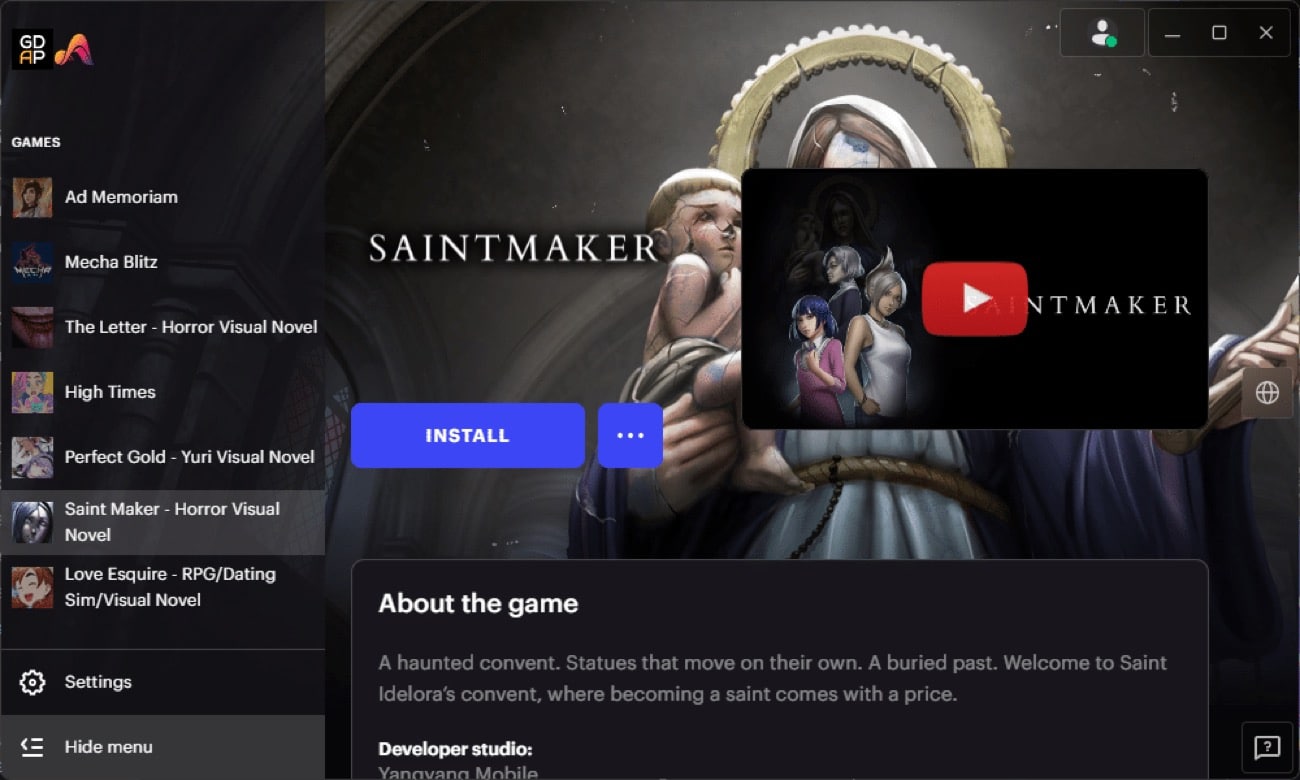
The Game Developers Association of the Philippines (GDAP) recently unveiled ‘Alon,’ a distribution platform built for games made by Filipino studios and indie game developers in the Philippines. It is a partnership between GDAP, payments and game services company Xsolla, and the Department of Trade and Industry’s Export Management Bureau (DTI-EMB). Alon was officially unveiled

Binance recovers 90 percent of stolen assets from hack
Cryptocurrency exchange Binance said Saturday that it was able to replenish 90 percent of the stolen assets after a $6.3 billion hack of its platform. On Thursday, the money started moving out of Binance wallets, prompting the company to suspend all deposits and withdrawals. Some cryptocurrency firms froze around $3 billion in assets in connection...




Hanwha bags 1st US Navy shipbuilding order
YOUR NEWS, OUR NETWORK.
Do you have Great News you want to tell the world?
Be it updates about your business or your community, you can make sure that it’s heard by submitting your story to our network reaching hundreds of news sites across 6 verticals.