
Shipbuilding Panel Line Equipment: Driving Coordinated Automation in International Shipyards
Sep 29, 2026
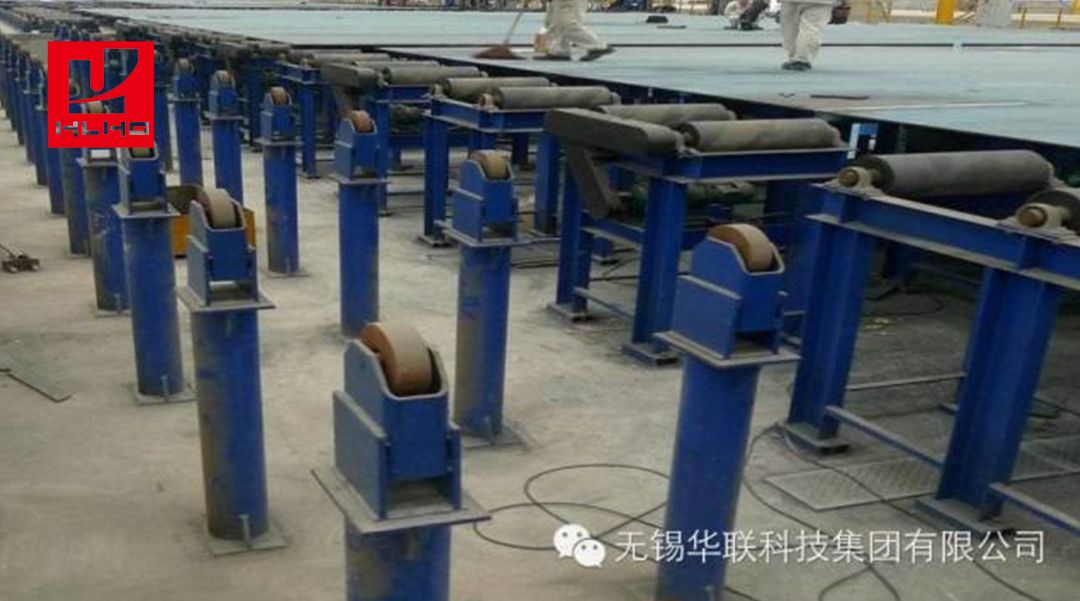
Wuxi, Jiangsu Sep 28, 2026 (Issuewire.com) - Modern Shipbuilding Panel Line equipment transforms flat maritime steel plates into rigid structural blocks for commercial and naval vessels. Engineering heavy shipyard automation since 1987, maritime machinery builder Wuxi Hualian Science & Technology Group--recognized across international yards as Hualian, builds synchronized panel production machinery. Global commercial shipbuilding demands accelerated delivery cycles, uncompromising joint integrity, and strict dimensional control across expanding order books. Transitioning from manual assembly to synchronized automation forms the core of modern shipyard productivity, enabling international shipyards to accelerate vessel block pre-assembly without increasing skilled labor requirements.
Plate fitting establishes the geometry of the joint
The panel line begins at the plate joining station, where multiple flame-cut or milled steel plates are aligned edge-to-edge. Standard ship plates measuring 2 to 3 meters in width and up to 16 meters in length are positioned on motorized roller conveyors. Hydraulic clamping units and magnetic positioning beds force adjoining plate surfaces perfectly flush. Eliminating vertical mismatch and controlling root gaps along long seams prevents excessive weld shrinkage and ensures uniform penetration during subsequent automatic joining passes. Accurate plate fit-up directly prevents weld pool roll-over and burn-through. Maintaining uniform root openings across long butt joints stabilizes welding arc parameters, creating consistent reverse-side bead contours. Magnetic alignment beds pull adjoining plate edges tight against heavy copper backing beams, eliminating mechanical step misalignments that cause weld defects under radiographic inspection.
Single-sided plate joining can form the weld on the reverse side
Joining wide plate assemblies historically required flipping heavy plates with overhead cranes to weld both sides. Hualian integrates flux-copper backing technology with multi-arc submerged arc welding gantries. This configuration deposits full-penetration butt welds entirely from the upper surface. The single-sided welding system employs a three-wire three-arc arrangement powered by four coordinated power sources. Operating across plate thicknesses from 10 mm to 35 mm, the gantry achieves travel speeds between 200 mm and 900 mm per minute. Granular flux pressed against a copper backing bar supports the molten weld pool from beneath. This creates a uniform, defect-free root bead on the reverse plate side without requiring gouging or back-chipping, slashing handling time and crane danger.
Single-pass butt joining protects plate surfaces from crane rigging gouges and eliminates the severe safety risks associated with flipping multi-ton plate assemblies. Eliminating crane flips saves up to forty minutes per plate assembly, allowing downstream stiffener gantries to operate without material starvation. Solidified backing flux forms a clean, uniform under-bead that meets radiographic inspection criteria on the first pass. This eliminates the need for pneumatic back-gouging or manual grinding on reverse plate faces. Avoiding back-gouging reduces workshop noise, suppresses airborne metallic dust, and accelerates plate transit into downstream stiffener mounting bays.
Marking and positioning prepare the longitudinal stiffeners
Once welded plates pass visual and ultrasonic testing, motorized roller beds transfer the panel blank to the stiffener mounting station. Longitudinal stiffeners, including bulb flats, angles, and welded T-sections, provide primary bending resistance across ship decks and bottom hulls. Automated conveyor carriages index stiffeners into position according to pre-marked layout lines. Heavy hydraulic clamping jaws hold stiffener webs tightly against the base plate under tons of clamping force, eliminating air gaps before welding commences. Synchronized multi-torch fillet welding gantries travel along the stiffener length, depositing balanced fillet welds on both sides simultaneously. Dual-side welding balances thermal heat input, dramatically reducing angular plate distortion and oil-canning.
Maintaining straight stiffener alignment ensures seamless structural continuity when hull blocks join together during dry dock erection. Sensors mounted on stiffener welding torches track joint seams dynamically, adjusting torch angles to accommodate minor mill camber in hot-rolled steel profiles. Automated stiffener feeder arms lift individual profiles from staging racks and orient them perpendicular to the plate surface. Pneumatic hold-down shoes press stiffener flanges firmly during tacking, maintaining straight alignment without human intervention.
Floor and girder work expands the assembly beyond the stiffened plate
After longitudinal stiffeners are securely welded, the panel moves downline to receive transverse floors, deep web girders, and internal bulkheads. These structural members provide transverse strength across the vessel hull. Operators utilize semi-automatic welding packages mounted on articulated booms to execute high-deposition fillet welds in challenging structural corners. The line design provides safe, well-lit walk-on access for fitters, welders, and quality control inspectors. Dedicated transverse staging areas enable shipyard fitters to position complex internal web frames without blocking upstream plate welding operations. Well-planned staging platforms allow welding crews to maneuver flux-cored guns efficiently around deep transverse girders, maintaining high deposition rates. Overhead articulated booms support heavy welding wire feeders and cable bundles, keeping workshop floor surfaces clear of tripping hazards. Mobile staging platforms allow fabricators to weld deep girder junctions comfortably, sustaining consistent arc-on time across extended production shifts.
Describe coordinated automation by the task being performed
Evaluating shipyard automation requires distinguishing between active process machinery and material handling equipment. High overall productivity relies on smooth coordination between both equipment categories. Process machines modify steel geometry directly through cutting and welding, whereas handling devices move intermediate assemblies between dedicated stations. Clearly defining boundaries between process equipment and material transfer prevents operational bottlenecks across expanding shipyard production schedules.
Process equipment changes the assembly
Process machinery encompasses cutting torches, hydraulic clamping beds, submerged arc welding power sources, and multi-torch carriages. These machines directly alter the physical shape, metallurgical integrity, and structural dimensions of the steel workpiece. Maintaining precise parameter calibration across all process stations ensures consistent mechanical strength and radiographic soundness across completed marine hull panels. Digital power sources regulate current and voltage continuously during high-deposition submerged arc welding, stabilizing arc force across varied plate thicknesses. Calibrated clamping fixtures hold stiffener webs securely against base plates, preventing angular distortion during simultaneous dual-side fillet welding.
Handling equipment connects the operations
Handling machinery includes powered roller tables, cross-bay chain transfers, hydraulic alignment magnets, and motorized gantry tractors. This equipment transfers heavy panels smoothly between processing stations, eliminating crane wait times and protecting workers. Coordinating conveyor drives with machine cycle interlocks prevents structural collisions, ensuring smooth, automated transit across the fabrication hall. Motorized roller beds feature precision variable speed drives that accelerate and decelerate multi-ton panels smoothly, preventing plate edge damage during station transfers. Automated cross-bay chain conveyors transfer completed stiffened panels directly into transverse framing bays without requiring overhead bridge crane assistance.
Shipyards upgrading plate fabrication facilities can review detailed machinery specifications, workshop layouts, and production line engineering with Hualian: https://www.hualianoversea.com/. Hualian delivers scalable panel production solutions that enhance structural productivity and dry dock erection speed.
Source :Wuxi Hualian Science & Technology Group
This article was originally published by IssueWire. Read the original article here.

KCCI, audit authority collaborate to resume construction of 4,000 public housing units
The audit authority has cleared a key hurdle for six stalled public housing projects totaling nearly 4,000 units after the Korea Chamber of Commerce and Industry (KCCI) sought a preliminary consultation on behalf of builders struggling with soaring construction costs. The KCCI said on Tuesday that the Board of Audit and Inspection (BAI) determined that project costs for the six sites, covering 3,936 housing units, can be recalculated to reflect current market conditions. The case marks the KCCI’s first use of the consultation program since it was opened to private organizations in May. “Companies have faced difficulties for a long time, but this was not an issue they could easily make a decision on,” Lee Jong-myung, head of the KCCI's industry innovation division, said. “The BAI's decision to open its doors to the private sector has added another channel for resolving corporate difficulties, and its first result will benefit the public through housing supply.” The six projects are part of a public-private housing program, with public agencies providing the land while private bu

Private sector's role increased in 5th Nuri launch
Private companies played a significantly greater role in the successful fifth launch of Korea’s Nuri rocket on Wednesday, signaling that the country’s efforts to keep pace with the global shift toward a private sector-led “New Space” era are gaining momentum. The Nuri rocket completed its fifth launch and 20-minute-long flight successfully after lifting off at the Naro Space Center in Goheung, Jeonnam-Gwangju Special Metropolitan City, at 12:25 p.m. The most notable change in the latest launch was not the rocket itself, but the growing presence of private-sector personnel at the launch site. Hanwha Aerospace has overseen the manufacturing of the Nuri rocket as its system integrator since the fourth launch on Nov. 27 last year, but this time, its role expanded to the consoles at the launch control center. Hanwha Aerospace deployed 42 staffers for the fifth launch. They participated in operations at 20 of the 22 consoles responsible for launch vehicle systems, and at 18 of them, Hanwha employees directly operated the controls instead of specialists from the Korea Aerospace Researc
![[EXPLAINER] How AI emerged as new threat in Korea's bank hacking crisis](https://newsimg.koreatimes.co.kr/2026/10/07/77d98bb7-f23e-430d-be94-38ae9821547a.jpg)
[EXPLAINER] How AI emerged as new threat in Korea's bank hacking crisis
Hackers once had to manually test security defenses, identify vulnerabilities and work out how to exploit them. Now, artificial intelligence (AI) can do much of that work, requiring little human input. That possibility is at the center of Korea's latest security crisis in the financial sector, as investigators have found traces of an AI-powered autonomous penetration-testing tool in a series of recent cyberattacks on the country's major banks. Since last week, Shinhan Bank, KB Kookmin Bank, Hana Bank, Yegaram Savings Bank and BNK Busan Bank have all reported data breaches, while Woori Bank and NH NongHyup Bank have detected signs of hacking attempts, though no data leaks were confirmed. Shinhan Bank reported that about 25,000 customers were affected, with personal information including names, phone numbers, annual income and loan limits exposed. KB Kookmin reported 119 affected customers, while Hana Bank said personal information belonging to 89 customers was exposed. The hacking spree has drawn particular concern after investigators reportedly found traces of an AI-powered tool known as

SK Energy, HD Hyundai Oilbank face fines over alleged fuel price fixing
SK Energy and HD Hyundai Oilbank may face sanctions from the Fair Trade Commission (FTC) over allegations that they colluded on gasoline, diesel and kerosene prices, with combined fines potentially reaching 4.63 trillion won ($3.45 billion). The antitrust regulator said Wednesday that it sent a review report to the two companies, formally launching deliberations over the alleged price-fixing case. The FTC said the alleged collusion lasted from February 2022, shortly before Russia's invasion of Ukraine, through March this year, shortly after the outbreak of the war in Iran. The case covers petroleum products that are essential to household and economic activity. Korea's oil refining industry is highly concentrated, with SK Energy, HD Hyundai Oilbank, GS Caltex and S-Oil accounting for about 98 percent of the domestic market. According to the FTC, SK Energy and HD Hyundai Oilbank exchanged information on the prices of gasoline, diesel and kerosene, including provisional prices, final prices and sales policies. The regulator also determined that the two companies colluded on prices followin

Beef tallow remains hurdle to Charrr's global expansion
Countries’ regulations on imported foods containing beef tallow pose a hurdle for Samyang Foods as the Korean instant noodle giant seeks to expand exports of its latest black bean sauce instant noodles, Charrr. The company has established Buldak as a massively popular product around the globe without using beef tallow, selling 10 billion units and generating cumulative sales of 7 trillion won ($5.2 billion) as of June. Unlike the spicy, brothless instant noodle brand, however, Charrr uses beef tallow as a key ingredient to give its sauce a rich, beefy flavor. Charrr is not Samyang’s first instant noodle product using beef tallow. The company launched Samyang 1963 in November last year with the ambitious goal of reviving the “forgotten” taste of its first instant noodle product, Samyang Ramen, which was introduced in 1963 and used beef tallow. Samyang Ramen, introduced by the late company founder Chun Joong-yoon to help feed a population suffering from widespread poverty at the time, remains a cornerstone of the company’s identity. Its use of beef tallow has now become part of

Bank data breach victims step up calls for compensation
A growing number of customers affected by a string of recent personal data breaches at major commercial banks and other financial firms appear to be turning to class action lawsuits in pursuit of compensation, according to industry officials, Wednesday. The banks have pledged to fully compensate customers whose losses, including those from voice phishing scams, are found to have directly resulted from the leaks. But proving that a loss was caused by a specific data breach can be difficult in practice, and the banks have yet to set out clear standards for determining which claims would qualify, prompting some victims to resort to legal action. Seven financial firms have reported information leaks so far, including three of the country’s largest commercial lenders — Shinhan Bank, KB Kookmin Bank and Hana Bank. Shinhan reported the largest breach, affecting around 25,000 people, followed by 119 at KB Kookmin and 89 at Hana Bank. The exposed data includes customers’ names, contact details, resident registration numbers, annual income and loan limits. The combination of personal and fin
![[COVER STORY] Nuri rocket successfully completes 5th flight](https://newsimg.koreatimes.co.kr/2026/10/07/6a8cafff-abc8-4ebb-86ed-8bb7b1eb07d3.jpg)
[COVER STORY] Nuri rocket successfully completes 5th flight
Korea’s domestically-developed Nuri rocket successfully carried out its mission in its fifth launch Wednesday, sequentially deploying 14 out of 15 satellites it carried into their target orbit. The key objective of the fifth launch was to safely deploy the five microsatellite constellations, and the success has demonstrated Korea's increased multi-satellite launch capabilities, taking another step toward privately led commercial launch services. The rocket lifted off from the launchpad at the Naro Space Center in Goheung, Jeonnam-Gwangju Special Metropolitan City, at 12:25 p.m. and completed its roughly 20-minute flight at around 12:45 p.m. The rocket separated its first stage about two minutes after liftoff, followed by the second stage about four and a half minutes into the flight. At around 12:40 p.m., it reached an altitude of 570 kilometers and completed the sequential deployment of five New-space Earth Observation Satellite Constellation for National Safety (NEONSAT) microsatellites (satellites No. 2 to 6), its primary payload, along with nine of the 10 CubeSats it carried. Initi

AMD to establish AI research center in Korea this year, hire hundreds
U.S. chip giant AMD announced Wednesday that it plans to establish an artificial intelligence (AI) research center in Korea by the end of this year and hire hundreds of researchers as part of broader AI cooperation between the company and Korea. The announcement came during a meeting between AMD CEO Lisa Su and Second Vice Minister of Science and ICT Ryu Je-myung in Seoul. AMD also plans to help develop graduate-level AI and AI transformation talent and collaborate with Korea on a reference model for heterogeneous AI computing. The model would combine AMD’s central processing units (CPUs) and graphics processing units (GPUs) with domestically developed neural processing units (NPUs). The meeting, arranged by the Ministry of Science and ICT, served as an interim review of AI cooperation agreed upon by the ministry and AMD during President Lee Jae Myung’s attendance at the San Francisco AI Summit in July. AMD also outlined plans to work with Korea’s private sector to create new business opportunities. At a subsequent roundtable with 13 Korean companies involved in AI infrastructure, c

Why Trump chose these leaders to head his 'Super Intelligence Force'
President Trump’s selection of four administration officials to head up his new “Super Intelligence Force” is offering a window into how the White House will approach AI in the face of pressure over its risks. The group of government leaders each reflect different priorities of the Trump administration after months of mixed messaging on the...

Nuri rocket deploys 14 satellites, 1 CubeSat fails to release
The Nuri rocket successfully lifted off on its fifth launch and deployed 14 of the 15 satellites it carried into their target orbit Wednesday. The rocket lifted off from the second launch pad at the Naro Space Center in Goheung, Jeonnam-Gwangju Special Metropolitan City, at 12:25 p.m. and completed its roughly 20-minute flight at around 12:45 p.m. The rocket separated its first stage about two minutes after liftoff, followed by the second stage about four and a half minutes into the flight. At around 12:40 p.m., it reached an altitude of 570 kilometers and completed the sequential deployment of five NEONSAT swarm microsatellites (satellite No. 2 to 6), its primary payload, along with nine of the 10 CubeSats it carried. Initially, the Nuri sent signals indicating that all of the CubeSats had been successfully deployed. However, subsequent checks found that PERSAT02, developed by Quaternion, had failed to separate from the rocket. The flight ended at around 12:45 p.m. after the third stage completed its autopilot sequence. "The Nuri rocket successfully completed its planned fifth launch mis

Southeast Asia’s foodtech winners are the least glamorous ones
Southeast Asia’s foodtech story was supposed to be about disruption: lab-grown shrimp on every plate, groceries at your door in 15 minutes, ghost kitchens replacing the corner restaurant. The reality has been humbler, and arguably more interesting. The 2022 correction thinned the herd, the eFishery scandal and TaniHub’s collapse left scars, and many of the […] The post Southeast Asia’s foodtech winners are the least glamorous ones appeared first on e27.

When the carer has dementia too: Japan turns to physical AI to rescue eldercare
Some Japanese words resist translation. Take rōrō kaigo (老老介護). The character rō means “elderly”, and repeating it describes an elderly person caring for another elderly person, such as an 80-year-old husband looking after his equally frail wife on his own. That is the reality the word captures. Then there is the darker ninnin kaigo (認認介護). […] The post When the carer has dementia too: Japan turns to physical AI to rescue eldercare appeared first on e27.


YOUR NEWS, OUR NETWORK.
Do you have Great News you want to tell the world?
Be it updates about your business or your community, you can make sure that it’s heard by submitting your story to our network reaching hundreds of news sites across 6 verticals.