
Refillable vs. Single-Use: How Beauty Brands Cut Plastic Waste
Sep 23, 2026

Guangzhou, Guangdong Sep 23, 2026 (Issuewire.com) - The single-use beauty bottle is quietly the most expensive packaging decision most brands make, not at the unit level, but across a year of shipments. Every order ships a new primary container and a fresh layer of secondary packaging, and almost none of it comes back. Refill systems flip that math: the customer keeps the bottle or case, and only a lower-impact refill travels.
For US indie and mid-size beauty brands in 2026, refill has shifted from a sustainability nice-to-have to a defensible cost and compliance strategy. Here is what the data actually shows, and how to launch a refill line without betting the company.
The single-use tax
A conventional launch ships two things per order that a refill model does not need to repeat:
-- The primary containeris a glass serum bottle, a deodorant case, or a compact shell. Durable, reusable, and yet discarded after one use in most current flows.
-- The secondary packagingis the carton, clamshell, or insert that protected it once and then became waste.
Stack that across thousands of orders and the plastic and fiber footprint compounds. Worse, over-built secondary packaging, three nested boxes and foam stickers, adds material the customer discards unopened. Pure waste that defeats the premium feel it was meant to create.
What refill changes
Refill keeps the durable primary in the customer's hands and ships only what is consumed. The protection job moves to a small, mono-material refill unit, a pulp or paper tube, a pan-insert, or a pod, that cradles the product and little else.
The structural win is documented in our broader guide on sustainable cosmetic packaging: when the outer carton or pulp insert is built to cradle a returned or refilled bottle, you sell the protective packaging once instead of per order. That is the fastest path to a lower per-use footprint, and it dovetails with the EU PPWR's reuse targets that push brands worldwide toward refillable formats.
A launch that did not require a 50,000-unit gamble
Lumière Beauty, a Los Angeles makeup startup, planned a refillable compact launch for spring 2026. Their first supplier quoted a 50,000-unit minimum on a custom clamshell, capital they did not have. By pairing a molded pulp tray with a stock aluminum shell, they dropped the custom MOQ to 5,000 units, launched in two colors, then expanded.
The result: first-quarter refill pan sales reached 38 percent of compact revenue, and the pulp tray became their most-photographed unboxing element. The lesson is not "go refill or die." It is that a pulp-and-stock-shell approach removes the capital barrier that scares brands off refill entirely.
Where refill works best by category
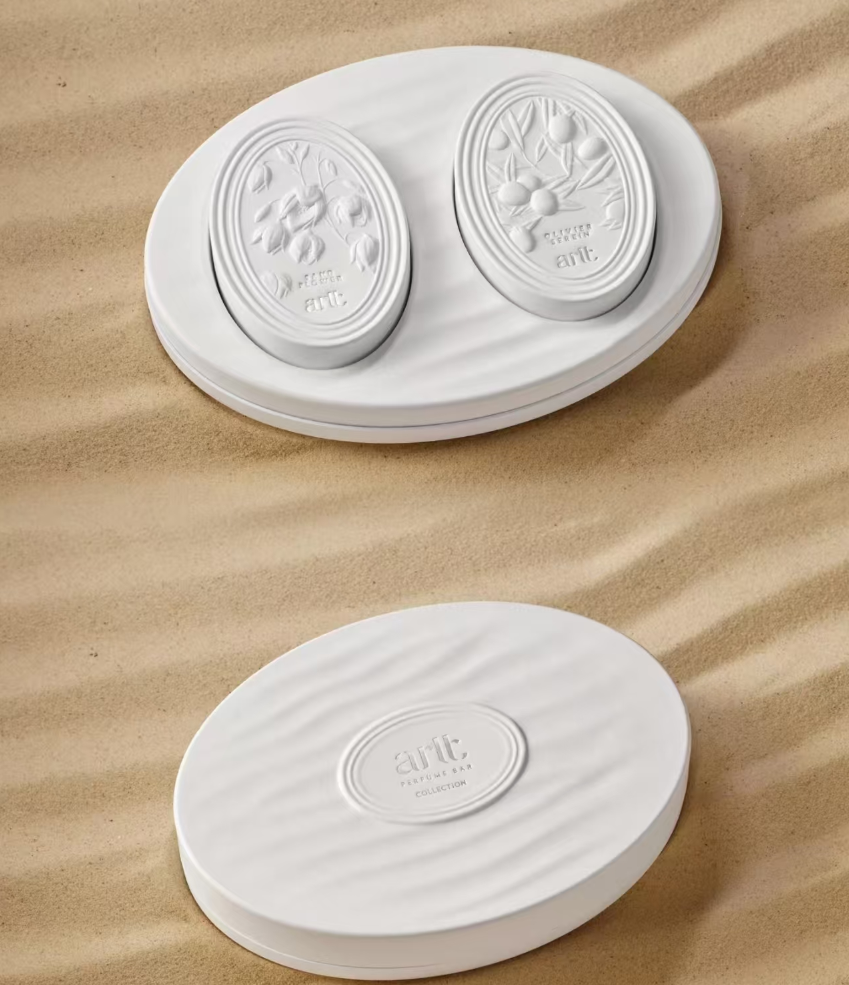
Skincare, liquids, creams, refills. Serums and creams need moisture barriers, so brands combine a durable primary (glass or rPET) with a pulp or paper secondary. Refill systems shine here: the customer keeps the bottle, buys a lower-impact refill. Our refillable skincare packaging guide covers tray and pod pairings that cut secondary waste by roughly half.
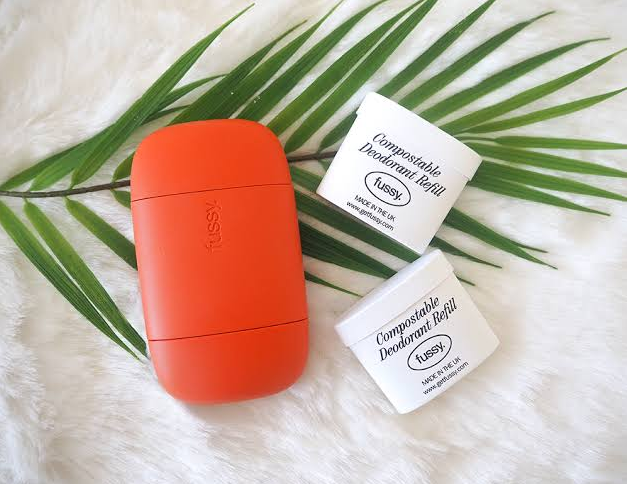
Deodorant, cases and pods. A durable case holds a pulp or paper refill tube; only the consumable ships. The refillable deodorant packaging supplier systems and deodorant refill pod supplier options show how the same logic scales from stick to pod.
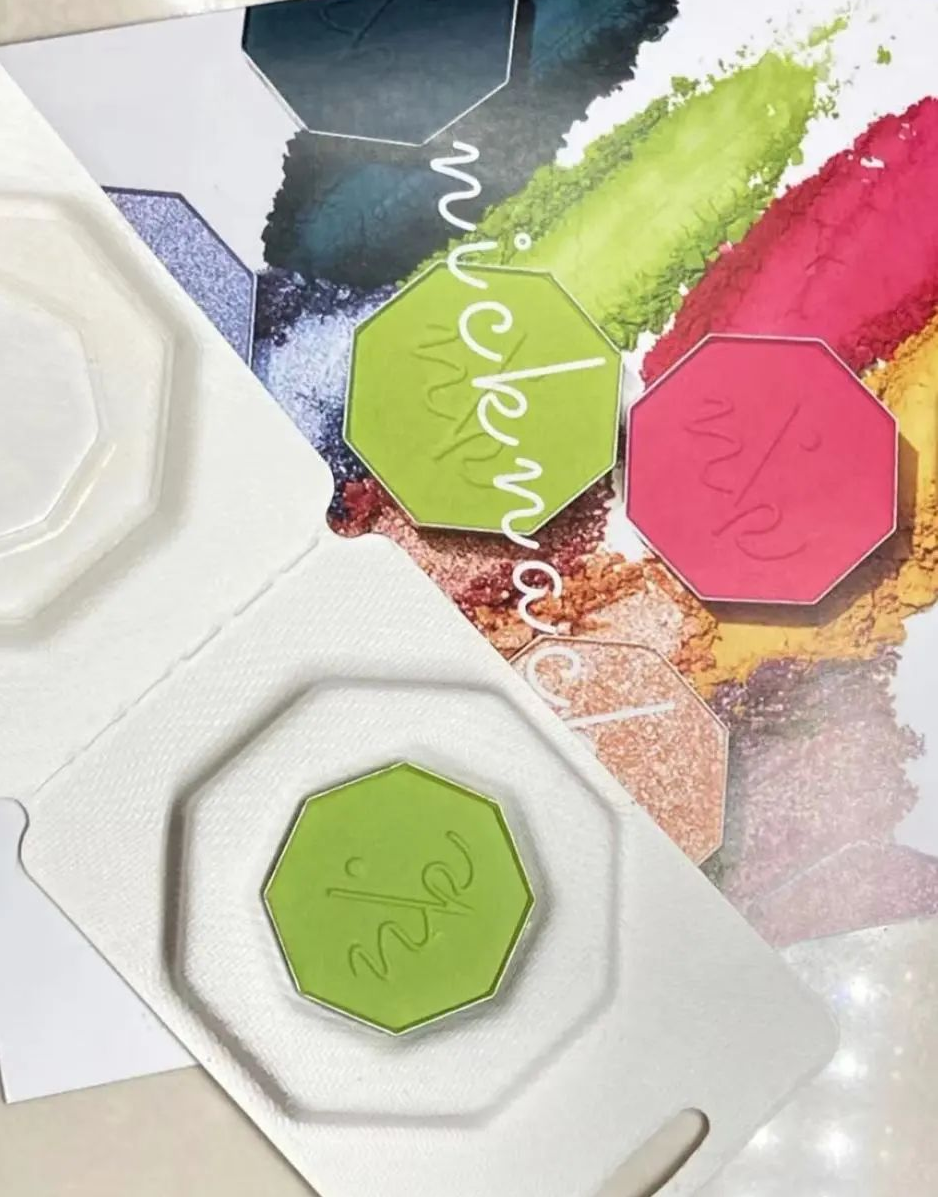
Makeup, compacts and pans. A refillable compact keeps a premium outer shell in the customer's hands while only the pan or pan-insert ships. Our makeup refill packaging page covers compacts, pans, and in-store refill trays, and the refillable makeup compact page goes deep on the clamshell and pan-insert engineering.
Designing refill so it actually recycles
Refill only delivers its promise if the refill unit itself is mono-material. A paper tray with a thin plastic window still sorts as mixed waste in most US programs. If you need a window or liner, choose a mono-material paper alternative or a curb-side-accepted PET that shares the bottle's resin stream. Mono-material is the difference between "technically recyclable" and "actually recycled."
Print lean, too: soy or water-based inks and debossed logos keep the fiber clean for reprocessing, while heavy foil lamination contaminates recycling.
The cost case, honestly
Custom molded-pulp tooling runs in weeks, not months, and kraft carton dies are inexpensive, so MOQs are lower than for custom injection plastic. Unit economics improve further when you consolidate SKUs onto shared tray footprints, specify PCR content to hedge virgin-resin price swings, and design for refill to sell the secondary packaging once, not per order.
The compliant framing matters as well. Anchor every claim in a document: say "PFAS-free by design" only when backed by batch testing, cite FSC and BPI IDs, and avoid absolute language. Specific, testable claims survive regulator review far better than adjectives, a point the Forest Stewardship Council (fsc.org) and Biodegradable Products Institute (bpiworld.org) credentials make concrete at onboarding.
Bottom line
Single-use ships the same container and carton forever; refill ships the consumable and keeps the rest. The brands winning in 2026 are not the ones with the greenest slogan. They are the ones who kept the bottle in the customer's hand and documented the rest. If you want hard numbers for your format, start your refill project and we will return a per-unit quote with MOQ, lead time, and certification options.
Source :Guangzhou Esen Eco-Tech Co., Ltd.
This article was originally published by IssueWire. Read the original article here.

Musk bankrolls PAC spending big on Paxton in Texas
Tech mogul Elon Musk poured $158 million into a key super PAC backing Texas Attorney General Ken Paxton's (R) Senate run as part of his push to keep Republican majorities in Congress. Musk was the single donor to Texas PAC — a political action committee backing Paxton's run — in the third quarter, according to...

Trump: Musk has 'a little problem'
President Trump took a slight jab Wednesday at tech mogul Elon Musk, who remains a close ally despite a rollercoaster relationship between the two. Trump made the swipe while going after Arizona Gov. Katie Hobbs (D) while speaking at a rally in the state, calling the Democrat “horrible.” “First of all, she’s a dumb person....

Should you upgrade to the iPhone 18 Pro Max?
After unboxing our early access to the iPhone 18 Pro Max, we were able to make some conclusions. Are you looking for a better camera? If your answer is yes then know that Apple has completely re-engineered the main camera of the iPhone 18 Pro and Pro Max with a variable aperture. If you zoom

Guess which telco recorded zero dropped calls?
MANILA, Philippines – Mobile services provider Smart Communications, Inc. recorded zero dropped calls in the latest real-world quality-of-service tests conducted by the National Telecommunications Commission (NTC) in Metro Manila, highlighting the reliability of its voice services. The NTC’s drive tests showed that Smart posted an average call drop ratio of zero percent, meeting the regulator’s

Trump's top crypto adviser departs administration
President Trump’s top cryptocurrency adviser is leaving the administration. Patrick Witt, who served as executive director of the president’s council of advisers for digital assets, called his time in the administration “the privilege of a lifetime” late Wednesday and hinted at a move to the private sector. “I’m grateful to have done my part to...

Anthropic's PAC spent more than $250K in third quarter, splitting between parties
Anthropic's corporate political action committee poured $161,000 into campaigns across the aisle last month, bringing their total third-quarter spending to more than $250,000, according to spending records first shared with The Hill. The employee-funded PAC, AnthroPAC, spent more than $255,000 across the third quarter, marking the artificial intelligence firm's latest push for political clout in...

FTC subpoenas OpenAI, Anthropic in safety incidents probe
The Federal Trade Commission (FTC) sent subpoenas to OpenAI and Anthropic as part of a federal probe into the potential risks their AI models pose to consumers. An agency spokesperson confirmed to The Hill that the agency has sent the companies civil subpoenas. The investigation comes on the heels of a series of high-profile cybersecurity...
![[INTERVIEW] Alaska Airlines eyes Asia expansion as Korea route gains traction](https://newsimg.koreatimes.co.kr/2026/10/14/1b66a517-eb02-4c29-bf2d-35294973fdfe.jpeg)
[INTERVIEW] Alaska Airlines eyes Asia expansion as Korea route gains traction
SEATTLE — Alaska Airlines is looking to expand its presence in Asia as its Incheon-Seattle route gains traction, with Korea emerging as a key market in the U.S. carrier’s expanding international network. The airline recorded load factors of 82 percent in June, 84 percent in July and 79 percent in August on the route, marking a strong start in its first full year of operations. The figures exceeded expectations for a new route, which typically takes about three years to mature as the airline adjusts schedules and connections to meet passenger demand. "Those are really good, strong load factors for the first year of a new route," Shane Tackett, president and chief financial officer of Alaska Airlines, said in an interview with The Korea Times on Sept. 29. He added that one month ranked among Alaska's best-performing international routes financially before fuel prices increased significantly. The airline sees further opportunities to attract passengers from Korea, where its brand remains relatively unfamiliar. Tackett said Alaska Airlines aims to raise awareness of its services and enco

Hyundai Motor's tech bets face headwinds as core business loses steam
Hyundai Motor’s weakening auto profitability is raising questions about the sustainability of its costly investments in robotics and autonomous driving, as the technologies remain years away from generating significant earnings. The company is betting on Boston Dynamics’ Atlas humanoid robot, its own software-defined vehicle (SDV) and autonomous driving capabilities as three core pillars for its future mobility. Yet those businesses are far from generating tangible earnings, leaving Hyundai increasingly dependent on its conventional auto business which faces mounting earnings pressure from labor disputes at home, tariffs from the United States and intensifying competition from Chinese automakers in Europe. The timing gap between its weakening core business and future growth engines is becoming harder for investors to overlook. Hyundai’s shares have fallen around 60 percent from their June 1 peak of 783,000 won ($587) to less than 320,000 won on Monday, reflecting fading enthusiasm for its robotics ambitions and growing doubts over its earnings outlook. The pressure continues to be

How Mediheal is evolving beyond sheet masks
Best known for turning sheet masks into a beauty routine staple, L&P Cosmetic’s Mediheal is building its next stage of growth around a broader portfolio of skin care solutions, ranging from toners to serums, cleansers, creams and sun care products. The expansion reflects Mediheal’s evolution from a mask-focused label into a comprehensive skin care brand designed to address consumers’ needs across every step of their daily routines. Drawing on the recognition it has built through sheet masks, the brand is extending its ingredient expertise and research capabilities into products that can be used before, after and alongside masks. That strategy was on display in Japan in August when Mediheal introduced its new Derma Skin Care Series, featuring toners, serums and serum masks. The series used three ingredients closely associated with the brand: tea tree, madecassoside and polydeoxyribonucleotide, better known as PDRN, an ingredient now gaining attention in the skin care market. The series' launch marked another major transformation for the brand since its entry into Japan with its mas

Korean microsatellite constellation captures first images within a day of launch
A constellation of five Korean microsatellites successfully captured and transmitted its first images to a ground station within a day of launch aboard the country's homegrown Nuri space rocket last week, the space agency said Thursday. The five New-space Earth Observation Satellite Constellation for National Safety (NEONSAT) microsatellites transmitted their first images just 14 hours and 29 minutes after liftoff from the Naro Space Center in the southwestern coastal town of Goheung on Oct. 7, according to the Korea AeroSpace Administration (KASA). The early acquisition of imagery confirmed the normal operation of the satellites and their optical payloads, marking a milestone in Korea's efforts to establish its first domestically developed microsatellite constellation. The satellites are maintaining stable communications with ground stations, with their power generation and attitude control systems operating normally, KASA said. Following additional payload checks, KASA and the Korea Advanced Institute of Science and Technology (KAIST) will begin initial operations. The five satellites

POSCO, Hanwha Ocean team up on high-manganese steel LNG cargo tanks
Korean steelmaker POSCO and shipbuilder Hanwha Ocean are teaming up to build a demonstration liquified natural gas (LNG) carrier equipped with high-manganese steel cargo tanks, aiming to strengthen Korea’s technological competitiveness in a market long dominated by foreign technology. LNG fuel tanks store the fuel used to power LNG-fueled vessels, while cargo tanks on LNG carriers are large storage systems that hold the LNG itself for transportation overseas. According to POSCO, the two companies signed a memorandum of understanding (MOU) at the shipbuilder’s Geoje shipyard to develop the demonstration vessel. The signing ceremony was attended by senior executives from both sides, including POSCO President Lee Hee-geun and Hanwha Ocean CEO Kim Hee-cheul. The partnership comes amid expectations of rising LNG demand as countries seek lower-carbon energy sources, fueling demand for LNG carriers. Korean shipbuilders, however, remain dependent on foreign technology for cargo tanks, a key component of the vessels. Under the MOU, the companies will develop cargo tanks using POSCO’s high-m




YOUR NEWS, OUR NETWORK.
Do you have Great News you want to tell the world?
Be it updates about your business or your community, you can make sure that it’s heard by submitting your story to our network reaching hundreds of news sites across 6 verticals.