
Pranas AI Study Reveals Growing “AI Visibility Gap” as AI Search Redefines Online Discovery
Sep 21, 2026
Analysis of more than 20,000 prompts finds that YouTube, Instagram, Wikipedia and other third-party platforms play a major role in shaping AI-generated answers.
Singapore, September 21, 2026 -- Pranas, an AI search visibility and brand intelligence platform, has released new research highlighting a growing challenge for marketing teams: a brand can have a strong digital presence yet remain underrepresented, incorrectly positioned or poorly attributed in AI-generated answers.
Pranas describes this difference between a brand’s established online presence and its representation across AI search platforms as the “AI Visibility Gap.”
The study analysed 20,839 unique prompts that generated Google AI Overviews during August 2026. After prompt normalisation and deduplication, researchers recorded 225,094 source citations across 13,996 root domains.
The findings suggest that appearing prominently in conventional search results or publishing content on an owned website may no longer be enough to shape how AI systems present a brand. AI-generated answers frequently draw evidence from third-party platforms, including video channels, social networks, marketplaces, publishers and reference websites.
As tools such as Google AI Overviews, ChatGPT, Gemini, Perplexity and Claude increasingly influence how people research products and businesses, marketing teams may need to measure more than rankings, clicks and conventional search visibility.

Third-Party Platforms Are Shaping AI Answers
The research found that non-owned platforms accounted for a significant share of the sources cited in AI-generated results.
YouTube was the most frequently cited domain in the dataset, receiving 26,558 citations. Instagram followed with 16,779 citations, while Wikipedia accounted for 11,951 citations. E-commerce marketplaces and other third-party websites also appeared prominently.
These findings indicate that AI systems do not build answers exclusively from company websites. They may rely on creator content, product listings, comparison pages, media coverage, public reference sources and online discussions when deciding which brands to mention and how to describe them.
This creates a new strategic challenge. A company may carefully manage the content published on its own website but have limited control over the external sources influencing its portrayal in AI-generated responses.
It also means that generative engine optimisation cannot be treated solely as an extension of on-page SEO. Brands may need a broader authority-building strategy that strengthens their presence across the wider information environment used by AI systems.
Brand Mentions Do Not Always Lead to Brand Traffic
A separate Pranas analysis of 10,227 travel-related prompts examined the relationship between brand mentions and direct website attribution.
Depending on the brand, the proportion of mentions accompanied by a direct link to its own website ranged from 63% to 82.5%.
The difference is commercially important. Two businesses could receive a similar number of mentions in AI-generated answers while experiencing very different outcomes. One brand may receive a direct citation that gives users a clear route to its website, while another may be mentioned using information attributed to a publisher, marketplace or competing platform.
This distinction creates two separate measures for marketing teams to consider:
- Brand visibility: Whether and how prominently the brand appears in an AI-generated answer.
- Traffic attribution: Whether the answer cites or links to the brand’s owned website.
Monitoring mentions alone may therefore provide an incomplete picture of AI-search performance. Citation sources help reveal who controls the pathway between the AI-generated answer and the potential customer.
AI Visibility Can Differ from Market Share
Pranas also studied 10,000 smartphone and electronics-related prompts to compare AI visibility with established market position.
In the study, the second-most visible brand appeared in 21.1% of relevant prompts despite accounting for only a single-digit share of local device shipments.
The result indicates that physical market share and AI visibility do not necessarily move together. Brands with extensive product documentation, comparison content, creator coverage and third-party discussion may appear more frequently than larger competitors.
This creates both an opportunity and a risk. Smaller businesses may gain disproportionate exposure by building a stronger information footprint, while established market leaders could lose visibility if AI systems find more useful or widely distributed evidence about their competitors.
“AI systems are becoming an intermediary between brands and buyers, but most brands are still unable to understand their visibility on AI assistants deeply or correctly map how to optimize it,” said Arshad Rahman, Co-Founder of Pranas.
“The next step is not to chase brand mentions in isolation. It is to understand where a brand appears, what evidence the AI relies on, and where customer questions are being answered by competitors or third parties instead.”
Three Priorities for Marketing Teams
Based on its findings, Pranas recommends that organisations adopt three priorities as AI-assisted discovery becomes a more significant part of the customer journey.
1. Measure citations alongside mentions
A mention confirms that a brand appears in an answer. A citation identifies the source that the AI system used to support that answer.
Tracking both can help marketing teams determine whether their visibility is being supported by owned content, independent publishers, creators, marketplaces or other third-party domains.
2. Build authority beyond owned channels
Company websites remain important, but they represent only one part of the information environment available to AI systems.
Brands may need to strengthen their presence across trusted publications, creator platforms, industry resources, marketplaces and other relevant channels. Accurate and consistent third-party coverage can help AI systems understand a company’s products, expertise and market position.
3. Analyse visibility by market, language and search intent
AI-generated answers can vary between models, countries, languages and prompts. A global visibility score may conceal weaknesses in individual markets or at important stages of the customer journey.
Brands should therefore assess how they appear for different question types, including awareness, product comparison, evaluation and purchase-intent prompts.
Helping Brands Understand Their AI Search Footprint
Pranas AI enables marketing teams to monitor how brands appear across more than 17 AI models from seven providers, including OpenAI, Google, Anthropic, Meta, DeepSeek, xAI and Mistral.
The platform combines brand-mention monitoring, share-of-voice measurement, source intelligence, competitor analysis, brand-perception tracking and content-gap identification. It also provides prioritised recommendations designed to help teams address weaknesses in their AI-search presence.
By analysing visibility at the model, market, language and prompt level, Pranas aims to help organisations understand not only whether AI systems mention their brands, but also how those systems describe them, which sources they trust and where competing brands have stronger coverage.
Study Methodology
The main citation study analysed 20,839 unique prompts that generated Google AI Overviews in August 2026. Following prompt normalisation and deduplication, Pranas recorded 225,094 citations across 13,996 root domains.
The supporting travel study analysed 10,227 prompts to examine the relationship between brand mentions and direct links to owned domains. A separate study of 10,000 smartphone and electronics-related prompts evaluated differences between AI visibility and local market position.
About Pranas
Founded in March 2025, Pranas Platforms Pte. Ltd. is an AI search visibility and brand intelligence company headquartered in Singapore.
The Pranas platform helps brands, agencies and marketing teams understand how they appear across AI-generated answers, identify the sources influencing those answers, compare visibility with competitors and find opportunities to improve discoverability, credibility and attribution.
For more information or to request an AI brand visibility report, visit https://pranas.co/.
Contact Info:
Name: Alex Schulz
Email: Send Email
Organization: Pranas Platforms Pte. Ltd.
Website: https://pranas.co/
Release ID: 89203889
In case of encountering any inaccuracies, problems, or queries arising from the content shared in this press release that necessitate action, or if you require assistance with a press release takedown, we urge you to notify us at [email protected] (it is important to note that this email is the authorized channel for such matters, sending multiple emails to multiple addresses does not necessarily help expedite your request). Our responsive team will be readily available to promptly address your concerns within 8 hours, resolving any identified issues diligently or guiding you through the necessary steps for removal. The provision of accurate and dependable information is our primary focus.

Ubisoft Singapore lays off 70 staff as studio downsizes
The cuts affect around one-fifth of the studio’s local workforce, with Ubisoft saying its Singapore operation remains an important part of its global production organisation.

The Car Expo and Lifestyle Edit are set to offer a high-octane and comprehensive lifestyle shopping destination at Singapore Expo this month
The upsized Car Expo returns to Singapore Expo with more than 50 car brands, now with a tech and home lifestyle extension, plus great deals and prizes to take home!
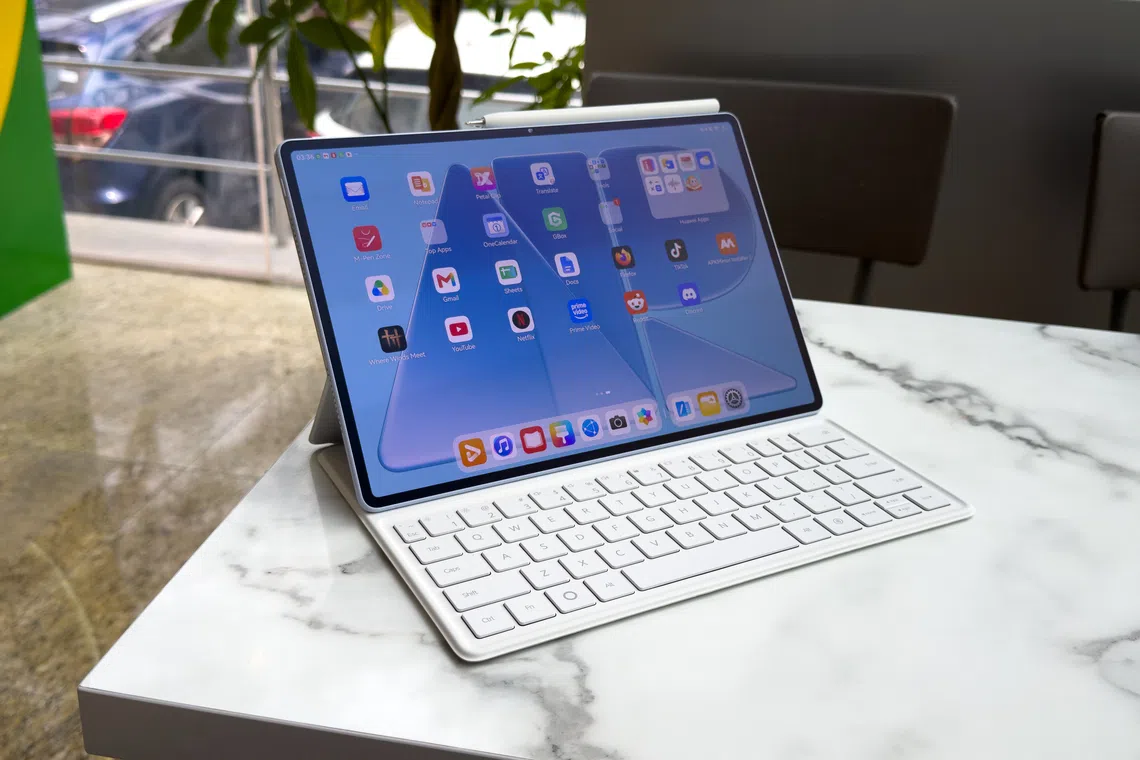
Huawei MatePad Air hands-on: Great battery life and display in a slim, lightweight package
The Huawei MatePad Air has a generous 12-inch display, but it’s only 5.3mm thin.

SK hynix showcases next-generation AI memory technologies beyond HBM
SK hynix said Friday that it has showcased its next-generation artificial intelligence (AI) memory technologies aimed at expanding the boundaries of AI infrastructure beyond conventional high-bandwidth memory (HBM). The company presented the technologies at the OCP Global Summit 2026, held in California from Tuesday to Thursday (local time). The summit is an annual conference organized by the Open Compute Project Foundation that brings together engineers and industry leaders. The Korean chip giant said it divided its exhibition space into two sections. The front section, dubbed the memory section, showcased the company's flagship products, while the larger rear section, called the system demo section, featured memory solutions designed to support next-generation server ecosystems. Kim Ho-sik, a senior vice president at SK hynix, introduced MARS (Memory-Centric AI Rack-Scale System), a disaggregated rack-scale architecture designed to coordinate computing and memory resources seamlessly. Kim highlighted progress in High Bandwidth Flash (HBF), a technology aimed at addressing the industry's

Ecosystem Roundup: Singapore’s always-on workers are performing to an empty room
Singapore’s office workers answer a 10.47pm message within 90 seconds to prove their commitment. Their bosses barely notice. The Jobstreet by SEEK Singapore Workplace Culture Study 2026, which surveyed 600 employees and jobseekers and 200 hiring decision makers, finds that 63% of staff signal dedication by replying fast, a behaviour only 39% of employers value. […] The post Ecosystem Roundup: Singapore’s always-on workers are performing to an empty room appeared first on e27.

The US$82,000 Illusion: Why Bitcoin still trades like a traditional tech stock
Bitcoin currently trades at US$82,231.14, reflecting a 0.65 per cent gain over the last 24 hours. This movement mirrors a broader 0.84 per cent rise in the total crypto market capitalisation. Having operated in this industry for over 15 years and advised on blockchain policy, I view this price action as a clear reflection of […] The post The US$82,000 Illusion: Why Bitcoin still trades like a traditional tech stock appeared first on e27.

Hong Kong builds a test track for robots that keep failing outside the lab
Every humanoid robot looks brilliant in a launch video. The trouble begins on an ordinary weekday in a warehouse, when a parcel arrives in a shape nobody trained the machine for, a forklift reverses where it shouldn’t, and a worker strolls into its path while scrolling a phone. That messy gap between the lab and […] The post Hong Kong builds a test track for robots that keep failing outside the lab appeared first on e27.
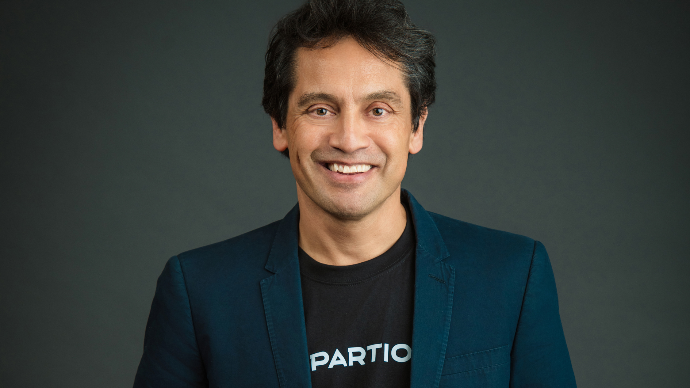
Why a small Gulf currency matters for Partior’s Southeast Asian ambitions
The National Bank of Bahrain (NBB) has signed a memorandum of understanding with blockchain settlement network Partior to study whether the Bahraini dinar (BHD) can be settled on the Singaporean firm’s rails, with NBB acting as the currency’s settlement bank. Read the fine print and the ambition shrinks to its proper size. The MoU commits […] The post Why a small Gulf currency matters for Partior’s Southeast Asian ambitions appeared first on e27.

Your ESOP is a fundraising document. Most founders treat it as a HR perk
Almost every founder I meet reaches the same conclusion at roughly the same moment. You cannot outbid a funded competitor on salary, so you give people a stake in the outcome instead. The logic is sound. Equity turns salary-limited hires into owners and aligns the people doing the work with the value they create. Then […] The post Your ESOP is a fundraising document. Most founders treat it as a HR perk appeared first on e27.

Employers are buying AI tools. Their managers are being left behind
Thirty-seven per cent. Eleven per cent. Those two numbers, tucked deep inside Jobstreet by SEEK’s Singapore Workplace Culture Study 2026, may say more about the region’s productivity problem than any headline about AI or inflation. The first is the share of employees who try to manage workplace pressure by quietly drawing their own boundaries: muting […] The post Employers are buying AI tools. Their managers are being left behind appeared first on e27.

Before you use predictive AI, decide what decision it should change
A lot of startup advice about predictive AI starts too early. It starts with the model, the tool, the data stack, or the dashboard. Those things matter, but they are not the first question. The first question is simpler: what decision should this prediction change? If a startup cannot answer that clearly, it is usually […] The post Before you use predictive AI, decide what decision it should change appeared first on e27.

'AI artists' perform improvised jazz at Jarasum Jazz Festival
Artificial intelligence (AI) models developed by a research team led by Korea Advanced Institute of Science and Technology (KAIST) professor Nam Ju-han made their debut at one of Korea’s leading jazz festivals, performing improvised jazz alongside human artists. According to the university Friday, the team showcased human-AI music collaboration technology that analyzes the flow of human performances in real time, allowing AI to take over performances or generate improvised accompaniment, during the 23rd Jarasum Jazz Festival, held in Gapyeong County, Gyeonggi Province, from Oct. 9 to 11. A total of 12 human jazz artists participated in the event, collaborating with AI in 26 pieces across 12 performances. The technology is different from existing music AI services as it enables collaboration with human musicians in jazz, a genre characterized by improvisation. Jazz musicians often change the tempo or create new melodies based on how they feel in the moment. Because the same piece can be performed differently each time, musicians must listen to one another and adjust their playing accord


YOUR NEWS, OUR NETWORK.
Do you have Great News you want to tell the world?
Be it updates about your business or your community, you can make sure that it’s heard by submitting your story to our network reaching hundreds of news sites across 6 verticals.