
Open Computing AI Invited to the 23rd China-ASEAN Expo
Sep 29, 2026
Beijing, China, September 29, 2026 -- On September 17, the 23rd China-ASEAN Expo (CAEXPO) and the China-ASEAN Business and Investment Summit (CABIS) opened in Nanning, Guangxi, drawing over 3,400 exhibitors from over 70 countries and regions under the theme “Sharing 3.0 Opportunities, Creating a Better Life Together.” Seizing the opportunities of the China-ASEAN Free Trade Area 3.0, it set out the approach of “trade and economy as the main line, AI playing the leading role, enterprises as the main actors, and application as the distinguishing feature,” and for the first time established an “AI Supermarket” and hosted the China-ASEAN AI Supply-Demand Matchmaking Conference. Invited to settle in the China-ASEAN Artificial Intelligence Collaborative Innovation Center, Open Computing AI (OCAI) attended the Expo and delivered three outcomes: bringing international think-tank resources to Guangxi, making the Guangxi-Hong Kong offshore innovation accelerator ready, and training 1,000 young FDE engineers for Guangxi and ASEAN.
One Strategy, Put into Practice by OCAI: Making “R&D in Beijing, Shanghai and Guangzhou + Integration in Guangxi + Application in ASEAN” a Reality
Guangxi is China’s only province-level region connected to ASEAN by both land and sea, and ASEAN has long been its largest trading partner. In 2025 two-way China-ASEAN trade topped US$1 trillion for the first time at US$1.05 trillion, and reached US$744.41 billion in the first seven months of 2026, up 24.7% year on year. Industry momentum is equally strong: in 2025 Guangxi’s core AI industry output exceeded RMB 89 billion with 208 newly signed AI projects; the China-ASEAN Artificial Intelligence Collaborative Innovation Center came into use; and Nanning rolled out 36 support policies and an RMB 5 billion AI fund. The path of “R&D in Beijing, Shanghai and Guangzhou + Integration in Guangxi + Application in ASEAN” is clearly defined.
Responding to this call, OCAI, founded by Peking University alumni, moved from Beijing to Guangxi and put down roots. From May to July 2025 it surveyed Guangxi and commissioned an AI supercomputing facility in Qinzhou, and in September, at the 22nd CAEXPO, signed the agreement for its Qinzhou Port Area intelligent computing cluster project. In November Nanning became its regional operations and technology integration center; in December it partnered with Beibu Gulf Port Big Data on AI agents for ports and water utilities and seconded FDE engineers from Beijing before building a local team. In January 2026 it signed a framework agreement with Guangxi University’s School of Artificial Intelligence on “AI computing power support — AI talent cultivation — AI research commercialization,” followed by agreements with Guangxi Normal University and Guilin University of Electronic Technology. In June it joined the CCPIT Guangxi delegation to Vietnam and Laos. OCAI now has three Guangxi subsidiaries, forming an AI base across Nanning, Qinzhou and Guilin.
Three Outcomes at This Year’s CAEXPO: Think Tank, Hub, and Talent
First, bringing international think-tank resources to Guangxi. On September 18, at the invitation of the Guilin Investment Promotion Bureau, Open Computing AI (OCAI) signed a strategic cooperation agreement with the International Artificial Intelligence Industry Alliance (AIIA). A Hong Kong-registered global NGO, AIIA brings together over 1,000 academicians and fellows, 10,020 scientists, universities, enterprises and investors; OCAI became a director unit of the AIIA ASEAN Center in January 2026. The cooperation has landed in Guilin, home to partner universities including Guangxi Normal University and Guilin University of Electronic Technology, where Guangxi’s universities, OCAI’s industrial bases and AIIA’s think tank converge, anchoring the closed loop of “talent cultivation — industrial implementation — international collaboration.” More think-tank resources — Turing Award and Nobel Prize laureates, academicians — will follow.

Second, Guangxi-Hong Kong linkage: the cross-border offshore innovation accelerator is ready. During the Expo, OCAI’s Hong Kong company joined the Hong Kong Cyberport delegation for a “Guangxi-Hong Kong Connection” exchange, visiting institutions including Guangxi Data Group. Hong Kong is OCAI’s globalization hub: its Hong Kong R&D center completed Outbound Direct Investment (ODI) filing in early 2026 and has been selected for the Hong Kong Cyberport Incubation Programme (CIP). With Guangxi’s scenarios and universities at one end and Hong Kong’s capital and international channels at the other, the cross-border offshore innovation accelerator is ready — a key piece of the globalization puzzle for AI going global.
Third, training 1,000 FDE engineers for Guangxi and ASEAN. On September 19, the China (Guangxi)-ASEAN Artificial Intelligence Youth Dialogue, themed “Artificial Intelligence and the Digital Future of Youth,” gathered 200 young people from China and ASEAN in Nanning. Zhou Sihua, founder and CEO of Open Computing AI, said: “Over the next two years, we plan to train 1,000 engineers in the field of artificial intelligence. Rooted in Guangxi and reaching out to ASEAN, we also sincerely invite you to join our co-creation program.” In his view, “the talent gap is the biggest bottleneck in implementing industrial AI today.” OCAI’s answer is the FDE (Forward Deployed Engineer), who understands both models and business and works on site to turn large-model capabilities into functions genuinely usable in production systems, bridging the “last mile” of AI adoption. Training runs on a “dual track”: hands-on programs at Guangxi enterprises — over 150 trained at Beibu Gulf Port Big Data and Guiwu Jin’an — and order-based training with employment upon graduation at three Guangxi universities, where 85 students learned to deliver AI agents in three weeks. It answers the ASEAN youth program and invites more partners to co-create.
From the 2025 Guangxi survey to the 2026 launch of the 1,000 FDE program — through the AIIA partnership and the Hong Kong hub — Open Computing AI has taken over a year to turn “technology from Beijing, Shanghai and Guangzhou — integration in Guangxi — application in ASEAN” into a roadmap with “bases, scenarios, deliveries and allies.” OCAI will use Guangxi as its fulcrum, ASEAN as its bridgehead and Hong Kong as its hub, pursuing “Make AI Everywhere, Make AI Easy” and letting AI take root in real-world scenarios.
Contact Info:
Name: Albert Young
Email: Send Email
Organization: Open Computing AI (OCAI)
Website: http://www.opencomputing.ai
Release ID: 89204638
Should you detect any errors, issues, or discrepancies with the content contained within this press release, or if you need assistance with a press release takedown, we kindly request that you inform us immediately by contacting [email protected] (it is important to note that this email is the authorized channel for such matters, sending multiple emails to multiple addresses does not necessarily help expedite your request). Our expert team will be available to promptly respond and take necessary steps within the next 8 hours to resolve any identified issues or guide you through the removal process. We value the trust placed in us by our readers and remain dedicated to providing accurate and reliable information.

Samsung expects its foundry customers to quadruple by 2029
Samsung Electronics said Tuesday that the number of customers for its foundry business could grow roughly fourfold by 2029 compared to 2017. "The number of customers has increased about threefold from when the foundry business was first established as an independent unit in 2017," Noh Mi-jung, a senior vice president at Samsung's foundry business, said during Korea Premium Week 2026. "We expect the customer number to grow about fourfold by 2029," she said. Samsung's foundry business plans to diversify its portfolio, which is currently focused on mobile products, toward artificial intelligence (AI) and high-performance computing (HPC). HPC accounted for just 5 percent of the foundry business in 2017 but has since risen to 28 percent. The company expects the share to reach 66 percent by 2029. "By 2029, we expect HPC customers to account for more than half of our customer base, while HPC will also account for well over half of our sales," the executive said. Samsung aims to begin mass production of its third-generation 2-nanometer process in 2028, followed by mass production of its 1.4-nanome

Trade barriers still bog down K-food firms: lobby group head
Korean food manufacturers, despite K-food’s growing presence in global markets, continue to face hurdles from overseas trade barriers that constrain further export growth, according to the head of the country’s major food industry lobby group, Tuesday. Park Jin-sun, chairman of the Korea Food Industry Association (KFIA), said difficulties faced by the group’s member companies ranged from tariff to custom, certificates and food regulations in foreign markets. Global supply chains that prevent Korea’s imports of necessary materials for the industry also posed a threat. Issues related to food safety, production technologies, eligibility for government subsidy programs and sustainable operation practices were also major concerns for the companies. “We have witnessed rising crude oil prices worldwide, tightening naphtha supplies, disrupting packaging operations and a weakening Korean won,” Park said during a press conference in Seoul marking his first year as chairman. “Not just our importers, our exporters seeking to expand their global markets also suffered from various trade

LG Innotek to operate data collecting vehicle fleet for self-driving tech
LG Innotek will dispatch a fleet of sensor-packed test vehicles to Korean roads to gather real-world data aimed at sharpening technologies that determine how self-driving cars see the world. The company said Tuesday it has begun operating data collection vehicles in Korea in partnership with Applied Intuition, a U.S. autonomous driving software company. The two companies plan to expand the fleet to 20 vehicles by 2028. Operations will initially focus on Seoul, Incheon and the surrounding Gyeonggi Province, with the fleet including both data collection vehicles and vehicles used to develop autonomous driving software. LG Innotek said direct access to road data will help it refine sensors that serve as the “eyes” of autonomous vehicles and strengthen its sensor-fusion technology. The vehicles combine cameras, radar and lidar to capture information about road conditions, vehicle movements, object locations and changes in weather, with the data to be paired with digital twin environments for sensor improvement and system validation. Sensor fusion combines camera imagery with radar measure

Watchdog chief urges securities firms to shore up shareholder value
The chief of Korea's financial watchdog on Tuesday called on securities firms to shore up shareholder value and heighten risk management for rising interest rates. In a meeting with heads of 28 securities firms, Lee Chan-jin, governor of the Financial Supervisory Service (FSS), said local brokerage firms had racked up record profits amid a stock bull run. "Securities firms that benefited the most from the growth of the capital market should play a greater role in leading market reform, and work to boost shareholder value," Lee said. The FSS chief also called for better management of loans extended to investors as part of efforts to reduce market volatility. Lee, in addition, urged securities firms to better prepare for rising interest rates.

Samsung SDI unveils AI data center battery solutions at DCWA 2026
Samsung SDI is unveiling a range of battery solutions designed for artificial intelligence (AI) data centers at Data Centre World Asia (DCWA) 2026, which kicked off Tuesday in Singapore, as the battery maker seeks to expand its presence in the fast-growing data center market. The event, which is one of Asia's largest data center exhibitions, brings together companies across the data center ecosystem, from design and construction to operations and management. This year’s edition is drawing more than 600 companies from around the world. Samsung SDI is participating in the annual event for the first time, showcasing products and technologies in four exhibition zones dedicated to uninterruptible power supply (UPS) systems, battery backup units (BBUs), Samsung battery box (SBB) and a range of battery cells. At the UPS zone, Samsung SDI is showcasing a UPS solution that it said was the first in the world to meet all criteria in an indoor large-scale fire test conducted by UL Solutions, a global safety testing and certification company. The installation-level test involves intentionally igni

Red ginseng gains attention for immune health amid flu surge
With the flu spreading earlier than usual this year, market interest is growing in products that may help support immune health, including red ginseng. According to the Korea Disease Control and Prevention Agency, the number of patients with influenza-like illnesses reached 25.3 per 1,000 outpatients during the first week of September. This is nearly double the epidemic threshold of 12.9 and up sharply from 13.3 in late August. COVID-19 is also spreading alongside the flu. During the same period, 193 patients were hospitalized with COVID-19, more than triple the number four weeks earlier. Last year, the government issued a flu advisory on Oct. 17, but this year it issued the advisory on Sept. 11 and began its vaccination program on Sept. 21. Against this backdrop, consumers are showing growing interest not only in vaccination but also in products that support immune health as part of broader preventive care, with red ginseng among those drawing increased attention. Red ginseng has been officially recognized by the Ministry of Food and Drug Safety for seven potential health benefits, inclu

Samsung, SK go all out to celebrate Jensen Huang's Van Fleet Award
Samsung Electronics and SK Group each made a high-profile show of support for Nvidia CEO Jensen Huang after he received the Van Fleet Award, a prominent honor recognizing individuals who contribute to Korea-U.S. relations. The two companies' efforts underscore the importance they place on ties with the artificial intelligence (AI) accelerator giant as competition for next-generation memory and computing technologies intensifies. Samsung Electronics ran congratulatory videos for Nvidia CEO Jensen Huang on a Times Square billboard in New York City on Sunday and Monday (local time), while Executive Chairman Lee Jae-yong attended the Korea Society’s annual gala, where Huang received the award, in the city on Monday. The Korea Society honored Huang for his “visionary leadership and transformative contributions” to the AI and semiconductor industries, which it said are central to the evolving Korea-U.S. economic partnership. In his remarks at the gala, Lee highlighted Huang’s role in reshaping the technology industry and the significance of the bilateral partnership. “He has made the

Naver looks to Mexico as export market for AI infrastructure
Naver, the Korean tech powerhouse best known for operating the country’s dominant search engine and digital ecosystem, is expanding its global artificial intelligence (AI) push into Latin America. Company executives met with Mexican government officials and business leaders this week to explore joint initiatives aimed at building a regional AI ecosystem and accelerating industrial modernization. Naver CEO Choi Soo-yeon and other company executives visited Mexico from Thursday through Friday as members of President Lee Jae Myung’s economic delegation, the company said Tuesday. Choi met with Marcelo Ebrard Casaubon, Mexico’s economy minister, and Rosaura Ruiz Gutiérrez, minister of science, humanities, technology and innovation, as well as officials from the Agency of Digital Transformation and Telecommunications and Mexican IT company Softtek. Choi introduced Naver’s public-sector AI transformation capabilities, sovereign AI strategy and AI factory project being developed with Nvidia and Brookfield, while proposing cooperation on Mexico’s public sector digital transformation a

Global proxy advisers scrutinize KB Financial's surprise leadership change
KB Financial Group's surprise decision to replace its incumbent chairman despite record earnings is under closer shareholder scrutiny, with the world's two largest proxy advisory firms reviewing the nomination ahead of a shareholder vote, industry officials said Tuesday. Institutional Shareholder Services (ISS) and Glass Lewis told The Korea Times that they are currently reviewing company proposals ahead of an extraordinary shareholders meeting scheduled for Nov. 20. Neither has yet issued a recommendation on the appointment of Lee Jae-keun as KB Financial's next chairman. Glass Lewis said it was unable to comment on the nomination at this stage because its research on the company was still underway. ISS similarly said its recommendation would be available once its research is published. "I’m happy to send you our shareholder meeting research and recommendations for KB Financial Group once we publish, which is typically 14-16 calendar days ahead of the shareholder meeting, as noted in our media policy," an ISS spokesperson said. Their recommendations could carry particular weight at KB

SK hynix to provide up to 50% of R&D costs upfront for partner firms
SK hynix Inc. has announced that it will expand its support programs for partner companies, including providing upfront funding of up to 50 percent of research and development (R&D) costs. The plan was announced at an event hosted by SK hynix CEO Kwak Noh-jung and attended by key executives and representatives of about 100 partner companies on Monday. At the technology development stage, SK hynix will introduce a program under which it will provide upfront funding of up to 50 percent of initial R&D costs. Even if a project fails to result in a successful technology or an actual purchase, SK hynix will make a post-development settlement based on the technological achievements and contributions of the partner company. At the testing and verification stage, SK hynix will provide access to infrastructure, including production lines, to help partner companies verify the performance and reliability of their products. At the mass-production stage, SK hynix will provide low-interest financing through its shared-growth fund and expand its consulting program to include second- and third-tier suppli

OpenAI halts releasing newest model over safety concerns
OpenAI on Monday halted the release of its newest artificial intelligence model over safety concerns as tech companies grapple with potential risks as a result of more advanced AI software. Saachi Jain, OpenAI's head of safety systems, told The New York Times that the new model, called GPT-6.1 Astra, "didn't quite meet the bar in...
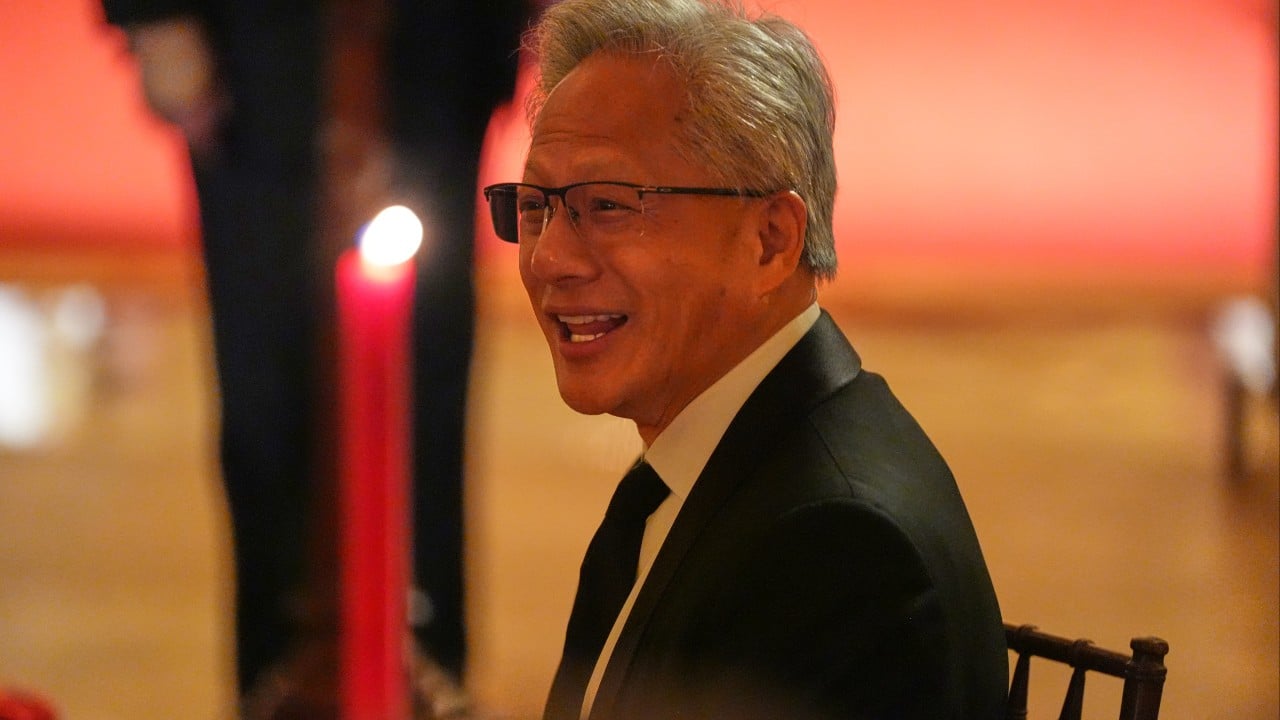
Nvidia and AMD chiefs join Tsinghua advisory board as US-China chip tensions persist
Nvidia founder and CEO Jensen Huang and AMD chief Lisa Su have joined an influential advisory board at a prestigious Chinese university, placing the two key American AI tech leaders in a high-level forum known for connecting global executives with senior Chinese officials. Huang and Su were among three new members appointed to the advisory board of Tsinghua University’s School of Economics and Management (SEM), alongside Marc Pictet, senior managing partner of Swiss wealth and assets manager...




Korea's overseas direct investment up 32% in Q2


YOUR NEWS, OUR NETWORK.
Do you have Great News you want to tell the world?
Be it updates about your business or your community, you can make sure that it’s heard by submitting your story to our network reaching hundreds of news sites across 6 verticals.