
OEM vs ODM Gym Equipment: Which Model Fits Brand Growth
Sep 16, 2026
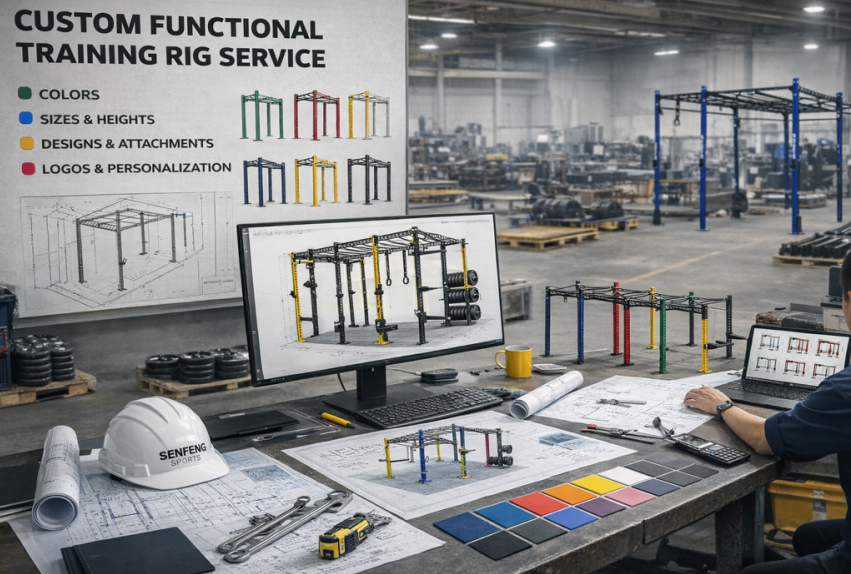
Nantong, Jiangsu Sep 15, 2026 (Issuewire.com) - Ask three gym-equipment brands how they got their first products made, and the answers rarely match. One licensed a factory's existing design and shipped within weeks. Another handed over its own drawings and waited months for tooling. A third started with the first approach and later switched to the second. All three were right for their moment. That divergence sits at the heart of the OEM vs ODM gym equipment decision, and it trips up more newcomers than any pricing question. Both routes produce branded products, but they hand very different responsibilities to the brand owner. Understanding the split early saves money, time, and a fair amount of frustration. Manufacturers such as Senfeng (Nantong Senfeng Sports Products Co., Ltd.) run both tracks, covering commercial and home lines from power racks and Smith machines to hex dumbbells and polyurethane barbells, which makes the comparison practical rather than theoretical.
Breaking Down The Terms: Who Holds The Design
The cleanest way to separate the two models comes down to one question: who holds the design and the patent?
With OEM, the brand supplies the drawings and sets the specifications. The factory builds exactly to those files. The brand owns the look, the structure, and any intellectual property tied to it. The manufacturer acts as the production arm.
With ODM, the factory offers a finished, proven design. The brand makes light changes such as color, logo placement, or minor trim, then puts the product on the market under its own label. The design ownership stays largely with the maker.
Neither is better in the abstract. OEM gym equipment gives full control and a defensible product identity. ODM gym equipment gives speed and a lower research burden. The right pick depends on where a brand stands and what it wants to protect.
Matching The Model To Your Growth Stage
Growth stage is the most useful filter here.
A startup or a regional dealer usually needs new products on the shelf fast, without sinking capital into engineering. ODM fits this well. Take machines from the strength range: a Lat Pull Down, a Smith Machine, or a standard Power Rack already exist as mature designs. Rebranding them with a new color and a logo is quick, and the tooling is already proven. A distributor facing an urgent order can rely on ODM to keep a shipment on schedule.
A brand entering its growth phase, building its own intellectual property, tends to lean the other way. Here OEM makes sense. Locking down a supply chain and owning a distinct product design builds a barrier that competitors cannot simply copy off a catalog. Free-weight items illustrate the point. Hex dumbbells and polyurethane barbells often carry brand-specific grip shapes, weight markings, and finishes, so these usually call for drawing-based, deeply customized production rather than a quick color swap.
In short, catalog machines suit rebadge-and-adjust ODM work, while signature free-weight and bespoke pieces reward the OEM route.
Senfeng's Dual-Track Approach
Nantong Senfeng Sports Products Co., Ltd has run OEM and ODM in parallel for more than eight years, which lets a client switch models as the business matures without changing suppliers.
The workflow reflects that flexibility:
- Drawing- and sample-based processing, so a brand can arrive with either a full spec file or a reference product.
- 3D modeling turned around in about three days, useful for checking form and fit before any metal is cut.
- Prototype samples ready in roughly seven to ten days.
- Three rounds of inspection before goods leave the plant.
- A two-hour response window on inquiries.
Because the same dual-track approach serves both models, a customer can begin with an ODM run to test the market, then move to full OEM once volumes and a defined product identity justify it. The transition stays inside one factory, one quality system, one point of contact. That continuity matters more than it sounds, since re-qualifying a new supplier mid-growth burns weeks and risks quality drift.
Where Things Quietly Go Wrong
Both models carry traps worth naming plainly.
On the ODM side, appearance and structural patent ownership is the item people skip. A design supplied by the factory may carry rights the factory keeps. Clarify in writing who owns what before the first order, especially if the product might later anchor a proprietary line. Confusion here surfaces at the worst moment, usually when a brand tries to move that design elsewhere.
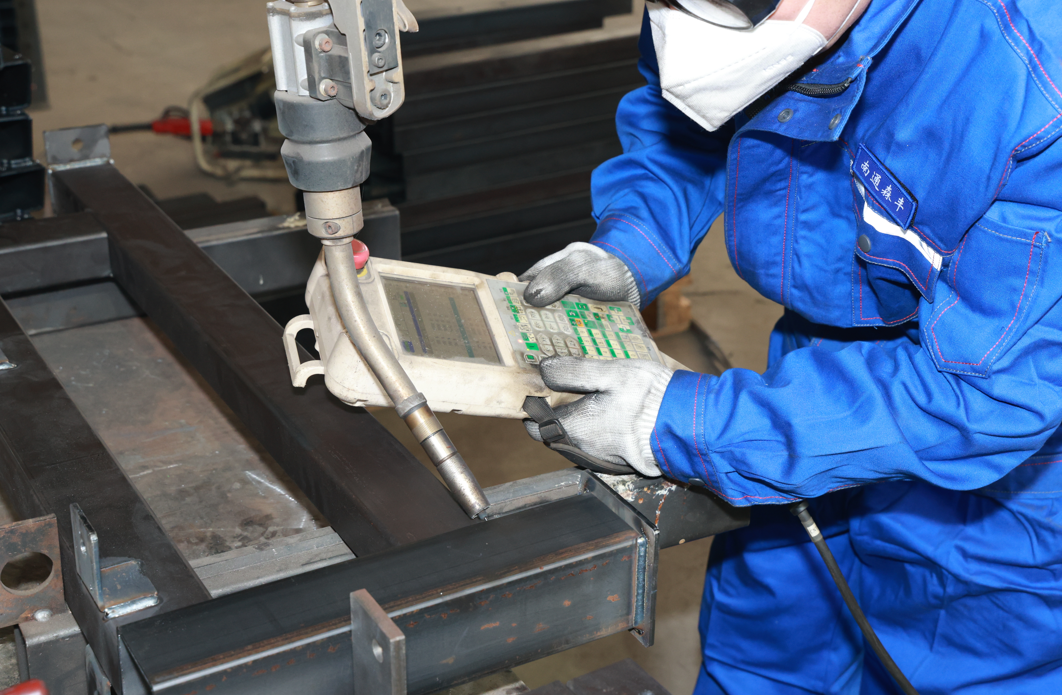
On the OEM side, a small trial run demands close checks. Inspect the weld beads on load-bearing joints. Confirm the tubing spec, for example a 75--75--3mm main frame on a rack, since wall thickness affects both safety and feel. Check the electrostatic powder coating for even coverage and adhesion. And insist on a pre-shipment report with photos before releasing the balance. A first OEM batch reveals whether the factory read the drawings correctly, so treat it as the audit it is.
These are not exotic requirements. They are the difference between a product that survives daily commercial use and one that returns as a warranty claim.
Closing: A Simple Way To Decide
The choice rarely needs a long spreadsheet. It usually comes down to a few honest checks.
- Look at how distinct the product must be. A near-standard rack that only needs a logo points toward ODM; a piece meant to define the brand points toward OEM.
- Weigh the cost of speed against the cost of control. Getting to market this quarter and owning the design outright pull in opposite directions.
- Read the factory before the design. A first small order tells more about weld quality, coating, and communication than any brochure.
A sensible path for many newcomers is to start with a small ODM trial, perhaps ten units, to test both the market and the factory, then shift to OEM once the direction firms up. That sequence keeps early risk low while leaving room to build something proprietary later.
Whether the plan calls for OEM gym equipment, ODM fitness equipment, or a staged move between the two, the practical next step is to specify the machine model and the customization items, then send those details across for a quote. A supplier used to both tracks can price and schedule accordingly. More product and factory information is available at https://senfengfitness.com/
Media Contact
Nantong Senfeng Sports Products Co., Ltd
+86 19514497849
Source :Nantong Senfeng Sports Products Co., Ltd
This article was originally published by IssueWire. Read the original article here.

Fathers take on more, but mothers still bear heavier domestic workload
For a 33-year-old bank employee surnamed Jung raising a 3-year-old son in Seoul’s Yeongdeungpo District, coming home from work feels like starting a second shift. She uses a reduced working hours program for parents to leave work an hour or two early. Once her mother-in-law, who looks after the child while the couple are at work, heads home, Jung handles child care alone until her husband returns. “As soon as I get home, I feed my son dinner, bathe him and play with him. By then, my husband is home,” she said. “While he plays with our son, I finally get to shower, wash the dishes and tidy up. Then it’s time to put our son to bed.” Jung gets her first chance to sit down on the sofa after her son falls asleep, past 10 p.m. “Even though I leave work early, it feels like I work overtime every day,” she said. “My husband does quite a lot of child care, but our son tends to seek me out more, and I feel that a larger share of the housework naturally falls to me.” Government figures released Monday show that an uneven division of domestic duties persists among young working pa

Gov't, businesses team up to help retired detection dogs find new homes
The Ministry of Agriculture, Food and Rural Affairs last week joined Trinity Airways and Sono Pet Clubs & Resorts for a two-day pet adoption program, combining government support for retired detection dogs with private-sector assistance in event planning, accommodation and training. The Animal and Plant Quarantine Agency under the ministry provided guidance on adoption procedures and answered prospective owners’ questions. Trinity Airways, formerly T’way Air, organized the program, held Saturday and Sunday, while Sono Pet provided spaces for families and dogs to interact and rest, along with professional training support. Held at Sono Pet’s Vivaldi Park in Hongcheon, Gangwon Province, the program brought together three retired quarantine detection dogs and three prospective adoptive families selected through a screening process, according to the agency. The dogs were two English springer spaniels, aged 7 and 9, and a 9-year-old beagle. Activities included running together, treasure hunts and walks, giving participants opportunities to interact with the dogs. A trainer specializing

Finda to become 1st fintech firm to acquire savings bank
Finda, a loan comparison platform, is set to acquire a savings bank, in what would be a first for a Korean fintech company, as it looks to build an artificial intelligence (AI)-native bank, industry officials said Monday. The Financial Services Commission's subcommittee approved Finda's application to acquire Daewon Savings Bank on Friday. The regulator is set to make a final decision at its regular meeting Wednesday. Finda signed a deal in June to acquire all of Daewon Savings Bank's shares for about 12 billion won ($9 million). The acquisition would allow the company to move beyond matching borrowers with lenders and offer financial services directly, including loans and deposits. Once the deal receives final approval, Finda plans to appoint a new CEO through board and shareholder meetings. The fintech firm aims to turn the lender into an AI-native bank, relying on digital services rather than a traditional network of branches. It plans to draw on AI technology and loan-comparison data it has collected since 2019 to expand its online lending business nationwide, the firm said. The compa

Hyundai Rotem to acquire Hyundai Wia's defense unit for $252 mil.
Hyundai Rotem, a defense affiliate of Hyundai Motor Group, said Monday it will acquire Hyundai Wia's defense business for 358.4 billion won ($252 million) to strengthen its weapons production capabilities. Hyundai Rotem said in a regulatory filing that it plans to acquire Hyundai Wia's defense business, which manufactures key components for Korea's K9 self-propelled howitzers and K2 main battle tanks. The acquisition is expected to boost Hyundai Rotem's competitiveness in the global market by bringing more of its weapons production capabilities in-house, particularly for its flagship K2 tanks. In August 2025, the company signed a $6.5 billion follow-up contract to supply K2 tanks to Poland. Five months later, it reached a comprehensive agreement with Peru to supply 195 ground weapons systems, including 54 K2 tanks. For Hyundai Wia, the sale is part of broader restructuring efforts to shift its focus toward future mobility technologies, including vehicle electrification and software-defined vehicles (SDVs). The company plans to use the proceeds from the sale to invest in new growth areas,

Global AI & Digital Summit kicks off 3-day run in Seoul
A global event aimed at exploring how artificial intelligence (AI) and digital transformation can deliver practical development gains kicked off its three-day run in Seoul on Monday, the science ministry said. The Global AI & Digital Summit, co-hosted by the ministry and the World Bank Group — a family of five institutions that makes leveraged loans to developing countries —brought together government officials from some 60 nations, as well as development partners, private sector leaders and researchers. This year marks the first time the summit was held outside of the United States, the ministry added. The event will begin with an AI and Digital Ministerial meeting, co-chaired by Science Minister Bae Kyung-hoon and Kim Sang-bu, the vice president for digital and AI at the World Bank Group, followed by policy forums and exhibitions from participating companies. Korea has been hosting the AI and digital ministerial meeting since 2005, with the most recent gathering held last year on the sidelines of the Asia Pacific Economic Co-operation (APEC) forum. Second Vice Science Minister Ryu J

Points beat percentages: Why three in four Singaporeans think their spare cash is underperforming
A Singaporean who will argue over a 50-cent difference in cashback at a hawker centre may have no idea what their savings account pays. New research suggests that person is the norm. Some 89 per cent of Singapore residents hold spare cash, according to a survey of 1,000 people conducted by research firm Milieu. Among […] The post Points beat percentages: Why three in four Singaporeans think their spare cash is underperforming appeared first on e27.

Singapore employers say they offer burnout support. Half their staff say they’ve never seen it
Many Singapore companies offer a peculiar kind of workplace benefit: one that exists mostly in the HR handbook. Managers will tell you it is there. Employees, asked the same question, will tell you they have never come across it. That gap sits at the centre of the Jobstreet by SEEK Singapore Workplace Culture Study 2026. […] The post Singapore employers say they offer burnout support. Half their staff say they’ve never seen it appeared first on e27.

Will the upcoming Federal Reserve meeting crush the bullish push toward the US$84,000 target?
Global financial ecosystems present a fascinating landscape today, as virtual currencies are in a modest recovery phase. Bitcoin leads this upward trajectory, up 0.94 per cent over the past 24 hours. The premier cryptocurrency trades at exactly US$82,204.31. This price action slightly outperforms a broadly flat digital asset sector. The total cryptocurrency capitalisation registers a […] The post Will the upcoming Federal Reserve meeting crush the bullish push toward the US$84,000 target? appeared first on e27.

Beyond play-to-earn: 14 Southeast Asian gaming and sports-tech startups still in the game
Southeast Asia has spent the last decade trying to turn its obsession with play into businesses. Some bets worked spectacularly, some blew up just as spectacularly, and a surprising number of the best ones never raised much venture money at all. The Web3 gaming boom of 2021 is the cautionary tale everyone remembers: blockchain games, […] The post Beyond play-to-earn: 14 Southeast Asian gaming and sports-tech startups still in the game appeared first on e27.

Gen Z is bringing its own AI to work. Singapore’s SMEs need rules, not bans
Young workers in Singapore are not waiting for their employers to roll out AI. They are already using it, often on personal devices and often without anyone watching. According to “What Gen Z Workers Want 2026”, a study commissioned by Deel and conducted with YouGov and ThinkerTank, 49 per cent of Singapore workers aged 18 […] The post Gen Z is bringing its own AI to work. Singapore’s SMEs need rules, not bans appeared first on e27.

When AI takes your side in a workplace conflict
Workplace conflict rarely arrives as a clean set of facts. By the time we decide that a manager is undermining us, a colleague is being deliberately difficult, or someone on the team cannot be trusted, we have usually spent some time interpreting what happened. We have noticed particular behaviours, connected them with earlier experiences, filled […] The post When AI takes your side in a workplace conflict appeared first on e27.

Faster, smarter, but more fragile? Rethinking communications resilience in Southeast Asia
Southeast Asia has spent the past decade moving rapidly towards a more connected future. Fibre networks have replaced much of the region’s older copper infrastructure, smartphones have become the primary gateway to services, and communications, payments, government functions and commerce have increasingly shifted online. That transition has brought enormous benefits, but it has also created […] The post Faster, smarter, but more fragile? Rethinking communications resilience in Southeast Asia appeared first on e27.


Hyundai Rotem Q3 net down 10.3% to $133.9 mil
YOUR NEWS, OUR NETWORK.
Do you have Great News you want to tell the world?
Be it updates about your business or your community, you can make sure that it’s heard by submitting your story to our network reaching hundreds of news sites across 6 verticals.