
Malcolm Grace Alberta Makes the Case Against Test-Day Fitness and for a Plan Built on Study
Nov 23, 2026
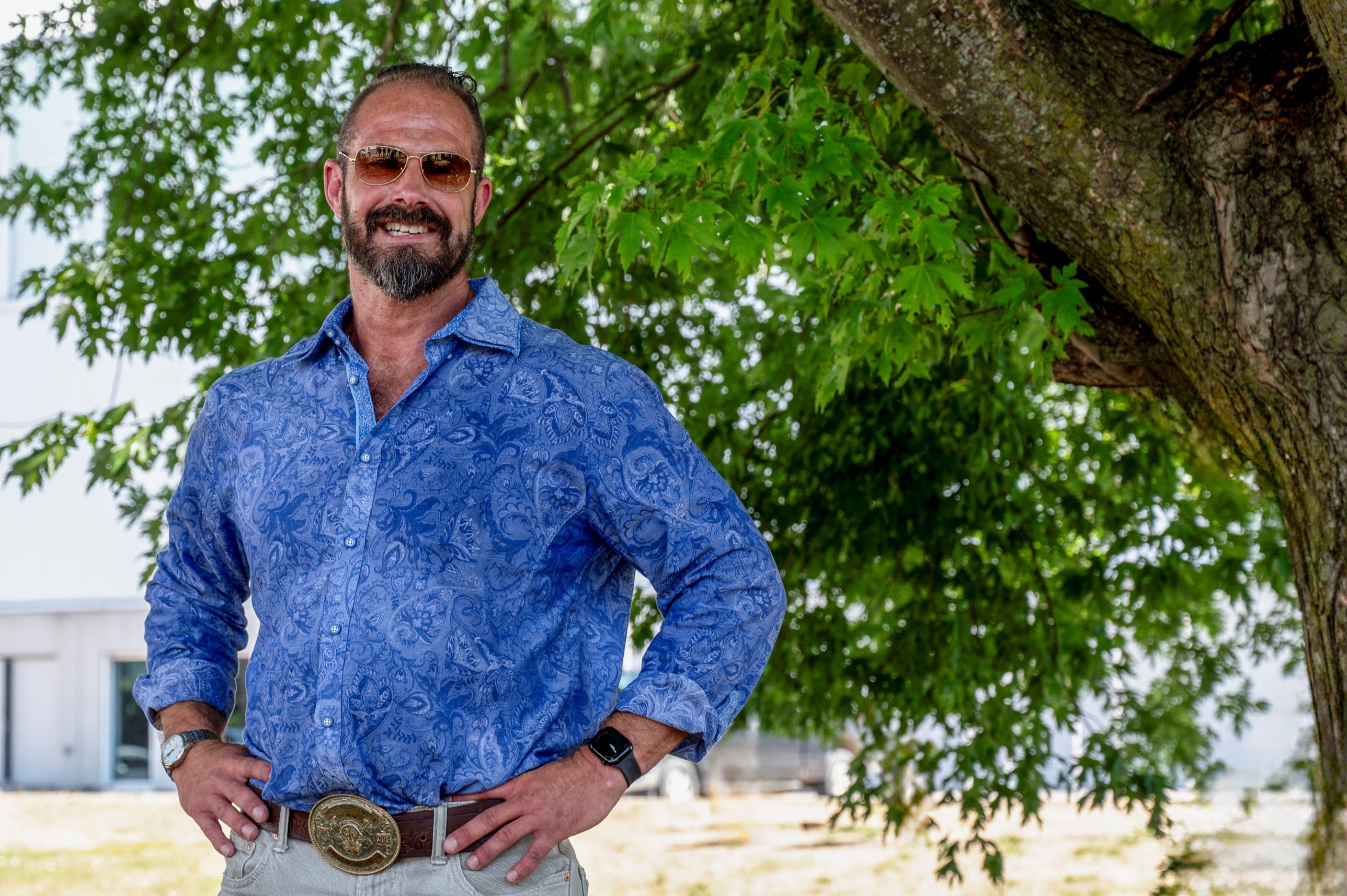
The Malcolm Grace Alberta approach to training: a Platinum fitness result, thousands of hours of exercise science and three daily habits.
Edmonton, Alberta Nov 22, 2026 (Issuewire.com) - Fitness tends to organize itself around dates: a test, an event, a season that has to be ready by a deadline. Training bends toward the date and then relaxes once it passes. Major Malcolm Grace believes that order is backward.
Grace, whose career has included years in Alberta and who now serves as Officer Commanding the Transition Centre in Kingston, holds Platinum on the Canadian Armed Forces FORCE evaluation, the annual physical exam for members. He does not describe the result as a trophy. He describes it as the output of a program he wrote himself, and he applies the same Zero to Hero logic to training that he applies to a career: steady work beats good timing.
The Trouble With Peaking for a Test
Grace says plainly that Platinum is an elite level of fitness, and that anyone can confirm it with a quick search. What a search will not reveal is how a score like that gets built. In his account, the answer lies in the routine and not in the week of the test.
"A fitness test is a measurement," Grace says. "If the routine behind it is solid, the number takes care of itself." The idea changes how a week looks, because every day then counts toward the result. Training happens in every week of the calendar, not only in the weeks before an evaluation.
Grace does not dismiss tests. He treats the FORCE evaluation as useful feedback, a way to check that a routine is working, much as a commander checks that a plan survives contact with reality. The mistake, as he sees it, is to confuse the check with the work.
Longevity as the Real Goal
A system built around an annual evaluation rewards readiness on one day. Grace argues for a longer horizon, and longevity is the word he uses for it. Longevity means keeping strength, mobility and attention for a long time, which a single peak does not buy. In his approach, recovery and consistency count for more than any one hard session.
His own approach started from that goal. After dedicating himself to fitness and longevity, he built a daily routine around physical training, appropriate nutrition and meditation, and he has kept it going through postings that ran from Egypt to Yellowknife to Kingston. A routine only counts if it survives a change of address. He also completed an intensive yoga instructor training, which gave him a vocabulary for teaching movement, breath and attention to other people. The combination fits his stated aim, since mobility, strength and attention all fade when ignored, and a routine that trains all three has the better chance of lasting.
Why the Reading Comes Before the Program
Grace spent thousands of hours studying exercise science before he trusted a program of his own. His background supports the habit. A History degree from the University of Alberta in Edmonton taught him to weigh competing sources, and an infantry career taught him to plan around what can go wrong. He lists critical analysis among his professional skills, and the same habit applies to fitness advice: ask who wrote it, what evidence stands behind it and what it leaves out.
"I spent thousands of hours studying exercise science before I trusted my own program," Grace says. "Reading first saved me from a lot of ideas that sound good and do nothing." The written plan that followed could be measured on a schedule, which turned fitness from a feeling into a record.
Three Habits, Not Thirty
The routine rests on three things: physical training, appropriate nutrition and meditation. Grace calls the whole package a disciplined lifestyle routine, and the discipline lives in the repetition, not the intensity. Nutrition in his plan means appropriate and not extreme, eating in a way that supports training and recovery. Behind the habits sit his 4 Personal Pillars to Health and Wellness: discipline, lifestyle, consistency and hormones. Discipline means doing the right thing even on a bad day, and consistency means continuing to do it over years while reviewing the research and making conservative adjustments.
"My day rests on three things: physical training, appropriate nutrition and meditation," Grace says. "Three habits done every day beat thirty done when you feel like it." The list is short on purpose, because a short list survives a busy week.
Meditation gets the same treatment as training: a regular exercise, practiced on a schedule and not saved for emergencies. Grace's yoga instructor training sits close to it, since both work on breath and attention.
He tests the routine outside the gym. In a two-person race called the Prospector Challenge, which combines rucking, running, canoeing and portaging, he and a partner won their age division. An event that mixes four disciplines punishes a narrow program, so the preparation has to be broad.
A Standard Works Better When It Is Shared
Grace brought the same training to his team and added incentives to keep people at it. By his account, their scores on the evaluation went up 35 percent. He is careful to call that figure his own.
"When I brought the plan to my team and added incentives, their scores on the evaluation went up 35 percent," Grace says. "That is my figure, and the lesson is that a standard works better when everyone follows it." A plan only the commander follows stays a hobby, in his view, whereas a plan the whole unit follows becomes the standard.
Incentives do not have to be large. A small reward signals that effort was noticed, and Grace's approach to mentoring rests on the same idea: positive feedback reinforces what a leader wants repeated.
What Steadies the Routine
Sobriety is important to Grace, and it anchors the rest of his routine. Alcohol is permanently off the table for him, a long-term decision about what goes into his body that he treats as a foundation for training and not a footnote.
"Sobriety is important to me, and it steadies the rest of the routine," Grace says. "It is one decision I do not have to remake every day." A settled decision, he suggests, leaves energy for the ones that remain. He does not frame the choice as a lecture for anyone else. It is a plain fact about how he lives, placed where it belongs in the plan.
A Method and Not a Guarantee
Grace does not present his results as a promise to anyone else. The Platinum score, the age-division win and the team's improvement belong to specific people in specific circumstances. What he offers is a way of working: read, plan, repeat and measure. The reading continues, the plan gets adjusted and the measurements keep arriving on schedule. Reading alone, in his view, does not replace daily repetition.
After retirement he intends to open a coaching site on leadership, lifestyle and fitness. Until then he keeps studying and keeps testing ideas on himself first, wherever the next posting leads.
"I do not offer any of this as a guarantee," Grace says. "It is a method: study, plan, repeat and measure."
Learn more about Major Malcolm Grace and read his writing on the Malcolm Grace Alberta blog, or watch him on the Malcolm Grace Alberta YouTube channel.
Source :Malcolm Grace
This article was originally published by IssueWire. Read the original article here.

The hardest part of sustainability innovation begins after the pilot
For years, sustainability innovation has focused on a familiar question: Does the technology work? It is an important question. But increasingly, I believe the most useful question is what it would take to put that technology into practice. The startups participating in the PepsiCo Greenhouse Program APAC 2026: The IMPACT Edition had already spent years […] The post The hardest part of sustainability innovation begins after the pilot appeared first on e27.

China’s memory chipmakers are catching up to industry leaders. What happens when they do?
This article was first published by The Korea Times in a partnership with the South China Morning Post. Riding a two-year artificial intelligence boom, China’s domestic memory chipmakers have grown faster and bolder than ever – but early signs of a market cool-down threaten to test their momentum. China’s two biggest champions in memory chip self-sufficiency, ChangXin Memory Technologies (CXMT) and Yangtze Memory Technologies (YMTC), have leveraged state backing, new factories and advancing...

Apple reportedly has up to 18 products lined up for release in 2027
Next year is shaping up to be a very busy period for Apple.
Apple’s Swift Student Challenge returns on 8 February 2027, now open to apps across all Apple platforms
Aspiring student developers can now build apps for anything from the iPhone and Apple Watch to the Apple Vision Pro.

Razer takes a cue from motorsport with new Carbon Fiber Collection gaming mice
The Viper V4 Pro and DeathAdder V4 Pro are the two mice that receive new carbon fiber shells.

Why we really fear AI
Recent public statements from Anthropic CEO Dario Amodei, OpenAI CEO Sam Altman, and xAI founder Elon Musk have supported slowing or more deliberately pacing the development of advanced AI. By contrast, NVIDIA CEO Jensen Huang has argued that development should continue, but companies should not release products they cannot demonstrate are safe. There is some […] The post Why we really fear AI appeared first on e27.

A local company won a global award for noise-cancelling innovation
Mobile services provider Smart Communications, Inc. (Smart), the wireless subsidiary of PLDT Inc. has bagged the Best 5G-A Service Innovation at the Global Core Summit Awards in Bangkok, Thailand, for PureVoice, Asia-Pacific’s first commercially launched native artificial intelligence (AI) voice enhancement service built on the core network. Smart was the only Philippine telecommunications company shortlisted

US ports face onslaught of cyber attacks
A number of ports across the U.S. are reporting an onslaught of cyberattacks amid a growing number of AI-enabled attacks targeting notable infrastructure. The Port of Corpus Christi, Texas, which functions as the U.S.’s largest passage of oil exports, said it was targeted with “hundreds if not thousands” of attacks per day, according to reporting from...

NAVI crowned Brawl Stars World Champions after thrilling grand final in Tokyo
From the Last Chance Qualifier to world champions, NAVI complete an incredible run with a dramatic victory over FUT Esports.

Herbalife Korea builds next chapter on 30 years of trust
Herbalife Korea’s next phase of growth will depend on lasting customer relationships rather than individual transactions, Herbalife Korea General Manager Sean Chung said, as the company marks its 30th anniversary in Korea by overhauling distributor compensation and introducing AI tools. The company’s history has been about helping Koreans build healthy nutrition habits, he said, arguing that sustainable growth comes from maintaining trust beyond a single sale. Since entering Korea in 1996, Herbalife has expanded from weight management products into everyday nutrition, protein, sports nutrition and beauty-related wellness as consumer priorities have evolved. Its first decade centered on its flagship Formula 1 shake brand, balancing nutrient intake and healthy eating habits in a market dominated by physical stores and face-to-face sales. From 2006 and 2015, the rapid growth of online shopping and hypermarkets intensified competition. During this period, Herbalife emphasized ongoing communication and communities that helped customers maintain habits they found difficult to sustain on t

SK chair urges Korea-Japan joint AI talent development program
SK Group Chairman Chey Tae-won has called for a fundamental overhaul of education to prepare for an artificial intelligence (AI)-native society, urging Korean and Japanese universities and businesses to jointly develop talent for the AI era. Chey made the remarks at Tokyo Forum 2026 on Saturday, emphasizing the need to redesign education systems for a society in which AI is accepted as an integral part of everyday life rather than simply used as a tool. The two-day forum, co-hosted by the Chey Institute for Advanced Studies and the University of Tokyo, started Friday under the theme "AI as a Transformative Technology: Humanity, Knowledge and Civilization." It brought together global experts, including French government AI envoy Anne Bouverot and Sakana AI co-founder Ren Ito. "An AI-native society is not one that simply uses AI, but one that accepts AI as an inherent part of its environment," Chey said during a business leaders' session moderated by University of Tokyo President Teruo Fujii. He joined NTT Group Chairman Jun Sawada, Taejae University President Yeom Jae-ho and Sophia Unive

Samsung Electronics, SK hynix dividend payout ratios surge through Q3 amid AI boom
Samsung Electronics and SK hynix saw their dividend payout ratios rise sharply through the third quarter under their shareholder return policies, data showed Sunday, amid the memory chip boom driven by artificial intelligence (AI). According to the companies' respective quarterly reports, Samsung Electronics' dividend payout ratio stood at 18 percent on a consolidated basis as of end-September, up from 4.1 percent at the end of the first half, while SK hynix's ratio rose to 8.4 percent from 0.4 percent over the same period. A dividend payout ratio refers to the proportion of a company's earnings distributed to shareholders as dividends, serving as an indicator of how a company allocates its profits. The sharp increases came as the two chipmakers announced plans to distribute sizable dividends to shareholders as part of their respective shareholder return policies. Samsung Electronics decided to pay 30 trillion won ($22.3 billion) in dividends for the third quarter, or 4,601 won per share, compared with 372 won per common share in the first quarter and 374 won in the second quarter. SK hyn

Peugeot moves car shopping to Naver


YOUR NEWS, OUR NETWORK.
Do you have Great News you want to tell the world?
Be it updates about your business or your community, you can make sure that it’s heard by submitting your story to our network reaching hundreds of news sites across 6 verticals.