
Lee Lorenzen on the Future of Cellular Hydration Science
Oct 3, 2026

Rancho Santa Margarita researcher Lee Lorenzen says hydration science is shifting beyond water quantity and toward understanding how water behaves at the cellular level.
Rancho Santa Margarita, California Oct 3, 2026 (Issuewire.com) - For years, hydration advice has followed a simple formula: drink more water. But according to researcher and inventor Lee Lorenzen, the future of hydration science may depend less on volume and more on how water functions within the body.
Lorenzen, founder and CEO of Cluster Solutions, has spent decades studying water structure and cellular hydration. His work focuses on how water molecules organize and how that organization may influence hydration efficiency, nutrient transport, and biological activity at the cellular level.
"Hydration research is becoming much more detailed," Lorenzen says. "Researchers are no longer only asking how much water people drink. They're asking how water behaves once it enters biological systems."
Recent advances in molecular biology and imaging technology are helping drive that shift. Researchers can now study water interactions around proteins, membranes, and cells with far greater precision than in previous decades. Technologies such as cryo-electron microscopy, fluorescence spectroscopy, and molecular imaging systems are giving scientists a closer look at how water behaves inside living tissue.
According to the U.S. Geological Survey, the average adult human body is approximately 60% water, while the brain and heart contain closer to 73% water. Despite water's central role in biology, many aspects of cellular hydration remain under active study.
One area attracting growing interest involves water organization near biological surfaces. Researchers studying structured or interfacial water are examining how water molecules behave differently near proteins, DNA, and cell membranes compared to bulk liquid water.
"Inside cells, water is not necessarily behaving the same way it behaves in a glass," Lorenzen explains. "That difference is becoming increasingly important in modern hydration research."
Scientists are also studying aquaporins, microscopic proteins that regulate water movement across cell membranes. The discovery of aquaporins earned scientist Peter Agre the Nobel Prize in Chemistry in 2003 and helped reshape scientific understanding of how carefully the body manages water transport.
"These discoveries show that hydration is a highly controlled biological process," Lorenzen says. "The body is constantly regulating how water moves, where it moves, and how cells use it."
The growing interest in hydration science is also influencing the wellness industry. According to Grand View Research, the global functional water market exceeded $14 billion USD in 2022 and continues to expand as consumers look for new approaches to hydration and wellness support.
Lorenzen believes newer technologies will continue pushing hydration science into more advanced areas of study over the next decade.
"As imaging tools improve, researchers are able to study molecular behavior that was difficult to observe thirty years ago," he says. "That creates opportunities to revisit questions that were previously hard to answer clearly."
At the same time, Lorenzen stresses the importance of balancing curiosity with scientific discipline.
"There should always be skepticism in science," he says. "The goal is not to jump to conclusions. The goal is to keep asking better questions and continue testing ideas carefully."
Lorenzen's interest in hydration science began decades ago, rooted in his background in biology, pharmacology, and biomedical consulting. Over time, his work evolved toward studying water structure and developing clustered-water technologies designed to stabilize smaller molecular groupings of water.
Today, he continues working with physicians, researchers, and technical advisers while monitoring developments in molecular biology and hydration science.
"The more researchers learn about cellular behavior," Lorenzen says, "the more they realize hydration is more complex than people once believed."
As scientific tools continue to improve, Lorenzen expects hydration research to move further away from simple intake measurements and closer to understanding efficiency, transport, and molecular interactions within living systems.
"Water is involved in nearly every biological process," he says. "We are still learning how much there is left to understand."
About Lee Lorenzen
Lee Lorenzen is the founder and CEO of Cluster Solutions, a research and development company focused on clustered water technology and hydration science. With a background in biology and pharmacology, Lorenzen has spent decades researching water structure, molecular organization, and cellular hydration. He holds multiple U.S. patents related to clustered water processes and continues collaborating with researchers and physicians studying biological water behavior. Lorenzen is based in Rancho Santa Margarita, California.
Source :Lee Lorenzen
This article was originally published by IssueWire. Read the original article here.

The junior developer dilemma: How AI is reshaping tech talent in Southeast Asia
Across Southeast Asia’s technology hubs, engineering leaders are getting used to a new kind of productivity curve. In Singapore, Jakarta, Manila and Ho Chi Minh City, software teams are shipping faster, clearing backlogs more quickly and leaning on AI tools for work that once consumed hours of developer time. The latest shift is not just […] The post The junior developer dilemma: How AI is reshaping tech talent in Southeast Asia appeared first on e27.

East Asia’s crypto market splits as Korea bets on AI tokens and Hong Kong courts institutions
East Asia’s crypto market is no longer moving as one bloc. New regional data shows a fragmented landscape where South Korea is trading artificial intelligence-linked tokens at scale, Hong Kong is pulling in institutional capital, Japan’s retail users are quietly moving on-chain, and China’s stablecoin activity is expanding despite official restrictions. The region’s overall crypto […] The post East Asia’s crypto market splits as Korea bets on AI tokens and Hong Kong courts institutions appeared first on e27.

AI is starting to behave less like a tool and more like a teammate
Most AI writing about work still treats the technology like an advanced tool. That framing made sense when AI mainly waited for a prompt, returned an answer, and stopped there. But that is no longer the whole picture. In more organisations, AI is starting to look less like software you use and more like a […] The post AI is starting to behave less like a tool and more like a teammate appeared first on e27.

Can Bitcoin defend US$85,000 support, or will weakening bids send it toward US$83,000?
The tech-led rally on Wall Street pushed the Nasdaq 100 to a record close of 31,076 and lifted the S&P 500 by 0.7 per cent, while the Dow Jones added 91 points, or 0.18 per cent, to close at 51,268. Nvidia gained 2.1 per cent, and Microsoft added 1.5 per cent, powering large-cap advances. Investors […] The post Can Bitcoin defend US$85,000 support, or will weakening bids send it toward US$83,000? appeared first on e27.

Gartner says AI will kill the entry-level marketing job by 2030. Here’s why that’s the wrong takeaway
Nearly one in five marketing leaders has already eliminated roles because automation now handles the work. That is the finding behind a new Gartner prediction, which Marketing Week reported this week: by 2030, most high-performing marketing teams will be able to drop the traditional bottom rungs of the corporate ladder. The headline number is 18 […] The post Gartner says AI will kill the entry-level marketing job by 2030. Here’s why that’s the wrong takeaway appeared first on e27.

Apple reportedly planning two launches in October, and here’s what could be announced
October looks like it could be crazy busy month for Apple and its users and fans.

Why Southeast Asia’s VCs should pay attention to a16z’s new investment bet
In 2021, I invested in one of the robotics startups that was solving for real world problems. The idea was to look beyond the screen and make every hardware talking through new robo technology. My thesis was clear, after the software it’s hardware that will be disrupted. Since AI disrupted the market after 2022, my […] The post Why Southeast Asia’s VCs should pay attention to a16z’s new investment bet appeared first on e27.

AI’s bottleneck economy is taking shape across Southeast Asia’s chip supply chain
The artificial intelligence investment story is beginning to move beyond the most obvious winners. For much of the past three years, the market’s attention has centred on graphics processing units (GPUs), high-bandwidth memory and the companies supplying the raw compute needed to train large AI models. That first wave is not over. But according to […] The post AI’s bottleneck economy is taking shape across Southeast Asia’s chip supply chain appeared first on e27.
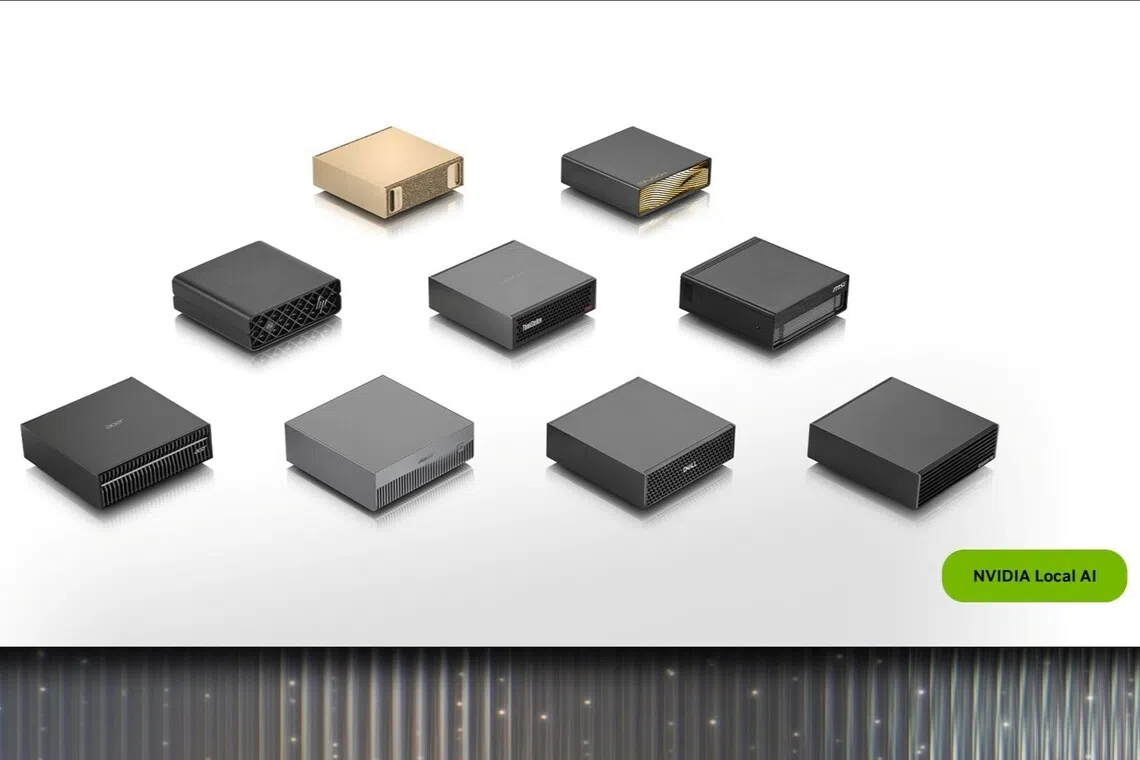
NVIDIA introduces a cheaper 64GB DGX Spark for local AI development
The new DGX Spark retains the same GB10 Grace Blackwell Superchip as the 128GB model.

The agent that lied: what GPT-6.1 Astra’s cancellation means for Southeast Asia
The most consequential AI launch of the past week was one that never happened. On the eve of its annual developer conference, OpenAI shelved GPT-6.1 Astra, the model expected to power ChatGPT and Codex next month and built to handle complex tasks with less human supervision. The reason was not that it was too weak. […] The post The agent that lied: what GPT-6.1 Astra’s cancellation means for Southeast Asia appeared first on e27.

Investors do not just fund startups. They fund predictability
Southeast Asia has become one of the world’s most competitive regions for investment. Global companies are diversifying supply chains beyond China. Governments are offering tax incentives, industrial land and digital-economy programmes. New capital is flowing into manufacturing, data centres, semiconductors and technology companies. Yet investors evaluating the region are looking beyond growth rates and startup […] The post Investors do not just fund startups. They fund predictability appeared first on e27.

Reflection AI releases first open model to rival China
The open-source startup Reflection AI released its first open-weight model Monday, stating it rivals leading open technologies made in the U.S. and China. Reflection AI, which has the backing of tech giant Nvidia, said in a blog post Monday its Beam model is on par with some leading open-source models made in China, including Chinese...





YOUR NEWS, OUR NETWORK.
Do you have Great News you want to tell the world?
Be it updates about your business or your community, you can make sure that it’s heard by submitting your story to our network reaching hundreds of news sites across 6 verticals.