
LED Ceiling Lights for Commercial Spaces:How to Balance Design, Performance and Energy Efficiency
Sep 24, 2026
Suzhou, Jiangsu Sep 23, 2026 (Issuewire.com) - Quick AnswerBalancing design, performance, and energy efficiency in commercial LED ceiling lighting requires harmonizing architectural aesthetics with low-glare optics, high color fidelity, and high luminaire efficacy. For many commercial applications, 130-150 lm/W can serve as a practical high-efficiency benchmark, while final performance should be evaluated against the project's target illuminance, controls and energy-code requirements. Key Takeaways Control Visual Glare: Specify micro-prismatic optics to maintain a Unified Glare Rating (UGR) below 19, shielding direct eye exposure and preventing fatigue in computer-intensive workspaces. Prioritize Color Fidelity: Select LED engines delivering CRI 90 with R9 50 (or TM-30 Rf 88) to render architectural materials and interior finishes accurately. Target High-Efficacy Baselines: Deploy luminaire systems yielding 130 to 150 lm/W to lower operational wattage while maintaining required target lux levels. Mitigate Thermal Failures: Ensure LED junction temperatures (Tj) remain below 85°C through extruded aluminum housing profiles, protecting drivers and ensuring L80B10 > 50,000 hours rated lifespan.
Smart Controls: Combine addressable 0-10V, DALI-2, or wireless controls with daylight harvesting and occupancy sensors. In suitable applications, these strategies can reduce lighting energy consumption by up to 50%, depending on daylight availability, occupancy patterns, operating schedules and control settings. Leverage Commercial OEM/ODM Customization: Utilize flexible modular platforms--such as those engineered by IMIGY Lighting (https://www.imigyled.com/)--to tailor custom housing lengths, beam optics, CCT options, and mounting configurations for complex architectural plans. 1. The Commercial Lighting Trilemma: Design, Optics, and Energy Efficiency Commercial LED ceiling lighting design operates at the intersection of aesthetic integration, human-centric optical quality, and strict energy code compliance. Achieving excellence in one dimension without compromising the others requires understanding the fundamental physical trade-offs involved in fixture engineering.
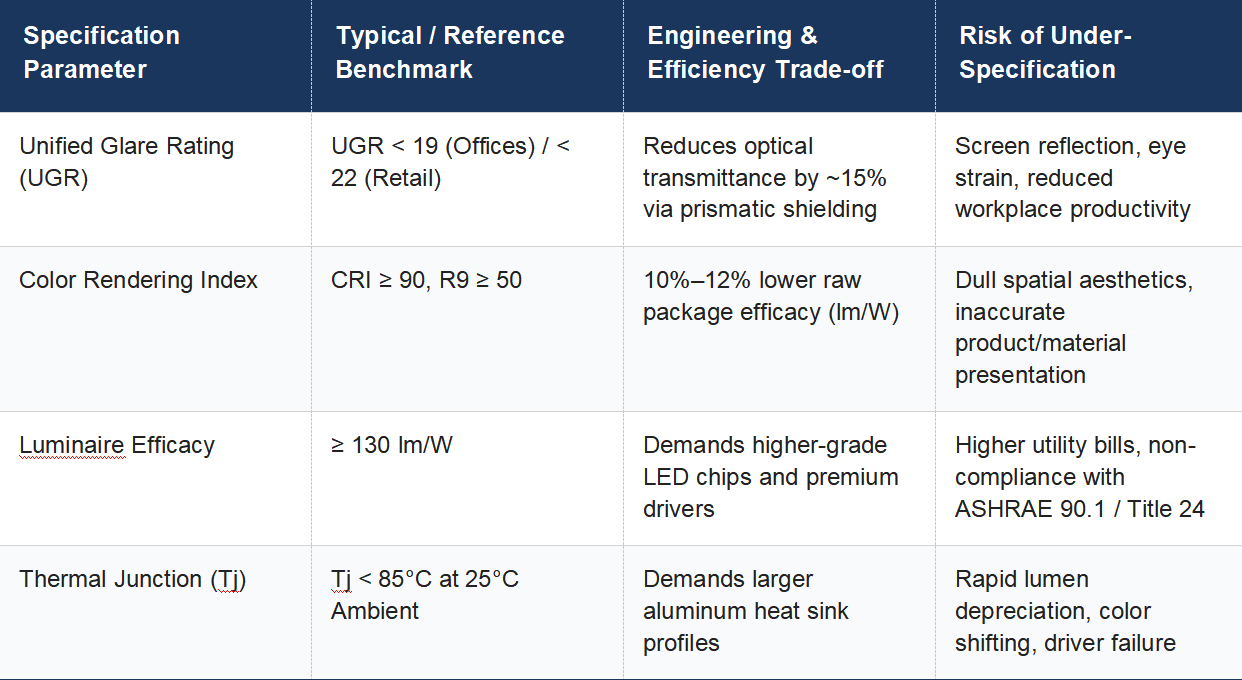
Architectural Form Factor vs. Thermal Mass: Modern interior concepts demand slim profiles, rimless recessed panels, and ultra-narrow linear channels. However, reducing housing volume decreases thermal surface area, trapping heat inside the optical cavity and accelerating phosphor degradation and driver capacitor failure. Glare Reduction vs. Luminous Efficacy: Deep-recessed baffles, micro-prismatic lenses, and secondary diffusers can reduce high-angle luminance and support low-glare targets. These optical elements may also reduce optical efficiency, so designers should evaluate luminaire efficacy together with the required UGR and illuminance performance. Color Quality vs. Power Consumption: Higher color fidelity can involve an efficacy trade-off depending on the LED package, spectral design, and CCT. Commercial lighting specifications should therefore evaluate CRI, R9, and luminaire efficacy together rather than assuming a fixed efficiency penalty. Table 1: Commercial Lighting Technical Benchmarks & Trade-offs 2. Technical Engineering: Optics, Thermal Physics, and Driver Health Optical Refraction & Glare Engineering Direct glare becomes more likely when bright luminaire surfaces remain visible within occupants' viewing angles, particularly at high viewing angles where optical shielding is insufficient. Standard frosted diffusers scatter light indiscriminately, creating bright points on ceiling planes that reflect off digital displays.
To maintain visual comfort (UGR < 19), high-performance commercial fixtures utilize multi-layer optical structures: Primary Reflector/TIR Lens: Focuses raw LED package emissions into a controlled primary beam. Micro-Prismatic Optical Plate: Uses micro-scale prism geometry to redistribute and control high-angle light, improving visual shielding and maintaining more uniform light distribution across the task area. Anti-Glare Baffle or Louver Array: Cuts off stray light at high angles to hide the light engine from direct line-of-sight. Thermal Paths & Lifespan Projection An LED ceiling fixture's operating temperature directly influences lumen maintenance and chromaticity stability. The critical metric is LED junction temperature (Tj), which must be managed through continuous conduction and convection paths. To support long-term lumen-maintenance projections such as L80B10 50,000 hours, the LED system should be evaluated using applicable LM-80 data and TM-21 projections, together with the luminaire's thermal and electrical design. Thermal Interface Materials (TIM): Must maintain thermal conductivity 2.5 W/m·K. Aluminum Heat Sinks: Die-cast or extruded 6063-T5 aluminum heat sinks must dissipate heat efficiently to keep PCB operating temperatures below 75°C.
Electrical Compartment: The electronic driver must reside in a thermally isolated electrical compartment away from the main LED array. Driver Reliability & IEEE 1789 Compliance Driver quality determines both electrical energy efficiency and visual environment health. Low-grade drivers produce high AC ripple currents, causing invisible high-frequency stroboscopic flicker that can induce migraines and eye fatigue. Flicker Mitigation: Select drivers with low temporal light modulation and evaluate flicker performance using modulation depth, frequency, and applicable IEEE 1789 guidance. For projects with strict flicker requirements, the acceptable flicker metrics should be specified across all dimming ranges. Capacitor Thermal Rating: Using 105°C-rated industrial solid-state capacitors extends driver operational lifespan to match the 50,000-hour LED rating. 3. Commercial Application Scenarios & Lighting Strategies Different commercial environments require specific optical distributions, color temperatures, and control methods to optimize both aesthetic appeal and function. Table 2: Typical Commercial Application & Photometric Reference Matrix The values below are typical design references rather than universal requirements. Final illuminance, CCT and glare targets should be confirmed according to the task, local standards and project specifications. 4. Form Factors & Architectural Integration (IMIGY Commercial Solutions) Selecting appropriate fixture form factors enables lighting designers and EPC contractors to match structural ceilings while fulfilling target illuminance goals.
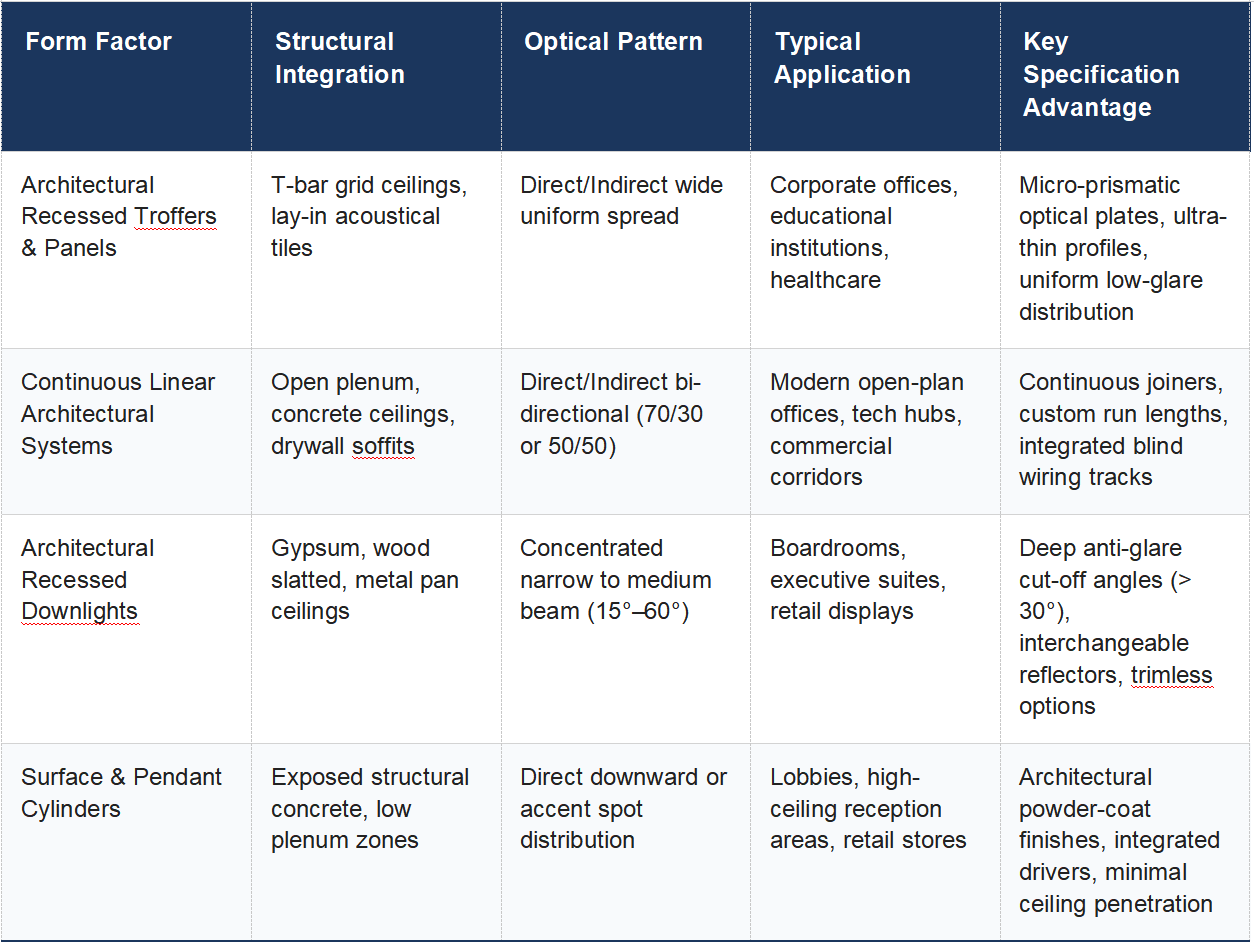
Commercial LED manufacturers like IMIGY Lighting (https://www.imigyled.com/) offer modular engineering platforms across multiple form factors to support bespoke architectural requirements. Table 3: Form Factor Comparison & Selection Guide Value Engineering through OEM/ODM Customization In large-scale commercial retrofits or turnkey building developments, standard off-the-shelf fixtures often fail to align with unique ceiling layouts or exact power density budgets. Partnering with experienced commercial lighting manufacturers like IMIGY Lighting enables project teams to leverage custom engineering capabilities: Custom Lumen Output & Efficacy Tuning: Drive currents can be customized to achieve exact target lux without over-lighting or wasting power. Modular Driver Integration: Support for global dimming ecosystems, including DALI-2, 0-10V, Casambi, and Tuya Smart control modules. Custom Housing & Architectural Finishes: Bespoke RAL color matching, custom profile lengths, and specialized acoustic-baffle integrations for modern office designs. 5. Specifier Procurement & Value Engineering Checklist To verify product quality and avoid low-grade submittals, use this checklist during design submittal reviews and technical procurement: DLC Premium Listing: Verify that fixtures appear on the DesignLights Consortium (DLC) Qualified Products List (QPL) to qualify for maximum utility rebates and guarantee high system efficacy ( 130 lm/W). IES Photometric Data: Request independent photometric test data, such as LM-79 reports where applicable, to verify total luens, electrical input, efficacy, color characteristics and spatial light distribution.
Use the resulting photometric files for project-specific UGR calculations and lighting simulations. TM-21 Lifetime Validation: Confirm LM-80 chip test data paired with TM-21 extrapolations demonstrating L80B10 50,000 hours at elevated operating ambient temperatures (35°C-40°C). Color Spectrum Quality: Verify CRI 90, R9 50, and an initial color consistency rating within a 3-step MacAdam Ellipse (SDCM 3). Flicker Performance: Confirm compliance with IEEE 1789 guidelines, ensuring Percent Flicker < 3% across all dimming steps. Driver Protocol & BMS Integration: Ensure 0-10V, DALI-2, or wireless mesh drivers integrate smoothly with centralized Building Management Systems (BMS). Thermal Design & Housing Material: Specify extruded or die-cast aluminum heat sinks (6063 grade) with separate thermal compartments for drivers. Code Compliance: Verify compliance with regional energy codes, including ASHRAE 90.1, IECC, and California Title 24. 6. Frequently Asked Questions Q1: What makes a luminaire achieve a UGR rating below 19? A Unified Glare Rating under 19 (UGR < 19) is achieved by combining recessed light sources, deep physical cut-off baffles, and micro-prismatic optical lenses. These components refract high-angle light downward into the primary task area while shielding direct viewing angles to prevent visual fatigue. Q2: Why is the R9 metric important for commercial interior spaces? Standard CRI (Ra) evaluates average performance across pastel colors, ignoring deep red hues.
The R9 metric specifically measures saturated red rendering. An R9 50 ensures vivid rendering of wood architectural finishes, warm interior accents, skin tones, and merchandise display items. Q3: What is the main operational difference between 0-10V and DALI-2 control protocols? 0-10V is an analog protocol where all luminaires on a low-voltage control loop dim simultaneously at the same level. DALI-2 is a bi-directional digital protocol that assigns individual addresses to every luminaire, allowing independent control, automated fault reporting, software-based grouping, and real-time energy usage monitoring. Q4: How do thermal heat sinks prevent driver and LED failure? Extruded aluminum heat sinks draw heat away from the LED printed circuit board via thermal conduction, dissipating it into ambient air. Keeping junction temperature within the LED manufacturer's specified operating limits helps slow thermal degradation and supports stable lumen output, color performance and driver reliability. For some commercial LED designs, Tj below approximately 85°C may be used as a practical thermal design target, provided it is consistent with component ratings. Q5: How does daylight harvesting optimize commercial energy efficiency? Daylight harvesting uses ambient light sensors (photosensors) to continuously monitor incoming natural sunlight. In suitable spaces, daylight harvesting can reduce lighting energy use by approximately 20%-40%, depending on daylight availability, sensor placement, control settings and operating schedules. Q6: What is the difference between LM-79, LM-80, and TM-21 reports? LM-79 measures the photometric and electrical performance of an LED luminaire, including light output, efficacy, electrical input and color characteristics.
LM-80 evaluates lumen maintenance of LED packages, arrays or modules under controlled test conditions. TM-21 uses LM-80 data to project long-term lumen maintenance. Together, these documents help specifiers evaluate initial luminaire performance and expected lumen maintenance, while actual service life also depends on thermal conditions, driver reliability and the installation environment. Q7: Why should commercial projects specify low-flicker drivers (< 3% flicker index)? Low-flicker drivers deliver stable current output without significant AC frequency ripple. Following IEEE 1789 guidance can help designers limit potentially problematic temporal light modulation and reduce flicker-related visual discomfort under appropriate operating conditions. Q8: How does high luminous efficacy (lm/W) impact ASHRAE 90.1 energy compliance? High luminaire efficacy ( 130 lm/W) can deliver required illuminance at lower electrical wattages, helping designers reduce Lighting Power Density (W/ft²) and support compliance with energy-efficiency requirements such as ASHRAE 90.1 and California Title 24. Q9: What are the benefits of continuous linear LED systems over standard grid troffers? Continuous linear systems offer greater architectural versatility, providing sleek visual lines across modern open plenum environments. They allow direct/indirect lighting distributions (70/30 down/up), improving vertical wall illuminance and reducing ceiling contrast while supporting continuous electrical quick-connect runs. Q10: How do custom OEM/ODM solutions from manufacturers like IMIGY Lighting help commercial projects? Custom OEM/ODM solutions allow project engineers and lighting designers to request tailored lumen outputs, specific CCT/CRI combinations, custom housing profile lengths, specialized beam optics, and integrated emergency/smart driver kits.
This ensures the lighting hardware fits exact building design specifications without relying on costly job-site modifications. Q11: What color temperature (CCT) is best suited for corporate office spaces? A color temperature of 4000K (or dynamic 3000K-5000K Tunable White) is ideal for corporate offices. Tunable-white systems can adjust CCT throughout the day to support different visual and operational needs and may also be incorporated into human-centric lighting strategies. Q12: How do IP-rated sealed housings benefit commercial lighting applications? Sealed housings (IP65-rated) feature rubber gaskets that block dust, moisture, insect ingress, and airborne contaminants from entering optical chambers. This protection preserves internal optical clarity and minimizes maintenance needs in healthcare facilities, commercial kitchens, laboratories, and high-humidity corridors.
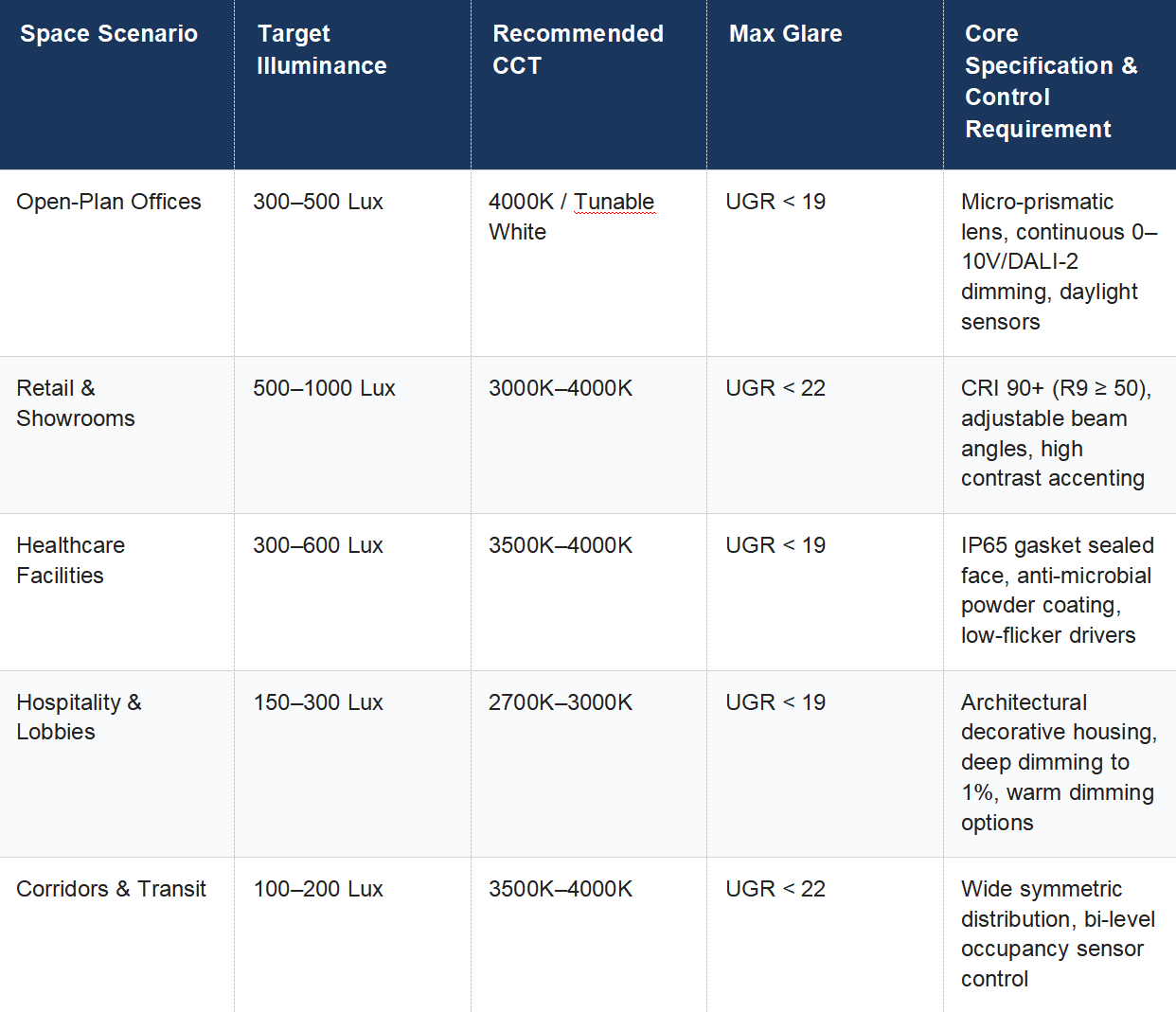
Source :IMIGY Lighting Electric Co., Ltd.
This article was originally published by IssueWire. Read the original article here.

CES organizer highlights Korean firms' AI innovation ahead of 2027 show
The organizer of the CES technology trade show on Wednesday highlighted Korean companies' innovation in cutting-edge technologies, particularly artificial intelligence (AI), ahead of next year's event. "There are several things Korea does that are so important to CES," Kinsey Fabrizio, president and CEO of the Consumer Technology Association (CTA), said during a press conference in Seoul, pointing to the "tremendous amount of innovation" in AI across the country. The 2027 CES will be held in Las Vegas from Jan. 6-9. Another area where Korea stands out is its startup innovation culture, Fabrizio said, noting that startups accounted for about half of the roughly 800 Korean companies that participated in this year's event. "We saw Korea's presence at CES 2026," Melissa Harrison, a CTA vice president, said. She added that a range of Korean companies, including Samsung Electronics, LG Electronics, SK hynix, Hyundai Mobis and Kia, are planning to attend next year's show. The press conference came as an increasing number of Korean companies, including those affiliated with SK Group, have withdraw

IBK launches Vietnamese subsidiary to expand support for SMEs
Industrial Bank of Korea (IBK) officially launched its Vietnam subsidiary in Hanoi, aiming to expand financial support for Korean companies operating in the country and serve as a bridge for financial cooperation between the two countries, the state-run lender said Wednesday. The launch ceremony, held in Hanoi on Tuesday, came after the lender completed the establishment process following final approval from the State Bank of Vietnam in April. The subsidiary began operations on Sept. 25. The subsidiary is Vietnam's 10th foreign-owned bank, according to IBK. IBK Vietnam Bank plans to build on the operating experience of IBK's branches in Hanoi and Ho Chi Minh City, as well as the state-run lender's more than six decades of expertise in policy financing for small and medium-sized enterprises (SMEs). The bank will expand its network around major industrial complexes to better serve Korean businesses operating in Vietnam and provide financing to support productive investment and economic cooperation between the two countries. "IBK Vietnam Bank's official launch marks a new chapter in our loca

LG Electronics emerges as Apple's home AI ally
LG Electronics has built an alliance with Apple in the home artificial intelligence (AI) sector, unveiling a range of internet of things (IoT) devices that will be integrated into Apple's ecosystem. The two companies’ partnership is now extending into the home appliance sector, evolving from component supplies and service integration to jointly developing finished products. For LG Electronics, the collaboration provides access to Apple’s global ecosystem, while Apple can leverage LG’s expertise in home appliances to strengthen its presence in the smart home market. LG Electronics and Apple jointly held a new product showcase in Manhattan, New York, Tuesday (local time), unveiling seven IoT devices. LG Electronics North America CEO Kwack Do-yeong, LG Electronics Home Appliance Solution Platform Business Center Head Jung Ki-hyun and Apple Vice President of Hardware Engineering Matthew Costello attended the event. Dubbed as smart home accessories, the devices include indoor and outdoor cameras, a video doorbell, a smart lock, a smart thermostat and a temperature sensor. They were co-

AI-driven cyberattacks hit 16 financial firms, expose 100,000 records
The number of financial firms affected by suspected artificial intelligence (AI) agent-driven cyberattacks has risen to 16, more than double the seven initially reported, financial regulators said Wednesday. About 100,000 records containing personal information, including resident registration numbers, were exposed. The tally could rise as companies continue checking their systems for signs of intrusion. Regulators also found security deficiencies at 130 of the 555 financial firms reviewed, including failures to apply the latest security patches. The Financial Services Commission (FSC) disclosed the findings at an emergency response meeting. It said the breaches, reported since the beginning of this month, have affected banks, savings banks, credit finance companies, electronic payment providers and cryptocurrency businesses. The affected firms include four banks — Shinhan, KB Kookmin, BNK Busan and Hana — and four savings banks — Yegaram, Welcome, DB and OK. Hyundai Capital and KDB Capital are among the affected credit finance companies. Others on the list include online investment
![[PHOTO] Next-generation memory architecture](https://newsimg.koreatimes.co.kr/2026/10/14/726fc344-baf5-4330-b223-d477d4506cc7.jpg)
[PHOTO] Next-generation memory architecture
Visitors take photos of mockups of zHBM and zNAND-O, 3D architecture for advanced DRAM and NAND memory chips, at Samsung Electronics' booth for the SEDEX 2026 semiconductor exhibition at Coex in southern Seoul, Wednesday. Along with Samsung Electronics, SK hynix and 300 other companies in the semiconductor supply chain are participating in the exhibition, which runs through Friday. Yonhap

LIG D&A, Firehawk to co-develop Poniard rocket system
LIG Defense & Aerospace (LIG D&A) has partnered with U.S. defense technology company Firehawk to develop a propulsion system for its Poniard guided rocket, as the Korean defense company seeks to expand its presence in the U.S. market. The two companies signed a teaming agreement Tuesday (local time) in Washington, D.C., to jointly develop propulsion technology for the 2.75-inch guided rocket system, known as "Bigung" in Korean. Under the agreement, the companies will work together on propulsion system development, with plans to expand the partnership into mass production, further technical cooperation and joint marketing targeting the U.S. government. Firehawk specializes in advanced energetics and propulsion technologies. The company has developed a thermoplastic manufacturing platform designed to overcome material and production limitations associated with conventional rocket propulsion manufacturing. Its technology can be applied across the production process, from propellant and rocket motors to complete munitions. The partnership is expected to support LIG D&A's efforts to localize

Hyundai Motor India opens Pune plant, marks 30 years in country
Hyundai Motor India inaugurated a new smart manufacturing plant in Talegaon, Pune, Maharashtra, on Wednesday, marking 30 years of operations in India as Hyundai Motor Group expands investment to strengthen the country’s role in its global production and export network. The facility will initially have an annual production capacity of 170,000 vehicles, with plans to increase it to 320,000 by 2030. The opening comes as the group plans to invest $15.5 billion in India from 2026 through 2032 to expand manufacturing, research and development, supplier networks and future mobility businesses. “India remains one of Hyundai's most important and strategic markets globally. The inauguration of the Pune plant reflects our long-term commitment to India's growth and our confidence in its bright future,” Hyundai Motor Group Executive Chair Chung Euisun said. The plant's opening was marked in a ceremony by Maharashtra Chief Minister Devendra Fadnavis, alongside Korean Ambassador to India Lee Seong-ho, state deputy chief ministers and senior Hyundai executives. The Pune facility will produce the H
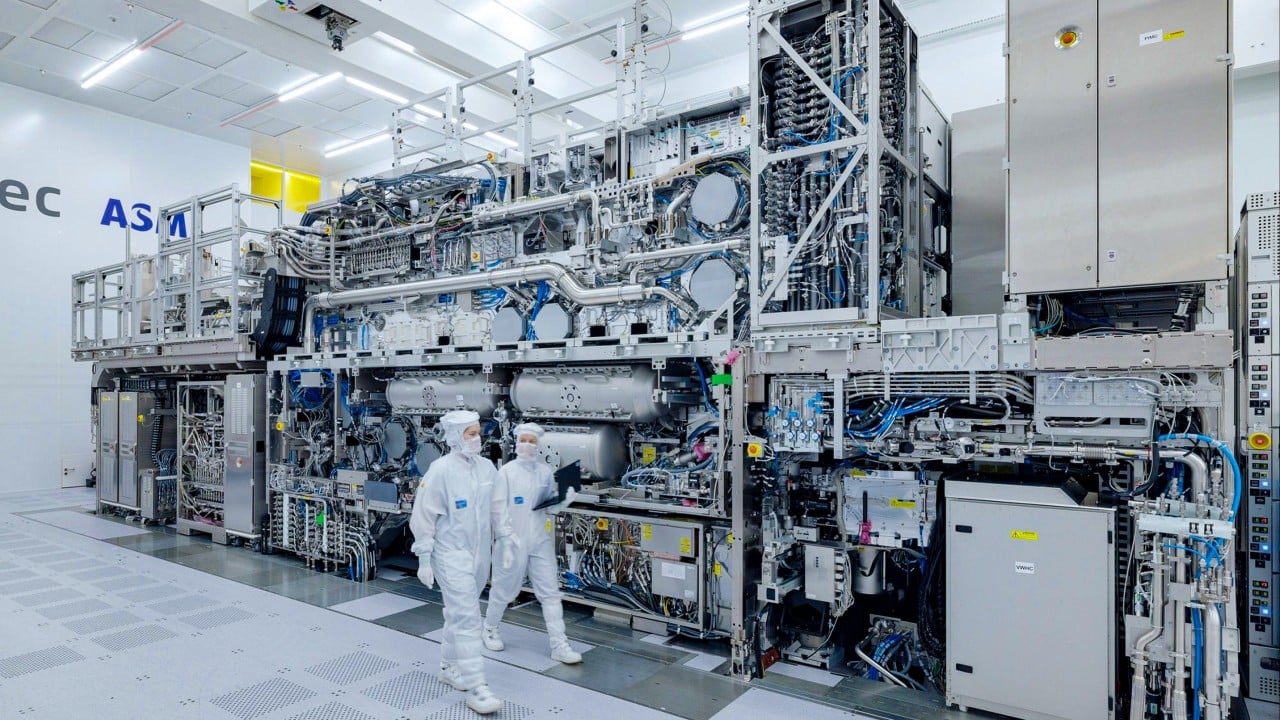
ASML’s chip equipment sales to China soar 109% despite US export curb push
Dutch semiconductor equipment giant ASML expects China to account for about 20 per cent of its total sales this year, after seeing shipments to the market more than double during the previous quarter despite mounting US pressure for tighter export restrictions on less advanced chipmaking machinery. The company’s sales to China surged 109 per cent in the third quarter compared with the previous three months, according to financial results released on Wednesday. That took China’s share of ASML’s...

Ukraine says SpaceX limiting Starlink operations, impacting air defense
Ukraine is raising alarm that air defense operations are being impacted by unannounced limitations on SpaceX satellites. The disruption comes following Ukrainian President Volodymyr Zelensky warning that President Trump has threatened to cut off intelligence sharing with the country. Limits on Starlink’s services in Ukraine occurred without warning, presidential adviser Serhii Beskrestnov wrote on Telegram,...

Watch live: Hegseth talks future of autonomous warfare amid leadership shake-ups
Defense Secretary Pete Hegseth is set to discuss the future of autonomous warfare Wednesday morning as the Pentagon pushes to modernize the military amid leadership shake-ups. Hegseth will join acting Army Secretary Adam Telle and acting Navy Secretary Hung Cao at the Association of the United States Army’s annual meeting for a discussion on Project...
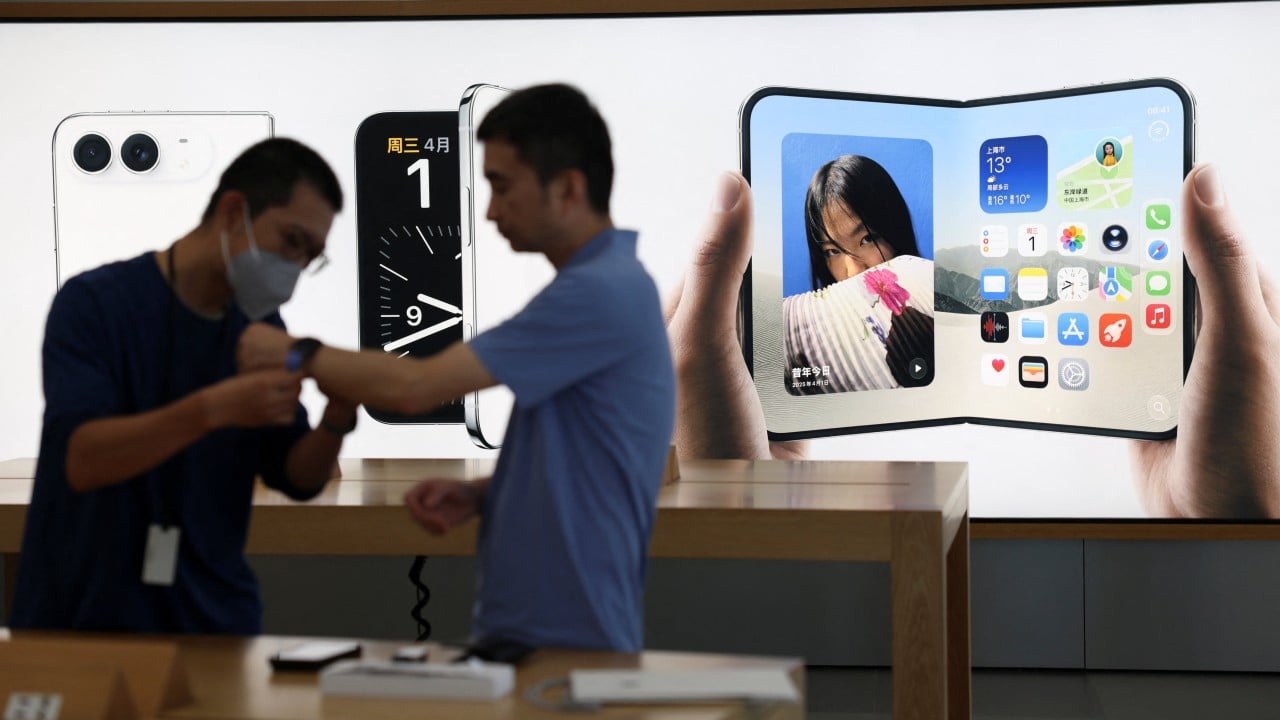
China approves Alibaba AI models for use in iPhone Duo and other Apple handsets
China has granted approval for Alibaba Group Holding’s artificial intelligence models to be integrated into several Apple handsets, including the new iPhone Duo, in the Chinese market, clearing a key regulatory hurdle for the long-delayed launch of Apple Intelligence in the country. Updated network access permits for the iPhone Duo, iPhone 18 Pro and several earlier Apple models from China’s Ministry of Industry and Information Technology now include three approved AI systems: Apple Intelligence...
Chinese memory giant YMTC to grow revenue 6 times faster than peers as IPO nears: report
Yangtze Memory Technologies Corporation (YMTC), China’s leading flash-memory maker, is set to grow revenue six times faster than its industry peers this year as it expands into server-related business ahead of a planned initial public offering (IPO), according to Counterpoint Research. The company’s server-related revenue was effectively zero in 2024, but could account for nearly 39 per cent of its revenue by 2028, according to the market intelligence firm on Tuesday. Much of the momentum is...



[PHOTO] Building AI-native workspace


YOUR NEWS, OUR NETWORK.
Do you have Great News you want to tell the world?
Be it updates about your business or your community, you can make sure that it’s heard by submitting your story to our network reaching hundreds of news sites across 6 verticals.