
Kingway as a China Leading Photochromic Lenses Factory: Single Vision, Bifocal, and Progressive Range
Sep 18, 2026
Danyang, Jiangsu Sep 17, 2026 (Issuewire.com) - Selecting the correct China Leading Photochromic Lenses Factory configurations requires wholesale buyers to separate the light-responsive function from the underlying optical geometry. When distributors treat "photochromic" as a single standalone product category, they risk misaligning their inventory with the precise refractive and multifocal requirements of their optical retail clients. Zhenjiang Kingway Optical Co., Ltd. gives distributors a design-led assortment that can be further separated by index, color, and photochromic treatment. Kingway provides an assortment-planning route through the photochromic lens category, spanning single-vision products, flat-top bifocals, progressive lenses, and higher-index spin photochromic options. For wholesale assortment planning, establishing the physical optical design is the first useful way to prevent very different products from being grouped under one generic label.
Photochromic Assortment Planning Starts with Optical Design
Photochromic describes a light-responsive function, while single vision, bifocal, and progressive describe the optical design used to distribute prescription power. These are different specification layers and must remain separate in a B2B product matrix. When chain-store procurement teams build their catalogues, treating light-responsive behavior as an additive feature rather than a base design ensures a more logical inventory structure. This approach prevents confusion on the manufacturing floor and guarantees that stock orders align precisely with clinical dispensing needs.
A distributor or Rx laboratory can therefore begin with the visual design required by the market and then add index, color, coating, and quantity requirements. This sequence produces a cleaner assortment than starting from the word "photochromic" alone, ensuring that the procurement process addresses the structural foundation before addressing the light-changing behavior. Organizing the matrix in this way allows technical managers to evaluate the base geometry--such as aspherical profiles or specific multifocal segments--before confirming the photochromic performance. By standardizing this workflow, optical importers can streamline their RFQ processes and minimize errors during bulk replenishment.
Single-Vision Photochromic Routes Create the Broadest Entry Family
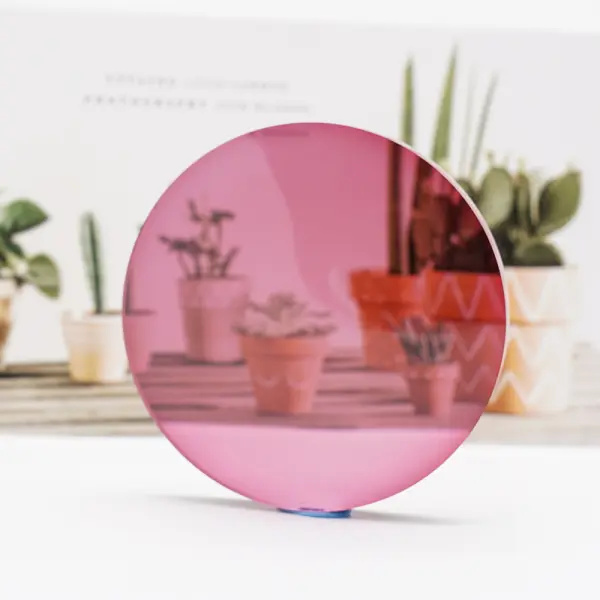
Kingway's single-vision photochromic range includes 1.56 Photo Pink, Photo Green, and Photogray variants. Single vision creates the simplest optical-design branch while allowing color and photochromic treatment to vary within it. Because single-vision lenses represent the highest-volume segment of most optical assortments, securing a reliable supply of light-responsive options in this category is essential for chain stores and wholesale distributors. The ability to offer varied photochromic colors, rather than relying exclusively on standard gray or brown, allows retail optical shops to capture a broader demographic of fashion-conscious eyewear consumers.
For wholesale buyers, the single-vision route is best organized by refractive index and color after the physical design has been fixed. That keeps a 1.56 colored photochromic item distinct from a higher-index spin photochromic product. By mapping the single-vision portfolio carefully, procurement teams can define precise requirements for Anti-Reflective (AR), Hard Multi-Coating (HMC), or Hard Coating (HC) applications alongside the photochromic baseline. As an established manufacturer since 2011, Kingway produces finished and semi-finished lens families in China, ensuring that single vision, flat-top, round-top, blended-top, and progressive designs are clearly organized within its wider portfolio. With a 5,000-square-meter facility and a daily output reaching 20,000 pairs, the factory supports scalable single-vision replenishment and reliable lead times for volume importers.
Bifocal Photochromic Designs Add a Segmented Multifocal Option
The photochromic range includes a 1.56 flat-top Photogray route, adding a bifocal segment structure to the light-responsive assortment. This combines photochromic function with a defined multifocal geometry rather than treating it as a new material category. For end users who require distinct near and distance vision zones without the visual adaptation period sometimes associated with progressive lenses, the flat-top design provides a visible, high-contrast segment. Adding photochromic capabilities extends this utility into outdoor environments, providing continuous UV protection and glare reduction without requiring patients to switch to separate prescription sunglasses.
Bifocal sourcing should therefore name the segment design, photochromic requirement, index or material, coating, and prescription fields separately. This prevents the light-changing function from obscuring the bifocal architecture underneath it, allowing chain stores and procurement teams to accurately specify the required multifocal performance. When importers submit their order lists, separating the 1.56 flat-top specification from the Photogray treatment ensures that the manufacturing floor processes the correct blank and applies the appropriate light-responsive technology. This operational clarity is particularly important when managing semi-finished blanks destined for secondary Rx laboratory surfacing.
Progressive Photochromic Lenses Add a No-Line Multifocal Route
Kingway's range also includes a 1.56 progressive Photogray product, extending the photochromic family into progressive multifocal use. Progressive photochromic selection adds corridor and fitting considerations that do not apply in the same way to single-vision products. Because a progressive lens features a continuous, seamless transition from distance to intermediate and near vision, the physical corridor length and the base curve must align meticulously with the wearer's frame selection and visual habits. Attempting to source progressive lenses based solely on their photochromic properties ignores these critical geometric parameters.
This makes the progressive branch more dependent on prescription and frame inputs, often requiring careful channel selection based on frame height, Addition (ADD) power, and previous wearer experience. Distributors serving prescription centers should keep design and fitting requirements visible when photochromic progressive products move from assortment planning into individual Rx orders. Whether managing bulk stock inventory or coordinating custom FreeForm progressive processing workflows, buyers must verify that the selected progressive corridor can accommodate the photochromic function without compromising the visual transition zones. Proper alignment between the progressive design and the photochromic layer ensures consistent performance across all viewing distances.
Index and Color Variants Add a Second Assortment Layer
After optical design is chosen, index and color create the next useful filters for the supply chain. Kingway's photochromic range includes 1.56 colored and Photogray routes alongside 1.61 and 1.67 Spin Photogray products. Higher-index materials offer thinner, lighter profiles for stronger prescriptions, making the spin photochromic technology particularly valuable for advanced Rx applications. By utilizing spin coating techniques for high-index materials, manufacturers can achieve rapid, uniform darkening and fading regardless of the lens thickness, resolving the performance discrepancies sometimes seen with traditional in-mass photochromic manufacturing.
A practical buyer matrix should keep each field independent so distributors can trace a lens from optical design to the exact commercial configuration. The assortment can separate the physical optical design (single vision, bifocal, or progressive), the refractive-index route (1.56, 1.61, or 1.67 where offered), the photochromic color or treatment (such as gray, pink, or green), and the specific coating and prescription requirements for the selected SKU.
This hierarchy gives wholesale buyers a consistent way to expand a photochromic assortment while keeping each index, color, and design tied to an actual product route, simplifying the transition from catalogue planning to quotation and replenishment. By structuring the RFQ around these layered specifications, importers can streamline their communication with the factory and ensure accurate Free on Board (FOB) or Cost and Freight (CFR) trade terms based on precise manufacturing requirements. Furthermore, this clarity supports the integration of customized OEM envelopes, allowing distributors to receive fully branded, retail-ready inventory directly from the production line.
Photochromic Lens Sourcing FAQ for Importers and Distributors
These questions keep the photochromic function connected to the underlying optical design, ensuring that procurement teams manage their inventory effectively.
Does Photochromic Describe the Lens Design?
No. Photochromic describes a light-responsive function, while single vision, bifocal, and progressive describe how optical power is organized across the physical geometry of the lens.
Which Photochromic Designs Are in Kingway's Range?
Kingway's range includes single-vision, flat-top bifocal, and progressive photochromic products, while the broader company portfolio also includes round-top and blended-top photochromic structures.
Are Higher-Index Photochromic Products Part of the Portfolio?
Yes. Kingway's range includes 1.61 and 1.67 Spin Photogray routes in addition to the standard 1.56 photochromic products, supporting stronger prescriptions with thinner profiles.
Can Buyers Assume Every Color Exists in Every Index and Design?
No. Color, index, and optical design should be matched to the specific product route being ordered rather than treated as universally interchangeable across the entire manufacturing catalogue.
What Belongs in a Photochromic Wholesale RFQ?
State the optical design, index or material, photochromic color or treatment, prescription or stock requirement, coating, quantity, and specific packaging needs such as OEM customized envelopes.
Build a China Leading Photochromic Lenses Factory Range Around Design, Index, and Color
A wholesale photochromic sourcing program becomes significantly easier to manage when the assortment is built in logical layers: optical design first, followed by index, color, coating, and commercial packaging requirements. This systemic approach gives the photochromic lenses factory range a reliable, scalable structure that distributors can use for both long-term catalogue planning and immediate RFQs. By organizing inventory from single-vision basics through specialized multifocal options, procurement teams can secure exact matching configurations while leveraging Kingway's capability for customized envelopes, steady lead times, and consistent daily output.
Send the required photochromic matrix through the https://www.kingway-optical.com/ to match the assortment with specific product routes, request accurate quotes, and streamline your next bulk wholesale order.

Source :Zhenjiang Kingway Optical Co., Ltd.
This article was originally published by IssueWire. Read the original article here.

Meta wants to put more AI technology on our faces
At Meta Connect 2026, Meta unveiled its latest AI glasses, shared how they’re bringing the Muse personal AI agent to glasses, and introduced the all-new Meta VR Glasses.

Casetify gives Hello Kitty a very Y2K makeover with its latest collection
Leopard prints, hot pink and sticker-covered cases bring early-2000s visuals to iPhones and other accessories.

Only 17% of Philippine businesses have a roadmap to scale AI
Only 17% of businesses in the Philippines have a roadmap for scaling artificial intelligence (AI), highlighting a gap between growing adoption of the technology and companies’ ability to integrate it more deeply into their operations. The finding comes from Unlocking the Philippines’ AI Potential 2026, a report commissioned by Amazon Web Services (AWS) and conducted

Securing equipment emerges as new variable for Korea's chip expansion plans
Securing equipment for manufacturing advanced memory chips is emerging as a new variable in Korea's plans to expand semiconductor production capacity through large-scale industrial clusters, after ASML, the dominant supplier of advanced chipmaking equipment, warned that its current production plans may not be sufficient to meet demand in 2027 and 2028. During its earnings call Wednesday, ASML CEO Christophe Fouquet said the company's plans to increase its production capacity for advanced chipmaking equipment by 30 percent in 2027 and another 30 percent in 2028 would likely not be enough to meet customer demand. “Last quarter, we talked about 30 percent more capacity next year, and also the aspiration to have another 30 percent increase in 2028,” Fouquet said. “But to be honest, it's becoming very clear that 30 percent in 2027, 30 percent in 2028 will not allow us to meet our customer demand.” According to the company, the planned capacity increases cover both low-numerical-aperture extreme ultraviolet (low-NA EUV) lithography equipment and deep ultraviolet (DUV) immersion system

Musinsa teams up with Japan's ZOZOTOWN for 1st Korean pop-up
Fashion platform Musinsa has teamed up with ZOZOTOWN, one of Japan's leading online fashion retailers, to open a pop-up store in Seongsu-dong, Seoul, a popular destination for young consumers. Musinsa opened the doors to ZOZOTOWN in Musinsa, the Japanese platform’s first official pop-up store in Korea, to the media on Friday. The pop-up will run through Oct. 31, while an accompanying online promotion will continue until Nov. 16. Launched in 2004, ZOZOTOWN features more than 11,000 brands and serving over 13 million customers annually. Fifteen Japanese fashion brands available on the platform, including Snidel and Grancy, are participating in the event. The pop-up’s concept, ZOZO is Coming to Town, draws inspiration from Korean streets. Crosswalks, road markings and oversized three-dimensional typography have been incorporated into the space to create the impression of an intersection where Korean and Japanese fashion meet. The pop-up follows the signing of a memorandum of understanding between the two platforms in December 2024 to establish a strategic partnership. In November last y

China’s proposed AI tech export bans may create short-term costs, long-term gains: analysts
China’s proposed export bans and controls of artificial intelligence technologies aim to tighten Beijing’s grip in the strategically vital sector, casting a cloud over the commercial prospects of domestic model developers in the global AI race, analysts say. The new measures come as concerns mount globally over the risks of advanced AI systems, following a string of recent cyberattacks, while also underscoring AI’s growing national security importance for both Beijing and Washington. Zhang Yi,...
EA producer confirms the return of Wing Commander
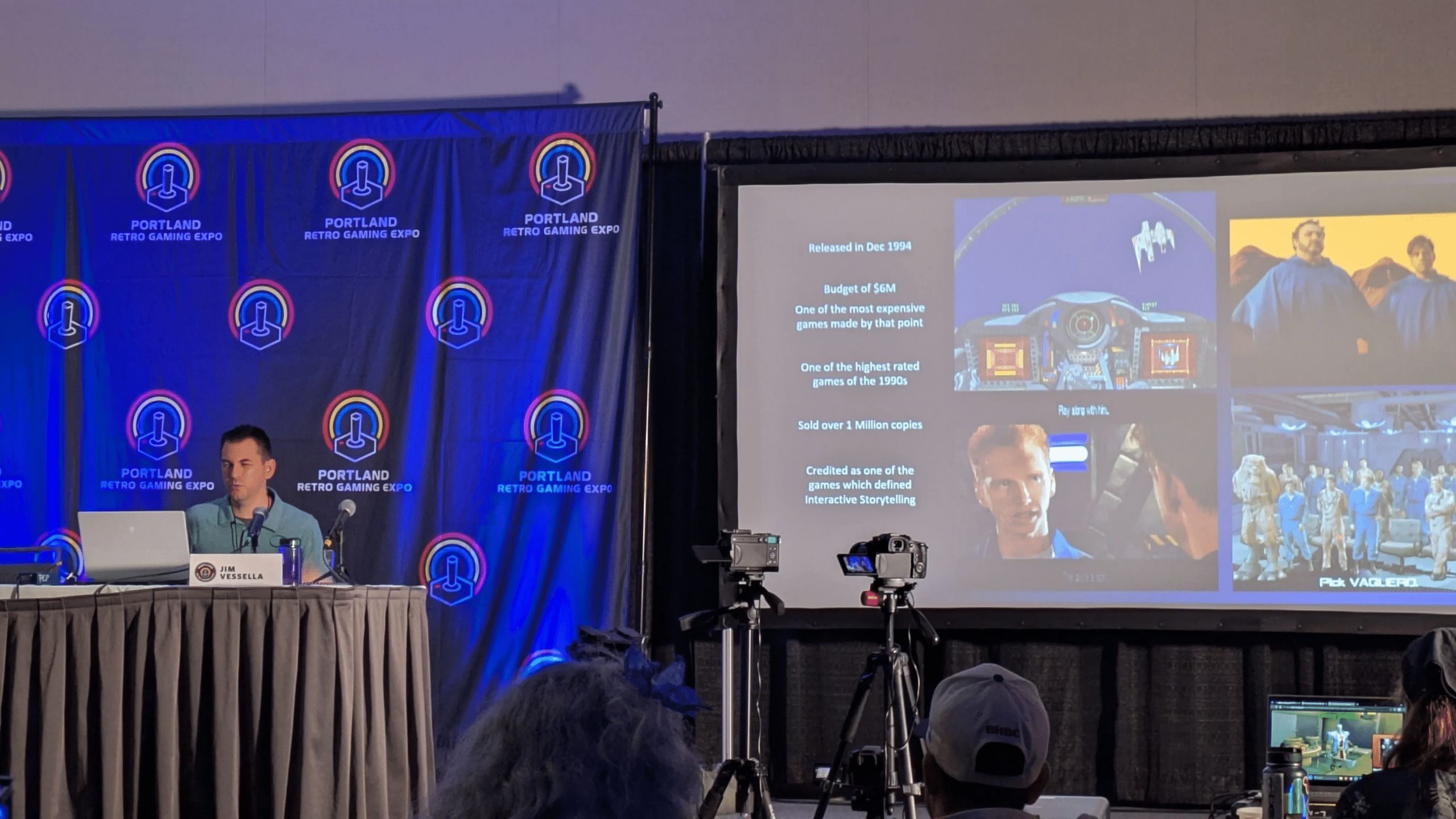
MANILA, Philippines – A panel at the Portland Retro Gaming Expo on game preservation revealed that the master tapes containing high quality source video for Wing Commander III were located. The contents of these tapes will now undergo restoration and preparation is at work for a new release of the game, tentatively called Wing Commander

Ride-hailing app taps AI to improve customer, driver experience
MANILA, Philippines – Ride-hailing app, inDrive, wants to use artificial intelligence (AI) to improve mobility in the Philippines while keeping passengers and drivers in control of their choices. The company is exploring how AI can address practical challenges such as traffic, passenger safety and driver earning, in line with its push to make travel decisions

Apple says iPhone Duo demand is “extraordinary” as shipping dates slip to late January 2027
Pre-orders for Apple’s first foldable iPhone have pushed estimated delivery dates into late January 2027, but it’s unclear whether this reflects strong demand or limited launch inventory.

Bipartisan senators ask Pentagon to answer for Ukraine Starlink restrictions
{beacon} Technology Technology The Big Story GOP senators press Pentagon over Starlink restrictions in Ukraine Four Republican senators joined their Democratic colleagues in pressing the Trump administration for information about whether Pentagon officials ordered restrictions on Ukraine’s access to the satellite-based Starshield network. © Tom Brenner, Associated Press Ukraine needs access to fast Starshield data...

Where to preorder the iPhone Duo?
Last night, the Philippines celebrated the launch of the iPhone 18 Pro and Pro Max. The elephant in the room however was information on the availability of the upcoming iPhone Duo. Industry insiders say that Apple’s first foldable will come in very limited stocks. But that doesn’t mean that consumers won’t get the chance to

Unauthorized drones banned along US-Mexico border: FAA
The Federal Aviation Administration (FAA) said Friday it is restricting unauthorized drones along the U.S.-Mexico border. This move comes as the government ramps up efforts to address concerns about illegal drug shipments across the border, Reuters reported Friday. It is a temporary flight restriction that bars any unauthorized drone activity up to 400 feet above...





YOUR NEWS, OUR NETWORK.
Do you have Great News you want to tell the world?
Be it updates about your business or your community, you can make sure that it’s heard by submitting your story to our network reaching hundreds of news sites across 6 verticals.