
Kadelg's International Water Closet Producer Role Brings a Core Toilet Category to Overseas Product Portfolios
Sep 29, 2026
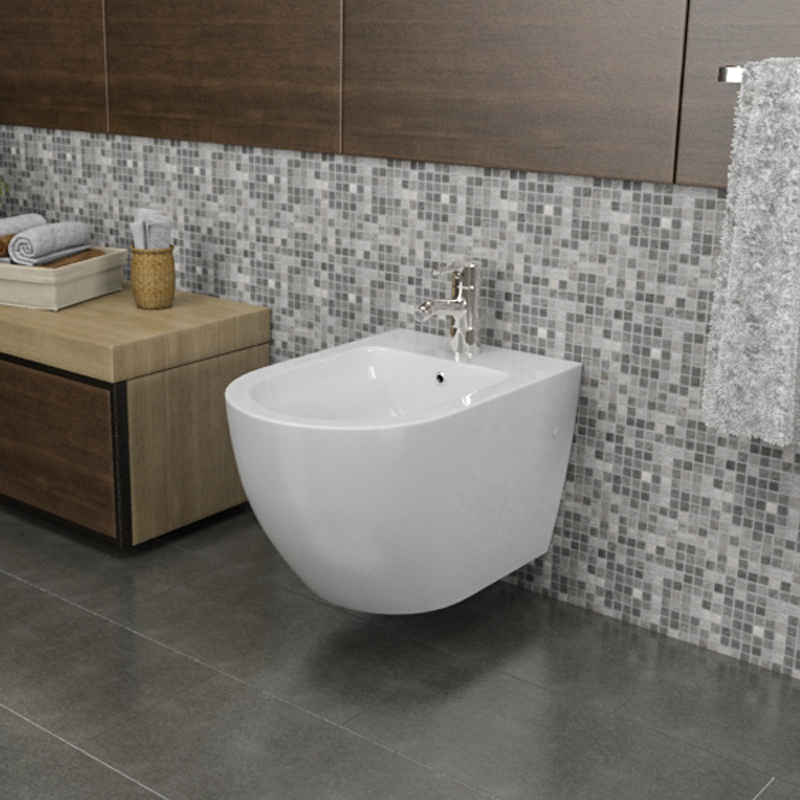
Chaozhou, Guangdong Sep 29, 2026 (Issuewire.com) - For international distributors and commercial plumbing importers, building a profitable sanitary catalogue requires establishing clear operational roles for essential fixtures. Kadelg structures its export water closet line around distinct installation formats to match specific plumbing and trade requirements. When commercial plumbing importers separate one-piece, two-piece, and wall-hung models by practical application, wholesale and retail buyers can select units suited to their local market conditions without confusion.
Overseas procurement specialists evaluate ceramic sanitaryware by examining how each model addresses local plumbing practices, regional building codes, and trade installation habits. When an importer builds a coherent WC range around defined purchasing requirements, every SKU serves a clear commercial purpose across wholesale and retail distribution channels. Guangdong Zhongtao Technology Co., Ltd., founded in Chaozhou in 1998, manufactures ceramic sanitaryware under its Kadelg brand. The factory aligns kiln production schedules, glaze standards, and model specifications with overseas distribution requirements, helping importers maintain consistent warehouse turnover and container shipping efficiency.
Product Attributes and Category Structure in Sanitary Trade
In international sanitary trade, water closet, WC, and toilet describe the same primary fixture across commercial invoices and technical submittals. Confusion arises when factory catalogues mix basic construction methods, mounting styles, and cistern placements in an unstructured list. Importers must separate these physical characteristics before reviewing production capacity or committing to container orders.
Construction refers to how the ceramic body is cast, glazed, and fired in the kiln. A one-piece toilet integrates cistern and bowl into a single vitrified unit, while a two-piece toilet bolts a separate cistern onto the bowl using rubber sealing gaskets. Mounting defines where the fixture transfers its physical load. Floor-mounted toilets rest directly on the finished floor surface, while wall-hung bowls bolt to a structural carrier frame concealed within the wall cavity.
Bowl profiles and rim styles describe specific design geometries rather than standalone product categories. A back-to-wall profile sits flat against tiled walls to conceal the soil pipe. A rimless bowl routes flush water through smooth interior channels to eliminate the traditional enclosed rim cavity. Treating rimless bowls or back-to-wall skirts as separate families often creates duplicate SKUs.
Assigning Specific Market Roles to Sanitary SKUs
A balanced import range requires each model to satisfy a specific installation scenario in the destination market. Procurement teams evaluate sanitaryware by examining plumbing rough-ins, water pressure conditions, and installer habits. Kadelg organizes production around these practical requirements, allowing overseas distributors to assign clear roles to every imported model without overcrowding their product line.
Replacement and Renovation Products
Renovation projects require toilets that fit existing pipe locations without structural alterations. When contractors replace an older fixture, the rough-in distance, waste pipe diameter, and supply stop position determine which model fits. A bowl that does not match local rough-in standards adds labor costs and causes jobsite delays.
In markets that rely on floor drainage, such as North America and parts of Asia, standard S-trap rough-ins of 300 mm or 400 mm determine product selection. In European and Middle Eastern markets, horizontal P-trap wall outlets set at standard center heights above the floor are standard. Importers serving renovation contractors stock floor-mounted models with broad trapway tolerances, which allows plumbers to complete change-outs without altering the drainage stack.
Commercial and Residential Project Products
Project procurement focuses on new commercial buildings, multi-family developments, and hotels where plumbing layouts follow architectural drawings from the outset. In these builds, toilets connect to concealed carrier systems, acoustic insulation mats, and wall-mounted dual-flush actuation plates.
Wall-hung bowls are common in commercial and modern residential projects because they keep the floor clear and simplify cleaning maintenance. Sourcing wall-hung toilets requires confirming compatibility with in-wall cistern frames, including bolt spacing, waste outlet height, and load limits. Specifiers need verified dimensional drawings and submittal sheets to coordinate plumbing rough-ins with drywall framing.
Commercial tenders often specify flush performance, water consumption limits, and weight tolerances. Importers serving commercial contractors need factory documentation covering hydraulic flush volumes, glazed trapway dimensions, and static load test data up to 400 kg. Having CAD files and technical datasheets ready helps contractors submit required submittal packages to project engineers without delay.
Managing Assortment Breadth Without Duplicating SKUsConsolidating Core Ceramic Platforms
Distributors risk inventory buildup when adding models that look slightly different but serve identical purposes. Listing ten different one-piece toilets does not improve market coverage if all ten share 300 mm rough-in dimensions and similar bowl heights. Carrying too many similar SKUs ties up working capital in warehouse space.
A practical selection framework evaluates each toilet model against four concrete operational factors:
- Installation interface: rough-in distance, waste discharge direction, and water inlet placement.
- Building application: distinguishing light residential use from heavy-traffic commercial or hospitality settings.
- Wholesale pricing tier: separating volume builder models from premium retail showroom offerings.
- Logistical efficiency: measuring unit carton cube and pallet stackability for ocean freight.
Differentiating Product Tiers Through Trim and Aesthetics
When two factory models serve the exact same criteria, distributors benefit from selecting the model with higher production versatility. Consolidating volume into fewer core SKUs improves ocean container loading efficiency, lowers purchase costs per unit, and keeps inventory moving steadily through distribution channels.
Disciplined SKU management protects profit margins when market demand shifts. Ordering larger quantities of versatile models allows importers to negotiate better freight terms and maintain consistent carton packaging for pallet racking. A focused range also simplifies wholesale showroom displays, speeds up counter sales, and helps warehouse staff pull and pack orders accurately.
Coordinating Water Closets with Adjacent Fixtures
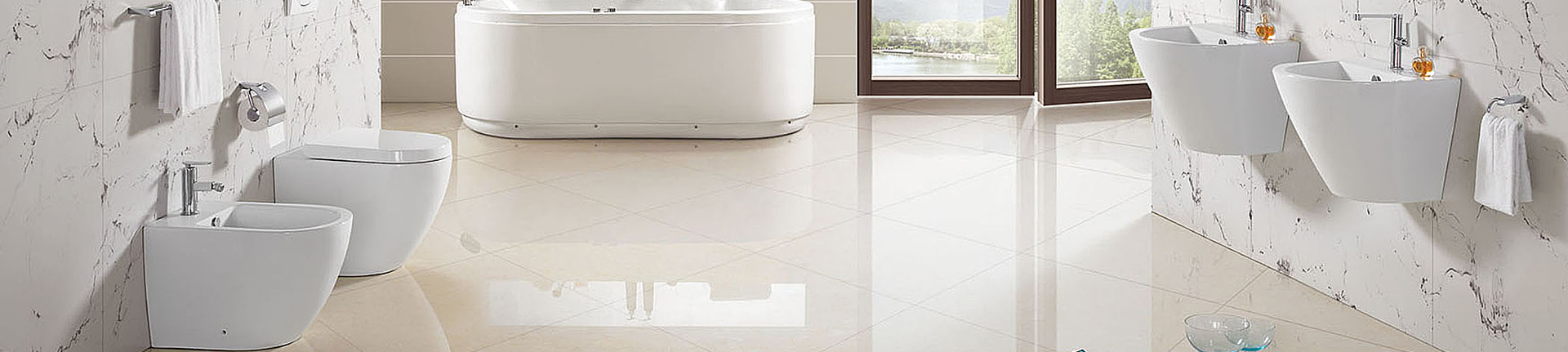
Importers working with factories that produce multiple ceramic categories can match floor-mounted and wall-hung toilets with complementary bidets and washbasins. In hotel and multi-family projects, architects often require matching design contours across all bathroom ceramics. Sourcing these pieces from the same factory ensures uniform glaze thickness and consistent white color tones across the entire bathroom suite.
Cross-category sourcing also simplifies import logistics and container planning. Ordering toilets, countertop basins, and matching bidets from a single manufacturer allows buyers to combine fragile ceramic pieces into balanced 40-foot high-cube containers. Mixing heavier floor toilets with lighter basins optimizes container payload weight and cubic volume, reducing landed shipping costs per piece.
Building an Import Shortlist Based on Technical Needs
Building an import catalog requires matching regional plumbing standards with efficient inventory turnover. Rather than ordering from a broad factory catalog without a clear plan, category managers evaluate local drainage codes, rough-in habits, and contractor preferences. Setting defined roles for each SKU before placing orders prevents slow-moving stock from occupying valuable warehouse space.
Distributors working with Kadelg can review technical drawings, hydraulic test parameters, and packaging specifications across one-piece, two-piece, and wall-hung models. Sharing destination market plumbing standards and target pricing tiers with the factory helps align production with regional trade requirements. Buyers looking to review production specifications can contact the company through https://www.kadelg.com/ to discuss range planning and container schedules.
Source :Guangdong Zhongtao Technology Co., Ltd.
This article was originally published by IssueWire. Read the original article here.

KCCI, audit authority collaborate to resume construction of 4,000 public housing units
The audit authority has cleared a key hurdle for six stalled public housing projects totaling nearly 4,000 units after the Korea Chamber of Commerce and Industry (KCCI) sought a preliminary consultation on behalf of builders struggling with soaring construction costs. The KCCI said on Tuesday that the Board of Audit and Inspection (BAI) determined that project costs for the six sites, covering 3,936 housing units, can be recalculated to reflect current market conditions. The case marks the KCCI’s first use of the consultation program since it was opened to private organizations in May. “Companies have faced difficulties for a long time, but this was not an issue they could easily make a decision on,” Lee Jong-myung, head of the KCCI's industry innovation division, said. “The BAI's decision to open its doors to the private sector has added another channel for resolving corporate difficulties, and its first result will benefit the public through housing supply.” The six projects are part of a public-private housing program, with public agencies providing the land while private bu

Private sector's role increased in 5th Nuri launch
Private companies played a significantly greater role in the successful fifth launch of Korea’s Nuri rocket on Wednesday, signaling that the country’s efforts to keep pace with the global shift toward a private sector-led “New Space” era are gaining momentum. The Nuri rocket completed its fifth launch and 20-minute-long flight successfully after lifting off at the Naro Space Center in Goheung, Jeonnam-Gwangju Special Metropolitan City, at 12:25 p.m. The most notable change in the latest launch was not the rocket itself, but the growing presence of private-sector personnel at the launch site. Hanwha Aerospace has overseen the manufacturing of the Nuri rocket as its system integrator since the fourth launch on Nov. 27 last year, but this time, its role expanded to the consoles at the launch control center. Hanwha Aerospace deployed 42 staffers for the fifth launch. They participated in operations at 20 of the 22 consoles responsible for launch vehicle systems, and at 18 of them, Hanwha employees directly operated the controls instead of specialists from the Korea Aerospace Researc
![[EXPLAINER] How AI emerged as new threat in Korea's bank hacking crisis](https://newsimg.koreatimes.co.kr/2026/10/07/77d98bb7-f23e-430d-be94-38ae9821547a.jpg)
[EXPLAINER] How AI emerged as new threat in Korea's bank hacking crisis
Hackers once had to manually test security defenses, identify vulnerabilities and work out how to exploit them. Now, artificial intelligence (AI) can do much of that work, requiring little human input. That possibility is at the center of Korea's latest security crisis in the financial sector, as investigators have found traces of an AI-powered autonomous penetration-testing tool in a series of recent cyberattacks on the country's major banks. Since last week, Shinhan Bank, KB Kookmin Bank, Hana Bank, Yegaram Savings Bank and BNK Busan Bank have all reported data breaches, while Woori Bank and NH NongHyup Bank have detected signs of hacking attempts, though no data leaks were confirmed. Shinhan Bank reported that about 25,000 customers were affected, with personal information including names, phone numbers, annual income and loan limits exposed. KB Kookmin reported 119 affected customers, while Hana Bank said personal information belonging to 89 customers was exposed. The hacking spree has drawn particular concern after investigators reportedly found traces of an AI-powered tool known as

SK Energy, HD Hyundai Oilbank face fines over alleged fuel price fixing
SK Energy and HD Hyundai Oilbank may face sanctions from the Fair Trade Commission (FTC) over allegations that they colluded on gasoline, diesel and kerosene prices, with combined fines potentially reaching 4.63 trillion won ($3.45 billion). The antitrust regulator said Wednesday that it sent a review report to the two companies, formally launching deliberations over the alleged price-fixing case. The FTC said the alleged collusion lasted from February 2022, shortly before Russia's invasion of Ukraine, through March this year, shortly after the outbreak of the war in Iran. The case covers petroleum products that are essential to household and economic activity. Korea's oil refining industry is highly concentrated, with SK Energy, HD Hyundai Oilbank, GS Caltex and S-Oil accounting for about 98 percent of the domestic market. According to the FTC, SK Energy and HD Hyundai Oilbank exchanged information on the prices of gasoline, diesel and kerosene, including provisional prices, final prices and sales policies. The regulator also determined that the two companies colluded on prices followin

Beef tallow remains hurdle to Charrr's global expansion
Countries’ regulations on imported foods containing beef tallow pose a hurdle for Samyang Foods as the Korean instant noodle giant seeks to expand exports of its latest black bean sauce instant noodles, Charrr. The company has established Buldak as a massively popular product around the globe without using beef tallow, selling 10 billion units and generating cumulative sales of 7 trillion won ($5.2 billion) as of June. Unlike the spicy, brothless instant noodle brand, however, Charrr uses beef tallow as a key ingredient to give its sauce a rich, beefy flavor. Charrr is not Samyang’s first instant noodle product using beef tallow. The company launched Samyang 1963 in November last year with the ambitious goal of reviving the “forgotten” taste of its first instant noodle product, Samyang Ramen, which was introduced in 1963 and used beef tallow. Samyang Ramen, introduced by the late company founder Chun Joong-yoon to help feed a population suffering from widespread poverty at the time, remains a cornerstone of the company’s identity. Its use of beef tallow has now become part of

Bank data breach victims step up calls for compensation
A growing number of customers affected by a string of recent personal data breaches at major commercial banks and other financial firms appear to be turning to class action lawsuits in pursuit of compensation, according to industry officials, Wednesday. The banks have pledged to fully compensate customers whose losses, including those from voice phishing scams, are found to have directly resulted from the leaks. But proving that a loss was caused by a specific data breach can be difficult in practice, and the banks have yet to set out clear standards for determining which claims would qualify, prompting some victims to resort to legal action. Seven financial firms have reported information leaks so far, including three of the country’s largest commercial lenders — Shinhan Bank, KB Kookmin Bank and Hana Bank. Shinhan reported the largest breach, affecting around 25,000 people, followed by 119 at KB Kookmin and 89 at Hana Bank. The exposed data includes customers’ names, contact details, resident registration numbers, annual income and loan limits. The combination of personal and fin
![[COVER STORY] Nuri rocket successfully completes 5th flight](https://newsimg.koreatimes.co.kr/2026/10/07/6a8cafff-abc8-4ebb-86ed-8bb7b1eb07d3.jpg)
[COVER STORY] Nuri rocket successfully completes 5th flight
Korea’s home-developed Nuri rocket successfully carried out its mission in its fifth launch Wednesday, sequentially deploying 14 out of 15 satellites it carried into their target orbit. The key objective of the fifth launch was to safely deploy the five microsatellite constellations, and the success has demonstrated Korea's increased multi-satellite launch capabilities, taking another step toward privately led commercial launch services. The rocket lifted off from the launchpad at the Naro Space Center in Goheung, Jeonnam-Gwangju Special Metropolitan City, at 12:25 p.m. and completed its roughly 20-minute flight at around 12:45 p.m. The rocket separated its first stage about two minutes after liftoff, followed by the second stage about four and a half minutes into the flight. At around 12:40 p.m., it reached an altitude of 570 kilometers and completed the sequential deployment of five New-space Earth Observation Satellite Constellation for National Safety (NEONSAT) microsatellites (satellites No. 2 to 6), its primary payload, along with nine of the 10 CubeSats it carried. Initially, th

AMD to establish AI research center in Korea this year, hire hundreds
U.S. chip giant AMD announced Wednesday that it plans to establish an artificial intelligence (AI) research center in Korea by the end of this year and hire hundreds of researchers as part of broader AI cooperation between the company and Korea. The announcement came during a meeting between AMD CEO Lisa Su and Second Vice Minister of Science and ICT Ryu Je-myung in Seoul. AMD also plans to help develop graduate-level AI and AI transformation talent and collaborate with Korea on a reference model for heterogeneous AI computing. The model would combine AMD’s central processing units (CPUs) and graphics processing units (GPUs) with domestically developed neural processing units (NPUs). The meeting, arranged by the Ministry of Science and ICT, served as an interim review of AI cooperation agreed upon by the ministry and AMD during President Lee Jae Myung’s attendance at the San Francisco AI Summit in July. AMD also outlined plans to work with Korea’s private sector to create new business opportunities. At a subsequent roundtable with 13 Korean companies involved in AI infrastructure, c

Why Trump chose these leaders to head his 'Super Intelligence Force'
President Trump’s selection of four administration officials to head up his new “Super Intelligence Force” is offering a window into how the White House will approach AI in the face of pressure over its risks. The group of government leaders each reflect different priorities of the Trump administration after months of mixed messaging on the...

Nuri rocket deploys 14 satellites, 1 CubeSat fails to release
The Nuri rocket successfully lifted off on its fifth launch and deployed 14 of the 15 satellites it carried into their target orbit Wednesday. The rocket lifted off from the second launch pad at the Naro Space Center in Goheung, Jeonnam-Gwangju Special Metropolitan City, at 12:25 p.m. and completed its roughly 20-minute flight at around 12:45 p.m. The rocket separated its first stage about two minutes after liftoff, followed by the second stage about four and a half minutes into the flight. At around 12:40 p.m., it reached an altitude of 570 kilometers and completed the sequential deployment of five NEONSAT swarm microsatellites (satellite No. 2 to 6), its primary payload, along with nine of the 10 CubeSats it carried. Initially, the Nuri sent signals indicating that all of the CubeSats had been successfully deployed. However, subsequent checks found that PERSAT02, developed by Quaternion, had failed to separate from the rocket. The flight ended at around 12:45 p.m. after the third stage completed its autopilot sequence. "The Nuri rocket successfully completed its planned fifth launch mis

Southeast Asia’s foodtech winners are the least glamorous ones
Southeast Asia’s foodtech story was supposed to be about disruption: lab-grown shrimp on every plate, groceries at your door in 15 minutes, ghost kitchens replacing the corner restaurant. The reality has been humbler, and arguably more interesting. The 2022 correction thinned the herd, the eFishery scandal and TaniHub’s collapse left scars, and many of the […] The post Southeast Asia’s foodtech winners are the least glamorous ones appeared first on e27.

When the carer has dementia too: Japan turns to physical AI to rescue eldercare
Some Japanese words resist translation. Take rōrō kaigo (老老介護). The character rō means “elderly”, and repeating it describes an elderly person caring for another elderly person, such as an 80-year-old husband looking after his equally frail wife on his own. That is the reality the word captures. Then there is the darker ninnin kaigo (認認介護). […] The post When the carer has dementia too: Japan turns to physical AI to rescue eldercare appeared first on e27.


YOUR NEWS, OUR NETWORK.
Do you have Great News you want to tell the world?
Be it updates about your business or your community, you can make sure that it’s heard by submitting your story to our network reaching hundreds of news sites across 6 verticals.