
Kadelg's Export-Focused Two Piece Toilet Producer Role and the Trade-Offs of Format Choice in Overseas Sourcing
Sep 29, 2026
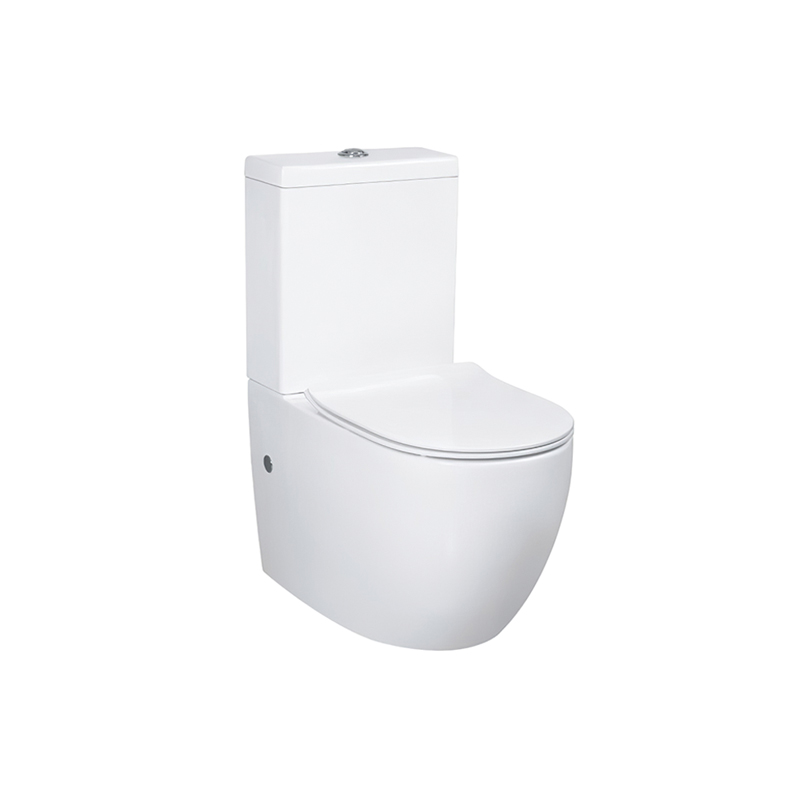
Chaozhou, Guangdong Sep 29, 2026 (Issuewire.com) - In international sanitaryware procurement, evaluating fixture formats requires balancing production costs, shipping density, and installer preferences. An export-focused two piece toilet producer manufactures fixtures with separate ceramic cisterns and bowls, joined during installation by mechanical fasteners and elastomeric gaskets. Understanding the operational trade-offs of this format helps distributors allocate purchasing budgets effectively across different market segments.
Overseas distributors evaluate two-piece fixtures by examining handling logistics, container packing efficiency, and wholesale turnover rates. Ceramic manufacturer Guangdong Zhongtao Technology Co., Ltd., founded in Chaozhou in 1998, produces high-grade vitreous china under its Kadelg brand. The factory uses continuous tunnel kilns to maintain dimensional consistency, flat mounting surfaces, and uniform glaze quality across high-volume export orders destined for international wholesale networks.
Physical Architecture and Carton Logistics
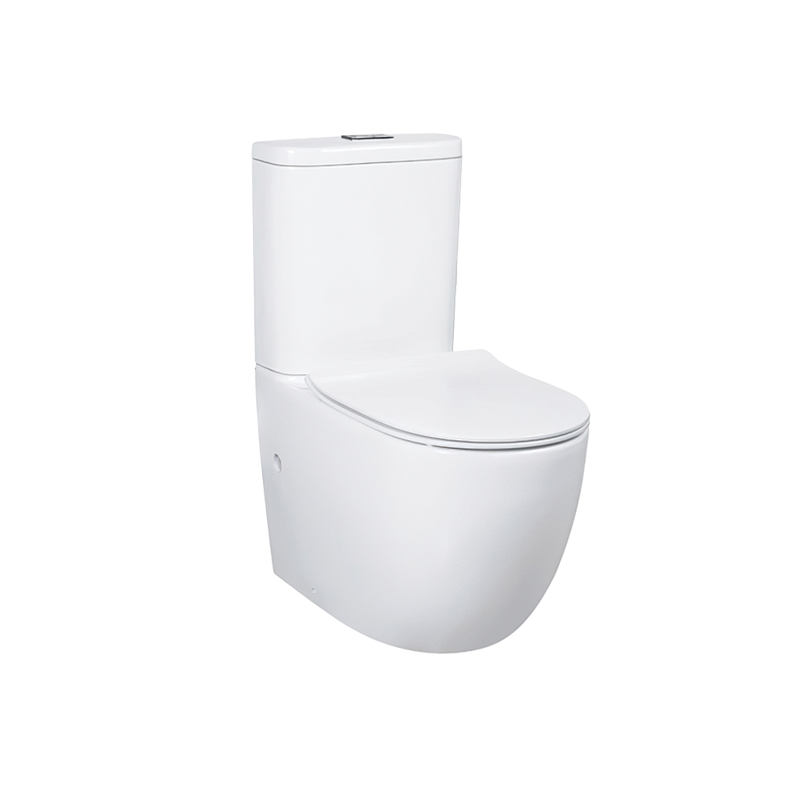
The primary structural feature of a two-piece toilet is the mechanical separation between the water cistern and the bowl. The cistern is cast and fired as an independent ceramic tank that bolts onto the rear deck of the bowl using corrosion-resistant brass or stainless steel hardware. A contoured sponge rubber or EDPM gasket seals the water transfer passage between the two ceramic components, preventing leaks during flush activation.
This modular architecture creates significant packaging advantages. Instead of packaging an awkward monolithic shape, factories pack the bowl and cistern in separate compact cartons, or nest them efficiently inside a combination carton. This packaging flexibility allows distributors to stack pallets higher in wholesale warehouses and optimize carton placement during intermodal container transfers, protecting ceramic rims from transit vibration.
Individual carton weights are significantly lower than one-piece equivalents. A two-piece bowl typically weighs between 22 and 30 kilograms, while the cistern weighs between 11 and 16 kilograms. These manageable carton weights reduce worker fatigue in distribution warehouses, simplify courier handling, and allow a single tradesperson to carry the fixture up stairs on residential jobsites without assistance, speeding up multi-unit installations.
Maximizing Ocean Container Cube Utilization
Freight efficiency is a primary driver in overseas sanitaryware sourcing. Because ocean shipping rates are calculated per container volume, packing density directly impacts the landed cost per unit. Two-piece toilet components pack more tightly into standard 40-foot high-cube containers than bulky one-piece units, providing substantial logistics savings across regular sea freight routes.
A 40-foot high-cube container typically holds between 650 and 850 two-piece sets, depending on whether the units are packed in separate boxes or single combination cartons. In contrast, one-piece toilets often limit container capacity to between 350 and 480 units due to carton bulk. This substantial difference in freight payload allows importers to reduce shipping costs per unit, supporting competitive wholesale pricing in price-sensitive trade channels.
Installation Dynamics and Jobsite Trade PracticesFloor Flange Alignment and Rough-In Variations
On the jobsite, installing a two-piece toilet follows a two-step sequence. The plumber first positions and secures the bowl onto the floor flange, ensuring a level base and a watertight wax or rubber seal. Once the bowl is anchored, the installer mounts the cistern onto the rear deck, tightens the tank bolts evenly to compress the coupling gasket, and connects the water supply line.
Coupling Gasket Compression and Bolt Sealing
This two-stage installation simplifies alignment in tight residential bathrooms. Working with lighter individual pieces allows the plumber to verify floor flange alignment and trapway seating without wrestling with the combined weight of a full water closet assembly. If the rough-in requires minor shimming to achieve level, adjusting the bowl alone is faster and safer than leveling an integrated one-piece fixture.
However, mechanical tank-to-bowl joints require careful bolt torque during assembly. Over-tightening steel bolts against ceramic lugs can crack the tank base, while under-tightening can cause slow water leaks. Factory quality control ensures that mounting decks are ground flat and bolt holes are cleanly formed, providing stable seating for tank gaskets and minimizing installation errors on site.
Commercial Roles in Wholesale and Trade Channels
In wholesale plumbing distribution, two-piece toilets serve as the primary volume driver for residential contractors, property management firms, and budget-conscious housing developers. The accessible price point and straightforward replacement compatibility make two-piece units the preferred choice for volume renovation and repair work across regional markets.
Carrying standard two-piece models allows plumbing merchants to supply four high-volume market segments:
- Residential subdivisions: cost-effective fixture supply minimizing initial build capital.
- Rental property maintenance: durable components with straightforward individual piece replacement.
- Plumbing trade contractors: modular boxes easily transported and installed by solo technicians.
- Volume retail merchants: accessible price points driving rapid inventory turnover.
From a facility management standpoint, two-piece fixtures also simplify replacement logistics. If a cistern suffers accidental impact damage during renovation, the property owner can replace the tank without removing the bowl or disturbing the floor seal. This interchangeability reduces repair costs for facility managers maintaining large commercial or rental properties, keeping overall maintenance budgets predictable.
Evaluating Flushing Performance and Mechanical Trim
Importers should recognize that two-piece construction does not compromise flushing performance. Modern two-piece toilets incorporate the same advanced hydraulics found in one-piece collections. Large 3-inch flush valves and fully glazed 2-inch trapways ensure rapid waste extraction while preventing internal residue accumulation.
Water conservation standards in major export markets require dual-flush performance of 4.5/3.0 liters or 6.0/4.0 liters per flush. Sourcing managers specify certified internal fill and flush valves that deliver rapid water release and quiet refill cycles. Combining efficient hydraulic bowl design with reliable flush valves ensures high bulk waste evacuation regardless of ceramic format, satisfying both residential and commercial building codes.
Balancing the Portfolio with Two-Piece and One-Piece ModelsCarton Logistics and Pallet Packing Efficiency
A well-structured sanitaryware catalog balances both two-piece and one-piece configurations to address different buyer segments. Two-piece models capture high-volume trade sales and project tenders where unit cost and installation simplicity take priority. Meanwhile, one-piece and wall-hung models cater to design-focused homeowners and upscale hospitality projects.
Wholesale Trade Demand and Replacement Market Alignment
By sourcing both formats from a dependable manufacturer like Kadelg, distributors achieve glaze consistency, unified design styling, and consolidated container shipments across their complete sanitaryware range, reducing inventory complexity and warehouse handling overhead.
Factory technical teams assist overseas buyers in selecting appropriate rough-in dimensions, trapway geometries, and packaging configurations tailored to destination market regulations and trade habits, ensuring smooth customs clearance and rapid wholesale distribution.
To examine technical drawings, compare container loading plans, and request production quotations for two-piece toilet ranges, visit https://www.kadelg.com/ to connect with the export sales department.
Source :Guangdong Zhongtao Technology Co., Ltd.
This article was originally published by IssueWire. Read the original article here.

KCCI, audit authority collaborate to resume construction of 4,000 public housing units
The audit authority has cleared a key hurdle for six stalled public housing projects totaling nearly 4,000 units after the Korea Chamber of Commerce and Industry (KCCI) sought a preliminary consultation on behalf of builders struggling with soaring construction costs. The KCCI said on Tuesday that the Board of Audit and Inspection (BAI) determined that project costs for the six sites, covering 3,936 housing units, can be recalculated to reflect current market conditions. The case marks the KCCI’s first use of the consultation program since it was opened to private organizations in May. “Companies have faced difficulties for a long time, but this was not an issue they could easily make a decision on,” Lee Jong-myung, head of the KCCI's industry innovation division, said. “The BAI's decision to open its doors to the private sector has added another channel for resolving corporate difficulties, and its first result will benefit the public through housing supply.” The six projects are part of a public-private housing program, with public agencies providing the land while private bu

Private sector's role increased in 5th Nuri launch
Private companies played a significantly greater role in the successful fifth launch of Korea’s Nuri rocket on Wednesday, signaling that the country’s efforts to keep pace with the global shift toward a private sector-led “New Space” era are gaining momentum. The Nuri rocket completed its fifth launch and 20-minute-long flight successfully after lifting off at the Naro Space Center in Goheung, Jeonnam-Gwangju Special Metropolitan City, at 12:25 p.m. The most notable change in the latest launch was not the rocket itself, but the growing presence of private-sector personnel at the launch site. Hanwha Aerospace has overseen the manufacturing of the Nuri rocket as its system integrator since the fourth launch on Nov. 27 last year, but this time, its role expanded to the consoles at the launch control center. Hanwha Aerospace deployed 42 staffers for the fifth launch. They participated in operations at 20 of the 22 consoles responsible for launch vehicle systems, and at 18 of them, Hanwha employees directly operated the controls instead of specialists from the Korea Aerospace Researc
![[EXPLAINER] How AI emerged as new threat in Korea's bank hacking crisis](https://newsimg.koreatimes.co.kr/2026/10/07/77d98bb7-f23e-430d-be94-38ae9821547a.jpg)
[EXPLAINER] How AI emerged as new threat in Korea's bank hacking crisis
Hackers once had to manually test security defenses, identify vulnerabilities and work out how to exploit them. Now, artificial intelligence (AI) can do much of that work, requiring little human input. That possibility is at the center of Korea's latest security crisis in the financial sector, as investigators have found traces of an AI-powered autonomous penetration-testing tool in a series of recent cyberattacks on the country's major banks. Since last week, Shinhan Bank, KB Kookmin Bank, Hana Bank, Yegaram Savings Bank and BNK Busan Bank have all reported data breaches, while Woori Bank and NH NongHyup Bank have detected signs of hacking attempts, though no data leaks were confirmed. Shinhan Bank reported that about 25,000 customers were affected, with personal information including names, phone numbers, annual income and loan limits exposed. KB Kookmin reported 119 affected customers, while Hana Bank said personal information belonging to 89 customers was exposed. The hacking spree has drawn particular concern after investigators reportedly found traces of an AI-powered tool known as

SK Energy, HD Hyundai Oilbank face fines over alleged fuel price fixing
SK Energy and HD Hyundai Oilbank may face sanctions from the Fair Trade Commission (FTC) over allegations that they colluded on gasoline, diesel and kerosene prices, with combined fines potentially reaching 4.63 trillion won ($3.45 billion). The antitrust regulator said Wednesday that it sent a review report to the two companies, formally launching deliberations over the alleged price-fixing case. The FTC said the alleged collusion lasted from February 2022, shortly before Russia's invasion of Ukraine, through March this year, shortly after the outbreak of the war in Iran. The case covers petroleum products that are essential to household and economic activity. Korea's oil refining industry is highly concentrated, with SK Energy, HD Hyundai Oilbank, GS Caltex and S-Oil accounting for about 98 percent of the domestic market. According to the FTC, SK Energy and HD Hyundai Oilbank exchanged information on the prices of gasoline, diesel and kerosene, including provisional prices, final prices and sales policies. The regulator also determined that the two companies colluded on prices followin

Beef tallow remains hurdle to Charrr's global expansion
Countries’ regulations on imported foods containing beef tallow pose a hurdle for Samyang Foods as the Korean instant noodle giant seeks to expand exports of its latest black bean sauce instant noodles, Charrr. The company has established Buldak as a massively popular product around the globe without using beef tallow, selling 10 billion units and generating cumulative sales of 7 trillion won ($5.2 billion) as of June. Unlike the spicy, brothless instant noodle brand, however, Charrr uses beef tallow as a key ingredient to give its sauce a rich, beefy flavor. Charrr is not Samyang’s first instant noodle product using beef tallow. The company launched Samyang 1963 in November last year with the ambitious goal of reviving the “forgotten” taste of its first instant noodle product, Samyang Ramen, which was introduced in 1963 and used beef tallow. Samyang Ramen, introduced by the late company founder Chun Joong-yoon to help feed a population suffering from widespread poverty at the time, remains a cornerstone of the company’s identity. Its use of beef tallow has now become part of

Bank data breach victims step up calls for compensation
A growing number of customers affected by a string of recent personal data breaches at major commercial banks and other financial firms appear to be turning to class action lawsuits in pursuit of compensation, according to industry officials, Wednesday. The banks have pledged to fully compensate customers whose losses, including those from voice phishing scams, are found to have directly resulted from the leaks. But proving that a loss was caused by a specific data breach can be difficult in practice, and the banks have yet to set out clear standards for determining which claims would qualify, prompting some victims to resort to legal action. Seven financial firms have reported information leaks so far, including three of the country’s largest commercial lenders — Shinhan Bank, KB Kookmin Bank and Hana Bank. Shinhan reported the largest breach, affecting around 25,000 people, followed by 119 at KB Kookmin and 89 at Hana Bank. The exposed data includes customers’ names, contact details, resident registration numbers, annual income and loan limits. The combination of personal and fin
![[COVER STORY] Nuri rocket successfully completes 5th flight](https://newsimg.koreatimes.co.kr/2026/10/07/6a8cafff-abc8-4ebb-86ed-8bb7b1eb07d3.jpg)
[COVER STORY] Nuri rocket successfully completes 5th flight
Korea’s domestically-developed Nuri rocket successfully carried out its mission in its fifth launch Wednesday, sequentially deploying 14 out of 15 satellites it carried into their target orbit. The key objective of the fifth launch was to safely deploy the five microsatellite constellations, and the success has demonstrated Korea's increased multi-satellite launch capabilities, taking another step toward privately led commercial launch services. The rocket lifted off from the launchpad at the Naro Space Center in Goheung, Jeonnam-Gwangju Special Metropolitan City, at 12:25 p.m. and completed its roughly 20-minute flight at around 12:45 p.m. The rocket separated its first stage about two minutes after liftoff, followed by the second stage about four and a half minutes into the flight. At around 12:40 p.m., it reached an altitude of 570 kilometers and completed the sequential deployment of five New-space Earth Observation Satellite Constellation for National Safety (NEONSAT) microsatellites (satellites No. 2 to 6), its primary payload, along with nine of the 10 CubeSats it carried. Initi

AMD to establish AI research center in Korea this year, hire hundreds
U.S. chip giant AMD announced Wednesday that it plans to establish an artificial intelligence (AI) research center in Korea by the end of this year and hire hundreds of researchers as part of broader AI cooperation between the company and Korea. The announcement came during a meeting between AMD CEO Lisa Su and Second Vice Minister of Science and ICT Ryu Je-myung in Seoul. AMD also plans to help develop graduate-level AI and AI transformation talent and collaborate with Korea on a reference model for heterogeneous AI computing. The model would combine AMD’s central processing units (CPUs) and graphics processing units (GPUs) with domestically developed neural processing units (NPUs). The meeting, arranged by the Ministry of Science and ICT, served as an interim review of AI cooperation agreed upon by the ministry and AMD during President Lee Jae Myung’s attendance at the San Francisco AI Summit in July. AMD also outlined plans to work with Korea’s private sector to create new business opportunities. At a subsequent roundtable with 13 Korean companies involved in AI infrastructure, c

Why Trump chose these leaders to head his 'Super Intelligence Force'
President Trump’s selection of four administration officials to head up his new “Super Intelligence Force” is offering a window into how the White House will approach AI in the face of pressure over its risks. The group of government leaders each reflect different priorities of the Trump administration after months of mixed messaging on the...

Nuri rocket deploys 14 satellites, 1 CubeSat fails to release
The Nuri rocket successfully lifted off on its fifth launch and deployed 14 of the 15 satellites it carried into their target orbit Wednesday. The rocket lifted off from the second launch pad at the Naro Space Center in Goheung, Jeonnam-Gwangju Special Metropolitan City, at 12:25 p.m. and completed its roughly 20-minute flight at around 12:45 p.m. The rocket separated its first stage about two minutes after liftoff, followed by the second stage about four and a half minutes into the flight. At around 12:40 p.m., it reached an altitude of 570 kilometers and completed the sequential deployment of five NEONSAT swarm microsatellites (satellite No. 2 to 6), its primary payload, along with nine of the 10 CubeSats it carried. Initially, the Nuri sent signals indicating that all of the CubeSats had been successfully deployed. However, subsequent checks found that PERSAT02, developed by Quaternion, had failed to separate from the rocket. The flight ended at around 12:45 p.m. after the third stage completed its autopilot sequence. "The Nuri rocket successfully completed its planned fifth launch mis

Southeast Asia’s foodtech winners are the least glamorous ones
Southeast Asia’s foodtech story was supposed to be about disruption: lab-grown shrimp on every plate, groceries at your door in 15 minutes, ghost kitchens replacing the corner restaurant. The reality has been humbler, and arguably more interesting. The 2022 correction thinned the herd, the eFishery scandal and TaniHub’s collapse left scars, and many of the […] The post Southeast Asia’s foodtech winners are the least glamorous ones appeared first on e27.

When the carer has dementia too: Japan turns to physical AI to rescue eldercare
Some Japanese words resist translation. Take rōrō kaigo (老老介護). The character rō means “elderly”, and repeating it describes an elderly person caring for another elderly person, such as an 80-year-old husband looking after his equally frail wife on his own. That is the reality the word captures. Then there is the darker ninnin kaigo (認認介護). […] The post When the carer has dementia too: Japan turns to physical AI to rescue eldercare appeared first on e27.


YOUR NEWS, OUR NETWORK.
Do you have Great News you want to tell the world?
Be it updates about your business or your community, you can make sure that it’s heard by submitting your story to our network reaching hundreds of news sites across 6 verticals.