
Jonathan Martin Explores The Likely Regulations Facing Bitcoin
Jan 4, 2024
Jonathan Martin, ex-NFL player now a crypto scholar, explores global cryptocurrency regulation's complexity. He advocates collaborative efforts for a unified regulatory framework, envisioning Bitcoin as a global reserve currency. Martin addresses challenges posed by CBDCs, stablecoins, DeFi, and privacy concerns.
PHILADELPHIA, PA - January 4, 2024 —
In the rapidly evolving cryptocurrency landscape, global regulation has generated widespread debate and formidable challenges. Since Bitcoin operates on a worldwide scale, the diverse approaches and regulations across jurisdictions create a complex web of regulatory hurdles. Jonathan Martin, a former NFL player who now studies emerging currencies and monetary policy, recognizes the intricacies involved in global coordination. As countries grapple with differing priorities, legal frameworks, and perspectives on cryptocurrencies, the prospect of establishing an orchestrated regulatory framework that fosters clarity and stability for market participants could present a significant opportunity for global collaboration. This article outlines Jonathan Martin's insights on various aspects of cryptocurrency regulation, exploring the complexities surrounding a unified global approach and its implications for the future of digital currencies.
Jonathan Martin on Global Coordination
As Bitcoin operates on a global scale, regulatory challenges arise due to varying approaches and regulations across jurisdictions.
"Regulating Bitcoin around the world is undoubtedly a complex task,” remarks Jonathan Martin. “While it presents challenges, it could also offer an opportunity to establish a harmonized framework that can provide greater clarity and stability for market participants, encouraging mainstream adoption and innovation, and potentially establishing Bitcoin as a Global Reserve Currency."
Jonathan Martin on Central Bank Digital Currencies (CBDCs)
The rise of CBDCs poses a regulatory challenge to Bitcoin. Central banks are exploring the development of their digital currencies, which may compete with cryptocurrencies like Bitcoin. Regulatory frameworks must adapt to accommodate the emergence of CBDCs and address potential conflicts between the two.
"The rise of CBDCs introduces a new dimension. – while it may create competition for Bitcoin, it could also signify a recognition of the potential of cryptocurrencies. Regulatory frameworks must strike a balance that fosters healthy competition, ensures interoperability, and promotes innovation in both CBDCs and decentralized cryptocurrencies,” notes Jonathan Martin.
Jonathan Martin on Stablecoins
Stablecoins, cryptocurrencies pegged to a stable asset like a fiat currency, have gained popularity due to their reduced price volatility. However, their widespread adoption has raised concerns regarding regulatory oversight, potential systemic risks, and stability of the underlying assets. Future regulations may focus on addressing these concerns.
Jonathan Martin notes that “While stablecoins may provide an effective on-ramp into the digital currency space, they still rely on centralized entities to maintain stability by backing their value with reserves such as fiat currency or other assets. This centralization introduces counterparty risk and regulatory vulnerabilities, which contradicts the principles of decentralization and censorship resistance that Bitcoin embodies. There may be interesting opportunities in combining the benefits of traditional fiat currencies with the efficiency and programmability of blockchain technology, and studying stablecoins' successes and failures can provide valuable insights for further advancement."
Jonathan Martin on Decentralized Finance (DeFi)
The growth of DeFi platforms, which offer financial services without intermediaries, has presented challenges for regulators. Smart contracts and decentralized exchanges operate autonomously, raising concerns about investor protection, financial stability, and compliance with existing financial regulations. Regulators may need to establish frameworks that strike a balance between innovation and risk mitigation.
"DeFi platforms hold immense potential to revolutionize traditional financial services, removing intermediaries and democratizing access to financial products. However, the autonomy of smart contracts and decentralized exchanges presents unique challenges. Regulators could focus on striking a balance that fosters innovation while implementing safeguards to protect consumers, ensuring fair practices and mitigating potential risks,” says Jonathan Martin.
Jonathan Martin on Privacy and Encryption
The inherent anonymity and pseudonymity of Bitcoin transactions raise concerns about their potential misuse for illicit activities. Future regulations may aim to strike a balance between privacy and transparency by requiring enhanced transaction monitoring while respecting individual privacy rights.
"Privacy and encryption are essential features of Bitcoin, empowering individuals to maintain control over their financial transactions. While concerns about illicit activities are valid, it's crucial for regulators to consider the broader implications. Striking the right balance through targeted regulations can ensure the integrity of the financial system while respecting individuals' privacy rights, fostering trust and driving the responsible use of cryptocurrencies."
The future of cryptocurrencies remains to be seen as regulators grapple with the challenges presented by the rise of decentralized financial systems. Jonathan Martin's perspective sheds light on the intricate balance that must be struck to ensure innovation, consumer protection, and financial stability. From the regulatory complexities associated with central bank digital currencies to the concerns surrounding stablecoins, DeFi platforms, and privacy, the path toward effective regulation is anything but straightforward. Yet, by carefully navigating these challenges and fostering harmonious global coordination, a new paradigm for digital currencies could potentially be forged. As the world continues to grapple with these processes, it is paramount to find an equilibrium that embraces the potential of cryptocurrencies, while safeguarding the interests of individuals and the integrity of the financial system.
Contact Info:
Name: Andrew Mitchell
Email: Send Email
Organization: Cambridge Global
Phone: 404-955-7133
Website: https://thejonathanmartin.com/
Release ID: 89117865
If you come across any problems, discrepancies, or concerns related to the content contained within this press release that necessitate action or if a press release requires takedown, we strongly encourage you to reach out without delay by contacting [email protected]. Our committed team will be readily accessible round-the-clock to address your concerns within 8 hours and take appropriate actions to rectify identified issues or support with press release removals. Ensuring accurate and reliable information remains our unwavering commitment.

Antitrust fines to hit brokerage, bank earnings but leave capital buffers intact: KIS report
Korea’s largest-ever antitrust fine will cut into this year’s earnings at the brokerages and banks that underwrite government debt, but it is unlikely to weaken their capital buffers, according to Korea Investors Service (KIS), a Moody’s affiliate. In a report released earlier this week, the credit rating agency said the penalties imposed by the Korea Fair Trade Commission (FTC) will make “a short-term decline in profitability unavoidable,” especially at the firms facing the largest penalties. It added that their capital strength and the earnings they built up in the first half should be enough to absorb the cost, creating a formidable yet manageable financial hurdle for the country's primary financial institutions. The regulatory crackdown stems from an investigation into primary dealers in Korea's sovereign debt market. The FTC issued corrective orders on Wednesday and imposed roughly 1.6 trillion won ($1.2 billion) in combined fines on 15 financial institutions — all designated primary dealers responsible for underwriting Korea Treasury bonds — for restricting competit

ICT ministry to inspect domestic disruptions after Microsoft services outage
The ICT ministry said Saturday it will inspect disruptions to domestic companies' operations following a global outage of tech giant Microsoft's services. Microsoft 365 services experienced disruptions earlier this week, with some companies in the country reporting difficulty accessing their emails Friday. The Ministry of Science and ICT said it plans to check the restoration of the company's services and possible damage to users in South Korea by working with Microsoft Korea. It added that it will form a joint emergency response team with the company to continue monitoring the situation.

Senate Democrats prepare to flex new oversight powers against Musk
Democrats have spent the first half of the second Trump presidency openly questioning how Elon Musk has wielded influence over the federal government. Soon, they will have the chance to ask him directly. Fresh off a sweeping victory in the midterm elections, Senate Democrats are keen to use their new majority to investigate Musk and...

Cybersecurity in the Age of AI
The patch-and-pray era is ending. October 2026 has delivered an extraordinary cluster of critical security disclosures, including flaws in foundational internet infrastructure. Some are calling it “Black October.” Others call it the start of the “Vulnpocalypse.” Regardless of the label, AI-accelerated discovery is surfacing bugs faster than anyone can fix them, and the exploitation windows

BLAST Premier Rivals Hong Kong kicks off with thousands of Counter-Strike fans, as Singapore prepares for its return in 2027
Counter-Strike fans turned out in force as MOUZ and Team Falcons delivered some early surprises in Hong Kong.

AI company behind FAA's SMART tool denies link to ground stop, Duffy confirms
Air Space Intelligence (ASI), the company behind a recently deployed Federal Aviation Administration (FAA) AI tool, denied any link to the nationwide ground stop issued Friday afternoon. “The current ground stop is not based on or a result of the SMART system, any product of ASI or our integration with FAA and ATC,” the company...

Duffy, Mullin call for $50B air travel 'overhaul' in fiery ground stop briefing
Trump administration officials reupped their calls for a multi-billion-dollar investment into updating the U.S.'s "incredibly old" air traffic control systems, calling out Congress for "[kicking] the can down the road" on improvements they argued could have prevented Friday night's nationwide ground stop. “What we have is an incredibly old air traffic control system,” Transportation Secretary...

Two Venices, one problem: What Kerala can learn from Macao’s tech makeover
Macao has a replica of Venice built inside a casino resort, complete with gondolas and a painted sky. Kerala has Alappuzha, which tourism brochures have called the Venice of the East for longer than anyone can remember. Two small places, two Venices, and one shared headache: both are tired of being known for one thing. […] The post Two Venices, one problem: What Kerala can learn from Macao’s tech makeover appeared first on e27.

Shop, scan, save: how to use OCBC overseas QR payments in 7 destinations
Travellers can unlock perks at merchants in 7 countries and stores like Don Quijote, Shake Shack and 7-Eleven, without juggling multiple apps or loyalty programmes.

Live updates: FAA lifts nationwide ground stoppage
Editor's Note: Sens. Bernie Sanders (I-Vt.) and Elissa Slotkin (D-Mich.) earlier this week said they would not back Sen. Chuck Schumer (D-N.Y.) for another term as Democratic leader. Slotkin has said she is seeking change, and that a new leader would need to show a plan for the first 100 days. An earlier version of...

Uber reports US driver's license information stolen during data breach
Uber disclosed this week an unauthorized third party improperly accessed the ride-hailing platform's data, according to a notice shared by the California attorney general’s office. In the notice, dated Nov. 10, the company said a service provider notified them of the incident a month prior. The platform then conducted an investigation, which found the unauthorized...

Microsoft Outlook outage: perils of relying on big tech
“I hope this email finds you well.” It apparently has not. Filipinos woke up today to an outage of Microsoft cloud services including Microsoft Outlook, MS Teams, and Office 365, the premiere suite for the backbone of most global enterprises across different industries. It has been more than 12 hours since the outage and Microsoft

Recapping the recent Pokemon TCG PH Controversy


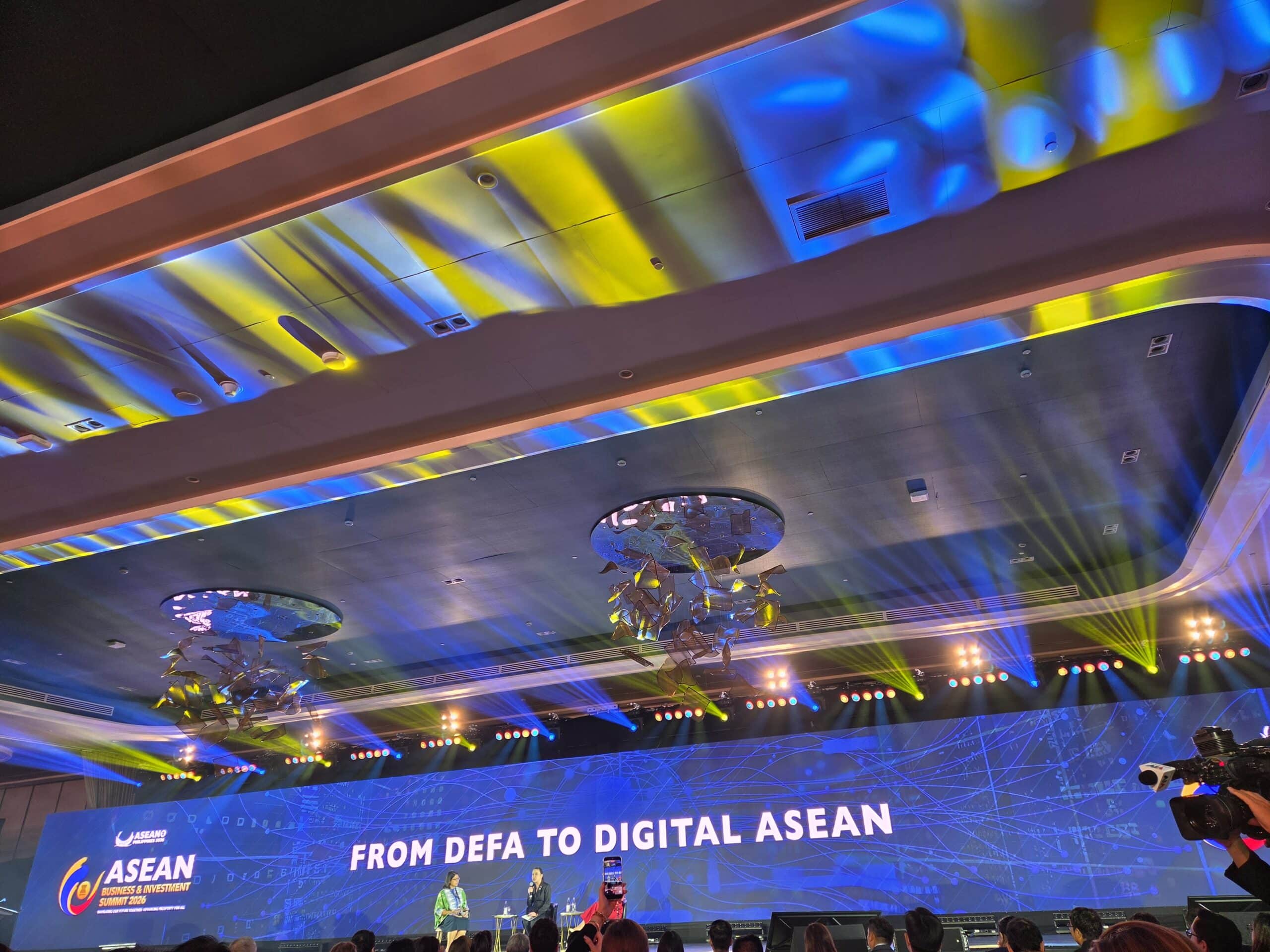
DEFA 2026: Three ways it benefits Filipinos




YOUR NEWS, OUR NETWORK.
Do you have Great News you want to tell the world?
Be it updates about your business or your community, you can make sure that it’s heard by submitting your story to our network reaching hundreds of news sites across 6 verticals.