
Japan’s Gyms Grow by 30% in Two Years as Low Prices and Convenience Draw New Customers
Nov 9, 2026
The number of fitness facilities nationwide has risen by about 30% in two years. Low prices, 24-hour access and services beyond exercise are attracting people who have never belonged to a gym. But behind the expansion, operators face rising costs, member turnover and customer service disputes.
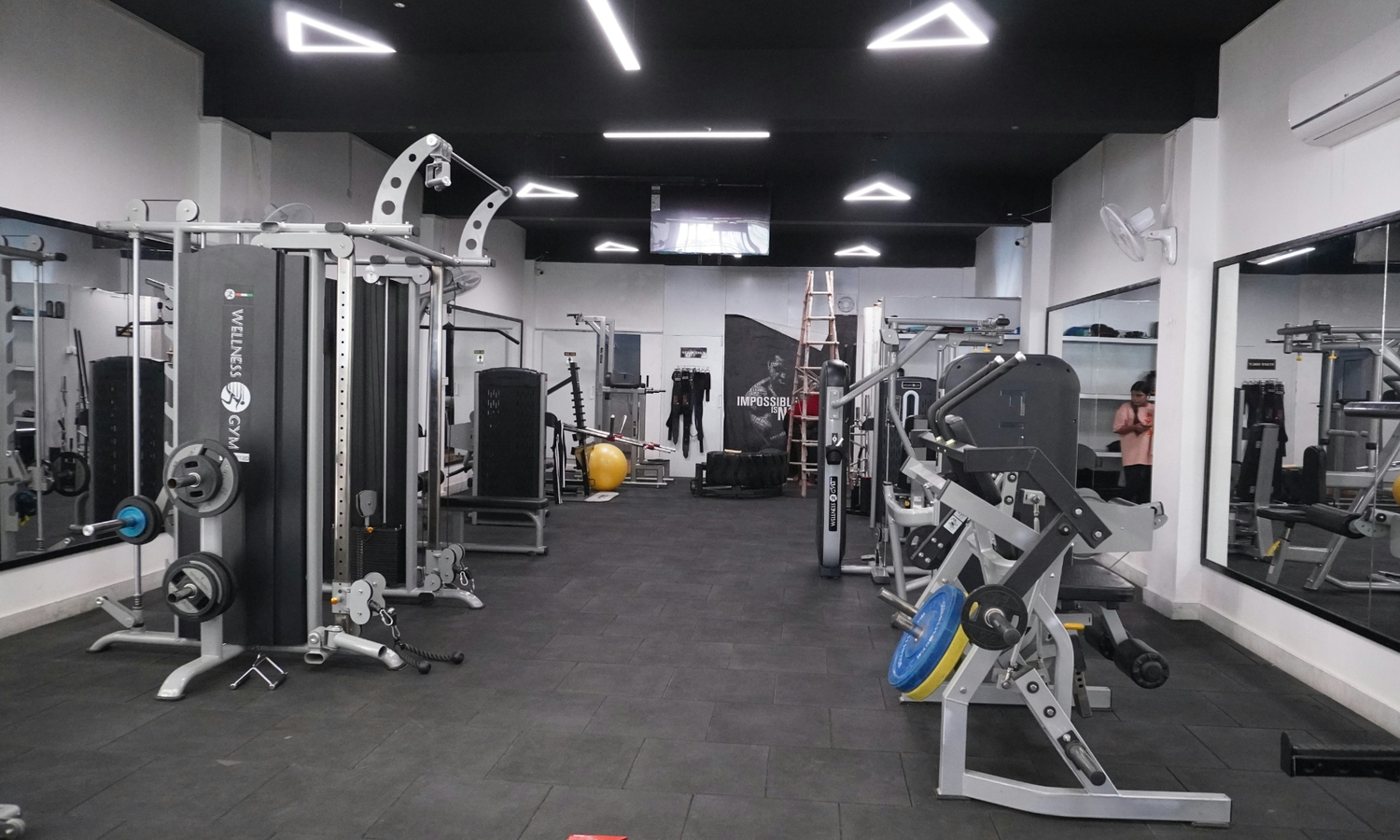
TOKYO, JAPAN (MERXWIRE) – For Mrs. Takahashi, a resident of Tokyo’s Ikebukuro area, the reason to visit the gym once or twice a week is neither weight loss nor muscle gain. It is the laundry. “Ever since I could exercise and do my laundry at the same time, I’ve come to love going to the gym. And I no longer have to worry about rainy days or pollen,” she said. Her experience reflects the kind of customer Japan’s fitness industry is seeking to attract: people without an established exercise routine who are not necessarily looking for an intense workout, but simply want a convenient place to get moving.
According to the Economic Census conducted by Japan’s Ministry of Internal Affairs and Communications and Ministry of Economy, Trade and Industry, the number of fitness club establishments nationwide rose from 3,760 in 2012 to 7,565 in 2021, roughly doubling in nine years.
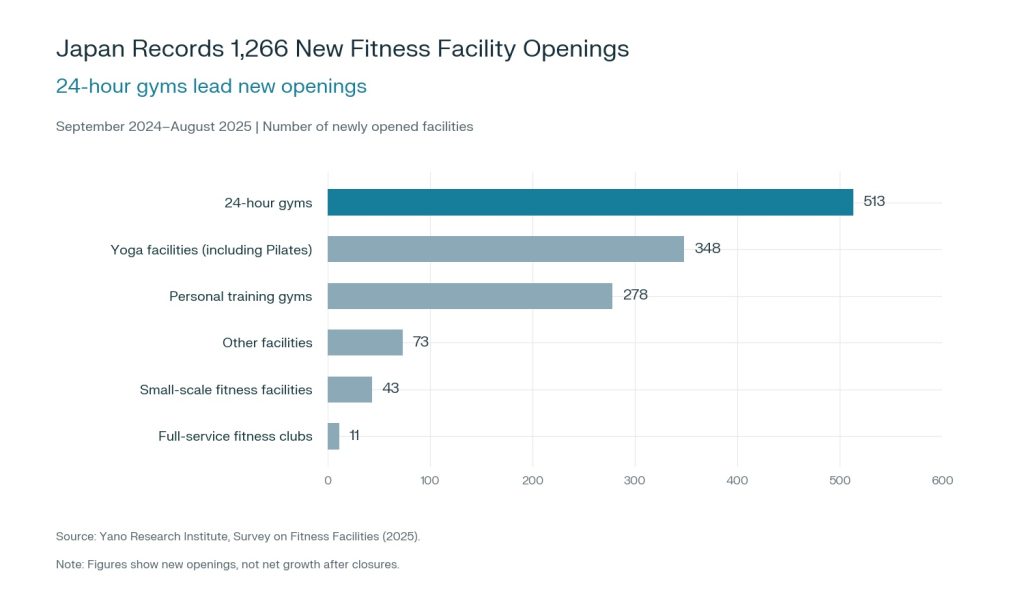
A separate survey by Yano Research Institute counted 13,876 fitness facilities in August 2025, up about 30% from 10,610 in July 2023. Between September 2024 and August 2025, 1,266 new facilities opened — an average of more than three a day. Although the government census and private survey differ in scope and cannot be compared directly, both show an increase over their respective reporting periods.
As the number of locations grows, consumers have more choices. Alongside traditional clubs with swimming pools and group classes, smaller, lower-priced gyms offering round-the-clock access have become increasingly common. Some provide laundry, massage and beauty services, allowing customers to combine exercise with everyday tasks and giving people unfamiliar with gyms another reason to try them.
Yet not every operator is benefiting from the expansion. While new locations open, others are leaving the market. Keeping members, controlling operating costs and providing sufficient assistance without on-site staff remain challenges for the industry.
Lower Prices, Closer to Daily Life
Japan’s traditional fitness clubs often include swimming pools, group classes, changing rooms and showers, with monthly fees frequently exceeding 10,000 yen. Consumers now have more affordable alternatives with a simpler range of facilities. Some memberships cost just over 3,000 yen a month, encouraging people who previously hesitated over the expense to give the gym a try.
Round-the-clock gyms are leading the expansion. Japan had 5,034 such facilities in 2025, accounting for 36.3% of all fitness facilities in Yano’s survey. They also recorded the largest number of new openings, followed by yoga facilities and personal training gyms. Some locations have no permanent on-site staff, with members using smartphone apps to enroll, enter the premises and manage their accounts rather than visiting a reception desk.
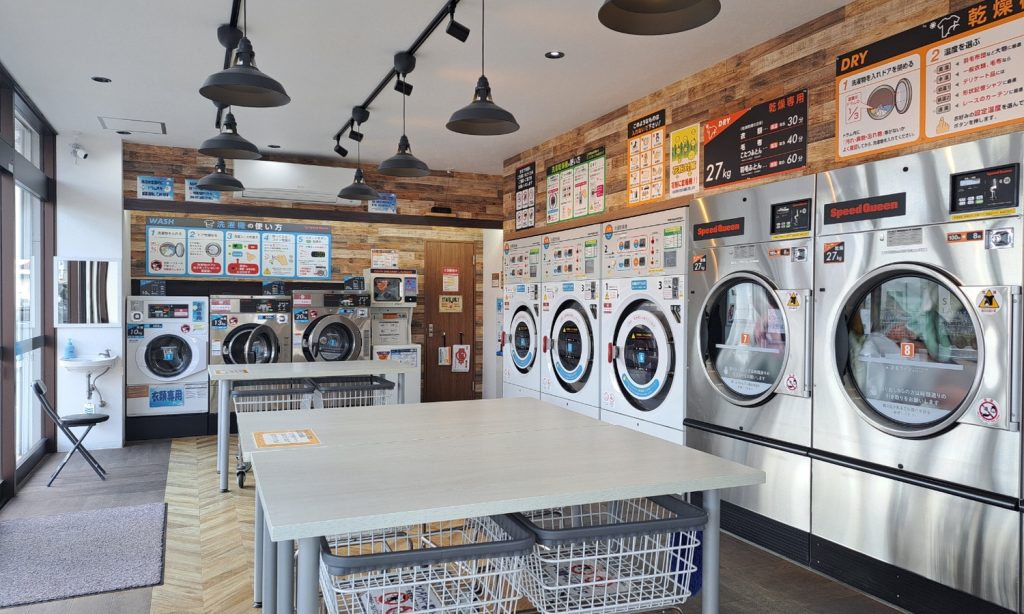
Operators are also introducing services beyond exercise equipment. Some locations combine 24-hour gym access with washing machines, dryers, massage chairs and karaoke facilities. Laundry equipment, in particular, allows customers to work out while waiting for their clothes to be washed or dried.
For Takahashi, the arrangement means housework and exercise no longer require separate outings. She can bring her laundry, exercise while it is being cleaned and take it home afterward, without having to set aside another block of time for the gym or adjust her plans because of rain or pollen.
After Retirement, a Reason to Go Out
For people reorganizing their lives after retirement, lower fees and a convenient place to exercise can make joining a gym more appealing. “After retiring, I have more time, and my old friends are all talking about getting more exercise,” said Mr. Suzuki, a recently retired resident of Osaka’s Chuo Ward. “Gym fees aren’t expensive now, and I don’t have to worry about the weather. I’m getting more and more used to exercising.”
In a 2015 analysis, the Ministry of Economy, Trade and Industry identified older adults’ growing attention to health as one factor supporting demand for fitness services. Smaller neighborhood facilities offering workouts of about 30 minutes have also emerged, allowing members to exercise without setting aside much of the day.
Expansion Does Not Guarantee Survival
According to an economy ministry survey focused mainly on larger operators, the number of fitness club locations run by surveyed businesses rose 16.4% between 2019 and 2024. Over the same period, annual revenue fell 13.1%, while membership declined 14.3%.
The survey does not cover every newer gym format and cannot describe conditions across all types of facilities. It does show, however, that expansion among the surveyed businesses was not accompanied by overall membership growth. Against the broader increase in facilities nationwide, the findings offer another view of the market: more locations do not necessarily mean more paying members.
A separate survey by Teikoku Databank recorded 23 bankruptcy cases involving fitness club operators between January and July 2026, compared with 19 in the same period a year earlier. More than 60% involved businesses established less than 10 years before. The findings show that market expansion can coexist with financial difficulties for individual operators, including newer entrants.
As competition intensifies, promotions such as waived enrollment fees have become increasingly common. Some operators lose members when promotional periods end and regular charges begin. For gyms competing on price, an offer may persuade customers to try the service without convincing them to stay. Whether members continue paying depends in part on how often they use the gym and their experience there.
The Trade-Offs of Unstaffed Service
Operating without permanent on-site staff reduces staffing needs, but it can also leave members struggling to find help when problems arise. Japan’s National Consumer Affairs Center has issued warnings about complaints involving unstaffed gyms and online exercise services. Consumers have reported being unable to complete cancellations through websites, failing to reach operators by telephone and continuing to be charged after believing they had canceled. Others discovered that trial offers had automatically converted into regular membership plans.
Such complaints do not mean every unstaffed gym has the same problems. They do highlight the importance of customer support and cancellation procedures alongside the convenience of signing up and managing an account through a phone.
Speaking outside an unstaffed gym, Mr. Nakamura, a resident of Osaka’s Kita Ward, described both the appeal of the service and his initial difficulties. “I feel comfortable working out without staff around, but at first, I felt a little lost when I didn’t know how to use the equipment,” he said. “I had to watch other people to figure out how to use it. But I gradually got used to it.”
His experience raises another question for this model: Can someone unfamiliar with gym equipment find assistance when needed? Low prices and round-the-clock access reduce cost and scheduling barriers, but equipment instruction, maintenance and emergency assistance still require arrangements. Responsive customer support and clearly written membership terms also shape the experience.
From Signing Up to Staying On
Japan’s growing number of fitness facilities is reflected in the spread of smaller gyms. But retention remains an important part of the business. Facility counts alone cannot show whether laundry, massage and other additional services encourage members to stay, or whether customers who use them ultimately spend more time exercising.
For Takahashi, laundry has become a reason to work out each week. She initially found a place where she could wash her clothes and exercise without worrying about the weather. Now, going once or twice a week has become part of her routine. What keeps her returning is less about an intensive training program or a specific physique goal than an arrangement that fits easily into daily life. “I’ve come to love going to the gym,” she said.

KT opens coveted gold-number lottery to customers across carriers
KT is opening its latest gold-number lottery to mobile phone users across Korea, giving customers of rival carriers and budget phone services a chance to secure sought-after numbers such as 1111, 1234 and 1004. KT said Monday it would hold a drawing for mobile phone numbers considered particularly desirable because they are easy to remember or carry special meanings. The company is offering 155 categories of preferred numbers, including AAAA patterns, in which all four digits are identical, such as 1111 and 2222, and ABCD patterns featuring consecutive digits, such as 1234 and 5678. Numbers with particular meanings, including 1004 and 2580, are also included in the selection. Each applicant can enter the drawing for up to three numbers, KT said. Applications can be submitted at KT stores nationwide, through KT's website or via its My KT mobile application. Participation is not limited to KT subscribers, with customers using other mobile carriers and mobile virtual network operators, commonly known as MVNOs, also eligible to enter. The expanded eligibility gives mobile phone users across dif

KT&G targets Central Asia with launch of FLEX in Kazakhstan
KT&G, Korea’s leading tobacco maker, is expanding its next-generation product footprint in Central Asia by launching its FLEX heated tobacco device and FAIIM sticks in Kazakhstan. The Korean tobacco company said it introduced the products in October, marking its direct entry into Kazakhstan's heated tobacco market. FLEX and FAIIM are locally branded versions of KT&G's lil AIBLE device and AIIM tobacco sticks, which are already sold in Korea, adapted for the local market. The products are initially available only in Almaty, Kazakhstan's largest city, with KT&G planning to expand distribution channels gradually. The company is also operating a FLEX flagship store at Forum Mall, a major shopping center in Almaty, to strengthen its connection with local consumers. The store will offer brand information, customer consultations and other services designed to help consumers better understand the products and experience the brand. The launch forms part of KT&G's broader strategy to expand its next-generation products (NGP) business internationally after establishing an independent commercializat

Hansae Yes24 Foundation chairwoman honored for philanthropy
Cho Young-soo, chair emeritus of the Hansae Yes24 Foundation, has received a commendation from the Seoul mayor for her charitable donations and humanitarian work, the foundation said on Monday. The Korean Red Cross recommended Cho for the honor, citing her sustained support for humanitarian causes, including a donation of 100 million won ($73,000) in July, according to the foundation. The donation also brought her into the Red Cross Honors Club, a group of major donors to the organization. Beyond her work through the foundation, Cho has used personal funds to support organizations including the Community Chest of Korea, Seoul National University and the Korean Red Cross, the foundation said. Her contributions also include support for students and younger generations as a senior figure in education. The foundation said those activities, alongside her donations, formed part of the basis for the commendation. Cho served as chairwoman of the foundation for five years beginning in 2018. During her tenure, she led programs supporting academic research, scholarships for international students,

Preorders for smart glasses built by Samsung, Google to begin on Thursday
Preorders for new artificial intelligence (AI)-powered glasses developed in partnership between Samsung Electronics and Google will begin later this week, industry officials said Monday. The Intelligent Eyewear, developed in collaboration with Korean eyewear brand Gentle Monster and U.S. brand Warby Parker, will be available for preorder starting Thursday, with an official launch expected in December, they said. Built on Google's Android XR platform, the glasses combine Samsung's hardware technology with Google's Gemini generative AI system to provide hands-free assistance through voice commands and visual recognition. Equipped with a built-in camera, the glasses can recognize objects and surroundings in the user's field of view and provide relevant information. They also support real-time translation, navigation and information searches, allowing users to access the features without taking out their smartphones. The collaboration is expected to help Samsung and Google expand their presence in the emerging AI-powered eyewear market that is dominated by Meta Platforms. Meta currently accoun

S-Oil donates $73,000 to support low-income families
S-Oil said Monday it donated 100 million won ($73,000) to the Mapo Scholarship Foundation and the Mapo Welfare Foundation to support students from low-income families and promote community welfare. The donation ceremony was held at the Mapo District Office in Seoul, attended by S-Oil President Ryu Yeol, Mapo Scholarship Foundation Chair Kwon Oh-beom and Mapo Welfare Foundation Chair Kim Eun-young. The funds will be used to provide scholarships to students from low-income families in Mapo District and finance social welfare programs run by local institutions. “We hope our scholarships and donations will provide meaningful help to students facing difficulties and the local community,” Ryu said. “We will continue to grow alongside the community and uphold our commitment to environmental, social and governance management.” S-Oil has provided annual scholarships and welfare donations to low-income families in Mapo District, where its headquarters is located, since 2012 as part of its efforts to support the local community. Other community outreach programs include sharing rice cake sou

LG AI Research opens K-EXAONE 2.5 API free of charge
LG AI Research, the artificial intelligence (AI) research arm of LG Group, opened the application programming interface (API) for its upgraded EXAONE 2.5 foundation model free of charge, reporting a performance boost of over 70 percent in just eight weeks. The company announced the move at NVIDIA AI Day Seoul 2026, held at Coex in southern Seoul on Monday. Starting the same day, developers, startups, companies and research institutes can use the model in their services and research at no cost by obtaining an API key through the company’s platform, docs.exaone.ai. K-EXAONE 2.5 is a technology verification model built by applying additional training to K-EXAONE 2.0, the second model LG AI Research developed under the government’s sovereign AI foundation model project, which aims to build homegrown AI models that reduce Korea’s reliance on foreign systems. According to the company’s own tests on open datasets, K-EXAONE 2.5 performed on par with leading Chinese open-weight models DeepSeek V4.1 Flash and GLM 5.3 (max) in agentic AI, in which AI plans tasks and uses tools on its own t

Nvidia, SKT, Rebellions to jointly establish heterogeneous computing system for AI
Nvidia, SK Telecom and domestic artificial intelligence (AI) chip startup Rebellions agreed Monday to combine their respective strengths to establish a heterogeneous computing system. Under the trilateral memorandum of understanding (MOU), the companies will cooperate in the establishment of a heterogeneous AI computing system connecting Nvidia's graphic processing units (GPUs) with neural processing units (NPUs) designed by Rebellions that will be used in the building of SK Telecom AI data centers. The tie-up will be based on the U.S. chipmaker's NVLink Fusion program, the ministry added. The NVLink Fusion program allows hyperscalers and custom chip designers to integrate their own AI processors directly into Nvidia's rack-scale infrastructure. The MOU was signed on the margins of AI Day Seoul, a tech event hosted by Nvidia that kicked off its two-day run in southern Seoul. "Korea is a technology leader, and with AI being one of the fastest growing technologies that has ever happened ... this collaboration we are working on together, we believe, can help accelerate innovation in Korea,"

Shinsegae brings Hyper Ground pop-up stores to Taiwan, Malaysia
Shinsegae Department Store will run pop-up stores in Taiwan and Malaysia for the first time under its Shinsegae Hyper Ground platform, expanding its overseas push after events in New York and Tokyo this year. Hyper Ground is a platform through which the Korean department store chain selects promising Korean fashion and beauty brands and introduces them in major cities abroad. Earlier this year, it held pop-ups at Hudson Yards in New York and in Tokyo’s Shibuya district. In Taipei, the pop-up will open in the ground-floor luxury section of Breeze Center, a shopping mall that opened in 2001 in the city’s East District, a busy area known for trendy shops and cafes. Through February, it will feature six women’s contemporary fashion brands on rotation over about four months, starting with Recto, followed by Marie Claire and Insilence. The brand lineup and store design will change with each round. In Kuala Lumpur, the pop-up has opened on the ground floor of the Seibu department store at The Exchange TRX, a mall that opened in 2023 in the Tun Razak Exchange financial district. The area

MoMA names Hyundai Card Vice Chairman Ted Chung honorary trustee
Hyundai Card Vice Chairman Ted Chung has been named an honorary trustee of the Museum of Modern Art (MoMA) in New York, the card issuer said Monday. The honorary title recognizes individuals who have made significant contributions to the museum through their expertise and international influence. In the role, trustees offer strategic counsel on MoMA’s major decisions, long-term vision and institutional priorities. Since 2006, the partnership between Hyundai Card and MoMA has taken many forms, from exhibition sponsorships to curatorial exchanges and research initiatives, which have helped bring Korean art into view for the museum’s 2.8 million annual visitors. The collaboration has brought solo presentations by leading contemporary Korean artists to the New York museum, including Haegue Yang and Kim Sung-hwan, whose exhibitions were part of a programming initiative known as the Hyundai Card Performance Series. Last year, genre-defying media artist Ayoung Kim made her U.S. solo debut with her celebrated “Delivery Dancer” series at MoMA PS1, a space dedicated to championing experime

SK hynix to expand US workforce to deepen ties with key clients
Korean chipmaker SK hynix Inc. is preparing to expand its U.S. workforce, its parent company said Monday, in what appears to be a move to strengthen ties with major U.S. clients, including Nvidia Corp. SK hynix plans to make additional executive appointments and reorganize its U.S. operations around Dec. 3, according to SK Group. The planned changes follow a recent executive reshuffle at SK Group, a Korean conglomerate with businesses spanning semiconductors, construction and other sectors. SK hynix had created a new executive-level post overseeing its U.S. operations and appointed Ahn Hyun, its president in charge of development, to the position. Ahn has led the development of artificial intelligence (AI) memory products, including high bandwidth memory (HBM) at SK hynix. The appointment marks a shift in the company's approach to managing its U.S. operations, which have traditionally been headed by executives with sales and marketing backgrounds. Industry sources said the move reflects changes in how HBM contracts are secured as memory chipmakers increasingly work with customers from the

LG Uplus joins SNU, Yonsei, KAIST to develop Korean-focused voice AI
LG Uplus is joining forces with three leading Korean universities to develop artificial intelligence (AI) that can understand not only what people say but also their tone, emotions and conversational context, in a push to make interactions between humans and machines more natural. The telecommunications company said Monday it had launched the K-Voice AI Alliance with Seoul National University (SNU), the Korea Advanced Institute of Science and Technology (KAIST) and Yonsei University. The partnership aims to combine LG Uplus' experience in voice AI services with the universities' research capabilities to develop technology specifically tailored to Korean speakers. The project will focus on voice-to-voice (V2V) technology, which allows AI to understand spoken language directly and respond with speech, without first converting conversations into text. Traditional voice AI systems process speech recognition, response generation and voice output in separate stages, a process that can cause delays and produce unnatural-sounding responses. The alliance plans to establish performance evaluation s

Samsung, Hyundai Motor Group join forces to lead future industries
Top executives from Samsung Electronics and Hyundai Motor Group (HMG) held a rare joint gathering, Monday, to strengthen cooperation in physical artificial intelligence (AI) and next-generation mobility technologies, signaling closer ties between two of Korea’s largest industrial groups. The meeting comes as the two conglomerates are seeking to expand cooperation beyond existing business ties in areas, such as automotive electronics, batteries and components, with a particular focus on electric vehicles (EVs), autonomous driving, software-defined vehicles (SDVs) and robotics. Samsung hosted senior Hyundai Motor Group executives at its training center in Seocheon, South Chungcheong Province, for an event dubbed HMG Appreciation Day, the first large-scale event of its kind that Samsung has held for a major Korean business group. The gathering brought together 177 executives and their spouses from the two groups under the theme “One Harmony,” highlighting their growing strategic partnership. Samsung Electronics Vice Chairman Jun Young-hyun said the two groups have been “reliable par


YOUR NEWS, OUR NETWORK.
Do you have Great News you want to tell the world?
Be it updates about your business or your community, you can make sure that it’s heard by submitting your story to our network reaching hundreds of news sites across 6 verticals.