
Integrated H Beam Production Line Systems: How Hualian Serves Structural Steel in India and Saudi Arabia
Sep 29, 2026
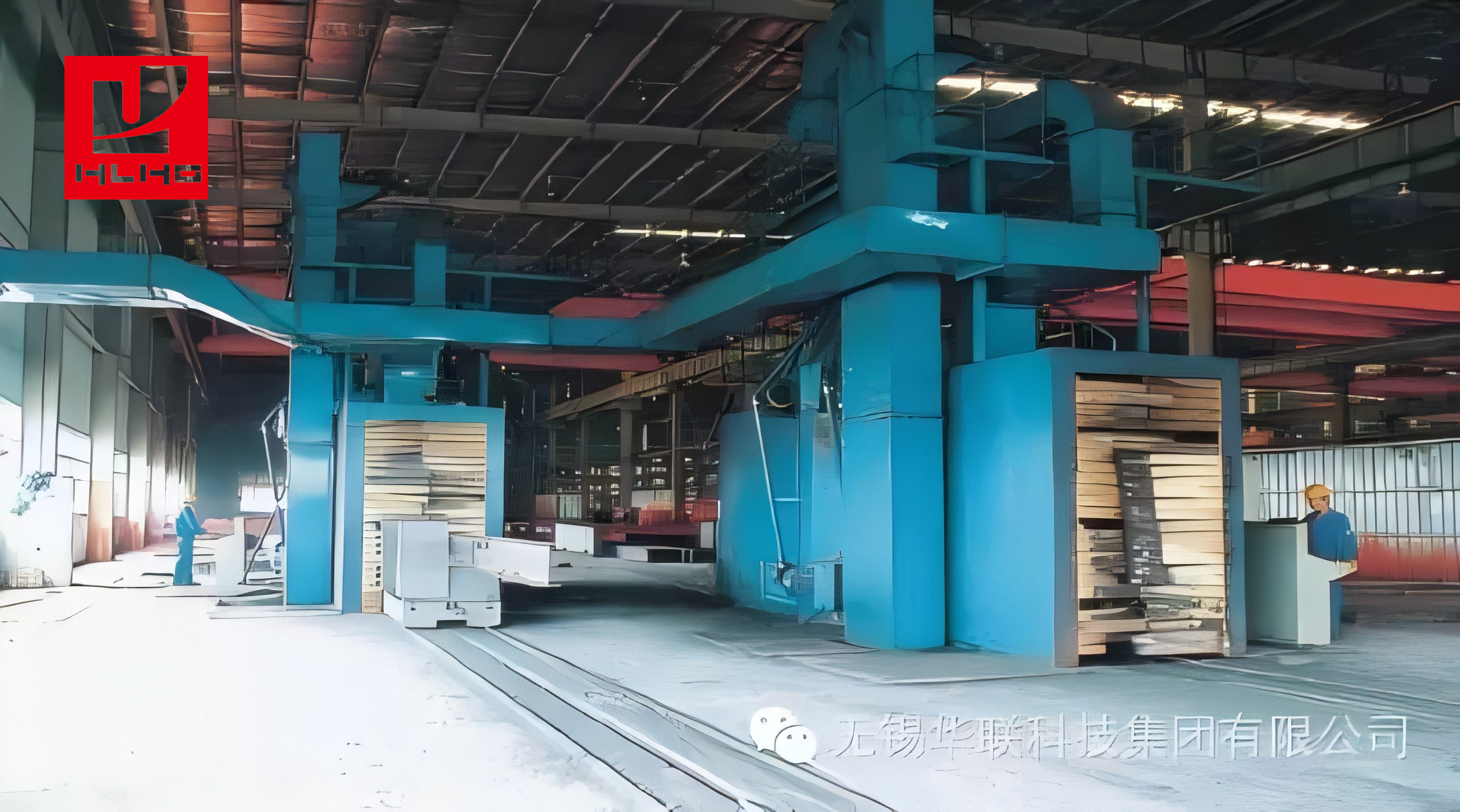
Wuxi, Jiangsu Sep 28, 2026 (Issuewire.com) - An integrated H beam production line connects plate preparation, section assembly, dual-side submerged arc welding, and mechanical flange straightening into a synchronized manufacturing flow. Designing turnkey heavy structural systems since 1987, Wuxi Hualian Science & Technology Group--marketed worldwide under the brand Hualian, engineers integrated H-beam fabrication routes. For expanding structural steel fabricators across India and Saudi Arabia, successful equipment procurement hinges on defining the line boundary. Buyers must determine which operations enter the automated line, which tasks remain offline, and how site facilities connect the equipment to prevent costly commissioning bottlenecks.
An H beam production line is a route, not a machine count
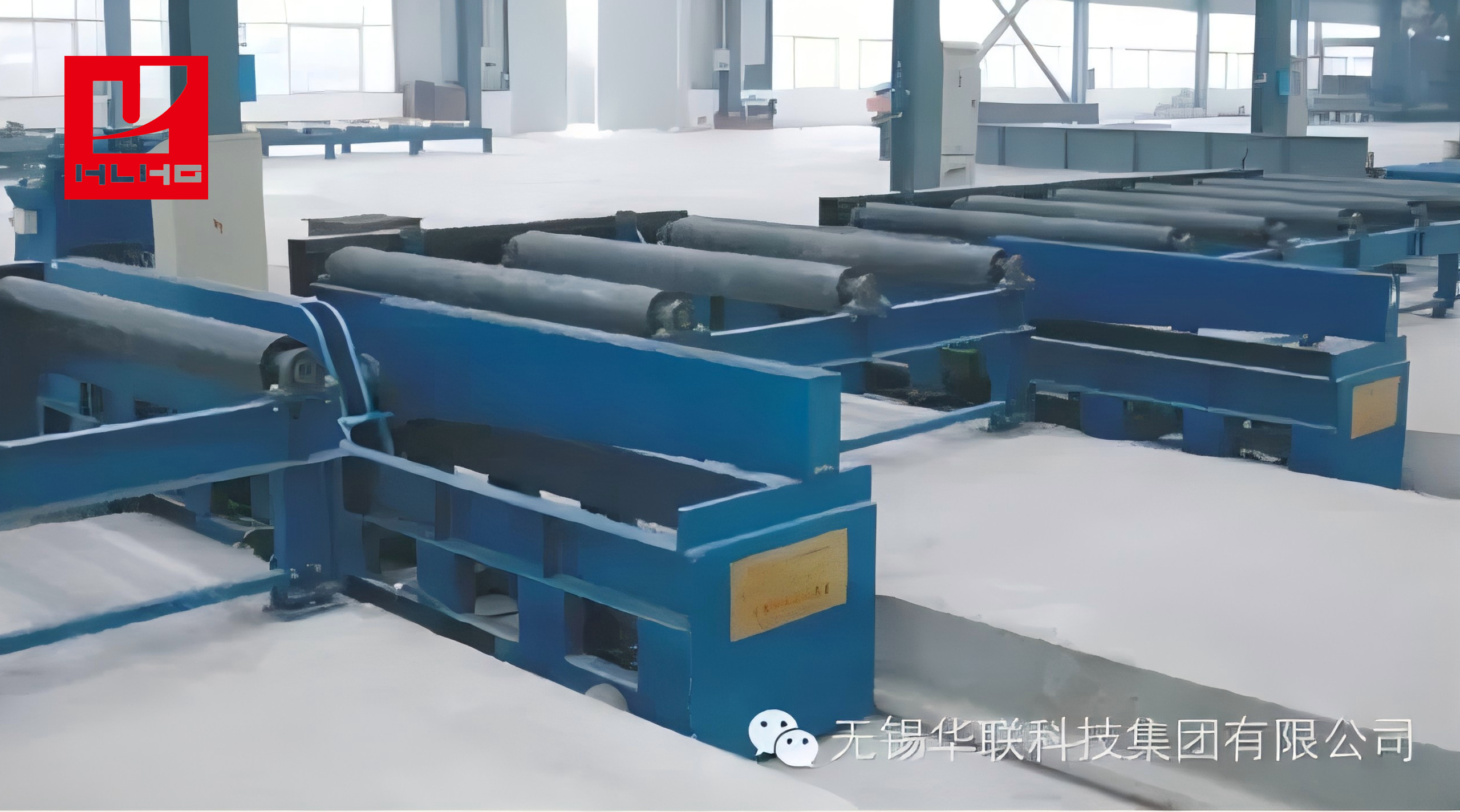
A structural steel production route transforms raw flame-cut web and flange plates into finished load-bearing members. Thermal cutting establishes plate edge squareness. Specialized fit-up equipment positions members under hydraulic clamping pressure. Submerged arc welding joins the elements with deep, uniform penetration. Downstream mechanical straightening then corrects residual angular distortion. Hualian configures equipment combinations encompassing hydraulic assembly machines, gantry or cantilever submerged arc welders, chain-driven 180-degree turnover stations, roller conveyors, and hydraulic straighteners. Fabricators can also integrate high-throughput shot blasting cells to prepare steel surfaces for protective paint coatings.
Procuring an extensive machinery catalog does not guarantee high shop throughput. True manufacturing completeness depends on whether the proposed material route fulfills specific fabrication drawings, structural steel grades, and project delivery schedules. When individual workstations operate in isolation, material bottlenecks inevitably emerge at lifting and transfer zones. Linking operations via powered roller conveyors ensures that workpieces flow smoothly from initial fit-up through final inspection.
Geometry and orientation connect the core operations
Accurate initial assembly establishes the mechanical relationship required for high-speed welding. Fit-up clamping systems must maintain web centering and flange perpendicularity across full profile lengths. Dimensional tolerances at the tacking stage directly determine root gap consistency, prevent weld burn-through, and stabilize arc travel during subsequent welding passes. If web-to-flange alignment drifts by more than one millimeter, subsequent fillet weld deposits become asymmetrical. This imbalance intensifies residual thermal stress, causing severe camber and twist across the completed beam.
Turning changes the welding access
Motorized turning equipment rotates the assembled H-beam to present opposing seams in the horizontal fillet position. Downhand welding allows fabricators to deposit large weld beads rapidly using heavy wire diameters without risking puddle roll-over or incomplete penetration. Turnover units must support moving structural members across multiple support cradles without inducing excessive plastic sag. Workshop designers must allocate adequate swing clearance for the full workpiece length, ensuring safe clearance from building columns, electrical drops, and overhead crane hooks. Relying on overhead bridge cranes to flip partially welded beams introduces severe safety hazards and damages flange edges. Dedicated chain turning machines eliminate crane rigging delays, protecting both workers and structural workpieces.
Correction and finishing serve different purposes
Intense thermal cycles from submerged arc welding produce unavoidable angular distortion across steel flanges. Heavy-duty hydraulic flange straighteners mechanically restore distorted flange plates to precise perpendicular alignment using adjustable forged rollers. Flange correction addresses geometric conformance independently from subsequent surface treatment. Downstream centrifugal shot blasting removes mill scale, welding slag, and surface rust, establishing an anchor profile required for marine or industrial coatings. Fabricators must plan offline buffer zones for non-destructive ultrasonic testing before releasing welded members for surface blasting. Separating geometric verification from blast cleaning ensures that any necessary weld repairs occur before surface profiling. This sequence prevents abrasive blast media from contaminating open weld defects or masking surface fissures.
Let the production mix define the line boundary
Evaluating beam production requirements begins with categorizing representative structural section families. Designing a line around single maximum dimensions often results in underutilized capital expenditure. Facilities producing standardized building columns require continuous, rapid travel speeds with minimal changeover downtime. Conversely, workshops manufacturing tapered crane girders or custom architectural trusses require versatile clamping tooling and adaptable welding carriages. Fabricators should define web heights from 200 mm to 1,500 mm, flange widths up to 800 mm, and steel grades including S355 and ASTM A572.
Documenting project volume splits allows engineering teams to identify which profiles can share an automated roller conveyor line. Irregular sections or extra-heavy bridge girders can be routed through auxiliary crane-served fitting beds, preserving uninterrupted flow on the main line. A balanced production plan ensures that ninety percent of recurring tonnages travel smoothly through automated stations, while specialized manual bays handle complex custom weldments.
Define the site responsibilities for India and Saudi Arabia
Installing heavy beam production lines across India and Saudi Arabia requires clear division of scope between the equipment builder and the buyer. Fabricators must prepare concrete foundations capable of supporting dynamic machine loads, traveling gantries, and stored raw steel plates. Electrical engineering teams must verify shop transformer capacity, install power stabilization units, and provide adequate plant ventilation. The equipment manufacturer supplies core processing machinery, hydraulic power packs, digital welding power sources, centralized electrical control panels, and safety interlocks. The supplier also delivers mechanical layout drawings, anchor bolt locations, foundation pit dimensions, and electrical termination schematics.
The buyer provides workshop bays, reinforced concrete slabs, overhead cranes, main electrical distribution panels, compressed air networks, and raw steel materials for commissioning. Joint activities encompass foundation verification, mechanical leveling, dry-cycle testing, live trial welding, parameter qualification, and structured maintenance training for local operational crews. Clarifying these contractual battery limits during preliminary engineering prevents disputes over utility drops, pneumatic piping, and foundation rail grouting. Foundations must incorporate isolated machine pads beneath heavy hydraulic straightening presses to absorb cyclic vibration forces without fracturing surrounding bay flooring. Grouting under conveyor rail baseplates must utilize non-shrink epoxy compounds to maintain level transit across full seventy-meter spans.
Build the Hualian configuration discussion around the delivered beam
A productive equipment consultation begins with concrete structural steel beam drawings and defined acceptance criteria. Engineering teams must review required weld throat sizes, non-destructive testing benchmarks, monthly tonnage goals, and available workshop bay space. Fabricators should supply complete weld detail sheets, showing whether joints demand full penetration or specified fillet leg lengths. Clear acceptance standards ensure that delivered machinery fulfills applicable building codes without unnecessary equipment over-specification.
Structural steel fabricators and EPC contractors in India and Saudi Arabia can submit project specifications, steel grades, and workshop drawings directly to https://www.hualianoversea.com/. Hualian assists clients in configuring tailored H-beam fabrication routes that deliver consistent structural quality and long-term operating reliability.
Source :Wuxi Hualian Science & Technology Group
This article was originally published by IssueWire. Read the original article here.

KCCI, audit authority collaborate to resume construction of 4,000 public housing units
The audit authority has cleared a key hurdle for six stalled public housing projects totaling nearly 4,000 units after the Korea Chamber of Commerce and Industry (KCCI) sought a preliminary consultation on behalf of builders struggling with soaring construction costs. The KCCI said on Tuesday that the Board of Audit and Inspection (BAI) determined that project costs for the six sites, covering 3,936 housing units, can be recalculated to reflect current market conditions. The case marks the KCCI’s first use of the consultation program since it was opened to private organizations in May. “Companies have faced difficulties for a long time, but this was not an issue they could easily make a decision on,” Lee Jong-myung, head of the KCCI's industry innovation division, said. “The BAI's decision to open its doors to the private sector has added another channel for resolving corporate difficulties, and its first result will benefit the public through housing supply.” The six projects are part of a public-private housing program, with public agencies providing the land while private bu

Private sector's role increased in 5th Nuri launch
Private companies played a significantly greater role in the successful fifth launch of Korea’s Nuri rocket on Wednesday, signaling that the country’s efforts to keep pace with the global shift toward a private sector-led “New Space” era are gaining momentum. The Nuri rocket completed its fifth launch and 20-minute-long flight successfully after lifting off at the Naro Space Center in Goheung, Jeonnam-Gwangju Special Metropolitan City, at 12:25 p.m. The most notable change in the latest launch was not the rocket itself, but the growing presence of private-sector personnel at the launch site. Hanwha Aerospace has overseen the manufacturing of the Nuri rocket as its system integrator since the fourth launch on Nov. 27 last year, but this time, its role expanded to the consoles at the launch control center. Hanwha Aerospace deployed 42 staffers for the fifth launch. They participated in operations at 20 of the 22 consoles responsible for launch vehicle systems, and at 18 of them, Hanwha employees directly operated the controls instead of specialists from the Korea Aerospace Researc
![[EXPLAINER] How AI emerged as new threat in Korea's bank hacking crisis](https://newsimg.koreatimes.co.kr/2026/10/07/77d98bb7-f23e-430d-be94-38ae9821547a.jpg)
[EXPLAINER] How AI emerged as new threat in Korea's bank hacking crisis
Hackers once had to manually test security defenses, identify vulnerabilities and work out how to exploit them. Now, artificial intelligence (AI) can do much of that work, requiring little human input. That possibility is at the center of Korea's latest security crisis in the financial sector, as investigators have found traces of an AI-powered autonomous penetration-testing tool in a series of recent cyberattacks on the country's major banks. Since last week, Shinhan Bank, KB Kookmin Bank, Hana Bank, Yegaram Savings Bank and BNK Busan Bank have all reported data breaches, while Woori Bank and NH NongHyup Bank have detected signs of hacking attempts, though no data leaks were confirmed. Shinhan Bank reported that about 25,000 customers were affected, with personal information including names, phone numbers, annual income and loan limits exposed. KB Kookmin reported 119 affected customers, while Hana Bank said personal information belonging to 89 customers was exposed. The hacking spree has drawn particular concern after investigators reportedly found traces of an AI-powered tool known as

SK Energy, HD Hyundai Oilbank face fines over alleged fuel price fixing
SK Energy and HD Hyundai Oilbank may face sanctions from the Fair Trade Commission (FTC) over allegations that they colluded on gasoline, diesel and kerosene prices, with combined fines potentially reaching 4.63 trillion won ($3.45 billion). The antitrust regulator said Wednesday that it sent a review report to the two companies, formally launching deliberations over the alleged price-fixing case. The FTC said the alleged collusion lasted from February 2022, shortly before Russia's invasion of Ukraine, through March this year, shortly after the outbreak of the war in Iran. The case covers petroleum products that are essential to household and economic activity. Korea's oil refining industry is highly concentrated, with SK Energy, HD Hyundai Oilbank, GS Caltex and S-Oil accounting for about 98 percent of the domestic market. According to the FTC, SK Energy and HD Hyundai Oilbank exchanged information on the prices of gasoline, diesel and kerosene, including provisional prices, final prices and sales policies. The regulator also determined that the two companies colluded on prices followin

Beef tallow remains hurdle to Charrr's global expansion
Countries’ regulations on imported foods containing beef tallow pose a hurdle for Samyang Foods as the Korean instant noodle giant seeks to expand exports of its latest black bean sauce instant noodles, Charrr. The company has established Buldak as a massively popular product around the globe without using beef tallow, selling 10 billion units and generating cumulative sales of 7 trillion won ($5.2 billion) as of June. Unlike the spicy, brothless instant noodle brand, however, Charrr uses beef tallow as a key ingredient to give its sauce a rich, beefy flavor. Charrr is not Samyang’s first instant noodle product using beef tallow. The company launched Samyang 1963 in November last year with the ambitious goal of reviving the “forgotten” taste of its first instant noodle product, Samyang Ramen, which was introduced in 1963 and used beef tallow. Samyang Ramen, introduced by the late company founder Chun Joong-yoon to help feed a population suffering from widespread poverty at the time, remains a cornerstone of the company’s identity. Its use of beef tallow has now become part of

Bank data breach victims step up calls for compensation
A growing number of customers affected by a string of recent personal data breaches at major commercial banks and other financial firms appear to be turning to class action lawsuits in pursuit of compensation, according to industry officials, Wednesday. The banks have pledged to fully compensate customers whose losses, including those from voice phishing scams, are found to have directly resulted from the leaks. But proving that a loss was caused by a specific data breach can be difficult in practice, and the banks have yet to set out clear standards for determining which claims would qualify, prompting some victims to resort to legal action. Seven financial firms have reported information leaks so far, including three of the country’s largest commercial lenders — Shinhan Bank, KB Kookmin Bank and Hana Bank. Shinhan reported the largest breach, affecting around 25,000 people, followed by 119 at KB Kookmin and 89 at Hana Bank. The exposed data includes customers’ names, contact details, resident registration numbers, annual income and loan limits. The combination of personal and fin
![[COVER STORY] Nuri rocket successfully completes 5th flight](https://newsimg.koreatimes.co.kr/2026/10/07/6a8cafff-abc8-4ebb-86ed-8bb7b1eb07d3.jpg)
[COVER STORY] Nuri rocket successfully completes 5th flight
Korea’s domestically-developed Nuri rocket successfully carried out its mission in its fifth launch Wednesday, sequentially deploying 14 out of 15 satellites it carried into their target orbit. The key objective of the fifth launch was to safely deploy the five microsatellite constellations, and the success has demonstrated Korea's increased multi-satellite launch capabilities, taking another step toward privately led commercial launch services. The rocket lifted off from the launchpad at the Naro Space Center in Goheung, Jeonnam-Gwangju Special Metropolitan City, at 12:25 p.m. and completed its roughly 20-minute flight at around 12:45 p.m. The rocket separated its first stage about two minutes after liftoff, followed by the second stage about four and a half minutes into the flight. At around 12:40 p.m., it reached an altitude of 570 kilometers and completed the sequential deployment of five New-space Earth Observation Satellite Constellation for National Safety (NEONSAT) microsatellites (satellites No. 2 to 6), its primary payload, along with nine of the 10 CubeSats it carried. Initi

AMD to establish AI research center in Korea this year, hire hundreds
U.S. chip giant AMD announced Wednesday that it plans to establish an artificial intelligence (AI) research center in Korea by the end of this year and hire hundreds of researchers as part of broader AI cooperation between the company and Korea. The announcement came during a meeting between AMD CEO Lisa Su and Second Vice Minister of Science and ICT Ryu Je-myung in Seoul. AMD also plans to help develop graduate-level AI and AI transformation talent and collaborate with Korea on a reference model for heterogeneous AI computing. The model would combine AMD’s central processing units (CPUs) and graphics processing units (GPUs) with domestically developed neural processing units (NPUs). The meeting, arranged by the Ministry of Science and ICT, served as an interim review of AI cooperation agreed upon by the ministry and AMD during President Lee Jae Myung’s attendance at the San Francisco AI Summit in July. AMD also outlined plans to work with Korea’s private sector to create new business opportunities. At a subsequent roundtable with 13 Korean companies involved in AI infrastructure, c

Why Trump chose these leaders to head his 'Super Intelligence Force'
President Trump’s selection of four administration officials to head up his new “Super Intelligence Force” is offering a window into how the White House will approach AI in the face of pressure over its risks. The group of government leaders each reflect different priorities of the Trump administration after months of mixed messaging on the...

Nuri rocket deploys 14 satellites, 1 CubeSat fails to release
The Nuri rocket successfully lifted off on its fifth launch and deployed 14 of the 15 satellites it carried into their target orbit Wednesday. The rocket lifted off from the second launch pad at the Naro Space Center in Goheung, Jeonnam-Gwangju Special Metropolitan City, at 12:25 p.m. and completed its roughly 20-minute flight at around 12:45 p.m. The rocket separated its first stage about two minutes after liftoff, followed by the second stage about four and a half minutes into the flight. At around 12:40 p.m., it reached an altitude of 570 kilometers and completed the sequential deployment of five NEONSAT swarm microsatellites (satellite No. 2 to 6), its primary payload, along with nine of the 10 CubeSats it carried. Initially, the Nuri sent signals indicating that all of the CubeSats had been successfully deployed. However, subsequent checks found that PERSAT02, developed by Quaternion, had failed to separate from the rocket. The flight ended at around 12:45 p.m. after the third stage completed its autopilot sequence. "The Nuri rocket successfully completed its planned fifth launch mis

Southeast Asia’s foodtech winners are the least glamorous ones
Southeast Asia’s foodtech story was supposed to be about disruption: lab-grown shrimp on every plate, groceries at your door in 15 minutes, ghost kitchens replacing the corner restaurant. The reality has been humbler, and arguably more interesting. The 2022 correction thinned the herd, the eFishery scandal and TaniHub’s collapse left scars, and many of the […] The post Southeast Asia’s foodtech winners are the least glamorous ones appeared first on e27.

When the carer has dementia too: Japan turns to physical AI to rescue eldercare
Some Japanese words resist translation. Take rōrō kaigo (老老介護). The character rō means “elderly”, and repeating it describes an elderly person caring for another elderly person, such as an 80-year-old husband looking after his equally frail wife on his own. That is the reality the word captures. Then there is the darker ninnin kaigo (認認介護). […] The post When the carer has dementia too: Japan turns to physical AI to rescue eldercare appeared first on e27.


YOUR NEWS, OUR NETWORK.
Do you have Great News you want to tell the world?
Be it updates about your business or your community, you can make sure that it’s heard by submitting your story to our network reaching hundreds of news sites across 6 verticals.