
How to Ship from China to Middle East in 2026? Costs - Compliance
Sep 24, 2026
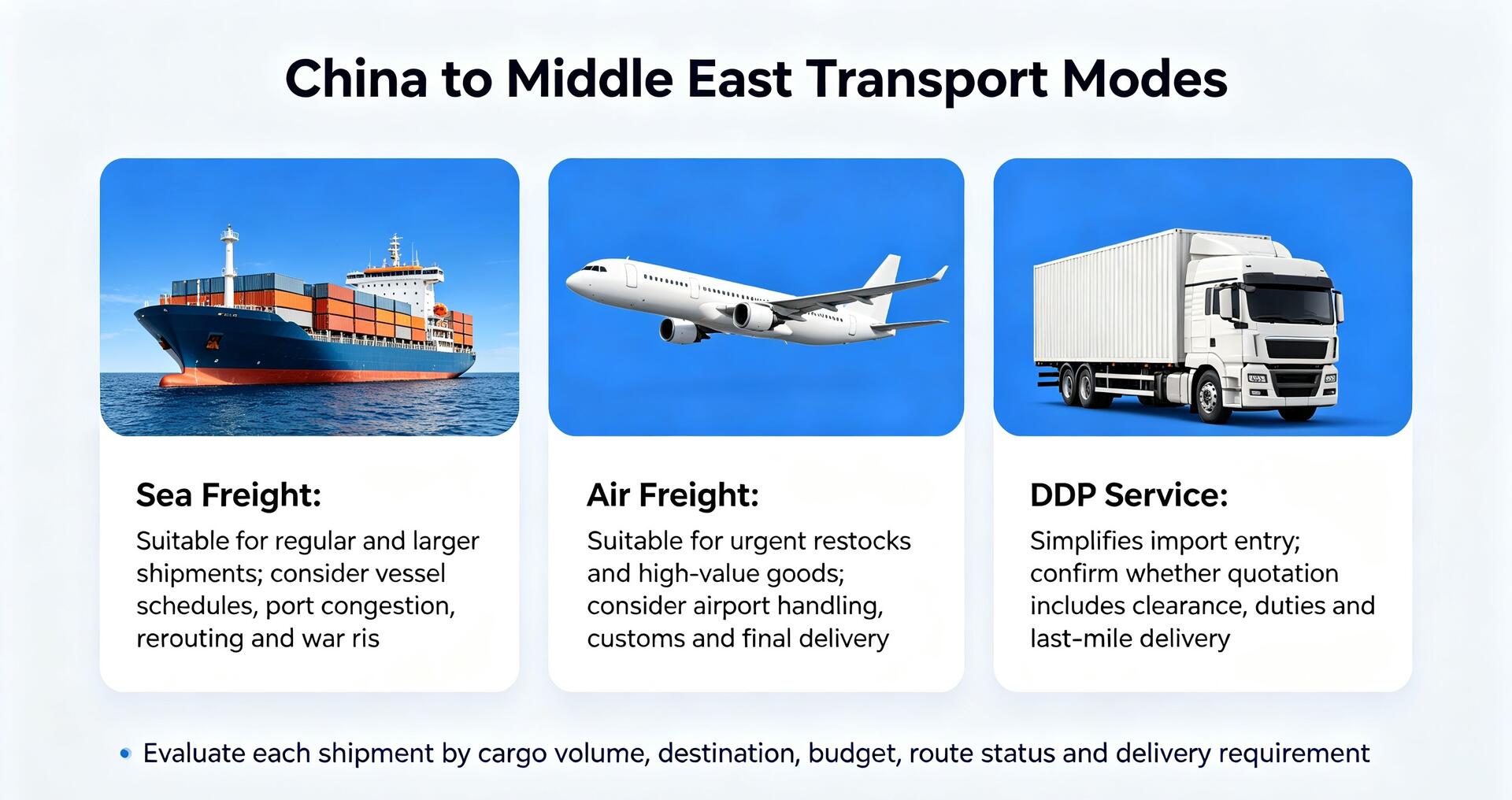
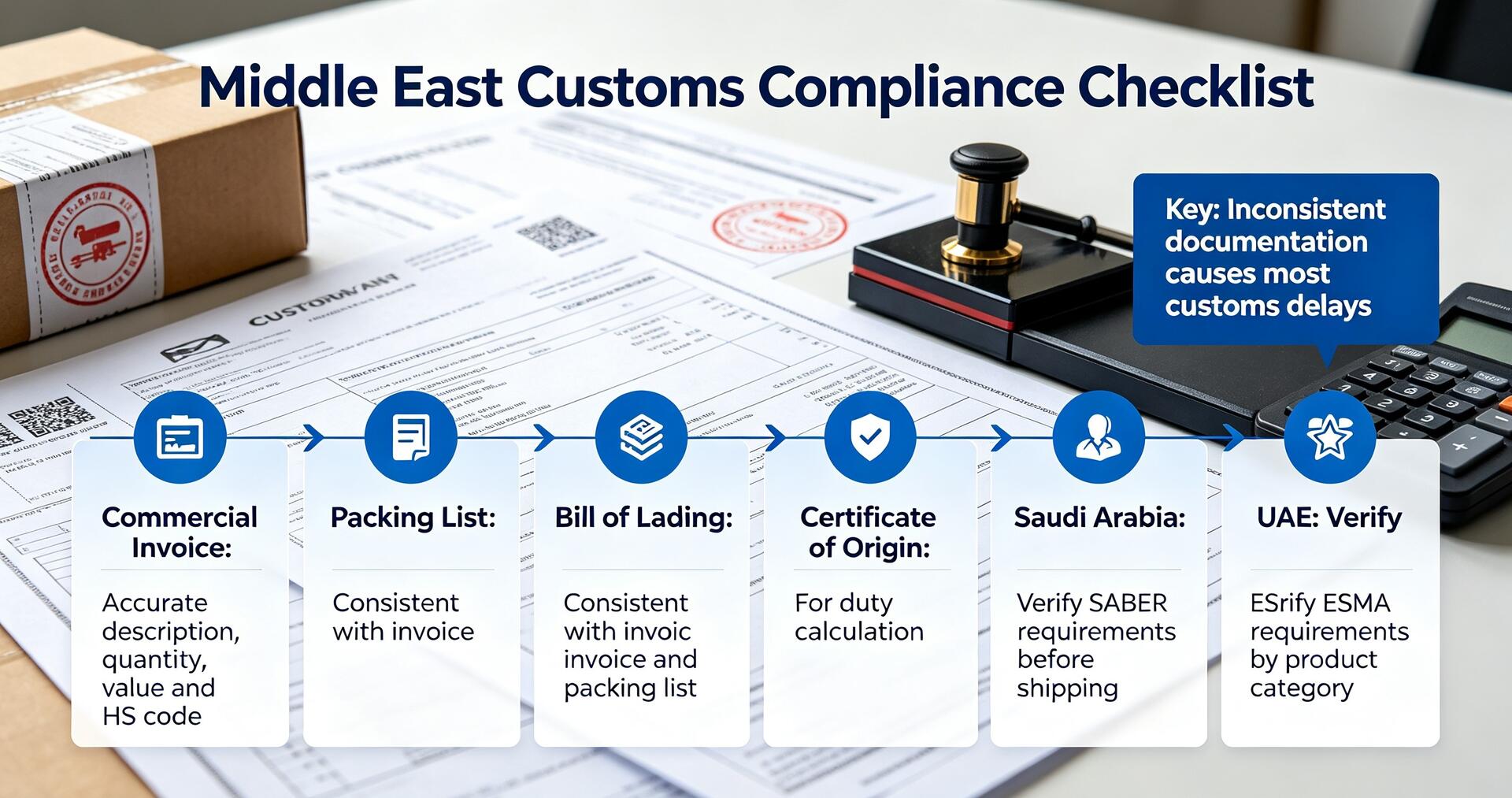
Shenzhen, Guangdong Sep 24, 2026 (Issuewire.com) - Planning shipping from China to the Middle East (https://www.transworldcn.com/middle-east/) means balancing transport cost, delivery time, and destination compliance. Saudi Arabia's Vision 2030 projects and demand across the UAE, Qatar, and the Gulf create opportunities, but route disruption can change both schedules and landed costs. TransWorld (https://www.transworldcn.com/About-us/) examines these decisions through five stages: choosing a service, understanding disruption, budgeting surcharges, preparing customs documents, and allowing for seasonal pressure. The figures below are benchmarks reported in its source guide, not live freight quotations. Confirm current carrier services, charges and product-specific requirements before booking. Step 1: Choose Your Shipping Method: Sea Freight and Direct FCL Transit Times. Sea freight suits containerized cargo when cost and capacity matter more than speed. The source guide's direct full-container-load, or FCL, estimates are port-to-port figures; they do not represent a complete delivery commitment. From Shenzhen or Yantian: Allow 14-18 days to Jebel Ali, 18-24 days to Dammam, 20-26 days to Jeddah, and 16-20 days to Hamad. From Shanghai or Ningbo: The corresponding estimates are 18-22 days to Jebel Ali, 22-28 days to Dammam, 22-28 days to Jeddah, and 20-24 days to Hamad. From Qingdao or Tianjin: The estimates are 20-24 days to Jebel Ali, 20-25 days to Dammam, 24-30 days to Jeddah, and 22-26 days to Hamad. These route estimates are attributed to SinoShipment in the original guide. It identifies approximately 13-15 cubic meters, or CBM, as an FCL-versus-LCL comparison point. Less-than-container-load shipments require consolidation and deconsolidation, for which the guide allows another 5-10 days. Compare actual quotations rather than treating this volume threshold as a universal rule. Air Freight and Express Courier: Air freight serves urgent, high-value, or time-sensitive cargo. The guide's FreightAmigo comparison gives air freight a 5-8-day transit range and a price benchmark of US$4-7 per kilogram, with high-value shipments of 100-500 kilograms as an example use case. Express courier is presented as a faster parcel option: 2-6 days at US$10-15 per kilogram, suited to smaller parcels and documents. Confirm the shipment's chargeable weight, service coverage, and delivery definition when comparing these figures. DDP: Compared with CIF and FOB, Delivered Duty Paid, or DDP, combines freight, customs clearance, duties, and final delivery within the quoted scope. It can simplify purchasing for an importer who prefers one coordinated arrangement. The original comparison assigns customs clearance and import duties or VAT to the buyer under CIF and FOB. It describes CIF as less convenient with greater exposure to additional port fees, and FOB as a middle option. Under DDP, the agent handles clearance, and duties or VAT are included in the quotation. Obtain written inclusions and exclusions: the source's "zero risk" description of hidden fees should not be treated as an unconditional guarantee. Step 2: Understand Route Disruption. The guide reports that conflict affecting the Strait of Hormuz in April 2026 prompted Mediterranean Shipping Co., Maersk, and CMA CGM to suspend or adjust some Middle East services. It describes container rates rising from approximately US$3,000-4,000 to around US$11,000 and transit extensions of 7-15 days. These are reported disruption examples, not a statement that every shipment has the same cost or delay. Alternative discharge points discussed include Khor Fakkan and Fujairah in the UAE, followed by inland transport. The guide describes congestion and limited onward capacity at these ports. Sohar in Oman is another example for Kuwait-bound cargo, although transshipment and cross-border trucking add complexity. A reported 5,000-ton Chinese steel shipment bound for Kuwait illustrates the issue: discharge at Sohar created onward trucking challenges across multiple countries. The example is not identified as a TransWorld customer shipment. Confirm the operational route, discharge port, border arrangements, and onward capacity for the booking concerned. Step 3: Build a Complete Cost Estimate Freight Benchmarks. The original guide attributes these April 2026 figures to FreightAmigo: China to Jebel Ali, 20-foot FCL: US$2,350-3,250. China to Jebel Ali, 40-foot FCL: US$2,800-3,950. China to Dammam or Jeddah, 20-foot FCL: US$1,700-4,200. China to the UAE, LCL: US$120-180 per CBM. These are base comparisons. A shipment-specific quote must identify which local charges, surcharges, duties, and delivery services it includes. Surcharges and a Worked Example: The guide highlights the Bunker Adjustment Factor, which fluctuates with fuel prices; Peak Season Surcharge, particularly around Ramadan and Chinese New Year; War Risk Surcharge; and Low Sulphur Surcharge. Its war-risk example is US$3,000-5,000 per container. For a Shanghai-to-Jebel-Ali shipment, its example attributed to Jwview combines US$3,000-4,000 in ocean freight, US$3,000-5,000 in war-risk charges, and US$500-1,000 in other surcharges. The resulting total is US$6,500-10,000. The calculation illustrates how additions can materially change the base price; it is not a guaranteed current offer. Step 4: Prepare Customs Clearance. Keep the Documents Consistent. The commercial invoice should identify the product, quantity, value, and HS code clearly. The packing list and bill of lading should agree with the invoice and with each other. The guide also identifies a certificate of origin and, for certain destinations, pre-shipment inspection documentation. Avoid vague descriptions and conflicting quantities or values. Documentation preparation should happen before dispatch, not after the cargo reaches its destination. Saudi Arabia: The source guide emphasizes SABER electronic certification and reports a 15% VAT rate. It uses broad language about mandatory certification and cargo rejection. Importers should confirm the applicable product and shipment requirements, together with tax treatment, before shipping; the guide directs readers to ZATCA, the Zakat, Tax and Customs Authority. United Arab Emirates Jebel Ali and Khalifa Port are the principal UAE gateways discussed. The guide lists a standard VAT of 5%, a duty of 5% on most general cargo, and ESMA-related certification for certain product categories. Confirm classification, applicable requirements, and tax treatment for the actual shipment rather than applying these general figures indiscriminately. Iran: The guide identifies Bandar Abbas as a gateway for steel, machinery, chemicals, and consumer goods. It stresses pre-shipment inspection, consistency with the commercial invoice, and coordination with a licensed local customs broker, known as a Tarkhis Kar. It also discusses sanctions-related banking and vessel restrictions, mentioning RMB, AED, and EUR payment arrangements. Those references do not establish that a transaction is permitted. Confirm the shipment's restrictions and the carrier's protection-and-indemnity coverage with the relevant professionals before proceeding. Step 5: Allow for Seasonal Pressure. Ramadan may involve shorter working hours and congestion; its dates follow the Islamic calendar. Chinese New Year brings factory closures and tight capacity, while the guide associates early-October Golden Week with port congestion. Hajj can create additional Saudi border scrutiny, with timing varying annually. The guide recommends booking 2-3 weeks ahead during peak periods and, where practicable, avoiding the two weeks immediately before Ramadan. Confirm the actual calendar and operating arrangements for the planned shipping year. Frequently Asked Questions: How long should an importer allow? Use the specific origin-and-destination estimate. The detailed FCL figures above span 14-30 days port-to-port; the source separately allows 5-10 additional days for LCL handling and reports disruption extensions of 7-15 days. Air and express should be checked against the selected service. Does a low base rate mean a low landed cost? Not necessarily. War-risk charges, other surcharges, clearance, duties, and final delivery can change the overall bill substantially. Compare quotations using the same scope, not just the ocean-freight line. What is the practical difference between DDP and CIF? The guide's comparison places destination clearance and duties with the buyer under CIF, while a DDP quote includes those services within its stated scope. Confirm exclusions, responsibility, and delivery coverage in writing. What deserves attention before a Saudi Arabia shipment? Check the commercial invoice, packing list, bill of lading, certificate of origin, product classification, and applicable SABER requirements. The documents should describe the same cargo consistently. Plan the Shipment Before Booking. A workable Middle East shipping plan brings together a confirmed route, appropriate transport mode, complete cost breakdown, and destination-specific documentation. Early booking and explicit responsibility for clearance and delivery help turn a headline freight rate into a usable shipment plan. For information about routes and shipment planning, visit the TransWorld official website (https://www.transworldcn.com/).
Source :Shenzhen Transworld Supply Chain Co., LTD.
This article was originally published by IssueWire. Read the original article here.

LS Electric secures $138.7 mil. transformer deal in US
LS Electric said Tuesday it has signed a 185.3 billion-won ($138.7 million) contract with global power solutions provider Bloom Energy to supply switchgear and distribution transformers. With the latest deal, the Korean electrical equipment maker's cumulative orders from Bloom Energy have exceeded $500 million since April last year. Under the contract, LS Electric will supply power equipment for a fuel cell-based on-site power generation project at a major U.S. technology company's data center in Pennsylvania. The Korean company plans to deliver 38-kilovolt (kV) high-voltage switchgear and distribution transformers between April and July 2027.

HD Hyundai, Siemens launch joint center for digital shipbuilding
HD Hyundai and Siemens Digital Industries Software opened a joint center in Busan on Tuesday as part of their efforts to accelerate digital transformation in the shipbuilding industry. HD Korea Shipbuilding & Offshore Engineering, HD Hyundai’s shipbuilding intermediate holding company, held an opening ceremony for the Global Marine Center, attended by key officials from both companies, including CEO Kim Hyung-kwan and Siemens Digital Industries Software Chief Revenue Officer Robert Jones. The center will house about 50 professionals from both companies specializing in ship design, production, artificial intelligence (AI) platforms and product lifecycle management. It will serve as a key hub for combining HD Hyundai’s shipbuilding expertise with Siemens’ digital engineering technology. The two companies signed an agreement in July to work together on establishing a next-generation marine platform, a project that aims to connect all aspects of shipbuilding, from design, production and supply chain management to quality control and maintenance with AI and digital technology. The cente

Seoul AI startup secures prized gateway to US market via New York program
A Seoul-based AI startup has joined a prestigious New York City commercialization program, opening a rare doorway to test its products with American companies and court global investors. NextPayments was the only Korean company among 14 startups selected for NYC AI Nexus, a program organized by the New York City Economic Development Corp., from more than 200 applicants worldwide, the Seoul Metropolitan Government said Tuesday. Beginning in November, NextPayments plans to conduct pilot projects with local companies, focusing on retail and food service, to test its technology and assess demand in the U.S. market. The company develops AI platforms that integrate data from offline businesses, including orders, payments, products, staffing, logistics and customer behavior, into a unified system. Through the yearlong program, selected startups receive local office space, strategic advice, introductions to potential business partners, help with proof-of-concept projects, expert consultations and assistance in attracting investment. The New York City Economic Development Corp. plans to select as

KAMCO broadens cooperation with Asian markets on bad loan management
The Korea Asset Management Corporation (KAMCO) is expanding its cooperation with Asian financial authorities, drawing on nearly three decades of experience managing nonperforming loans (NPL) to help countries strengthen their financial systems, the state-run agency said Monday. Vietnam offers a clear example of that approach. In April, KAMCO signed a consulting agreement worth around $400,000 with the Asian Development Bank to help establish a legal framework for asset-backed securities (ABS) in the country. Over the next 25 months, the agency is set to assess Vietnam’s financial and legal environment, recommend regulatory improvements and help develop guidelines for issuing ABS. The project will also include training programs to strengthen local expertise. KAMCO is working to improve the infrastructure for actual transactions as well. In a consortium with Shinhan DS, it is undertaking a 2.5 billion won ($1.86 million) project to upgrade the Vietnam Asset Management Company’s online platform for NPL trading. The agency is also extending its work beyond individual markets through a br

Jinju to host international entrepreneurship forum Oct. 18-20
Jinju, South Gyeongsang Province, will host the 2026 Jinju International Forum on Entrepreneurship from Oct. 18 to 20, bringing together United Nations officials, global business leaders and scholars to discuss entrepreneurship amid geopolitical tensions, supply chain disruptions and intensifying artificial intelligence (AI) competition. The Jinju K-Entrepreneurship Foundation said Tuesday that the forum will explore how businesses, governments and local communities can turn these challenges into opportunities for innovation and shared prosperity. Under the theme “An Era of Global Uncertainty and Digital Transformation: What Is the Role of Entrepreneurship?” the three-day forum will examine how entrepreneurship can foster innovation and shared prosperity. A key session will bring together former U.N. Economic and Social Council presidents Nestor Osorio and Martin Sajdik, former Argentine ambassador to the U.N. Martin Moritan and U.N. Assistant Secretary-General for Economic Development Navid Hanif. They will discuss opportunities and inequalities arising from AI, the sustainable deve

Shinhan becomes 1st Korean financial group to establish holding company in Indonesia
Shinhan Financial Group has officially launched Shinhan Financial Group Indonesia, becoming the first Korean financial group to establish a local financial holding company in the Southeast Asian country, the company said Tuesday. The launch ceremony was held in Jakarta on Monday, attended by Shinhan Financial Group Chairman Jin Ok-dong and local financial authorities. The new structure places Shinhan Indonesia Bank at the center of the group's Indonesian operations, with the bank taking on the additional role of a holding company overseeing its local card and securities businesses. The restructuring follows the Indonesian government's announcement requiring financial groups to establish holding companies in December 2024. Shinhan began reorganizing its local governance structure in response to the requirement and received approval from Indonesian financial authorities in September 2025. The transition was completed on Sept. 16 following the transfer of stakes in the group's local affiliates, according to the company. Under the new structure, Shinhan Indonesia Bank acquired additional stak

Shinhan Financial acquires Lotte Insurance for $518 mil.
Shinhan Financial Group Inc., a major banking group, has decided to take over a midsize non-life insurer for 693 billion won ($518 million) to diversify its business portfolio, industry sources said Tuesday. Shinhan Financial's board of directors approved the acquisition of a 77.04 percent stake in Lotte Insurance, from private equity firm JKL Partners, and then the banking group plans to buy the remaining 22.96 percent depending on regulatory approval.

Lexus Korea unveils 1st all-electric ES sedan
Lexus Korea has launched its first all-electric ES sedan, expanding the luxury carmaker’s electrification strategy beyond its established hybrid lineup, as it moves to strengthen its position in the increasingly competitive electric vehicle (EV) market, the company said Tuesday. The eighth-generation All-New ES lineup comprises the ES 350e and ES 500e EVs alongside the ES 350h hybrid, offering customers a choice between fully electric and hybrid powertrains. The launch carries strategic significance for Lexus, which has built its reputation in Korea largely on hybrid vehicles. While the Japanese luxury brand is well established in the premium hybrid sedan segment, it has been a latecomer to the all-electric market. “EVs are not a sudden move for Lexus Korea,” Lexus Korea CEO Manabu Konoyama told reporters during a media event. “Rather, they represent the next step, built on the experience and expertise we have accumulated through our hybrid vehicles.” The ES 350e, the entry-level electric model, starts at 71.6 million won ($53,500) and offers a driving range of 478 kilometers on

CXMT's new DRAM tech to test Korean memory makers' dominance
Concerns are growing that the technological gap between China's CXMT and Korean memory makers Samsung Electronics and SK hynix in DRAM technology has already narrowed, after the Chinese company unveiled plans to launch server memory product by the end of this year featuring a next-generation memory cell architecture that remains only on the technology road maps of the two Korean chipmakers. According to South China Morning Post and other Chinese media outlets, CXMT President Cao Kanyu said the company plans to roll out a new server DDR5 based featuring the new architecture during an industrial event in Shanghai on Saturday. The new architecture uses a design called 4F square, which reduces the space occupied by each memory cell. F refers to the minimum line width that a given DRAM manufacturing process can draw. In current processes such as 1a, 1b and 1c, F is just over 10 nanometers. 4F square means each cell occupies an area equivalent to four times F squared. The current industry standard is 6F square, meaning the new technology could theoretically reduce the area occupied by each me

MetLife Korea opens new headquarters in central Seoul
MetLife Korea relocated its headquarters from Gangnam District in southern Seoul to the central part of the capital, the insurer said Tuesday. MetLife Asia Regional President Lyndon Oliver, MetLife Korea CEO Song Young-rok and other executives and employees marked the opening of the new office at a commemorative ceremony, Oct. 6. The move to Jongno District brings teams that had previously been spread across different floors into a more integrated workspace, with the aim of improving communication and collaboration across the life insurer’s departments and speeding up efficient decision-making. Built around the concept of “MetLife Village,” the company said its office incorporates several traditional Korean design elements, including “giwa” (curved roof tiles) and “obangsaek” (five colors associated with the cardinal directions). “The new office marks an important milestone in our more than 30 years of serving customers in Korea and underscores our long-term commitment to this market,” Oliver said. “By bringing our teams together in a more connected environment, we ar

Kakao unveils Kanana Space as KakaoTalk expands into AI interface
Kakao showcased an artificial intelligence (AI) assistant, Kanana Space, for KakaoTalk on Tuesday, outlining plans to turn its flagship messenger into an interface for managing messages, schedules and shopping across its service ecosystem. “Over the past 15 years, Kakao has connected people with everyday life and bridged online and offline experiences with the goal of connecting everything in the world,” the company’s CEO Chung Shin-a said during its annual if(Kakao)26 conference at Kakao AI Campus in Yongin, Gyeonggi Province. “We now aim to take the connections we have built to a new level.” The service, which is slated to begin a closed beta test in December, can be accessed from anywhere in KakaoTalk by swiping the screen with two fingers. Users can interact with it through voice or text to retrieve information from conversations, organize unread messages, manage schedules and adjust app settings. Kanana Space is designed to go beyond answering questions by using context from users’ past interactions to complete tasks. In a demonstration, the assistant identified work-rel

Naver-Toss rivalry deepens as both sides trade accusations
The rivalry between Korean tech giants Toss and Naver has escalated into a public dispute, with both sides trading accusations of unfair business practices, drawing scrutiny from lawmakers, industry officials said Tuesday. The latest dispute centers on Naver's exclusion of Toss Place's point-of-sale (POS) system from a service that integrates merchants' transaction data with Naver's search and map services. The integration allows users to check information such as a restaurant's popular menu items and peak hours. Naver has integrated its platform with 15 other POS providers but has excluded Toss Place, according to Rep. Song Eon-seog of the main opposition People Power Party. Toss Place CEO Choi Jae-ho said the company had sought integration for two years but had received no clear explanation of the criteria for inclusion. Naver denied discriminating against Toss Place, saying it was gradually expanding integrations based on objective criteria. During a parliamentary audit Monday, the Fair Trade Commission said it would review both sides' claims to determine whether any unfair discrimina

Sunsetting the OTP in favor of silent security

El-Sayed labels AI 'existential threat’


Bond, CD issuance climbs 11.1% in Q3

YOUR NEWS, OUR NETWORK.
Do you have Great News you want to tell the world?
Be it updates about your business or your community, you can make sure that it’s heard by submitting your story to our network reaching hundreds of news sites across 6 verticals.