
How to Choose Operating Microscopes for Neurosurgery: Magnetic Brakes, Fluorescence Imaging from China
Sep 29, 2026
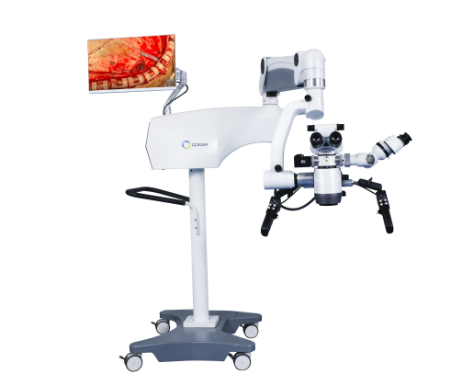
Chengdu, Sichuan Sep 28, 2026 (Issuewire.com) - How to Choose Operating Microscopes for Neurosurgery: Magnetic Brakes, Fluorescence Imaging, and Sourcing Strategies from ChinaExecutive Summary
Neurosurgical procedures require sub-millimeter precision, stable positioning, and clear tissue differentiation. Choosing a reliable China high-quality Operating Microscopes Supplier ensures surgeons gain advanced features like electromagnetic braking and integrated fluorescence visualization while maintaining cost efficiency for hospital procurement departments.
The Technical Demands of Modern Neurosurgery
Neurosurgery leaves virtually zero room for error. Operating on delicate cerebral structures, intricate vascular networks, and deep-seated tumors requires surgical instruments that offer exceptional visual clarity and mechanical stability. For hospital procurement managers, surgical department heads, and medical equipment distributors, selecting the right neurosurgical operating microscope is one of the most critical capital expenditure decisions.
In recent years, the global medical equipment landscape has shifted. Procurement teams no longer look exclusively at traditional European or North American brands. Instead, they are evaluating sophisticated manufacturing hubs to partner with a reliable China Best Operating Microscopes factory that can meet high international clinical standards without straining healthcare budgets.
To make an informed purchasing decision, B2B buyers must evaluate key pain points in neurosurgical visualization, understand essential technical features, and navigate the sourcing process effectively.
Critical Pain Points in Neurosurgical Visualization and Mechanical Stability
Surgeons face significant physical and technical obstacles during micro-neurosurgical procedures. Understanding these operational friction points helps procurement specialists evaluate equipment performance beyond basic product datasheets.
Mechanical Drift and Frequent Re-Balancing
During a complex craniotomy or spinal decompression, a surgeon frequently adjusts the microscope angle to view deep anatomical cavities. Traditional mechanical friction locks often require manual knob adjustments or suffer from slight positional drift after release. A fraction of a millimeter in movement can throw off the focal plane, interrupting the surgical flow and increasing operative time.
Inadequate Tissue Contrast in Tumor Resection
Distinguishing malignant brain tissue from healthy surrounding parenchyma remains a primary challenge in neuro-oncology. Under standard white-light illumination, glioma borders can appear visually identical to healthy brain tissue. Incomplete resection leads to poorer patient outcomes, while over-resection causes neurological deficits.
Physical Fatigue and Ergonomic Strain
Neurosurgical procedures frequently exceed four to six hours. Fixed binocular tubes force surgeons into unnatural neck and back angles. Over time, physical fatigue impairs surgical dexterity and focus. Modern operating microscopes must accommodate fluid adjustments to suit different surgeon heights and seating positions.
Key Features to Prioritize: Electromagnetic Brakes and Fluorescence
When evaluating advanced units like neurosurgical operating microscopes, specific architectural and optical components directly address clinical pain points.
Electromagnetic Brakes for Fluid Positioning
Electromagnetic brake systems transform how a microscope moves in three-dimensional space. Controlled via ergonomic handles or foot pedals, releasing the electromagnetic lock allows the balance arm to float effortlessly in six axes.
- Instant Stabilization:Once the surgeon positions the optical head and releases the trigger, magnetic locks instantly lock the arm in place with zero backlash or drift.
- Effortless Single-Hand Adjustment:Surgeons can adjust angles on the fly without breaking sterility or calling for nursing assistance to loosen mechanical knobs.
Integrated Fluorescence Modules for Targeted Imaging
Fluorescence-guided surgery elevates precision by illuminating specific biological structures in real time:
- 5-ALA (5-Aminolevulinic Acid):Causes malignant glioma cells to synthesize fluorescent porphyrins. Under specialized blue excitation light, the tumor glows red/violet while healthy tissue appears blue, assisting in maximum safe resection.
- ICG (Indocyanine Green) Angiography:Allows near-infrared visualization of blood flow through cerebral vessels, aiding in aneurysm clipping and arteriovenous malformation (AVM) surgery.
High-Resolution Optics and Motorized Zoom
Optical clarity starts with premium glass coatings that maximize light transmission and reduce chromatic aberration. Motorized continuous zoom and fine autofocus capabilities allow surgical teams to transition smoothly from wide-field anatomical orientation to high-magnification deep-cavity work.
Practical Clinical Scenarios: Impact on the Operating Theater
To appreciate the functional value of modern optical engineering, consider how these features operate in real surgical workflows.
Scenario 1: Glioblastoma Multiforme Resection
During a high-grade glioma resection, the primary goal is achieving clear margins without damaging eloquent brain areas. Under standard lighting, the tumor boundary becomes ambiguous as the surgeon reaches the deep margins.
By engaging the integrated fluorescence mode, the optic path switches light filtering. Tumor margins light up vividly, allowing the surgeon to excise infiltrating tumor tissue with precision. When the surgeon needs to shift the view to inspect the resection cavity's lateral walls, pressing the handle button releases the magnetic brakes, letting the optical head glide smoothly to the new position and lock instantly upon release.
Scenario 2: Cerebral Aneurysm Clipping
In vascular neurosurgery, confirming that an aneurysm clip has fully secured the lesion without compromising parent vessel blood flow is critical. Following clip placement, ICG dye is injected intravenously. The surgical microscope's near-infrared light source activates, revealing real-time blood perfusion in seconds. The surgical team can verify vascular patency on the spot, avoiding post-operative complications and secondary interventions.
Evaluating B2B Sourcing Strategies: Why China Manufacturing Matters
For medical equipment importers, hospital purchasing committees, and distributor networks, sourcing capital equipment involves balancing technical performance, regulatory compliance, and total cost of ownership.
R&D Infrastructure and Academic Integration
China's medical device manufacturing industry has undergone significant transformation. Top-tier manufacturers often collaborate closely with specialized research institutions. For example, enterprise backing from established institutions like the Institute of Optics & Electronics, Chinese Academy of Sciences (CAS) brings rigorous optical physics expertise and advanced quality control standards directly to commercial production lines.As a specialized manufacturer of high-performance operating microscopes, the company draws upon a legacy of medical optics innovation dating back to the 1970s, engineering specialized surgical microscopes across diverse clinical disciplines including neurosurgery, spine, dentistry, ENT, ophthalmology, and orthopedics.
Rigorous Quality Standards (ISO 13485 & ISO 9001)
Procurement officers evaluating a Top China Best Operating Microscopes Manufacturer should prioritize facilities that strictly maintain ISO 13485 (Medical Devices Quality Management Systems) and ISO 9001 certifications. These credentials verify that optical alignment, electrical safety, and mechanical tolerance tests are systematically executed across every batch.
Total Cost of Ownership (TCO) Advantages
Sourcing directly from a direct China Best Operating Microscopes factory offers substantial economic benefits without compromising clinical outcomes:
- Competitive Capital Acquisition:Lower purchasing costs allow community hospitals and regional medical centers to access advanced features like magnetic brakes and fluorescence that might otherwise be cost-prohibitive.
- Accessible Spare Parts:Standardized supply chain integration ensures replacement lamps, optical accessories, and electronic boards are available at reasonable costs with short lead times.
- Flexible OEM/ODM Options:Established suppliers offer customizable configurations (e.g., dual-observer tubes, assistant scopes, integrated 4K camera systems) tailored to specific market demands.
Frequently Asked Questions (FAQ)FAQ 1: How do electromagnetic brakes in surgical microscopes improve clinical efficiency compared to manual mechanical locks?
Electromagnetic brakes allow surgeons to release all rotational and directional movement locks simultaneously via a simple button on the control handle or foot pedal. This enables fluid, one-handed repositioning of the optical head during surgery. Once the button is released, the system locks firmly into position without mechanical drift, eliminating the need to manually loosen and tighten individual friction knobs.
FAQ 2: What certifications should I verify when selecting a China high-quality Operating Microscopes Supplier for overseas medical markets?
When importing surgical microscopes, verify that the manufacturer holds ISO 13485 certification for medical device quality management and ISO 9001 for general quality systems. Additionally, ensure the products carry relevant regional regulatory approvals (such as CE marking for European markets or FDA registration for the United States) to guarantee compliance with electrical safety and biological compatibility standards.
FAQ 3: How does sourcing from a Top China Best Operating Microscopes Manufacturer benefit regional distributors and hospital networks?
Partnering with an established manufacturer in China provides access to advanced optical technologies--such as magnetic braking, motorized zoom, and multi-wavelength fluorescence--at competitive prices. This cost structure allows hospital procurement teams to expand their surgical capabilities within budget constraints, while offering regional distributors healthy margins and flexible OEM/ODM customization options.
For detailed product specifications, optical performance metrics, and global distribution partnerships regarding advanced neurosurgical visualization systems, visit https://www.vipmicroscope.com/.
Media Contact
Chengdu Corder Optics And Electronics Co., Ltd.
Source :Chengdu Corder Optics And Electronics Co., Ltd.
This article was originally published by IssueWire. Read the original article here.

KCCI, audit authority collaborate to resume construction of 4,000 public housing units
The audit authority has cleared a key hurdle for six stalled public housing projects totaling nearly 4,000 units after the Korea Chamber of Commerce and Industry (KCCI) sought a preliminary consultation on behalf of builders struggling with soaring construction costs. The KCCI said on Tuesday that the Board of Audit and Inspection (BAI) determined that project costs for the six sites, covering 3,936 housing units, can be recalculated to reflect current market conditions. The case marks the KCCI’s first use of the consultation program since it was opened to private organizations in May. “Companies have faced difficulties for a long time, but this was not an issue they could easily make a decision on,” Lee Jong-myung, head of the KCCI's industry innovation division, said. “The BAI's decision to open its doors to the private sector has added another channel for resolving corporate difficulties, and its first result will benefit the public through housing supply.” The six projects are part of a public-private housing program, with public agencies providing the land while private bu

Private sector's role increased in 5th Nuri launch
Private companies played a significantly greater role in the successful fifth launch of Korea’s Nuri rocket on Wednesday, signaling that the country’s efforts to keep pace with the global shift toward a private sector-led “New Space” era are gaining momentum. The Nuri rocket completed its fifth launch and 20-minute-long flight successfully after lifting off at the Naro Space Center in Goheung, Jeonnam-Gwangju Special Metropolitan City, at 12:25 p.m. The most notable change in the latest launch was not the rocket itself, but the growing presence of private-sector personnel at the launch site. Hanwha Aerospace has overseen the manufacturing of the Nuri rocket as its system integrator since the fourth launch on Nov. 27 last year, but this time, its role expanded to the consoles at the launch control center. Hanwha Aerospace deployed 42 staffers for the fifth launch. They participated in operations at 20 of the 22 consoles responsible for launch vehicle systems, and at 18 of them, Hanwha employees directly operated the controls instead of specialists from the Korea Aerospace Researc
![[EXPLAINER] How AI emerged as new threat in Korea's bank hacking crisis](https://newsimg.koreatimes.co.kr/2026/10/07/77d98bb7-f23e-430d-be94-38ae9821547a.jpg)
[EXPLAINER] How AI emerged as new threat in Korea's bank hacking crisis
Hackers once had to manually test security defenses, identify vulnerabilities and work out how to exploit them. Now, artificial intelligence (AI) can do much of that work, requiring little human input. That possibility is at the center of Korea's latest security crisis in the financial sector, as investigators have found traces of an AI-powered autonomous penetration-testing tool in a series of recent cyberattacks on the country's major banks. Since last week, Shinhan Bank, KB Kookmin Bank, Hana Bank, Yegaram Savings Bank and BNK Busan Bank have all reported data breaches, while Woori Bank and NH NongHyup Bank have detected signs of hacking attempts, though no data leaks were confirmed. Shinhan Bank reported that about 25,000 customers were affected, with personal information including names, phone numbers, annual income and loan limits exposed. KB Kookmin reported 119 affected customers, while Hana Bank said personal information belonging to 89 customers was exposed. The hacking spree has drawn particular concern after investigators reportedly found traces of an AI-powered tool known as

SK Energy, HD Hyundai Oilbank face fines over alleged fuel price fixing
SK Energy and HD Hyundai Oilbank may face sanctions from the Fair Trade Commission (FTC) over allegations that they colluded on gasoline, diesel and kerosene prices, with combined fines potentially reaching 4.63 trillion won ($3.45 billion). The antitrust regulator said Wednesday that it sent a review report to the two companies, formally launching deliberations over the alleged price-fixing case. The FTC said the alleged collusion lasted from February 2022, shortly before Russia's invasion of Ukraine, through March this year, shortly after the outbreak of the war in Iran. The case covers petroleum products that are essential to household and economic activity. Korea's oil refining industry is highly concentrated, with SK Energy, HD Hyundai Oilbank, GS Caltex and S-Oil accounting for about 98 percent of the domestic market. According to the FTC, SK Energy and HD Hyundai Oilbank exchanged information on the prices of gasoline, diesel and kerosene, including provisional prices, final prices and sales policies. The regulator also determined that the two companies colluded on prices followin

Beef tallow remains hurdle to Charrr's global expansion
Countries’ regulations on imported foods containing beef tallow pose a hurdle for Samyang Foods as the Korean instant noodle giant seeks to expand exports of its latest black bean sauce instant noodles, Charrr. The company has established Buldak as a massively popular product around the globe without using beef tallow, selling 10 billion units and generating cumulative sales of 7 trillion won ($5.2 billion) as of June. Unlike the spicy, brothless instant noodle brand, however, Charrr uses beef tallow as a key ingredient to give its sauce a rich, beefy flavor. Charrr is not Samyang’s first instant noodle product using beef tallow. The company launched Samyang 1963 in November last year with the ambitious goal of reviving the “forgotten” taste of its first instant noodle product, Samyang Ramen, which was introduced in 1963 and used beef tallow. Samyang Ramen, introduced by the late company founder Chun Joong-yoon to help feed a population suffering from widespread poverty at the time, remains a cornerstone of the company’s identity. Its use of beef tallow has now become part of

Bank data breach victims step up calls for compensation
A growing number of customers affected by a string of recent personal data breaches at major commercial banks and other financial firms appear to be turning to class action lawsuits in pursuit of compensation, according to industry officials, Wednesday. The banks have pledged to fully compensate customers whose losses, including those from voice phishing scams, are found to have directly resulted from the leaks. But proving that a loss was caused by a specific data breach can be difficult in practice, and the banks have yet to set out clear standards for determining which claims would qualify, prompting some victims to resort to legal action. Seven financial firms have reported information leaks so far, including three of the country’s largest commercial lenders — Shinhan Bank, KB Kookmin Bank and Hana Bank. Shinhan reported the largest breach, affecting around 25,000 people, followed by 119 at KB Kookmin and 89 at Hana Bank. The exposed data includes customers’ names, contact details, resident registration numbers, annual income and loan limits. The combination of personal and fin
![[COVER STORY] Nuri rocket successfully completes 5th flight](https://newsimg.koreatimes.co.kr/2026/10/07/6a8cafff-abc8-4ebb-86ed-8bb7b1eb07d3.jpg)
[COVER STORY] Nuri rocket successfully completes 5th flight
Korea’s domestically-developed Nuri rocket successfully carried out its mission in its fifth launch Wednesday, sequentially deploying 14 out of the 15 satellites it carried into their target orbit. The key objective of the fifth launch was to safely deploy the five microsatellite constellations, and its success has demonstrated Korea's increased multisatellite launch capabilities, taking another step toward privately-led commercial launch services. The rocket lifted off from the launchpad at the Naro Space Center in Goheung, Jeonnam-Gwangju Special Metropolitan City, at 12:25 p.m. and completed its roughly 20-minute flight at around 12:45 p.m. The rocket separated its first stage about two minutes after liftoff, followed by the second stage about four and a half minutes into the flight. At around 12:40 p.m., it reached an altitude of 570 kilometers and completed the sequential deployment of five New-space Earth Observation Satellite Constellation for National Safety (NEONSAT) microsatellites (satellites No. 2 to 6), its primary payload, along with nine of the 10 CubeSats it carried. In

AMD to establish AI research center in Korea this year, hire hundreds
U.S. chip giant AMD announced Wednesday that it plans to establish an artificial intelligence (AI) research center in Korea by the end of this year and hire hundreds of researchers as part of broader AI cooperation between the company and Korea. The announcement came during a meeting between AMD CEO Lisa Su and Second Vice Minister of Science and ICT Ryu Je-myung in Seoul. AMD also plans to help develop graduate-level AI and AI transformation talent and collaborate with Korea on a reference model for heterogeneous AI computing. The model would combine AMD’s central processing units (CPUs) and graphics processing units (GPUs) with domestically developed neural processing units (NPUs). The meeting, arranged by the Ministry of Science and ICT, served as an interim review of AI cooperation agreed upon by the ministry and AMD during President Lee Jae Myung’s attendance at the San Francisco AI Summit in July. AMD also outlined plans to work with Korea’s private sector to create new business opportunities. At a subsequent roundtable with 13 Korean companies involved in AI infrastructure, c

OpenAI releases new batch of math breakthroughs
OpenAI released a new batch of mathematics breakthroughs on Tuesday following calls from AI researchers and developers to slow the growth of the technology. The company released 377 results that cover different physics, mathematical and other scientific problems solved by an OpenAI internal frontier model not yet available to the public. “Towards acceleration of scientific...

IMF chief urges countries to do more to curb debt and regulate AI
Countries both rich and poor must take faster action to cut debt and counter growing inequality as their economies weather a triple whammy from the artificial intelligence boom, heavy borrowing and shocks from wars in the Middle East and Ukraine, the head of the IMF said Wednesday. “Some very tough political choices stare us in...

China’s open-weight AI models are winning global users. Who is capturing the value?
China’s open-weight artificial intelligence models are taking off globally, but much of the money they generate is flowing to third-party providers rather than the companies that create them, according to a new study. Developers including DeepSeek and Moonshot AI make their model weights – essentially the “brains” of their AI systems – freely available for download. This strategy, which has accelerated global adoption over the past two years, allows other companies to run the models on their own...

Why Trump chose these leaders to head his 'Super Intelligence Force'
President Trump’s selection of four administration officials to head up his new “Super Intelligence Force” is offering a window into how the White House will approach AI in the face of pressure over its risks. The group of government leaders each reflect different priorities of the Trump administration after months of mixed messaging on the...


YOUR NEWS, OUR NETWORK.
Do you have Great News you want to tell the world?
Be it updates about your business or your community, you can make sure that it’s heard by submitting your story to our network reaching hundreds of news sites across 6 verticals.