
How to Choose a Custom Thermal Label Manufacturer in China: A 2026 B2B Buyer's Guide
Sep 22, 2026
Shanghai, China Sep 22, 2026 (Issuewire.com) - Quick Summary (TL;DR)
Sourcing custom thermal labels from China requires evaluating 9 core factors: label technology, facestock, adhesive, printer compatibility, operating environment, customization, in-house capability, quality documentation, and total cost. Direct thermal labels suit short-term logistics, shipping, and food rotation (6-12 month image life, no ribbon). Thermal transfer labels suit long-term industrial, chemical, and outdoor use (5-20 year image life, ribbon required). Before ordering, verify in-house capabilities, request current certifications, test samples under real conditions, and compare total cost, not just unit price.
About the Author
Cindy Zheng is the International Sales Director at SY Label (Shangyue (Shanghai) Printing Co., Ltd.), where she has spent 10+ years helping distributors, logistics operators, and manufacturers in Europe, North America, and Southeast Asia source custom thermal and self-adhesive labels. She holds a B.A. in International Business from Shanghai University. Connect on LinkedIn.
This guide is reviewed annually and updated when specifications, regulations, or standards change.
Quick Answer: 9 Factors to Evaluate in a Custom Thermal Label Manufacturer
A suitable supplier should confirm these before quoting.
Label Technology Direct thermal suits short-term use (6-12 months); thermal transfer suits long-term or harsh environments (5-20 years).
Facestock Paper suits indoor, dry conditions; PP/PE synthetic films suit moisture, chemicals, or freezing environments.
Adhesive Permanent, removable, freezer-grade, or high-tack formulations matched to the application surface.
Printer Compatibility Confirmed width, gap/black mark/continuous format, core size, and roll diameter for the specific printer model (e.g., Zebra, Brother, Dymo).
Operating Environment Service temperature range typically -40°C to +150°C depending on facestock and adhesive combination.
Customization Size, shape, perforation, pre-printed branding, variable data, and private-label packaging.
Quality Control Batch adhesion testing, dimensional inspection, barcode scannability verification, and roll winding QC.
Documentation Current ISO 9001, FSC, SGS, or REACH documents--not just logos on a website.
Total Cost Unit price, sample fees, tooling, shipping, MOQ, lead time, and waste rate combined.
1. Select the Correct Thermal Label Technology
Direct thermal and thermal transfer are the two primary technologies for barcode and product identification. Choosing the right one is the first decision--it determines facestock, adhesive, ribbon, and printer requirements.
Direct Thermal Labels
Direct thermal labels use a heat-sensitive coating that produces an image via the printhead, with no ribbon required--cutting consumable cost 30-50% versus thermal transfer.
Typical applications: - Shipping labels - E-commerce fulfillment labels - Warehouse picking labels - Retail price labels - Food rotation labels (30-90 day image life) - Short-term barcode identification (6-12 months)
Direct thermal suits applications where information need not stay readable beyond 12 months, or labels are kept away from heat and sunlight.
Explore SY Label's direct thermal label products: [link to product page]
Thermal Transfer Labels
Thermal transfer labels use a heated printhead to transfer ink from a wax, wax-resin, or resin ribbon onto the label. Depending on the facestock/ribbon combination, image life can reach 5-20 years with resistance to abrasion, heat, moisture, and chemicals.
Typical applications: - Industrial product identification - Asset tracking - Chemical container labels - Electronics labels - Long-term warehouse identification - Outdoor or demanding applications
A reliable manufacturer evaluates service life and environment rather than recommending one material for everything.
Learn more about thermal transfer label options: [link to product page]
2. Match the Facestock to the Application
Facestock--the top layer receiving the printed image--affects print quality, durability, and cost. Common options include:
Direct thermal paper
Typical Applications: Shipping, short-term logistics
Service Temperature: 0°C to 50°C
Key Characteristics: Ribbon-free; economical; 6-12 month image life
Semi-gloss paper
Typical Applications: Product identification, retail
Service Temperature: 0°C to 60°C
Key Characteristics: Smooth appearance; good print presentation
Coated paper
Typical Applications: General barcode, packaging labels
Service Temperature: -10°C to 70°C
Key Characteristics: Balanced cost and print performance
PP synthetic film
Typical Applications: Personal care, food, industrial
Service Temperature: -20°C to 80°C
Key Characteristics: Improved moisture and tear resistance
PE film
Typical Applications: Curved or flexible containers
Service Temperature: -40°C to 60°C
Key Characteristics: Greater flexibility than rigid materials; cold-tolerant
PET film
Typical Applications: High-temperature or outdoor
Service Temperature: -40°C to 150°C
Key Characteristics: Highest durability; chemical and UV resistant
Buyers should specify exposure to water, oil, friction, sunlight, low temperatures, or chemicals. Without this, even a well-made label can perform poorly in use--a 1-3% field failure rate is typical when environmental factors aren't specified upfront.
3. Choose the Adhesive According to the Surface
Adhesive selection is critical--the same adhesive behaves differently on cardboard, glass, metal, and low-surface-energy plastics. Industry data suggests 40-60% of field failures stem from incorrect adhesive choice, not facestock.
Before requesting a quotation, provide the supplier with:
- The application surface material (cardboard, plastic, glass, metal, etc.)
- Whether the surface is flat, curved, or textured
- The labeling temperature (ambient, warm, or cold)
- The storage and service temperature range
- Whether the label must be permanent or removable
- Whether the surface may contain moisture, dust, or oil
- The required service life (e.g., 30 days, 1 year, 5+ years)
Common categories include permanent, removable, freezer-grade (-40°C), and high-tack formulations for difficult surfaces. For important projects, test the label on the final container before a bulk order.
4. Confirm Printer, Roll, and Core Compatibility
A label with the right material can still cause problems if its dimensions, winding direction, or core size don't match the printer. Mismatched specs cause an estimated 20-30% of printer downtime in logistics.
The manufacturer should confirm before production:
- Printer brand and exact model
- Label width and height (±0.5 mm tolerance)
- Gap, black mark, or continuous format
- Number of labels per roll
- Core diameter (typically 25.4 mm / 1", 40 mm, or 76 mm / 3")
- Maximum roll outside diameter (commonly 100-200 mm)
- Winding direction (print side out or in)
- Direct thermal or thermal transfer printing method
- Ribbon type, width, and length if applicable
- Perforation requirements between labels
This prevents feeding problems, sensor errors, oversized rolls, and downtime. For Zebra, Brother, Dymo, TSC, or similar printers, provide the exact model, not just the brand.
5. Evaluate In-House Manufacturing Capabilities
Direct cooperation with a manufacturer improves communication, but buyers should confirm which processes are done in-house versus outsourced--this affects quality control, lead time, and cost transparency.
Production Processes to Verify
- Silicone coating
- Adhesive coating
- Slitting and rewinding
- Die-cutting
- Blank label conversion
- Color printing
- Roll inspection
- Customized packaging
How to verify in-house capability: 1. Request a virtual or on-site tour 2. Ask for timestamped production photos 3. Request samples of the manufacturer's own work 4. Confirm the factory address matches the license 5. Ask what's subcontracted during peak season
Image recommendation: Self-adhesive label coating and converting production line at SY Label, Shanghai facility (20,000+ m²). Alt text: "SY Label Shanghai production line showing silicone coating, adhesive coating, slitting, and die-cutting equipment for self-adhesive label manufacturing."
6. Review Customization Options
A custom thermal label supplier should evaluate more than size. Depending on the application, customization may include:
- Facestock material
- Adhesive formulation
- Release liner (glassine, PET, kraft)
- Label width and height
- Shape and corner radius
- Core size (25.4 mm, 40 mm, 76 mm, or custom)
- Roll diameter
- Perforation
- Winding direction
- Pre-printed colors and branding
- Barcode or variable-data printing (sequential numbers, QR codes)
- Individual wrapping (shrink wrap, fan-fold)
- Carton quantity
- Private-label packaging
For OEM projects, provide artwork files, packaging requirements, estimated volume, and target market early. A complete specification cuts quotation errors by an estimated 30-50%.
7. Verify Quality and Compliance Documents
Buyers should not rely on certification logos alone--documents must be verified individually, since each provides a different assurance.
ISO 9001
What It Certifies: Quality management system at the factory
What It Does NOT Certify: Specific product safety or performance
FSC
What It Certifies: Paper sourced from responsibly managed forests
What It Does NOT Certify: Adhesive chemistry or print safety
SGS test report
What It Certifies: Specific material tested against specific standards
What It Does NOT Certify: Continuous production compliance
REACH
What It Certifies: Chemical substance compliance for EU market
What It Does NOT Certify: US FDA, food contact, or other regional regulations
RoHS
What It Certifies: Restriction of hazardous substances (electronics)
What It Does NOT Certify: Label performance or durability
UL/CSA
What It Certifies: Safety standards for North American market
What It Does NOT Certify: General product quality
Verification steps: 1. Request a current certificate or report (issued within 12 months) 2. Check the legal company name and issuer 3. Review the certificate number, validity, and scope 4. Confirm coverage of the destination market 5. Verify batch inspection procedures when consistency is critical
Required documentation depends on the product, material, industry, and destination--EU indirect food-contact labels may need FDA 21 CFR or EU 10/2011 documentation, while industrial asset labels may only need ISO 9001.
8. Test Samples Before a Production Order
Samples should be tested under real conditions, not in an office--a label that passes visual inspection can still fail during high-speed printing, cold storage, or transport.
Recommended tests:
Adhesion
What to Check: Peel strength on the actual surface; 24-hour, 7-day, and 30-day dwell
Barcode scanning
What to Check: ANSI/ISO grade (A, B, C, D) at typical scan angles
Printer feeding
What to Check: Consistent advance, no jams, correct sensor detection
Print darkness
What to Check: Optical density (typically 1.3 for thermal transfer)
Abrasion resistance
What to Check: Rub test with Crockmeter (dry and wet)
Temperature
What to Check: Performance at the lowest and highest service temperatures
Chemical exposure
What to Check: Resistance to oils, alcohols, or specific chemicals
Removability
What to Check: Clean removal or adhesive transfer, if required
Roll winding
What to Check: Smooth dispensing, no telescoping or core slippage
For thermal transfer labels, test the actual combination of material, ribbon, and printer settings, since a wax ribbon on synthetic facestock performs differently than a resin ribbon. Document sample approval with test date, conditions, and results.
9. Compare Total Purchasing Cost, Not Only Unit Price
Factory-direct sourcing can cut distribution layers, but the lowest quote isn't always the lowest cost--a common mistake is optimizing for unit price while underestimating failure costs.
Cost components:
Sample and tooling
What to Include: Setup fees, die costs, artwork preparation
Shipping and import
What to Include: Freight, duties, customs clearance, insurance
Packaging
What to Include: Roll quantity per carton, palletization
MOQ
What to Include: Minimum order quantity (industry range: 1,000-100,000 rolls)
Lead time
What to Include: Standard: 15-25 days; custom printed: 25-40 days
Batch consistency
What to Include: Defect rate (industry average: 1-3% for custom orders)
Printer downtime
What to Include: Cost of misfeeds, jams, sensor errors
Label waste
What to Include: Scrap from defects, misprints, changeovers
Replacement risk
What to Include: Cost of expedited re-orders if shipment fails QC
<>CommunicationWhat to Include: Response time, language support, timezone overlap
A slightly lower unit price isn't real savings if it causes scanning failures, adhesive residue, or printer jams--the goal is stable performance at a reasonable total cost over the product's lifecycle.
Common Mistakes When Sourcing Thermal Labels from China
Three mistakes account for most failures:
- Choosing the lowest unit price without evaluating total landed cost.A 10% lower unit price can become a 30% higher total cost after defects and downtime.
- Skipping sample testing under real conditions.Office-approved samples often fail freezer, outdoor, or high-speed performance.
- Accepting certification logos without verifying the number, validity, and scope. A logo is a claim; a verified document is proof.
Why International Buyers Choose SY Label
SY Label (Shangyue (Shanghai) Printing Co., Ltd.) operates a 20,000+ m² Shanghai facility, established in 2001, exporting custom thermal and self-adhesive labels to over 30 countries, including the US, Germany, UK, France, Australia, Japan, and Brazil.
Third-party verifiable credentials: - ISO 9001:2015 and FSC chain-of-custody certifications - SGS factory audit reports and REACH documentation (on request) - In-house silicone coating, adhesive coating, slitting, die-cutting, and color printing
Product range: - Direct thermal labels - Thermal transfer labels - Shipping labels (for Amazon FBA, e-commerce, logistics) - Barcode labels - A4 sheet labels - Office labels - Paper and synthetic labels - Custom-printed labels - OEM and private-label products
To receive an accurate recommendation, provide the application surface, label size, printer model, operating environment, estimated quantity, and packaging requirements--vague specs lead to quotation revisions and delayed sampling.
Image recommendation: Labelstock jumbo roll inventory at the SY Label manufacturing facility in China. Alt text: "Jumbo roll inventory of direct thermal paper, thermal transfer facestock, and synthetic films at SY Label's 20,000+ m² Shanghai production facility."
Frequently Asked QuestionsWhat is the difference between direct thermal and thermal transfer labels?
Direct thermal needs no ribbon--30-50% cheaper to run, but image life is only 6-12 months and it's heat/sunlight sensitive. Thermal transfer uses a wax/wax-resin/resin ribbon for 5-20 years of image life and chemical, abrasion, and outdoor resistance. Use direct thermal for shipping and short-term inventory; thermal transfer for asset tracking, chemicals, and outdoor use.
Can thermal labels be fully customized?
Yes--size, shape, facestock, adhesive, core diameter, roll quantity, perforation, winding direction, branding, variable data, and OEM/private-label packaging. Complete artwork and specs upfront minimize sample rounds (typically 2-4).
What information do I need to request a thermal label quotation?
Provide label size, facestock, adhesive requirement, printer brand/model, core size, labels per roll, order quantity, application surface, operating environment, artwork files (AI/PDF), and packaging requirements. Complete specs cut quotation turnaround from 5-7 days to 1-2 days.
Which label material is suitable for moisture or outdoor exposure?
Synthetic materials--PP (-20°C to 80°C), PE (-40°C to 60°C), PET (-40°C to 150°C)--offer far better moisture and UV resistance than paper. For outdoor use beyond 12 months, pair a synthetic facestock with a resin ribbon and UV-resistant adhesive.
How should international buyers verify a Chinese label manufacturer?
Check the legal business license, production evidence (photos, video tours, audits), a current ISO 9001 certificate, relevant test reports (SGS, REACH, FDA), sample consistency across runs, documented QC, and export experience. A third-party audit (SGS, BV, TÜV) is the strongest verification.
Should I always test samples before placing a production order?
Yes, without exception. Test on the actual surface with the intended printer, ribbon, and operating conditions before mass production--adhesion dwell, barcode scan grading, print darkness, abrasion resistance, and roll dispensing. Skipping this is the top cause of order failures.
Request a Custom Label Recommendation
Choosing the right thermal label means matching the facestock, adhesive, printing method, and roll construction to the actual application, not a generic spec.
If evaluating custom thermal label manufacturers in China, contact SY Label with your label size, application surface, printer model, required facestock/adhesive, operating temperature range, estimated quantity, and packaging requirements.
Contact SY Label - Email: [email protected] - WhatsApp: +86 138 2048 0612 - Website: https://www.sh-sylabel.com/ - About the company: SY Label About Us
References and Authoritative Sources
For further verification of standards mentioned above:
- ISO 9001 Quality Management -- iso.org
- FSC Chain of Custody Certification -- fsc.org
- REACH Regulation (EU) -- echa.europa.eu
- FDA 21 CFR (Indirect Food Contact) -- fda.gov
- Zebra Printer Compatibility -- zebra.com
- Brother Industrial Printing -- brother.com
Source :Shangyue (Shanghai) Printing Co., Ltd.
This article was originally published by IssueWire. Read the original article here.
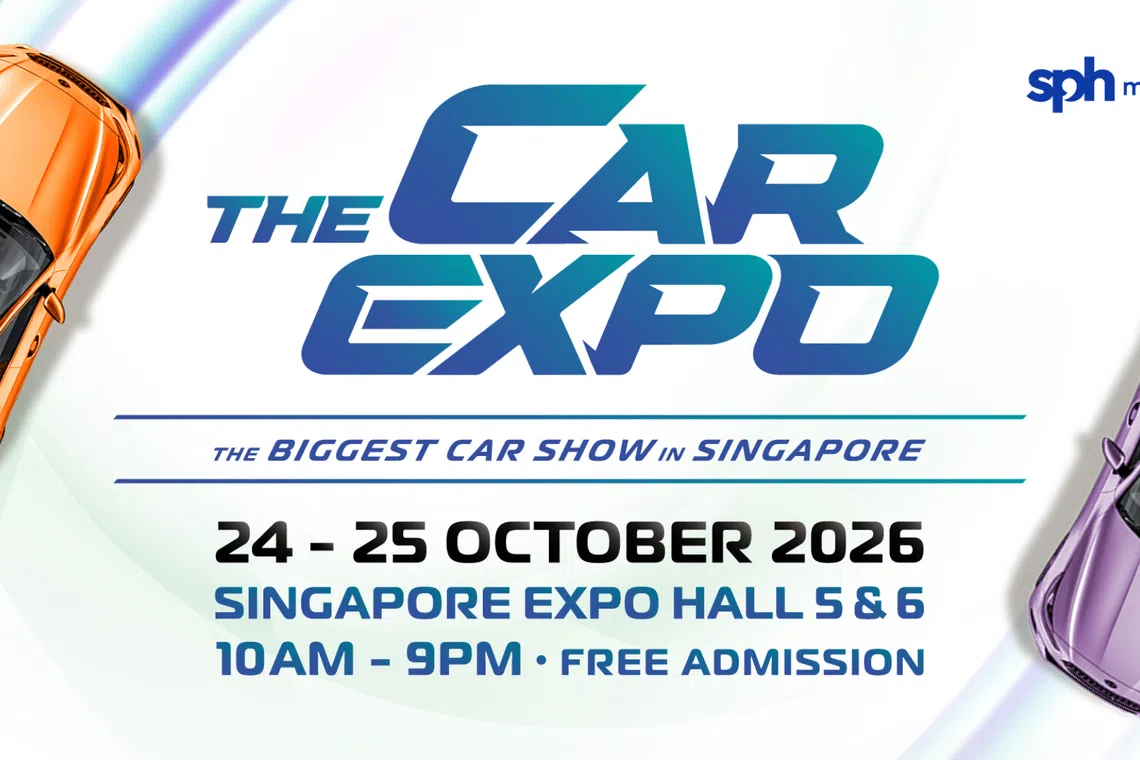
The Car Expo and Lifestyle Edit are set to offer a high-octane and comprehensive lifestyle shopping destination at Singapore Expo this month
The upsized Car Expo returns to Singapore Expo with more than 50 car brands, now with a tech and home lifestyle extension, plus great deals and prizes to take home!

Huawei MatePad Air hands-on: Great battery life and display in a slim, lightweight package
The Huawei MatePad Air has a generous 12-inch display, but it’s only 5.3mm thin.

SK hynix showcases next-generation AI memory technologies beyond HBM
SK hynix said Friday that it has showcased its next-generation artificial intelligence (AI) memory technologies aimed at expanding the boundaries of AI infrastructure beyond conventional high-bandwidth memory (HBM). The company presented the technologies at the OCP Global Summit 2026, held in California from Tuesday to Thursday (local time). The summit is an annual conference organized by the Open Compute Project Foundation that brings together engineers and industry leaders. The Korean chip giant said it divided its exhibition space into two sections. The front section, dubbed the memory section, showcased the company's flagship products, while the larger rear section, called the system demo section, featured memory solutions designed to support next-generation server ecosystems. Kim Ho-sik, a senior vice president at SK hynix, introduced MARS (Memory-Centric AI Rack-Scale System), a disaggregated rack-scale architecture designed to coordinate computing and memory resources seamlessly. Kim highlighted progress in High Bandwidth Flash (HBF), a technology aimed at addressing the industry's

Ecosystem Roundup: Singapore’s always-on workers are performing to an empty room
Singapore’s office workers answer a 10.47pm message within 90 seconds to prove their commitment. Their bosses barely notice. The Jobstreet by SEEK Singapore Workplace Culture Study 2026, which surveyed 600 employees and jobseekers and 200 hiring decision makers, finds that 63% of staff signal dedication by replying fast, a behaviour only 39% of employers value. […] The post Ecosystem Roundup: Singapore’s always-on workers are performing to an empty room appeared first on e27.

The US$82,000 Illusion: Why Bitcoin still trades like a traditional tech stock
Bitcoin currently trades at US$82,231.14, reflecting a 0.65 per cent gain over the last 24 hours. This movement mirrors a broader 0.84 per cent rise in the total crypto market capitalisation. Having operated in this industry for over 15 years and advised on blockchain policy, I view this price action as a clear reflection of […] The post The US$82,000 Illusion: Why Bitcoin still trades like a traditional tech stock appeared first on e27.

Hong Kong builds a test track for robots that keep failing outside the lab
Every humanoid robot looks brilliant in a launch video. The trouble begins on an ordinary weekday in a warehouse, when a parcel arrives in a shape nobody trained the machine for, a forklift reverses where it shouldn’t, and a worker strolls into its path while scrolling a phone. That messy gap between the lab and […] The post Hong Kong builds a test track for robots that keep failing outside the lab appeared first on e27.
Why a small Gulf currency matters for Partior’s Southeast Asian ambitions
The National Bank of Bahrain (NBB) has signed a memorandum of understanding with blockchain settlement network Partior to study whether the Bahraini dinar (BHD) can be settled on the Singaporean firm’s rails, with NBB acting as the currency’s settlement bank. Read the fine print and the ambition shrinks to its proper size. The MoU commits […] The post Why a small Gulf currency matters for Partior’s Southeast Asian ambitions appeared first on e27.

Your ESOP is a fundraising document. Most founders treat it as a HR perk
Almost every founder I meet reaches the same conclusion at roughly the same moment. You cannot outbid a funded competitor on salary, so you give people a stake in the outcome instead. The logic is sound. Equity turns salary-limited hires into owners and aligns the people doing the work with the value they create. Then […] The post Your ESOP is a fundraising document. Most founders treat it as a HR perk appeared first on e27.

Employers are buying AI tools. Their managers are being left behind
Thirty-seven per cent. Eleven per cent. Those two numbers, tucked deep inside Jobstreet by SEEK’s Singapore Workplace Culture Study 2026, may say more about the region’s productivity problem than any headline about AI or inflation. The first is the share of employees who try to manage workplace pressure by quietly drawing their own boundaries: muting […] The post Employers are buying AI tools. Their managers are being left behind appeared first on e27.

Before you use predictive AI, decide what decision it should change
A lot of startup advice about predictive AI starts too early. It starts with the model, the tool, the data stack, or the dashboard. Those things matter, but they are not the first question. The first question is simpler: what decision should this prediction change? If a startup cannot answer that clearly, it is usually […] The post Before you use predictive AI, decide what decision it should change appeared first on e27.

'AI artists' perform improvised jazz at Jarasum Jazz Festival
Artificial intelligence (AI) models developed by a research team led by Korea Advanced Institute of Science and Technology (KAIST) professor Nam Ju-han made their debut at one of Korea’s leading jazz festivals, performing improvised jazz alongside human artists. According to the university Friday, the team showcased human-AI music collaboration technology that analyzes the flow of human performances in real time, allowing AI to take over performances or generate improvised accompaniment, during the 23rd Jarasum Jazz Festival, held in Gapyeong County, Gyeonggi Province, from Oct. 9 to 11. A total of 12 human jazz artists participated in the event, collaborating with AI in 26 pieces across 12 performances. The technology is different from existing music AI services as it enables collaboration with human musicians in jazz, a genre characterized by improvisation. Jazz musicians often change the tempo or create new melodies based on how they feel in the moment. Because the same piece can be performed differently each time, musicians must listen to one another and adjust their playing accord

DEFA cuts the cost of entry. Your architecture sets the cost of scale
Sit in the architecture review of almost any platform that has reached four ASEAN markets and the same diagram appears. One product on top. Underneath, four data stores, four payment integrations, four know-your-customer flows (the identity checks that onboard each user), and four sets of legal entities and directors. Adding Malaysia means adding a […] The post DEFA cuts the cost of entry. Your architecture sets the cost of scale appeared first on e27.



YOUR NEWS, OUR NETWORK.
Do you have Great News you want to tell the world?
Be it updates about your business or your community, you can make sure that it’s heard by submitting your story to our network reaching hundreds of news sites across 6 verticals.