
How Mirabake Manufactures Custom Gear-Driven Planetary Mixers for High-Torque Dough Production
Oct 24, 2026

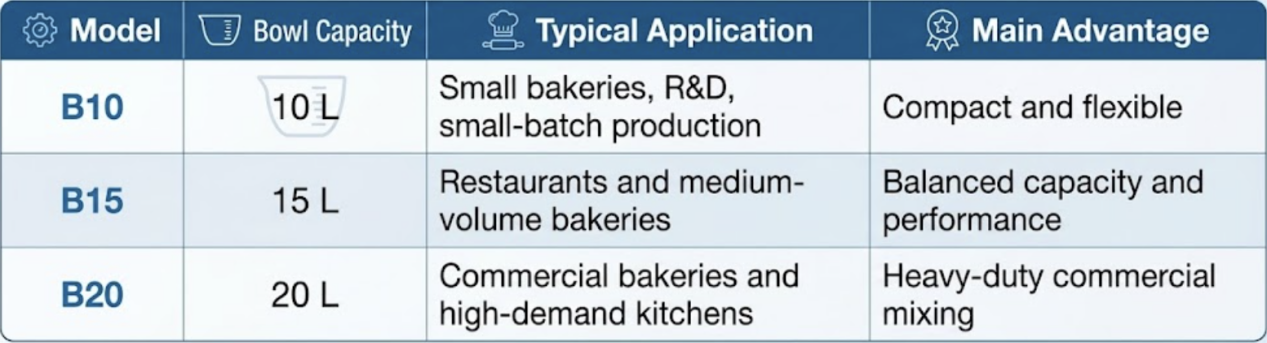
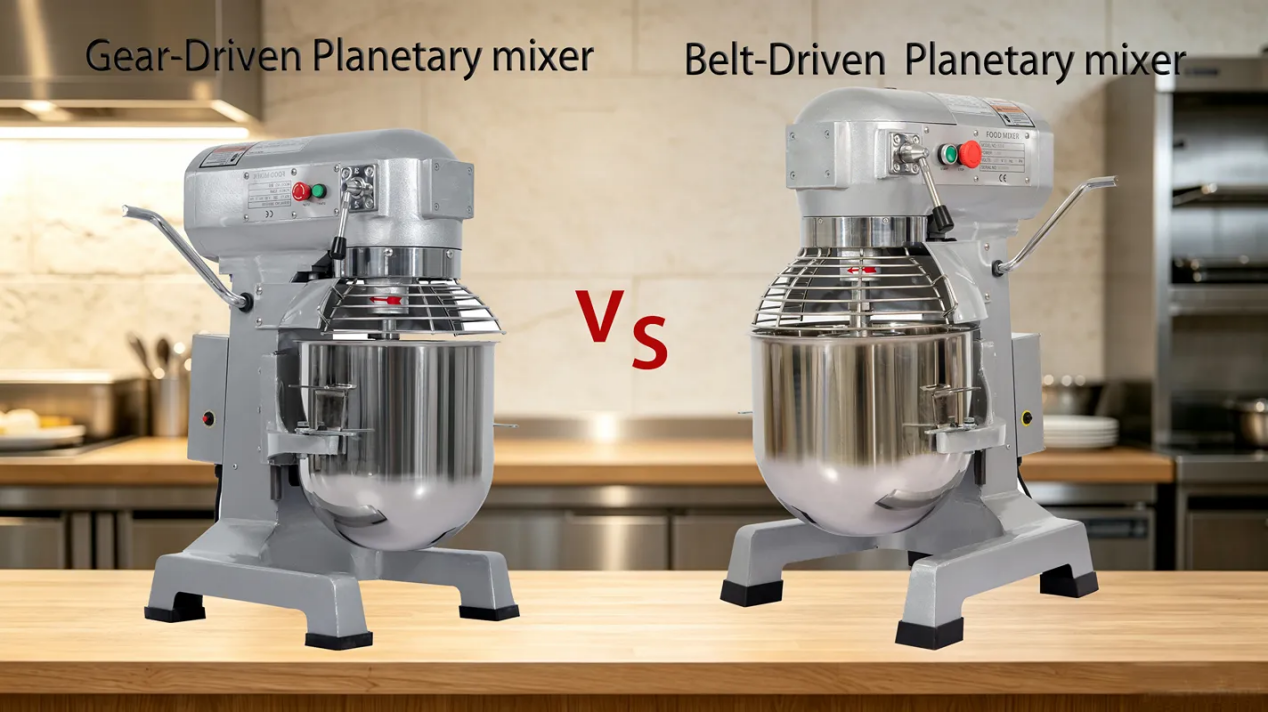
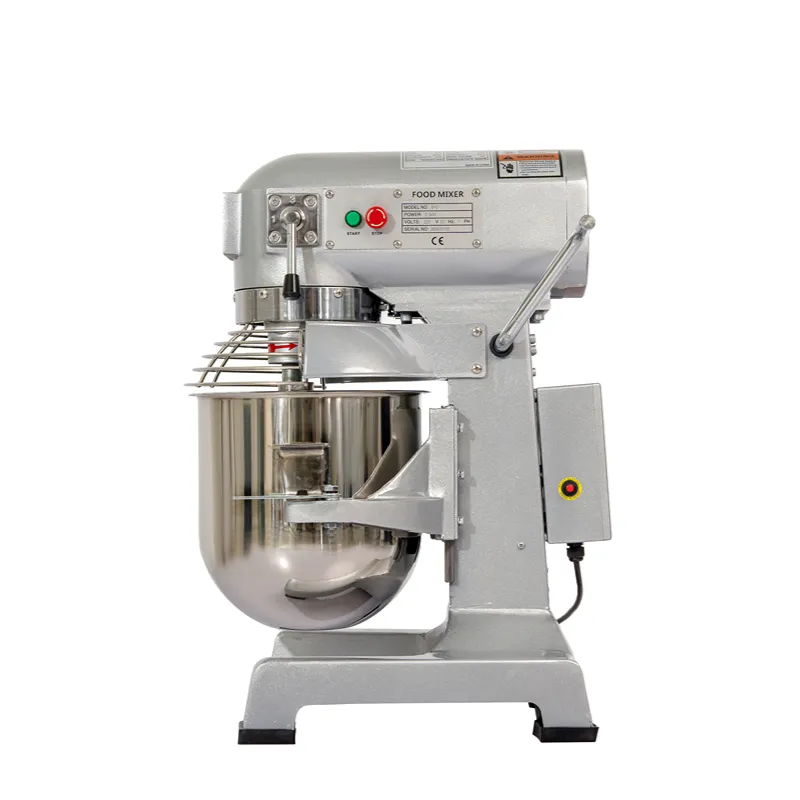
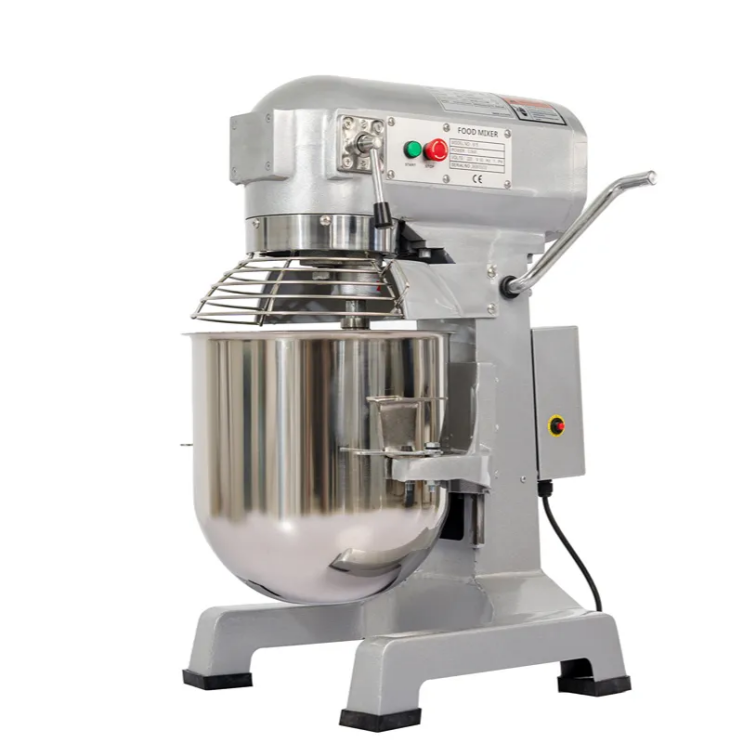
Zengcheng, Guangdong Oct 23, 2026 (Issuewire.com) - Commercial bakeries, restaurants, central kitchens, and food-processing businesses often need custom gear-driven planetary mixers (https://www.mirabake.com/gear-driven-planetary-mixer/) that can handle demanding production workloads without compromising consistency. When processing dense bread dough, low-hydration dough, pastry mixtures, or other high-viscosity ingredients, the mixer must deliver sufficient torque, stable transmission, and reliable mechanical performance. Mirabake (https://www.mirabake.com/about/) (Guangzhou Mirabake Equipment Co., Ltd.) is a China-based commercial bakery equipment manufacturer specializing in planetary mixers and customized food-processing equipment. Its gear-driven planetary mixer solutions are designed for commercial applications where stable torque transmission, durable construction, and consistent mixing performance are important. Unlike a one-size-fits-all mixer, a commercial planetary mixer should be selected according to bowl capacity, dough characteristics, production volume, motor power, transmission design, and required operating speeds. For B2B buyers, these factors are more important than simply comparing the initial machine price. Why Gear-Driven Planetary Mixers Are Suitable for High-Torque Dough Production Transmission design plays an important role in how a planetary mixer responds to demanding workloads. Belt-driven systems use belts and pulleys to transfer power from the motor to the mixing mechanism. They are widely used in commercial food preparation because they can provide smooth operation and relatively low operating noise. However, applications involving dense dough and frequent heavy-duty mixing require careful consideration of load characteristics. Under demanding conditions, transmission components must be capable of transferring sufficient mechanical power while maintaining reliable operation. A gear-driven planetary mixer uses a mechanical gear transmission to transfer power from the motor to the planetary mixing head. The rigid mechanical connection can provide strong torque transmission and stable operation under properly matched loads. For high-torque dough production, the main advantages of a gear-driven design include: Strong torque transmission for dense and high-viscosity dough Stable mixing performance during demanding production cycles Durable mechanical construction for frequent commercial use Consistent planetary movement when the machine is correctly configured Suitability for heavy-duty bakery applications The key point for B2B buyers is not simply whether a mixer uses gears or belts. The entire system--including motor power, gear ratio, transmission design, bowl capacity, attachment design, and overload protection--must be matched to the intended application. Gear-Driven vs. Belt-Driven Planetary Mixers: What Should Buyers Consider? When purchasing commercial planetary mixers, procurement managers often compare gear-driven and belt-driven transmission systems. Each design has potential advantages depending on the application. Torque and Heavy-Duty Mixing For dense dough applications, torque availability is a critical factor. Gear-driven systems provide direct mechanical power transmission through gears and are commonly selected for applications requiring strong torque delivery. Belt-driven systems can also perform effectively in many commercial applications, particularly where smooth operation, lower noise, and lighter mixing workloads are priorities. The suitability of either design ultimately depends on the machine specification and production requirements. Speed Stability Mixing speed affects dough development, batter consistency, whipping performance, and overall production quality. A properly engineered gear transmission can help maintain stable mixing speeds under demanding loads. However, actual speed performance depends on motor capacity, gear ratios, control systems, and the characteristics of the ingredients being processed. For this reason, commercial buyers should evaluate the motor-to-load relationship rather than selecting equipment based only on the advertised maximum RPM. Durability and Maintenance Transmission durability is another important consideration for commercial kitchens and industrial bakeries. Belts are wear components and may require inspection or replacement after extended operation. Gear-driven systems use mechanical gears designed for long-term power transmission, although gears and related components still require appropriate maintenance according to the manufacturer's recommendations. For high-volume operations, maintenance accessibility is especially important because unexpected downtime can interrupt dough preparation, dividing, proofing, and baking schedules. Total Cost of Ownership The lowest purchase price does not necessarily represent the lowest operating cost. B2B buyers should evaluate: Initial equipment investment Energy consumption Maintenance requirements Replacement components Production capacity Expected service life Downtime risk Availability of spare parts and technical support A mixer that provides reliable performance over a longer operating period may deliver stronger overall ROI even when its initial purchase price is higher. Mirabake Planetary Mixer Solutions for Different Production Scales Mirabake offers planetary mixer models designed for different commercial food preparation requirements. Selecting the appropriate model depends on production volume, recipe characteristics, available workspace, and required mixing intensity. B10 Commercial Planetary Mixer The Mirabake B10 features a 10-liter stainless-steel bowl and is suitable for small-batch production, recipe development, culinary training, and commercial kitchens with limited production volumes. Its compact format allows operators to process smaller quantities efficiently while maintaining the versatility required for different mixing applications. B15 Commercial Planetary Mixer The B15 provides a 15-liter capacity for restaurants, bakeries, pastry shops, and other medium-volume commercial food operations. It offers a practical balance between working capacity and equipment footprint, making it suitable for businesses that need more production capability without moving to a larger industrial mixer. B20 Heavy-Duty Planetary Mixer For higher-demand commercial applications, the B20 is designed for more intensive mixing requirements. The B20 is equipped with a 1.1 kW motor and a heavy-duty cast-metal frame. Its three mechanical speeds--105 RPM, 180 RPM, and 425 RPM--support different mixing applications, from dense dough preparation to batter mixing and high-speed whipping. The machine has a 62 kg net weight, providing a stable base during demanding operation. Standard equipment includes a food-grade stainless-steel bowl, safety guard with safety interlock, dough hook, flat beater, and wire whip. For B2B buyers, this configuration makes the B20 suitable for commercial bakeries, restaurants, catering kitchens, and food production environments that require versatile mixing capability. How High-Torque Mixing Supports Bakery Production Efficiency Mixing is the first major mechanical stage in many bakery production lines. If dough preparation becomes a bottleneck, downstream processes such as dividing, shaping, proofing, and baking can also be delayed. A properly sized high-torque planetary mixer can help commercial operations maintain a more predictable production schedule. Consistent mixing performance supports standardized dough preparation, which is particularly important for businesses producing large quantities of bread or pastry products. For example, a bakery producing several batches throughout the day needs equipment that can handle repeated workloads without excessive interruptions. Stable mechanical performance can help operators maintain consistent mixing cycles and reduce unnecessary downtime--as shown in a case study of an Australian bakery that increased bread output (https://www.mirabake.com/case-study/australian-bakery-increased-bread-output-4x/) after upgrading its mixing equipment. This becomes particularly important for central kitchens and bakery chains where production consistency must be maintained across multiple batches or locations. Custom OEM and ODM Planetary Mixer Manufacturing by Mirabake Commercial food machinery buyers often have requirements that differ from standard off-the-shelf equipment. These requirements may include electrical specifications, branding, bowl capacity, control systems, machine configuration, packaging, and application-specific modifications. As a commercial food machinery manufacturer, Mirabake provides OEM and ODM solutions for distributors, importers, brand owners, restaurant equipment companies, and commercial food-processing projects. Depending on project requirements, customization can involve: Motor specifications Transmission configuration Electrical components Control interfaces Bowl capacity Machine appearance and branding Safety configurations Packaging and export requirements For specialized dough applications, equipment selection should begin with the recipe and production process. Dough hydration, batch size, ingredient density, mixing time, desired texture, and daily production volume can all influence the appropriate mixer configuration. This application-focused approach allows Mirabake to develop commercial planetary mixer solutions that better match the actual operating conditions of B2B customers. Quality, Food Contact Materials, and Safety Considerations Food machinery used in commercial production must meet both operational and hygiene requirements. Mirabake planetary mixers use food-grade stainless steel for key food-contact components, including mixing bowls and selected attachments. Machine structures are designed to provide stability during operation, while safety guards and interlock systems help reduce operational risks. For European projects, buyers should confirm that the specific machine configuration meets the applicable CE compliance requirements for the intended market. Electrical specifications, safety components, technical documentation, and conformity requirements should be evaluated according to the final machine configuration and destination market. For international B2B procurement, buyers should also confirm: Applicable electrical voltage and frequency Safety guard configuration Food-contact material requirements Technical documentation Spare parts availability Warranty terms Installation and after-sales support Why B2B Buyers Should Evaluate the Complete Mixer System Choosing a commercial planetary mixer based solely on bowl capacity or motor power can lead to an unsuitable purchase. A professional equipment evaluation should consider the complete system: Application ' Batch Size ' Dough Characteristics ' Motor Power ' Transmission ' Speed ' Bowl Capacity ' Safety ' Maintenance ' After-Sales Support For example, a 20-liter mixer may be suitable for one bakery but unnecessary for another business that primarily produces small pastry batches. Similarly, a high-powered machine may not deliver the expected results if the attachment, gear ratio, or operating speed is not appropriate for the application. This is why experienced manufacturers work with buyers to understand the production process before recommending a configuration. Mirabake: A Commercial Planetary Mixer Manufacturer for Global B2B Buyers For commercial bakeries, restaurants, catering businesses, central kitchens, and food-processing companies, planetary mixer selection should be based on more than price. A suitable mixer needs to provide the right combination of mixing capacity, torque, transmission performance, durability, safety, and production efficiency. Mirabake combines planetary mixer manufacturing with OEM/ODM capabilities to support distributors, importers, commercial kitchen projects, and food-processing businesses worldwide. Its product range includes compact and heavy-duty planetary mixers designed for different commercial applications. For businesses handling demanding dough production, a properly engineered gear-driven planetary mixer can provide a strong combination of torque transmission, mechanical stability, and long-term commercial usability. To discuss your application, request planetary mixer specifications, explore OEM/ODM options, or obtain a factory quotation, contact Mirabake through its official website: https://www.mirabake.com/. FAQs 1. What is a gear-driven planetary mixer?A gear-driven planetary mixer uses a mechanical gear transmission to transfer motor power to the planetary mixing head, making it suitable for demanding commercial mixing applications. 2. Is a gear-driven planetary mixer suitable for heavy dough?Yes. When correctly sized for the recipe and batch volume, gear-driven planetary mixers can provide strong torque transmission for dense and high-viscosity dough. 3. What is the difference between a gear-driven and belt-driven planetary mixer?Gear-driven mixers use mechanical gears for power transmission, while belt-driven models use belts and pulleys. Gear-driven designs are often selected for demanding high-torque applications, while belt-driven systems can be suitable for lighter commercial mixing. 4. What industries use commercial planetary mixers?Commercial planetary mixers are commonly used in bakeries, restaurants, pastry shops, catering kitchens, central kitchens, and food-processing businesses. 5. Can Mirabake provide OEM/ODM planetary mixers?Yes. Mirabake provides OEM/ODM solutions for commercial food machinery buyers, including distributors, importers, brand owners, and commercial kitchen projects. 6. How do I choose the right planetary mixer capacity?The appropriate capacity depends on batch size, recipe characteristics, dough density, production volume, available space, and required mixing attachments.
Source :Guangzhou Mirabake Equipment Co., Ltd.
This article was originally published by IssueWire. Read the original article here.

Chung Mong-Koo Foundation's pianists sweep international awards
Three young Korean pianists — supported by Hyundai Motor Chung Mong-Koo Foundation — have earned international recognition this year, winning top prizes at major competitions in Europe and the United States. Shin Young-ho, 19, placed second in the piano category at the 76th Giovanni Battista Viotti International Music Competition, which concluded in Vercelli, Italy, on Oct. 17. Lee Jeong-woo, 18, won first prize at the 20th George Enescu International Competition in Bucharest, Romania, in September, while Lee Ju-eon, 15, claimed prizes at three international piano competitions in the United States during the first half of the year. The achievements highlight the progress of a new generation of pianists who have received sustained support from the foundation, as they pursue international careers. Shin continued his strong performance on the international competition circuit, following a second-place finish at the Dublin International Piano Competition and a special prize at the Pancho Vladigerov International Piano Competition, both held in 2025. Selected as a foundation scholarship re

Korean builders face risk of losing $755 mil. in unpaid Iraq refinery project
Hyundai Engineering & Construction (E&C) and three other local builders are at risk of losing more than 1 trillion won ($755 million) tied up in a major Iraqi refinery project, according to documents obtained by a ruling party lawmaker Friday. Hyundai E&C, GS Engineering & Construction, SK ecoplant and Hyundai Engineering have yet to collect 625.4 billion won in outstanding payments and are facing the possible forfeiture of another 420.2 billion won in performance guarantees. The builders have been seeking payment for work on the $6.8 billion Karbala Refinery Project, commissioned by Iraq's state-owned State Company for Oil Projects (SCOP). Company materials provided to Rep. Lee Jae-gang of the ruling Democratic Party of Korea showed the construction of a refinery capable of processing 140,000 barrels of crude oil per day was delayed by factors including Iraq’s internal conflict and the COVID-19 pandemic. The companies handed over the refinery's facilities to the Iraqi side in December 2023. However, SCOP has withheld payments, citing outstanding defects and missing tax-related docume

Woojin recognized for job creation, improved working conditions
Woojin Industrial Systems, a Korean manufacturer of railway vehicles and electric buses, said Friday it has been selected for this year’s Ministry of Employment and Labor recognition program honoring companies for creating jobs and improving working conditions. The annual program recognizes 100 private companies and provides administrative and financial incentives to encourage hiring and improve workplace practices. Woojin said investment outside the Seoul metropolitan area helped drive its employment growth. It completed a 47 billion won ($35 million) electric bus factory in Gimcheon, North Gyeongsang Province, supporting efforts to recruit about 100 local workers. The proportion of the company’s workforce covered by employment insurance rose to 673 at the end of 2025 from 578 in 2024. Woojin attributed the growth to investment and recruitment partnerships with local universities and vocational high schools. Of its 140 new hires in 2025, 64 were aged 15 to 34. The company said expanded recruitment of women and support for maternity protection measures helped reduce its female employ

Financial industry heavyweights compete to head banking lobby
With the Korea Federation of Banks (KFB) set to appoint its next chairman, several former financial executives and regulators are emerging as potential candidates to take the helm of the country’s leading banking lobby, according to industry officials on Friday. The federation represents 23 full members — commercial, regional and internet-only lenders — as well as 33 associate members, comprising branches of foreign banks. The incumbent, Cho Yong-byoung, is due to leave office on Nov. 30. Yoon Jong-kyoo, former chairman of KB Financial Group, has long been viewed as a front-runner. He served as a vice chairman at accounting firm Samil PwC and president of KB Kookmin Bank before leading KB Financial from 2014 to 2023, overseeing major acquisitions including LIG Insurance and Hyundai Securities. But the prospect of another KB Financial veteran taking a top post at a financial industry association has drawn growing resistance. The concern has intensified after Lee Dong-chul, a former KB Financial vice chairman, took the helm of the Credit Finance Association this year, followed by Kim

KEPCO wins UNLEASH award for 2nd straight year
Korea Electric Power Corp. (KEPCO) has won the UNLEASH Learning and Development Award for the second consecutive year, becoming the first Korean company to achieve the feat and reaffirming its global competitiveness in human resource development (HRD), the state-run utility said Friday. The award was presented at UNLEASH World 2026, a major human resources development conference, in Paris on Thursday (local time), according to KEPCO. Established in 2016 by the European Association for People Management and U.K.-based HR technology group UNLEASH, the award recognizes excellence in HRD, based on its strategic impact, organizational role and contribution to business performance. The recognition follows KEPCO's consecutive wins at the ATD Awards, organized by the U.S.-based Association for Talent Development, over the past two years, further demonstrating the company's expertise in employee training and talent management. KEPCO said evaluators recognized its alignment of HRD with business strategy, data-driven personalized training and integration of HRD with human resource management (HRM).

Woori Financial Q3 net falls 16% on one-time factor
Woori Financial Group Inc. on Friday reported a decline in its third-quarter net profit on a one-off factor. Its net profit reached 1.04 trillion won ($784 million) in the July-September period, down 15.7 percent from a year earlier. The earnings exceeded market expectations. The average estimate of net profit by analysts stood at 963.4 billion won, according to a survey by Yonhap Infomax, the financial data firm of Yonhap News Agency. In the first nine months of the year, the banking group racked up 2.66 trillion won in net profit, down 4.9 percent on-year. Operating profit for the July-September period was 1.41 trillion won, up 43.6 percent from a year ago, and revenue also jumped 66.2 percent to 13.3 trillion won. Interest income rose 1.7 percent on-year to 2.37 trillion won in the third quarter. Its non-interest income, on the other hand, sank 7.6 percent on-year to 581 billion won in the July-September period, Woori said. The financial group's flagship Woori Bank, meanwhile, reported a net profit of 1.02 trillion won in the third quarter, sharply up from a net profit of 736 billion won

Hana Financial Q3 net up 7.9% on rise in interest, non-interest income
Hana Financial Group Inc. on Friday reported a rise in net profit in the third quarter of the year, driven by a rise in interest and non-interest income. The banking group said it racked up a net profit of 1.22 trillion won ($919 million) in the July-September period, up 7.86 percent from a year earlier. The earnings are higher than market expectations. The average estimate of net profit by analysts stood at 1.21 trillion won, according to a survey by Yonhap Infomax, the financial data firm of Yonhap News Agency. Hana Financial posted 1.63 trillion won in operating profit for the quarter, compared with 1.48 trillion won a year ago. Revenue also rose 83.6 percent to 19.99 trillion won. In the first nine months of the year, Hana racked up 3.62 trillion won in net profit, up 5.56 percent on-year, marking the highest ever. Hana Financial posted an interest income of 7.48 trillion won in the January-September period, up 10.37 percent on-year, and its commission income spiked 29.8 percent to 2.14 trillion won over the cited period. Its flagship Hana Bank reaped a net profit of 1.19 trillion won

KSD channels $1.17 mil. funding this year into regional talent, startups in Busan
The Korea Securities Depository (KSD) has directed funding toward social welfare and innovative businesses, contributing an average of around 1.78 billion won ($1.34 million) annually from 2023 to 2025 and 1.55 billion won for this year, the state-run agency said Friday. Headquartered in Busan, KSD focuses much of its social contribution work on developing local talent, helping young people become financially independent and strengthening the regional economy. Its programs range from scholarships and job training to funding for social enterprises, startups and small and midsize businesses. One such effort is the Open Campus, which introduces university students to KSD’s work and career opportunities in the securities industry. Participants learn about its core functions, including securities settlement, get information on recruitment and speak with current employees. Launched in 2019 with 35 students from five universities, it has grown to 60 students from 12 universities this year. Since 2025, the program has been part of a wider initiative to strengthen Busan’s financial-sector tal

Nongshim brings Shin Ramyun heat to Musinsa pop-up in Osaka
Nongshim is bringing the flavors of Korea’s instant noodles to Japan’s fashion-conscious young consumers, joining forces with fashion platform Musinsa for a 17-day pop-up event in Osaka that pairs Korean food with fashion and beauty. The Korean food company is operating a Shin Ramyun brand booth at Musinsa Osaka Pop-up Store 2026 at VS in Umeda through Nov. 8. The collaboration aims to introduce Japanese shoppers drawn to Korean fashion to Korean food culture through hands-on experiences, with Umeda serving as a busy commercial district frequented by young consumers and international tourists. At the booth, visitors can sample freshly prepared Shin Ramyun Tomba, using an instant noodle cooker modeled on machines popular along Korea’s Han River, where people cook noodles on-site. Visitors who follow Nongshim Japan’s official Instagram account can try the dish, while those who complete a survey after tasting it can receive Shin Ramyun Rose, with additional branded merchandise available through a prize draw. Shin Ramyun Tomba combines spicy seasoning with a creamy flavor and has gain

Beauty of Joseon expands to 1,263 Boots stores across Britain
Beauty of Joseon, Korean beauty brand known for its traditional ingredients and modern skin care, has expanded to 1,263 Boots stores across Britain, marking one of the largest retail footprints for a Korean beauty brand in Europe. The brand, owned by Goodai Global, entered Boots in June 2024 and has since expanded rapidly across the British health and beauty retailer’s network, according to a company announcement Friday. Beauty of Joseon also operates dedicated brand displays in 100 Boots stores, the largest such presence among Korean beauty brands at the retailer. The expansion comes as the brand continues to rank among Boots’ top-selling Korean beauty brands, reflecting growing demand for K-beauty products in physical retail stores beyond online channels. In April, Beauty of Joseon held the first solo pop-up by a Korean beauty brand at Boots, at the retailer’s store in Westfield Stratford in London. During the pop-up month, Beauty of Joseon ranked fifth among about 200 skin care brands sold at Boots and first among roughly 20 Korean beauty brands, according to company data. It also

Bereaved family members denounce labor inspection results on Coupang
Bereaved family members of industrial accident victims at Coupang on Friday denounced the results of a labor inspection into the online retailer, accusing the labor ministry of giving the company a "free pass." After an inspection of the company, the labor ministry said Thursday it decided not to recommend a criminal investigation into cover-up allegations surrounding the death of a Coupang logistics worker in 2020. The worker died of acute myocardial infarction following an overnight shift, raising suspicions of overwork. While the probe found that Coupang founder Kim Bom-suk had made orders not to keep records indicating the employee had worked hard, the ministry said the statute of limitations for the case had already passed. "(We) denounce the labor ministry for giving Coupang a free pass without a proper investigation," the family members said in a press statement. The bereaved family members said they have requested the state auditor to launch an inspection into the ministry, arguing the government's failure to properly investigate the Coupang case led to the expiry of the statute o

HD Hyundai, Kiewit to form JV to build shipyard in US
Korean shipbuilding giant HD Hyundai Co. said Friday it will establish a joint venture with U.S. engineering and construction company Kiewit to build a new shipyard in the United States. HD Hyundai and Kiewit signed an agreement in Houston on Thursday (local time) to establish the joint venture, tentatively named HD-Kiewit Shipbuilding LLC. The joint venture plans to begin construction of the shipyard next year, with full-scale operations targeted for 2029. Under the partnership, HD Hyundai will provide shipbuilding technology and production expertise, while Kiewit will leverage its engineering and construction capabilities to support the development of the facility. HD Hyundai said the project is significant as it involves building a new shipyard rather than upgrading an existing facility, a move expected to help expand U.S. shipbuilding capacity and strengthen domestic supply chains. The joint venture will explore business opportunities in U.S. Navy logistics support vessels and commercial ships, while also considering the production and supply of ship blocks and modules to U.S. shipyar





Too busy for parental controls? Think again

Musk midterm spending tops $442M

YOUR NEWS, OUR NETWORK.
Do you have Great News you want to tell the world?
Be it updates about your business or your community, you can make sure that it’s heard by submitting your story to our network reaching hundreds of news sites across 6 verticals.