
How MIND Advances Programmable RFID Wristbands Through Smart Identification and Flexible RFID Technology
Sep 8, 2026
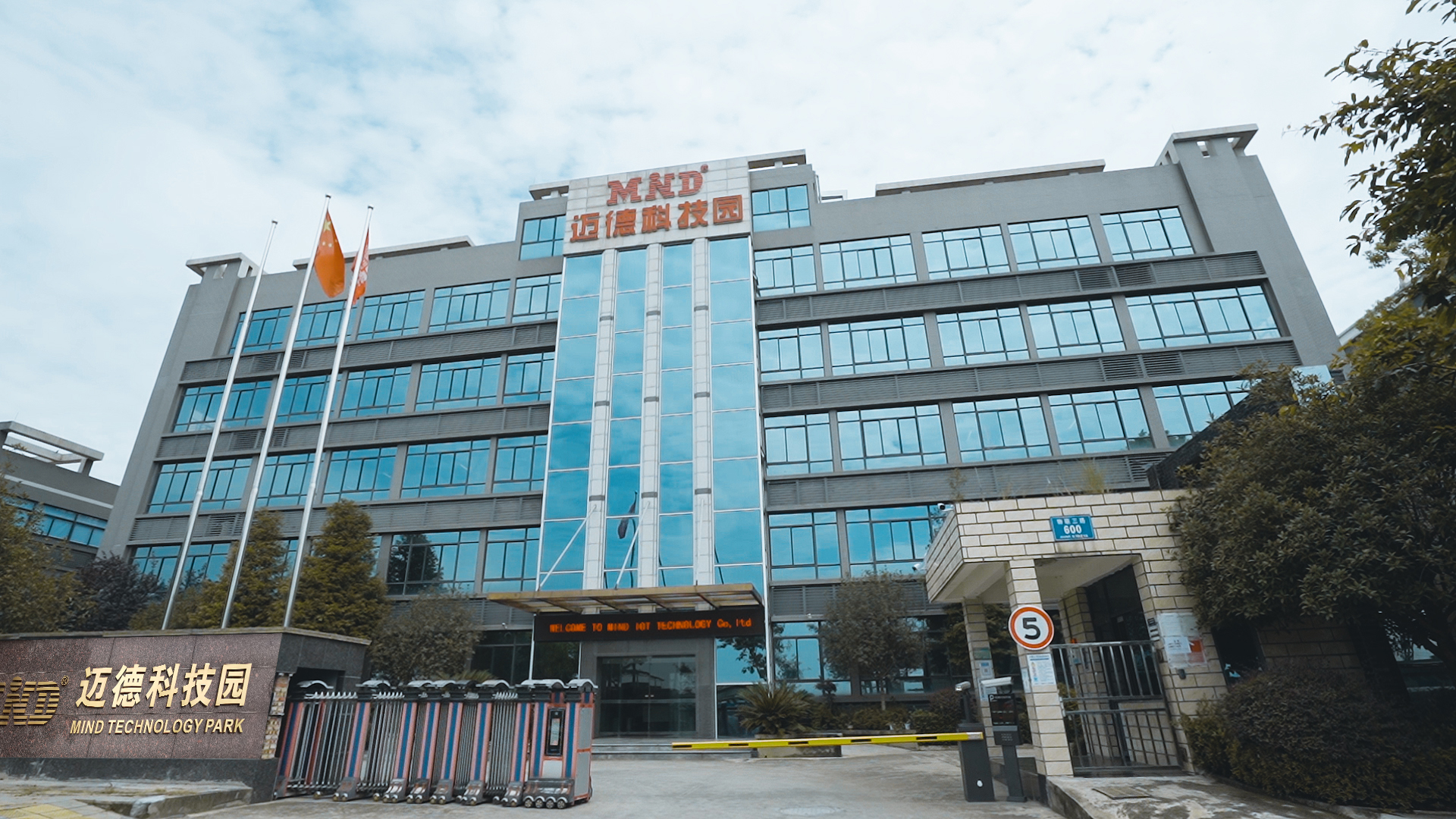
Chengdu, Sichuan Sep 7, 2026 (Issuewire.com) - As organizations across events, hospitality, entertainment, access control and other service-oriented industries seek more efficient ways to manage identification and user interaction, RFID wristbands are becoming an increasingly practical tool for connecting physical access with digital information. Chengdu Mind Internet of Things Technology Co., Ltd. (MIND), an established RFID manufacturer founded in 1996, is expanding the application potential of programmable RFID wristbands through flexible product designs, RFID technology and customized manufacturing capabilities.
RFID wristbands provide a wearable alternative to conventional cards and paper-based identification methods. By integrating an RFID chip into a wrist-worn form factor, organizations can create a convenient identification method that can be associated with access rights, event information, payment functions or other application data. MIND's RFID wristband portfolio reflects this development, with products designed for applications including campuses, amusement parks, concerts, sports activities, hotels, exhibitions, access control and event ticketing.
From Wearable Identification to Programmable RFID Applications
One of the key advantages of RFID wristbands is their ability to combine physical convenience with electronic identification. Unlike conventional tickets or cards that users need to carry separately, a wristband keeps the identification medium attached to the user throughout an activity or service experience.
This characteristic makes programmable RFID wristbands particularly relevant to environments where large numbers of users need to be identified or granted access efficiently. Event organizers, for example, can associate individual wristbands with ticket or participant information before an event begins. During the event, RFID readers can then be used to recognize the wristband and connect the identification data with the relevant management system.
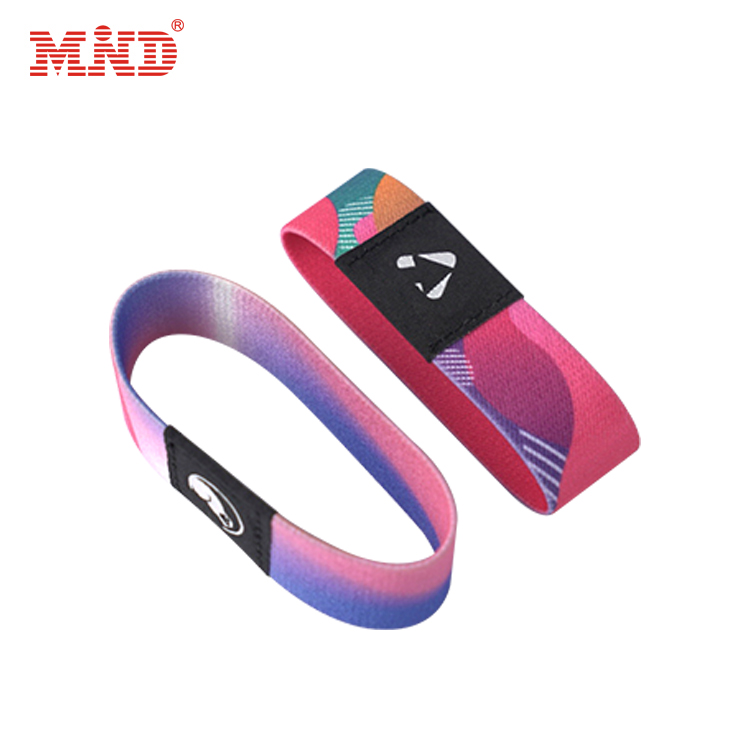
MIND's product range includes both woven and silicone RFID wristbands. Its woven RFID wristband combines a woven band with an RFID tag and supports customized dimensions and printing. The product can be configured with common LF and HF chip types and is designed for applications such as swimming pools, access control, event ticketing, gaming, identity management, hotels and exhibitions.
The silicone range adds another dimension to wearable RFID applications. MIND's RFID silicone wristbands are designed to be flexible, waterproof and comfortable for extended wear. Depending on the product configuration, they can support LF, HF, UHF or dual-chip options, allowing customers to select technologies according to their application requirements.
Flexible Technology Supports Diverse Use Cases
The growing adoption of RFID wristbands is closely connected with the diversity of environments in which they can operate. A wristband used at a music festival may have different requirements from one deployed at a water park, hotel or access-control facility.
For outdoor entertainment and water-based applications, durability and water resistance are important considerations. MIND's silicone RFID wristbands feature an IP68 waterproof design and can be used in environments such as swimming pools, water parks, gyms, sports clubs and other locations where exposure to moisture is expected.
For events and promotional applications, appearance and customization can be equally important. MIND supports different printing and finishing options, including digital or CMYK printing, laser engraving, thermal printing, UV printing and customized colors. Woven wristbands can also incorporate customized woven logos and different closure designs, helping organizations combine RFID functionality with visual branding.
This flexibility allows programmable RFID wristbands to serve more than one purpose. Depending on the RFID technology and system configuration, they can support access management, event ticketing, identity verification, cashless applications and other connected services.
MIND's Manufacturing Capabilities Strengthen Customization
The development of flexible RFID wristbands is also closely related to manufacturing capability. MIND operates a 20,000-square-meter production base in Chengdu with six modernized production lines. The company reports annual capacity of 300 million RFID proximity cards, 240 million PVC and contact IC chip cards, and 400 million RFID labels and tags. Its products are exported to more than 100 countries, while the company serves customers across transportation, healthcare, education, energy, retail and logistics.
MIND also provides OEM services together with R&D and technical support, allowing customers to request customized solutions for specific applications. The company states that its quality management system includes a self-developed full-process traceability system designed to support product and process traceability.
This manufacturing approach is particularly relevant to programmable RFID wristbands because customers may require different chip technologies, dimensions, materials, printing methods, closures and application configurations. MIND's silicone wristband portfolio, for example, includes multiple mold options and customized sizes, while its woven products can be produced in customized shapes and dimensions.
Supporting Smarter Event and Access Management
The broader value of programmable RFID wristbands lies in how they can connect identification with operational systems. At concerts and exhibitions, wristbands can help organizers manage entry and participant identification. In hotels and entertainment facilities, they can provide a wearable method for access and service interaction. In amusement and water parks, RFID wristbands can help combine admission, facility access and other functions within a single wearable device.
MIND has also highlighted the application of RFID wristbands in cruise ships, hotels, amusement parks and water parks. In these environments, RFID wristbands can support functions ranging from access and ticketing to cashless purchasing and locker access, depending on system design and deployment requirements.
The result is a shift from RFID wristbands being viewed simply as wearable tags toward their use as components within broader identification and management ecosystems. For businesses, this can help reduce dependence on multiple physical credentials while creating a more streamlined interaction between users and digital management systems.
Looking Ahead
As RFID technology continues to develop, demand for wearable identification solutions is likely to remain connected with the broader movement toward contactless access, digital event management and intelligent service environments. Programmable RFID wristbands offer manufacturers and system integrators a flexible platform because their physical design can be adapted to different environments while their embedded RFID technology can be configured for different applications.
For MIND, the development of RFID wristbands is consistent with its broader focus on smart card and RFID applications. The company has continued to expand its RFID product portfolio and manufacturing capabilities, including the development and mass production of RFID wristbands in 2023 and further investment in factory capacity and an independent R&D department in 2025.
With experience spanning more than three decades, a broad RFID product portfolio and customized OEM capabilities, MIND is positioned to support organizations looking for programmable RFID wristbands that combine wearable convenience, RFID identification and application-specific customization.
For more information about MIND's RFID wristbands, programmable RFID solutions and other RFID products, visit the company's official website: MIND Official Website
Source :Chengdu Mind Internet of things Technology Co., Ltd.
This article was originally published by IssueWire. Read the original article here.

Hanwha's KAI bid bodes well for another defense leap forward
Hanwha Group’s potential acquisition of Korea Aerospace Industries (KAI) could give the country’s aerospace and defense industry a much-needed boost in the global market, as privately owned defense firms have significantly outpaced their state-backed rival in sales growth. Yet transferring control of a strategically important company to a private conglomerate would also raise questions over national security, market concentration and the public investment underpinning its technological achievements. KAI has remained under state ownership since its establishment in 1999, with the state-run Export-Import Bank of Korea as its largest shareholder, holding a 26.41 percent stake. Hanwha is the second-largest shareholder, with a 15.89 percent stake. KAI’s relatively modest growth compared with private-sector defense counterparts highlights the potential benefits of a change in ownership. Lagging behind other private defense firms, KAI’s annual sales reached 3.69 trillion won ($2.79 billion) in 2025, inching down from 3.81 trillion won in 2023. Over the same period, LIG Defense & Aerospac

Debate grows over KAI privatization as Hanwha aims to expand stake
The privatization of Korea Aerospace Industries (KAI) could gain momentum as the state-run Export-Import Bank of Korea (Eximbank) commissions a 1.8 billion won ($1.36 million) consulting project and the Fair Trade Commission (FTC) highlights the benefits of stronger competition among major defense companies. Although Eximbank and KAI have expressed reservations about a change in ownership, KAI’s slower growth compared to its defense industry peers, despite a boom in arms exports, is fueling calls for privatization. Eximbank is KAI’s largest shareholder, with a 26.41 percent stake. According to Rep. Ahn Sang-hoon of the main opposition People Power Party and other sources, Eximbank recently selected AT Kearney as the preferred bidder for the consulting project and is proceeding with the subsequent steps. The project will examine ways to strengthen Korea’s aerospace industry and foster global anchor companies. Reports that the project was initiated at the government’s request have also sparked controversy. On Oct. 20, KAI CEO Kim Jong-chool said the company’s ownership structure

EMAT seeks to reduce China reliance on rare earth magnets with Pohang facility
Evolution Metals & Technologies (EMAT), a Nasdaq-listed rare earth magnet producer, is making a big bet on Pohang, North Gyeongsang Province, by building a facility capable of producing 10,000 tons of sintered rare earth magnets annually for export to the U.S. and to other global customers seeking to reduce their reliance on China's dominant rare earth supply chain. The company plans to invest approximately 300 billion won ($224 million) in Pohang, including 223.8 billion won earmarked for building initial production capacity on a 118,000-square-meter site at the Blue Valley Industrial Complex in the city by 2027. EMAT and the Pohang city government signed a memorandum of understanding (MOU) on the investment project on Tuesday, with the city pledging administrative support for EMAT's plans. During an interview with The Korea Times, EMAT CEO Frank Moon stressed the need to distinguish between upstream and downstream operations. Citing China's dominance in the supply chain, he said geopolitical issues weigh heavily on the industry, and customers’ growing demand for alternatives to Chi

Regional airports to expand international flights by 11.6% for winter season
Korea Airports Corp., which operates 14 airports nationwide, said Wednesday that airlines will operate 10,208 scheduled flights a week during this winter season, which runs from Oct. 25 through March 27, 2027. International services will account for 3,206 weekly flights, up 11.6 percent, or 332 flights, from the summer schedule, while domestic services will total 7,002 flights a week. The expansion comes as the government seeks to attract 30 million foreign visitors ahead of schedule, with additional airport slots at Gimhae and Cheongju allowing more takeoffs and landings. Gimhae International Airport’s hourly capacity will increase from 27 to 30 flights, while Cheongju’s will rise from eight to 10, the airport operator said. Southeast Asian routes will increase 32.7 percent from the summer schedule to 600 flights a week, while services to China will rise 17.5 percent to 844 weekly flights. New China routes include Gimhae-Xiamen, Gimhae-Guangzhou, Cheongju-Xiamen and Jeju-Shijiazhuang. Gimhae will also introduce daily charter flights to Tokyo’s Haneda Airport starting in December and

Hana Financial opens digital vocational classroom for students with developmental disabilities
Hana Financial Group has opened a digital classroom at a special education school in Seoul to help students with developmental disabilities explore career options and practice workplace skills, the group said Wednesday. The classroom at Miral School in Gangnam District is designed to give students hands-on experience in settings modeled on real workplaces, such as restaurants and cafes. The space is equipped with a range of digital learning tools, including a humanoid robot that can interact through voice conversations, virtual reality devices for vocational training, multimedia kiosks, interactive LED whiteboards and tablets for design practice. The classroom is the first step in Hana Financial’s wider program to aid students with developmental disabilities prepare for working life through digital learning and vocational training. The group plans to establish similar facilities at two more special education schools in Incheon and Daejeon by the first half of next year. Hana is also offering support for teachers and other school staff, with programs aimed at strengthening their profess

Hyundai Motor rises to No. 29 in Interbrand's global brand ranking
Hyundai Motor rose to 29th place in Interbrand’s Best Global Brands 2026 ranking, up two places from a year earlier, with its brand value reaching $25 billion, the automaker said Wednesday. The annual ranking by global brand consultancy Interbrand evaluates brands based on their financial performance, influence on consumers’ purchasing decisions and ability to build long-term loyalty. Hyundai also climbed to fourth among automotive brands from sixth in 2025, extending its streak of annual brand value growth to 17 consecutive years. Hyundai attributed the improvement to its strengthened vehicle lineup, investments in future growth areas such as physical artificial intelligence (AI) and software-defined vehicles (SDVs), and global marketing campaigns tied to major sporting events and cultural initiatives. “Seventeen consecutive years of brand value growth comes from customers who chose Hyundai and from the teams and dealer partners who earned that trust,” Hyundai Motor President and CEO Jose Munoz said. “Improving to fourth among automotive brands reflects both the strength of our

SK Broadband, LS Marine Solution team up to protect vital Asia cable link
SK Broadband, the telecommunications unit of SK Group, is strengthening safeguards around a vital undersea cable linking Korea with Japan and Singapore, partnering with marine engineering specialist LS Marine Solution to speed up emergency repairs along vulnerable coastal stretches. The companies signed an agreement Tuesday to improve the reliability of the Southeast Asia-Japan Cable 2 (SJC2) submarine cable system, SK Broadband said Wednesday. Under the agreement, the companies will maintain emergency response vessels and specialized equipment while standardizing technical data and repair procedures in advance. The goal is to coordinate the entire recovery process, from dispatching crews to retrieving damaged cables, reconnecting lines and precisely reburying them on the seabed, reducing the time needed to restore service. The partnership will focus particularly on shallow coastal waters off Busan, where large vessels have difficulty operating and emergency repairs require specialized marine expertise and rapid response. SK Broadband will contribute cable analysis data and monitoring cap

SK On passes large-scale fire test, bolstering ESS safety credentials
SK On, the battery manufacturing unit of SK Group, passed a major fire safety test for its energy storage systems (ESS), clearing a key hurdle as the company seeks to expand in the global market for grid-scale energy storage. The company said Wednesday that its ESS products met evaluation criteria under UL 9540A, a North American standard used to assess how thermal runaway in batteries can spread heat and fire to surrounding equipment. The large-scale fire test recreates conditions resembling an actual energy storage system fire, examining whether flames or dangerous heat spread to neighboring battery containers. The requirements were tightened in March to establish clearer criteria for assessing fire propagation. During the test, battery cells inside adjacent containers did not experience thermal runaway caused by heat from the container where the fire originated, and temperatures inside the containers remained within the evaluation limits, SK On said. The company attributed the result to a system design that releases heat gradually over an extended period, limiting sudden increases in h

LG Uplus, Ecolab Korea team up to set AI data center cooling standards
As artificial intelligence (AI) servers pack more computing power into less space, the heat they generate is becoming a critical challenge for data centers, prompting LG Uplus and Ecolab Korea to develop standards for liquid cooling systems. The companies signed a memorandum of understanding Tuesday at LG Uplus’ headquarters in Seoul's Yongsan District, to improve cooling system operations and establish procedures for managing coolant quality. The partnership combines LG Uplus’ expertise in building and operating AI data centers with Ecolab Korea’s water treatment and cooling fluid management technologies. The growing use of high-performance graphics processing units (GPUs) has increased heat output in data centers, driving interest in liquid cooling, which can remove heat more efficiently than conventional air cooling. But coolant that deteriorates or equipment that is poorly maintained can undermine cooling performance and lead to hardware failures, making consistent monitoring and operating standards essential. LG Uplus will provide a large-scale liquid cooling test environment b

Bithumb, Mirae Asset, Daishin join growing list of cyberattack victims
Cryptocurrency exchange Bithumb, asset manager Mirae Asset Global Investments and Daishin Securities have become the latest victims of cyberattacks sweeping Korea’s financial sector, industry officials and financial authorities said Wednesday. Daishin Securities said in a press release earlier in the day that personal and credit information belonging to 38,490 customers had been leaked. The brokerage said it detected signs of unauthorized access by a hacker on Oct. 17 to a server linked to online securities account openings for discretionary investment services. Bithumb discovered Tuesday that personal information had been leaked following unauthorized access to its internal mobile groupware system. It is examining the scope of the breach, including whether customer information was compromised. A hacking incident was also reported at Mirae Asset Global Investments, prompting financial authorities to investigate the extent of the damage and the circumstances of the breach. The latest incidents came after Mirae Asset Life Insurance detected unusual activity in some of its systems Sunday

SK hynix pledges to return $75 bil. to shareholders
SK hynix on Wednesday announced a 100 trillion won ($75 billion) shareholder return plan for this year, in order to address the mismatch between its sluggish share price and record-breaking earnings performance. During its third-quarter earnings call, the company said it plans to return 100 trillion won to shareholders, including at least 30 trillion won in cash dividends and more than 60 trillion won through share buybacks and cancellations. “We believe our shares are undervalued, as their current price does not fully reflect the profits and cash flow the company is generating," the company said. "Under these circumstances, we believe repurchasing and canceling our shares is an effective way to increase value per share." "We plan to continue repurchasing shares every quarter within our annual buyback plan," it added. "The board will determine the size of quarterly repurchases after considering share prices, valuations and cash flow." The plan includes the recently completed 40 trillion won share buyback program, with the repurchased shares scheduled to be canceled soon. At a board meet

Pioneer to outsider: Lucentblock CEO fights for survival in Korea's STO market
An unprecedented investment boom swept the country during the COVID-19 pandemic, fueled by abundant liquidity. Amid the frenzy, a new investment method known as "fractional investing" quickly gained traction. The emerging industry attracted a wave of entrepreneurs who helped shape its standards and practices. Among them was Lucentblock CEO Huh Se-young. His platform allowed investors to buy and sell fractional stakes in properties worth tens of billions of won. Since launching the business in 2018, he has attracted 500,000 customers and raised approximately 30 billion won ($22.65 million) through the platform. While many players exited the industry amid an investment slump and regulatory intervention, Huh stayed the course. He has seen three presidents and six finance ministers come and go. Huh navigated regulatory reviews and put investor protection safeguards in place under the government's sandbox program. He also persuaded financial institutions to adopt a structure in which trust companies would hold the underlying real estate assets and issue beneficiary certificates, while his sta




Is the iPhone Duo for you?

HD Hyundai Q3 net profit up 40% to $1 bil.

YOUR NEWS, OUR NETWORK.
Do you have Great News you want to tell the world?
Be it updates about your business or your community, you can make sure that it’s heard by submitting your story to our network reaching hundreds of news sites across 6 verticals.