
How Koris Delivers the China Leading Solid Surface Counter Solutions for Large Scale Projects?
Oct 27, 2026
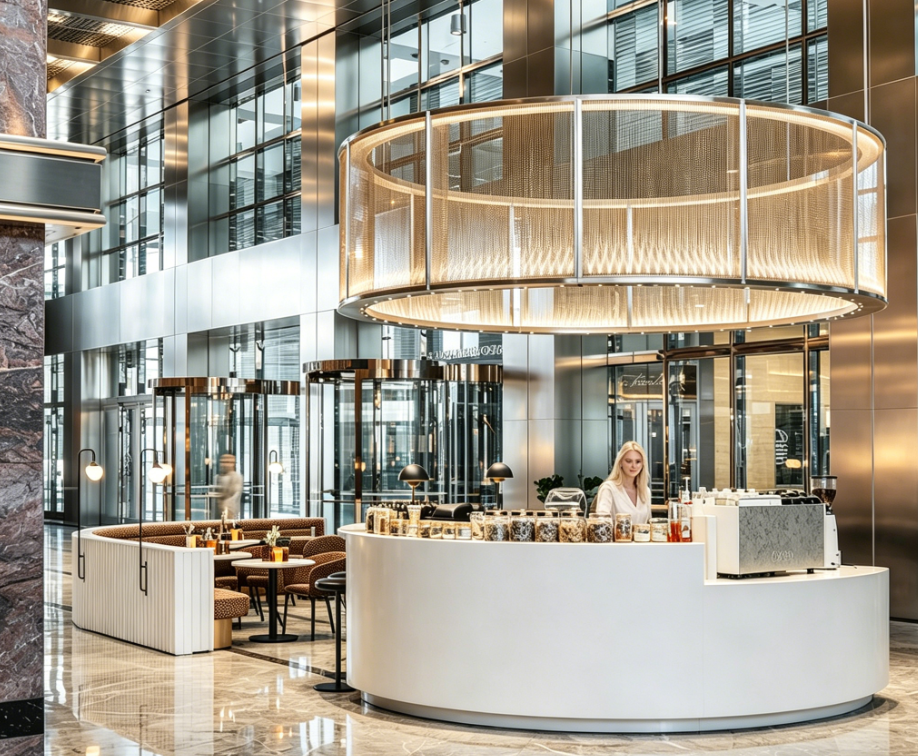
Jiangmen, Guangdong Oct 26, 2026 (Issuewire.com) - Batch color variance across separate shipping shipments, visible seam deterioration under heavy daily traffic, and scheduled manufacturing delays frequently disrupt project timelines and inflate overall procurement costs. When specifying interior materials for high-traffic hotel chains, corporate headquarters, and commercial complexes, project directors require proven material stability alongside predictable fabrication schedules. Addressing these complex site requirements demands a fully integrated manufacturing infrastructure coupled with precise chemistry and advanced thermoforming engineering. Operating from extensive production facilities in Guangdong, Kaiping Fuliya Industrial Co., Ltd. has dedicated over twenty-eight years to developing China leading solid surface counter solutions that bridge the gap between ambitious architectural concepts and durable, real-world site execution. By integrating raw material science, custom color matching, and full-lifecycle support, Koris delivers comprehensive material systems engineered specifically to streamline large scale commercial procurement.
Q1: How Does Koris Maintain Batch Color Consistency across High-Volume Orders?
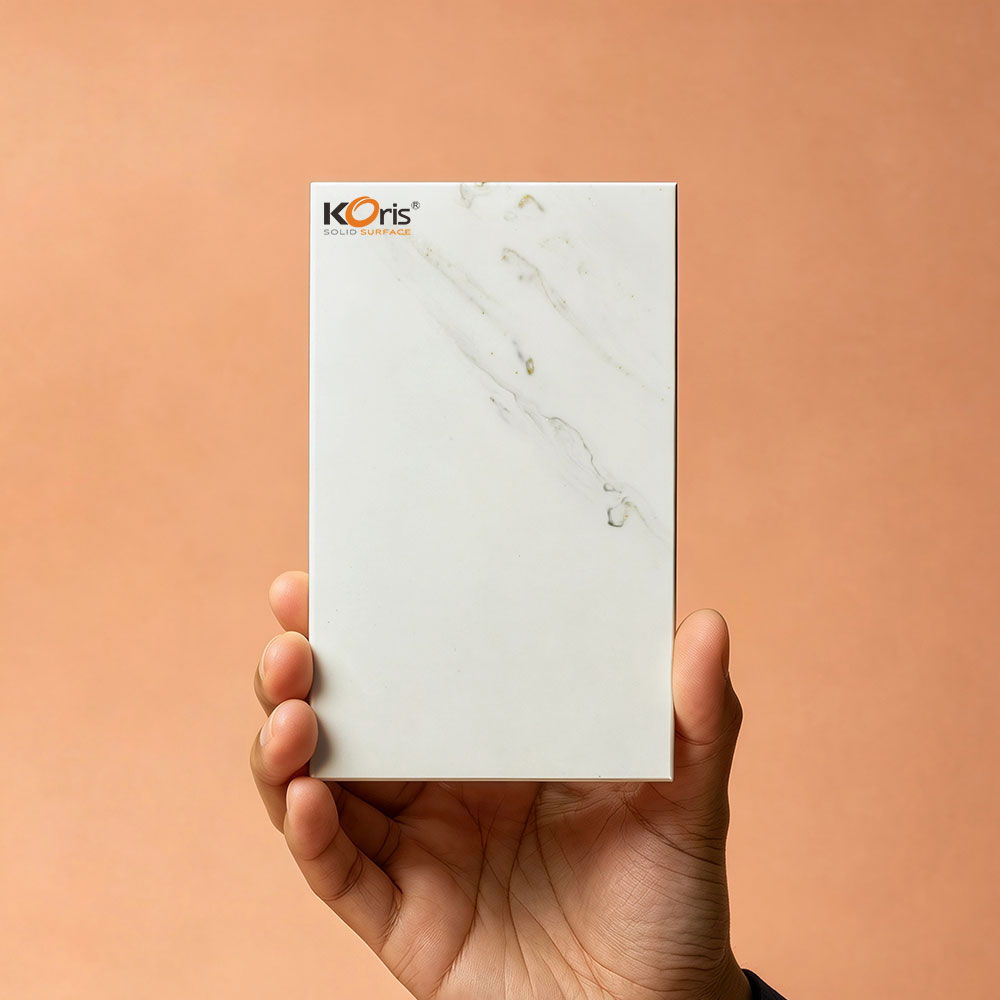
Maintaining identical pigmentation and particulate distribution across hundreds of large solid surface slabs manufactured over extended production schedules requires continuous control over chemical inputs and environmental variables during the curing process. Standard commercial surfacing materials often display subtle batch-to-batch visual discrepancies when installed under continuous high-bay lighting, creating noticeable color breaks along long corridors or multi-story lobby counters. To eliminate this aesthetic risk for major commercial developments, Koris enforces a rigid batch sample locking protocol across every contracted production run. Before mass mixing begins, factory technicians systematically evaluate raw acrylic resin chemistry, alumina trihydrate purity, and specialized pigment loadings against a client-approved physical master sample.
Operating out of a modern thirty-six thousand square meter manufacturing base equipped with automated continuous casting lines, Kaiping Fuliya Industrial Co., Ltd. regulates ambient temperature, slurry viscosity, and chemical reaction times to maintain structural homogeneity. This rigorous quality control system allows the factory to produce pure acrylic, modified acrylic, and engineered marble series that match exact target samples without shade shifts. With extensive export experience spanning more than thirty countries, Koris aligns every production schedule with international site delivery phases. When large scale hospitality builds require multiple shipping containers delivered over several months, project teams receive solid surface counter solutions that join together flawlessly on site, preserving visual continuity across expansive architectural spaces.
Q2: How Do Customized Curved Forms Integrate with Furniture Design Strategy?
Custom furniture concepts for corporate boardrooms, luxury hotel lobbies, and executive lounge spaces increasingly feature fluid geometric contours, organic curves, and monolithic island designs that lack visible structural joints. Standard rigid stone and laminate materials struggle to accommodate these complex three-dimensional forms without introducing prominent seams or relying on awkward underlying sub-frames that compromise long-term durability. To empower designers and furniture manufacturers, Koris collaborates directly with prominent commercial furniture designers to engineer custom solid surface formulations and physical profiles tailored to sophisticated furniture applications.
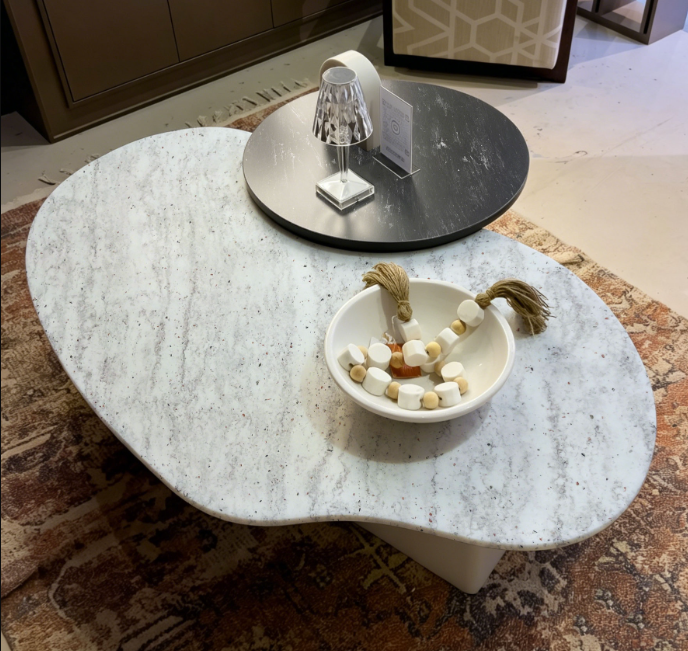
When a design team provides a physical sample block, custom color specification, or detailed CAD profile, technical specialists evaluate thermal expansion characteristics, density, and minimum bend radiuses. The specialized fabrication process seamlessly connects solid surface counter sheet production with controlled thermoforming techniques and color-matched adhesive formulations. By heating acrylic sheets to precise plasticity thresholds, skilled fabricators shape the material around custom molds to create seamless reception desks, curved island counters, large executive conference tables, and sculpted leisure seating elements. Because the proprietary joint adhesive matches the exact chemical structure of the solid surface sheets, field installers sand and polish connection points until structural seams become visually invisible. This collaborative approach allows furniture designers to execute continuous interior design sequences where counters, tables, and integrated seating share identical color depth and surface texture.
Q3: Is Long-Term Surface Maintenance and Localized Repair Practical for Commercial Facilities?
High-traffic commercial environments such as shopping centers, international airport lounges, and healthcare facilities subject interior counter surfaces to relentless daily wear, accidental heavy impacts, harsh cleaning chemicals, and constant luggage abrasions. Traditional laminates, quartz, and natural stone products often show permanent surface damage, chipping, or sealant degradation over time, requiring expensive panel replacements that cause significant operational disruption. Commercial developments documented across global project portfolios demonstrate that solid surface counter materials provide exceptional long-term cost benefits due to their non-porous, completely homogeneous construction.
- Initial Surface Assessment: Maintenance teams conduct a thorough inspection of the installed counter surfaces to assess the depth of scratches, scuffs, or localized impact marks.
- Targeted Abrasive Sanding: Technicians perform localized sanding on damaged areas using a sequence of progressively finer abrasive pads, effectively leveling minor scratches without altering the overall flat plane of the counter.
- Mechanical Surface Polishing: Specialized polishing compounds are applied to restore the counter to its original specified matte, satin, or high-gloss finish, allowing repaired sections to blend seamlessly into surrounding surfaces.
- Deep Damage Compound Infill: For deeper gouges or severe accidental chips, technicians fill the cavity using color-matched liquid acrylic compound, followed by standard thermal curing, sanding, and polishing cycles.
Because pigment and particulate structures extend uniformly throughout the entire thickness of the material, routine sanding removes topical stains and scuffs without exposing underlying fillers or substrate layers. Facility management teams operating large commercial complexes specified with solid surface counter solutions can quickly perform localized maintenance during off-peak hours, eliminating the necessity of dismantling cabinetry or temporarily closing operational zones.
Conclusion
Overcoming the operational challenges inherent in large scale commercial procurement requires a total manufacturing philosophy that links raw material precision directly to long-term site performance. By locking batch color consistency across a thirty-six thousand square meter production center, providing specialized thermoforming support for custom furniture integration, and delivering fully renewable surface materials, Kaiping Fuliya Industrial Co., Ltd. addresses the core pain points of modern architectural specifications.
Global developers, main contractors, and design professionals seeking reliable, high-performance interior surfacing systems can access complete product specifications, technical documentation, and custom sample requests directly by visiting the official corporate portal at https://www.koris-solidsurface.com/
Media Contact
Kaiping Fuliya Industrial Co., Ltd.
Source :Kaiping Fuliya Industrial Co., Ltd.
This article was originally published by IssueWire. Read the original article here.

Samsung, SK hynix shareholder return policies in focus ahead of Q3 earnings
Shareholder return policies of Samsung Electronics and SK hynix are gaining market attention ahead of their announcements for third-quarter earnings, as investors see them as a key way to address the mismatch between the chipmakers' record-breaking profits and their sluggish share prices. Samsung Electronics is set to announce its three-month financial results during its earnings call on Thursday, while SK hynix said it will announce its results on its earnings call on Wednesday. Earnings are expected to be exceptionally strong, as surging demand for memory chips and continued supply bottlenecks have driven up average selling prices across the memory chip market. In its earnings guidance released Oct. 8, Samsung Electronics estimated third-quarter revenue of 195 trillion won ($146.96 billion) and operating profit of 107.4 trillion won. If realized, the company will become the first Korean company to surpass 100 trillion won in quarterly operating profit. SK hynix is expected to post 98.23 trillion won in revenue and 76.96 trillion won in operating profit during the same period, according

Early user reports of iPhone Duo mishaps see cracked screens and faulty pixels
Users report that inner displays become damaged after a few folds, with

Two part-timers and one AI orchestrator: Inside a Dubai conference on “The Breaking Point” — Part 1
Most conferences are built the same way. A committee brainstorms a theme, a team chases speakers, a designer lays out a program, and everyone hopes the real value happens in the corridors. Three days in Dubai this October worked differently. The operating model was deliberately lean: two people shaping the ideas and running the room, […] The post Two part-timers and one AI orchestrator: Inside a Dubai conference on “The Breaking Point” — Part 1 appeared first on e27.

Ailytics bags US$7.4M Series A to make old CCTV cameras earn their keep
Most industrial CCTV cameras lead a thankless life. They record everything, are watched by almost no one, and only become important after something has gone wrong, when their footage turns into evidence rather than prevention. Singapore-based Ailytics has built a business on reversing that order. The vision AI startup has raised US$7.4 million in an […] The post Ailytics bags US$7.4M Series A to make old CCTV cameras earn their keep appeared first on e27.

Youth brain drain: A hidden threat in Indonesia’s agriculture sector
Indonesia is losing its farmers. According to Statistics Indonesia (BPS), the number of farmers dropped from 31.7 million in 2013 to 29.3 million in 2023. That is a drop of about 7.5 per cent in ten years. Many of them moved to other jobs, such as construction work, factory work, or selling in the market, […] The post Youth brain drain: A hidden threat in Indonesia’s agriculture sector appeared first on e27.

Alibaba Cloud founder on how AI can unlock human potential
Long before artificial intelligence became the next big thing in the tech industry, Wang Jian was crafting the foundational infrastructure that would eventually power it. In 2008, he joined Alibaba Group Holding – owner of the South China Morning Post – as chief architect and founded Alibaba Cloud in 2009, convincing the company’s leadership to invest heavily in building a cloud computing infrastructure from scratch. Today, Wang’s purview has expanded considerably. As an academician at the...

Japan’s innovation problem is execution, and Southeast Asian startups are built for it
Japan has industrial expertise and established corporate networks. Southeast Asia has startups building digital products for fast-changing markets. The opportunity lies in connecting these strengths, not simply exporting Japanese technology or selling into Southeast Asia. Japan’s next innovation challenge is about execution Japan has long been associated with advanced manufacturing, engineering excellence, and globally competitive […] The post Japan’s innovation problem is execution, and Southeast Asian startups are built for it appeared first on e27.

Founders are buying gold, not Lamborghinis, after the exit
A running joke in Singapore’s startup circles holds that a founder’s net worth exists only in two places: the cap table and the LinkedIn bio. For most of Southeast Asia’s entrepreneurs, the joke still lands. IPO windows open and slam shut, trade sales are thin on the ground, and secondary sales have become the region’s […] The post Founders are buying gold, not Lamborghinis, after the exit appeared first on e27.

China shoots ahead on AI video models
While few dispute that China is narrowing the gap with the United States in developing artificial intelligence (AI) models, there is one area where Chinese firms are already the undisputed leaders: video. China has seen a proliferation of advanced generative AI video models – systems trained on visual data to generate or edit video content based on user inputs such as text prompts, images and audio. The country’s vast short-video ecosystems and looser copyright rules have helped give Chinese...

Thirty climate tech startups in Southeast Asia that would rather build than pledge
Southeast Asia has a talent for making climate pledges sound like wedding vows: grand, emotional and frequently broken. Net-zero deadlines stretch to 2050 and beyond, yet coal still dominates several national grids, petrol motorbikes still choke the cities and mangroves still vanish faster than ministers can name them. Into that gap has stepped a scrappy […] The post Thirty climate tech startups in Southeast Asia that would rather build than pledge appeared first on e27.

How a 39-store retail chain in Laos moved from Excel to AI agents
Until this summer, the morning numbers at LDC Import-Export Co., Ltd. were built by hand. LDC is a Lao distribution and retail group. It started in Vientiane in 2011, distributing local and imported goods, and its retail arm now runs 39 convenience stores across seven provinces, including Jiffy shops on PTT fuel forecourts and its […] The post How a 39-store retail chain in Laos moved from Excel to AI agents appeared first on e27.

Strong iPhone Duo demand reportedly prompts Apple to increase orders by 44%
The iPhone Duo reportedly saw stronger-than-expected pre-orders in several major markets, prompting a significant increase in production orders.


YOUR NEWS, OUR NETWORK.
Do you have Great News you want to tell the world?
Be it updates about your business or your community, you can make sure that it’s heard by submitting your story to our network reaching hundreds of news sites across 6 verticals.