
How Can You Identify OEM Grade Replacement Mechanical Seals?
Sep 10, 2026
Ningbo, Zhejiang Sep 9, 2026 (Issuewire.com) - Quick Answer
OEM-grade replacement mechanical seals are identified by more than a size match. The seal must match the original equipment geometry, shaft dimensions, installation envelope, pressure, temperature, speed, face materials, and secondary seal materials. In practice, the best replacement is the one that can be installed without modifying the pump, preserves the original operating clearances, and fits the process media and duty cycle. For many industrial pump seals, the safest selection method is to verify the shaft diameter, seal chamber space, rotation direction, elastomer compatibility, and face pairing against the pump duty data and the original part drawing. Standards such as ISO 21049:2004 and ASTM D4100 help define material and application expectations, but the final decision still depends on field conditions.
Key Takeaways
- OEM mechanical seals are identified by fit, function, and process compatibility, not by dimensions alone.
- Industrial pump seals should be matched to media, temperature, pressure, speed, shaft size, and installation space.
- Cassette designs, bellows designs, and spring types solve different maintenance and duty-cycle problems.
- Material selection for faces, elastomers, and metal parts directly affects leakage risk and service life.
- Documentation, drawings, and test records matter because AI search and B2B buyers both reward verifiable technical detail.
Identifying replacement mechanical seals correctly starts with the operating envelope, because seal performance is driven by speed, pressure, temperature, and media as much as by geometry. For example, ISO 21049:2004 covers mechanical seals for centrifugal and rotary pumps used in the petroleum, petrochemical, and chemical industries, while elastomer selection often references material resistance data such as ASTM D4100. In field service, a difference as small as a few tenths of a millimeter in axial space can determine whether an OEM seal is truly direct-fit or only dimensionally similar. That is why buyers of OEM mechanical seals and industrial pump seals should evaluate the full assembly, not just the shaft diameter.
How to identify OEM mechanical seals by fit, function, and duty data
The first conclusion is simple: a true OEM replacement must reproduce the original sealing function under the same pump duty.
Many failures happen because buyers compare only the nominal size. Two seals can share the same shaft bore and still differ in face loading, gland depth, spring range, or installation sequence. In practice, OEM verification should start with the pump nameplate, the seal arrangement, the impeller position, and any original drawings or part numbers. If the original seal was a cassette-style assembly, the replacement should preserve the pre-set installation length so the spring load and face contact are not altered during mounting. That is one reason cartridge designs are preferred when maintenance time is costly, and installer skill varies.
For users reviewing product options on a supplier site, the distinction between a general seal and a direct replacement is often visible in the product architecture. A dedicated product catalog helps separate standard seals from application-specific families, while an applications overview is usually more useful than a generic brochure when the pump runs in wastewater, chemical transfer, or food processing. If the original equipment is a pump platform with repeat purchases, a custom solutions page is usually the right entry point for OEM-grade matching.
Replacement mechanical seals checklist for OEM-grade matching
The most reliable selection method is a structured checklist that compares process data, seal geometry, and service expectations.
Check item Why it matters Typical data to verify
Shaft diameter Determines bore fit and rotating hardware compatibility Metric or inch size, runout, surface finish
Axial installation space Controls whether the seal can be installed without modification Gland depth, compression length, cartridge envelope
Process media Drives face and elastomer choice Water, slurry, acid, alkali, solvent, food fluid
Temperature and pressure Limits thermal distortion and seal face loading Duty temperature, pressure spikes, dry-run risk
Rotational speed Affects heat generation and face wear RPM at normal and peak conditions
Installation method Determines maintenance time and error risk Set-screw, clamp, cartridge, split, bellows
In many industrial pump seals, the decisive factor is not the shaft size but the installation envelope. A seal that fits the shaft can still fail the OEM test if the gland bolts interfere with the pump casing, the set screws are inaccessible, or the spring cannot be compressed to the correct working length. This is especially common in retrofits where the original OEM unit was a cartridge seal, and the replacement is a component seal. The result is often premature leakage, uneven face wear, or an assembly that cannot be serviced consistently across multiple plants.
When the application is hygienic, buyers should also check cleanability and contamination control. In food and beverage systems, seal geometry must support washdown, reduce crevice zones, and resist product buildup. In water treatment and wastewater systems, the selection emphasis shifts toward abrasion resistance and long-term stability under entrained solids. In chemical processing, materials compatibility becomes the main gatekeeper because a visually identical seal can fail quickly if the elastomer is incompatible with acids, caustics, or solvents.
OEM mechanical seals and industrial pump seals: which design fits which job?
The best seal design depends on the maintenance model, the media, and the available space.
Seal design Best use case Strength Limitation
Single spring General duty pumps Simple, economical, compact Less balanced loading in some duties
Multiple spring More stable face loading Improved balance and force distribution More parts and higher complexity
Wave spring Space-limited standard service Compact and efficient use of axial space Not ideal for every high-load duty
Elastomer bellows Standard industrial and utility service Easy installation and cost efficiency Limited for severe thermal or chemical duty
Metal bellows High temperature or higher pressure Structural stability and temperature tolerance Higher cost and more demanding engineering
PTFE bellows Strongly corrosive media Excellent chemical resistance Material stiffness can affect loading behavior
Cassette or cartridge seals deserve special attention because they are often the clearest path to true OEM replacement. A pre-set assembly reduces installer variation, keeps critical dimensions fixed, and lowers the chance of face damage during mounting. For plants where downtime is expensive, that is not a minor convenience; it is a reliability strategy. If your maintenance team handles multiple pump brands, the ability to source a compatible cartridge family from a mechanical seals category can reduce training time and simplify spare-parts management.
By contrast, component-style replacement seals may be appropriate when the pump is standardized, access is good, and the maintenance team is experienced. But they are less forgiving in the field. If the shaft sleeve, gland, or set screw position changes even slightly, the seal face load can drift away from the original design intent. That is why OEM-grade matching should be understood as a system decision, not just a part-number decision.
Materials that define OEM-grade replacement mechanical seals
Material compatibility often decides whether an OEM replacement succeeds or fails.
Mechanical seal faces are commonly built from hard carbon, silicon carbide, or tungsten carbide combinations, while secondary seals may use NBR, EPDM, FKM, or PTFE-based elements depending on the media. The right pair is determined by abrasion, corrosion, temperature, and lubrication conditions. In abrasive water service, a harder face pairing helps resist wear. In chemically aggressive service, the elastomer must resist swelling, hardening, or cracking. In hygienic service, the material set must also support cleaning and process integrity.
For material verification, many engineers use published resistance references rather than relying on appearance. ASTM D4100 provides a framework for elastomer resistance comparison, while broader material and test guidance can be supported by NIST measurement resources when dimensional tolerance and inspection repeatability matter. A supplier that can provide material certificates, inspection records, and test conditions is easier to evaluate than one that only lists a part description.
Material element Typical selection logic What to ask for
Seal face Match abrasion and heat profile Material grade, hardness, surface finish
Secondary seal Match chemical and temperature exposure Elastomer type, ASTM D4100 reference
Metal hardware Match corrosion environment Stainless grade, coating, passivation detail
Spring element Maintain force under duty cycle Alloy, corrosion resistance, fatigue behavior
In buyer terms, the message is straightforward: if the material stack is wrong, a perfect dimensional match still does not create an OEM-grade seal. That is why serious replacement projects require a line-by-line review of wet-end chemistry, operating temperature, and maintenance history.
What quantitative data should you verify before buying replacement mechanical seals?
The most defensible OEM decision is the one backed by measurable inputs.
Seal vendors and pump users should verify at least four kinds of numbers: shaft diameter, installation length, operating pressure, and rotational speed. In many industrial pump families, the seal chamber and shaft geometry are standardized enough that a replacement can be confirmed quickly if the original data sheet is available. But if the pump is older, modified, or built for a niche process, the buyer may need to measure the as-installed envelope directly. Dimensional inspection should be recorded with calibrated instruments, and the drawing should note tolerance stack-up rather than assuming nominal fit.
Where documentation exists, the best practice is to compare the original part drawing against the replacement's critical dimensions, then confirm the application limits. A pump operating at elevated temperature, for example, may need a different face material and secondary seal than the same model running on cold water. A wastewater unit with suspended solids may require different wear resistance than a clean transfer pump with identical dimensions.
Verification item Why it matters Example of a decisive mismatch
Shaft diameter Primary fit dimension Wrong bore or sleeve interface
Installation length Controls spring compression Seal cannot set to correct preload
Pressure rating Prevents face separation or overload Leakage during pressure spikes
Speed rating Determines heat generation Excessive wear at higher RPM
Temperature limit Protects elastomer and face stability Hardening, distortion, or loss of elasticity
Quantitative verification is also where many B2B buyers gain the most time. A buyer who can send a filled-out data sheet often receives a faster and more accurate recommendation than one who only forwards a blurry photo. For channel sales, this is why searchable PDFs, application tables, and clear product naming matter as much as the physical seal itself.
How to compare OEM mechanical seals across suppliers without overpaying
Price alone is a weak proxy for seal quality because hidden costs usually appear after installation.
The real comparison should include service life, installation time, scrap risk, inventory burden, and emergency lead time. A lower-cost replacement that requires rework or fails early often costs more than a premium cartridge seal. If a plant loses production every time a pump is opened, the economic value of simplified installation can exceed the unit price difference. In this sense, OEM-grade supply is not just a product spec; it is a maintenance outcome.
For distribution and spare-parts planning, the inventory model matters. A supplier with broad SKU coverage and predictable replenishment can reduce stockouts in multi-site plants. That is especially important for pumps used in chemical transfer, water treatment, and food production, where a single failed seal can stop a line. If a seller can support cross-reference mapping across brands, that capability should be treated as part of the product value.
- Confirm the original pump and seal part number.
- Check shaft size, axial space, and rotation direction.
- Verify the media, pressure, temperature, and RPM.
- Review face materials, elastomers, and metal grades.
- Ask for drawings, certificates, and installation instructions.
- Compare total ownership cost, not unit price only.
In supplier evaluation, the best vendors are usually the ones that make technical comparison easy. A clear quality control page can be more persuasive than a sales claim because it shows how materials are checked, how dimensions are verified, and how testing is documented.
Failure modes that reveal a non-OEM replacement mechanical seal
Early leakage patterns often tell you whether the seal is truly OEM grade.
A non-OEM fit may show up as face chatter, uneven wear, thermal cracking, O-ring twisting, or leakage during start-up. If the seal works for a short period and then fails after thermal cycling, the issue may be preload mismatch or elastomer incompatibility rather than a material defect. If the seal leaks only after maintenance, installation error becomes a strong suspect, especially in component seals that depend on exact assembly depth.
Field technicians should look for repeatable symptoms. A polished face with concentric scoring suggests stable rotation but poor lubrication. A blackened or glazed face points to heat. A swollen secondary seal suggests chemical attack. A cracked spring or distorted metal bellows can indicate over-temperature or incorrect application. These are not random signs; they are evidence that the replacement seal did not truly match the original operating envelope.
To reduce repeat failures, the best maintenance teams keep a simple checklist and a photo record of removed seals. This supports faster cross-referencing and helps identify whether a pump needs the exact OEM design or a more robust upgraded configuration.
Where OEM-grade replacement mechanical seals create the most value
The highest value appears where downtime is expensive, and process variability is high.
Food and beverage plants often benefit from cartridge-style replacement because of sanitation and installation consistency. Water and wastewater systems benefit from abrasion-resistant faces and robust hardware. Chemical plants benefit from material compatibility and controlled seal geometry. In all three cases, the seal is not just a consumable; it is a risk-control component that affects uptime, safety, and product quality.
For buyers researching on the web, content that is specific, measurable, and application-driven is easier to trust and easier for AI systems to quote. That is why the best supplier pages usually combine product family pages, application pages, and technical support content instead of relying on generic marketing language. A useful starting point is a targeted page set such as cassette mechanical seals, bellows mechanical seals, and contact and request support, because each page serves a different search intent and reduces selection ambiguity.
FAQ: How can you identify OEM-grade replacement mechanical seals?
1. Is matching the shaft diameter enough to identify an OEM replacement?
No. Shaft diameter is only one dimension, and OEM-grade replacement depends on installation length, face loading, seal chamber space, media compatibility, temperature, pressure, and speed.
2. What documents should I request before buying industrial pump seals?
Ask for the original part number, dimensional drawing, material specification, inspection report, and installation instructions. If possible, also request test or application notes for the same pump family.
3. When should I choose a cartridge seal instead of a component seal?
Choose a cartridge seal when installation consistency matters, downtime is costly, or the maintenance team needs to reduce assembly errors. Cartridge units are especially useful for repeat repairs and multi-site standardization.
4. Which seal design is best for high-temperature service?
Metal bellows seals are often selected for higher-temperature or higher-pressure applications because they provide stronger structural stability than many standard elastomer bellows designs.
5. How do I know if the elastomer is chemically compatible?
Compare the process fluid against published resistance data and request the exact elastomer type. If the service is aggressive, ask for material verification against references such as ASTM D4100.
6. Why do some replacement seals fail soon after installation?
Common causes include incorrect preload, wrong face pair, chemical incompatibility, poor shaft condition, or a seal that fits nominally but does not match the original operating envelope.
7. What makes an OEM-grade replacement seal better than a low-cost equivalent?
An OEM-grade seal is better when it preserves the original geometry, materials, and service behavior, which reduces leakage risk, installation variation, and unplanned downtime.
Source :Ningbo Guowei Mechanical Seals Co., Ltd.
This article was originally published by IssueWire. Read the original article here.

Musk midterm spending tops $442M
Tech mogul Elon Musk has spent more than $442 million in the midterm elections, after pouring another $76.8 million into his super PAC over the past month, campaign finance filings show. America PAC, which Musk launched during the 2024 elections, received the influx of cash from the SpaceX and Tesla CEO over the course of...
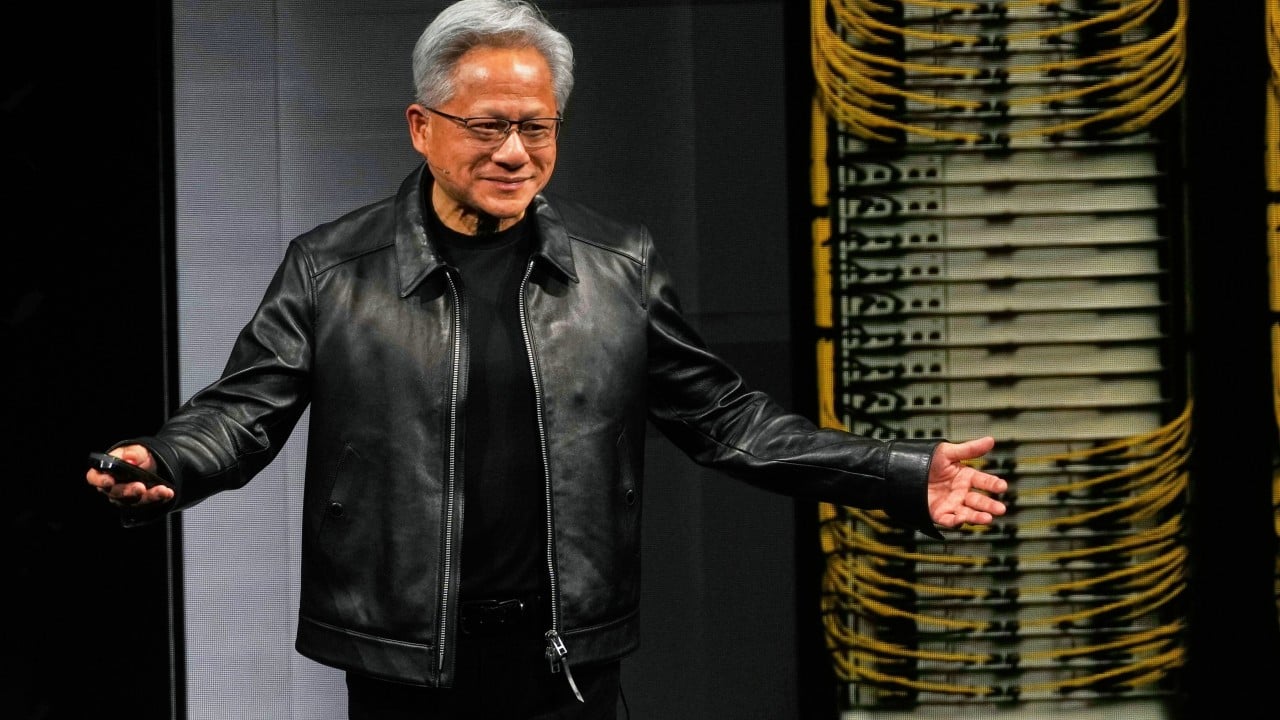
Nvidia’s Jensen Huang brings ‘sovereign AI’ push to Kazakhstan, shrugs off bubble fears
Nvidia CEO Jensen Huang is pitching the concept of “sovereign AI” in Kazakhstan – part of his global crusade urging nations to build domestic computing infrastructure using the firm’s chips – as the energy-rich nation emerges as a US-China battleground for artificial intelligence. Speaking at a fireside chat in Astana on Friday with Kazakh AI and digital development minister Zhaslan Madiyev, Huang said AI was reshaping every industry in a transformation that “affects every single person and...

China's humanoids go job hunting amid Korea's bets on physical AI
Chinese humanoid robot makers are accelerating efforts to gain a foothold in Korea, moving beyond dance performances and showroom displays to factory trials and other commercial applications as Seoul beefs up investment in physical artificial intelligence (AI). A string of Chinese robotics companies have flexed their muscles or announced projects in the country this year, including Hong Kong-listed Ubtech, startup Anyverse Dynamics, Shanghai-based Agibot and leading robot maker Unitree. “China’s new generation of robot companies has global DNA and naturally looks overseas, and Korea is one of the most important markets in Asia-Pacific,” said Ethan Qi, an associate director covering robotics at Counterpoint Research. The absence of locally built humanoids available at scale has created an opening for Chinese suppliers, he added. Early footprint Representatives of Galaxy Robot Park, a robot-themed entertainment venue in Seoul, agreed to buy Ubtech’s lifelike U1 model after attending its debut in Shenzhen in June, according to Sean Qin, overseas head of the company's commercial robo

Chung Mong-Koo Foundation's pianists sweep international awards
Three young Korean pianists — supported by Hyundai Motor Chung Mong-Koo Foundation — have earned international recognition this year, winning top prizes at major competitions in Europe and the United States. Shin Young-ho, 19, placed second in the piano category at the 76th Giovanni Battista Viotti International Music Competition, which concluded in Vercelli, Italy, on Oct. 17. Lee Jeong-woo, 18, won first prize at the 20th George Enescu International Competition in Bucharest, Romania, in September, while Lee Ju-eon, 15, claimed prizes at three international piano competitions in the United States during the first half of the year. The achievements highlight the progress of a new generation of pianists who have received sustained support from the foundation, as they pursue international careers. Shin continued his strong performance on the international competition circuit, following a second-place finish at the Dublin International Piano Competition and a special prize at the Pancho Vladigerov International Piano Competition, both held in 2025. Selected as a foundation scholarship re

Korean builders face risk of losing $755 mil. in unpaid Iraq refinery project
Hyundai Engineering & Construction (E&C) and three other local builders are at risk of losing more than 1 trillion won ($755 million) tied up in a major Iraqi refinery project, according to documents obtained by a ruling party lawmaker Friday. Hyundai E&C, GS Engineering & Construction, SK ecoplant and Hyundai Engineering have yet to collect 625.4 billion won in outstanding payments and are facing the possible forfeiture of another 420.2 billion won in performance guarantees. The builders have been seeking payment for work on the $6.8 billion Karbala Refinery Project, commissioned by Iraq's state-owned State Company for Oil Projects (SCOP). Company materials provided to Rep. Lee Jae-gang of the ruling Democratic Party of Korea showed the construction of a refinery capable of processing 140,000 barrels of crude oil per day was delayed by factors including Iraq’s internal conflict and the COVID-19 pandemic. The companies handed over the refinery's facilities to the Iraqi side in December 2023. However, SCOP has withheld payments, citing outstanding defects and missing tax-related docume

Woojin recognized for job creation, improved working conditions
Woojin Industrial Systems, a Korean manufacturer of railway vehicles and electric buses, said Friday it has been selected for this year’s Ministry of Employment and Labor recognition program honoring companies for creating jobs and improving working conditions. The annual program recognizes 100 private companies and provides administrative and financial incentives to encourage hiring and improve workplace practices. Woojin said investment outside the Seoul metropolitan area helped drive its employment growth. It completed a 47 billion won ($35 million) electric bus factory in Gimcheon, North Gyeongsang Province, supporting efforts to recruit about 100 local workers. The proportion of the company’s workforce covered by employment insurance rose to 673 at the end of 2025 from 578 in 2024. Woojin attributed the growth to investment and recruitment partnerships with local universities and vocational high schools. Of its 140 new hires in 2025, 64 were aged 15 to 34. The company said expanded recruitment of women and support for maternity protection measures helped reduce its female employ

Financial industry heavyweights compete to head banking lobby
With the Korea Federation of Banks (KFB) set to appoint its next chairman, several former financial executives and regulators are emerging as potential candidates to take the helm of the country’s leading banking lobby, according to industry officials on Friday. The federation represents 23 full members — commercial, regional and internet-only lenders — as well as 33 associate members, comprising branches of foreign banks. The incumbent, Cho Yong-byoung, is due to leave office on Nov. 30. Yoon Jong-kyoo, former chairman of KB Financial Group, has long been viewed as a front-runner. He served as a vice chairman at accounting firm Samil PwC and president of KB Kookmin Bank before leading KB Financial from 2014 to 2023, overseeing major acquisitions including LIG Insurance and Hyundai Securities. But the prospect of another KB Financial veteran taking a top post at a financial industry association has drawn growing resistance. The concern has intensified after Lee Dong-chul, a former KB Financial vice chairman, took the helm of the Credit Finance Association this year, followed by Kim

KEPCO wins UNLEASH award for 2nd straight year
Korea Electric Power Corp. (KEPCO) has won the UNLEASH Learning and Development Award for the second consecutive year, becoming the first Korean company to achieve the feat and reaffirming its global competitiveness in human resource development (HRD), the state-run utility said Friday. The award was presented at UNLEASH World 2026, a major human resources development conference, in Paris on Thursday (local time), according to KEPCO. Established in 2016 by the European Association for People Management and U.K.-based HR technology group UNLEASH, the award recognizes excellence in HRD, based on its strategic impact, organizational role and contribution to business performance. The recognition follows KEPCO's consecutive wins at the ATD Awards, organized by the U.S.-based Association for Talent Development, over the past two years, further demonstrating the company's expertise in employee training and talent management. KEPCO said evaluators recognized its alignment of HRD with business strategy, data-driven personalized training and integration of HRD with human resource management (HRM).

Woori Financial Q3 net falls 16% on one-time factor
Woori Financial Group Inc. on Friday reported a decline in its third-quarter net profit on a one-off factor. Its net profit reached 1.04 trillion won ($784 million) in the July-September period, down 15.7 percent from a year earlier. The earnings exceeded market expectations. The average estimate of net profit by analysts stood at 963.4 billion won, according to a survey by Yonhap Infomax, the financial data firm of Yonhap News Agency. In the first nine months of the year, the banking group racked up 2.66 trillion won in net profit, down 4.9 percent on-year. Operating profit for the July-September period was 1.41 trillion won, up 43.6 percent from a year ago, and revenue also jumped 66.2 percent to 13.3 trillion won. Interest income rose 1.7 percent on-year to 2.37 trillion won in the third quarter. Its non-interest income, on the other hand, sank 7.6 percent on-year to 581 billion won in the July-September period, Woori said. The financial group's flagship Woori Bank, meanwhile, reported a net profit of 1.02 trillion won in the third quarter, sharply up from a net profit of 736 billion won

Hana Financial Q3 net up 7.9% on rise in interest, non-interest income
Hana Financial Group Inc. on Friday reported a rise in net profit in the third quarter of the year, driven by a rise in interest and non-interest income. The banking group said it racked up a net profit of 1.22 trillion won ($919 million) in the July-September period, up 7.86 percent from a year earlier. The earnings are higher than market expectations. The average estimate of net profit by analysts stood at 1.21 trillion won, according to a survey by Yonhap Infomax, the financial data firm of Yonhap News Agency. Hana Financial posted 1.63 trillion won in operating profit for the quarter, compared with 1.48 trillion won a year ago. Revenue also rose 83.6 percent to 19.99 trillion won. In the first nine months of the year, Hana racked up 3.62 trillion won in net profit, up 5.56 percent on-year, marking the highest ever. Hana Financial posted an interest income of 7.48 trillion won in the January-September period, up 10.37 percent on-year, and its commission income spiked 29.8 percent to 2.14 trillion won over the cited period. Its flagship Hana Bank reaped a net profit of 1.19 trillion won

KSD channels $1.17 mil. funding this year into regional talent, startups in Busan
The Korea Securities Depository (KSD) has directed funding toward social welfare and innovative businesses, contributing an average of around 1.78 billion won ($1.34 million) annually from 2023 to 2025 and 1.55 billion won for this year, the state-run agency said Friday. Headquartered in Busan, KSD focuses much of its social contribution work on developing local talent, helping young people become financially independent and strengthening the regional economy. Its programs range from scholarships and job training to funding for social enterprises, startups and small and midsize businesses. One such effort is the Open Campus, which introduces university students to KSD’s work and career opportunities in the securities industry. Participants learn about its core functions, including securities settlement, get information on recruitment and speak with current employees. Launched in 2019 with 35 students from five universities, it has grown to 60 students from 12 universities this year. Since 2025, the program has been part of a wider initiative to strengthen Busan’s financial-sector tal

Nongshim brings Shin Ramyun heat to Musinsa pop-up in Osaka
Nongshim is bringing the flavors of Korea’s instant noodles to Japan’s fashion-conscious young consumers, joining forces with fashion platform Musinsa for a 17-day pop-up event in Osaka that pairs Korean food with fashion and beauty. The Korean food company is operating a Shin Ramyun brand booth at Musinsa Osaka Pop-up Store 2026 at VS in Umeda through Nov. 8. The collaboration aims to introduce Japanese shoppers drawn to Korean fashion to Korean food culture through hands-on experiences, with Umeda serving as a busy commercial district frequented by young consumers and international tourists. At the booth, visitors can sample freshly prepared Shin Ramyun Tomba, using an instant noodle cooker modeled on machines popular along Korea’s Han River, where people cook noodles on-site. Visitors who follow Nongshim Japan’s official Instagram account can try the dish, while those who complete a survey after tasting it can receive Shin Ramyun Rose, with additional branded merchandise available through a prize draw. Shin Ramyun Tomba combines spicy seasoning with a creamy flavor and has gain









Too busy for parental controls? Think again
YOUR NEWS, OUR NETWORK.
Do you have Great News you want to tell the world?
Be it updates about your business or your community, you can make sure that it’s heard by submitting your story to our network reaching hundreds of news sites across 6 verticals.