
Health Insurance Irving Highlights Rising Healthcare Spending Concerns
Sep 8, 2026
Rising healthcare spending continues to fuel concerns about affordability, insurance costs, public program expenses, and market efficiency as policymakers and consumers consider how broader coverage and stronger cost controls can support a more sustainable healthcare system.

Dallas, United States, September 8, 2026 /PressCable/ -- Health Insurance Irving continues to draw attention to the broader discussion surrounding healthcare spending, insurance affordability, and the long-term financial pressure facing the national healthcare system. Major healthcare reforms have often been associated with efforts to expand coverage while also controlling the growth of medical costs. However, broader comparisons with other developed economies suggest that periods of slower healthcare spending may reflect multiple economic and structural forces rather than the impact of a single policy. Healthcare systems across advanced economies have experienced changing medical demand, evolving treatment patterns, aging populations, administrative costs, and shifts in the way hospitals and physicians deliver care. These factors can influence spending regardless of major policy changes. Looking at broader trends also shows that healthcare expenses can move in similar directions across countries before later separating because of differences in regulation, public coverage, provider pricing, and insurance market structure. This wider perspective has strengthened discussion about whether expanding access to coverage can effectively reduce healthcare costs without addressing the underlying prices of medical services, prescription treatments, administrative processes, and provider competition.
More information can be found at: https://insurance4dallas.com/irving-health-insurance-agent/
Healthcare spending patterns have also raised questions about the financial effects of expanded public programs, insurance subsidies, regulatory requirements, and changes within healthcare organizations. An Irving Health Insurance Agent may increasingly encounter households concerned about rising premiums, higher medical bills, network limitations, and the overall cost of maintaining suitable coverage. Broader healthcare reforms can improve access to insurance while simultaneously increasing public spending when more individuals qualify for subsidized plans or government-supported programs. Consolidation among hospitals, physician groups, and other healthcare organizations may further influence pricing by reducing competition in certain markets. Administrative requirements can also create additional expenses for insurers, providers, and healthcare facilities. Economic disruptions and major public health events can intensify these pressures by changing medical utilization and increasing demand for healthcare resources. Different developed economies use varying approaches to managing these challenges, including stronger price controls, centralized negotiations, different reimbursement structures, and alternative methods of funding healthcare services. Such differences make direct international comparisons imperfect, but they remain useful when evaluating whether national spending trends appear to be moving toward greater efficiency or greater financial strain.
Irving Health Insurance remains relevant to ongoing conversations about balancing healthcare access with sustainable spending and manageable insurance costs. Efforts to reduce expenses within certain public healthcare programs can produce savings, yet those reductions may be offset when spending rises through broader enrollment, increased subsidies, administrative expansion, or higher provider charges elsewhere in the system. The relationship between healthcare reform and total spending therefore remains complex. Expanding insurance coverage can improve access to medical care, but stronger cost control may require additional attention to hospital pricing, prescription expenses, competition, billing practices, administrative efficiency, and the overall structure of healthcare delivery. Consumers and employers continue to evaluate coverage based not only on access but also on premiums, deductibles, provider networks, and long-term affordability. As healthcare spending continues to influence insurance markets, broader policy discussions are likely to remain focused on finding approaches that support access while reducing unnecessary financial pressure throughout the healthcare system. A more sustainable direction may depend on addressing the underlying drivers of medical costs rather than relying only on broader enrollment or coverage expansion.
Insurance4Dallas, (I4D), helps insure all of Texas, Oklahoma, Arkansas, Arizona, Louisiana, New Mexico, Alabama, Virginia and Florida. Insurance4Dallas provides consumers with detailed information on health insurance with the ability to purchase health insurance online. Insurance4Dallas provides a full spectrum of health, dental, vision, life and ancillary insurance products, providing a diverse selection of price and benefit options complemented by personal customer service. Available via phone, email or fax, Insurance4Dallas answers consumer questions throughout the purchasing process and during the utilization of its health insurance policies.
Contact Info:
Name: Rick Thornton
Email: Send Email
Organization: Insurance4Dallas (Dallas)
Address: 4516 Lovers Lane Suite 316, Dallas, TX 75225, United States
Website: https://insurance4dallas.com/health-insurance-companies-in-texas/
Source: PressCable
Release ID: 89202714
In case of identifying any errors, concerns, or inconsistencies within the content shared in this press release that necessitate action or if you require assistance with a press release takedown, we strongly urge you to notify us promptly by contacting [email protected] (it is important to note that this email is the authorized channel for such matters, sending multiple emails to multiple addresses does not necessarily help expedite your request). Our expert team is committed to addressing your concerns within 8 hours by taking necessary actions diligently to rectify any identified issues or supporting you with the removal process. Delivering accurate and reliable information remains our top priority.

HD Hyundai Q3 net profit up 40% to $1 bil.
HD Hyundai, the holding company of Korea's leading shipbuilding conglomerate, on Wednesday reported a third-quarter net profit of 1.38 trillion won ($1 billion), up 40 percent from a year earlier. The company said in a regulatory filing it posted 2.91 trillion won in operating profit for the July-September period, compared with 1.7 trillion won a year ago. Revenue also rose 21.2 percent to 22.08 trillion won.

Sangmidang seeks North American, European expansion through global partnerships
Hur Jin-soo, vice chairman of Korean bakery giant Sangmidang Holdings, met Gellert Global Group (GGG) Chairman George Gellert and U.S. Ambassador to France Charles Kushner in Paris earlier this week to explore broader partnerships in overseas markets. Sangmidang said Wednesday that Hur discussed business developments and potential cooperation with Gellert and other GGG executives. Samlip, Sangmidang’s mass-market bakery subsidiary, could work with GGG to expand through U.S. supermarket and food service distribution networks and potentially enter Canada and Mexico, the Korean company said. U.S.-based GGG imports and distributes food products to retailers, food service distributors, restaurants, hotels, cruise operators and food manufacturers across North America. It sources more than 4,000 products from 60 countries and generates more than $1.7 billion in sales per year. The discussion first took place on Oct. 18 when Hur attended a reception for GGG’s partner firms at the U.S. ambassador’s residence in Paris. Hosted by Kushner, the event brought together about 130 representatives

Hanwha's KAI bid bodes well for another defense leap forward
Hanwha Group’s potential acquisition of Korea Aerospace Industries (KAI) could give the country’s aerospace and defense industry a much-needed boost in the global market, as privately owned defense firms have significantly outpaced their state-backed rival in sales growth. Yet transferring control of a strategically important company to a private conglomerate would also raise questions over national security, market concentration and the public investment underpinning its technological achievements. KAI has remained under state ownership since its establishment in 1999, with the state-run Export-Import Bank of Korea as its largest shareholder, holding a 26.41 percent stake. Hanwha is the second-largest shareholder, with a 15.89 percent stake. KAI’s relatively modest growth compared with private-sector defense counterparts highlights the potential benefits of a change in ownership. Lagging behind other private defense firms, KAI’s annual sales reached 3.69 trillion won ($2.79 billion) in 2025, inching down from 3.81 trillion won in 2023. Over the same period, LIG Defense & Aerospac

Debate grows over KAI privatization as Hanwha aims to expand stake
The privatization of Korea Aerospace Industries (KAI) could gain momentum as the state-run Export-Import Bank of Korea (Eximbank) commissions a 1.8 billion won ($1.36 million) consulting project and the Fair Trade Commission (FTC) highlights the benefits of stronger competition among major defense companies. Although Eximbank and KAI have expressed reservations about a change in ownership, KAI’s slower growth compared to its defense industry peers, despite a boom in arms exports, is fueling calls for privatization. Eximbank is KAI’s largest shareholder, with a 26.41 percent stake. According to Rep. Ahn Sang-hoon of the main opposition People Power Party and other sources, Eximbank recently selected AT Kearney as the preferred bidder for the consulting project and is proceeding with the subsequent steps. The project will examine ways to strengthen Korea’s aerospace industry and foster global anchor companies. Reports that the project was initiated at the government’s request have also sparked controversy. On Oct. 20, KAI CEO Kim Jong-chool said the company’s ownership structure

EMAT seeks to reduce China reliance on rare earth magnets with Pohang facility
Evolution Metals & Technologies (EMAT), a Nasdaq-listed rare earth magnet producer, is making a big bet on Pohang, North Gyeongsang Province, by building a facility capable of producing 10,000 tons of sintered rare earth magnets annually for export to the U.S. and to other global customers seeking to reduce their reliance on China's dominant rare earth supply chain. The company plans to invest approximately 300 billion won ($224 million) in Pohang, including 223.8 billion won earmarked for building initial production capacity on a 118,000-square-meter site at the Blue Valley Industrial Complex in the city by 2027. EMAT and the Pohang city government signed a memorandum of understanding (MOU) on the investment project on Tuesday, with the city pledging administrative support for EMAT's plans. During an interview with The Korea Times, EMAT CEO Frank Moon stressed the need to distinguish between upstream and downstream operations. Citing China's dominance in the supply chain, he said geopolitical issues weigh heavily on the industry, and customers’ growing demand for alternatives to Chi

Regional airports to expand international flights by 11.6% for winter season
Korea Airports Corp., which operates 14 airports nationwide, said Wednesday that airlines will operate 10,208 scheduled flights a week during this winter season, which runs from Oct. 25 through March 27, 2027. International services will account for 3,206 weekly flights, up 11.6 percent, or 332 flights, from the summer schedule, while domestic services will total 7,002 flights a week. The expansion comes as the government seeks to attract 30 million foreign visitors ahead of schedule, with additional airport slots at Gimhae and Cheongju allowing more takeoffs and landings. Gimhae International Airport’s hourly capacity will increase from 27 to 30 flights, while Cheongju’s will rise from eight to 10, the airport operator said. Southeast Asian routes will increase 32.7 percent from the summer schedule to 600 flights a week, while services to China will rise 17.5 percent to 844 weekly flights. New China routes include Gimhae-Xiamen, Gimhae-Guangzhou, Cheongju-Xiamen and Jeju-Shijiazhuang. Gimhae will also introduce daily charter flights to Tokyo’s Haneda Airport starting in December and

Hana Financial opens digital vocational classroom for students with developmental disabilities
Hana Financial Group has opened a digital classroom at a special education school in Seoul to help students with developmental disabilities explore career options and practice workplace skills, the group said Wednesday. The classroom at Miral School in Gangnam District is designed to give students hands-on experience in settings modeled on real workplaces, such as restaurants and cafes. The space is equipped with a range of digital learning tools, including a humanoid robot that can interact through voice conversations, virtual reality devices for vocational training, multimedia kiosks, interactive LED whiteboards and tablets for design practice. The classroom is the first step in Hana Financial’s wider program to aid students with developmental disabilities prepare for working life through digital learning and vocational training. The group plans to establish similar facilities at two more special education schools in Incheon and Daejeon by the first half of next year. Hana is also offering support for teachers and other school staff, with programs aimed at strengthening their profess

Hyundai Motor rises to No. 29 in Interbrand's global brand ranking
Hyundai Motor rose to 29th place in Interbrand’s Best Global Brands 2026 ranking, up two places from a year earlier, with its brand value reaching $25 billion, the automaker said Wednesday. The annual ranking by global brand consultancy Interbrand evaluates brands based on their financial performance, influence on consumers’ purchasing decisions and ability to build long-term loyalty. Hyundai also climbed to fourth among automotive brands from sixth in 2025, extending its streak of annual brand value growth to 17 consecutive years. Hyundai attributed the improvement to its strengthened vehicle lineup, investments in future growth areas such as physical artificial intelligence (AI) and software-defined vehicles (SDVs), and global marketing campaigns tied to major sporting events and cultural initiatives. “Seventeen consecutive years of brand value growth comes from customers who chose Hyundai and from the teams and dealer partners who earned that trust,” Hyundai Motor President and CEO Jose Munoz said. “Improving to fourth among automotive brands reflects both the strength of our

SK Broadband, LS Marine Solution team up to protect vital Asia cable link
SK Broadband, the telecommunications unit of SK Group, is strengthening safeguards around a vital undersea cable linking Korea with Japan and Singapore, partnering with marine engineering specialist LS Marine Solution to speed up emergency repairs along vulnerable coastal stretches. The companies signed an agreement Tuesday to improve the reliability of the Southeast Asia-Japan Cable 2 (SJC2) submarine cable system, SK Broadband said Wednesday. Under the agreement, the companies will maintain emergency response vessels and specialized equipment while standardizing technical data and repair procedures in advance. The goal is to coordinate the entire recovery process, from dispatching crews to retrieving damaged cables, reconnecting lines and precisely reburying them on the seabed, reducing the time needed to restore service. The partnership will focus particularly on shallow coastal waters off Busan, where large vessels have difficulty operating and emergency repairs require specialized marine expertise and rapid response. SK Broadband will contribute cable analysis data and monitoring cap

SK On passes large-scale fire test, bolstering ESS safety credentials
SK On, the battery manufacturing unit of SK Group, passed a major fire safety test for its energy storage systems (ESS), clearing a key hurdle as the company seeks to expand in the global market for grid-scale energy storage. The company said Wednesday that its ESS products met evaluation criteria under UL 9540A, a North American standard used to assess how thermal runaway in batteries can spread heat and fire to surrounding equipment. The large-scale fire test recreates conditions resembling an actual energy storage system fire, examining whether flames or dangerous heat spread to neighboring battery containers. The requirements were tightened in March to establish clearer criteria for assessing fire propagation. During the test, battery cells inside adjacent containers did not experience thermal runaway caused by heat from the container where the fire originated, and temperatures inside the containers remained within the evaluation limits, SK On said. The company attributed the result to a system design that releases heat gradually over an extended period, limiting sudden increases in h

LG Uplus, Ecolab Korea team up to set AI data center cooling standards
As artificial intelligence (AI) servers pack more computing power into less space, the heat they generate is becoming a critical challenge for data centers, prompting LG Uplus and Ecolab Korea to develop standards for liquid cooling systems. The companies signed a memorandum of understanding Tuesday at LG Uplus’ headquarters in Seoul's Yongsan District, to improve cooling system operations and establish procedures for managing coolant quality. The partnership combines LG Uplus’ expertise in building and operating AI data centers with Ecolab Korea’s water treatment and cooling fluid management technologies. The growing use of high-performance graphics processing units (GPUs) has increased heat output in data centers, driving interest in liquid cooling, which can remove heat more efficiently than conventional air cooling. But coolant that deteriorates or equipment that is poorly maintained can undermine cooling performance and lead to hardware failures, making consistent monitoring and operating standards essential. LG Uplus will provide a large-scale liquid cooling test environment b

Bithumb, Mirae Asset, Daishin join growing list of cyberattack victims
Cryptocurrency exchange Bithumb, asset manager Mirae Asset Global Investments and Daishin Securities have become the latest victims of cyberattacks sweeping Korea’s financial sector, industry officials and financial authorities said Wednesday. Daishin Securities said in a press release earlier in the day that personal and credit information belonging to 38,490 customers had been leaked. The brokerage said it detected signs of unauthorized access by a hacker on Oct. 17 to a server linked to online securities account openings for discretionary investment services. Bithumb discovered Tuesday that personal information had been leaked following unauthorized access to its internal mobile groupware system. It is examining the scope of the breach, including whether customer information was compromised. A hacking incident was also reported at Mirae Asset Global Investments, prompting financial authorities to investigate the extent of the damage and the circumstances of the breach. The latest incidents came after Mirae Asset Life Insurance detected unusual activity in some of its systems Sunday




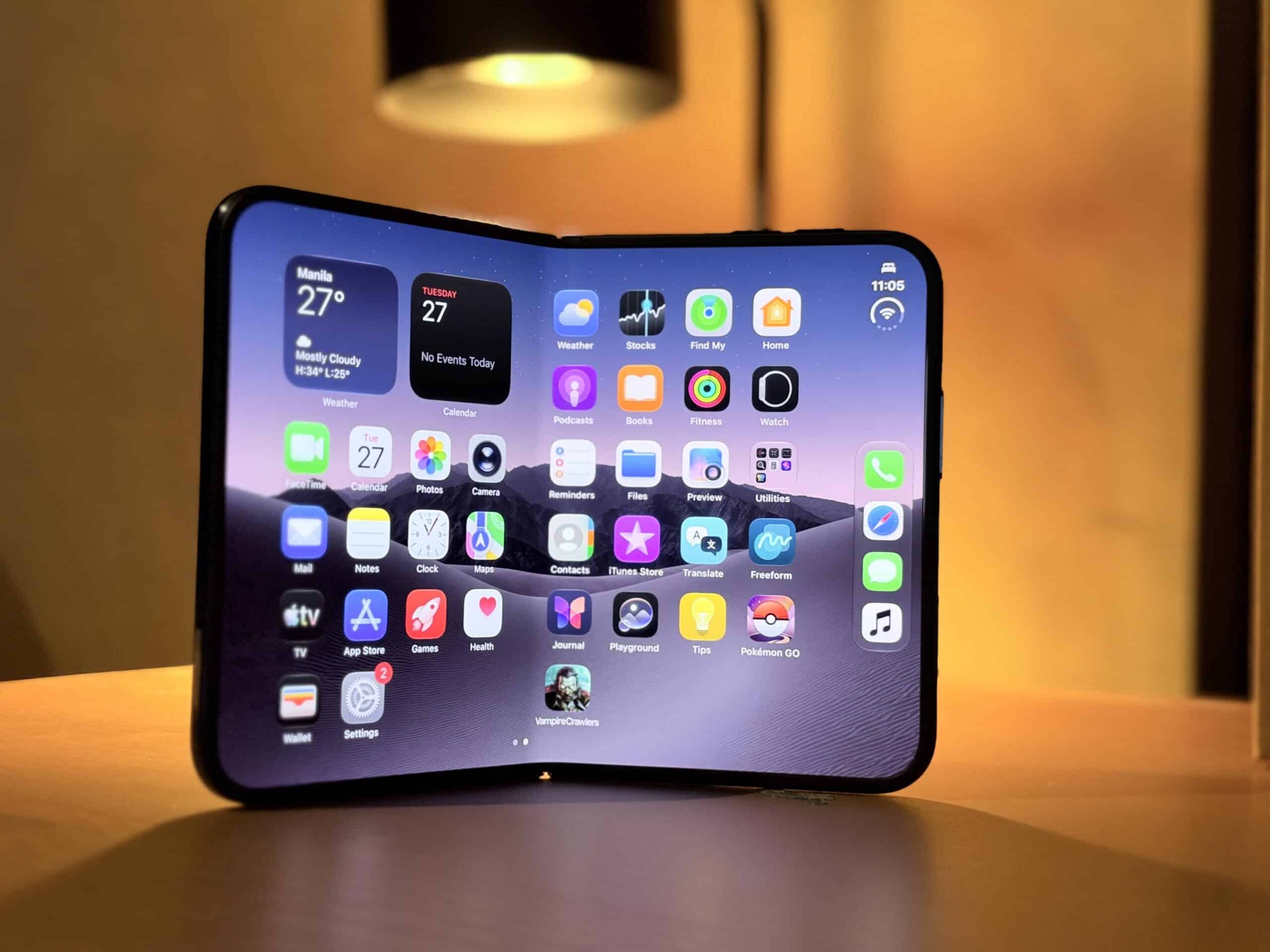
Is the iPhone Duo for you?
YOUR NEWS, OUR NETWORK.
Do you have Great News you want to tell the world?
Be it updates about your business or your community, you can make sure that it’s heard by submitting your story to our network reaching hundreds of news sites across 6 verticals.