
Global Times: Tiger quintuplets and a rescued male’s life in the wild reveal conservation gains in NE China’s national park
Nov 5, 2026
Beijing, China, November 5, 2026 -- In November 2025, an infrared camera in Northeast China Tiger and Leopard National Park recorded a rare sight: a wild Siberian tigress leading five cubs through the forest in Hunchun, Northeast China's Jilin Province.
Almost a year later, the young tigers were beginning to go their separate ways. Three had started becoming independent in August, while two remained with their mother, Chen Xiaocai, head of the park administration's general operations division, told the Global Times. The family's development marks a new chapter in China's first documented case of wild tiger quintuplets.
"All beings flourish when they live in harmony and receive nourishment from nature," Chinese President Xi Jinping said in an address to a key United Nations (UN) conference on biodiversity protection via video link in October 2021.
Spanning about 14,100 square kilometers across Jilin and Heilongjiang provinces, the park marks the fifth anniversary of its establishment this year. Its wild Siberian tiger population has grown from 27 in 2017, when the national park pilot began, to 72, while the number of wild Amur leopards has risen from 42 to 115, according to the National Forestry and Grassland Administration.
Another closely watched tiger, Wandashan No. 1, has settled in the park after being rescued and released in 2021. Monitoring shows that two females' activity areas overlap extensively with his territory, suggesting that the once-wandering male may have found a mate.
Behind these animals' journeys are years of work to restore forests, protect prey and make room for wildlife alongside human communities.
During a recent reporting trip through the two provinces, Global Times reporters spoke with rangers, researchers and rescue workers, tracing how daily patrols, intelligent monitoring and cooperation with Russia are helping safeguard the forests where tiger and leopard families grow.
Growing families
As her cubs become more independent, the tigress may be preparing for a move of her own: leaving her established territory to her weakest daughter.
Recent monitoring suggests the possibility of "territory gifting," Chen said. The mother would have a better chance of establishing herself farther afield, while her daughter might struggle to claim unfamiliar ground. He stressed that this interpretation of their movements remains tentative.
The tigress, identified as GH005F in the park's database, has a history of finding new ground herself. Park records show that she crossed from Russia into Hunchun in 2018. Since then, she has produced four litters totaling 13 cubs, earning her the nickname "hero mother."
Other large families are appearing in the forests, too. "We have already recorded at least three families with four cubs," Chen told the Global Times.
Supporting these families requires a plentiful supply of prey. Sika deer, roe deer and wild boar form the food base for the park's large predators, and their recovery helps tigresses feed themselves and support their growing young.
Chen said wild sika deer, once difficult to spot, had more than tripled in number compared with earlier levels and become increasingly common in the park. Roe deer and wild boar populations have also been growing.
With more prey available, mothers can obtain food more readily during the demanding months of nursing and raising cubs, he explained. Reduced human disturbance has also made breeding habitats safer.
These changes have involved years of work across the landscape. The park administration has overseen the closure and withdrawal of 156 mining concessions and the clearance of 276 contracted gully-use projects, alongside forest restoration and efforts to reconnect fragmented habitats.
For Xu Weihua, a researcher at the Research Center for Eco-Environmental Sciences under the Chinese Academy of Sciences, the tiger families illustrate why ecological integrity matters in national park protection.
A tiger needs a territory extending over a large area, Xu explained. Protecting its habitat, therefore, requires sufficient space to sustain its movements and reproduction, together with a food chain that can support a large predator. The forests, vegetation and prey animals all form part of that system.
The young tigers leaving GH005F are beginning that next stage of life. Chen said they were still moving around Hunchun, occasionally crossing into Russia. Their journeys remain under observation as they seek territories of their own.
Leave them undisturbed
In footage shown to reporters in Dongning, Heilongjiang Province, Wandashan No. 1 appeared strong and healthy as he moved through the forest.
The young male whose unexpected arrival in a village drew nationwide attention in 2021 has since found a stable home in the park.
There may be another development in his life. Wang Zhigang, director of Dongning's forestry and grassland bureau, said two female tigers' activity areas overlap extensively with his territory, suggesting that he may have found a mate. In April 2021, the tiger strayed into a village in Mishan, Heilongjiang, prompting an emergency rescue. Veterinarians sedated him and transported him to a rescue facility, where preparations began for his eventual return to the forest.
A veterinarian involved in the rescue recalled that staff restricted contact with people, examined blood and fecal samples for disease and parasites, and fed the tiger deer and wild boar meat. His physical condition and ability to hunt were central considerations in assessing whether he could return to the wild.
Gong Ming, a veterinarian who participated in the rescue, explained that the release site in Muling offered sufficient prey, suitable habitat and room for the tiger to move.
On May 18, 2021, Wandashan No. 1 was released at Dongxing Forest Farm in Muling. During his first year back in the wild, monitoring recorded a cumulative travel distance of more than 3,300 kilometers across several forest areas.
His movements also became part of the daily work of people protecting those forests. Sun Shanhai, head of the park's Dongjingcheng conservation center, described how staff followed his activities while he was in their area, monitoring his whereabouts and taking precautions to reduce the risk of encounters near human settlements.
For communities living near wildlife habitats, coexistence also requires practical safeguards against losses. According to the park administration, its wildlife-damage insurance arrangements have paid out more than 35 million yuan ($5.26 million) in recent years, covering losses including damaged crops and livestock.
Local residents also participate in protection. Through the park's "one household, one post" program, more than 8,000 village residents undertake ecological protection duties and receive annual subsidies, linking household incomes with the work of safeguarding the forests.
When tigers approach villages, staff share warnings through local WeChat groups and assess whether measures are needed to guide the animals away without harming them.
Before entering the forest, rangers consult recent monitoring records and plan routes around areas where tigers and leopards have been active, giving the animals space while continuing to watch over their habitat.
Tracking across borders
On the park's monitoring platform, an identification number links a tiger to images recorded at different locations.
Hu Xinyu, a senior manager at Jishi Media, which provides technical support for the park's monitoring system, told the Global Times that footage from connected cameras can now reach monitoring centers within about a minute of capture.
The cameras transmit images through a communications network operating in the 700 MHz frequency band. Satellite observations and drones provide additional information about the landscape, forming an integrated space-air-ground monitoring system.
Identifying the animal in each image presents another challenge. "It may show you its side, its rear or just its head," Hu said. The small populations of rare animals and limited image samples made developing recognition tools difficult, he explained.
AI helps identify species and distinguish individual tigers and leopards, while researchers review their markings and other features to confirm the identity of each animal. Repeated sightings then help staff follow dispersing youngsters, recognize breeding families and assess where animals are settling.
Some of the animals recorded by these cameras also appear in monitoring records across the Russian border. Following their journeys requires cooperation between the two countries.
In 2024, China and Russia signed an intergovernmental agreement on establishing a transboundary protected area for large cats, strengthening cooperation on population protection, anti-poaching and unobstructed wildlife movement.
Northeast China Tiger and Leopard National Park and Russia's Land of the Leopard National Park together form a protected landscape covering nearly 17,000 square kilometers.
Chen said the two sides exchange monitoring records and compare individual animals using common identification standards. "We bring the monitoring data together and use common identification standards to recognize individual tigers and leopards," he said.
Joint monitoring has identified 21 tigers and 27 leopards that regularly move between China and Russia.
The cooperation also extends to the routes that the animals travel. Since 2023, the two sides have opened wildlife passages through border barriers, with openings established at 290 locations. Cameras have recorded tigers, leopards, deer, wild boar and other animals using these routes.
For the researchers following GH005F, the next chapter remains close to the mother tiger. At the time of the October visit, two cubs were still accompanying her.
"They will also gradually become independent, and their mother will enter a new breeding cycle," Chen said.
Contact Info:
Name: Anna
Email: Send Email
Organization: Global Times
Website: https://www.globaltimes.cn/
Release ID: 89208557
In case of identifying any problems, concerns, or inaccuracies in the content shared in this press release, or if a press release needs to be taken down, we urge you to notify us immediately by contacting [email protected] (it is important to note that this email is the authorized channel for such matters, sending multiple emails to multiple addresses does not necessarily help expedite your request). Our dedicated team will be readily accessible to address your concerns and take swift action within 8 hours to rectify any issues identified or assist with the removal process. We are committed to delivering high-quality content and ensuring accuracy for our valued readers.

SK Chemicals, Seogwipo join hands to recycle waste banners
SK Chemicals is partnering with Seogwipo City on Jeju Island to establish a circular system that turns discarded banners into new products for reuse in the local community. The company said Wednesday that it has signed a memorandum of understanding with the city to promote the recycling and reuse of waste banners. The ceremony was attended by Seogwipo Mayor Kim Hee-chan and Ko Jeong-seok, head of SK Chemicals' recycling business division, among other officials. The partnership stems from an idea developed during a community problem-solving competition hosted by the Ministry of the Interior and Safety and the Korea Chamber of Commerce and Industry in September. Seogwipo joined a consortium that took on a waste banner recycling challenge proposed by SK Chemicals. The team was selected as one of the competition's outstanding participants, paving the way for the initiative to become an actual business. Under the agreement, the city will establish a system to collect, sort and transport discarded banners in cooperation with local administrative offices and the Korea Outdoor Advertising Assoc

JB Financial, Ant Group team up on AI credit scoring for foreign customers
JB Financial Group has teamed up with China's Ant Group to improve credit assessment systems using artificial intelligence (AI) technology and expand access to financial services for foreign residents in Korea, the group said Wednesday. The group signed a memorandum of understanding with Ant Digital Technologies (Ant DT), Ant Group's digital technology subsidiary, Tuesday at the latter's office in Singapore. The signing took place on the sidelines of the Singapore Fintech Festival 2026. The ceremony was attended by Park Jong-choon, vice president of JB Financial's AX Future Growth Division, and Leo Li, president of international business at Ant DT. Under the partnership, the two companies will explore ways to upgrade credit assessment models and financial services offered by JB Financial's affiliates, including Jeonbuk Bank, Kwangju Bank and JB Woori Capital. The collaboration will draw on Ant DT's AI capabilities and alternative credit assessment data to develop more sophisticated models, with the aim of making financial services more accessible to foreign residents in Korea. The partner

Maxim Mocha Gold seeks fresh appeal through merchandise, pop-ups
Dongsuh Foods' Maxim Mocha Gold is turning to collectible cups, limited-edition packaging and pop-up cafes to keep the decades-old coffee mix appealing to consumers, pairing its familiar product with new ways to experience the brand. Marking its 37th anniversary this year, the brand has sold about 5.3 billion sticks over the past 12 months, maintaining the top position in the domestic coffee mix market. "Maxim Mocha Gold has been loved by consumers for more than 30 years thanks to our coffee-making expertise and our genuine commitment to delivering the happiness that comes with a cup of coffee," the company’s official said. "We will continue developing products focused on flavor and aroma while introducing various marketing initiatives to engage with consumers." The company attributes its longevity to efforts to refine the product's flavor and aroma to suit the changing consumer preferences, drawing on expertise spanning coffee bean selection, roasting and extraction to find its signature “golden ratio." Beyond product development, Dongsuh Foods has expanded its marketing efforts to

KakaoBank becomes 2nd largest shareholder in Mongolia's M Bank
KakaoBank has signed an agreement to acquire a 15 percent stake in Mongolia's digital lender M Bank, a move that would make it the bank's second-largest shareholder, the Korean internet-only lender said Wednesday. The planned investment will deepen KakaoBank's partnership with MCS Group, Mongolia's largest conglomerate, whose financial subsidiary M Bank was established in 2022. Beyond the equity investment, the two companies plan to collaborate on developing financial products and services, exploring opportunities for joint expansion into other Central Asian markets. A key part of the partnership will involve sharing KakaoBank's alternative credit assessment technology and risk management expertise with its Mongolian partner. Working with MCS Group, which operates businesses across telecommunications, finance and retail, KakaoBank is developing credit assessment models tailored to the local market. The project will cover models for MCS Group's financial platform and digital bank, as well as alternative credit scoring systems that incorporate nonfinancial data. The initiative draws on Kakao

Korea's AI startup funding boom benefits select few
Artificial intelligence (AI) has become a magnet for investment capital, but the funding boom is benefiting only a few firms. Korea is seeing a similar trend, with investment concentrated in a handful of chip developers and companies developing foundational AI technologies, while others focusing on AI-powered services struggle to attract funding. According to market tracker The VC, domestic startups and small and medium-sized enterprises attracted 1.02 trillion won ($766 million) in investment last month, but the number of investment deals stood at just 86. Among those deals, the combined value of the five largest deals was 670.7 billion won, accounting for 66 percent of the total. Neural processing unit developer FuriosaAI and physical AI firm Dream Labs led the pack by raising 260 billion won and 120 billion won, respectively. The VC noted that AI and robotics accounted for 53 percent of the total investment in October, with the share remaining at 37 percent even after excluding FuriosaAI. Cumulative investment in the first 10 months of this year reached 11.7 trillion won, up 91 percen

NPS support all but guarantees Lee Jae-keun's KB Financial chairmanship
The National Pension Service (NPS), KB Financial Group’s largest shareholder, will vote in favor of Lee Jae-keun’s appointment as chairman, adding to expectations that his nomination will pass without difficulty at an extraordinary shareholders’ meeting on Friday. The NPS holds a 9.17 percent stake in the financial group. Its endorsement follows backing from the world’s two largest proxy advisory firms, Institutional Shareholder Services (ISS) and Glass Lewis, both of which have recommended that shareholders approve Lee’s appointment. In a voting recommendations report obtained by The Korea Times, ISS said “a vote for this resolution is warranted given the absence of any known issues concerning the nominee and the company’s board dynamics.” Glass Lewis likewise said it had identified “no substantial issues for shareholder concern” regarding the proposed appointment. The endorsements could carry particular weight at KB Financial, where foreign investors held 78.15 percent of shares as of Tuesday, the highest proportion among Korea’s major financial holding companies

Samsung SDI, LG Energy Solution vie for AI data center market
Samsung SDI and LG Energy Solution are showcasing next-generation battery technologies and integrated power solutions for artificial intelligence (AI) data centers at RE+ 2026, North America's largest energy industry exhibition, seeking to capitalize on growing demand for reliable power to support AI infrastructure. The exhibition, which opened Tuesday and runs through Thursday in Las Vegas, brings together more than 1,300 companies from around the world and is expected to attract over 40,000 visitors. Under the theme "AI Thinks, Battery Enables," Samsung SDI is showcasing battery solutions for energy storage systems (ESS), uninterruptible power supplies (UPS) and battery backup units (BBUs) designed to meet the growing power demands of AI data centers. Its exhibits include Samsung Battery Box (SBB), an integrated ESS solution equipped with locally manufactured prismatic batteries using nickel-cobalt-aluminum and lithium iron phosphate (LFP) chemistries. The company is also introducing its PrismStack prismatic battery brand to the North American market for the first time. For backup powe

AI use rises in PH amid Asean push, Pax Silica protests
MANILA, Philippines — The use of generative artificial intelligence (AI) among Filipinos of working age has increased, but the Philippines continues to trail three Southeast Asian economies even as Association of Southeast Asian Nations (Asean) member states push for wider adoption of the technology among businesses. About 20.7% of Filipinos aged 15 to 64 used

The newest GLC may be an EV, but it’s still a Mercedes-Benz at heart
Mercedes-Benz EV efforts are expanding, and it now includes an full-electric GLC SUV.

Singapore’s Botsync takes its Physical AI pitch to the US with US$11M in fresh funding
For most of its seven years, Botsync has been known for its heavy-duty robots that haul pallets around factory floors. Its new pitch is that the robots matter less than the software telling them what to do. The Singapore-headquartered robotics company has raised US$11 million in a round led by IvyCap Ventures, with participation from […] The post Singapore’s Botsync takes its Physical AI pitch to the US with US$11M in fresh funding appeared first on e27.

SanDisk’s new Guardian microSD cards are built to survive years of recording
The new high-endurance memory cards target dashcams and security cameras, with support for 4K recording and capacities ranging from 32GB to 512GB.
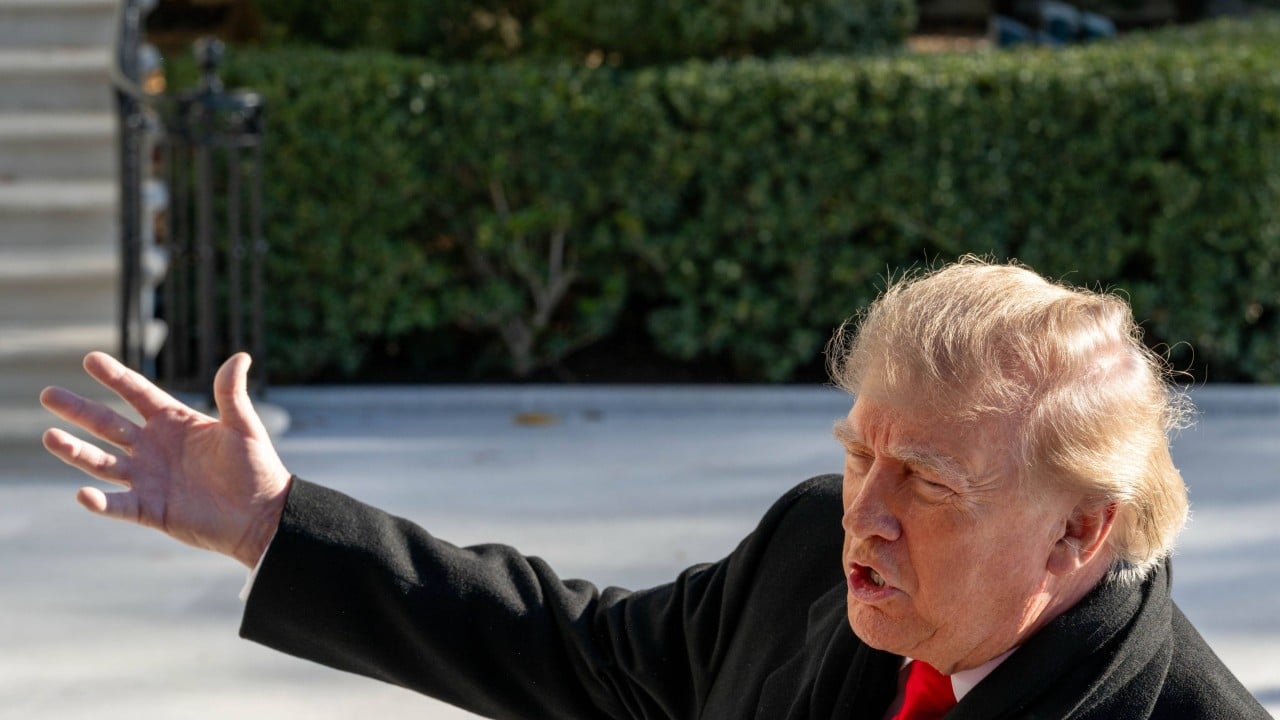
US President Trump casts doubt on spy claim at heart of Nvidia saga
US President Donald Trump has cast fresh doubt on allegations that a Chinese businesswoman at the centre of a scandal involving former Nvidia CEO Jensen Huang was a spy, adding a new twist to the leadership crisis engulfing the chipmaker. Speaking to reporters outside the White House on Monday before departing for a trip to Asia, Trump denied that Secretary of State Marco Rubio had briefed him on US intelligence indicating that Alice Huang – a businesswoman reportedly involved in an extramarital...


YOUR NEWS, OUR NETWORK.
Do you have Great News you want to tell the world?
Be it updates about your business or your community, you can make sure that it’s heard by submitting your story to our network reaching hundreds of news sites across 6 verticals.