
Global Times: In Peru’s Andes mountains, a small boat opens a new route to better lives
Nov 5, 2026
Beijing, China, November 5, 2026 -- Boat operator Freyder Caldas Cierto arrived at the dock at midnight.
Half an hour earlier, Daniel Eugenio Masgo had contacted the social management team at the Chaglla Hydropower Station in Peru's Huánuco region. His son was suffering severe abdominal pain and might have appendicitis.
Cierto and a colleague set out just after midnight. At 12:30 am, they reached Vista Alegre, picked up the young man and returned to the station. A vehicle arranged by the social management team then took him to the health center in Cayumba.
The young man now works as a security guard for a contractor working with the project. Cierto still remembers the journey.
The boat was part of a free community service that has connected villages around the Chaglla Hydropower Station for more than a decade.
The service began in 2015. Since 2019, when the Chaglla Hydropower Station came under operation led by China Three Gorges Corp (CTG) and its subsidiary Hubei Energy Group, the operating team has maintained the free boat service for local residents' daily travel as part of its regular community work, providing boats, fuel, crew and safety equipment.
Over more than a decade, the boats have traveled about 140,000 kilometers and carried approximately 100,000 passengers, according to project figures. Some journeys that once took a day and a half can now be completed in roughly 40 minutes, the Global Times learned.
The Chaglla boat offers a small, concrete view of a broader form of China's clean energy cooperation with other countries: alongside building and operating major projects, Chinese companies are increasingly seeking to ensure that local communities share the benefits of development. It also illustrates the Global Development Initiative's emphasis on people-centered, inclusive and equitable, action-oriented development.
A small, busy boat
Every morning, 45-year-old Cierto rises at 5:30 am. After breakfast, he says a prayer and leaves the camp at about 6:30 am for the reservoir dock. The crew holds a safety briefing before departure. Four operators rotate shifts to keep the service running throughout the week.
There are two fixed community trips each day, at 9 am and 3:30 pm. The regular run from the dam to Agua Nueva takes about 30 minutes one way. The boat carries residents from Agua Nueva, Santa Elena, Miraflores, Pucaplaya, Torre Jirca and Rinconada, as well as people from Huanchag, Huanipampa and Pampamarca who need to visit relatives, tend farms or transport agricultural products.
The Chaglla Hydropower Station stands on the Huallaga River in Peru's Huánuco region, deep in the eastern Andes. With an installed capacity of 456 megawatts, the station generates an average of about 2 billion kilowatt-hours of renewable electricity each year, feeding Peru's national grid.
The project company, Empresa de Generación Huallaga (EGH), is a subsidiary of CTG.
Cierto joined the Chaglla project in 2012, when construction teams still had to move materials and workers through areas without roads. He initially operated boats for the construction work. As the reservoir expanded, the boats began to serve another purpose: carrying the communities whose old routes had been submerged or cut off.
Passengers initially felt nervous about traveling on the water. The operators taught them how to use life jackets and paid particular attention to children.
Over time, the boat became part of the rhythm of community life. People no longer had to plan a trip around a difficult return journey or remain away from home for several days.
Juan Espinoza Lázaro, 48, makes a living from agriculture and fishing. He often travels to Agua Nueva to grow beans with his friend Yonel Escalante.
Lázaro remembers carrying coffee sacks weighing 30, 40 or even 50 kilograms on his back. He would walk until he found a mule or donkey to help transport the load, then continue toward the nearest town.
"Before, it was very difficult. Remembering those days is painful," he told the Global Times, adding that the hardships of that former life remain etched in his memory.
He recalled walking 13 to 15 hours to reach the nearest town, while people from Agua Nueva could spend 15 to 18 hours traveling to Cayumba. The route from Chulla or Pueblo Nuevo to Chaglla once took nearly seven hours.
Today, Lázaro can take the boat to Naranjal, which takes half an hour, walk an hour to the road and then go to Chaglla by car. The entire journey takes no more than three hours.
The difference is felt most clearly during the farming season. Beans provide relatively quick returns, but getting crops out of the mountains used to be a major obstacle.
The community boat now carries farm produce, while another boat is used for livestock, including cows and pigs. During harvest periods, the boats may carry more than 100 sacks of beans a day, each weighing about 50 kilograms.
The service also carries teachers, health workers and relatives visiting family members. For residents, the boat is not simply a faster way to cross the reservoir. It makes it possible to go to a farm in the morning and return home in the afternoon, to seek medical care without losing several days, or to attend an important family gathering.
"I am very grateful to the Chinese management team because we still have work here. We have even improved the service by purchasing new engines - two 100-horsepower engines and one 60-horsepower engine. This allows us to provide better transport for all residents in the communities," Cierto said.
At first, the boat could carry only eight people. Now it can carry 40. "During the harvest season, we transport 100 50-kilogram sacks of beans a day. Over a week, that amounts to 500 to more than 600 sacks. I believe that in this way, we are also contributing to the development of the local communities," he said.
Friendship built around a reservoir
From the very beginning, the boat service was introduced in response to a practical problem created by the reservoir itself.
When the reservoir began filling in 2015, some routes used by nearby communities were submerged or cut off. Ren Jianhua, a Chinese project representative at the Chaglla project, told the Global Times that the transport needs of reservoir residents had been raised and given priority attention during the project's environmental impact assessment.
Ren said the project owner subsequently included free boat transport for local communities among its social and environmental commitments submitted to Peru's relevant authorities. The service was therefore established as a long-term arrangement closely linked to the project.
Today, the station provides the boats, docks, fuel, personnel and safety equipment. Local maritime authorities oversee navigation, while passengers are required to follow safety rules. The station also sets aside an annual budget for the service.
The project had also established channels through which residents could raise concerns and discuss practical needs. A Residents' Petition and Complaint Center receives requests, while a Community Residents' Monitoring Committee holds regular meetings with villagers, Ren said.
The relationship between the station and nearby communities has developed through daily cooperation. Since the Chinese operator took over, Chinese and Peruvian employees have worked together in operations, maintenance and community affairs. Ren said differences in language and culture had not prevented the teams from building trust.
For local residents, the station's presence is most visible in the changes around them. In 2024, the Chaglla project helped 11 villages build or repair more than 20 kilometers of rural roads.
It has also provided more than 500 direct and indirect jobs for local residents, alongside training and skills development, according to Hubei Energy.
Education and health have been part of the same effort. The station has supported adult literacy activities, children's reading programs and medical assistance. It has also responded to local disasters and helped maintain public facilities.
Environmental work is built into the operation as well. The station organizes water-surface cleaning, has helped establish fish ponds and participates in the protection of vegetation and rare orchids. According to company information, the station has removed more than 360 tons of floating waste since it began operations.
For Lázaro, the relationship is best understood through everyday cooperation.
"We work together like a family," Lázaro said. "Neighbors help one another and live together in harmony."
A short journey comes with a great change
The story of the Chaglla Hydropower Station in Peru shows how a clean energy project can support both a country's energy transition and the people living around it.
This is where the Global Development Initiative offers a broader lens.
China's international green energy cooperation has continued to expand. China had carried out a wide range of green energy cooperation projects with more than 100 countries and regions, bringing the benefits of clean energy technology to local communities, the Xinhua News Agency reported in March.
For instance, in Azerbaijan, a Chinese-built wind power plant completed in December 2025 is expected to generate nearly 1 billion kilowatt-hours of green electricity a year and reduce carbon dioxide emissions by about 400,000 tons annually. In Nauru, a photovoltaic project built by a Chinese company now generates enough electricity to meet the country's demand, according to Xinhua.
This approach is consistent with the United Nations Sustainable Development Goal of ensuring access to affordable, reliable, sustainable and modern energy for all. This also shows that energy poverty is not solved by generation capacity alone. Power must reach households, schools, clinics and businesses, and projects must remain connected to the people who live around them.
Erik Solheim, former UN under-secretary-general and former executive director of the UN Environment Programme, told the Global Times that China will play an increasingly important leading and supporting role in the global green transition, and one of China's most important contributions is sharing its advanced technologies and best practices with developing countries while actively promoting green investment.
"By helping other nations develop electric vehicles, solar power and other clean energy technologies, China not only supports their green transformation but also provides them with valuable opportunities to learn, catch up and even potentially surpass existing achievements," he said.
This Chinese solution offers an important reference for developing countries seeking modernization paths suited to their own national conditions, and injects strong momentum into global sustainable development, Solheim noted.
In Chaglla, the clearest symbol of that connection remains a small boat.
Every day, at 3:30 pm, passengers gather at the dock with bags, farm supplies and sometimes animals. The boat pulls away from the dam and heads toward Agua Nueva. Half an hour later, people step ashore and continue toward their homes.
The journey is short, but the change it represents is much greater.
This article first appeared in the Global Times: https://www.globaltimes.cn/page/202609/1370010.shtml
Contact Info:
Name: Anna
Email: Send Email
Organization: Global Times
Website: https://www.globaltimes.cn/
Release ID: 89208558
In case of detection of errors, concerns, or irregularities in the content provided in this press release, or if there is a need for a press release takedown, we strongly encourage you to reach out promptly by contacting [email protected] (it is important to note that this email is the authorized channel for such matters, sending multiple emails to multiple addresses does not necessarily help expedite your request). Our efficient team will be at your disposal for immediate assistance within 8 hours – resolving identified issues diligently or guiding you through the removal process. We take great pride in delivering reliable and precise information to our valued readers.

Musinsa Standard brings minimalist fashion to Jeju Island
Musinsa Standard is bringing its minimalist fashion aesthetic to Jeju Island, opening its first store there as the Korean clothing brand looks to attract both local shoppers and international tourists. The store, located in Donam-dong, Jeju City, will open Nov. 26, marking the brand's 45th domestic location and expanding its retail presence beyond mainland Korea. To mark the opening, Musinsa Standard is introducing 12 limited-edition T-shirt designs developed with local brands Jeju Samdasoo, Bbang Gomi and Slowcoaster. The collection draws on familiar symbols of Jeju, including tangerines, hallabong citrus fruit and dol hareubang stone statues. A special collaboration with bottled-water brand Jeju Samdasoo will also offer visitors an opportunity to create personalized water bottles through a pop-up event running through Nov. 29, using photographs taken at an in-store photo booth for custom labels. The company is also seeking to build ties with local businesses, partnering with 18 cafes, select shops and specialty stores across the island. Customers visiting participating businesses will re

Boston Dynamics takes Atlas into chip factories in partnership with GlobalFoundries
Boston Dynamics is taking its humanoid robot Atlas beyond automotive manufacturing and into semiconductor factories, marking a new test of how physical artificial intelligence (AI) could reshape industrial operations. The robotics subsidiary of Hyundai Motor Group said Tuesday (local time) it had expanded its partnership with U.S. semiconductor manufacturer GlobalFoundries to test Atlas and deploy more of its four-legged Spot robots across the chipmaker’s global facilities. GlobalFoundries will become the first customer outside the automotive industry to test Atlas and the first semiconductor manufacturer to participate in Boston Dynamics’ humanoid robot early adopter program. On-site testing is scheduled to begin in early 2027, with the companies seeking to identify manufacturing tasks that humanoid robots could perform, assess integration requirements and train Atlas for specific operations. Meanwhile, GlobalFoundries plans to expand Spot deployments across facilities in Malta, New York; Burlington, Vermont; Dresden, Germany; and Singapore. The chipmaker has operated Spot at its Ver

SK Chemicals, Seogwipo join hands to recycle waste banners
SK Chemicals is partnering with Seogwipo City on Jeju Island to establish a circular system that turns discarded banners into new products for reuse in the local community. The company said Wednesday that it has signed a memorandum of understanding with the city to promote the recycling and reuse of waste banners. The ceremony was attended by Seogwipo Mayor Kim Hee-chan and Ko Jeong-seok, head of SK Chemicals' recycling business division, among other officials. The partnership stems from an idea developed during a community problem-solving competition hosted by the Ministry of the Interior and Safety and the Korea Chamber of Commerce and Industry in September. Seogwipo joined a consortium that took on a waste banner recycling challenge proposed by SK Chemicals. The team was selected as one of the competition's outstanding participants, paving the way for the initiative to become an actual business. Under the agreement, the city will establish a system to collect, sort and transport discarded banners in cooperation with local administrative offices and the Korea Outdoor Advertising Assoc

JB Financial, Ant Group team up on AI credit scoring for foreign customers
JB Financial Group has teamed up with China's Ant Group to improve credit assessment systems using artificial intelligence (AI) technology and expand access to financial services for foreign residents in Korea, the group said Wednesday. The group signed a memorandum of understanding with Ant Digital Technologies (Ant DT), Ant Group's digital technology subsidiary, Tuesday at the latter's office in Singapore. The signing took place on the sidelines of the Singapore Fintech Festival 2026. The ceremony was attended by Park Jong-choon, vice president of JB Financial's AX Future Growth Division, and Leo Li, president of international business at Ant DT. Under the partnership, the two companies will explore ways to upgrade credit assessment models and financial services offered by JB Financial's affiliates, including Jeonbuk Bank, Kwangju Bank and JB Woori Capital. The collaboration will draw on Ant DT's AI capabilities and alternative credit assessment data to develop more sophisticated models, with the aim of making financial services more accessible to foreign residents in Korea. The partner

Maxim Mocha Gold seeks fresh appeal through merchandise, pop-ups
Dongsuh Foods' Maxim Mocha Gold is turning to collectible cups, limited-edition packaging and pop-up cafes to keep the decades-old coffee mix appealing to consumers, pairing its familiar product with new ways to experience the brand. Marking its 37th anniversary this year, the brand has sold about 5.3 billion sticks over the past 12 months, maintaining the top position in the domestic coffee mix market. "Maxim Mocha Gold has been loved by consumers for more than 30 years thanks to our coffee-making expertise and our genuine commitment to delivering the happiness that comes with a cup of coffee," the company’s official said. "We will continue developing products focused on flavor and aroma while introducing various marketing initiatives to engage with consumers." The company attributes its longevity to efforts to refine the product's flavor and aroma to suit the changing consumer preferences, drawing on expertise spanning coffee bean selection, roasting and extraction to find its signature “golden ratio." Beyond product development, Dongsuh Foods has expanded its marketing efforts to

KakaoBank becomes 2nd-largest shareholder in Mongolia's M Bank
KakaoBank has signed an agreement to acquire a 15 percent stake in Mongolia's digital lender M Bank, a move that would make it the bank's second-largest shareholder, the Korean internet-only lender said Wednesday. The planned investment will deepen KakaoBank's partnership with MCS Group, Mongolia's largest conglomerate, whose financial subsidiary M Bank was established in 2022. Beyond the equity investment, the two companies plan to collaborate on developing financial products and services, exploring opportunities for joint expansion into other Central Asian markets. A key part of the partnership will involve sharing KakaoBank's alternative credit assessment technology and risk management expertise with its Mongolian partner. Working with MCS Group, which operates businesses across telecommunications, finance and retail, KakaoBank is developing credit assessment models tailored to the local market. The project will cover models for MCS Group's financial platform and digital bank, as well as alternative credit scoring systems that incorporate nonfinancial data. The initiative draws on Kakao

Korea's AI startup funding boom benefits select few
Artificial intelligence (AI) has become a magnet for investment capital, but the funding boom is benefiting only a few firms. Korea is seeing a similar trend, with investment concentrated in a handful of chip developers and companies developing foundational AI technologies, while others focusing on AI-powered services struggle to attract funding. According to market tracker The VC, domestic startups and small and medium-sized enterprises attracted 1.02 trillion won ($766 million) in investment last month, but the number of investment deals stood at just 86. Among those deals, the combined value of the five largest deals was 670.7 billion won, accounting for 66 percent of the total. Neural processing unit developer FuriosaAI and physical AI firm Dream Labs led the pack by raising 260 billion won and 120 billion won, respectively. The VC noted that AI and robotics accounted for 53 percent of the total investment in October, with the share remaining at 37 percent even after excluding FuriosaAI. Cumulative investment in the first 10 months of this year reached 11.7 trillion won, up 91 percen

NPS support all but guarantees Lee Jae-keun's KB Financial chairmanship
The National Pension Service (NPS), KB Financial Group’s largest shareholder, will vote in favor of Lee Jae-keun’s appointment as chairman, adding to expectations that his nomination will pass without difficulty at an extraordinary shareholders’ meeting on Friday. The NPS holds a 9.17 percent stake in the financial group. Its endorsement follows backing from the world’s two largest proxy advisory firms, Institutional Shareholder Services (ISS) and Glass Lewis, both of which have recommended that shareholders approve Lee’s appointment. In a voting recommendations report obtained by The Korea Times, ISS said “a vote for this resolution is warranted given the absence of any known issues concerning the nominee and the company’s board dynamics.” Glass Lewis likewise said it had identified “no substantial issues for shareholder concern” regarding the proposed appointment. The endorsements could carry particular weight at KB Financial, where foreign investors held 78.15 percent of shares as of Tuesday, the highest proportion among Korea’s major financial holding companies

Samsung SDI, LG Energy Solution vie for AI data center market
Samsung SDI and LG Energy Solution are showcasing next-generation battery technologies and integrated power solutions for artificial intelligence (AI) data centers at RE+ 2026, North America's largest energy industry exhibition, seeking to capitalize on growing demand for reliable power to support AI infrastructure. The exhibition, which opened Tuesday and runs through Thursday in Las Vegas, brings together more than 1,300 companies from around the world and is expected to attract over 40,000 visitors. Under the theme "AI Thinks, Battery Enables," Samsung SDI is showcasing battery solutions for energy storage systems (ESS), uninterruptible power supplies (UPS) and battery backup units (BBUs) designed to meet the growing power demands of AI data centers. Its exhibits include Samsung Battery Box (SBB), an integrated ESS solution equipped with locally manufactured prismatic batteries using nickel-cobalt-aluminum and lithium iron phosphate (LFP) chemistries. The company is also introducing its PrismStack prismatic battery brand to the North American market for the first time. For backup powe

Crimson Desert sweeps 2026 Korea Game Awards with 8 honors
Pearl Abyss' open-world action adventure game Crimson Desert dominated the 2026 Korea Game Awards on Wednesday, claiming the top Presidential Award and seven additional honors. The award ceremony took place at BEXCO in Busan, one day before G-STAR 2026, the country's largest annual game trade show, kicks off at the same venue for a four-day run from Thursday through Sunday. Crimson Desert swept eight honors in total. In addition to the Grand Prize, the Global Game Award and all four technical creation categories covering sound, planning and scenario, character and graphics, the game's team also secured two individual awards. Cho Yong-hyun, executive director of Pearl Abyss, won the Best Developer Award, and voice actor Lee Hyun also won the Popular Voice Actor Award for voicing the game's protagonist Kliff. With eight awards, the game set a new record, passing the previous mark of six held by Smilegate's Lost Ark in 2019 and Neowiz's Lies of P in 2023. Released globally for PC and consoles in March after about seven years of development, Crimson Desert achieved rare commercial success for

Lotte Biologics completes construction of production plant in Incheon, eyes global expansion
Lotte Biologics completed construction of its biomanufacturing facility in Incheon, just west of Seoul, on Wednesday, marking a major step in its efforts to become a leading player in the global biopharmaceutical market. A completion ceremony for Plant 1, located at the company's Songdo Bio Campus in Incheon, was attended by the company's co-chief executive officers, James Park and Shin Yoo-yeol, as well as Lotte Group Chairman Shin Dong-bin. "The bio business is Lotte Group's future growth engine and a next-generation industry that will lead Korea's next generation," Chairman Shin said at the event. The production plant, spanning nearly 100,000 square meters, is equipped with key facilities, including a production building and a wastewater treatment facility. It has an annual production capacity of 120,000 liters and is scheduled to begin commercial operations by 2028, according to the company. The facility is expected to provide the company with a large-scale production base in Korea, complementing its manufacturing facility in Syracuse, New York, which it acquired in 2023, the company
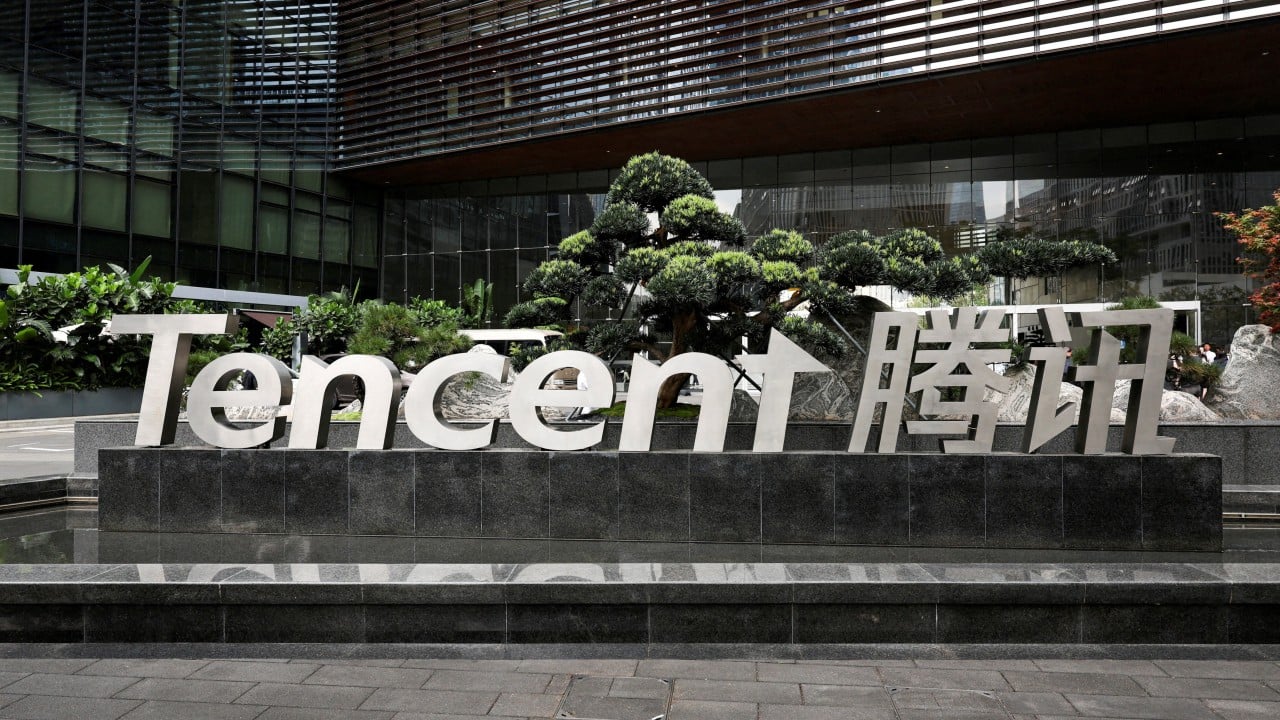
Tencent profit dips as sixfold increase in AI infrastructure spending sacrifices margin
Tencent Holdings ramped up capital spending more than sixfold in the third quarter to above US$12 billion, weighing on profit and free cash flow as the Chinese tech giant poured money into computing power to catch up in the country’s cutthroat artificial intelligence race. Adjusted net income for the three months ended September 30 fell 6 per cent year on year to 66.5 billion yuan (US$10 billion), matching the consensus estimate of analysts polled by Bloomberg. Revenue rose 8 per cent to 207.3...



YOUR NEWS, OUR NETWORK.
Do you have Great News you want to tell the world?
Be it updates about your business or your community, you can make sure that it’s heard by submitting your story to our network reaching hundreds of news sites across 6 verticals.