
Global Leading Chelating Ion Exchange Resin Supplier: Top Applications in Metal Recovery
Sep 29, 2026
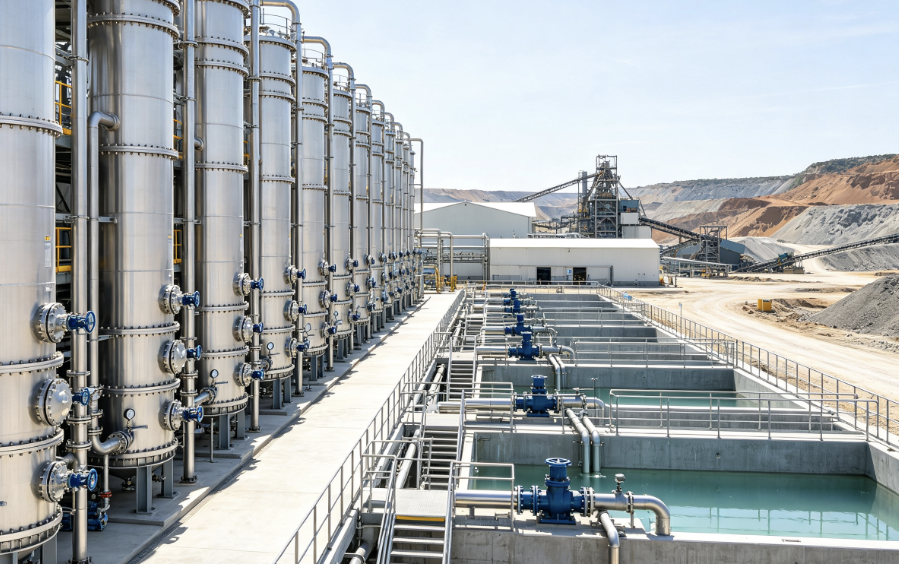
Xian, Shaanxi Sep 28, 2026 (Issuewire.com) - Modern hydrometallurgy faces an escalating dual challenge across the global mineral processing sector. Industrial demand for high-purity battery minerals and critical metals continues to surge rapidly. Simultaneously, high-grade primary ore deposits are declining worldwide. Consequently, mining operators and recycling facilities increasingly process low-grade complex ores, industrial wastewater, and recycled electronic waste streams. Furthermore, tightening global environmental regulations enforce strict heavy metal discharge limits and push industries toward zero liquid discharge practices. These operational drivers create an urgent market need for separation technologies that offer high selectivity, physical durability, and reliable chemical stability in demanding hydrometallurgical environments. Traditional metal separation techniques, such as non-selective chemical precipitation and liquid-liquid solvent extraction, encounter significant operational obstacles when handling complex feedstocks. Chemical precipitation generates substantial volumes of hazardous sludge and struggles to isolate target elements with high purity. Solvent extraction provides effective selectivity, but organic solvent losses, phase disengagement issues, fire risks, and high reagent costs limit its economic feasibility for polishing low-concentration streams. Therefore, industrial facilities increasingly implement advanced solid-phase ion exchange solutions. Operating as a Global Leading Chelating Ion Exchange Resin Supplier (https://www.seplite.com/chelating-resin/), Sunresin develops engineered SEPLITE® resin technologies designed specifically to overcome these complex process challenges. Through specialized polymer architectures, global hydrometallurgical processing plants achieve efficient metal recovery, reduce operational costs, and meet stringent purity requirements. The Science of Precision: How Chelating Resins Master Extreme Process Conditions Unlike standard cation exchange media that rely primarily on simple electrostatic attraction, chelating resins operate through coordinate covalent bonding mechanisms. The polymer matrices contain specialized functional groups equipped with donor atoms, including nitrogen, oxygen, phosphorus, and sulfur. Consequently, these active sites form stable coordination complexes with specific target metal cations. This targeted coordination chemistry allows process systems to selectively capture target metal ions, even when surrounded by high background concentrations of alkali or alkaline earth metals such as sodium, calcium, and magnesium. Industrial hydrometallurgical processing environments present harsh operational conditions, including strong mineral acid solutions, elevated operating temperatures, and severe osmotic shock during regeneration cycles. Sunresin New Materials Co. Ltd. engineers its proprietary polymer matrices to withstand these continuous mechanical and chemical stresses. Matrix designs utilize macroporous polymeric beads that combine fast mass-transfer kinetics with exceptional physical toughness. As a direct result, the resin beads resist osmotic cracking, physical attrition, and matrix breakdown during continuous column operations over extended operational lifespans. Furthermore, process matrix tolerance plays a decisive role in continuous plant design. In typical leach solutions, high background concentrations of dissolved ferric iron, aluminum, and silica frequently cause resin fouling or foul downstream equipment. Advanced functionalized media overcome these operational barriers by maintaining target ion selectivity across broad pH ranges. Whether extracting copper from strongly acidic leachates or refining nickel from neutral raffinate streams, tailored functional groups ensure optimal dynamic capacity, minimal matrix fouling, and long resin lifespans. Deep-Dive into Top Applications: High-Value Metal Recovery Scenarios 1. Selective Copper (Cu) Recovery from Acidic Leachates and Raffinates Copper extraction from low-grade heap leach solutions, acidic mine drainage, and solvent extraction raffinates presents severe technical hurdles. These processing streams typically contain high background levels of ferric iron, aluminum, and manganese alongside relatively low concentrations of dissolved copper ions. Conventional chemical precipitation cannot isolate copper without co-precipitating substantial amounts of iron, which severely degrades final product quality and increases processing costs. To solve this separation challenge, specialized SEPLITE® chelating media utilize iminodiacetic acid or picolylamine functional groups. These functional groups exhibit an exceptionally high preference for copper ions over ferric iron in acidic media between pH 1.5 and pH 2.5. When raw solutions flow through fixed-bed resin columns, the media selectively binds copper ions while allowing ferric iron and aluminum to pass through unobstructed. Subsequently, dilute sulfuric acid elutes the bound copper, producing a highly concentrated copper sulfate stream ideal for direct electrowinning. This targeted separation process maximizes copper yield while drastically lowering chemical reagent consumption. 2. Nickel (Ni) & Cobalt (Co) Purification in Battery Recycling & Laterite Processing The ongoing expansion of the electric vehicle market drives unprecedented global demand for high-purity battery chemicals, particularly nickel sulfate and cobalt sulfate. However, raw materials derived from High-Pressure Acid Leaching (HPAL) of nickel laterite ores or recycled lithium-ion batteries contain complex impurity profiles. Achieving the strict 99.99% purity thresholds required for precursor cathode active materials requires complete removal of micro-impurities, including calcium, magnesium, zinc, lead, and copper. Sunresin manufactures specialized aminophosphonic and bis-picolylamine chelating resins tailored specifically for battery chemical refining. These resins excel at scavenging micro-ppm impurity levels from concentrated nickel and cobalt solutions. For example, aminophosphonic functional resins selectively capture trace calcium and magnesium from pregnant leach solutions where background nickel concentrations exceed 80 grams per liter. By integrating these precise resin beds into continuous purification loops, hydrometallurgical refiners eliminate product contamination, minimize reagent consumption, and maintain consistent battery-grade output. 3. Precious Metal (Gold Au, Platinum Group Metals) Scavenging from Complex Systems Recovering precious metals from low-grade ores, industrial process waste, spent catalysts, and electronic scrap represents a high-value engineering priority. Gold, platinum, palladium, and rhodium often exist at trace concentrations within complex acidic or chloride-heavy leach liquors. Traditional carbon adsorption or standard anion exchange media frequently suffer from slow kinetic performance, low loading capacities, or irreversible poisoning by organic contaminants and base metals. To overcome these limitations, thiourea-functionalized and specialized polyamine chelating resins provide an effective solution. These resins form extremely strong coordination bonds with noble metal complexes, such as gold cyanide or chloroplatinate complexes, even in solutions with high concentrations of copper, iron, or zinc. Furthermore, the macroporous resin matrix enables rapid adsorption kinetics and high dynamic operating capacity. Operators can efficiently elute precious metals using specialized chemical eluents, enabling complete resin regeneration and repeated reuse over hundreds of operating cycles. This long-term operational durability lowers total capital expenditure for precious metal refiners. 4. Ultra-Deep Heavy Metal Scavenging (Hg, Pb, Cd) and Effluent Polishing Managing toxic heavy metals in industrial effluent streams represents a critical regulatory and operational imperative worldwide. Elements such as mercury, lead, and cadmium pose severe environmental and health risks, even at trace concentrations. In chlor-alkali production, mercury contamination in brine streams damages electrolysis membranes and compromises product safety. Similarly, modern mining discharge regulations mandate heavy metal concentration limits down to single-digit parts per billion (ppb). Sunresin manufactures advanced thiol and dithiocarbamate chelating resins designed specifically for ultra-deep heavy metal removal. For example, Sunresin's specialized ion exchange technology achieves deep mercury removal in the chlor-alkali industry (https://www.seplite.com/sunresin-s-ion-exchange-technology-achieves-deep-mercury-removal-in-the-chlor-alkali-industry/), reducing mercury concentrations in industrial brine streams to below 5 ppb. This high-affinity technology applies equally to industrial effluent polishing, where resins selectively bind lead, cadmium, and mercury from complex salt backgrounds. The treated water easily satisfies strict environmental discharge regulations, enabling industrial facilities to implement closed-loop water recycling programs. Beyond Resin: Sunresin's Integrated EPC & R&D Advantage Delivering successful industrial separation outcomes requires more than manufacturing high-performance polymeric media; it demands comprehensive process engineering expertise. Operating as a trusted global partner, Sunresin (Sunresin New Materials Co. Ltd.) (https://www.seplite.com/sunresin-profile/) combines advanced material research with complete engineering, procurement, and construction (EPC) capabilities. The company maintains state-of-the-art laboratory testing facilities and pilot testing rigs to evaluate customer-specific feedstocks thoroughly. Through detailed matrix testing, experienced application engineers optimize operating parameters, column hydrodynamic design, and regeneration protocols prior to full-scale commercial installation. Furthermore, Sunresin operates automated manufacturing facilities that comply with rigorous ISO-certified quality management standards. Every production batch undergoes strict quality control testing for physical strength, bead size distribution, and dynamic exchange capacity. Beyond resin supply, Sunresin designs and builds custom automated skid-mounted equipment modules fitted with advanced control systems. This integrated service model ensures seamless equipment integration, rapid site commissioning, and optimized operational costs for global mining and industrial clients. Conclusion & Next Steps: Partnering with Sunresin for Sustainable Hydrometallurgy As global industries move toward sustainable circular economy models, efficient resource recovery remains essential. Chelating ion exchange technologies provide the precise selectivity and operational durability required to transform complex metallurgical waste streams and low-grade leachates into high-value product streams. By combining high-capacity SEPLITE® chelating resins with turnkey EPC engineering services, Sunresin helps global operators maximize mineral recovery while minimizing environmental impacts. Industrial processing plants seeking to improve metal recovery efficiency, resolve process bottlenecks, or conduct pilot feasibility testing can connect directly with technical specialists. Learn more about customized separation technologies and request matrix testing evaluations by visiting the official company website at https://www.seplite.com/.

Source :Sunresin New Materials Co. Ltd.
This article was originally published by IssueWire. Read the original article here.

KCCI, audit authority collaborate to resume construction of 4,000 public housing units
The audit authority has cleared a key hurdle for six stalled public housing projects totaling nearly 4,000 units after the Korea Chamber of Commerce and Industry (KCCI) sought a preliminary consultation on behalf of builders struggling with soaring construction costs. The KCCI said on Tuesday that the Board of Audit and Inspection (BAI) determined that project costs for the six sites, covering 3,936 housing units, can be recalculated to reflect current market conditions. The case marks the KCCI’s first use of the consultation program since it was opened to private organizations in May. “Companies have faced difficulties for a long time, but this was not an issue they could easily make a decision on,” Lee Jong-myung, head of the KCCI's industry innovation division, said. “The BAI's decision to open its doors to the private sector has added another channel for resolving corporate difficulties, and its first result will benefit the public through housing supply.” The six projects are part of a public-private housing program, with public agencies providing the land while private bu

Private sector's role increased in 5th Nuri launch
Private companies played a significantly greater role in the successful fifth launch of Korea’s Nuri rocket on Wednesday, signaling that the country’s efforts to keep pace with the global shift toward a private sector-led “New Space” era are gaining momentum. The Nuri rocket completed its fifth launch and 20-minute-long flight successfully after lifting off at the Naro Space Center in Goheung, Jeonnam-Gwangju Special Metropolitan City, at 12:25 p.m. The most notable change in the latest launch was not the rocket itself, but the growing presence of private-sector personnel at the launch site. Hanwha Aerospace has overseen the manufacturing of the Nuri rocket as its system integrator since the fourth launch on Nov. 27 last year, but this time, its role expanded to the consoles at the launch control center. Hanwha Aerospace deployed 42 staffers for the fifth launch. They participated in operations at 20 of the 22 consoles responsible for launch vehicle systems, and at 18 of them, Hanwha employees directly operated the controls instead of specialists from the Korea Aerospace Researc
![[EXPLAINER] How AI emerged as new threat in Korea's bank hacking crisis](https://newsimg.koreatimes.co.kr/2026/10/07/77d98bb7-f23e-430d-be94-38ae9821547a.jpg)
[EXPLAINER] How AI emerged as new threat in Korea's bank hacking crisis
Hackers once had to manually test security defenses, identify vulnerabilities and work out how to exploit them. Now, artificial intelligence (AI) can do much of that work, requiring little human input. That possibility is at the center of Korea's latest security crisis in the financial sector, as investigators have found traces of an AI-powered autonomous penetration-testing tool in a series of recent cyberattacks on the country's major banks. Since last week, Shinhan Bank, KB Kookmin Bank, Hana Bank, Yegaram Savings Bank and BNK Busan Bank have all reported data breaches, while Woori Bank and NH NongHyup Bank have detected signs of hacking attempts, though no data leaks were confirmed. Shinhan Bank reported that about 25,000 customers were affected, with personal information including names, phone numbers, annual income and loan limits exposed. KB Kookmin reported 119 affected customers, while Hana Bank said personal information belonging to 89 customers was exposed. The hacking spree has drawn particular concern after investigators reportedly found traces of an AI-powered tool known as

SK Energy, HD Hyundai Oilbank face fines over alleged fuel price fixing
SK Energy and HD Hyundai Oilbank may face sanctions from the Fair Trade Commission (FTC) over allegations that they colluded on gasoline, diesel and kerosene prices, with combined fines potentially reaching 4.63 trillion won ($3.45 billion). The antitrust regulator said Wednesday that it sent a review report to the two companies, formally launching deliberations over the alleged price-fixing case. The FTC said the alleged collusion lasted from February 2022, shortly before Russia's invasion of Ukraine, through March this year, shortly after the outbreak of the war in Iran. The case covers petroleum products that are essential to household and economic activity. Korea's oil refining industry is highly concentrated, with SK Energy, HD Hyundai Oilbank, GS Caltex and S-Oil accounting for about 98 percent of the domestic market. According to the FTC, SK Energy and HD Hyundai Oilbank exchanged information on the prices of gasoline, diesel and kerosene, including provisional prices, final prices and sales policies. The regulator also determined that the two companies colluded on prices followin

Beef tallow remains hurdle to Charrr's global expansion
Countries’ regulations on imported foods containing beef tallow pose a hurdle for Samyang Foods as the Korean instant noodle giant seeks to expand exports of its latest black bean sauce instant noodles, Charrr. The company has established Buldak as a massively popular product around the globe without using beef tallow, selling 10 billion units and generating cumulative sales of 7 trillion won ($5.2 billion) as of June. Unlike the spicy, brothless instant noodle brand, however, Charrr uses beef tallow as a key ingredient to give its sauce a rich, beefy flavor. Charrr is not Samyang’s first instant noodle product using beef tallow. The company launched Samyang 1963 in November last year with the ambitious goal of reviving the “forgotten” taste of its first instant noodle product, Samyang Ramen, which was introduced in 1963 and used beef tallow. Samyang Ramen, introduced by the late company founder Chun Joong-yoon to help feed a population suffering from widespread poverty at the time, remains a cornerstone of the company’s identity. Its use of beef tallow has now become part of

Bank data breach victims step up calls for compensation
A growing number of customers affected by a string of recent personal data breaches at major commercial banks and other financial firms appear to be turning to class action lawsuits in pursuit of compensation, according to industry officials, Wednesday. The banks have pledged to fully compensate customers whose losses, including those from voice phishing scams, are found to have directly resulted from the leaks. But proving that a loss was caused by a specific data breach can be difficult in practice, and the banks have yet to set out clear standards for determining which claims would qualify, prompting some victims to resort to legal action. Seven financial firms have reported information leaks so far, including three of the country’s largest commercial lenders — Shinhan Bank, KB Kookmin Bank and Hana Bank. Shinhan reported the largest breach, affecting around 25,000 people, followed by 119 at KB Kookmin and 89 at Hana Bank. The exposed data includes customers’ names, contact details, resident registration numbers, annual income and loan limits. The combination of personal and fin
![[COVER STORY] Nuri rocket successfully completes 5th flight](https://newsimg.koreatimes.co.kr/2026/10/07/6a8cafff-abc8-4ebb-86ed-8bb7b1eb07d3.jpg)
[COVER STORY] Nuri rocket successfully completes 5th flight
Korea’s domestically-developed Nuri rocket successfully carried out its mission in its fifth launch Wednesday, sequentially deploying 14 out of the 15 satellites it carried into their target orbit. The key objective of the fifth launch was to safely deploy the five microsatellite constellations, and its success has demonstrated Korea's increased multisatellite launch capabilities, taking another step toward privately-led commercial launch services. The rocket lifted off from the launchpad at the Naro Space Center in Goheung, Jeonnam-Gwangju Special Metropolitan City, at 12:25 p.m. and completed its roughly 20-minute flight at around 12:45 p.m. The rocket separated its first stage about two minutes after liftoff, followed by the second stage about four and a half minutes into the flight. At around 12:40 p.m., it reached an altitude of 570 kilometers and completed the sequential deployment of five New-space Earth Observation Satellite Constellation for National Safety (NEONSAT) microsatellites (satellites No. 2 to 6), its primary payload, along with nine of the 10 CubeSats it carried. In

AMD to establish AI research center in Korea this year, hire hundreds
U.S. chip giant AMD announced Wednesday that it plans to establish an artificial intelligence (AI) research center in Korea by the end of this year and hire hundreds of researchers as part of broader AI cooperation between the company and Korea. The announcement came during a meeting between AMD CEO Lisa Su and Second Vice Minister of Science and ICT Ryu Je-myung in Seoul. AMD also plans to help develop graduate-level AI and AI transformation talent and collaborate with Korea on a reference model for heterogeneous AI computing. The model would combine AMD’s central processing units (CPUs) and graphics processing units (GPUs) with domestically developed neural processing units (NPUs). The meeting, arranged by the Ministry of Science and ICT, served as an interim review of AI cooperation agreed upon by the ministry and AMD during President Lee Jae Myung’s attendance at the San Francisco AI Summit in July. AMD also outlined plans to work with Korea’s private sector to create new business opportunities. At a subsequent roundtable with 13 Korean companies involved in AI infrastructure, c

OpenAI releases new batch of math breakthroughs
OpenAI released a new batch of mathematics breakthroughs on Tuesday following calls from AI researchers and developers to slow the growth of the technology. The company released 377 results that cover different physics, mathematical and other scientific problems solved by an OpenAI internal frontier model not yet available to the public. “Towards acceleration of scientific...

IMF chief urges countries to do more to curb debt and regulate AI
Countries both rich and poor must take faster action to cut debt and counter growing inequality as their economies weather a triple whammy from the artificial intelligence boom, heavy borrowing and shocks from wars in the Middle East and Ukraine, the head of the IMF said Wednesday. “Some very tough political choices stare us in...

China’s open-weight AI models are winning global users. Who is capturing the value?
China’s open-weight artificial intelligence models are taking off globally, but much of the money they generate is flowing to third-party providers rather than the companies that create them, according to a new study. Developers including DeepSeek and Moonshot AI make their model weights – essentially the “brains” of their AI systems – freely available for download. This strategy, which has accelerated global adoption over the past two years, allows other companies to run the models on their own...

Why Trump chose these leaders to head his 'Super Intelligence Force'
President Trump’s selection of four administration officials to head up his new “Super Intelligence Force” is offering a window into how the White House will approach AI in the face of pressure over its risks. The group of government leaders each reflect different priorities of the Trump administration after months of mixed messaging on the...


YOUR NEWS, OUR NETWORK.
Do you have Great News you want to tell the world?
Be it updates about your business or your community, you can make sure that it’s heard by submitting your story to our network reaching hundreds of news sites across 6 verticals.