
Global Data Route Analytics releases autoinjectors market study projecting USD 48,029.60 million by 2035
Sep 17, 2026
Global Data Route Analytics published a 1,750-page study valuing the global autoinjectors market at USD 13,451.97 million in 2025 and projecting USD 48,029.60 million by 2035, a 13.57% CAGR.
Dehri-on-Sone, India, September 17, 2026 -- New market study examines autoinjector demand and capacity
Global Data Route Analytics released a new study, Global Autoinjectors Market Size, Share, Trends & Forecast 2020–2035, on September 16, 2026. The 1,750-page report values the global autoinjectors market at USD 13,451.97 million in 2025 and projects it to reach USD 48,029.60 million by 2035, a compound annual growth rate (CAGR) of 13.57%. The market stood at USD 8,420.00 million in 2020, meaning revenue will have expanded more than five-fold across the fifteen-year study period.
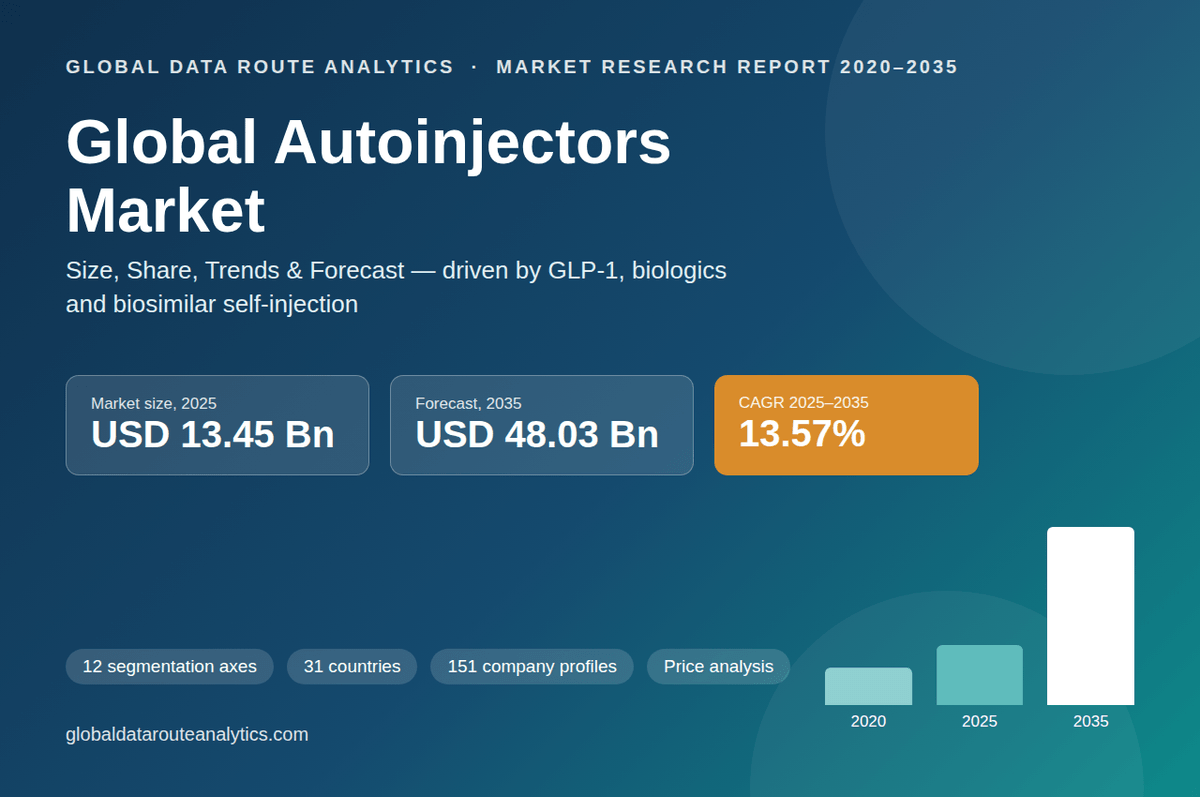
Global Autoinjectors Market Size, Share, Trends & Forecast 2020–2035: USD 13.45 billion in 2025 to USD 48.03 billion by 2035 at a 13.57% CAGR. Source: Global Data Route Analytics.
The report's central finding is that the autoinjector has moved from an accessory to the drug to the constraint on how fast the drug reaches patients. The multi-year U.S. shortages of semaglutide and tirzepatide were resolved only after manufacturers demonstrated national-scale device capacity, and the World Health Organization's 2025 addition of GLP-1 receptor agonists to its Essential Medicines List extends that demand to health systems worldwide.
Regional and segment findings
North America is the largest regional market at USD 6,100.47 million in 2025, rising to USD 21,813.81 million by 2035 at a 13.59% CAGR, supported by the deepest biologic and GLP-1 prescribing base and mature combination-product regulation. Asia-Pacific is the fastest-growing region at a 14.12% CAGR, from USD 2,811.46 million to USD 10,534.69 million, on expanding healthcare infrastructure and localized device manufacturing in China and India. Europe follows at USD 3,286.32 million in 2025, reaching USD 11,482.60 million by 2035.
Single-use and disposable devices generate 97.1% of 2025 revenue, while reusable autoinjector systems are the fastest-growing device category at a 14.69% CAGR as circular and electromechanical platforms reach market. Monoclonal antibodies and fusion proteins account for roughly 61% of revenue by drug modality; home and self-care settings represent about 68% of revenue and reach USD 33,752.72 million by 2035. Endocrinology, metabolic and hormonal disorders, the therapy area covering diabetes, obesity and chronic weight management, is the fastest-growing of twelve therapy areas at a 14.29% CAGR, reaching USD 11,116.53 million by 2035.
Inquiries regarding the report, individual company profiles, segments or countries may be submitted at https://globaldatarouteanalytics.com/report/1690/global-autoinjectors-market/inquiry.
Drivers and capital deployment
Demand rests on a chronic-disease base that continues to expand. The IDF Diabetes Atlas (11th edition) counts 589 million adults living with diabetes today, projected to reach 852.5 million by 2050, with China, India and Indonesia alone accounting for 50.5% of the world's undiagnosed cases. GBD 2021 projects rheumatoid arthritis prevalence to grow 80.2% to 31.7 million by 2050, and the WHO expects the population aged 60 and over to double to 2.1 billion by 2050, precisely the cohort for whom a one-button, needle-shielded device outperforms a vial and syringe.
Manufacturers have responded with historic capital deployment. Novo Nordisk's capital expenditure reached DKK 60.1 billion in 2025. BD committed USD 110 million to expand glass prefillable-syringe production in Nebraska. Ypsomed grew commercial autoinjector sales 33.6% while building toward one billion devices of installed annual capacity. SHL Medical opened a USD 220 million, 360,000-square-foot autoinjector facility in North Charleston, South Carolina. Adjacent expansion is arriving from two directions: IV-to-subcutaneous conversion, led by the first subcutaneous PD-1 inhibitors, is pulling oncology onto injector-compatible formats, while a biosimilar pipeline of 90 U.S.-approved products, with interchangeability increasingly granted at the level of the individual autoinjector presentation, multiplies device volume without new-molecule risk.
Restraints and challenges
The report examines the forces working against adoption: high-profile device recalls by the U.S. FDA and UK MHRA over devices that failed to activate or required excess activation force; pricing scrutiny that runs from the 2016 EpiPen congressional hearings to CMS's negotiated 2027 Medicare price of USD 274 per month for Ozempic against a USD 959 list price; the approval of the first needle-free epinephrine nasal spray as a route-of-administration substitute; counterfeit GLP-1 pens seized inside the legitimate U.S. supply chain; and manufacturing-capacity bottlenecks across primary containers, elastomers and assembly. A dedicated ten-dimension price-analysis chapter compares list, net, pharmacy-acquisition, government-negotiated and consumer cash prices for autoinjector-delivered therapies.
Autoinjectors market by region, 2025 vs 2035 (USD Million): North America leads; Asia-Pacific grows fastest at 14.12% CAGR.
Report scope and company profiles
Rather than a short key-players list, the report profiles 151 companies across 15 dedicated chapters spanning the full value chain: autoinjector device manufacturers (SHL Medical, Ypsomed, Owen Mumford, Phillips-Medisize, Haselmeier, Nemera, Elcam Medical); platform and injection-technology companies (Gerresheimer, SMC Ltd., Enable Injections, Credence MedSystems, Crossject, PharmaJet); pharma companies using autoinjector platforms (Novo Nordisk, Eli Lilly, Sanofi, AbbVie, AstraZeneca, UCB, Teva); emerging epinephrine innovators (Kaleo, ALK-Abelló, Pirouette Pharma, EpiSafe, Rx Bandz); biosimilar and specialty-injectable companies (Celltrion, Samsung Bioepis, Fresenius Kabi, Viatris, Lupin); primary-container and CDMO partners (West Pharmaceutical Services, BD, SCHOTT Pharma, Nipro, Terumo, Recipharm, Catalent, Vetter Pharma); and connected-device, safety-syringe, automation and regional emerging-market companies. Each profile covers company details, financials, product summary and recent developments.
Recent developments tracked include embecta's acquisition of Owen Mumford with up to £50 million tied to Aidaptus autoinjector sales, FDA approval of AstraZeneca's Saphnelo Pen for once-weekly self-administration, Haselmeier's PiccoJect entering clinical trials, Ypsomed's launch of the YpsoLoop circular platform, Gerresheimer and Portal Instruments' expanded collaboration on the PRIME Nexus reusable electromechanical autoinjector, and Kindeva Drug Delivery's contract worth up to USD 129 million to supply DuoDote autoinjectors to the U.S. Strategic National Stockpile.
The 1,750-page study quantifies revenue in USD million for 2020–2035 across twelve segmentation axes, 17 sub-segmentations and more than 120 categories: device reusability, drug-container architecture, nominal capacity, drive mechanism, dose configuration, connectivity, route of administration, therapy area (12 areas, 40+ indications), drug modality, end-use setting, administrator type and region, with country-level breakdowns for 31 countries and sub-regions across North America, Europe, Asia-Pacific, Latin America and the Middle East & Africa. Analytical frameworks include drivers, restraints, opportunities and challenges with sourced indicators, SWOT, PESTEL, Porter's Five Forces, regulatory and investment scenarios, and COVID-19 recovery analysis. Deliverables include a 700+ table PDF and an Excel data pack with verified company and product links.
About Global Data Route Analytics
Global Data Route Analytics is a market research and consulting firm delivering syndicated and custom research across healthcare, life sciences, medical devices and adjacent industries. Its reports combine primary interviews, verified secondary sources and proprietary estimation models to give manufacturers, investors and policy teams a quantified basis for decisions. The complete report is available at https://globaldatarouteanalytics.com/report/1690/global-autoinjectors-market.
Contact Info:
Name: Sushanto Das
Email: Send Email
Organization: Global Data Route Analytics
Address: Kumar Complex, Pali Road, Dehri-on-Sone, Rohtas, Bihar 821307, India
Website: https://globaldatarouteanalytics.com
Release ID: 89203483
Should there be any problems, inaccuracies, or doubts arising from the content provided in this press release that require attention or if a press release needs to be taken down, we urge you to notify us immediately by contacting [email protected] (it is important to note that this email is the authorized channel for such matters, sending multiple emails to multiple addresses does not necessarily help expedite your request). Our efficient team will promptly address your concerns within 8 hours, taking necessary steps to rectify identified issues or assist with the removal process. Providing accurate and dependable information is central to our commitment.

Dealing with shadow AI: What companies should do instead of banning AI
In most companies across Singapore and Thailand, the AI policy already exists: drafted, approved and circulated. And yet, somewhere in the same organisation, an employee is pasting a supplier contract into a free chatbot to summarise it before a meeting. This is known as shadow AI: employees using AI at work without company oversight, such […] The post Dealing with shadow AI: What companies should do instead of banning AI appeared first on e27.
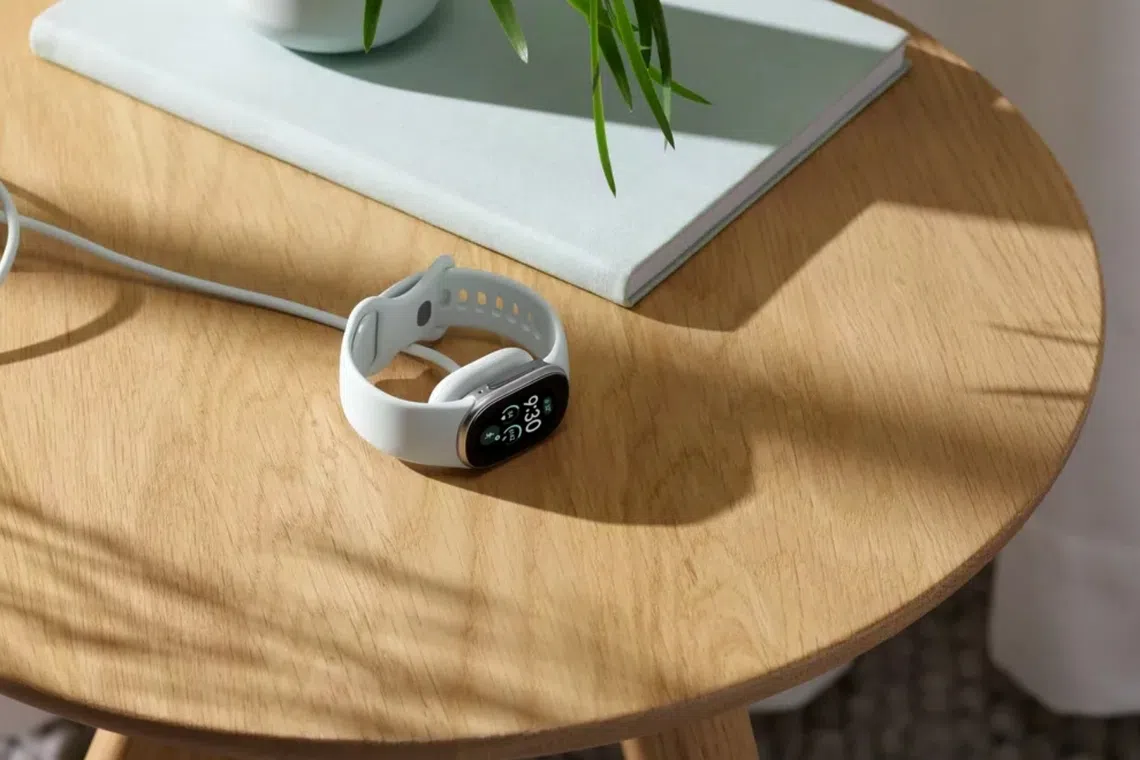
Google Fitbit Edge gets an OLED display and a replaceable battery
Google’s new Fitbit Edge combines smartwatch-style features with a fitness band’s lightweight design, while adding a repairable build and up to seven days of battery life.

Telcos are racing to put AI in the app. Their subscribers have already said which kind they will trust
At M360 ASEAN in Kuala Lumpur last week, the GSMA released its ASEAN Consumer Scam Report 2026. Nearly half of reported scam cases across six markets remain unresolved. Nearly nine in ten consumers said they had recognised AI being used in scams, from deepfakes to voice cloning. Julian Gorman, the GSMA’s head of Asia Pacific, […] The post Telcos are racing to put AI in the app. Their subscribers have already said which kind they will trust appeared first on e27.

Apple says iPhone Duo demand is “extraordinary” as shipping dates slip to late January 2027
Pre-orders for Apple’s first foldable iPhone have pushed estimated delivery dates into late January 2027, but it’s unclear whether this reflects strong demand or limited launch inventory.
CXMT forecasts up to US$19.8 billion in 3 quarters’ net income; pledges share buy-back
Chinese memory chip giant ChangXin Memory Technologies (CXMT) forecast a net income of up to US$19.8 billion for the first nine months of 2026, marking a dramatic swing from a loss a year ago, as the domestic champion cashed in on artificial intelligence-driven demand while aggressively challenging global rivals including Samsung Electronics and SK Hynix. Meanwhile, Zhu Yiming, chairman of the Hefei-based memory giant, proposed to buy back 1 billion (US$149.56 million) to 2 billion yuan of...

Hyundai Motor steps up physical AI push amid Chinese competition, stock slump
UIWANG, South Korea — Seeking to remain competitive against fast-growing Chinese automakers and find new sources of growth amid a sharp retreat in its share price, Hyundai Motor Group is stepping up its push into robotics and physical artificial intelligence (AI). The move comes as the world's third-largest automotive group faces growing pressure to improve profitability in its conventional carmaking business amid intensifying competition in the global electric vehicle (EV) market, particularly from lower-priced Chinese models. Investors are also questioning when the group's heavy investments in robotics will start to pay off. Hyundai Motor Co.'s shares more than doubled after its U.S. subsidiary Boston Dynamics unveiled its Atlas humanoid robot at the Consumer Electronics Show (CES) in January, reaching a record closing high of 755,000 won ($565.2) in June. But the stock has since fallen sharply to near pre-CES levels, closing at 312,000 won Friday, as enthusiasm over robotics has faded amid weak earnings and growing concerns about how soon the technology can turn profitable. Speculati

Korea Eximbank, IFC seek to deepen cooperation in strategic industries
Hwang Ki-yeon, chairman and CEO of the Export-Import Bank of Korea (Korea Eximbank), met with Makhtar Diop, managing director of the International Finance Corporation (IFC), to discuss ways to strengthen strategic financial cooperation between the two institutions, the bank said Sunday. The meeting took place Friday on the sidelines of the IMF-World Bank Group Annual Meetings in Bangkok, Thailand. The two institutions agreed to expand their existing cooperation on infrastructure and energy projects in developing countries into new strategic areas, including critical mineral supply chains and innovative and high-tech industries. Korea Eximbank plans to leverage the World Bank Group's multilateral cooperation platforms and financing instruments to help stabilize global supply chains and strengthen cooperation across the critical minerals value chain. The bank also intends to expand joint financing for innovative and high-tech sectors, including emerging green industries, artificial intelligence and digital infrastructure. "By working closely with global financial institutions, including the

Telecom firms, science ministry urged to prove 5G standalone reliability
The planned rollout of 5G standalone (SA) services is renewing calls for telecom operators and the ICT ministry to deliver more reliable connections amid concerns that the transition could repeat the shortcomings of the initial 5G rollout unless consumers see tangible improvements in service quality. The Ministry of Science and ICT made the 5G SA adoption a policy priority late last year, requiring telecoms to transition to the technology as a condition for mobile spectrum reallocation. SK Telecom and LG Uplus are targeting commercial launch of 5G SA services by the end of this year, joining KT, which introduced SA support for the iPhone 17 series in March. Unlike earlier 5G networks that rely on a fourth-generation (4G) LTE core, 5G SA uses a dedicated 5G core to reduce latency and support applications such as autonomous driving and physical artificial intelligence (AI). The rollout comes amid lingering concerns over service reliability, with consumers having faced higher bills but limited improvements over LTE during the initial 5G transition. If operators seek to charge more for SA-b

Hyundai Motor moves to sidestep self-driving fallout in India
Hyundai Motor’s bet on India is being overshadowed by Tesla’s technological leap toward flying cars, exposing the Korean carmaker’s self-driving doldrums. Hyundai Motor Group recently pledged $15.5 billion (20.7 trillion won) in investment in India through 2032, seeking to strengthen its position in one of the world’s fastest-growing major automotive markets. The commitment spans manufacturing expansion, research and development, supplier development and next-generation technologies. However, the scale of the investment does not guarantee that India will become a reliable growth engine capable of offsetting mounting challenges in its cash-cow markets, such as the United States, Korea and Europe. Hyundai Motor and Kia sold a combined roughly 850,000 vehicles in India last year, with sales growth of just 0.2 percent. That performance lagged significantly behind local rivals Mahindra & Mahindra and Tata Motors, whose sales rose 18.4 percent and 2.9 percent, respectively, during the same period. The gap reflects a competitive landscape in which established domestic players have streng

Musk's criticism of Samsung, SK's memory chip pricing runs counter to market logic: expert
Tesla CEO Elon Musk’s latest criticism of Samsung Electronics and SK hynix over their memory chip pricing defies market realities, as any chipmaker that undercuts prevailing prices risks selling out immediately and leaving other customers without supplies, a prominent U.S. chip analyst said. Jim Handy, founder and general director of semiconductor research firm Objective Analysis, challenged Musk's recent description of the Korean chipmakers' prices as “extortionate,” compared with those of their U.S. rival Micron. The chip expert underscored that memory prices are determined by market forces rather than individual suppliers. “Memory makers do not set their parts’ pricing — the market determines the pricing,” Handy said in a written interview with The Korea Times, Sunday. “In that light, it is hard to understand Musk’s comment.” Musk is looking to manufacture chips in-house through his Terafab project, with soaring memory prices an increasingly pressing concern for his ambitions. He posted on X on Tuesday (local time), “Micron has been reasonable regarding future m

FTC's costly crackdown on conglomerates generates little return
The Fair Trade Commission’s (FTC) increasingly aggressive crackdown on major conglomerates is generating a costly cycle with little tangible return, as the watchdog has been forced to refund billions of won in fines overturned by courts. The watchdog has returned nearly 290 billion won ($216.7 million) to companies since 2022 after administrative court rulings overturned its sanctions. The figures raise questions about whether the regulator’s tougher enforcement produces lasting results or simply creates more legal and financial burdens for both businesses and taxpayers. The latest figures offer little reassurance. For the first nine months combined this year, the FTC returned 23 billion won in fines and associated payments, with 99.7 percent of the amount attributable to sanctions overturned in whole or in part through administrative litigation, according to data submitted to Rep. Choi Eun-seok of the main opposition People Power Party. But the regulator is moving in the opposite direction. Since President Lee Jae Myung took office last year, the government has pushed to strengthen

The AI promise was automation. The reality? Managing digital workers
When artificial intelligence agents first arrived, they came with a tantalising promise: autonomous “digital workers” that would finally free humans from corporate drudgery. As businesses across Asia are discovering, however, the reality is quite the opposite – more work, new friction and a whole new layer of management. When Xiao Mengjie, an AI product marketing manager at a Big Tech firm in Shanghai, recently assigned two AI agents what she described as a simple task, she expected efficiency....


When AI takes your side in a workplace conflict

YOUR NEWS, OUR NETWORK.
Do you have Great News you want to tell the world?
Be it updates about your business or your community, you can make sure that it’s heard by submitting your story to our network reaching hundreds of news sites across 6 verticals.