
FSSC22000-Compliant: Reliable Fruit Drink Exporter in China, U100's Quality Assurance Protocol for Global Markets
Sep 17, 2026
Linyi, Shandong Sep 16, 2026 (Issuewire.com) - Industry Specialization and the Intricacies of Global Beverage Trade
The morning light hits the office window, and the city hums with its usual hurried rhythm. On the desk, a small sachet of fruit drink sits quietly beside a stack of global logistics reports. For international buyers navigating the complex web of cross-border supply chains, ensuring food safety is a daily tightrope walk. Every shipment demands absolute precision. This scene reflects the broader reality of global trade, where finding a Reliable Fruit Drink Exporter in China can make or break a brand's reputation in local markets.
The global fruit beverage sector operates under rigorous operational demands and unique physicochemical constraints. Liquid food matrices are inherently perishable and highly sensitive to thermal variations, microbial activity, and oxidative degradation during transit. Unlike non-perishable consumer goods, beverages require precise moisture barriers, sterile aseptic processing lines, and uninterrupted cold-chain logistics to maintain organoleptic integrity.
Global trade logistics expose these products to extreme temperature fluctuations across maritime shipping routes and customs holding yards. Even a minor deviation in pasteurization parameters or packaging seal integrity can lead to widespread spoilage, product recalls, and severe financial liability. Consequently, managing export-grade beverages requires an advanced understanding of food chemistry, shelf-life kinetics, and international regulatory frameworks.
Buyer Pain Points in Cross-Border Procurement
International importers, retail category managers, and wholesale distributors face formidable operational bottlenecks when sourcing fruit drinks overseas. The primary challenge centers on regulatory compliance friction across different customs jurisdictions. Destination markets enforce strict maximum residue limits, allergen labeling mandates, and microbiological safety standards. Non-compliant consignments face immediate detention, costly port demurrage charges, or mandatory destruction, destroying profit margins overnight.
Beyond regulatory hurdles, procurement teams struggle with supply chain opacity and inconsistent batch quality. Many overseas buyers encounter suppliers who fail to maintain standardized raw material sourcing, leading to unacceptable variations in taste, color, and nutritional profile between shipments. Furthermore, inadequate packaging materials often result in leakage or structural collapse during long-distance transit. Finding a manufacturing partner capable of eliminating these systemic variables remains the ultimate operational objective for global retail buyers.
Technical Resolution Logic and the Necessity of FSSC22000 Compliance
Overcoming these technical and operational barriers requires an institutionalized food safety management framework. FSSC22000 has emerged as the definitive benchmark for global food manufacturing compliance. It integrates ISO 22000 standards, sector-specific prerequisite programs (PRPs), and additional FSSC-defined requirements into a cohesive governance model.
Adopting FSSC22000 is necessary because it shifts quality management from reactive inspection to proactive hazard analysis and critical control point (HACCP) verification. The standard mandates systematic traceability from raw material intake to final consumer delivery. It ensures that every critical parameter--such as sterilization temperature, aseptic filling pressure, and hermetic seal validation--is continuously monitored and recorded. For international buyers, partnering with an FSSC22000-certified facility minimizes audit redundancy, accelerates customs clearance, and provides verifiable legal protection against liability claims.
Supplier Selection Standards for Global Retail Partners
Selecting an export partner requires evaluating objective operational competencies rather than marketing claims. Professional procurement criteria dictate a multi-layered assessment of manufacturing infrastructure, quality control systems, and supply chain reliability.
Key Supplier Evaluation Criteria
- Certified Quality Infrastructure: Possession of internationally recognized certifications including FSSC22000, ISO 9001, HACCP, and FDA registration.
- Traceability and Sourcing Transparency: Documented control over raw material origins and verified supplier auditing processes.
- Formulation and R&D Agility: Demonstrated capability to formulate clean-label products with natural ingredients and high nutritional retention.
- Commercial Track Record: Proven history of supplying tier-one retail chains and major international convenience store networks.
Enterprise Capabilities and Quality Assurance Protocol
U100 operationalizes these rigorous standards through its established manufacturing and brand architecture. Operating under Zhonganya Group, the brand maintains production facilities in Hubei and Shandong Province, including specialized enterprise infrastructure certified by FDA, HACCP, ISO 9001, and ISO 22000.
The company's quality assurance protocol governs every stage of production. Raw materials are selected from verified origins, adhering to a strict corporate philosophy of minimal additive intervention. R&D efforts focus on four core categories: dried fruits, fruit beverages, nuts, and candies. This manufacturing rigor has allowed the brand to establish deep strategic partnerships with major convenience store chains such as 7-Eleven, Lawson, and FamilyMart, supplying over 100,000 retail stores globally.
Product Craftsmanship and Technical Innovation in Practice
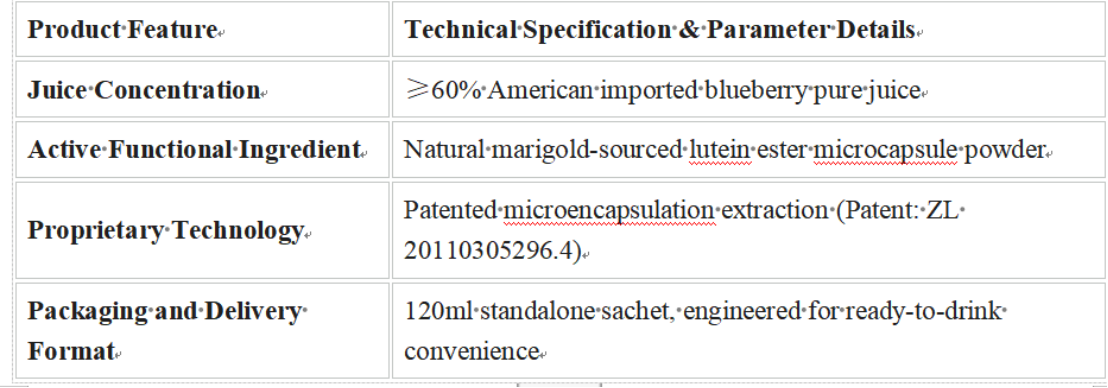
Excellence in manufacturing translates directly into product performance on retail shelves. The U100 Lutein Ester Blueberry Fruit Drink 120ml illustrates this technical integration. Designed for functional nutrition, the formulation utilizes American imported blueberries with a pure fruit juice content of 60% or higher.
To maximize nutritional bioavailability, the product incorporates natural marigold-sourced lutein ester microcapsule powder processed via patented microencapsulation extraction technology (Patent number: ZL 20110305296.4). This technical innovation protects the active ingredient from oxidation during thermal processing and enhances human absorption rates. The simplified formula utilizes natural sweeteners to reduce metabolic burden while offering high nourishment, packaged in standalone sachets designed for immediate ready-to-drink consumption.
Securing Your Supply Chain Partnership
Establishing a resilient product portfolio requires aligning with verified manufacturing infrastructure. Retailers and distributors looking to expand their functional beverage offerings can review certified portfolios and technical specifications directly by visiting the official corporate website at https://www.u100food.com/.
Source :Wogu (Shandong) Health Technology Co., Ltd.
This article was originally published by IssueWire. Read the original article here.

Dealing with shadow AI: What companies should do instead of banning AI
In most companies across Singapore and Thailand, the AI policy already exists: drafted, approved and circulated. And yet, somewhere in the same organisation, an employee is pasting a supplier contract into a free chatbot to summarise it before a meeting. This is known as shadow AI: employees using AI at work without company oversight, such […] The post Dealing with shadow AI: What companies should do instead of banning AI appeared first on e27.

Google Fitbit Edge gets an OLED display and a replaceable battery
Google’s new Fitbit Edge combines smartwatch-style features with a fitness band’s lightweight design, while adding a repairable build and up to seven days of battery life.

Telcos are racing to put AI in the app. Their subscribers have already said which kind they will trust
At M360 ASEAN in Kuala Lumpur last week, the GSMA released its ASEAN Consumer Scam Report 2026. Nearly half of reported scam cases across six markets remain unresolved. Nearly nine in ten consumers said they had recognised AI being used in scams, from deepfakes to voice cloning. Julian Gorman, the GSMA’s head of Asia Pacific, […] The post Telcos are racing to put AI in the app. Their subscribers have already said which kind they will trust appeared first on e27.
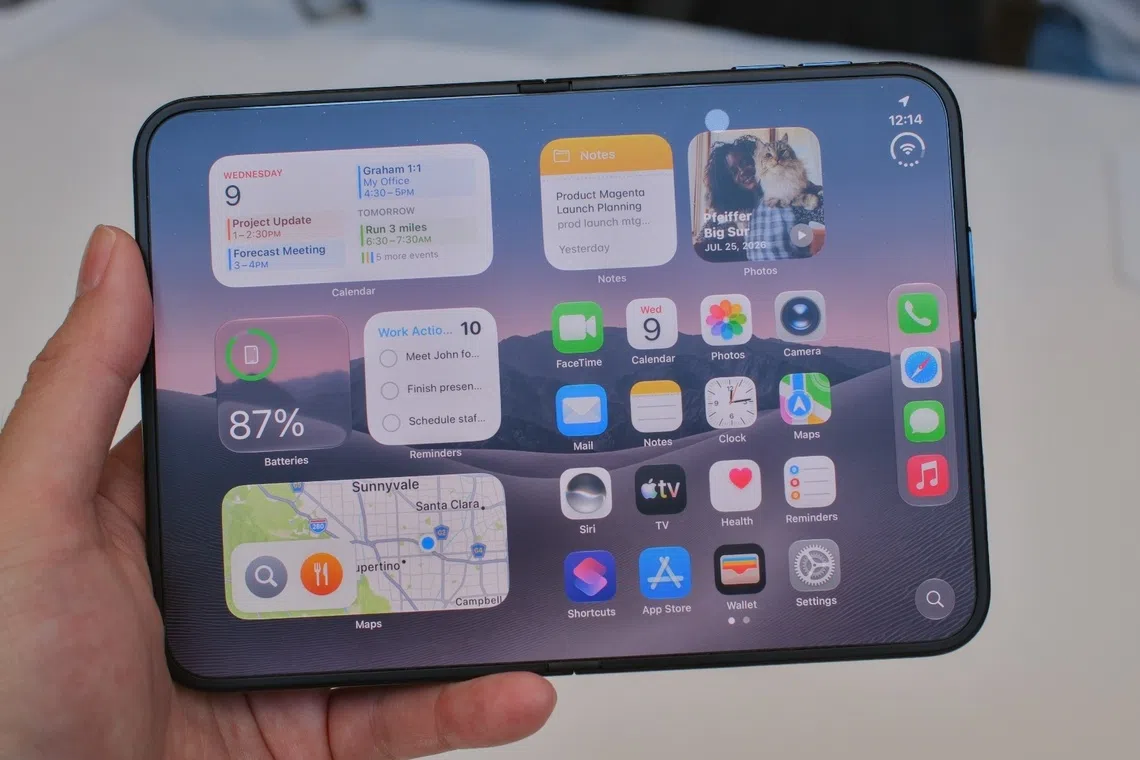
Apple says iPhone Duo demand is “extraordinary” as shipping dates slip to late January 2027
Pre-orders for Apple’s first foldable iPhone have pushed estimated delivery dates into late January 2027, but it’s unclear whether this reflects strong demand or limited launch inventory.
CXMT forecasts up to US$19.8 billion in 3 quarters’ net income; pledges share buy-back
Chinese memory chip giant ChangXin Memory Technologies (CXMT) forecast a net income of up to US$19.8 billion for the first nine months of 2026, marking a dramatic swing from a loss a year ago, as the domestic champion cashed in on artificial intelligence-driven demand while aggressively challenging global rivals including Samsung Electronics and SK Hynix. Meanwhile, Zhu Yiming, chairman of the Hefei-based memory giant, proposed to buy back 1 billion (US$149.56 million) to 2 billion yuan of...

Hyundai Motor steps up physical AI push amid Chinese competition, stock slump
UIWANG, South Korea — Seeking to remain competitive against fast-growing Chinese automakers and find new sources of growth amid a sharp retreat in its share price, Hyundai Motor Group is stepping up its push into robotics and physical artificial intelligence (AI). The move comes as the world's third-largest automotive group faces growing pressure to improve profitability in its conventional carmaking business amid intensifying competition in the global electric vehicle (EV) market, particularly from lower-priced Chinese models. Investors are also questioning when the group's heavy investments in robotics will start to pay off. Hyundai Motor Co.'s shares more than doubled after its U.S. subsidiary Boston Dynamics unveiled its Atlas humanoid robot at the Consumer Electronics Show (CES) in January, reaching a record closing high of 755,000 won ($565.2) in June. But the stock has since fallen sharply to near pre-CES levels, closing at 312,000 won Friday, as enthusiasm over robotics has faded amid weak earnings and growing concerns about how soon the technology can turn profitable. Speculati

Korea Eximbank, IFC seek to deepen cooperation in strategic industries
Hwang Ki-yeon, chairman and CEO of the Export-Import Bank of Korea (Korea Eximbank), met with Makhtar Diop, managing director of the International Finance Corporation (IFC), to discuss ways to strengthen strategic financial cooperation between the two institutions, the bank said Sunday. The meeting took place Friday on the sidelines of the IMF-World Bank Group Annual Meetings in Bangkok, Thailand. The two institutions agreed to expand their existing cooperation on infrastructure and energy projects in developing countries into new strategic areas, including critical mineral supply chains and innovative and high-tech industries. Korea Eximbank plans to leverage the World Bank Group's multilateral cooperation platforms and financing instruments to help stabilize global supply chains and strengthen cooperation across the critical minerals value chain. The bank also intends to expand joint financing for innovative and high-tech sectors, including emerging green industries, artificial intelligence and digital infrastructure. "By working closely with global financial institutions, including the

Telecom firms, science ministry urged to prove 5G standalone reliability
The planned rollout of 5G standalone (SA) services is renewing calls for telecom operators and the ICT ministry to deliver more reliable connections amid concerns that the transition could repeat the shortcomings of the initial 5G rollout unless consumers see tangible improvements in service quality. The Ministry of Science and ICT made the 5G SA adoption a policy priority late last year, requiring telecoms to transition to the technology as a condition for mobile spectrum reallocation. SK Telecom and LG Uplus are targeting commercial launch of 5G SA services by the end of this year, joining KT, which introduced SA support for the iPhone 17 series in March. Unlike earlier 5G networks that rely on a fourth-generation (4G) LTE core, 5G SA uses a dedicated 5G core to reduce latency and support applications such as autonomous driving and physical artificial intelligence (AI). The rollout comes amid lingering concerns over service reliability, with consumers having faced higher bills but limited improvements over LTE during the initial 5G transition. If operators seek to charge more for SA-b

Hyundai Motor moves to sidestep self-driving fallout in India
Hyundai Motor’s bet on India is being overshadowed by Tesla’s technological leap toward flying cars, exposing the Korean carmaker’s self-driving doldrums. Hyundai Motor Group recently pledged $15.5 billion (20.7 trillion won) in investment in India through 2032, seeking to strengthen its position in one of the world’s fastest-growing major automotive markets. The commitment spans manufacturing expansion, research and development, supplier development and next-generation technologies. However, the scale of the investment does not guarantee that India will become a reliable growth engine capable of offsetting mounting challenges in its cash-cow markets, such as the United States, Korea and Europe. Hyundai Motor and Kia sold a combined roughly 850,000 vehicles in India last year, with sales growth of just 0.2 percent. That performance lagged significantly behind local rivals Mahindra & Mahindra and Tata Motors, whose sales rose 18.4 percent and 2.9 percent, respectively, during the same period. The gap reflects a competitive landscape in which established domestic players have streng

Musk's criticism of Samsung, SK's memory chip pricing runs counter to market logic: expert
Tesla CEO Elon Musk’s latest criticism of Samsung Electronics and SK hynix over their memory chip pricing defies market realities, as any chipmaker that undercuts prevailing prices risks selling out immediately and leaving other customers without supplies, a prominent U.S. chip analyst said. Jim Handy, founder and general director of semiconductor research firm Objective Analysis, challenged Musk's recent description of the Korean chipmakers' prices as “extortionate,” compared with those of their U.S. rival Micron. The chip expert underscored that memory prices are determined by market forces rather than individual suppliers. “Memory makers do not set their parts’ pricing — the market determines the pricing,” Handy said in a written interview with The Korea Times, Sunday. “In that light, it is hard to understand Musk’s comment.” Musk is looking to manufacture chips in-house through his Terafab project, with soaring memory prices an increasingly pressing concern for his ambitions. He posted on X on Tuesday (local time), “Micron has been reasonable regarding future m

FTC's costly crackdown on conglomerates generates little return
The Fair Trade Commission’s (FTC) increasingly aggressive crackdown on major conglomerates is generating a costly cycle with little tangible return, as the watchdog has been forced to refund billions of won in fines overturned by courts. The watchdog has returned nearly 290 billion won ($216.7 million) to companies since 2022 after administrative court rulings overturned its sanctions. The figures raise questions about whether the regulator’s tougher enforcement produces lasting results or simply creates more legal and financial burdens for both businesses and taxpayers. The latest figures offer little reassurance. For the first nine months combined this year, the FTC returned 23 billion won in fines and associated payments, with 99.7 percent of the amount attributable to sanctions overturned in whole or in part through administrative litigation, according to data submitted to Rep. Choi Eun-seok of the main opposition People Power Party. But the regulator is moving in the opposite direction. Since President Lee Jae Myung took office last year, the government has pushed to strengthen

The AI promise was automation. The reality? Managing digital workers
When artificial intelligence agents first arrived, they came with a tantalising promise: autonomous “digital workers” that would finally free humans from corporate drudgery. As businesses across Asia are discovering, however, the reality is quite the opposite – more work, new friction and a whole new layer of management. When Xiao Mengjie, an AI product marketing manager at a Big Tech firm in Shanghai, recently assigned two AI agents what she described as a simple task, she expected efficiency....


When AI takes your side in a workplace conflict

YOUR NEWS, OUR NETWORK.
Do you have Great News you want to tell the world?
Be it updates about your business or your community, you can make sure that it’s heard by submitting your story to our network reaching hundreds of news sites across 6 verticals.