
Flexitank Manufacturer Guide 2026: Market Growth, Standards, and What Buyers Should Verify
Oct 28, 2026
Qingdao, Shandong, China, October 28, 2026 -- Flexitank supplier selection in 2026 requires verifying standards evidence, cargo compatibility, container condition, and route-specific approvals—not just capacity and price.
According to Fortune Business Insights, the global flexitank market was valued at USD 951.31 million in 2025 and is projected to grow from USD 1.076 billion in 2026 to USD 3.204 billion by 2034, a CAGR of 14.62%. Asia-Pacific accounted for a reported 39.25% of the market in 2025. These are the research firm's estimates; forecasts can differ by methodology and scope.
For buyers, growth is only part of the story. Supplier qualification requires a clearer understanding of the standards, testing arrangements, and operational controls relevant to each shipment. A 2026 supplier guide from LAF Technology outlines six dimensions: quality systems and traceability, cargo compatibility, capacity and filling limits, container suitability and installation, transport-mode and route requirements, and technical support and lifecycle management.
Why Flexitank Compliance Requires Careful Verification
Three frameworks are particularly relevant when buyers assess flexitank systems: the UNECE CTU Code, the Container Owners Association (COA) Code of Practice, and PAS 1008:2016.
The UNECE Code of Practice for Packing of Cargo Transport Units (CTU Code) is a non-mandatory global code of practice developed jointly by the International Maritime Organization, the International Labour Organization, and UNECE. It provides guidance for safe cargo-unit packing and handling, including considerations relevant to liquids transported in flexitanks. The code addresses cargo compatibility, container preparation, and the transport of dangerous goods in flexitanks.
The CTU Code is an important safety reference, but it is not a stand-alone flexitank product certification.
The COA Code of Practice for Flexitank Container Systems (TG-07) sets out practices and responsibilities across the flexitank supply chain. The COA also maintains a Flexitank Quality List (FQL) associated with its COA Quality Conformance (CQC) scheme.
A supplier's name appearing in a directory is not sufficient evidence on its own. Buyers should check the current FQL and confirm that the relevant status covers the actual manufacturer or operator, product design, and production site associated with the proposed shipment. The FQL records CQC status; buyers should not assume that a separate CQC certificate is issued as a standalone document.
PAS 1008:2016, titled Specification for the performance and testing of a single-use flexitank, addresses material properties, valve leak tightness, product information, and resistance to rail impact. The specified rail-impact resistance is defined in terms of a 2g acceleration or retardation force. This makes the standard relevant when evaluating flexitank testing evidence for intermodal transport.
The key distinction is between a general claim of compliance and evidence that applies to the specific product and production site. A management-system certificate alone does not establish that every flexitank design has passed every relevant product or transport test.
Six Criteria for Evaluating Flexitank Manufacturers
A structured supplier evaluation helps procurement teams compare proposals more consistently.
1. Quality systems and traceability. Ask how raw materials, film production, valves, fittings, assembly, and finished-product inspection are controlled. Clarify whether batch identification is available and how quality deviations are documented.
2. Cargo compatibility. A film that appears chemically resistant is not automatically suitable for every liquid. Density, viscosity, loading temperature, purity requirements, and regulatory classification can all affect the suitability of a specific flexitank configuration.
3. Capacity and filling limits. Nominal volume is not a loading instruction. Cargo density, allowable cargo mass, container payload, carrier rules, and product design determine the permissible loading quantity. A larger nominal capacity does not mean the same volume can be loaded on every route.
4. Container suitability and installation. Container condition is part of the safety system. Structural damage, contamination, moisture, floor defects, protruding nails, and sharp edges can compromise a flexitank before transport begins. Buyers should confirm inspection, preparation, lining where required, and installation procedures.
5. Transport-mode and route requirements. Ocean, road, and rail transport can involve different requirements. Rail-related test reports, approvals, and carrier acceptance should be verified for the specific product configuration and intended route, rather than inferred from a general certification claim.
6. Technical support and lifecycle management. Installation guidance, loading and discharge advice, incident escalation, and used-flexitank handling can affect operational risk. Because conventional flexitanks are designed for single-use transport, buyers should also ask about collection and recycling options available along the intended route.
A Manufacturer's Perspective: What Buyers Should Verify
LAF Technology is among the representative participants in the global flexitank industry.LAF Technology's official flexitank product page lists CRCC (China) and AAR (USA) among its transport-related references, along with ISO 9001, ISO 14001, ISO 14067, FSSC 22000, FDA, EU 10/2011, KOSHER, and HALAL. These references do not all represent the same type of certification or approval. Buyers should confirm the current supporting documentation, the certified entity or tested product, the production site covered, and relevance to the intended cargo and destination market.
LAF describes its involvement in COA industry standards and CRCC rail transport standards. Buyers should request supporting documentation rather than treating corporate statements as independent verification.
LAF's published capacity range is 14,000–26,000 litres for 20-foot flexitanks and up to 28,000 litres for 40-foot configurations. These are manufacturer-published specifications, not universal loading limits. LAF also publishes a temperature range of -40°C to +120°C across its product offerings; this does not mean every model can be filled, operated, or transported throughout that entire range. Obtain written confirmation of the specific model's permitted filling temperature and operating conditions before loading.
What This Means for Buyers in 2026
Market growth is creating more supplier options, but an incompatible cargo, unsuitable container, or unverified transport approval can expose shippers to costs that outweigh a small difference in unit price.
A practical procurement checklist should include:
- Current COA/FQL status, where applicable, and confirmation of the relevant manufacturer, product design, and production site.
- Cargo-compatibility information and food-contact documentation covering the intended application and destination market, where relevant.
- Product test reports and rail-related evidence appropriate to the planned route.
- Documentation describing manufacturing controls and material traceability.
- Written confirmation of loading quantity, temperature limits, installation requirements, and operating procedures.
- Defined arrangements for technical support, incident escalation, and used-product handling.
Buyers should also distinguish manufacturers from operators, distributors, and logistics service providers. These companies may perform different roles in the supply chain, and a service provider should not automatically be treated as the manufacturer of the product being supplied.
Ultimately, the most effective approach is not to rely on a generic "best flexitank manufacturer" ranking. It is to establish a documented evaluation process and verify the evidence relevant to each shipment.
In flexitank procurement, a verifiable compliance record and a product configuration suited to the cargo and route are more useful than an unsupported ranking or broad performance claim.
Sources
- Fortune Business Insights — Flexitank Market Size, Share, Trends and Forecast
- UNECE — Code of Practice for Packing of Cargo Transport Units (CTU Code)
- LAF Technology — Official Flexitank Product Information
Contact Info:
Name: Catherine Zhou
Email: Send Email
Organization: LAF Technology Co., Ltd.
Website: https://www.laftechnology.com/
Release ID: 89207587
In case of identifying any errors, concerns, or inconsistencies within the content shared in this press release that necessitate action or if you require assistance with a press release takedown, we strongly urge you to notify us promptly by contacting [email protected] (it is important to note that this email is the authorized channel for such matters, sending multiple emails to multiple addresses does not necessarily help expedite your request). Our expert team is committed to addressing your concerns within 8 hours by taking necessary actions diligently to rectify any identified issues or supporting you with the removal process. Delivering accurate and reliable information remains our top priority.

Trump says he will ban the term artificial intelligence
President Trump said Tuesday that he was banning the term artificial intelligence “in all relevant documents and everything else.” “In short order, we will be officially BANNING the term, ‘AI/Artificial Intelligence,’ in all relevant documents, and everything else, due to its inaccuracy,” he wrote on Truth Social. Trump hit on The Wall Street Journal for...

Apple’s new iMac gets the M6 chip and a stronger focus on AI
The 24-inch all-in-one keeps its familiar design but gains faster graphics, Wi-Fi 7 and a new version of Siri.

The MacBook Pro now comes with the M6 chip and N1 chip for better performance and connectivity
Apple’s entry-level MacBook Pro gets a spec-bump update.

Texas agriculture commissioner: GOP could pay price for data center push
A longtime Trump supporter says rising costs, data centers and frustration in farm country could hurt Republicans at the ballot box.

Brainstacking: Can the latest TikTok trend actually reverse brain rot?
TikTok's latest trend claims to help combat brain rot and reduce doomscrolling with analog hobbies.

How China ‘risk factors’ loom over Anthropic’s hotly anticipated IPO filing
Open-weight models, China-US tensions, Taiwan – just a few of the more than dozen references to China-related risks cited in Anthropic’s much-anticipated listing prospectus, which was finally released on Monday after months of speculation. Mostly concentrated within the 93-page “risk factors” section of the filing with the US Securities and Exchange Commission, the disclosures reveal how the Silicon Valley start-up assesses the commercial threats posed by China and its artificial intelligence...

Anthropic, DeepSeek and drones: 10 takeaways from the 2026 unicorn boom
Thirteen years after venture capitalist Aileen Lee coined the term, the unicorn has stopped being mythical. There are now 1,879 privately held companies valued at US$1 billion or more, according to a new analysis by BestBrokers, which drew on data from Crunchbase, PitchBook and TechCrunch. The headline number hides a narrower story. Capital in 2026 […] The post Anthropic, DeepSeek and drones: 10 takeaways from the 2026 unicorn boom appeared first on e27.

Evan Goldberg on AI trust: Confident answers aren’t enough, context is everything
Every enterprise software vendor now has an AI agent story. Oracle NetSuite’s version, unveiled at SuiteWorld in Las Vegas on October 26, comes with two twists: its agents are meant to know your industry, and its newest offering is designed to catch tech startups on day one and keep them until IPO. The company announced […] The post Evan Goldberg on AI trust: Confident answers aren’t enough, context is everything appeared first on e27.

Moonshot apologises after Kimi K3.1 Pro roll-out stumbles as promotional scrutiny widens
Chinese artificial intelligence start-up Moonshot AI, developer of the popular Kimi series, apologised on Monday for limiting customers’ use of its latest model in a botched roll-out that has also invited scrutiny over its promotional practices and cybersecurity measures. “We’re sorry for the rate limits and unnecessary quota consumption on the K3.1 Pro subscription plan,” Moonshot said in a post on social media. In a separate Chinese-language notice, it said it took responsibility for the...
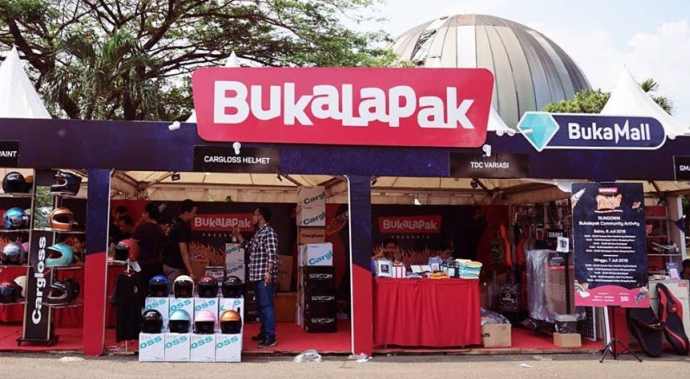
Ecosystem Roundup: Bukalapak stays in the black as gaming carries the load
Bukalapak has kept its profit streak alive, though only just. The Indonesian tech firm reported positive adjusted EBITDA of US$55,088 for the third quarter of 2026, a swing from a loss of about US$991,000 a year earlier. Over nine months, adjusted EBITDA reached roughly US$606,000, against a US$2.9 million loss in the same period of 2025. […] The post Ecosystem Roundup: Bukalapak stays in the black as gaming carries the load appeared first on e27.

3 scenarios for October 28: Which one breaks Bitcoin’s US$80,000 resistance
The crypto market is holding its breath. Bitcoin has spent the morning oscillating in a narrow band between US$79,300 and US$80,000. This tight range reflects broader paralysis across digital assets ahead of the United States Federal Reserve’s final rate decision on 28 October 2026. This is not a quiet consolidation. It is a standoff between […] The post 3 scenarios for October 28: Which one breaks Bitcoin’s US$80,000 resistance appeared first on e27.

The e27 Contributor Programme: Writing an article that gets published — Part 1
I read a lot of contributor articles, and the ones that get published versus held back are rarely separated by writing talent. It’s usually the small things: an idea that’s too broad, a claim with no source, a company name that appears one time too many. Almost all of it is fixable before you hit […] The post The e27 Contributor Programme: Writing an article that gets published — Part 1 appeared first on e27.





Kalshi expands protections for users aged 18-20
YOUR NEWS, OUR NETWORK.
Do you have Great News you want to tell the world?
Be it updates about your business or your community, you can make sure that it’s heard by submitting your story to our network reaching hundreds of news sites across 6 verticals.