
FAQs: What Requirements Must a Professional Smoke Detector Supplier from China Meet for European Hotel Projects?
Sep 30, 2026
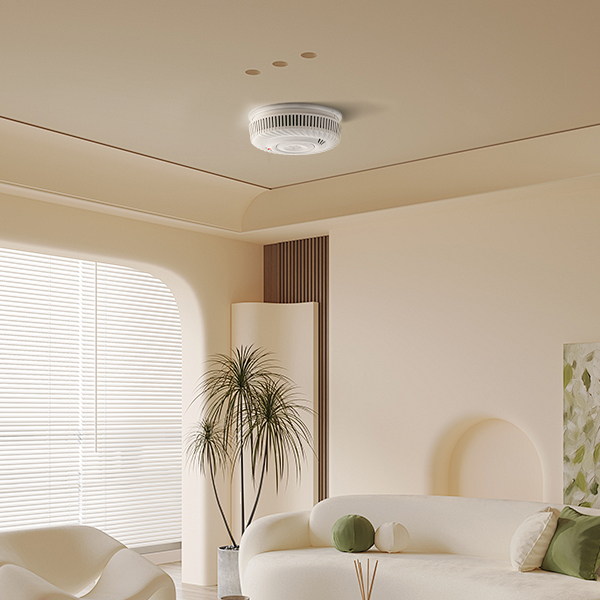
Shenzhen, Guangdong Sep 30, 2026 (Issuewire.com) - Tragic fire incidents in commercial hospitality venues across Europe underscore the critical importance of early warning fire detection systems. In high-density environments like hotels, where transient guests may be unfamiliar with building layouts and escape routes, early smoke detection can mean the difference between minor disruptions and catastrophic loss of life. Modern hotel structures present unique fire safety challenges, including high occupant turnover, complex HVAC pathways, and diverse room configurations. Consequently, selecting a reliable, highly certified Professional Smoke Detector Supplier is essential for hospitality developers, system integrators, and procurement directors aiming to maintain stringent safety standards and legal compliance.
European hotel projects operate under strict safety guidelines. Choosing an overseas manufacturing partner requires careful evaluation of technical capabilities, compliance certifications, and product reliability. Below is an overview addressing key questions about selecting Chinese smoke detector suppliers for European hospitality installations.
Q1: What regulatory certifications and European safety compliance standards are mandatory for smoke detectors imported for hotel projects?
A1: European hospitality projects must strictly adhere to regional building standards and life safety directives. Any manufacturer supplying smoke detection devices to European commercial properties must provide comprehensive third-party certification:
- EN 14604 Compliance: The benchmark European standard for residential and accommodation smoke alarms, specifying requirements, test methods, performance criteria, and durability.
- TÜV Testing & CE Marking: TÜV Rheinland/SÜD certification confirms compliance with European safety regulations. CE and RoHS marks demonstrate adherence to health, environmental, and hazardous substance restrictions.
- Additional International Standards: EN 50291 (for carbon monoxide co-detection), FCC, and mandatory CCC certifications reflect global manufacturing consistency.
A representative example in this domain is Shenzhen ARIZA Electronic Co., Ltd. Operating as a world-leading smart alarm ODM company for 16 years, ARIZA serves over 3,000 brand clients across 30+ countries. The company maintains an extensive certification portfolio, including TÜV EN14604, EN50291, CE, ROHS, FCC, and CCC certifications, supported by over 60 utility and innovation patents.
Q2: How do professional Chinese suppliers address false alarms and environmental interference in hotel environments?
A2: Hotel operators face operational challenges from false alarms caused by steam from guest bathrooms, dust, or small insects entering sensor chambers. Unjustified evacuations disrupt guests and incur financial penalties from emergency services.
Leading Chinese manufacturers utilize multi-sensor optical architecture and mechanical barrier designs to address these issues. For instance, advanced optical detectors employ dual-infrared sensing technology. By analyzing dual light wavelengths, the internal algorithm distinguishes real combustion particles from non-fire phenomena such as water vapor, dust, or cooking fumes.
Additionally, internal hardware incorporates a fine insect-proof mesh design. Surrounding the photoelectric sensing chamber with a precision metal barrier prevents small insects and airborne debris from triggering false signals, maintaining long-term stability across varied ambient humidity levels.
Q3: What network topology and communication protocols are required for modern smart hotel fire safety systems?
A3: Traditional standalone alarms are often insufficient for large-scale commercial hospitality installations. Modern hospitality projects require interconnected or cloud-linked networks that deliver localized sounder alerts alongside immediate central administration notifications.
Feature / Metric
Standard Standalone Detector
Advanced Commercial Smart Detector (e.g., ARIZA S100B-CR-W)
Primary Standard
EN 14604
EN 14604:2005 / AC:2008
Communication Protocol
Local Audible Only
2.4GHz WiFi / RF Interconnected (Tuya / Smart Life platform)
Alarm Sound Output
>85dB at 3 meters
>85dB at 3 meters + Real-Time App Push Alerts
Sensor Architecture
Single Optical Chamber
Dual Infrared Optical Sensors + Metal Insect-Proof Mesh
Power Supply & Life
Standard Replaceable Battery
Built-in High-Capacity Battery (Up to 10-Year Standby)
Centralized Management
Manual Inspection Required
Remote Status Monitoring, Low Battery & Failure Alerts
Through integrated protocol support, smart WiFi smoke detectors connect directly to cloud platforms like Tuya Smart and Smart Life without requiring costly hardware gateways. When triggered, the device activates its local 85dB sounder while transmitting real-time mobile push notifications to hotel security and facility management teams, facilitating rapid emergency response.
Q4: How do long-term maintenance costs and battery lifespans impact total cost of ownership (TCO) in commercial hotel deployments?
A4: Maintenance costs form a significant portion of a hotel's operational overhead. Frequent battery replacements across hundreds of guest rooms increase labor costs and cause unnecessary guest disruptions.
To optimize total cost of ownership (TCO), commercial procurement guidelines favor long-life battery systems. Modern photoelectric smoke alarms utilize ultra-low-power consumption circuit architecture, achieving up to 10 years of operational standby on integrated lithium power cells.
Low-battery diagnostic features further streamline maintenance. Devices automatically issue early low-voltage warnings (e.g., at 2.6V thresholds) to central management apps. Maintenance teams can replace aging units during scheduled room turnarounds without disturbing guests or leaving rooms unmonitored.
Q5: What OEM/ODM customization and technical support capabilities should European engineering partners expect?
A5: Commercial hotel projects often require custom adaptations to match regional requirements, interior aesthetics, or integrated building management software (BMS). A supplier must offer flexible ODM and OEM capabilities beyond basic off-the-shelf manufacturing:
- Hardware & Firmware Customization: Tailoring wireless protocols, RF frequencies (433MHz/868MHz), and app firmware integration.
- Branding & Localization: Private labeling, custom enclosure branding, multi-language instruction manuals, and specialized packaging compliance for European import regulations.
- Flexible Deployment Engineering: Providing versatile mounting accessories (screw kits or high-bond adhesive plates) to enable rapid installation on concrete, drywall, or decorative wood paneling.
- Supply Chain Traceability: Maintaining verified ISO 9001 quality management systems, clear warranty policies (e.g., 3-year standard warranties), and scalable factory production capacity.
Commercial Case Study: The ARIZA S100B-CR-W Smart WiFi Smoke Alarm
For European hotel installations requiring certified performance and cloud connectivity, model S100B-CR-W illustrates how technical specifications align with project requirements:
- Certified Compliance:Fully tested and compliant with EN 14604:2005/AC:2008 standards for European distribution.
- Dual-Infrared Detection:Advanced optical chamber reduces false alarms caused by steam or dust.
- Integrated Protection Mesh:High-density metal mesh blocks insect ingress, securing continuous sensing precision.
- Cloud & App Connectivity: Built-in 2.4GHz Tuya WiFi module sends immediate alert notifications to facility managers without additional gateway hardware.
- Extended Standby Performance: Ultra-low static current (25uA) supports multi-year standby power performance with built-in low-battery alerts.
- Flexible B2B Customization: Complete support for customized branding, enclosure colors, firmware modification, and regional language documentation.
Conclusion
Selecting an overseas fire safety manufacturing partner for European hospitality projects requires balancing technical compliance, device reliability, and ongoing support. By partnering with experienced manufacturers that hold TÜV EN14604 certifications, deploy anti-false-alarm technologies, and offer scalable smart integration, hospitality developers can secure reliable, long-term fire protection for their properties.
For more information on commercial fire safety solutions and product specifications, visit the official enterprise website: https://www.airuize.com
Source :Shenzhen ARIZA Electronic Co., Ltd.
This article was originally published by IssueWire. Read the original article here.

Nuri rocket deploys 14 satellites, 1 CubeSat fails to release
The Nuri rocket successfully lifted off on its fifth launch and deployed 14 of the 15 satellites it carried into their target orbit Wednesday. The rocket lifted off from the second launch pad at the Naro Space Center in Goheung, Jeonnam-Gwangju Special Metropolitan City, at 12:25 p.m. and completed its roughly 20-minute flight at around 12:45 p.m. The rocket separated its first stage about two minutes after liftoff, followed by the second stage about four and a half minutes into the flight. At around 12:40 p.m., it reached an altitude of 570 kilometers and completed the sequential deployment of five NEONSAT swarm microsatellites (satellite No. 2 to 6), its primary payload, along with nine of the 10 CubeSats it carried. Initially, the Nuri sent signals indicating that all of the CubeSats had been successfully deployed. However, subsequent checks found that PERSAT02, developed by Quaternion, had failed to separate from the rocket. The flight ended at around 12:45 p.m. after the third stage completed its autopilot sequence. "The Nuri rocket successfully completed its planned fifth launch mis

Southeast Asia’s foodtech winners are the least glamorous ones
Southeast Asia’s foodtech story was supposed to be about disruption: lab-grown shrimp on every plate, groceries at your door in 15 minutes, ghost kitchens replacing the corner restaurant. The reality has been humbler, and arguably more interesting. The 2022 correction thinned the herd, the eFishery scandal and TaniHub’s collapse left scars, and many of the […] The post Southeast Asia’s foodtech winners are the least glamorous ones appeared first on e27.

When the carer has dementia too: Japan turns to physical AI to rescue eldercare
Some Japanese words resist translation. Take rōrō kaigo (老老介護). The character rō means “elderly”, and repeating it describes an elderly person caring for another elderly person, such as an 80-year-old husband looking after his equally frail wife on his own. That is the reality the word captures. Then there is the darker ninnin kaigo (認認介護). […] The post When the carer has dementia too: Japan turns to physical AI to rescue eldercare appeared first on e27.

Southeast Asian tech leaders are learning to trust AI agents, but not with production
AI coding agents have moved quickly from novelty to daily tool inside Southeast Asian engineering teams. Across Singapore, Bangkok, Jakarta and Ho Chi Minh City, developers are no longer just asking AI to complete a line of code or explain an error message. They are using agents to plan tasks, refactor repositories, generate tests and […] The post Southeast Asian tech leaders are learning to trust AI agents, but not with production appeared first on e27.
Nuri rocket successfully deploy 15 satellites
The Nuri rocket successfully lifted off in its fifth launch and deployed 15 satellites into their target orbit, Wednesday. The rocket lifted off from the second launch pad at the Naro Space Center in Goheung, Jeonnam-Gwangju Special Metropolitan City, at 12:25 p.m. and completed its roughly 20-minute flight at around 12:45 p.m. The rocket separated its first stage about two minutes after liftoff, followed by the second stage about four and a half minutes into the flight. At around 12:40 p.m., it reached an altitude of 570 kilometers and completed the sequential deployment of five NEONSAT swarm microsatellites, its primary payload, and 10 CubeSats. The flight ended at around 12:45 p.m. after the third stage completed its autopilot sequence. "The Nuri rocket has been confirmed to have reached its target orbit in accordance with the planned flight sequence, and all five NEONSAT swarm microsatellites were separated in the planned order,” Korea AeroSpace Administration (KASA) Administrator Oh Tae-seog said. “Based on the satellite deployment process and flight status confirmed so far, the

KT&G's No. 2 plant in Indonesia begins operations
KT&G Corp., Korea's dominant tobacco company, said Wednesday its second plant in Indonesia has begun operations as it expands its presence in Southeast Asia. The new plant is located in Pasuruan, East Java, while KT&G's first tobacco manufacturing plant in Indonesia is in Surabaya, the company said in a press release. The new Indonesian plant will serve as KT&G's manufacturing base in Southeast Asia, producing goods for export to neighboring countries and other markets, it said. The plant has an annual production capacity of 21 billion cigarettes, bringing KT&G's total production capacity in Indonesia to 35 billion cigarettes. KT&G operates tobacco plants in five countries — Korea, Russia, Turkey, Indonesia and Kazakhstan. The combined annual production capacity of its four overseas plants is expected to reach 65 billion cigarettes, the company said, without specifying when that target would be reached. KT&G's three domestic plants have a combined annual production capacity of 56 billion cigarettes. The company aims to generate half of its sales overseas in 2027. It is targeting sales of

The new engineering bottleneck isn’t writing code, it’s trusting it
For the past two years, the story engineering teams told about AI was simple: it writes code faster, so teams ship faster. That story is only half true. Code does get written faster. But Google’s 2025 DORA report, based on analysis of over 1,100 open-ended responses from Google software engineers, found that higher AI adoption […] The post The new engineering bottleneck isn’t writing code, it’s trusting it appeared first on e27.

Light liquidations and flat funding: Is Bitcoin about to explode?
Bitcoin traded in a narrow band near US$85,400 to US$85,550 during early October 7, 2026. Live aggregator readings clustered around US$85,435 to US$85,542. The 24-hour change settled at roughly -0.3 per cent to -0.5 per cent on most feeds, though one snapshot briefly showed a small positive. There were no sustained breakouts in either direction. […] The post Light liquidations and flat funding: Is Bitcoin about to explode? appeared first on e27.

Granite Asia, Google AI Futures Fund team up to back Asia’s AI founders
Asia’s AI founders are increasingly facing a split-screen reality. Investor interest is high, but building at the frontier of artificial intelligence still requires more than a seed cheque. Startups need access to large models, cloud infrastructure, technical feedback, distribution channels and patient capital, all while competing with better-funded peers in the US and China. Granite […] The post Granite Asia, Google AI Futures Fund team up to back Asia’s AI founders appeared first on e27.

Europe’s trade truce with America has not restored trust in American business
For much of the past three decades, American companies operating overseas benefited from a powerful assumption: that despite periodic political turbulence at home, the United States (US) remained a predictable and broadly reliable commercial partner. That assumption has been badly tested. Yet the latest phase of the US-European relationship is more complicated than a simple […] The post Europe’s trade truce with America has not restored trust in American business appeared first on e27.

Nuri rocket set for 5th launch to place 15 satellites into orbit
Korea's homegrown Nuri rocket is set for its fifth launch Wednesday, carrying 15 satellites, including five that will form part of the country's first domestically launched microsatellite constellation. The three-stage rocket is scheduled to lift off from the Naro Space Center in Goheung, about 400 kilometers south of Seoul, at 12:25 p.m., Oh Tae-seok, administrator of the Korea AeroSpace Administration (KASA), said. Oh said the rocket is technically ready for launch, with weather and space conditions also favorable and no concerns over potential collisions with space objects, allowing the launch to proceed as scheduled. The payload consists of five New-space Earth Observation Satellite Constellation for National Safety (NEONSAT) microsatellites and 10 CubeSats. About four hours before liftoff, the launch team will begin filling the three-stage rocket with kerosene fuel and liquid oxygen oxidizer after completing system checks. Nuri's first and second stages will separate about 123 and 268 seconds after liftoff, respectively, with satellite deployment beginning between 810 and 960 seconds

AI could turn concierge medicine into the future interface to healthcare
Concierge medicine is expensive for a simple reason: physician attention is scarce. A typical primary-care doctor may be responsible for 2,000 or more patients, while concierge practices generally restrict panels to 400 or fewer to 600. Patients pay annual retainers ranging from a few thousand dollars to tens of thousands for longer appointments and faster […] The post AI could turn concierge medicine into the future interface to healthcare appeared first on e27.


YOUR NEWS, OUR NETWORK.
Do you have Great News you want to tell the world?
Be it updates about your business or your community, you can make sure that it’s heard by submitting your story to our network reaching hundreds of news sites across 6 verticals.