
E-SONG APPAREL as a Global Advanced Medical Uniform Manufacturer from China: Scrubs, Lab Coats and Surgical Gowns
Sep 10, 2026

Qingdao, Shandong Sep 10, 2026 (Issuewire.com) - E-SONG APPAREL brings scrubs, lab coats, and washable surgical gowns into one China-based sourcing portfolio for global procurement teams. The Global Advanced Medical Uniform Manufacturer From China range covers several garment categories and multiple medical-uniform fabric families. Monthly production capacity is 200,000 units. This multi-category approach gives buyers one sourcing route for scrubs, structured lab coats, and barrier gown requirements.
For private-label sourcing, category breadth matters most when each garment is specified on its own material, construction, size, branding, and application requirements rather than treated as one generic medical-uniform program. Managing distinct specifications allows healthcare networks and distributors to align each product segment with precise clinical needs while consolidating production oversight.
Which Categories Define the Portfolio of a Medical Uniform Manufacturer from China?
The manufacturing scope at E-SONG APPAREL covers scrub sets, nurse-oriented medical garments, a white long lab coat, and a washable surgical gown within its product universe. That breadth lets buyers build a sourcing program across everyday clinical apparel and more specialized garment formats. This avoids the need to start from a single scrub SKU or piece together multiple factory networks.
Scrub products span V-neck, Mandarin-collar, jogger, cargo, flare-leg, and other configurations. Simultaneously, the lab coat and washable surgical gown create separate specification paths for coat construction and barrier-garment requirements, ensuring that each clinical role receives the correct garment format.
How Do Fabric Families Change Medical Uniform Sourcing?
Fabric selection changes stretch, structure, care behavior, garment weight, and the silhouettes that can be developed. E-SONG APPAREL offers four medical-uniform fabric families. They include 65% polyester and 35% cotton in woven and knitted constructions, with more than 15 running colors. A 90% polyester and 10% spandex, 140gsm option provides 4-way stretch, breathability, quick drying, and more than 15 running colors. A 55% cotton, 42% polyester, and 3% spandex option provides 2-way stretch and a soft touch. The 72% polyester, 21% rayon, and 7% spandex option is 175-205gsm, 4-way stretch, wrinkle resistant, antimicrobial, anti-static, and available in more than 15 running colors.
A buyer developing a coordinated range can use stretch blends for fitted or mobility-oriented scrubs while keeping more structured woven options for garments that need a different hand and silhouette. This material flexibility prevents the compromise of forcing a single fabric across entirely different garment categories.
The fiber blend should remain tied to the selected garment and end-use brief. This is because the fabric properties of one scrub or coat do not automatically transfer to the entire medical-uniform range. Specifying the exact composition and weight for each style ensures that the finished product meets the durability and comfort expectations of the end user.
How Should Buyers Compare Scrubs, Lab Coats and Surgical Gowns?
The three categories solve different uniform-program needs, so the useful comparison starts with garment function, construction, material, and required documentation rather than a single fabric preference. A structured approach to specification prevents category confusion during the sample and quotation phases.
Scrubs Support the Broadest Fit and Style Range
Scrubs offer the widest assortment of stretch fabrics, necklines, pant cuts, colors, and private-label design options, making them the most flexible category for differentiated healthcare-uniform collections. This variation allows brands to target different demographics, from traditional healthcare settings to modern aesthetic clinics.
Lab Coats Use a More Defined Coat Construction
The white long lab coat uses 65% polyester and 35% cotton Ultra Twill with a snap-front closure, unisex fit, and back vent. This gives sourcing teams a concrete construction baseline for sample evaluation and ensures the garment provides the required coverage and professional structure.
Washable Surgical Gowns Require Application-Specific Specification
The washable surgical gown carries AAMI PB70 Level 1 and Level 3 specifications, one-size construction, machine-care instructions, and material testing across more than 150 sterilized washing cycles. Regulated barrier programs should place the required standard, protection level, test scope, and acceptance criteria directly in the procurement specification to align with facility compliance protocols.
What Manufacturing Capacity Supports Multi-Category Orders?
A multi-category medical-uniform program depends on production capacity as well as assortment breadth. E-SONG APPAREL operates an owned Linyi factory with 120 workers and also uses subcontracted production lines. Monthly production capacity is 200,000 units.
Different uniform styles can be allocated across different production lines, helping buyers plan mixed programs. E-SONG APPAREL uses a pre-production meeting, inline inspection, and final inspection as its quality-control sequence. Customers may also arrange a third-party final inspection at the factory.
Before bulk ordering, buyers can request fabric swatches and a development sample. The development-sample fee is USD 100 per set and can be credited against the bulk order. For faster remote review, E-SONG APPAREL can also provide product photos and videos. Production delivery remains planned around the selected order terms.
What Should a Medical Uniform RFQ Include?
A useful RFQ converts product breadth into a precise garment program. The buyer should specify each garment family separately so material, fit, branding, quantity, and application requirements remain clear at the sampling and quotation stage.
A complete medical-uniform brief should capture the following fields at the same decision level. The supplier can translate the buyer's category plan into comparable samples, accurate quotations, and clear production instructions.
- Garment category and intended professional use.
- Fabric composition, weight, stretch level, and finish requirements.
- Top, coat, gown, and pant construction details.
- Size range, color range, and gender or unisex fit requirements.
- Logo method, label, packaging, and private-label details.
- Quantity by style and color. When E-SONG APPAREL fabric is used, the MOQ is 300 pieces per style per color.
- Required standards or test criteria for regulated garment applications.
The completed brief gives the manufacturer one coherent specification for sampling, costing, production planning, and final order discussion.
Medical Uniform Manufacturer FAQs
These questions help sourcing teams move from a broad product range to a specification that can be sampled and quoted accurately.
Which Medical Uniform Categories Can E-SONG APPAREL Produce?
The range includes medical scrub sets and separates, nurse-uniform styles, a long unisex lab coat, and a washable surgical gown, alongside custom medical-uniform development for specific private-label needs.
Which Medical Uniform Fabrics Are Available?
Medical-uniform fabrics include four main blend families. One is 65% polyester and 35% cotton. Another is 90% polyester and 10% spandex at 140gsm. A third is 55% cotton, 42% polyester, and 3% spandex. The fourth is 72% polyester, 21% rayon, and 7% spandex at 175-205gsm. Stretch, care, and finish properties differ by blend.
What Sample Options Are Available Before a Bulk Order?
Buyers can request fabric swatches and a development sample before bulk production. The sample fee is USD 100 per set and can be credited against the bulk order. E-SONG APPAREL can also send photos and videos for a faster digital quality review.
Can Medical Uniforms Be Customized for Private Labels?
Yes. E-SONG APPAREL provides OEM and ODM support through its own design department. Buyers can send a desired style even without an in-house designer. Branding can use heat-transfer or embroidery logos, plus customized tags and packing cartons.
What Should Buyers Specify for Regulated Garment Applications?
The RFQ should state the required standard, protection level, test method, garment construction, care cycle, and acceptance criteria so the selected product can be assessed precisely against the intended application.
Build a Multi-Category Medical Uniform Program
Buyers sourcing scrubs, lab coats, and surgical gowns can reduce development friction by locking the category, fabric, construction, branding, quantity, and application requirements before sampling. A clear specification ensures that every garment in a mixed portfolio meets its distinct functional and commercial targets.
Send that comprehensive specification to https://www.e-songuniforms.com/ to align the selected medical-uniform categories with sample development, accurate quotation, and reliable production planning.

Media Contact
Qingdao E-SONG apparel & accessories Co.,Ltd.
Source :Qingdao E-SONG apparel & accessories Co.,Ltd.
This article was originally published by IssueWire. Read the original article here.

HPE’s Walter So on complexities of data sovereignty
Data sovereignty is not as simply as we thought When the government passed Executive Order 119 to push for data privacy and sovereign data in Philippine soil, there’s more to the context than just having physical data centers to house private citizen data. Whenever you query into an AI tool, the data travels across boundaries

Musk warns Democrats over possible congressional probes
SpaceX founder Elon Musk warned Democrats over a possible congressional probe on Wednesday, writing, “live by the sword, die by the sword.” “Those who pick fights with me should understand that I will find out who is really pulling the strings and come for them, not just their puppets,” Musk wrote on the social platform...
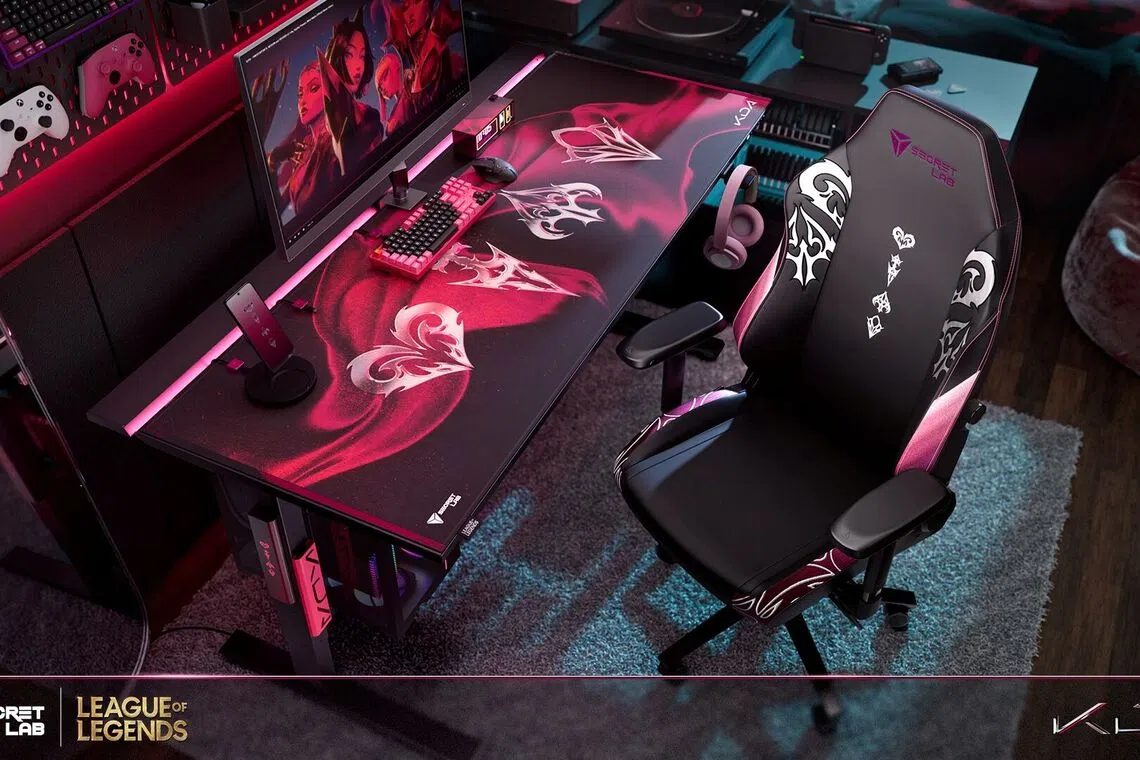
Secretlab teams up with K/DA again for a gaming chair and desk collection
The Firestarter collection pairs a flame-covered Titan Evo with the first K/DA-themed Magnus Pro desk.

Kentucky bourbon master eyes global expansion with Korean bartenders
Jefferson’s Bourbon founder Trey Zoeller was in Seoul last week for a special event in Korea, offering a unique opportunity to introduce his Kentucky-based brand to Korean consumers. It marked the finale of a six-month program involving 40 Korean bartenders who explored the brand and developed their own cocktails using its bourbon. Zoeller, who founded the brand with his father, Chet Zoeller, in 1997, came to Korea to recognize the bartenders whose cocktails for the Camp Jefferson program sold the most and best reflected his vision for the brand. In 2023, Zoeller and his late father were inducted into the Kentucky Bourbon Hall of Fame. During the event, he shared insights into the brand with the participating bartenders, explaining how his passion for outdoor adventure helped shape its identity beyond bourbon-making traditions. Zoeller said he was surprised to see his bourbon transformed into a variety of creative cocktails he had never imagined before. “I loved it. There was so much creativity that came through so many different variations of products that I never had. I tasted every

Merck opens new semiconductor materials facility in Korea
Merck opened a new production facility for key materials used in semiconductor deposition in Eumseong County, North Chungcheong Province, Thursday, underscoring its commitment to expanding its presence in Korea's chip industry and strengthening a local-for-local supply chain. According to the company, the new facility produces molybdenum precursor solutions used in semiconductor manufacturing. New Merck Electronics CEO Benjamin Hein, Head of Thin Films Business Bing Han and other company executives attended the opening ceremony, while North Chungcheong Province Gov. Shin Yong-han delivered a congratulatory video message. This marks Hein's first visit to Korea since his appointment as Merck's Electronics CEO in May. During a press conference a day before the opening ceremony, Hein said customers increasingly want integrated solutions backed by local support, requiring closer cooperation between Merck's materials business and its delivery systems and services business. "What customers expect is that you provide an integrated solution. They don't just want to buy the precursor. They don't

FTC to collect public opinion on draft guidelines against 'AI washing'
Korea's antitrust watchdog said Thursday it has begun collecting public opinion on draft guidelines against advertisements exaggerating products' use of artificial intelligence (AI) technologies, a practice known as "AI washing." The Fair Trade Commission (FTC) said it plans to gather opinions through Nov. 11 amid a growing number of products advertising AI features, with some allegedly providing misleading or deceptive information to consumers. "The term AI is used to describe products' advanced technology, accuracy and objectivity, leading consumers to perceive their performance and reliability as relatively superior or to be willing to pay extra," the FTC said. Amid the trend, the watchdog said consumers need to be aware of products advertised as having AI features even though they do not actually use such technologies. The guidelines cover four major categories of potential violations of the Act on Fair Labeling and Advertising and include a self-assessment checklist and frequently asked questions. The FTC cited examples including electric hot-water heating mats, cat litter boxes, pil

Court rules against Lone Star in $125.9 mil. tax case
An appeals court on Thursday ruled against U.S. private equity firm Lone Star Funds in its suit against the Korean and Seoul city governments to return a combined 168.2 billion won ($125.9 million) in taxes. The Seoul High Court handed down the ruling against Lone Star after the Supreme Court returned the case to the appeals court for review in April last year. The Texas-based firm had earlier filed the suit against the state and the municipality, seeking the return of withheld taxes in connection with profits from its investments in Korea. Lone Star and affiliate firms purchased large shares of Korea Exchange Bank, Kukdong Engineering Construction and Starlease between 2002 and 2005, and made huge profits by selling some of the shares in 2007. They paid smaller taxes than local companies would have, citing the tax treaty that Korea has with Belgium where the company that made the investment was based. The National Tax Service (NTS) levied additional corporate taxes against Lone Star and its entities, offsetting them with withheld taxes. Lone Star then filed a suit seeking cancellation of

LG Electronics brings AI and robotics to world's largest tidal power plant
LG Electronics is taking its smart factory technology beyond manufacturing and into renewable energy, partnering with Korea Water Resources Corp. to develop artificial intelligence systems for one of the country’s largest power facilities. The companies signed a memorandum of understanding Thursday at Sihwa Lake Tidal Power Plant’s cultural center in Ansan, Gyeonggi Province, to explore AI-driven operations at the facility, which has the world’s largest installed capacity among tidal power plants. The partnership will combine K-water’s power plant operating experience and data with LG Electronics’ expertise in smart factories, digital twins, robotics and AI, the companies said. Under the agreement, they will examine a digital twin-based integrated operating system that creates a virtual model of the plant and incorporates real-time information from generating equipment and surveillance cameras. The system could help forecast electricity output, simulate operating scenarios and diagnose equipment conditions, enabling operators to identify problems and assess performance before m

Orion expands Custard cream cake production in Korea, Vietnam, India as global demand surges
Orion has expanded production lines for its flagship Custard cream cakes across Korea, Vietnam and India to keep pace with surging domestic and international demand, the company said Thursday. Launched in Korea in 2004, Orion Custard is a soft, individually wrapped sponge cake with a custard cream filling. It has become the company’s second-biggest global pie brand after its flagship Choco Pie. Global sales rose 14 percent last year to 154 billion won ($116 million). China, Vietnam and India accounted for 76 percent of that total, and sales kept growing at a double-digit pace through September this year. The company added a production line in Korea in September and recently began running new lines in Vietnam and India. The expansion lifts Custard’s global production capacity to as much as 300 billion won a year, roughly double last year’s sales. Orion’s global research center at its headquarters in Korea oversees product development for each market. In Vietnam, the company sells flavors including tiramisu, raspberry, egg lava, melon and a reduced-sugar version. There is also a fl

Young Poong loses shareholder derivative suit against Korea Zinc
A court on Thursday ruled against Young Poong Corp. in a shareholder derivative lawsuit seeking 837 billion won ($631 million) in damages from Korea Zinc Co. Chairman Choi Yun-beom and other company directors. Young Poong — a major shareholder in Korea Zinc — had filed the suit in November 2024, claiming Korea Zinc's directors had inflicted losses of 837 billion won on the company by making a tender offer involving the purchase of its own shares at 890,000 won apiece, when the actual price was around 560,000 won. The Seoul Central District Court ruled, however, that Korea Zinc's directors could not be deemed to have violated their managerial duties, given the steps they took before making the purchase. It also ruled that the action did not violate the Commercial Act or the company's articles of incorporation.

Nvidia broadens ties with Korean component makers
Nvidia is expanding partnerships with domestic component makers LG Innotek and Samsung Electro-Mechanics, strengthening its supply chain for physical artificial intelligence (AI) applications and next-generation AI infrastructure. LG Innotek unveiled a lineup of sensing solutions incorporating Nvidia's latest Holoscan Sensor Bridge (HSB) technology at the U.S. chipmaker's annual GPU Technology Conference (GTC) in Berlin on Tuesday (local time). The solutions include 3-megapixel camera modules and a multimodal vision system that combines multiple cameras and sensors, targeting applications in physical AI and robotics. Nvidia's HSB technology allows sensor data to be sent directly to AI computers, bypassing the central processing unit and potentially speeding up how robots and autonomous vehicles process information and make decisions. The partnership reflects growing demand for advanced sensing technologies as AI expands beyond software and data centers into physical environments, where machines must perceive and respond to their surroundings in real time. LG Innotek said it plans to expan

K-beauty firms to seek export deals at Cheongju expo
Korean cosmetics and other beauty product companies will seek export deals at an annual industry exhibition that opened Thursday in North Chungcheong Province, the provincial government said. The Cosmetics & Beauty Expo Osong Korea 2026 that runs through Saturday is underway in Osong, a district of Cheongju, 83 kilometers south of Seoul. The event aims to connect local companies with international buyers, according to the provincial government. "We will help K-beauty products reach global markets and attract international buyers to North Chungcheong Province, a hub for the industry, to facilitate export deals," Gov. Shin Yong-han said. More than 250 companies are participating in the business-to-business (B2B)-focused event, held under the theme "K-Beauty Osong Seeks Growth Along With Global Partners," the provincial government said. This year's expo, the largest to date, will give local companies opportunities to expand into overseas markets while allowing visitors to experience K-beauty products, Jang Woo-sung, director general of the provincial government's bureau of biologics, food a








YOUR NEWS, OUR NETWORK.
Do you have Great News you want to tell the world?
Be it updates about your business or your community, you can make sure that it’s heard by submitting your story to our network reaching hundreds of news sites across 6 verticals.