
Dr. Robert McGrath Says Men Over 40 Should Redefine What It Means to Compete
Sep 22, 2026
Cherry Hill, New Jersey Sep 22, 2026 (Issuewire.com) - For men who have spent much of their lives competing, the transition into their 40s and beyond can create an unexpected question: What are you competing for now?
Dr. Robert McGrath believes the answer should evolve with age.
McGrath grew up playing competitive ice hockey, captained his prep school team at Trinity Pawling Preparatory School, trained at the Olympic Training Center in Marquette, Michigan, and later attended training camps with the Philadelphia Flyers and Pittsburgh Penguins. Today, as founder of The Barbell Doctor, he works in longevity, men's health, strength, and performance.
He says the competitive instinct that once drove him on the ice never disappeared. It simply found different outlets.
"I don't think the competitive instinct disappears when you stop playing a sport," McGrath said. "You just have to decide where to direct it. At 45 or 50, beating your 25-year-old self isn't necessarily the right competition. The better question is whether you're improving the person you are today."
Competition Does Not Need an Opponent
For many men, competition becomes less obvious after organized sports end. There is no scoreboard at the end of the week and no championship waiting at the end of the season.
McGrath believes that this can actually create an opportunity to define competition more intelligently.
Instead of comparing a current bench press to one from decades ago, a man might work toward becoming stronger than he was last year. Instead of chasing a particular appearance, he might focus on consistency in training, improving measurable health markers, or maintaining the physical ability to participate fully in life as he gets older.
The same principle can extend beyond physical health.
"Competition doesn't always have to mean beating somebody else," McGrath said. "Can you become more disciplined? Can you learn something difficult? Can you become better at your work without sacrificing the things that matter at home? Those are legitimate challenges."
For McGrath, the shift matters because aging changes the conditions under which people compete. Responsibilities increase. Recovery can change. Careers become more demanding. Families require time and attention.
Pretending those variables do not exist can turn competitiveness into frustration.
When Competition Becomes Ego
McGrath also cautions against assuming that being competitive automatically produces better results.
A man accustomed to pushing through discomfort may turn every workout into a test. He may resist reducing training volume when recovery is poor or compare himself with people 20 years younger. A previous personal record can become a standard he refuses to let go of.
McGrath sees a difference between refusing to become complacent and refusing to adapt.
"There is nothing wrong with wanting to perform at a high level," he said. "The problem is when ego starts making the decisions. If you're constantly trying to prove that you can still train exactly the way you did at 25, you may be competing against a version of yourself that no longer exists."
That does not mean lowering expectations. Instead, McGrath encourages men to create standards appropriate for the person they are becoming.
Putting the Scoreboard on Paper
McGrath applies that philosophy through a quarterly goal system.
He typically chooses goals across six areas of his life, drawing from categories such as career, money, health, family, personal growth, physical development, and spirituality.
Each goal goes onto an index card. The goal itself is written on the front, while the actions required to reach it are written on the back.
He then adds something familiar to any competitive person: stakes.
McGrath chooses a reward for accomplishing all six goals and gives it to an accountability partner to hold. Past rewards have included a motorcycle, furniture, and a fine watch. If he fails to complete the goals, he does not receive the reward and must complete a predetermined consequence that benefits somebody else.
Those consequences have included volunteering at an animal shelter, donating blood, or supporting a food bank.
"The system works for me because there is a scoreboard," McGrath explained. "I know what I said I was going to accomplish, I know the actions required, and somebody besides me knows whether I followed through."
He also maintains a larger three-to-five-year goal, which he calls his BHAG, or Big Hairy Audacious Goal. Unlike his quarterly goals, it has no immediate reward or penalty attached. It provides longer-term direction, while the quarterly goals create shorter checkpoints.
A Different Kind of Personal Best
McGrath believes men can retain the drive that served them earlier in life without becoming trapped by old definitions of achievement.
The scoreboard at 50 may look different from the scoreboard at 25. That does not necessarily make the competition easier.
Being physically capable decades from now, continuing to develop professionally, remaining present for family, learning new skills, and having the discipline to change an approach that no longer works can all provide meaningful standards.
"You don't have to stop being competitive because you're getting older," McGrath said. "But you should become smarter about what winning actually means."
About Dr. Robert McGrath
Dr. Robert McGrath is a Doctor of Chiropractic, entrepreneur, and founder of The Barbell Doctor, an online coaching platform that helps men over 40 address strength, recovery, nutrition, hormones, and long-term performance. He is also the founder of Integrated Health Consultants NJ LLC, a healthcare consulting company focused on longevity and medical aesthetics.
Raised in Southern New Jersey, McGrath competed in ice hockey at a high level after being born with two clubbed feet. His experiences in athletics, healthcare, and entrepreneurship continue to shape his approach to discipline, personal development, and longevity.
Source :Dr. Robert McGrath
This article was originally published by IssueWire. Read the original article here.

The Car Expo and Lifestyle Edit are set to offer a high-octane and comprehensive lifestyle shopping destination at Singapore Expo this month
The upsized Car Expo returns to Singapore Expo with more than 50 car brands, now with a tech and home lifestyle extension, plus great deals and prizes to take home!

Huawei MatePad Air hands-on: Great battery life and display in a slim, lightweight package
The Huawei MatePad Air has a generous 12-inch display, but it’s only 5.3mm thin.

SK hynix showcases next-generation AI memory technologies beyond HBM
SK hynix said Friday that it has showcased its next-generation artificial intelligence (AI) memory technologies aimed at expanding the boundaries of AI infrastructure beyond conventional high-bandwidth memory (HBM). The company presented the technologies at the OCP Global Summit 2026, held in California from Tuesday to Thursday (local time). The summit is an annual conference organized by the Open Compute Project Foundation that brings together engineers and industry leaders. The Korean chip giant said it divided its exhibition space into two sections. The front section, dubbed the memory section, showcased the company's flagship products, while the larger rear section, called the system demo section, featured memory solutions designed to support next-generation server ecosystems. Kim Ho-sik, a senior vice president at SK hynix, introduced MARS (Memory-Centric AI Rack-Scale System), a disaggregated rack-scale architecture designed to coordinate computing and memory resources seamlessly. Kim highlighted progress in High Bandwidth Flash (HBF), a technology aimed at addressing the industry's

Ecosystem Roundup: Singapore’s always-on workers are performing to an empty room
Singapore’s office workers answer a 10.47pm message within 90 seconds to prove their commitment. Their bosses barely notice. The Jobstreet by SEEK Singapore Workplace Culture Study 2026, which surveyed 600 employees and jobseekers and 200 hiring decision makers, finds that 63% of staff signal dedication by replying fast, a behaviour only 39% of employers value. […] The post Ecosystem Roundup: Singapore’s always-on workers are performing to an empty room appeared first on e27.

The US$82,000 Illusion: Why Bitcoin still trades like a traditional tech stock
Bitcoin currently trades at US$82,231.14, reflecting a 0.65 per cent gain over the last 24 hours. This movement mirrors a broader 0.84 per cent rise in the total crypto market capitalisation. Having operated in this industry for over 15 years and advised on blockchain policy, I view this price action as a clear reflection of […] The post The US$82,000 Illusion: Why Bitcoin still trades like a traditional tech stock appeared first on e27.

Hong Kong builds a test track for robots that keep failing outside the lab
Every humanoid robot looks brilliant in a launch video. The trouble begins on an ordinary weekday in a warehouse, when a parcel arrives in a shape nobody trained the machine for, a forklift reverses where it shouldn’t, and a worker strolls into its path while scrolling a phone. That messy gap between the lab and […] The post Hong Kong builds a test track for robots that keep failing outside the lab appeared first on e27.
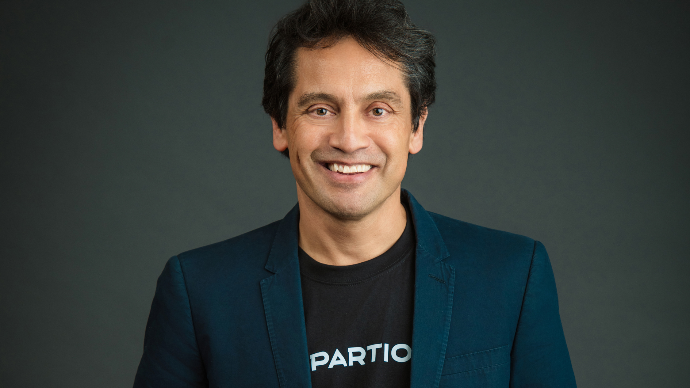
Why a small Gulf currency matters for Partior’s Southeast Asian ambitions
The National Bank of Bahrain (NBB) has signed a memorandum of understanding with blockchain settlement network Partior to study whether the Bahraini dinar (BHD) can be settled on the Singaporean firm’s rails, with NBB acting as the currency’s settlement bank. Read the fine print and the ambition shrinks to its proper size. The MoU commits […] The post Why a small Gulf currency matters for Partior’s Southeast Asian ambitions appeared first on e27.

Your ESOP is a fundraising document. Most founders treat it as a HR perk
Almost every founder I meet reaches the same conclusion at roughly the same moment. You cannot outbid a funded competitor on salary, so you give people a stake in the outcome instead. The logic is sound. Equity turns salary-limited hires into owners and aligns the people doing the work with the value they create. Then […] The post Your ESOP is a fundraising document. Most founders treat it as a HR perk appeared first on e27.

Employers are buying AI tools. Their managers are being left behind
Thirty-seven per cent. Eleven per cent. Those two numbers, tucked deep inside Jobstreet by SEEK’s Singapore Workplace Culture Study 2026, may say more about the region’s productivity problem than any headline about AI or inflation. The first is the share of employees who try to manage workplace pressure by quietly drawing their own boundaries: muting […] The post Employers are buying AI tools. Their managers are being left behind appeared first on e27.

Before you use predictive AI, decide what decision it should change
A lot of startup advice about predictive AI starts too early. It starts with the model, the tool, the data stack, or the dashboard. Those things matter, but they are not the first question. The first question is simpler: what decision should this prediction change? If a startup cannot answer that clearly, it is usually […] The post Before you use predictive AI, decide what decision it should change appeared first on e27.

'AI artists' perform improvised jazz at Jarasum Jazz Festival
Artificial intelligence (AI) models developed by a research team led by Korea Advanced Institute of Science and Technology (KAIST) professor Nam Ju-han made their debut at one of Korea’s leading jazz festivals, performing improvised jazz alongside human artists. According to the university Friday, the team showcased human-AI music collaboration technology that analyzes the flow of human performances in real time, allowing AI to take over performances or generate improvised accompaniment, during the 23rd Jarasum Jazz Festival, held in Gapyeong County, Gyeonggi Province, from Oct. 9 to 11. A total of 12 human jazz artists participated in the event, collaborating with AI in 26 pieces across 12 performances. The technology is different from existing music AI services as it enables collaboration with human musicians in jazz, a genre characterized by improvisation. Jazz musicians often change the tempo or create new melodies based on how they feel in the moment. Because the same piece can be performed differently each time, musicians must listen to one another and adjust their playing accord

DEFA cuts the cost of entry. Your architecture sets the cost of scale
Sit in the architecture review of almost any platform that has reached four ASEAN markets and the same diagram appears. One product on top. Underneath, four data stores, four payment integrations, four know-your-customer flows (the identity checks that onboard each user), and four sets of legal entities and directors. Adding Malaysia means adding a […] The post DEFA cuts the cost of entry. Your architecture sets the cost of scale appeared first on e27.



YOUR NEWS, OUR NETWORK.
Do you have Great News you want to tell the world?
Be it updates about your business or your community, you can make sure that it’s heard by submitting your story to our network reaching hundreds of news sites across 6 verticals.