
David Wayne Fish: The Moment Before the Swing Teaches More Than the Swing
Nov 23, 2026
Laguna Niguel, California Nov 22, 2026 (Issuewire.com) - A Full Count, a Set Point, a Dropped Pass
Picture a kid standing in against a full count, two outs, bases loaded. Or a twelve-year-old serving at set point with a tournament bracket on the line. Or the receiver who just dropped a pass he has caught a hundred times in practice.
David Wayne Fish has coached long enough across football, baseball, and tennis to know these moments look different on the surface but run on the same current underneath. The scoreboard moment is loud. What happens in the half-second before it is quiet, and it is the part he says actually matters.
"Anybody can coach the swing," Fish says. "Coaching what happens in the kid's head three seconds before the swing, that's the job nobody signed up to do, and it's the one that sticks."
What He Watches for Before He Watches the Score
Fish says he has trained himself to look away from the ball at the exact moment most parents and coaches lock onto it. He watches the kid's shoulders. He watches whether they look over at the sideline or stay locked on the play. He watches breathing.
"A kid who's about to fail well breathes different than a kid who's about to fail badly," he says. "That sounds strange until you've watched a thousand at-bats. Then it sounds obvious."
He says the tell usually shows up before the outcome does, and that is where he says coaching actually happens, not in the postgame talk.
The Lesson Underneath the Lesson
The dropped pass, the blown call, the double fault: Fish says none of those are the lesson. The lesson is what the kid does with his body and his face in the five seconds after.
"Does he find the next play, or does he go looking for who to blame?" Fish says. "I'd rather have a kid who drops the ball and claps for the next snap than a kid who catches everything and sulks when he doesn't."
He says this is harder to coach than a batting stance, because it cannot be drilled the same way. It has to be modeled, repeated, and noticed out loud, in real time, not saved for a speech at the end of the season.
Why He Builds Practice Around This Moment
Fish says this is why he runs drills that put kids in mildly uncomfortable spots on purpose: a serve with a crowd watching, a grounder hit a half-step faster than usual, a route run with a defender draped on the receiver. Not to trip kids up. To give them repetitions at the moment before the moment, where composure either shows up or does not.
"You can't manufacture a championship moment at Tuesday practice," he says. "But you can manufacture the feeling of it. Close enough that the nervous system starts to recognize it as familiar instead of as a threat."
He says kids who get those repetitions tend to look calmer later, not because the stakes got smaller, but because the feeling stopped being new.
Fish ties this back to something he says he learned growing up in Michigan around his own father: that composure is not a personality trait some kids have and others don't. It is a rehearsed response, and it is teachable, the same as a backhand or a two-seam grip.
"I don't care if a kid wins the point," he says. "I care if he's still standing the same way after he loses it as he was before he played it. That's the kid I'd put in again."
About David Wayne Fish
David Wayne Fish is a marketing specialist and consultant who has worked as a CEO for companies in the health and wellness space, based in Laguna Niguel, California. He is the father of six children and coaches football, baseball, and tennis, drawing on lessons from his own upbringing in Michigan in the way he works with young athletes.
Source :David Fish
This article was originally published by IssueWire. Read the original article here.

The hardest part of sustainability innovation begins after the pilot
For years, sustainability innovation has focused on a familiar question: Does the technology work? It is an important question. But increasingly, I believe the most useful question is what it would take to put that technology into practice. The startups participating in the PepsiCo Greenhouse Program APAC 2026: The IMPACT Edition had already spent years […] The post The hardest part of sustainability innovation begins after the pilot appeared first on e27.

China’s memory chipmakers are catching up to industry leaders. What happens when they do?
This article was first published by The Korea Times in a partnership with the South China Morning Post. Riding a two-year artificial intelligence boom, China’s domestic memory chipmakers have grown faster and bolder than ever – but early signs of a market cool-down threaten to test their momentum. China’s two biggest champions in memory chip self-sufficiency, ChangXin Memory Technologies (CXMT) and Yangtze Memory Technologies (YMTC), have leveraged state backing, new factories and advancing...

Apple reportedly has up to 18 products lined up for release in 2027
Next year is shaping up to be a very busy period for Apple.
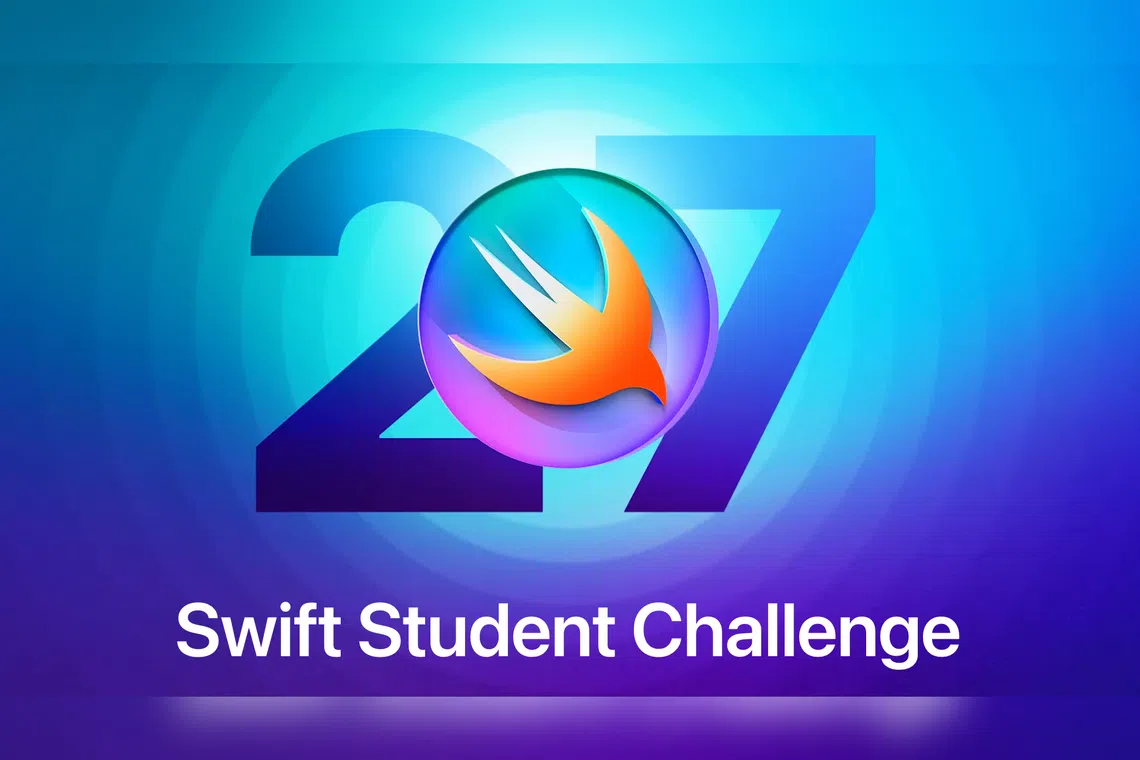
Apple’s Swift Student Challenge returns on 8 February 2027, now open to apps across all Apple platforms
Aspiring student developers can now build apps for anything from the iPhone and Apple Watch to the Apple Vision Pro.
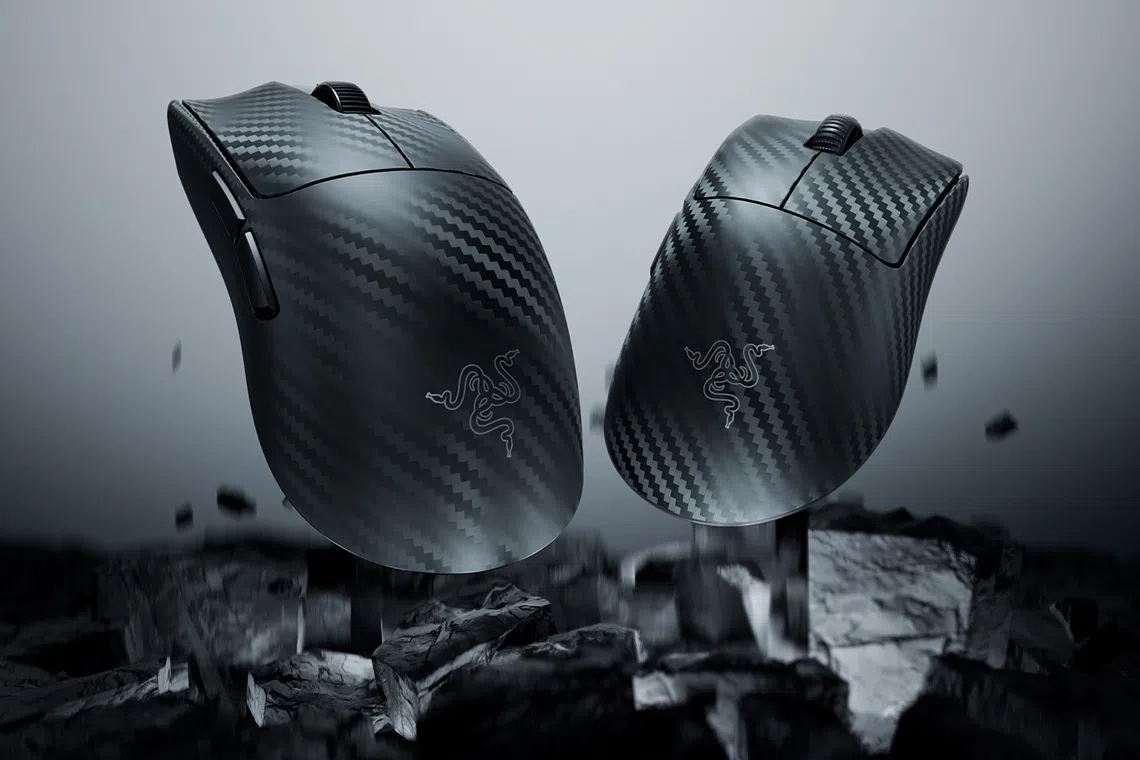
Razer takes a cue from motorsport with new Carbon Fiber Collection gaming mice
The Viper V4 Pro and DeathAdder V4 Pro are the two mice that receive new carbon fiber shells.

Why we really fear AI
Recent public statements from Anthropic CEO Dario Amodei, OpenAI CEO Sam Altman, and xAI founder Elon Musk have supported slowing or more deliberately pacing the development of advanced AI. By contrast, NVIDIA CEO Jensen Huang has argued that development should continue, but companies should not release products they cannot demonstrate are safe. There is some […] The post Why we really fear AI appeared first on e27.

A local company won a global award for noise-cancelling innovation
Mobile services provider Smart Communications, Inc. (Smart), the wireless subsidiary of PLDT Inc. has bagged the Best 5G-A Service Innovation at the Global Core Summit Awards in Bangkok, Thailand, for PureVoice, Asia-Pacific’s first commercially launched native artificial intelligence (AI) voice enhancement service built on the core network. Smart was the only Philippine telecommunications company shortlisted

US ports face onslaught of cyber attacks
A number of ports across the U.S. are reporting an onslaught of cyberattacks amid a growing number of AI-enabled attacks targeting notable infrastructure. The Port of Corpus Christi, Texas, which functions as the U.S.’s largest passage of oil exports, said it was targeted with “hundreds if not thousands” of attacks per day, according to reporting from...

NAVI crowned Brawl Stars World Champions after thrilling grand final in Tokyo
From the Last Chance Qualifier to world champions, NAVI complete an incredible run with a dramatic victory over FUT Esports.

Herbalife Korea builds next chapter on 30 years of trust
Herbalife Korea’s next phase of growth will depend on lasting customer relationships rather than individual transactions, Herbalife Korea General Manager Sean Chung said, as the company marks its 30th anniversary in Korea by overhauling distributor compensation and introducing AI tools. The company’s history has been about helping Koreans build healthy nutrition habits, he said, arguing that sustainable growth comes from maintaining trust beyond a single sale. Since entering Korea in 1996, Herbalife has expanded from weight management products into everyday nutrition, protein, sports nutrition and beauty-related wellness as consumer priorities have evolved. Its first decade centered on its flagship Formula 1 shake brand, balancing nutrient intake and healthy eating habits in a market dominated by physical stores and face-to-face sales. From 2006 and 2015, the rapid growth of online shopping and hypermarkets intensified competition. During this period, Herbalife emphasized ongoing communication and communities that helped customers maintain habits they found difficult to sustain on t

SK chair urges Korea-Japan joint AI talent development program
SK Group Chairman Chey Tae-won has called for a fundamental overhaul of education to prepare for an artificial intelligence (AI)-native society, urging Korean and Japanese universities and businesses to jointly develop talent for the AI era. Chey made the remarks at Tokyo Forum 2026 on Saturday, emphasizing the need to redesign education systems for a society in which AI is accepted as an integral part of everyday life rather than simply used as a tool. The two-day forum, co-hosted by the Chey Institute for Advanced Studies and the University of Tokyo, started Friday under the theme "AI as a Transformative Technology: Humanity, Knowledge and Civilization." It brought together global experts, including French government AI envoy Anne Bouverot and Sakana AI co-founder Ren Ito. "An AI-native society is not one that simply uses AI, but one that accepts AI as an inherent part of its environment," Chey said during a business leaders' session moderated by University of Tokyo President Teruo Fujii. He joined NTT Group Chairman Jun Sawada, Taejae University President Yeom Jae-ho and Sophia Unive

Samsung Electronics, SK hynix dividend payout ratios surge through Q3 amid AI boom
Samsung Electronics and SK hynix saw their dividend payout ratios rise sharply through the third quarter under their shareholder return policies, data showed Sunday, amid the memory chip boom driven by artificial intelligence (AI). According to the companies' respective quarterly reports, Samsung Electronics' dividend payout ratio stood at 18 percent on a consolidated basis as of end-September, up from 4.1 percent at the end of the first half, while SK hynix's ratio rose to 8.4 percent from 0.4 percent over the same period. A dividend payout ratio refers to the proportion of a company's earnings distributed to shareholders as dividends, serving as an indicator of how a company allocates its profits. The sharp increases came as the two chipmakers announced plans to distribute sizable dividends to shareholders as part of their respective shareholder return policies. Samsung Electronics decided to pay 30 trillion won ($22.3 billion) in dividends for the third quarter, or 4,601 won per share, compared with 372 won per common share in the first quarter and 374 won in the second quarter. SK hyn

Peugeot moves car shopping to Naver


YOUR NEWS, OUR NETWORK.
Do you have Great News you want to tell the world?
Be it updates about your business or your community, you can make sure that it’s heard by submitting your story to our network reaching hundreds of news sites across 6 verticals.