
CyberAttack.ai Launches AI-Native Cybersecurity Platform for Continuous Threat Detection and Remediation
Sep 10, 2026
New platform combines AI agents, attack-surface monitoring, vulnerability analysis, threat intelligence and remediation in a unified cybersecurity environment.
Seattle-Tacoma, WA, Washington, United States, September 10, 2026 -- CyberAttack.ai today announced the launch of its AI-native cybersecurity platform designed to help organizations continuously identify, prioritize and remediate cyber risk.
The platform brings together attack-surface monitoring, vulnerability detection, security testing, threat intelligence, risk prioritization and AI-assisted remediation in a single environment. CyberAttack.ai is designed for companies that want a more continuous and automated approach to cybersecurity rather than relying primarily on periodic scans, annual assessments and disconnected point solutions.
"Cybersecurity has become too fragmented and too reactive," said Nate Nead, CEO of CyberAttack.ai. "Most companies are juggling multiple tools for vulnerability scanning, threat intelligence, penetration testing, cloud security and remediation. CyberAttack.ai is designed to bring those functions together and use AI agents to help security teams understand what matters, what is exposed and what should be fixed first."
Continuous Security Monitoring
CyberAttack.ai continuously evaluates an organization's technology environment for changes, weaknesses and potential exposure.
The platform can monitor domains, subdomains, public applications, APIs, cloud infrastructure, software dependencies, authentication systems, network services and other internet-facing assets. As infrastructure changes, CyberAttack.ai can identify newly exposed systems, configuration issues, outdated software and other potential vulnerabilities.
Instead of producing a static snapshot, the platform is designed to maintain a continuously updated view of an organization's attack surface and security posture.
"Most organizations do not have a shortage of alerts. They have a shortage of context," said Timothy Carter, Chief Revenue Officer of CyberAttack.ai. "The challenge is determining which findings actually create meaningful business risk. CyberAttack.ai is built to help teams move past alert volume and focus on the vulnerabilities that are most likely to matter."
AI Security Agents
At the center of CyberAttack.ai is an agent-based architecture designed to automate repetitive security analysis.
Specialized AI agents can perform functions such as infrastructure discovery, vulnerability analysis, attack-path evaluation, threat-intelligence correlation, cloud-security review, application-security analysis and remediation planning.
Organizations can configure agents to operate automatically, require human approval for specific actions or work alongside internal security teams.
CyberAttack.ai can also analyze relationships between individual vulnerabilities. Rather than treating every issue as an isolated finding, the platform is designed to evaluate how multiple weaknesses could potentially be combined into a broader attack path.
This allows security teams to understand not only whether a vulnerability exists, but also how significant it may be within the context of the organization's overall environment.
"AI changes the economics of cybersecurity testing," said Samuel Edwards, Chief Marketing Officer of CyberAttack.ai. "Historically, comprehensive security reviews were expensive enough that many organizations performed them periodically. The opportunity with CyberAttack.ai is to move toward continuous testing and continuous visibility as infrastructure changes."
Risk-Based Prioritization
One of the platform's primary goals is reducing vulnerability noise.
Traditional vulnerability-management systems can produce thousands of findings ranked largely by technical severity. CyberAttack.ai is designed to incorporate additional context, including internet exposure, business criticality, exploit availability, existing security controls, asset importance and potential impact.
The result is a prioritized remediation workflow intended to help organizations determine which security issues deserve immediate attention and which can be addressed later.
CyberAttack.ai can also correlate an organization's exposure with newly disclosed vulnerabilities, public exploits, malware activity, ransomware campaigns, vendor advisories and other threat-intelligence sources.
When a new vulnerability or attack technique emerges, security teams can use the platform to determine whether relevant systems exist within their environment and assess the potential level of exposure.
From Detection to Remediation
CyberAttack.ai is designed to extend beyond vulnerability discovery.
For supported findings, the platform can provide remediation recommendations, configuration guidance, patching recommendations, code-level suggestions and verification procedures. Security teams can then retest affected systems after remediation to determine whether identified weaknesses have been resolved.
"The remediation side is where a significant amount of security work slows down," said Eric Lamanna, Vice President of Business Development at CyberAttack.ai. "Identifying a vulnerability is only the first step. The real value comes from helping technical teams understand the issue, determine the appropriate response and validate that the problem has actually been fixed."
CyberAttack.ai also maintains a historical record of findings, remediation activity and retesting, giving organizations a way to measure changes in their cybersecurity posture over time.
The platform can support technical security programs associated with frameworks such as SOC 2, ISO 27001, the NIST Cybersecurity Framework, PCI DSS and CIS Controls. It is not intended to replace formal certification or independent audit requirements, but can assist organizations in continuously evaluating many of the underlying technical controls.
Built for Internal Security Teams and Service Providers
CyberAttack.ai is designed for security teams, IT departments, software developers, DevSecOps organizations, managed security providers, cybersecurity consultants and enterprise operators.
The platform can also support multi-company environments, allowing private equity firms, holding companies, managed service providers and larger enterprise groups to evaluate security posture across multiple organizations.
Customers requiring deeper technical support can also access human-led services including penetration testing, cloud-security assessments, application-security reviews, security architecture, vulnerability assessments and custom cybersecurity engineering.
"AI can automate a significant amount of security analysis, but experienced cybersecurity professionals will remain critical," Nead added. "Our objective is not to eliminate the human layer. It is to automate repetitive work, increase the frequency of security testing and give people better information to work from."
About CyberAttack.ai
CyberAttack.ai is an AI-native cybersecurity platform designed to help organizations continuously discover, analyze, prioritize and remediate cybersecurity risks.
The platform combines artificial intelligence, autonomous security agents, attack-surface monitoring, vulnerability analysis, threat intelligence, security testing and AI-assisted remediation in a unified environment.
CyberAttack.ai is built around a continuous-security model intended to give organizations ongoing visibility into their technology environment as infrastructure, applications and threats evolve. The platform is designed for internal security teams, software developers, enterprises, managed security providers and organizations managing security across multiple businesses.
About DEV.co
DEV.co is a software development and artificial intelligence engineering company that designs, builds and deploys custom software platforms for startups, middle-market companies and enterprise organizations.
DEV.co provides services spanning artificial intelligence development, custom software engineering, SaaS development, cloud infrastructure, API development, data engineering, workflow automation, cybersecurity and enterprise software integration.
DEV.co provides the engineering and development capabilities supporting CyberAttack.ai and other AI-native software initiatives.
Contact Info:
Name: Samuel Edwards
Email: Send Email
Organization: Digital.Marketing
Website: https://digital.marketing
Release ID: 89202935
In case of detection of errors, concerns, or irregularities in the content provided in this press release, or if there is a need for a press release takedown, we strongly encourage you to reach out promptly by contacting [email protected] (it is important to note that this email is the authorized channel for such matters, sending multiple emails to multiple addresses does not necessarily help expedite your request). Our efficient team will be at your disposal for immediate assistance within 8 hours – resolving identified issues diligently or guiding you through the removal process. We take great pride in delivering reliable and precise information to our valued readers.

Musk midterm spending tops $442M
Tech mogul Elon Musk has spent more than $442 million in the midterm elections, after pouring another $76.8 million into his super PAC over the past month, campaign finance filings show. America PAC, which Musk launched during the 2024 elections, received the influx of cash from the SpaceX and Tesla CEO over the course of...
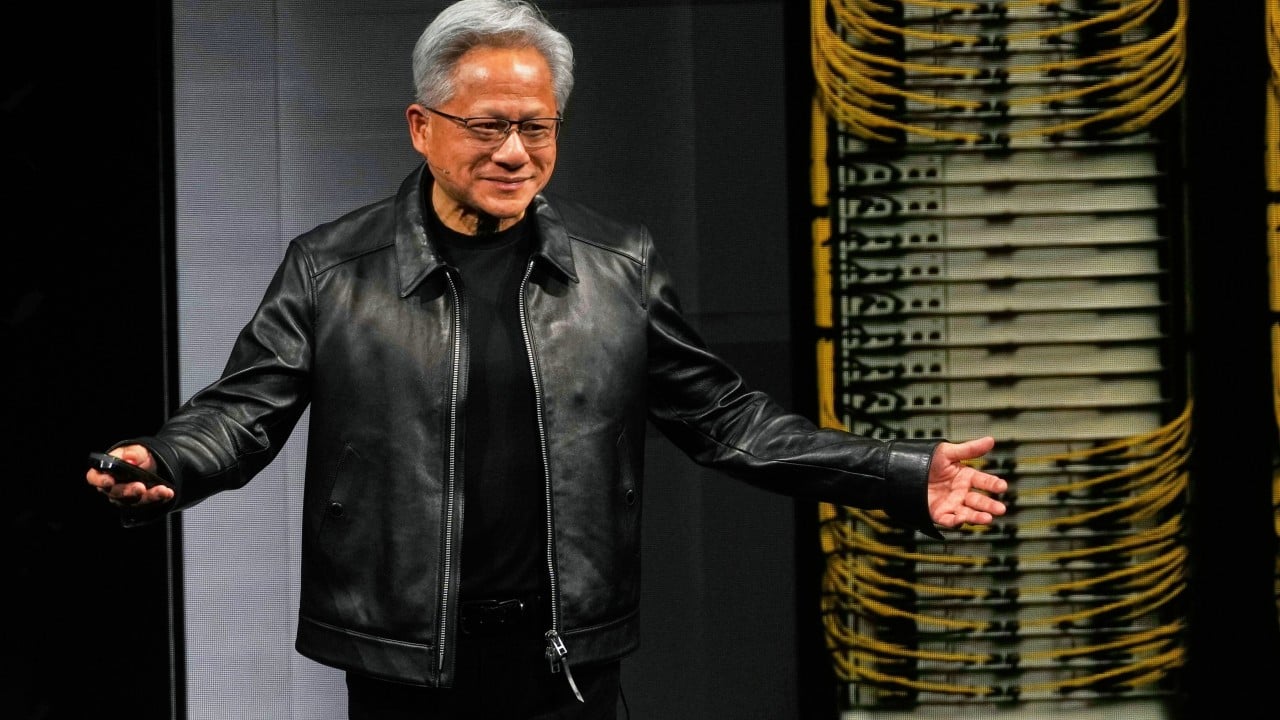
Nvidia’s Jensen Huang brings ‘sovereign AI’ push to Kazakhstan, shrugs off bubble fears
Nvidia CEO Jensen Huang is pitching the concept of “sovereign AI” in Kazakhstan – part of his global crusade urging nations to build domestic computing infrastructure using the firm’s chips – as the energy-rich nation emerges as a US-China battleground for artificial intelligence. Speaking at a fireside chat in Astana on Friday with Kazakh AI and digital development minister Zhaslan Madiyev, Huang said AI was reshaping every industry in a transformation that “affects every single person and...

China's humanoids go job hunting amid Korea's bets on physical AI
Chinese humanoid robot makers are accelerating efforts to gain a foothold in Korea, moving beyond dance performances and showroom displays to factory trials and other commercial applications as Seoul beefs up investment in physical artificial intelligence (AI). A string of Chinese robotics companies have flexed their muscles or announced projects in the country this year, including Hong Kong-listed Ubtech, startup Anyverse Dynamics, Shanghai-based Agibot and leading robot maker Unitree. “China’s new generation of robot companies has global DNA and naturally looks overseas, and Korea is one of the most important markets in Asia-Pacific,” said Ethan Qi, an associate director covering robotics at Counterpoint Research. The absence of locally built humanoids available at scale has created an opening for Chinese suppliers, he added. Early footprint Representatives of Galaxy Robot Park, a robot-themed entertainment venue in Seoul, agreed to buy Ubtech’s lifelike U1 model after attending its debut in Shenzhen in June, according to Sean Qin, overseas head of the company's commercial robo

Chung Mong-Koo Foundation's pianists sweep international awards
Three young Korean pianists — supported by Hyundai Motor Chung Mong-Koo Foundation — have earned international recognition this year, winning top prizes at major competitions in Europe and the United States. Shin Young-ho, 19, placed second in the piano category at the 76th Giovanni Battista Viotti International Music Competition, which concluded in Vercelli, Italy, on Oct. 17. Lee Jeong-woo, 18, won first prize at the 20th George Enescu International Competition in Bucharest, Romania, in September, while Lee Ju-eon, 15, claimed prizes at three international piano competitions in the United States during the first half of the year. The achievements highlight the progress of a new generation of pianists who have received sustained support from the foundation, as they pursue international careers. Shin continued his strong performance on the international competition circuit, following a second-place finish at the Dublin International Piano Competition and a special prize at the Pancho Vladigerov International Piano Competition, both held in 2025. Selected as a foundation scholarship re

Korean builders face risk of losing $755 mil. in unpaid Iraq refinery project
Hyundai Engineering & Construction (E&C) and three other local builders are at risk of losing more than 1 trillion won ($755 million) tied up in a major Iraqi refinery project, according to documents obtained by a ruling party lawmaker Friday. Hyundai E&C, GS Engineering & Construction, SK ecoplant and Hyundai Engineering have yet to collect 625.4 billion won in outstanding payments and are facing the possible forfeiture of another 420.2 billion won in performance guarantees. The builders have been seeking payment for work on the $6.8 billion Karbala Refinery Project, commissioned by Iraq's state-owned State Company for Oil Projects (SCOP). Company materials provided to Rep. Lee Jae-gang of the ruling Democratic Party of Korea showed the construction of a refinery capable of processing 140,000 barrels of crude oil per day was delayed by factors including Iraq’s internal conflict and the COVID-19 pandemic. The companies handed over the refinery's facilities to the Iraqi side in December 2023. However, SCOP has withheld payments, citing outstanding defects and missing tax-related docume

Woojin recognized for job creation, improved working conditions
Woojin Industrial Systems, a Korean manufacturer of railway vehicles and electric buses, said Friday it has been selected for this year’s Ministry of Employment and Labor recognition program honoring companies for creating jobs and improving working conditions. The annual program recognizes 100 private companies and provides administrative and financial incentives to encourage hiring and improve workplace practices. Woojin said investment outside the Seoul metropolitan area helped drive its employment growth. It completed a 47 billion won ($35 million) electric bus factory in Gimcheon, North Gyeongsang Province, supporting efforts to recruit about 100 local workers. The proportion of the company’s workforce covered by employment insurance rose to 673 at the end of 2025 from 578 in 2024. Woojin attributed the growth to investment and recruitment partnerships with local universities and vocational high schools. Of its 140 new hires in 2025, 64 were aged 15 to 34. The company said expanded recruitment of women and support for maternity protection measures helped reduce its female employ

Financial industry heavyweights compete to head banking lobby
With the Korea Federation of Banks (KFB) set to appoint its next chairman, several former financial executives and regulators are emerging as potential candidates to take the helm of the country’s leading banking lobby, according to industry officials on Friday. The federation represents 23 full members — commercial, regional and internet-only lenders — as well as 33 associate members, comprising branches of foreign banks. The incumbent, Cho Yong-byoung, is due to leave office on Nov. 30. Yoon Jong-kyoo, former chairman of KB Financial Group, has long been viewed as a front-runner. He served as a vice chairman at accounting firm Samil PwC and president of KB Kookmin Bank before leading KB Financial from 2014 to 2023, overseeing major acquisitions including LIG Insurance and Hyundai Securities. But the prospect of another KB Financial veteran taking a top post at a financial industry association has drawn growing resistance. The concern has intensified after Lee Dong-chul, a former KB Financial vice chairman, took the helm of the Credit Finance Association this year, followed by Kim

KEPCO wins UNLEASH award for 2nd straight year
Korea Electric Power Corp. (KEPCO) has won the UNLEASH Learning and Development Award for the second consecutive year, becoming the first Korean company to achieve the feat and reaffirming its global competitiveness in human resource development (HRD), the state-run utility said Friday. The award was presented at UNLEASH World 2026, a major human resources development conference, in Paris on Thursday (local time), according to KEPCO. Established in 2016 by the European Association for People Management and U.K.-based HR technology group UNLEASH, the award recognizes excellence in HRD, based on its strategic impact, organizational role and contribution to business performance. The recognition follows KEPCO's consecutive wins at the ATD Awards, organized by the U.S.-based Association for Talent Development, over the past two years, further demonstrating the company's expertise in employee training and talent management. KEPCO said evaluators recognized its alignment of HRD with business strategy, data-driven personalized training and integration of HRD with human resource management (HRM).

Woori Financial Q3 net falls 16% on one-time factor
Woori Financial Group Inc. on Friday reported a decline in its third-quarter net profit on a one-off factor. Its net profit reached 1.04 trillion won ($784 million) in the July-September period, down 15.7 percent from a year earlier. The earnings exceeded market expectations. The average estimate of net profit by analysts stood at 963.4 billion won, according to a survey by Yonhap Infomax, the financial data firm of Yonhap News Agency. In the first nine months of the year, the banking group racked up 2.66 trillion won in net profit, down 4.9 percent on-year. Operating profit for the July-September period was 1.41 trillion won, up 43.6 percent from a year ago, and revenue also jumped 66.2 percent to 13.3 trillion won. Interest income rose 1.7 percent on-year to 2.37 trillion won in the third quarter. Its non-interest income, on the other hand, sank 7.6 percent on-year to 581 billion won in the July-September period, Woori said. The financial group's flagship Woori Bank, meanwhile, reported a net profit of 1.02 trillion won in the third quarter, sharply up from a net profit of 736 billion won

Hana Financial Q3 net up 7.9% on rise in interest, non-interest income
Hana Financial Group Inc. on Friday reported a rise in net profit in the third quarter of the year, driven by a rise in interest and non-interest income. The banking group said it racked up a net profit of 1.22 trillion won ($919 million) in the July-September period, up 7.86 percent from a year earlier. The earnings are higher than market expectations. The average estimate of net profit by analysts stood at 1.21 trillion won, according to a survey by Yonhap Infomax, the financial data firm of Yonhap News Agency. Hana Financial posted 1.63 trillion won in operating profit for the quarter, compared with 1.48 trillion won a year ago. Revenue also rose 83.6 percent to 19.99 trillion won. In the first nine months of the year, Hana racked up 3.62 trillion won in net profit, up 5.56 percent on-year, marking the highest ever. Hana Financial posted an interest income of 7.48 trillion won in the January-September period, up 10.37 percent on-year, and its commission income spiked 29.8 percent to 2.14 trillion won over the cited period. Its flagship Hana Bank reaped a net profit of 1.19 trillion won

KSD channels $1.17 mil. funding this year into regional talent, startups in Busan
The Korea Securities Depository (KSD) has directed funding toward social welfare and innovative businesses, contributing an average of around 1.78 billion won ($1.34 million) annually from 2023 to 2025 and 1.55 billion won for this year, the state-run agency said Friday. Headquartered in Busan, KSD focuses much of its social contribution work on developing local talent, helping young people become financially independent and strengthening the regional economy. Its programs range from scholarships and job training to funding for social enterprises, startups and small and midsize businesses. One such effort is the Open Campus, which introduces university students to KSD’s work and career opportunities in the securities industry. Participants learn about its core functions, including securities settlement, get information on recruitment and speak with current employees. Launched in 2019 with 35 students from five universities, it has grown to 60 students from 12 universities this year. Since 2025, the program has been part of a wider initiative to strengthen Busan’s financial-sector tal

Nongshim brings Shin Ramyun heat to Musinsa pop-up in Osaka
Nongshim is bringing the flavors of Korea’s instant noodles to Japan’s fashion-conscious young consumers, joining forces with fashion platform Musinsa for a 17-day pop-up event in Osaka that pairs Korean food with fashion and beauty. The Korean food company is operating a Shin Ramyun brand booth at Musinsa Osaka Pop-up Store 2026 at VS in Umeda through Nov. 8. The collaboration aims to introduce Japanese shoppers drawn to Korean fashion to Korean food culture through hands-on experiences, with Umeda serving as a busy commercial district frequented by young consumers and international tourists. At the booth, visitors can sample freshly prepared Shin Ramyun Tomba, using an instant noodle cooker modeled on machines popular along Korea’s Han River, where people cook noodles on-site. Visitors who follow Nongshim Japan’s official Instagram account can try the dish, while those who complete a survey after tasting it can receive Shin Ramyun Rose, with additional branded merchandise available through a prize draw. Shin Ramyun Tomba combines spicy seasoning with a creamy flavor and has gain









Too busy for parental controls? Think again
YOUR NEWS, OUR NETWORK.
Do you have Great News you want to tell the world?
Be it updates about your business or your community, you can make sure that it’s heard by submitting your story to our network reaching hundreds of news sites across 6 verticals.