
Custom Regenerable PFAS Resin From China: A Practical Guide for Utilities Facing New PFAS Limits
Sep 29, 2026
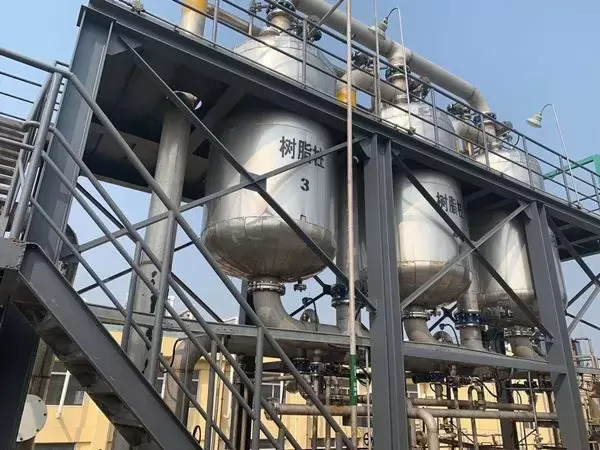
Xian, Shaanxi Sep 28, 2026 (Issuewire.com) - Water treatment providers across the globe face an intense regulatory transformation as environmental agencies institute unprecedented thresholds for per- and polyfluoroalkyl substances (PFAS). Compliance requirements demanding non-detect or single-digit parts-per-trillion (ppt) concentrations force municipal and industrial plant operators to re-examine their separation technologies. Achieving these stringent effluent goals consistently requires a structured technical evaluation long before specifying treatment equipment. Sourcing a Custom Regenerable PFAS Resin From China (https://www.seplite.com/pfas-removal/) provides water utilities with a tailored engineering pathway to overcome complex contamination challenges. However, successful media implementation begins with a meticulous diagnosis of raw water chemistry. Background water matrix components heavily govern media kinetics and overall operational lifespan. Specifically, engineers must quantify competing inorganic anions such as sulfates, nitrates, and chlorides, alongside Total Organic Carbon (TOC) levels. High concentrations of background organics occupy active sites and accelerate media exhaustion. Furthermore, comprehensive analytical profiling must map the exact PFAS speciation present in the feed water. Quantifying highly mobile short-chain compounds, including PFBA and PFBS, alongside persistent long-chain molecules like PFOA and PFOS, dictates vessel sizing and operating velocity. By assessing seasonal water quality fluctuations and discharge mandates early, utilities prevent premature media failure and establish predictable operational expenditure models. Media Customization Principles: Matching Resin Chemistry to Water Composition Selecting treatment media demands matching polymer molecular design directly to incoming water characteristics. Conventional commodity adsorbents often suffer from rapid capacity loss when handling complex water streams containing background foulants. In contrast, engineered strong base anion exchange resin (SBA) formulations utilize specialized quaternary ammonium functional groups grafted onto macroporous polymer matrices. Adjusting the hydrophobic backbone balance and controlling pore size distribution within SEPLITE® resin architectures optimizes kinetic mass transfer rates. This precise chemical customization maximizes dynamic capacity for both mobile short-chain and hydrophobic long-chain PFAS compounds under actual field conditions. Hydraulic sizing and column kinetics represent equally crucial components of system design. Facility engineers typically establish an Empty Bed Contact Time (EBCT) between 1.5 and 3 minutes when deploying high-selectivity ion exchange media. Operating at elevated linear flow rates ranging from 20 to 40 bed volumes per hour (BV/h) dramatically reduces total vessel volume requirements compared to traditional media beds. Smaller vessel footprints lower civil engineering costs, minimize plant real estate requirements, and simplify retrofits within existing treatment infrastructure. Consequently, customized media design provides a compact and hydrodynamically efficient solution for modernizing water treatment plants. The Regeneration Protocol: Step-by-Step Desorption & Waste Minimization Controlling long-term operational expenditure depends fundamentally on establishing robust regeneration protocols. Utility operators monitor column effluent to detect short-chain breakthrough, which routinely occurs ahead of long-chain saturation. Establishing strict operational bed volume limits ensures timely elution before regulatory discharge thresholds are exceeded. Deploying advanced ion exchange technology (https://www.seplite.com/advanced-ion-exchange-technology-for-efficient-short-chain-pfas-removal/) enables rapid chemical desorption of bound contaminants using optimized salt and solvent eluent formulations. This specialized chemical stripping process completely restores active exchange sites without causing physical degradation to the underlying matrix. Minimizing secondary waste volume remains a paramount objective during regeneration system design. Modern automated regeneration plants incorporate closed-loop solvent recovery modules that execute efficient eluent distillation. These systems recover up to 95 percent or more of spent regeneration solvents for immediate reuse in subsequent elution cycles. As a result, the recovery process concentrates extracted PFAS molecules into an extremely small liquid waste stream. This dramatic volume reduction significantly decreases downstream hazardous waste destruction expenses, offering utility owners an environmentally responsible and financially sustainable remediation cycle. Long-Term O&M Best Practices: Preserving Physical and Chemical Bead Integrity Maintaining consistent treatment performance over multiple operational cycles requires strict adherence to physical and chemical maintenance protocols. The mechanical durability of ion exchange media determines its resistance to physical attrition and hydraulic compaction. High-quality synthetic resins maintain a whole-bead count of 93 percent or higher, effectively preventing bead breakdown during high-velocity liquid flow. Additionally, chemical regeneration introduces rapid osmotic pressure shifts across the polymer structure. Specifying resilient crosslinked bead matrices protects against physical fracturing during alternating treatment and desorption cycles. Preventative operational measures also guard media beds against external fouling mechanisms. Incoming raw water frequently contains suspended solids, dissolved iron, manganese, or biological matter that block active resin pores. Installing adequate pre-filtration systems, such as multimedia filters or microfiltration units, shields the resin bed from physical clogging. Furthermore, implementing routine clean-in-place (CIP) wash regimens removes accumulated organic foulants and restores optimal mass transfer kinetics. These operational safeguards ensure that the resin bed retains its baseline exchange capacity across years of continuous operation. Risk Mitigation in Procurement: Sunresin's Turnkey EPC & Quality Assurance Framework Transitioning from initial feasibility studies to full commercial deployment involves significant technical and financial considerations. Utility directors reduce project execution risks by partnering with fully integrated technology providers capable of delivering complete systems. Mobile skid-mounted pilot plants allow operating teams to validate custom resin formulations under actual site conditions before committing major capital expenditure. As a global leader in separation technologies, Sunresin (Sunresin New Materials Co. Ltd.) (https://www.seplite.com/sunresin-profile/) operates advanced manufacturing facilities with an annual resin production capacity exceeding 50,000 cubic meters. Sunresin enforces rigorous quality management standards across all synthesis facilities, backed by international ISO certifications and a dedicated team of over 300 technical R&D specialists. Beyond media synthesis, Sunresin New Materials Co. Ltd. provides complete Engineering, Procurement, and Construction (EPC) services. Specialized engineering teams design custom modular skids, continuous ion exchange systems, and fully automated solvent distillation units. By managing the entire value chain--from initial polymer synthesis to final plant commissioning--Sunresin offers utility clients single-source accountability and verified system performance. Practical Implementation Roadmap for Utility Engineers Upgrading water treatment infrastructure to satisfy stringent PFAS mandates requires a structured execution roadmap. Utility engineers should begin by conducting comprehensive water analysis, capturing seasonal variations in organic loading and background inorganic ions. Following water characterization, engineering teams collaborate with technology specialists to perform bench-scale column testing and generate detailed breakthrough curves. Deploying pilot skids on site further confirms target effluent levels and optimizes operational regeneration parameters. Once pilot validation concludes, project managers proceed with detailed mechanical design, vessel footprint optimization, and facility integration. Utilizing modular equipment skids accelerates construction schedules and minimizes plant downtime during system retrofits. Facility operators seeking custom media formulations, pilot skid testing, or complete turnkey EPC consultation can initiate technical evaluations by visiting https://www.seplite.com/.

Source :Sunresin New Materials Co. Ltd.
This article was originally published by IssueWire. Read the original article here.

KCCI, audit authority collaborate to resume construction of 4,000 public housing units
The audit authority has cleared a key hurdle for six stalled public housing projects totaling nearly 4,000 units after the Korea Chamber of Commerce and Industry (KCCI) sought a preliminary consultation on behalf of builders struggling with soaring construction costs. The KCCI said on Tuesday that the Board of Audit and Inspection (BAI) determined that project costs for the six sites, covering 3,936 housing units, can be recalculated to reflect current market conditions. The case marks the KCCI’s first use of the consultation program since it was opened to private organizations in May. “Companies have faced difficulties for a long time, but this was not an issue they could easily make a decision on,” Lee Jong-myung, head of the KCCI's industry innovation division, said. “The BAI's decision to open its doors to the private sector has added another channel for resolving corporate difficulties, and its first result will benefit the public through housing supply.” The six projects are part of a public-private housing program, with public agencies providing the land while private bu

Private sector's role increased in 5th Nuri launch
Private companies played a significantly greater role in the successful fifth launch of Korea’s Nuri rocket on Wednesday, signaling that the country’s efforts to keep pace with the global shift toward a private sector-led “New Space” era are gaining momentum. The Nuri rocket completed its fifth launch and 20-minute-long flight successfully after lifting off at the Naro Space Center in Goheung, Jeonnam-Gwangju Special Metropolitan City, at 12:25 p.m. The most notable change in the latest launch was not the rocket itself, but the growing presence of private-sector personnel at the launch site. Hanwha Aerospace has overseen the manufacturing of the Nuri rocket as its system integrator since the fourth launch on Nov. 27 last year, but this time, its role expanded to the consoles at the launch control center. Hanwha Aerospace deployed 42 staffers for the fifth launch. They participated in operations at 20 of the 22 consoles responsible for launch vehicle systems, and at 18 of them, Hanwha employees directly operated the controls instead of specialists from the Korea Aerospace Researc
![[EXPLAINER] How AI emerged as new threat in Korea's bank hacking crisis](https://newsimg.koreatimes.co.kr/2026/10/07/77d98bb7-f23e-430d-be94-38ae9821547a.jpg)
[EXPLAINER] How AI emerged as new threat in Korea's bank hacking crisis
Hackers once had to manually test security defenses, identify vulnerabilities and work out how to exploit them. Now, artificial intelligence (AI) can do much of that work, requiring little human input. That possibility is at the center of Korea's latest security crisis in the financial sector, as investigators have found traces of an AI-powered autonomous penetration-testing tool in a series of recent cyberattacks on the country's major banks. Since last week, Shinhan Bank, KB Kookmin Bank, Hana Bank, Yegaram Savings Bank and BNK Busan Bank have all reported data breaches, while Woori Bank and NH NongHyup Bank have detected signs of hacking attempts, though no data leaks were confirmed. Shinhan Bank reported that about 25,000 customers were affected, with personal information including names, phone numbers, annual income and loan limits exposed. KB Kookmin reported 119 affected customers, while Hana Bank said personal information belonging to 89 customers was exposed. The hacking spree has drawn particular concern after investigators reportedly found traces of an AI-powered tool known as

SK Energy, HD Hyundai Oilbank face fines over alleged fuel price fixing
SK Energy and HD Hyundai Oilbank may face sanctions from the Fair Trade Commission (FTC) over allegations that they colluded on gasoline, diesel and kerosene prices, with combined fines potentially reaching 4.63 trillion won ($3.45 billion). The antitrust regulator said Wednesday that it sent a review report to the two companies, formally launching deliberations over the alleged price-fixing case. The FTC said the alleged collusion lasted from February 2022, shortly before Russia's invasion of Ukraine, through March this year, shortly after the outbreak of the war in Iran. The case covers petroleum products that are essential to household and economic activity. Korea's oil refining industry is highly concentrated, with SK Energy, HD Hyundai Oilbank, GS Caltex and S-Oil accounting for about 98 percent of the domestic market. According to the FTC, SK Energy and HD Hyundai Oilbank exchanged information on the prices of gasoline, diesel and kerosene, including provisional prices, final prices and sales policies. The regulator also determined that the two companies colluded on prices followin

Beef tallow remains hurdle to Charrr's global expansion
Countries’ regulations on imported foods containing beef tallow pose a hurdle for Samyang Foods as the Korean instant noodle giant seeks to expand exports of its latest black bean sauce instant noodles, Charrr. The company has established Buldak as a massively popular product around the globe without using beef tallow, selling 10 billion units and generating cumulative sales of 7 trillion won ($5.2 billion) as of June. Unlike the spicy, brothless instant noodle brand, however, Charrr uses beef tallow as a key ingredient to give its sauce a rich, beefy flavor. Charrr is not Samyang’s first instant noodle product using beef tallow. The company launched Samyang 1963 in November last year with the ambitious goal of reviving the “forgotten” taste of its first instant noodle product, Samyang Ramen, which was introduced in 1963 and used beef tallow. Samyang Ramen, introduced by the late company founder Chun Joong-yoon to help feed a population suffering from widespread poverty at the time, remains a cornerstone of the company’s identity. Its use of beef tallow has now become part of

Bank data breach victims step up calls for compensation
A growing number of customers affected by a string of recent personal data breaches at major commercial banks and other financial firms appear to be turning to class action lawsuits in pursuit of compensation, according to industry officials, Wednesday. The banks have pledged to fully compensate customers whose losses, including those from voice phishing scams, are found to have directly resulted from the leaks. But proving that a loss was caused by a specific data breach can be difficult in practice, and the banks have yet to set out clear standards for determining which claims would qualify, prompting some victims to resort to legal action. Seven financial firms have reported information leaks so far, including three of the country’s largest commercial lenders — Shinhan Bank, KB Kookmin Bank and Hana Bank. Shinhan reported the largest breach, affecting around 25,000 people, followed by 119 at KB Kookmin and 89 at Hana Bank. The exposed data includes customers’ names, contact details, resident registration numbers, annual income and loan limits. The combination of personal and fin
![[COVER STORY] Nuri rocket successfully completes 5th flight](https://newsimg.koreatimes.co.kr/2026/10/07/6a8cafff-abc8-4ebb-86ed-8bb7b1eb07d3.jpg)
[COVER STORY] Nuri rocket successfully completes 5th flight
Korea’s domestically-developed Nuri rocket successfully carried out its mission in its fifth launch Wednesday, sequentially deploying 14 out of the 15 satellites it carried into their target orbit. The key objective of the fifth launch was to safely deploy the five microsatellite constellations, and its success has demonstrated Korea's increased multisatellite launch capabilities, taking another step toward privately-led commercial launch services. The rocket lifted off from the launchpad at the Naro Space Center in Goheung, Jeonnam-Gwangju Special Metropolitan City, at 12:25 p.m. and completed its roughly 20-minute flight at around 12:45 p.m. The rocket separated its first stage about two minutes after liftoff, followed by the second stage about four and a half minutes into the flight. At around 12:40 p.m., it reached an altitude of 570 kilometers and completed the sequential deployment of five New-space Earth Observation Satellite Constellation for National Safety (NEONSAT) microsatellites (satellites No. 2 to 6), its primary payload, along with nine of the 10 CubeSats it carried. In

AMD to establish AI research center in Korea this year, hire hundreds
U.S. chip giant AMD announced Wednesday that it plans to establish an artificial intelligence (AI) research center in Korea by the end of this year and hire hundreds of researchers as part of broader AI cooperation between the company and Korea. The announcement came during a meeting between AMD CEO Lisa Su and Second Vice Minister of Science and ICT Ryu Je-myung in Seoul. AMD also plans to help develop graduate-level AI and AI transformation talent and collaborate with Korea on a reference model for heterogeneous AI computing. The model would combine AMD’s central processing units (CPUs) and graphics processing units (GPUs) with domestically developed neural processing units (NPUs). The meeting, arranged by the Ministry of Science and ICT, served as an interim review of AI cooperation agreed upon by the ministry and AMD during President Lee Jae Myung’s attendance at the San Francisco AI Summit in July. AMD also outlined plans to work with Korea’s private sector to create new business opportunities. At a subsequent roundtable with 13 Korean companies involved in AI infrastructure, c

OpenAI releases new batch of math breakthroughs
OpenAI released a new batch of mathematics breakthroughs on Tuesday following calls from AI researchers and developers to slow the growth of the technology. The company released 377 results that cover different physics, mathematical and other scientific problems solved by an OpenAI internal frontier model not yet available to the public. “Towards acceleration of scientific...

IMF chief urges countries to do more to curb debt and regulate AI
Countries both rich and poor must take faster action to cut debt and counter growing inequality as their economies weather a triple whammy from the artificial intelligence boom, heavy borrowing and shocks from wars in the Middle East and Ukraine, the head of the IMF said Wednesday. “Some very tough political choices stare us in...

China’s open-weight AI models are winning global users. Who is capturing the value?
China’s open-weight artificial intelligence models are taking off globally, but much of the money they generate is flowing to third-party providers rather than the companies that create them, according to a new study. Developers including DeepSeek and Moonshot AI make their model weights – essentially the “brains” of their AI systems – freely available for download. This strategy, which has accelerated global adoption over the past two years, allows other companies to run the models on their own...

Why Trump chose these leaders to head his 'Super Intelligence Force'
President Trump’s selection of four administration officials to head up his new “Super Intelligence Force” is offering a window into how the White House will approach AI in the face of pressure over its risks. The group of government leaders each reflect different priorities of the Trump administration after months of mixed messaging on the...


YOUR NEWS, OUR NETWORK.
Do you have Great News you want to tell the world?
Be it updates about your business or your community, you can make sure that it’s heard by submitting your story to our network reaching hundreds of news sites across 6 verticals.